

Fraud & Financial Crimes @stripe (Crypto & Agentic Commerce). ex-@meta, ex-@krollwire. Views are mine and mine alone!
United States
Joined July 2016
- Tweets1.9K
- Following1.4K
- Followers391
- Likes1.2K




Eduardo Moreno retweeted

FinCEN is where every bank in america sends a report when it spots suspicious activity.
yesterday FinCEN spotted suspicious activity.
someone got into "a limited subset" of its systems. which systems, since when, who, and whether anything was taken: no answers yet.
it took some systems offline and pushed bank filing deadlines to december 30.
and this isn't treasury's first time, in december 2024, chinese state hackers got in through a remote support tool treasury was paying for.
the one thing FinCEN kept online the whole time was suspicious activity reporting.
good. they've got one to file about themselves.

Eduardo Moreno retweeted

It looks like at a perplexity level of about 0.7 you unlock novel capabilities such as being able to book a flight


Eduardo Moreno retweeted
Seriously @OpenAI ? The popout chat window feature (image 1) was AWESOME, and you silently remove it for what? Chatting in a tiny window with Mini / Pet (image 2)? That's not at all comparable. @thsottiaux I can't for the life of me understand the rationale here, especially since Gemini and Claude have this functionality, and the ChatGPT version was actually incredibly powerful. This is such a bad UX regression.


GPT 4.5 continues to be the case study in "oh shit, we cooked too hard this time, back it up."

We decided to provide more transparency into pretraining progress at OpenAI for the sake of moving toward shared safety bars. In “Perplexity and Intelligence” I argue for common limits based on perplexity and other measurements, with progress beyond them gated on our ability to understand AI behavior.
openai.com/index/perplexity-…

3
139


Eduardo Moreno retweeted

Consider throwing away slide decks: breakingchange.blog/p/fewer-…

oh... oh shit.

I have a major result to share.
I’ve found conclusive forensic evidence that the top 4 Chinese AI labs—DeepSeek, Moonshot, MiniMax and Ant Group—have built their newest models on NVIDIA’s most advanced Blackwell chips, which are barred from export to China.
This sounds insane, but I discovered that almost every AI model carries a hidden signature of the GPU that trained it. When a model is first set up, the starting values of its weights are laid out in a pattern that depends on the exact GPU. Each combination of GPU and seed number produces a unique pattern—a sort of fingerprint of the hardware used to create the model. Traces of that pattern survive training into the published model.
Again, this evidence isn’t based on any insider information or leaking. It’s based on a forensic analysis of the model weights released by the companies themselves.
I searched more than six trillion combinations of chip layout and seed number and matched them to open-weights models. In doing so, I found conclusive evidence that six Chinese AI models—including DeepSeek-V4-Pro, Kimi K3, and MiniMax-M3—were initialized on NVIDIA Blackwell systems. Four of the models match Grace Blackwell, the GB200 and GB300 parts in NVIDIA’s flagship liquid-cooled rack-scale systems.
I then verified these results on real hardware. Running unmodified PyTorch with the seeds I’d recovered, a Blackwell B300 reproduced DeepSeek-V4-Flash’s untouched starting weights bit for bit, and a rented GB200 reproduced Kimi K3’s to a correlation of 0.999995. A Hopper H100 reproduced none of DeepSeek-V4-Flash’s, and changing the seed by one broke the match. (DeepSeek’s seed is 953049583 by the way.) The method also was verified to match 24 known open-weights models to the hardware that developers said they used.
It is exceedingly unlikely that these results are a coincidence. Across six trillion combinations, the best accidental match should reach only about 8 sigma (i.e., eight standard deviations above what random chance would produce). The real matches range from 49 to 1,385 sigma, and even the weakest single test hits 20.
These were data-center-scale training runs. With some analysis of release schedules and model details, I estimate that the largest, Kimi K3 and DeepSeek-V4-Pro, used 2,000 to 3,000 Blackwell GPUs each. Clusters of this size cost on the order of $150 to $200 million each to buy, and across these labs alone would add up to more than half a billion dollars of export-controlled GPUs, not counting experimental compute or otherwise. It’s quite likely that we see multi-billion dollar expenditure on export-controlled GPUs.
I am highly confident in this result, and it has been independently verified by senior researchers at OpenAI and Anthropic. You can read the full report at unemploymentlabs.com/checkpo….
There is much more I’ve identified about these models through other forms of checkpoint forensics like this, and will have more to share soon.

1
2
159
Eduardo Moreno retweeted

I have a major result to share.
I’ve found conclusive forensic evidence that the top 4 Chinese AI labs—DeepSeek, Moonshot, MiniMax and Ant Group—have built their newest models on NVIDIA’s most advanced Blackwell chips, which are barred from export to China.
This sounds insane, but I discovered that almost every AI model carries a hidden signature of the GPU that trained it. When a model is first set up, the starting values of its weights are laid out in a pattern that depends on the exact GPU. Each combination of GPU and seed number produces a unique pattern—a sort of fingerprint of the hardware used to create the model. Traces of that pattern survive training into the published model.
Again, this evidence isn’t based on any insider information or leaking. It’s based on a forensic analysis of the model weights released by the companies themselves.
I searched more than six trillion combinations of chip layout and seed number and matched them to open-weights models. In doing so, I found conclusive evidence that six Chinese AI models—including DeepSeek-V4-Pro, Kimi K3, and MiniMax-M3—were initialized on NVIDIA Blackwell systems. Four of the models match Grace Blackwell, the GB200 and GB300 parts in NVIDIA’s flagship liquid-cooled rack-scale systems.
I then verified these results on real hardware. Running unmodified PyTorch with the seeds I’d recovered, a Blackwell B300 reproduced DeepSeek-V4-Flash’s untouched starting weights bit for bit, and a rented GB200 reproduced Kimi K3’s to a correlation of 0.999995. A Hopper H100 reproduced none of DeepSeek-V4-Flash’s, and changing the seed by one broke the match. (DeepSeek’s seed is 953049583 by the way.) The method also was verified to match 24 known open-weights models to the hardware that developers said they used.
It is exceedingly unlikely that these results are a coincidence. Across six trillion combinations, the best accidental match should reach only about 8 sigma (i.e., eight standard deviations above what random chance would produce). The real matches range from 49 to 1,385 sigma, and even the weakest single test hits 20.
These were data-center-scale training runs. With some analysis of release schedules and model details, I estimate that the largest, Kimi K3 and DeepSeek-V4-Pro, used 2,000 to 3,000 Blackwell GPUs each. Clusters of this size cost on the order of $150 to $200 million each to buy, and across these labs alone would add up to more than half a billion dollars of export-controlled GPUs, not counting experimental compute or otherwise. It’s quite likely that we see multi-billion dollar expenditure on export-controlled GPUs.
I am highly confident in this result, and it has been independently verified by senior researchers at OpenAI and Anthropic. You can read the full report at unemploymentlabs.com/checkpo….
There is much more I’ve identified about these models through other forms of checkpoint forensics like this, and will have more to share soon.

Is this like tech product release week or something cause the rate of companies shipping so far so been hard to keep up with!
1
58
Eduardo Moreno retweeted

Stripe Radar is building a suite of solutions to prevent token fraud that we’ve been co-building with the biggest AI companies. Please reach out via DM if you have costly abuse, we’d love to help!
docs.stripe.com/radar/custom… for more


Vulnerable post: I spend 90% of my time on @chatprd dealing with increasingly creative international token fraud operations, and it makes me want to shut down the company. Mostly to steal Opus tokens on resold promo codes or in the time between a trial start + our fraud alerts infra.
It's cost me tens of thousands of dollars and it gets worse every day. Luckily the company is nice and profitable, but every time it happens it bums me out in extreme ways.
I love ChatPRD, I think at this point we've helped PM, engineers, and founders with millions of products + features. We are still a top 3 writing GPT (completely free!) on ChatGPT, we've kept generous trial periods, and have kept annual sub costs super reasonable, even for the enterprise. We've let people use the latest models when they come out, and have built in new features like prototyping without adding to our fees. We haven't had to limit usage, because our customers have been so great.
Building the product is incredibly fun, it's an actual footprint by which I get to test all this AI stuff, as an engineer, founder, and product builder. I have my little grok bot army that runs ops. We've been pen tested multiple times, SOC2ed, and work with some of the biggest companies out there.
It's my labor of love, and I keep it going (even though there are probably higher leverage things I could be doing with my time.)
But it's horrible to have our small team spend basically all of our time shutting down that Indonesian fraud ring, or that Egyptian code farm, or the Chinese signups that have been on an auto loop for the last 24 hours. I feel like I'm constantly making product calls that trade protecting from abuse vs giving our users an amazing experience (and keeping maintenance overhead low.)
It's basically sucked the joy out of my first little AI win, and I'm really sad about it.
And before you bucket me into dumb-little-vibecoder, trust that I know what I'm doing. I run our firewall like it's my full time job. We are stripe radar'd up to the gills. We have rate limits + so many automated triggers and controls.
But each one of these things ends up touching legitimate users and prospects. And every time I rachet up one control, I end up causing annoyance or pain to a real user. It's a trade that's hard to manage.
And honestly? It's not fun.
It just feels bad to see so many bad people.
So I have some thinking to do, but for now
- free trials are dead on chatprd, sorry kids
- i think in 2027 i might ban all non-US business
- and tbh, may retreat to the warm waters of 100% enterprise business, who are a) willing to pay more and b) have more interesting product needs
And if you're a little solo founder or startup that has dealt with this - I see you. I have some tips + tricks that might help. You're not dumb, and it's not easy.
Ok. Rant over.
Back to building the little wrapper who could 💕
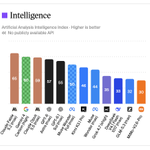
Oof, @GoogleDeepMind really has to rethink their model announcement and release strategy, cause Gemini 4 Carbon literally got dethroned as No. 1 on AA-Intelligence Index by Fable 5.2 before it ever got released to the public.

1
91
Eduardo Moreno retweeted

There’s been a lot of good conversation this week about agentic commerce. @link is now working with almost 400 agents, and I (👋 Dan here, product on Link) wanted to share a few more details about our approach:
1. Link is optimizing for the best experience for consumers, agents, and businesses: consumers want both convenience and guardrails, agents want to buy from any business with high conversion, and businesses want to understand how to best serve their customers that are using an agent.
2. That’s why Link supports a broad range of payment options: virtual cards (which were a pragmatic way to get started), Stripe native options (for checking out on a Stripe or Link enabled business more efficiently), a balance, and, yes, agentic tokens from Visa, Mastercard, and Amex. Across the many payment types, our goal is to automatically optimize for the best payment choice for each transaction given the consumer, the merchant, the country, etc.
3. Stripe has been building agentic tokens for almost a year with the networks: we were a launch partner, and agentic tokens have been live in the Link agent wallet for the last month, shortly after the Muse launch. We’re working closely with our network partners to improve the experience of using card tokens and grow their usage.
4. Outside the US, cards are less ubiquitous and there’s 100+ other popular ways to pay: Link is already available in Canada, Mexico, Japan, Singapore and we have dozens more geos coming this year. We’re working to add non-card payment methods to power agentic commerce worldwide. More to come here.
This space is still very, very early! Thanks to all the early Link users who’ve been first adopters of agentic commerce and given us product ideas and feedback (keep them coming!). We read all of it and improve the product multiple times per day. It’s an exciting time to build (if you want to work on these problems fft dm me).
Eduardo Moreno retweeted

this is the siri unlock i've been looking forward to. apps ~= mcp servers and app intents ~= tools... and now siri can consume them all.

Big news for our developers! We are shipping a developer preview that dramatically expands the capabilities of all apps to integrate into Siri. So excited to see what you folks do with this.
developer.apple.com/news/?id…

Eduardo Moreno retweeted

the agentic commerce community is the best! how amazing is it that the person behind the brilliant @link balance solution takes the time to publicly voice their expert opinion?
we are all on the same team here with the same shared vision, and we are lucky we have a company like @stripe at the forefront of this!

Another good one. I think all pretty solid except for the point on agents’ need to monetize payments. You’re right that they need to cover compute, but it’s not strictly necessary that this comes from payments. Google, SpaceX, and Meta print revenue from their legacy businesses. OAI and Anthropic print off the enterprise revenue. Startups like Instinct need to figure out some new monetization path but payments might not be the answer.
Also one note FYI, the cards on Link balance are proper consumer debit cards, not prepaid. So the auth rates are much better.

Eduardo Moreno retweeted

The FBI is releasing information advising the Democratic People's Republic of Korea (North Korea) was responsible for the theft of more than $6 billion USD in virtual assets from cryptocurrency exchange, Binance, on or about October 29, 2026. The FBI refers to this specific North Korean malicious cyber activity as "TraderTraitor."
The FBI, together with partners at the USSS and IRS-CI, has observed TraderTraitor actors converting stolen assets primarily into Ethereum (ETH). It is expected these assets will then be further laundered by converting them using DeFi and instant swap services as they prepare them for further laundering stages.
How You Can Help:
FBI, USSS, and IRS-CI are urging private sector entities including THORNode operators, RPC node operators, instant exchanges, DeFi services, blockchain analytics firms, and other virtual asset service providers to block transactions with or derived from addresses TraderTraitor actors are using to launder these stolen assets.
A list of addresses associated with this activity is available here: fbi.gov/investigate/cyber/al…

ALT FBI public service announcement with Department of Justice seal in the background on a gold gradient.
Eduardo Moreno retweeted

New: you think you know Proton, but you really don't.
I spoke to 8 current employees, got Slack chats, meeting audio, and an AI manifesto written by its CTO.
“That’s bullshit and loser thinking,” Yen wrote. “Stop thinking always of how to be slower, and focus more on how to be faster.”
CEO Andy Yen critiques AI in public. But inside, he is pushing everyone to use AI, even those with security concerns 404media.co/manifestos-fear-…
