

@ApacheIggy Core Team | Low latency message streaming @laserdata | OSS | 🎓 @iitmadras '17
Bengaluru
Joined November 2014
- Tweets1.7K
- Following784
- Followers796
- Likes5.1K





Pinned Tweet
That's me.
From being an ML Engineer to contributing to a DB project.
Never imagined this timeline but here we go.


Krishna Vishal retweeted

If you've ever wondered why smart TVs are so cheap, this is why.
@log4j rooted his Samsung and found an always-on hot mic, automatic content recognition, geolocation, network mapping, ad targeting and user profiling, shared with Samsung's "400 partners".
A lot of it can be blocked in <15 min, wrote a basic guide below.
What your TV is doing
The main culprit is ACR (automatic content recognition). Your TV screenshots what's on screen, fingerprints it, and sends it home to build your ad profile. Samsung does it every 500ms, LG every 10ms [1].
What is insane: it happens on connected devices too.
Plug in your laptop, your console, your work machine, and your TV can fingerprint that via HDMI [1].
He also found that if your Samsung doesn't have a mic, it'll look for one from a connected soundbar or bluetooth device.
xitter.cf/log4j/status/211376224…
It's on by default, and you likely agreed to it on the setup screen you clicked through in 10 seconds.
Step 1: Turn off ACR
Samsung: Terms & Privacy → Viewing Information Services
LG: Live Plus
Vizio: Viewing Data
Roku: "Use info from TV inputs"
Sony/Google TV: Samba Interactive TV
Menus vary by model, but those are the names to look for. While you're in there, opt out of interest-based ads, reset your advertising ID, decline every optional privacy agreement, turn off voice recognition, and delete apps you never open.
Step 2: Give smart devices their own network
Put the TV, cameras, speakers and vacuum on your router's guest/IoT network. The logic is simple: these devices rarely get patched. If one gets compromised (getting drastically more frequent with AI), it shouldn't be able to see your other devices or home network.
Step 3: Block trackers for the whole house with DNS-level filtering
NextDNS (cloud-based) is easy and has a solid free plan. Pi-hole is a little bit more work if you prefer self hosting. For simplicity we'll focus on the former.
1. Sign up at nextdns.io (free tier is plenty)
2. Privacy tab: add a blocklist (OISD is a good bet) and turn on Native Tracking Protection for Samsung, LG, Roku, Amazon (see attached image)
3. Setup tab: copy your endpoint
4. Paste it into your router's DNS settings as DNS-over-HTTPS/TLS (or use the IPs + "Link IP" if your router only does plain DNS)
5. Bonus: block outbound port 53 except to your router. Some devices hardcode their own DNS to get around you
Then open the NextDNS logs and watch how often your TV phones home. It's eye-opening. If an app or update breaks, find the domain in the logs and allowlist it.
Why they do this
TV prices are down 97% since 2000 [2]. Most of that is better manufacturing and brutal competition. But once margins on the hardware hit zero, the cost moved to you.
In Q3 2024, Vizio lost $6.7M selling TVs and made $115.8M in gross profit from ads and viewing data [3]. They've said on earnings calls that they keep TV prices low to grow the audience they sell to advertisers. Walmart bought them in 2024.
This isn't a conspiracy theory either. Vizio paid $2.2M to the FTC in 2017 for tracking 11 million TVs without consent. Last December, Texas sued Samsung, LG, Sony, Hisense and TCL over ACR. Samsung and LG have since agreed to stop collecting that data without explicit consent [4].
TL;DR
1. ACR off
2. Ads + voice off
3. Smart devices on their own network
4. NextDNS filtering on the router
Sources:
[1] ACR study: arxiv.org/abs/2409.06203
[2] Cost of US consumer goods: aei.org/economics/chart-of-t…
[3] Vizio Q3 2024: sec.gov/Archives/edgar/data/…
[4] Texas v. Samsung: texasattorneygeneral.gov/new…


Krishna Vishal retweeted

Spend two weeks writing down every piece of friction you run into or watch someone else run into. Don't fix anything yet. Just log it.
At the end of the two weeks, look for repeats. Pick the one that happens most often and affects the most people. Estimate, roughly, how much time it costs per month. Being off by half is fine. You only need to know whether it's 2 hours or 200.
Fix that one thing, properly, at the layer where it keeps happening. Then tell people it's fixed, and tell them roughly how much time it gives back. That last step matters more than it should. Invisible work stays invisible unless someone makes it visible, and you're the only one who knows it happened.
Repeat.

Keep a friction log. It doesn't need to be a formal one and you can just write a note on your phone or a text file. Now, every time something wastes your time or someone else's, write it down. After a few weeks, patterns show up. The things that recur are the things worth fixing. One-offs usually aren't.


Krishna Vishal retweeted

Increasing carb intake for 60 g/day to 200 g/day was enough to raise T3 by 43%.
low carbing nukes one of the most important hormones we humans have.


I built the deterministic simulation testing suite for @ApacheIggy . This post explains how it works.
The whole cluster runs on one thread, driven by one seed. We inject crashes, network partitions and torn writes, and when a run fails we replay the exact same execution to find out why. Reproducibility is the part I value most. A failure that only happens under one particular sequence of events becomes something we can step through, understand and test a fix against.
If you test distributed systems or follow Iggy’s clustering work, give it a read.

New on the blog: part 3 of 3 on Apache Iggy clustering. A deterministic simulator runs the whole cluster on one thread from a single seed, injects crashes, partitions and torn writes, and replays every bug.
iggy.apache.org/blogs/2026/1…
#iggy #asf #vsr #cluster #dst #rust #streaming


Krishna Vishal retweeted

i regret to inform you that personal growth rarely comes from acquiring new knowledge and almost always from:
-getting humiliated
-showing up terrified and doing it anyway
-admitting you might be the problem
Krishna Vishal retweeted

I found a way to speed up Rust builds by 10x...
the project isn't ready just yet but I have some early numbers to share
some details:
- dissolve crates as the compile unit (@charliermarsh)
- aggressively cache codegen on a per function basis
- fine-grained span invalidation

Krishna Vishal retweeted

Jordan Epstein: Ouch, you didn’t like my name? 🥲
I thought I had a pretty cool one!
Iggy = Italian Greyhound. One of the fastest dogs in the world. 🐕⚡
Fast dog. Fast streaming engine. Now does the name make a little more sense? 😄
lnkd.in/p/gWw8x8Rc

Krishna Vishal retweeted

Look at him, thats my Qual.
Your what?
My Qualitative! My vibe specialist. Look at him, you notice anything different about him? Look at his face.
I'll give you a hint, his name is Jayden. He won a local poetry competition in bushwick! Yeah I'm sure of the vibe.


Quant firms are hiring idea guys, not quants
I've been skeptical about the whole - software is commoditized, ideas are the moat argument
But I've seen first hand the best quant and technical firms in the world hire thinkers, liberal arts grads, and generalists
I predict the trend accelerates
Letter from @AQRCapital below

Krishna Vishal retweeted

"What could possibly go wrong?" Exploring the ruliology of the unexpected ... to develop a theory of bugs ...
writings.stephenwolfram.com/…

Krishna Vishal retweeted

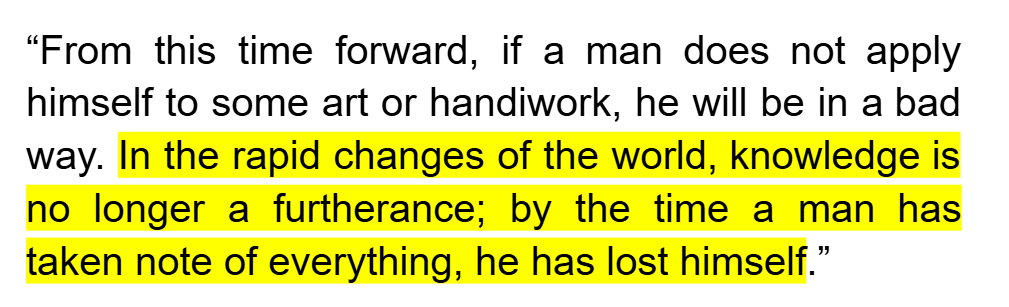
it's crazy that Goethe was dropping these bangers in his private journals 200 years before the internet


Krishna Vishal retweeted

One more stream is here. 💚
Today marks the beginning of a new chapter for @laserdatainc
We’re bringing together three worlds that have largely evolved independently:
1. Real-time message streaming.
2. Agent Data Fabric.
3. Real-time applications.
One infrastructure. One durable foundation.
Today we’re announcing major new capabilities across the stack, from VSR-based clustering in @ApacheIggy and Agent Data Exchange (AGDX) Protocol for agent-agent-system data exchange, to new LaserData Cloud plans (launch, scale, performance, and enterprise) and deployment options across AWS and GCP.
All these capabilities are in PRIVATE BETA, will be GA on September 18, 2026.
And we’re just getting started.
We’ll continue shipping throughout the year. But once in a while, we’ll take a moment to bring together the biggest ideas we’ve been working on and share where we’re taking real-time and agent data infrastructure next.
Welcome to the next chapter of LaserData. 🚀


Krishna Vishal retweeted

Friends, I finished writing a 2-part blog about our #iouring work at @conviva ... this is what i'll be speaking about at @P99CONF . Please read and share widely! bit.ly/io_uring-1


I've been building deterministic simulation testing suite for Apache Iggy and its starting to pay dividends now.
I also have plans to add PBT, fuzzing, mutation based testing for Iggy. We will get there. Our current focus is to deliver v1 of clustering with DST backing its functionality.
