

76. Still lifting. Strength is legacy for everyone willing to carry the weight. No fluff. Just work, scars, and truth.
USA
Joined August 2019
- Tweets1.7K
- Following325
- Followers1.1K
- Likes1.7K




Pinned Tweet
Become an Elder Beast.
Not to compete.
Not to impress.
But to stay in the fight — for your family, your health, your legacy.
One day at a time. One rep at a time.
No bullshit.
Just reclaiming the part of you that still wants to fight.
I read a lot about maintaining muscle versus building it. At 76, some days it feels like I’m building just to hold my ground. Either way, it takes deliberate work. I want strong, capable muscle that supports the life I choose to live.
My body has changed considerably over the last 20 years. So has my understanding of what needs attention.
I was never an athlete. I never built much of a foundation in my legs and glutes, and years of sitting added to the problem. Over time, my hips became so restricted that I couldn’t move through the range of motion I needed to train properly.
Physical therapy helped me regain that movement. Now I’m finally able to train muscles I neglected for much of my life. Those muscles still have room to grow, even while I’m working to preserve strength elsewhere.
That has taken patience. First, restore the movement. Then build the strength to use it.
“Maintaining” sounds passive, but there’s nothing passive about what it requires from me. I have to keep challenging my muscles, give them time to recover, and return consistently. What needs attention changes as I do.
Everyone has to find an approach that fits their body and circumstances. For me, it starts with paying attention: look for what’s gone to sleep, work on waking it up, and keep coming back.
After all these years, there are still parts of this body I’m learning how to use.

3
23
446
Raising kids taught me something about advice. You tell them the stove is hot. You tell them again, and they look at you like you don’t know what you’re talking about. Sometimes they still have to find out for themselves.
But those warnings aren’t wasted. Maybe your words make them hesitate. Maybe they approach with a little more caution.
You can’t keep your children from every mistake. You try to give them enough understanding that a mistake becomes a lesson they can recover from.
You hope they never touch the stove. But if they do, you don’t want them grabbing it with both hands.

As a father of 3, one thing I’ve learned is that watching your kids struggle is sometimes harder than struggling yourself…
Of course our natural instinct is to step in and fix whatever is going wrong.
When your kid gets a bad grade, talk to the teacher.
When your kid is not getting enough playing time, call the coach.
When someone hurts their feelings, get involved.
I understand the instinct because I’ve felt it myself and there were many times I wanted to step in and fix it myself
But I also think we’re doing our kids a disservice when we constantly remove every obstacle in front of them…
They’re eventually going to become adults and the world isn’t going to rearrange itself every time something doesn’t go their way.
How hard it is, resist the temptation to get involved everytime something doesn’t go as planned.
Learn to just sit back and let things play out on their own.
7
333
Sometimes people aren’t unwilling to do the work. They’re overwhelmed by how the work is presented.
Fitness is a perfect example. Someone who has never trained starts reading about lifting routines, diets, supplements, and everything they’re supposed to optimize. They’re shown where they could end up, but given little help figuring out where to begin.
The starting point has to be something manageable for the person they are today. A short walk. Getting out of a chair a few times. A few push-ups against the kitchen counter.
Those things might seem small to someone who already trains. For someone starting, they can be an accomplishment worth repeating.
As those movements become familiar and their ability improves, they can add a little more. Repetition builds consistency, and consistency becomes part of how they live.
Before we conclude that someone doesn’t want the process, we should consider whether we’ve made the beginning unnecessarily complicated.

It doesn’t make sense to continue wanting something if you’re not willing to do what it takes to get it.
If you don’t want to live the lifestyle, then release yourself from the desire. To crave the result but not the process, is to guarantee disappointment.
1
8
243
I don’t weigh myself. The only time I step on a scale is at the doctor’s office.
Wouldn’t surprise me if my weight moves five to seven pounds during the year. But that’s a guess. I pay more attention to how I feel, how I move, and what I see in the mirror.
The holidays bring foods I don’t normally eat. More gatherings. More sitting around talking. I enjoy those things. They’re part of being with family and friends.
Afterward, I get back to my usual meals and movement. Having a routine I’ve practiced for years makes that easier. I know what to return to.
At 76, I know I feel better and perform better when I’m carrying less extra weight and keeping my strength. Whether that adds years, I can’t say. But I can feel what it does for the life I’m living now.
So I’ll enjoy the holiday meal. I’ll get some movement in. And I’ll keep showing up for the habits that let me stay involved.
One big meal doesn’t erase years of consistency. And getting back to your routine doesn’t have to wait until January.

3
8
316
I started lifting at 50. I’m 76 now.
The changes have been physical, mental, and emotional. What began as exercise changed how I live—and how much of life I can participate in.
I don’t know if I’ll live to 77. But today, I can get off the floor, carry what needs carrying, keep up with my grandchildren, and show up for the people I care about.
That’s what strength gives me. The ability to stay involved.
We take strength for granted until everyday things start getting difficult. As our capabilities shrink, our opportunities to participate can shrink with them. Building strength has helped me protect my independence and keep contributing.
I’ve got experiences to share. Mistakes somebody might learn from. Stories my grandchildren ought to hear. And I want to be there while we make a few more.
I call that legacy. You can call it whatever you want.
Starting at 50 gave me these last 26 years of living differently. At 40, you have every reason to begin.
Build the strength to stay involved. Share what you know while you’re here. Give the next generation something they can carry forward.

I started going to the gym at 40.
I kept it simple and got on the treadmill.
About 3 minutes in, my shin bones started hurting.
It felt like something below my knee was about to break.
So I skipped jogging for about a year and focused on lifting weights.
After that year, jogging never hurt again. Not once. No bone pain, no discomfort.
Bones adapt to the load you put on them, and strength training is one of the best ways to build and keep them strong, especially as we get older.
That's how much lifting matters.
Anyone else start lifting later in life?

Believe it or not, staying fit takes less time than most people think.
I’m 76. I spend about 150 minutes a week resistance training. That’s 2½ hours out of 168. I train with intensity, stay consistent, and pay attention to what I eat.
Movement fills the gaps: a few squats while loading the dishwasher, stretching while the microwave runs, getting down on the floor and back up. Little things add up.
The thing to understand is that this process never ends. At 76, I’m still building strength and working on weaknesses. There’s no finish line.
That retirement comparison is right. I’m still paying in, but I’m already collecting—with every day I’m strong enough to stay involved with my grandchildren.

Resistance training and paying attention to your diet are 2 of the most high ROI things you can do.
It's like paying into your retirement.
Sacrifice time now, you'll get it back tenfold when you're alive and able bodied in later life.
1
3
203
At 76, I make room for both. Hard work in the gym and small movements throughout the day.
Waiting for the microwave? A few squats. Standing at the counter? Counter push-ups. A minute here and there to stretch, flex, and put my muscles to work.
Those small efforts make a noticeable difference in how I move, how I feel, and how well I train when I get to the gym.
At my age, keeping what I’ve built takes attention. I’m too stubborn to quietly give back the strength I’ve worked so hard to gain.
The hard sessions matter. So do the little opportunities to move between them.

I think we should aim to make at least some of our physical activity vigorous, if we can safely do so. The potential payoff for reducing chronic disease risk may be bigger than we realize.
1 minute of vigorous activity is associated with a similar reduction in cardiovascular death risk as about 8 minutes of moderate activity, or about 73 minutes of light activity. For type 2 diabetes, the comparison is around 9 and 94 minutes.
Light movement still has value. But recent studies have made me appreciate the potential of short, hard efforts, whether in a workout or everyday life.
113
At 76, I have a lot of years to look back on. That gives me some perspective on what drove me—and a reason to question it.
I’ve always been competitive. For much of my life, that showed up at work. I wanted to solve the problem, have the better idea, do the better job. And yes, sometimes I wanted to be better than the person next to me.
Was that ambition? Competition? Ego?
Looking back, I can see some of each. I enjoyed the challenge. I took pride in being capable. I also liked the recognition. Winning gave me satisfaction, and it gave my ego something to feed on.
These days, that competitive drive shows up in my training. The weights give me a challenge. My own progress gives me something to measure.
But competing against myself doesn’t automatically take ego out of it. I can still get attached to a number. I can still want to prove I haven’t lost a step.
Experience has helped me recognize when that happens.
Sometimes progress means more weight. Sometimes it means lowering the weight and doing the movement better. Sometimes it means accepting that I need another day to recover.
I still want to improve. I still take pride in the work. I’m learning to let that pride coexist with an honest assessment of what I need.
At this age, my definition of winning includes getting off the floor, keeping up with my grandchildren, and being ready for whatever the day asks of me.
I haven’t stopped being competitive. I’ve had enough life behind me to think more carefully about what’s worth winning.

2
10
338
The irony is that I spent most of my life thinking my physical condition was genetic. I was skinny fat, never athletic, and figured muscle just wasn’t part of who I was.
I’d been withdrawn growing up because of family issues. I never explored what my body could do. Then I mistook that lack of experience for a permanent limitation.
Around 50, I started seeing where my lifestyle was taking me. I wanted to live longer, but underneath that, I was craving strength I’d never had.
Now I’m 76, still discovering that I can improve. Strength, mobility, balance—there are weaknesses I can work on, and believe me, I find them every day.
Getting older has given me some of the sense I wish I’d had younger. I know now that I don’t have to accept every limitation as a permanent part of who I am.
It takes work. Recovery takes longer. But that work lets me show up for my grandchildren and give more to people who need me.
That’s what I’m building toward my 80s: the strength to keep participating.
Age with strength. There’s still capacity left to build.

This is a HUGE problem!
No aging does NOT have to be a steady decline.
Yes you might be different than in your younger years.
No don’t settle for this mindset.
Not criticizing the cartoonist but this type of messaging needs more counter advice!
Age with Strength! 💪🏼

2
6
266
Don’t get stuck searching for one lifelong purpose.
Give what you’ve accumulated: time, knowledge, experience, wisdom. Somebody can use what you have to offer.
The people and needs will change.
Purpose comes when you give with no strings attached.

8
241
I’ve had “bird legs” my whole life.
I was never an athlete, and using my legs often hurt. So they never got the attention they needed.
In my early 70s, that started concerning me. My upper body was getting stronger. My lower body seemed stuck.
A physical therapist helped me understand how much my hips were limiting my movement. I’ve talked about that before. Since then, I’ve put consistent work into hip mobility and strength. That work is finally allowing me to train my legs more productively.
Now, at 76, I’m seeing a little definition. Occasionally, some vascularity during a workout. My legs are definitely stronger.
But this feels slow. Sometimes, painfully slow.
I can’t tell you how much of that is age and how much is developing muscles I’ve neglected for decades. I just know the changes aren’t obvious from one workout to the next.
Then I get off the floor with an ease I didn’t have before.
That’s progress I can use.
It’s easy to look in the mirror, see little difference, and decide nothing is happening. Meanwhile, you may be moving better, controlling the weight better, or doing something that used to require help.
Pay attention to those changes.
Your body needs a reason to adapt. That takes effort, repeated over time, with enough recovery to keep going. And the strength you build still needs to be used.
I’ll keep sharing this journey. I don’t expect some overwhelming jump in strength. I expect small improvements that become clearer over months.
The discomfort gets my attention, but it isn’t my proof that this is working.
Getting off the floor more easily is.
Keep doing the work. Give it time. Notice what your body can do.

Retirement has never really hit me the way it hits some people. Whenever one chapter of my working life ended, I found something new to do.
I’ve seen what can happen when someone’s whole identity becomes their job. The work ends, and they struggle to see who they are without it. Some begin to lose direction and withdraw.
That isn’t everyone’s experience. But it happens, and I think we need to talk about it.
There is more to us than the work we used to do.
There’s family. Friends. Taking care of ourselves. Learning something unfamiliar. Passing along what experience has taught us. Building a legacy through how we live and what we give.
But you’ve got to be willing to start over. To try something you might be bad at. To fail at a few things while discovering something else you can do.
I do that every day. I spend more time discovering what I don’t know than repeating what I already know. There’s always something that challenges me to learn.
You can make room for that in your life, too. Start with an interest, a responsibility, or something you’ve always wanted to try. Give yourself permission to be a beginner again.
Purpose doesn’t require a paycheck. Sometimes it means showing up for someone, teaching what you know, or doing the work of taking care of yourself.
Retire from the job when it’s time. There is still a life to build—and people who need what you have to offer.

I’ve never had an athletic background. Here’s what I’m learning at 76.
Hip pain used to stop me before my legs were challenged. Building hip strength and mobility now lets me lift more with better form.
Better leg workouts. Potential for more muscle.
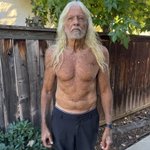
The leg development in this picture isn’t much, but it’s more than I’ve ever had in my life. It’s progress toward my goal.
We don’t all start on the tenth floor. A lot of us start in the basement and work our way up.
At 76, I’m still building.

2
10
446
Your body is part of your backup plan.
Think about being stranded in an airport. The systems go down. Flights are grounded. Hotels fill up. You may spend the night in a chair—or on the floor.
Now think about what that asks of your body.
Can you get down there? Can you rest? Can you get back up? Can you carry your bag across the terminal when the gate changes again?
For someone already dealing with pain, weakness, or limited mobility, that disruption can become a serious physical challenge.
That’s why taking care of yourself matters beyond the gym.
Strength, mobility, and endurance give you more options when the day stops going according to plan.
If your body requires assistance, that assistance belongs in your preparation. Maintain your equipment. Plan for medication, power, transportation, and the people you may need to call. Resilience includes knowing what support you depend on and keeping it available.
The same thinking applies at home. If you can’t drive, how will you get groceries? If water service is interrupted, how will you get drinking water—and bring it home?
These are ordinary needs. A disruption can make meeting them harder.
We live with technology that handles an enormous amount for us. We also need the physical capacity and practical plans to handle a day when it fails.
Start with what you can do today. Build the strength available to you. Maintain the support you need. Make the next disruption a little more manageable.
Invest in yourself so you can keep participating in your own life—and sharing it with the people who value who you are and what you bring.
Start today. It’s never too late.
Believe me, I know.
ELDER-BEAST

You have worth because you exist. That worth is already yours—at every age, at every size, and through illness, injury, and struggle.
Caring for your body is one way to give yourself more opportunity to express that worth.
That’s what I want people to understand when I talk about fitness.
I want you to have more opportunities to do what matters to you. To spend time with people you love. To participate in the things that make your life yours. To share the experiences and knowledge you’ve spent a lifetime gathering.
The people around you experience your legacy through everyday moments. How you listen. What you teach. The example you set when something gets difficult. The time you spend together.
Taking care of yourself can help make more room for those moments.
And that care will look different for each of us. Start with what your body allows today. Give yourself something you can build on. You deserve that care wherever you’re starting from.
This is why a fitness legacy matters to me. We pass along our habits and our attitudes toward ourselves, along with our stories. The next generation watches how we live—including how we treat ourselves when we struggle.
Your worth is automatic. Caring for yourself gives that worth another way to show up in your life and in the lives you touch.

9
285
There isn’t a number on the bar that answers “how much is too much.” Four sets of five at 315 doesn’t tell us enough by itself. How hard those sets are, how often you do them, and how you recover all matter.
As I’ve gotten older, I’ve found that the areas I neglected deserve more attention. My strongest lifts don’t tell the whole story of how well my body works.
Deadlifts can be part of a good program. But I also need to train the things they don’t cover. For me, that has meant working on hip strength and mobility where I’m limited, along with the other areas I’ve overlooked through years of work habits and training preferences.
Less constant variation, more honest assessment: What needs attention, and am I actually doing the work?
On the “so what?” question, enjoying getting stronger counts. Every pound doesn’t need a practical justification. But neither does every training cycle need a heavier deadlift.
My personal line is when chasing the next number repeatedly costs me more recovery, time, or comfort than the achievement is worth—especially if it crowds out the rest of my training or being active with my family.
You can keep lifting heavy. You can also maintain a strong deadlift and put your effort elsewhere. That’s a deliberate training decision.
For me, the goal is to keep building strength I can use and sustain.

A genuine question: When it comes to lifting, how much is too much?
I’m 41 with three young kids. I don’t have any injuries and my body feels good.
On one hand, it’s been fun to build back up my deadlift to four sets of 5 at 315lbs.
But a question I keep asking is “so what?” Where is the point of diminishing returns? Like, at what point does the risk/reward ratio get skewed?
Super curious what you think. I don’t have a good answer.
1
2
168
Work is a positive word for me. It means movement. Participation in life.
Lifting weights. Taking the stairs. Carrying groceries. Getting up out of the chair.
Big effort or small, I’m taking part in the life I want to live.
That’s work. That’s living.
81
Years of consistent training have built my capacity to handle effort and discomfort that would have overwhelmed me when I started. That capacity took time to develop.
When you begin exercising, you’re training your mind as much as your body. You feel soreness. You anticipate feeling it again. It’s understandable to hesitate before returning to something that hurt.
But with manageable effort, recovery, and repetition, you gain experience. You learn what familiar muscle soreness feels like, how you recover, and how your capacity changes. You begin to associate the work with improvement. Your anticipation starts to include the benefit.
That has been a key to getting fitter as I age.
Getting older can bring aches even when you haven’t done much. For me, movement gives me a way to keep building strength and capability. Recovery gives me the opportunity to return and build again.
There’s judgment involved. Being able to tolerate discomfort doesn’t guarantee that you’re safe from injury. Over the years, I’ve become more attentive to what I’m feeling, how I’m moving, and when I need to adjust. Knowing when to back off belongs in the same skill set as knowing when I can do more.
That awareness grows through consistency.
I’m still aging, and I’m still improving. Every time I train and recover, I give myself more experience to carry into the next session.
Give your mind time to learn the process. Give your body time to adapt. Both are part of staying fit.

At 76, I still want every one of those things.
Some days I’m chasing strength. Other days, more energy, better balance, or looking better in the mirror. Keeping up with my grandchildren and staying independent are part of it, too.
The emphasis shifts. It never stays static.
For me, assigning each goal to a decade is too limiting. Getting older hasn’t narrowed my reasons for training. It’s added to them.

This is the formula for living. Your legacy is built by what you do, not just what you say.
Your kids are watching how you work, how you handle setbacks, and how you care for yourself. They can carry those lessons into their own lives and pass them to their children.
That’s a responsibility we all share: build the fullest, most capable life we can, and show the next generation how to build theirs.
You’re giving your kids an example they can live by. That’s legacy in motion.

54 years old, dialed in, and on my road to 10% body fat. No shortcuts, no excuses. Just discipline, consistency, and hard work. But more importantly, I want to show my kids that you lead by example, not just words. 💪👊🏽👊🏽

3
118