

Clear electronics/RF guides, videos & downloads by Ian Poole | Resource hub for engineers & hobbyists | Shop: https://xitter.cf/t.co/ClrsfjiAbA
South East, England
Joined November 2016
- Tweets28.4K
- Following269
- Followers17.4K
- Likes2.5K





ElectronicsNotes by Ian Poole retweeted
How do you keep your DMM probe on the test point while you are away at looking at the display.
As you look away, it's so easy for the probe you are holding to slip.
Instead is so much easier to use a Pen style DMM like the ANENG A3008 that you see here.
(Sponsored link)
Check out more - its low cost and great performance: link.amazon/B06T6VkAG
#DMM #digitalmultimeter #ANENG #ANENGA3008
🤝 Paid partnership

ElectronicsNotes by Ian Poole retweeted
What's your most useful / favourite electronics book.
Without a doubt mine is: The Art of Electronics. It is packed full of the information I need. Practical & yet descriptive with the right amount of mathematics.
Check it out on Amazon .com (sponsored): link.amazon/B0cQd0reZ
🤝 Paid partnership

ElectronicsNotes by Ian Poole retweeted
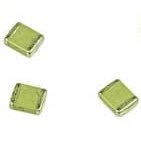
Understand Ceramic Capacitors
Ceramic capacitors are used in vast quantities each year, but what exactly are they, and what do you need to know so you don't fall into any pitfalls.
Check out my new video now: tiktok.com/@electronicsnotes…

ElectronicsNotes by Ian Poole retweeted
Stuck by an obsolete or out-of-stock transistor?
Whether you’re repairing a classic piece of gear, prototyping a new circuit design, or dealing with supply chain gaps, you will eventually face a common hurdle: The exact transistor you need is completely unavailable. I’ve been there a number of times.
The good news? Because transistor specifications have a high degree of overlap, you don’t need the exact part number to get the job done.
You just need to know how to pick a proper substitute.
Here’s my 6-step checklist to safely narrow down a cross-reference or replacement transistor without blowing up your circuit:
1️⃣ Verify the Polarity & Material First
It’s the absolute bare minimum: NPN must replace NPN, and PNP must replace PNP. Equally important is the material. Silicon (approx. 0.6V base-emitter drop) and Germanium (approx. 0.2V–0.3V drop) cannot be casually swapped because the circuit’s biasing relies heavily on this voltage.
2️⃣ Check Voltage Breakdown (VCEO/ VCBO)
Ensure the replacement transistor can withstand the circuit's maximum voltages. The replacement ratings should always be equal to or greater than the original. (Pro-tip: If you don't have the original datasheet, aim for a maximum operating voltage that is at least twice the circuit’s rail voltage).
3️⃣ Match Current Handling (IC(max)
The substitute transistor must be capable of passing the required maximum continuous current. Your replacement's maximum collector current (I_C) should be \ge the original.
4️⃣ Look closely at Current Gain (hFE / beta)
While gain inherently varies significantly even within the same batch, you want a similar range. In most general-purpose circuits, choosing a replacement with a slightly higher gain is perfectly safe, but a lower gain might starve the circuit.
5️⃣ Watch the Frequency Limit (fT)
Make sure the transition frequency (fT) is adequate for the circuit's operation (especially in RF or high-speed switching). However, beware going too high! Choosing a substitute with a massively higher fT than required can inadvertently introduce unwanted circuit oscillations.
6️⃣ Don't Ignore Package & Pin-outs
Physical sizing matters—especially if you're dealing with heatsinks or compact PCBs. More importantly, double-check the pinout configuration. Just because two small-signal transistors look identical (like TO-92 packages) doesn't mean their pins are both E-B-C. A mismatched pinout is a quick way to let the magic smoke out.
What if you can't find the original datasheet at all?
You can still reverse-engineer a safe bet! Check the operating voltage of the power rail, deduce the material by measuring the base-emitter voltage drop of a working neighbor transistor (if available), and gauge power dissipation limits by matching the physical case style.
For more information, check out the link in the comments. 👇
#ElectronicsEngineering #CircuitDesign #PCBRepair #ElectricalEngineering #Hardware #EmbeddedSystems #electronicsnotes

ElectronicsNotes by Ian Poole retweeted
Do you want to learn about: RF Fundamentals: Definitions, Components, and Concepts.
Check out this book now that offers a great coverage of RF essentials.
The content of this book focuses on the basics of RF and is intentionally written for:-Managers, engineers, and designers, who want to understand concepts of RF Wireless Communication.
Check out the book now on Amazon .com via this sponsored link: link.amazon/B08k30FPl
🤝 Paid partnership

ElectronicsNotes by Ian Poole retweeted
The 2N706: A Pivotal Silicon Transistor That Helped Build the Computer Age
Who remembers the 2N706? Before the 2N2222 became an industry staple, it was a silicon NPN switching transistor that bridged the gap between early transistors and the integrated circuit revolution: this device was the 2N706.
Introduced by Fairchild Semiconductor in the very early 1960s, the 2N706 was created when pioneering engineers like Jean Hoerni and Robert Noyce were perfecting the planar process.
At a time when heat-sensitive germanium transistors were proving too unreliable for the tightly packed, hot mainframe computer cabinets of the day. When the rugged 2N706 arrived on the market, it was able to meet the demands of high-speed digital computing of the time.
Why was the 2N706 so revolutionary?
🔹 The Planar Innovation: Unlike older mesa-style transistors with exposed junctions, the 2N706 utilized a layer of silicon dioxide to protect the junction surfaces from contamination, skyrocketing manufacturing yields and reliability.
🔹 Epitaxial Process Tuning: By growing a precise, thin layer of high-resistivity silicon onto a lower-resistivity substrate, engineers dropped collector-base junction capacitance to a minimum.
🔹 Nanosecond Speed: This architecture allowed the 2N706 to achieve switching speeds in the nanosecond range—a critical requirement for the increasing clock speeds of early processors, calculators, and military mainframes.
Key Technical Specifications At a Glance:
• Type: NPN Silicon Switching Transistor
• Package: TO-18 Metal Can
• VCER (Max): 20 V
• IC(Max): 200 mA
• fT(Min): 200 MHz
• Modern Equivalent: 2N2369
While its reign was eventually eclipsed in the mid-to-late 60s by the more versatile power-handling capabilities of the 2N2222, the 2N706 remains a vital piece of engineering history.
It permanently established the planar process that remains the gold standard for all modern silicon manufacturing today.
#ElectronicsEngineering #SemiconductorHistory #VintageTech #ElectricalEngineering #Transistors #FairchildSemiconductor #ComponentData

ElectronicsNotes by Ian Poole retweeted
Xiegu G90 HF Radio SDR 20W SSB/CW/AM Built-in Auto Antenna Tuner - NEW Version.
This transceiver offers a really budget friendly option while offering some advanced features and it is especially suited for portable operation.
High Performance SDR - the XIEGU G90 is a portable 20W amateur shortwave transceiver built on an SDR architecture, ensuring superior receive and transmit capabilities ideal for both novice and expert operators
Versatile Mode Options - this device supports SSB, CW, and AM operating modes, Allowing users to engage in various communication styles.
Equipped with a built-in high-efficiency automatic antenna tuner and SWR scanner, the XIEGU G90 simplifies your setup process. Experience enhanced flexibility whether you are in a casual chat or a serious contest work.
[Sponsored link]
Check this out now on Amazon .com: link.amazon/B0eCAVphg
#hamradio #amateurradio #hamr
🤝 Paid partnership

ElectronicsNotes by Ian Poole retweeted
The Hidden Traps of MLCCs: What You Really Need to Know
Multilayer Ceramic Capacitors (MLCCs) are used everywhere in modern hardware design. But because they are small and inexpensive, it’s easy to treat them as foolproof.
In practice, ignoring the physics inside these tiny rectangular blocks is one of the leading causes of catastrophic board failures and latent field issues.
Based on my latest deep dive over on Electronics Notes, and in my video, here are four essential practical bench tips every hardware and layout designer should keep in mind:
🔹 1. The DC Bias Voltage Trap
Did you know a Class II MLCC (like X7R or X5R) operating near its rated voltage can lose over 50% of its nominal capacitance? The barium titanate crystal domains literally get locked in place by the internal DC electric field.
* The fix: Derate aggressively. If you have a 5V rail, don't use a 6.3V capacitor—opt for 16V or 25V to retain your capacitance. For absolute precision, stick to Class I (C0G/NP0).
🔹 2. The Imperial vs. Metric Size Minefield
Beware the "0603" and "0402" danger zone. An Imperial 0603 is a standard, hand-solderable component. A Metric 0603 (which is an Imperial 0201) is microscopic.
* The fix: Never leave units ambiguous on your BOM. A simple mix-up between an Imperial 0402 and a Metric 0402 will completely stall a production run because the physical parts won’t fit the landing pads.
🔹 3. Preventing the Dreaded Flexure Crack
Ceramics are incredibly brittle. When a PCB warps during reflow, cooling, panel snapping, or chassis mounting, that mechanical stress transfers directly to the rigid MLCC, causing a 45-degree flexure crack.
* The fix: Always orient the long axis of the capacitor parallel to the expected board bend line (90° relative to the bend direction). Keep large MLCCs a minimum of 3mm to 5mm away from high-stress areas like mounting holes and heavy connectors.
🔹 4. MLCCs Are Not Immune to ESD
We protect ICs, but we often forget passives. Modern high-density MLCCs have internal dielectric layers separated by mere microns. Dumping a 1,000V static spike across a 5µm gap creates an electric field of 200 million volts per meter (200 MV/m)—instantly punching a physical hole through the ceramic and causing a latent short circuit.
* The fix: adopt fill ESD circuit design techniques. One idea is to use TVS diodes to clamp the spike at the absolute entry point of the PCB before the pulse reaches your fragile ceramic layers.
What’s your go-to layout rule for ensuring MLCC reliability? Let's discuss in the comments!
Watch my video with the full technical breakdown, using the link in the comments. Don’t miss out - watch now👇
#ElectronicsEngineering #PCBDesign #HardwareDesign #capacitor #capacitors #mlcc #ElectronicsNotes #RFengineering

ElectronicsNotes by Ian Poole retweeted
Gold Conductor Myth: it isn’t the best conductor so why is it used?
You see gold-plated connectors everywhere, from high-end audio gear to spacecraft. But here’s the shocker: Gold is NOT the best conductor of electricity.
In this video I explain this mystery, I look at look at some key specifications so you don't fall into a trap, and I explode a myth.
Watch my video now to find out all: youtu.be/TO3dyX9p3ck
#gold #conductors #connectors #electronics #conductivity #electronicsnotes #electroniccomponents

ElectronicsNotes by Ian Poole retweeted
FNIRSI 2C53T 3-in-1 50MHz 2CH Oscilloscope Multimeter DDS Signal Generator
250MSa/s Sampling, 19999 Counts Multimeter, Handheld Portable Oscilloscope.
This scope boasts a 50 MHz bandwidth, 250 MSa/s sampling rate, 1 Kpts record depth, automatic measurement function, max voltage 400 V, vertical sensitivity 10mV/div-10V/div , support waveform image storage and export.
It also has many more capabilities. Check it out on Amazon .com using this sponsored link: link.amazon/B06B847YU
🤝 Paid partnership

ElectronicsNotes by Ian Poole retweeted
Understanding Surface Mount Technology: A Deep Dive into the Quad Flat Pack (QFP)
As electronic devices become more compact and feature-rich, integrated circuits (ICs) require higher pin counts to handle complex connections.
The Quad Flat Pack (QFP) surface-mount package remains one of the primary industry standards solving this challenge.
Here are a few key takeaways on how QFP packages work and why they are widely used in modern SMT assembly:
🔹 High Pin Count Connectivity: By distributing connection leads across all four sides of a flat package in a "gull-wing" shape, QFPs can support anywhere from 32 to over 256 pins.
🔹 Versatile Form Factors: Depending on thermal, height, and space requirements, QFPs come in various specialized variants:
• LQFP & TQFP: Low-profile and thin options (1.0mm–1.4mm body thickness) for space-constrained designs.
• HQFP & BQFPH: Integrated heat sinks/spreaders for high-power dissipation.
• BQFP: Bumpered corners to protect fragile leads during handling.
• CQFP: High-reliability ceramic packages for critical applications.
⚠️ Design & Handling Considerations:
Because QFP leads are thin and fine-pitched, they are susceptible to physical damage and lead deformation. Careful waffle-pack packaging, automated pick-and-place handling, and precise PCB track-density routing are essential to ensure high assembly yields.
Discover more in the link in the comments.
#ElectronicsEngineering #SurfaceMountTechnology #SMD #PCBDesign #HardwareEngineering #Semiconductors

ElectronicsNotes by Ian Poole retweeted
ANENG Pen Type Digital Multimeter: great capabilities in a small form factor.
This very convenient to use pen-style DMM boasts 6000 count display, AC/DC Voltage Tester with NCV and much more.
It measures: current, resistance, continuity, capacitance, diodes and it has an extremely useful non-contact voltage sensor for detecting live wires.
Check out this amazing product on Amazon .com with this sponsored link: link.amazon/B0hsqp3FM
🤝 Paid partnership

ElectronicsNotes by Ian Poole retweeted
The humble BC547: 5 things you might not know about this jellybean general-purpose transistor.
If you’ve ever built an analogue circuit, wired a breadboard, or designed a low-power switching stage, chances are you’ve held a BC547 in your hands.
While it looks like any standard 3-pin TO-92 package, there are a few fascinating nuances behind its design and history:
1. Decoding the Pro Electron Part Number
The "BC" designation isn't random - it follows the European Pro Electron naming system:
• B = Silicon semiconductor material.
• C = Low-power, low-frequency audio amplifier (small-signal transistor).
• 547 = Standard industrial registration number.
2. A, B, and C Are NOT Just Quality Grades
Many engineers assume BC547A, BC547B, and BC547C represent performance bins or tolerances. They actually denote distinct hFE (current gain) ranges:
• BC547A: 110 – 220
• BC547B: 200 – 450 (The workhorse of the family)
• BC547C: 420 – 800 (Ideal when driving directly from high-impedance nodes)
3. The Pinout Trap (C-B-E vs. E-B-C)
If you swap a European BC547 for a US equivalent like the 2N3904 or 2N2222, watch your lead orientation!
Looking at the flat side with leads facing down:
• BC547: Collector – Base – Emitter (C-B-E)
• 2N3904: Emitter – Base – Collector (E-B-C)
Dropping a 2N3904 directly into a BC547 footprint without rotating it 180 degrees is a classic debugging trap.
4. It's a Direct Descendant of early Metal-Can Transistors
The BC547 belongs to a family born in the late 1960s (starting with the BC107 in metal TO-18 cans). As plastic encapsulation evolved, the BC107 became the lock-fit BC147, before settling into the standard TO-92 package as the BC547 we use today.
5. Hidden RF Potential
Though rated as a general-purpose audio transistor, the BC547 boasts a transition frequency (f_T) around 300 MHz. This high f_T makes it surprisingly useful in low-power HF/VHF radio circuits, active antenna buffers, and RF oscillators.
What was the first circuit you built using a BC547? Let me know in the comments!
#ElectronicsEngineering #CircuitDesign #Semiconductors #BC547 #HardwareDesign #HardwareDesign #electroniccomponents #electronicsnotes

ElectronicsNotes by Ian Poole retweeted
The 2N3055 Transistor: the workhorse that still carries on!
If you’ve ever opened up a vintage hi-fi amplifier, a 1960s or 1970s laboratory linear power supply, or an early industrial motor controller, you’ve almost certainly seen it: the iconic, silver TO-3 metal "top hat."
The 2N3055 silicon NPN power transistor launched by RCA in the early 1960s, and it is possibly the most famous, reliable, and omnipresent power transistor ever manufactured. Decades after its debut, it remains a staple in the electronics world.
Here is a look at why this component became an absolute legend:
A Quick History
Before the 2N3055, power electronics heavily relied on germanium transistors, which were notoriously sensitive to thermal runaway, they could not handle much power, and they were expensive. RCA changed the game by utilizing silicon.
Initially built using a rugged hometaxial process, it was seemed indestructible under heavy loads, it handle more power than the previous germanium transistors and it broke the sub-$1 barrier.
Later, manufacturers transitioned to the more cost effective epitaxial-base processes and this also improved speed and efficiency. It quickly became the industry standard, manufactured by everyone from Motorola (ON Semi) to STMicroelectronics.
The Basic Performance (The Workhorse Stats)
The 2N3055 wasn't built to be fast or elegant; it was built to handle raw abuse.
* Collector-Emitter Voltage (VCEO): 60V (perfect for standard audio and power rails)
* Continuous Collector Current (IC): 15A
* Total Power Dissipation (PD): 115W (when properly bolted to a hefty heatsink)
* Frequency (fT): Around 2.5 MHz for the epitaxial version, but not quoted for the hometaxial version.
Current Usage: Where is it today?
While modern designers swear by efficient switching MOSFETs and high-speed IGBTs for new commercial products, the 2N3055 is far from retired:
1. Linear Power Supplies: Because it behaves beautifully in its linear region, it’s still the go-to choice for DIY bench power supplies where low noise is critical.
2. Audio Restoration & Boutique Amps: Audiophiles still prize the warm, classic clipping characteristics of 2N3055-driven output stages.
3. Education & Prototyping: It is the quintessential teaching tool. Its physical size makes it easy to mount, probe, and—crucially—it can survive the inevitable wiring mistakes made by engineering students.
The 2N3055 proves that in engineering, reliability and simplicity often outlast cutting-edge innovation.
👉 What was your first project using a 2N3055? Have you used one recently, or have you fully migrated to plastic TO-220s and surface-mount components? Let’s reminisce in the comments!
More information available in a link to my website in the comments. 👇
#ElectronicsEngineering #HardwareDesign #VintageTech #ElectricalEngineering #Innovation #EmbeddedSystems #RetroElectronics

ElectronicsNotes by Ian Poole retweeted
Microwave Active Circuit Analysis and Design
Do you struggle with microwave circuit design? I found this book really good and it was explained in a more understandable manner than most.
teaches the skills and knowledge required by today's RF and microwave engineer in a concise, structured and systematic way.
Reflecting modern developments in the field, this book focuses on active circuit design covering the latest devices and design techniques.
Check out the (sponsored) link more details on Amazon .com: link.amazon/B0hQCDpll
🤝 Paid partnership

ElectronicsNotes by Ian Poole retweeted
Better Performance Beyond Double Balanced Mixer when you need ultra-clean RF signal conversion? The Triple Balanced Mixer
While single and double balanced mixers handle most RF tasks, high-performance systems often demand a Triple Balanced Mixer (also known as a doubly double balanced mixer).
Here’s a breakdown based on the page on my Electronics-Notes website, of how it works and why it matters for your next RF design:
The Basics: Balancing All Three Ports
Unlike single or double balanced architectures where only one or two ports are balanced, a triple balanced mixer balances all three ports:
• Local Oscillator (LO)
• Radio Frequency (RF)
• Intermediate Frequency (IF)
Architecturally, it combines two double-balanced mixer structures utilizing two diode quads (a total of 8 diode junctions) along with RF and LO microwave baluns. Of course it can also use active devices, typically MOSFETs and not be limited to Schottky diodes.
Key Performance Advantages
1. Superior Isolation: Excellent LO-to-RF, LO-to-IF, and RF-to-IF port isolation, preventing unwanted leakage across the circuit.
2. Enhanced Linearity & Dynamic Range: Handles higher input signal levels without early saturation.
3. Reduced Spurious Outputs: Significantly suppresses intermodulation distortion (IMD) products and unwanted spurious signals.
4. Wide IF Bandwidth: The dual diode quad structure makes the IF available at isolated terminals, providing an exceptionally broad IF frequency response.
The Engineering Trade-Offs
High performance always comes at a cost:
• Higher LO Drive Required: Driving two diode bridges requires significantly more LO power.
• Increased Complexity & Cost: Higher component count and precision baluns make these units more expensive and complex to layout.
Whether you’re working on wideband communications, high-dynamic-range test equipment, or advanced home-bench RF projects, the triple balanced mixer remains a gold standard for clean frequency translation.
#RFEngineering #Electronics #HamRadio #Wireless #CircuitDesign #RadioFrequency #engineering #electronicsnotes #RFdesign

ElectronicsNotes by Ian Poole retweeted
Don't take life too seriously!
So, I've been experimenting with some electronics related jokes.
See what you think, & please leave a comment. You might hate it or love it. but whatever you think, my main focus remains electronics technology.
Watch now: youtube.com/shorts/VZo7Ey7-g…

ElectronicsNotes by Ian Poole retweeted
When I mention DMMs in social media posts, I often receive comments from people saying how they really like their Fluke DMMs.
They are accurate and very reliable . . . . and in addition to this they have reliable CAT safety ratings.
One of the most popular is the Fluke 17B+: Measures AC/DC Voltage 1000V, Current Measurements to 10A, Resistance, Continuity, Diode, Capacitance, Frequency, and Temperature Testing.
Check it out on Amazon .com: link.amazon/B0gUmfO9B
(sponsored link)
🤝 Paid partnership

ElectronicsNotes by Ian Poole retweeted
The Schottky diode (or Schottky barrier diode) is one of the oldest diode concepts, tracing its roots back to early cat's whisker detectors associated with crystal radio sets of the 1920s and earlier.
Unlike standard PN junction diodes, it uses a metal-semiconductor junction, offering low forward voltage drop and ultra-fast recovery times - making it a key component in modern RF, power, and switching circuit.🧵
👇
#ElectronicsEngineering #circuits #electronicsnotes #semiconductor #diode

ElectronicsNotes by Ian Poole retweeted
I’ve just picked up a Bush TR90 broadcast transistor radio to feature on my website and in a video teardown.
The early 1960s marked a pivotal turning point in British consumer electronics as heavy, power-hungry valve sets gave way to portable solid-state technology.
Leading this revolution was the iconic Bush TR90 transistor radio—a design that captured the spirit of mid-century optimistic engineering.
Wrapped in a distinctive leatheretteette cabinet with a prominent central tuning dial, it proved that portable listening could be both stylish and reliable.
🧵👇
