
Demographics Are Destiny Rubio 2028
Joined August 2026
- Tweets15.5K
- Following1.3K
- Followers468
- Likes13.7K


Electorate retweeted

On July 2, ICE arrested Mexican boxer and criminal illegal alien Julio Cesar Chavez Jr.
He is now being processed for expedited removal from the United States. This Sinaloa Cartel affiliate has an active arrest warrant in Mexico for his involvement in organized crime and trafficking firearms, ammunitions and explosives.
Under President Trump, NO ONE is above the law—including world-famous athletes. Our message to any cartel affiliates in the U.S. is clear: We will find you and you will face consequences. The days of unchecked cartel violence are over.
dhs.gov/news/2025/07/03/dhs-…

Electorate retweeted

“‘[Arrests] didn't happen at Home Depots. We were in west L.A., we were in the Palisades, we were in Laguna Beach. Some arrests were made in Beverly Hills, and they weren't all Latino.’”
I question the former and regarding the latter there’ve been examples of non-Latino arrests.

ALT Screenshot of photo by TikTok user @no11baby captioned “A screenshot from video of a man being restrained by masked individuals in downtown L.A. on June 16” from 25 June LAist article, “Widely-shared video taken in downtown LA shows arrest of man at immigration check-in, ICE says” by Jordan Rynning.

Former ICE officer criticizes tactics used in SoCal raids: 'It's like the gloves are off'
abc7.la/40uFKeU

Electorate retweeted
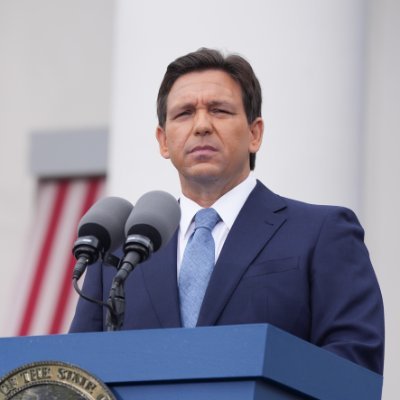
Welcomed @POTUS to Florida today for a tour of Alligator Alcatraz, Florida’s one-stop shop for staging illegal aliens for deportation.
Alligator Alcatraz can stage 3000 detainees for efficient removal—and has a two-mile runway to allow federal aircraft to transport illegal aliens directly out of the country. We got this facility up and running in a matter of days, enhancing the ability of DHS to remove detained illegal aliens as expeditiously as possible.
Alligator Alcatraz is a milestone in our effort to help the Trump Administration fulfill its mandate to the American people and restore our nation’s sovereignty.

Electorate retweeted

7/2- MS-13 Gang Member on the run in Dallas, Texas, was located by USBP agents.
The Salvadoran national attempted to evade agents and ultimately drove himself home. Upon arrival at his home, agents were met with three adult relatives who ambushed and assaulted the agents. With the assistance of FBI and ICE, all subjects successfully exited the residence and USBP agents determined they were ALL illegally present in the country. The Salvadoran national plus two adult females and one adult male will be charged with assaulting a federal agent and put into removal proceedings. BONUS: the17 year old juvenile who punched USBP agents will face state charges for assault on an officer and placed in removal proceedings as well.
We will continue to work with our partners to deliver consequences to ANYONE that assaults our agents.


Electorate retweeted

An illegal alien in California was granted a restraining order by a San Francisco federal judge, barring ICE agents from taking him into custody.
Two weeks later, he was arrested for a string of crimes—including attempting to steal a car with a 3-year-old child inside.
Electorate retweeted

BULL. You’ve got waivers for criminal offenses sprinkled throughout your amnesty bill. Waivers for misdemeanor convictions, waivers for controlled substance violations, waivers for controlled substance trafficking, waivers for prostitution and commercialized vice, waivers for alien smuggling, and waivers for unlawful voting. Stop lying.
Electorate retweeted

I asked one of Kilmer Abrego Garcia's lawyers if it's a good thing that President Trump secured the border.
He proceeded to claim that our borders were secure under the Biden admin.
And that he has no idea if there are fewer illegals in America today than under Biden.
Electorate retweeted

ICE has arrested more than half a million people since President Trump returned to office, and nearly 40 percent do not have a criminal record.
As of Aug. 6, ICE had detained more people without a criminal record this year than in all of 2025. wapo.st/45V4GP5

Electorate retweeted

Why did Massie lose tonight?
Massie went from principled libertarian during COVID, to GOP leadership lapdog under McCarthy, to anti-Trump Epstein obsessive in 2025 after tweeting about that issue a whopping three (3) times in the decade prior. The nail in the coffin for him was voting against OBBB in 2025 because, according to Massie, it did too much to secure the border.
Trump mercilessly trashed Massie in 2020–calling him a “disaster” for America and Kentucky and saying he should be thrown out of the GOP entirely—but Massie easily swatted that away and won 81-19, so you can’t say he only lost because of Trump. He went toe-to-toe with Trump on COVID in 2020 and won overwhelmingly.
Massie lost because he went from being perceived as a quirky but lovable nerd who seemed to genuinely believe everything he said, to looking like a clout-chasing influencer who cared more about getting TV time with Democrats on an issue he clearly never cared about until five minutes ago than he did about representing his voters.
We’ll never know what caused the apparent personality change—maybe it was the death of his wife, maybe it was the McCarthy race followed by McCarthy’s ouster, or maybe it was a desire for notoriety or media acclaim and a lucrative podcasting career outside of Congress—but the drastic change was undeniable, as was the seeming lack of interest in much of anything happening in Kentucky.
Blame Trump, blame Israel, blame Epstein, blame the tragic death of a spouse, I don’t care. But you cannot just wave away 2020 Massie going face-to-face with the Trump machine and winning in a rout only to get smoked six years later.
Massie’s voters didn’t really change all that much, but he did, and they noticed.
Electorate retweeted

Commodities are getting hit pretty hard alongside the broader equity market as the surging U.S. dollar sucks liquidity out of the global financial system. For those that follow me, I've been saying this from some time that there was risks if the dollar strengthens too quickly.
The issue is that dollar-denominated debt becomes more expensive to service, financial conditions tighten, and investors are forced to raise cash, reduce leverage and sell assets. It becomes less about fundamentals and more about liquidity.
One thing I've learned over the years is that market leverage doesn't necessarily tell you when a correction will happen, but it tells you a great deal about how painful that correction could become. For some perspective, U.S. margin debt has surged to approximately $1.45 trillion, equivalent to roughly 58% of U.S. currency in circulation and 6.2% of M2 money supply. That's an extraordinary amount of leverage in the system, and when markets start moving against investors, it can accelerate the selling pressure.
Unfortunately, even gold isn't immune. During a liquidity-driven selloff, investors often sell what they can, not necessarily what they want to. Gold can become a source of cash to cover margin calls and offset losses elsewhere.
The irony is that the very forces driving the dollar higher could eventually create the conditions for its reversal. The U.S. government and broader financial system have become increasingly reliant on negative real interest rates to help manage an enormous debt burden. A prolonged dollar-driven liquidity squeeze makes that increasingly difficult, raising the risk that something eventually breaks and forces central banks to step in with lower rates and additional liquidity.
That's when things can get interesting for gold. It may get sold during the initial panic, but if policymakers respond by driving real interest rates back into negative territory, the combination of easier money and renewed currency debasement concerns could send gold sharply higher.
In other words, the same liquidity squeeze hurting gold today could ultimately create the conditions for its next rally.
We're watching all of this closely and remaining deliberate about managing exposure through what continues to be a challenging market environment through to the end of the year.
Electorate retweeted

في إنكشاف جديد، تدخلت #باكستان لمحاولة منع #إيران من مهاجمة دول #الخليج العربية في اليوم الأول للحرب، قبل أن يطلق الحرس الثوري الإيراني ترسانته من الصواريخ والطائرات المسيّرة ضد جيران إيران العرب. وزير الخارجية الباكستاني إسحاق دار اتصل بنظيره الإيراني عباس عراقجي في 28 فبراير 2026 وحث طهران على عدم الرد باستهداف الدول العربية ردا على إسرائيل والولايات المتحدة، مقترحا أن تتفادى الرد العسكري.
وكشف دار في مقابلة مع @euronews أنه قدم هذه النصيحة، التي وصفها بأنها "نصيحة أخوية"، قبل أن تبدأ طهران هجماتها على جيرانها العرب.
لكن النظام الإيراني تجاهل النصيحة الباكستانية بوضوح.
وقال دار:
"في الساعات الأولى من صباح اليوم الأول للحرب، 28 فبراير، اتصلت بوزير الخارجية الإيراني عباس عراقجي، وطلبت منه التحلي بالقوة وضبط النفس وعدم الرد، لأنني كنت أخشى أن ترد إيران بمهاجمة دول الخليج، وهو ما حدث للأسف".
euronews.com/2026/11/19/new-…


Electorate retweeted

I think you have to admit that Trump is an incompetent moron. He destroyed disinflation at beginning of the year by starting a war, then he appointed an ultra-hawk Fed chair despite wanting lower rates, and he caps it off by denying chip sales to China
Electorate retweeted

🔴 If seaborne diesel exports are at their lowest since 2022, where is the oil glut?
🔴 Is the drop in diesel prices a real easing of the crisis, or just a seasonal dip?
🔴 Why are US gasoline stocks building in a season when they normally fall?
🔴 China has spare refining capacity, so why won't it use it to export more fuel?
🔴 Is the real story Japan refilling its reserves, or Saudi oil being stored beyond Hormuz?
🔴 Can government mandates raise biofuel output when droughts and feedstock shortages are cutting supply?
🔴 Why are Indian refiners racing to lock in long-term tanker charters?
🔴 Is $85–95 Brent really a new normal?
🔴 Does BMO's return to US oil and gas banking matter for the market, or mainly for BMO's reputation?
🔴 What does the collapse in the sour crude premium tell us about the diesel crisis?
🔴 Who is really shaping the climate narrative at COP31, and how did the oil industry change it?
🔴 Is Iran finding ways to get oil through the US blockade?
Daily Energy Report afalhajji.substack.com/p/dai…

Electorate retweeted

So US Central Command Commander Adm. Brad Cooper just met with MBS to discuss military cooperation right on the heels of the Houthi’s going literally ballistic. Probably nothing, but actually everything. A US led Shock & Awe is coming to Yemen’s coast to rid the Houthi threat for good. Operation Mosses is coming soon to a conflict theatre near you.


🇸🇦🇺🇸 The Houthis Strike Riyadh. The Consequences Reach Washington.
Adm. Brad Cooper @CENTCOM met Saudi leaders in Riyadh for talks on military cooperation and regional security amid escalating Houthi terrorist attacks across the region and the Red Sea.
On Nov 19, Saudi Civil Defense reported damage to several floors of a tower and neighbouring buildings in @KAFD. No injuries were reported. Reuters identified the building as PIF Tower. An attack had damaged @Aramco’s building on Nov 8. Two attacks on a civilian financial district in 11 days reveal a campaign to make economic life a target.
Cooper met Crown Prince MBS and Defence Minister @kbsalsaud as the partnership confronted that threat. The Houthis were threatening the Saudi capital while America’s regional military commander was there discussing its security.
That is contempt for international warnings. It is also an attempt to make violence speak louder than diplomacy.
The U.S. Embassy denied reports that it had been hit. But the embassy’s safety doesn’t settle the question of American security.
🔴 American interests don’t stop at embassy gates. They extend to citizens, companies, energy supplies and shipping routes whose security depends on the same region the Houthis are threatening.
On the same day, the @WhiteHouse said Trump, Putin and Xi were committed to maintaining strategic stability and international security after their talks in Shenzhen. Saudi Arabia called on the international community, including the Security Council’s permanent members, to fulfil their responsibilities.
Iran supplies the Houthis with weapons and support. China’s economic ties with Tehran and Russia’s military relationship with it give both a reason and an opportunity to act.
The Security Council has already spoken. On Oct 15, it condemned Houthi attacks & called for stronger cooperation to block weapons supplies. On Nov 12, it unanimously adopted Resolution 2837, renewing sanctions and moving towards controls on dual-use components.
Yet negotiations exposed the limits of that unity. Russia opposed restoring the terrorist designation in the text. China, backed by Russia, resisted provisions on dual-use items and the expert panel. Saudi Arabia is demanding that the Council now turn its position into firm action.
The military effort needs the same coherence. On Nov 15, Saudi-backed Yemeni forces announced redeployment from Dhubab and Bab al-Mandab to reinforce Aden and neighbouring areas while continuing operations to relieve Taiz.
Securing the government’s base and supply routes preserves the strength needed to recover territory. Restoring the legitimate Yemeni government’s authority is a Yemeni and Saudi national security priority. Securing Bab al-Mandab is an international responsibility. Lasting security requires both.
🔴 A U.S.-Saudi-led international military coalition should integrate early warning, air & missile defence, maritime protection and arms embargo enforcement into a sustained campaign to deter aggression, dismantle the Houthi terrorist militia’s military capabilities and protect civilians and trade.
Every interception matters. But a strategy that leaves the supply network intact allows the next missile to follow. Brokers, financiers, component suppliers and transport networks must face coordinated pressure that prevents the Houthis from replacing what they lose.
Support for the legitimate Yemeni government belongs at the centre of that effort. Restoring its authority would help deny the militia territory from which to threaten Saudi cities and international shipping.
Saudi Arabia is defending its people. Its partners must recognise that their own interests are exposed to the same campaign.
Cooper’s visit should produce stronger deterrence. The U.S.-Saudi security partnership should translate shared interests into coordinated action against the networks sustaining the Houthi threat.
THE HOUTHIS MUST NOT BE ALLOWED TO DICTATE THE TERMS OF REGIONAL SECURITY.

Electorate retweeted

Zarif is warning that the regime could lose its remaining advantages if it waits too long to change course.
Former foreign minister Javad Zarif warned at a November 19 book-launch event that time is passing quickly and today’s victory can become tomorrow’s defeat—remarks that read as a message to the IRGC and the regime’s decision-makers.
His central warning was simple: having the upper hand at one stage of a conflict does not mean keeping it until the end.
He cited Iran’s experience in the Iran-Iraq War, including the capture of Faw, to show how battlefield gains can be reversed. He also pointed to Armenia losing territory it had controlled for decades.
The message challenges the regime’s assumption that surviving the war means it can dictate what happens next.
Zarif recalled that Iran ultimately negotiated with Saddam Hussein despite its hostility toward him. Decisions, he argued, should serve national interests rather than personal feelings or ideological attachments.
In the current context, his remarks read as an appeal to pursue an agreement before conditions deteriorate further—not an announcement that the leadership has approved a change of course.
The contrast with the IRGC’s messaging is stark.
While Ahmad Vahidi describes a sacred “final confrontation” and promises revenge, Zarif warns that favorable circumstances are temporary and opportunities can disappear.
One message prepares supporters for continued confrontation. The other warns that refusing an exit can turn a difficult position into a worse one.
But Zarif’s influence inside the system has diminished sharply.
He no longer holds the foreign ministry or his subsequent vice-presidential position. Hardline outlets have repeatedly attacked his diplomatic proposals, while the IRGC and senior security leadership retain decisive influence over military and regional policy.
His earlier calls for a negotiated settlement drew accusations of betrayal and demands for punishment. Even advocating different tactics for preserving the Islamic Republic can provoke hostility from factions committed to confrontation.
That does not make Zarif an opponent of the regime.
He spent decades representing and defending it. His disagreement with the hardliners concerns how the system should protect its interests and survive—not whether Iranians should replace it.
This is an argument inside the ruling establishment about how to preserve power, not a break with the establishment itself.
Zarif is warning the leadership not to squander its remaining options. The danger is that those holding power would rather demand more sacrifice from Iranians than admit they need a way out.

The IRGC’s commander is framing the conflict as a civilizational clash—declaring a “final confrontation,” threatening revenge worldwide and signaling changes to the Islamic Republic’s military doctrine.
Speaking to Basij university students on November 20, IRGC Commander-in-Chief Ahmad Vahidi described the conflict as a “great and sacred jihad between truth and falsehood.”
His message was not that the fighting is over. It was that the regime intends to continue the confrontation until its enemies are defeated and driven from the region.
“Revenge is our right, and retribution is our right,” he declared, warning that those responsible for attacks would no longer be safe anywhere in the world.
He tied that threat to the killing of Ali Khamenei, the children killed in Minab and other Iranian casualties, promising continued pursuit until their blood was avenged.
This presents retaliation as an enduring commitment, unconstrained by geography—not something settled by a temporary pause in fighting.
The most consequential military statement concerned doctrine.
Vahidi said the enemy’s actions would lead to changes in Iran’s defense doctrine, with the Islamic Republic deciding what those changes would entail.
He did not specify the weapons, targets or authorization rules involved. But the statement prepares the regime’s supporters for changes in how it fights, rather than an accommodation that ends the confrontation.
The combination matters—an unfinished ideological war, an open commitment to revenge and a military doctrine under revision.
Vahidi also claimed the IRGC Aerospace Force is stronger than when the war began, with improved operational capabilities and technical achievements.
At sea, he asserted control over the Strait of Hormuz, the Persian Gulf and at least 500 kilometers beyond it, claiming enemy vessels were keeping their distance.
Vahidi claims naval dominance while the U.S. blockade chokes Iranian oil exports. Threatening tankers is not control of the Persian Gulf—and boasting about power does not put oil revenue back into the regime’s accounts.
His broader narrative was that the United States and Israel had exhausted enormous resources, failed to overthrow the Islamic Republic and were now demoralized.
Vahidi is selling survival as victory while the blockade squeezes the economy and the regime threatens its neighbors to regain leverage. Sacred-war rhetoric does not reverse those losses—it asks Iranians to endure more hardship so the leadership can avoid admitting failure.
The audience was equally important. Vahidi was addressing Basij students, part of the ideological network the regime relies on for recruitment, mobilization and internal control.
He was telling that base to expect continued struggle, not compromise.
This is how the regime sustains an endless confrontation: portray political enemies as absolute evil, present retaliation as a sacred duty and treat survival as proof that escalation works.
Vahidi is not offering an exit from conflict. He is preparing the regime’s base for its continuation—with revenge still promised and military doctrine potentially changing to support the next phase.
Electorate retweeted

Religion of peace

Electorate retweeted

Headlines you won’t read in a newsletter…

For the first time in 20 years, production-ready rare earth permanent magnets are being manufactured in America!
Made from neodymium mined in Mountain Pass mine in CA and with no Chinese equipment or other dependencies!
Huge congrats to @MPMaterials on this impressive feat!

Electorate retweeted

And just like that, odds of a rate hike in Jan, Mar, and Apr all collapsing.
Waller and Cook accomplishing with their words the intended outcome - cooling markets.
It's much easier to pivot words as oil prices come down (even without a formal end to hostilities) and inflation very likely subsides. The "talking" down of interest rates (10 yr back under 5%) also has the impact of reducing monthly payment prices for home buyers, which will help there.
Overall, cooling the market and pushing rates down just enough to avoid having to actually raise rates is the goal by the Fed governors here.

Electorate retweeted
A stark example of the Islamic Republic squandering Iranian resources: roughly $800 million spent on a handful of Russian S-300 batteries, only for Israeli strikes to destroy all four.
The systems the regime advertised as a shield for its most important sites could not even protect themselves.
One was disabled near Isfahan on April 19, 2024. U.S. and Israeli officials said the remaining three were taken out in a single night of strikes on October 25–26. Netanyahu later stated that all four batteries had been eliminated.
The critical targets were the engagement radars. Without functioning engagement radars, surviving launchers could not operate as complete batteries. Intact missile tubes are not working air defenses.
The regime spent years promoting these systems as proof of military strength. Most of its flagship imported air defense was neutralized in a matter of hours.
Iranians paid nearly a billion dollars for a shield that Israeli strikes reduced from regime propaganda to wreckage.
