

Software and initiatives for people building with AI and Web3. Bringing builders and resources together.
United States
Joined November 2025
- Tweets128
- Following41
- Followers43
- Likes111






Atumera retweeted

Distributed compute is still a good bet #dePIN
📽️ Why AI Demand Is Outrunning Compute Supply youtu.be/FGC4ofTcg2k?si=Giwg… via @YouTube


Atumera retweeted

Make sure to join the Watercooler chat
Join here: discord.com/events/423160867…
Atumera retweeted

Donated medicine only helps if you can prove each unit reached the right patient. @origin_trail putting WFH Humanitarian Aid factor therapy on TRACk is that proof layer in practice. Sanofi and Sobi treating 22k+ people is the kind of supply record the DKG is built to keep checkable. $TRAC

Medicines and science, on TRACk.
Through the World Federation of Hemophilia (WFH) Humanitarian Aid Program, Sanofi and Sobi alone donated 1 billion international units of factor therapy between 2014 and 2024, treating 22,219 people with inherited bleeding disorders in developing countries. They have committed up to 100 million IUs a year for the next five years.
At that scale, every donation has to be accounted for. #AidTrust, co-developed by BSI and Trace Labs, makes the chain visible. With the WFH, it was deployed across more than 25 treatment centres in India.
How it works on OriginTrail Decentralized Knowledge Graph (DKG):
→ Shipping, receiving, disposal and dispensing to patients are recorded as @GS1 EPCIS events
→ Some events come from existing IT systems; others are captured by warehouse and clinic staff with the AidTrust scanning app
→ The resulting trail supports product authentication, tracks utilisation and flags diversion or waste
For donors and manufacturers, it answers the question behind every donation: did it reach the patient?
Trust the source.
Case study: bsigroup.com/en-GB/insights-…
Atumera retweeted

Ho partecipato ad un hackathon (una cosa da nerd) perché chi lo ha organizzato ha visto delle cose che ho fatto e ha detto "Dai dai dai partecipa". Son stato 4 giorni davanti ad un monitor perché un'idea l'avevo e credevo fosse buona (allego la demo) vimeo.com/1228648577

Atumera retweeted
Agents read files, run shell commands and hit the network, mostly unwatched.
@umanitek Blackbox checks each action first and blocks risky ones. One command covers every agent on the machine.
Add an @origin_trail DKG record of what the agent did and you can audit it. $TRAC

Atumera retweeted
Small build, but this is the $TRAC use I like. CueBound makes game sound effects with a Livepeer agent and stores the approved sound brief on the @origin_trail DKG, so a fresh session can pull it back and verify it instead of guessing. Hackathon 2nd place, testnet for now 🔊

I've been looking at CueBound, a game audio demo built with Livepeer and OriginTrail. The bit I like: you can add a new sound without losing the brief or changing sounds you've already approved. Still on testnet.
github.com/Timidan/cuebound


Atumera retweeted

We are now entering into an era where any product can be created exactly to a consumer's preferences & needs.
I vibe-fabricated a dog door with a wifi-controlled lock, perfectly to the specifications & design of my house.
I know nothing about metal fabrication or electrical engineering.
It's now getting manufactured and delivered in 2 weeks -- for almost the same cost if I bought a mass-produced item off-the-shelf.
Atumera retweeted

Built Wanderkin for the @Livepeer x @Embody_Net hackathon, and it won $1,000 🏆
Snap a photo of any object around you and it turns into a 3D world you can actually play in.
Here's how it works 👇
Atumera retweeted
Try it with your own stuff 👇
wanderkin-tau.vercel.app
(desktop only for now, keyboard + mouse)
Huge thanks to @Livepeer and @Embody_Net for hosting 🙏
Atumera retweeted

Give one creative brief to a media team. Make sure every role improves the next version.
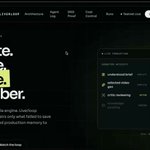
I built 𝐋𝐈𝐕𝐄𝐑𝐋𝐎𝐎𝐏 for the @Embody_Net Livepeer Agent Hackathon, submitting to the Livepeer Agent + OriginTrail DKG track.
LiverLoop is an autonomous media production loop:
Generate → Evaluate → Improve → Remember.
One Director turns a creative brief into a production plan by discovering the capabilities currently available through Livepeer Agent.
The Orchestrator executes the plan. The Critic evaluates the finished artifact against the brief. If something fails, the Director chooses a targeted retry instead of regenerating everything blindly.
The loop can coordinate video generation, image generation, audio, FFmpeg transformations, trimming, muxing and subtitle overlays. Every capability call uses authenticated server-side access, with provider fallbacks and key rotation for reliability. The browser never receives the credentials.
Livepeer returns real media artifacts, URLs and estimated costs. LiverLoop stores them, probes the files with mediainfo, checks their actual format, duration, dimensions and streams, then makes the final artifacts playable and downloadable from the dashboard. Previous versions stay preserved instead of being overwritten.
The system also checks generated footage for unwanted baked-in text before allowing a version to pass. When a run completes, LiverLoop packages the brief, plan, artifacts, evaluations, retry decisions and lessons into a knowledge asset. OriginTrail DKG stores that memory so future runs can retrieve previous lessons and improve their next plan.
How to use it:
1. Open the app and start a run
2. Describe your brief: format, duration, audience, style and CTA
3. Watch the loop plan, generate, evaluate and improve in real time
4. Download the final artifact, or browse earlier versions
5. Open Provenance to audit every event, cost and decision
> One Director.
> One Critic.
> One orchestration loop.
> A network of media capabilities.
> Downloadable artifacts.
> Explainable retries.
The key word is Generate. Evaluate. Improve. Remember.
Live app: liverloop.world
GitHub: github.com/Saber1Y/LiverLoop
full demo: youtu.be/oBlLtjnV4uw
Built with Livepeer Agent, OriginTrail DKG, Next.js, FFmpeg and mediainfo.
#Livepeer #OriginTrail #AI #GenerativeAI


Atumera retweeted

Myself and @floozi_official built a Video generating AI for the @Embody_Net & Livepeer Agent Hackathon.
It was a pleasure working with you @floozi_official 👏🫡

Built this with my teammate @styledbyjamz for the @Embody_Net × Livepeer Agent Hackathon
We took the storytelling idea behind The Last Memory and turned it into an interactive media experience, combining narrative, visuals, and Livepeer Agent.
Proud of what we created together. 🩷
#Livepeer #Atumera #Hackathon #AI #InteractiveStorytelling
Atumera retweeted

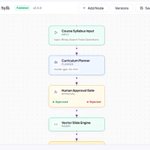
A few days ago, George (@Embody_Net) reached out to me about the Livepeer Agent Hackathon, and I decided to actually build an n8n workflow around Livepeer Agent rather than just read the docs.
The idea sounded simple:
Telegram
→ receive a product image + brief
→ n8n
→ Livepeer Agent
→ image-to-video
→ return the finished video
What started as a straightforward automation turned into a pretty interesting exercise in debugging AI infrastructure.
The first issue I hit was media handoff.
I initially passed the Telegram-hosted image URL directly into the image-to-video request.
The request reached the provider, but the provider rejected the asset with:
file_download_error
“Failed to download the file. Please check if the URL is accessible…”
So I changed the architecture.
Instead of asking the model provider to fetch the Telegram file:
Telegram
→ download image into n8n
→ upload image to Livepeer
→ receive a Livepeer-hosted asset URL
→ pass that URL into the video generation request
That worked.
Then I hit MCP surface routing.
I called run_capability on the creative MCP surface.
The server rejected it before execution and explicitly told me that run_capability was available on the raw surface:
/api/mcp/raw
So now different parts of the workflow had to understand different MCP surfaces rather than treating the Agent as one uniform endpoint.
Then authentication became another interesting layer.
I created credentials and tested authenticated requests, but the deployment I was hitting returned:
“This deployment is keyless — Livepeer Agent does not accept an API key here…”
So I removed the Authorization header and went back to the keyless connection for that deployment.
At that point I realized I was no longer debugging an “AI video generation” problem.
I was debugging an integration contract.
The next question was:
What exactly does create_media return?
Because video generation is asynchronous, the workflow isn't simply:
create_media
→ video
It becomes something more like:
create_media
→ job
→ wait
→ get_create_media(job_id)
→ inspect status
→ wait
→ retrieve final asset
And this is where things got particularly interesting.
My workflow reached the polling stage, but the data coming back through MCP wasn't giving my parser the job identifier in the form I expected.
I could have kept guessing.
Instead, I changed the workflow.
The latest version is intentionally a diagnostic pipeline whose job is to capture the raw create_media response before I write another line of polling logic around assumptions.
Then I hit another boundary.
I tried exact model dispatch with:
run_capability(ltx-25-i2v-fast)
and received:
“Demo budget store unavailable — try again shortly.”
The response also explicitly said the request was refused before dispatch and that nothing was billed.
So the provider wasn't even reached in that attempt.
This is the part of AI infrastructure engineering that I find fascinating.
The hard part isn't always the model.
The hard part is everything around the model.
For an automation system like n8n, the actual integration contract is:
authentication
+
MCP surface discovery
+
tool schemas
+
binary media handoff
+
async job lifecycle
+
job identifiers
+
polling semantics
+
asset URLs
+
error semantics
Every one of those has to be predictable if the workflow is eventually going to run unattended.
And that changes the question I'm asking.
I'm no longer asking:
“Can Livepeer generate a video?”
The more interesting question is:
“Can an external automation system reliably treat Livepeer Agent as a deterministic media execution layer?”
That's what I'm testing.
I'm deliberately not hiding the failures behind a polished demo.
I'm logging the actual runtime errors.
I'm changing one integration boundary at a time.
I'm separating provider failures from MCP failures.
I'm separating MCP failures from n8n expression/state problems.
And I'm refusing to assume what an API returned until I inspect the actual response.
That's how I prefer to debug systems where multiple services are involved:
Observe first.
Normalize second.
Automate third.
There are also signs that this area is still actively evolving. Livepeer's own Agent documentation describes multiple MCP surfaces, asynchronous media jobs, model selection behavior, and the need to inspect returned capability/job information rather than assuming a model or result. The documentation also explicitly describes run_capability as the exact-dispatch path.
So my takeaway so far isn't “Livepeer doesn't work.”
It's more nuanced:
The underlying media-generation capability is interesting.
But when you integrate an AI media agent into an external orchestration system, the documentation needs to make the entire runtime contract easy to follow:
auth
→ endpoint/surface
→ tool
→ schema
→ async lifecycle
→ output contract
→ error handling
→ billing behavior
That's the part I'm validating right now.
George, thanks for reaching out and pushing me to actually build this instead of just reading about it.
I'm still debugging the workflow, and the next checkpoint is simple:
Capture the real create_media response.
Identify the exact job lifecycle.
Wire the polling layer against the actual response.
Then finish the end-to-end Telegram → Livepeer → video automation.
I’ll share the final architecture once I have it running.
#Livepeer #LivepeerAgent #AI #AIVideo #MCP #n8n #Automation #AIEngineering #GenerativeAI #BuildInPublic #DevTools #AIAgents


Atumera retweeted

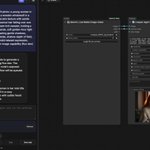
Quick 1-min Demo for @workflow_xAI - A Thread🧵
the problem, Workflow [powered by @Livepeer] solves for me is removing the tedious effort of jumping through different tabs, for different tasks.
sometimes, i have to resize/extend a reference image, sometimes i have to re-imagine or recreate a certain shot/frame, sometimes it's getting an optimized prompt for a particular model, but by bringing all of that into one place.
i have elliminated a chunk of time-wasting in my process, which optimizes my workflow, hence the name 'Workflow'. and i believe it can do the same for creators like me.
here is a quick one minute walkthrough, sped up, but i will post the full versions in the threads below, so you can see it in real time.
