

Sustainability, communications, e-biking, Mother of Twins, views are my own.
Auckland City, New Zealand
Joined March 2009
- Tweets6.8K
- Following2.1K
- Followers770
- Likes9.2K







I got excited for a minute that Point Chev would get a new name. Rangi-mata-rau? stuff.co.nz/nz-news/35030243…
85
Emily retweeted

The severity is up 55% since the 80s. Climate change is the cause.
What causes air turbulence and how worried should passengers be? theguardian.com/business/art…


Emily retweeted

Round 1 of #WorstXmasTrad - vote for the Christmas Tradition one you dislike the most for the 16 polls.
I tried to group similar nominations where possible.
Please share this tweet - I will pin it and hang all polls off this one.
#BestXmasTrad to follow early in 2024


Has anyone watched this Robbie Williams doco all the way through? It feels like hours of him being sad about being hugely successful and popular while traveling the world with celebrities? 🤷♀️
1
167

Emily retweeted

When traffic cones along a road in New Zealand began mysteriously moving around, the Transport Agency set up a CCTV to pin down the culprits
It turned out a Kea parrot moved them to get attention from humans & get fed
[read more: buff.ly/3nSt01o]
teapaw.org/rod_mallo/status/16440…


Emily retweeted
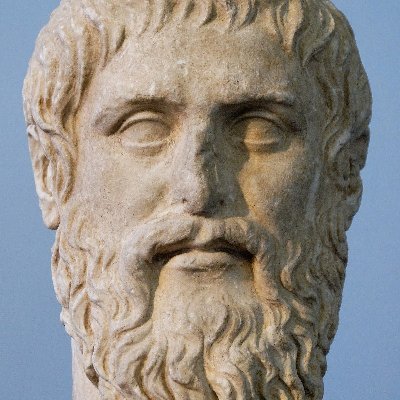
The football star Kylian Mbappé was offered $1 billion to join the Saudi Arabian team Al-Hilal.
But that wouldn't have made him even nearly the richest athlete in history.
Because there was a Roman chariot racer called Gaius Appuleius Diocles who earned more than $15 billion...
Chelsea FC in England have spent over one billion dollars on new players in the last year alone, and Cristiano Ronaldo is currently earning $200 million per year at the Saudi club Al-Nassr. Has football gone mad? Is it right for athletes to earn such exorbitant wages?
Let's leave the politics of that question to one side and simply observe that, as with so much else, there are historical precedents — and one in particular: Gaius Appuleius Diocles.
Chariot racing was the most popular sport in Ancient Rome, with races held all over the empire — there are ruins of huge stadiums around Europe. The crowds flocked to watch their favourite teams or racers, and the money came pouring in.
Gaius Appuleius Diocles was born in the province of Lusitania, modern-day Portugal, in 104 AD. That's where many charioteers came from — not just those who raced in Rome itself, but right across the empire — because it was where the fastest racehorses on the continent were bred.
And such was the career that Gaius pursued; he made his racing debut in Rome, which then had a population of well over one million and was the richest and largest city on earth, at the age of just 18.
There were four "factiones", sort of like teams, in Ancient Roman chariot racing: Green, Red, White, and Blue. Each had their own stables, managers, breeders, agents, patrons, sponsors, and racers. These were large, professional organisations with hordes of fans and fierce rivalries. Even the Emperor himself usually had a favourite faction.
Gaius joined the Whites and won his first race after two years. He stayed with them for another four years. Then he moved to the Greens, where he had a torrid run of poor performances and a serious injury, followed three years later by a move to the Reds. There he remained for fifteen years, winning over one thousand races, before retiring at the age of 42 to a lovely little town called Praeneste.
Where did Gaius race? At the Circus Maximus in Rome, now a ruin but once a racing stadium which could hold more than 150,000 spectators. It's hard to imagine the atmosphere, with the thundering of the horses drowned out by the roaring of the crowds and the sound of splintering chariots...
We know much of this because of two monuments made in Gaius' honour after his retirement. They also include the rather impressive statistics of his racing career — 4,257 starts and 1,463 victories — and the prize money he won: a grand total of 35,863,120 sesterces.
These earnings are estimated to have been, in modern terms, about $15 billion, which would make him by far the richest athlete in history. His fortune was equivalent to about 1.5% of the Roman annual state expenditure, which would be like an American sportsperson being worth over $100 billion.
But this is not merely an interesting factoid. What does it tell us about Ancient Roman society during the Empire that regular people had enough time, and that there was enough money in the system, to support such a wealthy sporting scene?
Alas, if you don't much like sports and wonder why some people get so worked up about athletes running round a field and kicking a ball... there's also a Roman precedent for that. Here's what the lawyer Pliny the Younger wrote to a friend in the year 98 AD:
"The Races were on, a type of spectacle which has never had the slightest attraction for me. I can find nothing new or different in them: once seen is enough, so it surprises me all the more that so many thousands of adult men should have such a childish passion for it."
Whether sports stars should earn the money they do is a complicated question. But, in any case, Kylian Mbappé has a long way to go before he's on the level of Gaius Appuleius Diocles...

