

An open-access journal, publishing high-quality original research across engineering microbes, microbial communities, microbial cellular, and enzymes.
Qingdao, China
Joined November 2021
- Tweets81
- Following1.1K
- Followers213
- Likes6




Cross-kingdom noncoding RNA regulation facilitates Nosema bombycis proliferation by modulating a host miRNA and parasite gene axis.
doi.org/10.1016/j.engmic.202…
#NoncodingRNA #Microsporidia #HostPathogenInteraction
Graphical abstract: Pengcheng Zhang et al. | CC BY 4.0

A pathway-independent three-module self-induced system enables sequential gene expression, improving 3-HP production to 7.0 g/L.
doi.org/10.1016/j.engmic.202…
#MetabolicEngineering #SyntheticBiology #Biomanufacturing
Graphical abstract: Yaping Gao et al. | CC BY 4.0

A fermentation-driven strategy enhances nitrogen removal by redirecting carbon toward bioavailable electron donors and strengthening carbon–nitrogen coupling.
doi.org/10.1016/j.engmic.202…
#Denitrification #WastewaterTreatment
Graphical abstract: Ji Qi et al. | CC BY 4.0

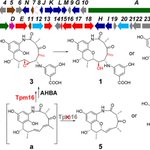
Genome mining of Streptomyces sp. LR53 reveals seven novel tropansamycins, including compounds active against plant and human pathogens.
doi.org/10.1016/j.engmic.202…
#GenomeMining #NaturalProducts #AntibacterialActivity
Graphical abstract: Haotian Wang et al. | CC BY 4.0

Our latest issue is out!
On the cover: Fuad Ale Enriquez, Stephen J. Callister et al. quantify methanogen robustness under bioprocess perturbations and uncover stress-specific proteomic responses relevant to biomethanation.
doi.org/10.1016/j.engmic.202…
#Proteomics #Biomethanation

Researchers identify a small heat shock protein that improves the thermotolerance of Bacillus thermoamylovorans, enabling more efficient PET degradation at elevated temperatures.
doi.org/10.1016/j.engmic.202…
#PETDegradation #MicrobialEngineering #Biotechnology

New in @EngMicroSDU : RAMPAGE enables continuous genome-wide diversification in Pichia pastoris, supporting strains with improved methanol tolerance and thermotolerance. doi.org/10.1016/j.engmic.202… #SyntheticBiology #PichiaPastoris #StrainEngineering
How do phages recognize Bacillus subtilis?
Researchers characterize three B. subtilis phages and identify wall teichoic acid as a key receptor determinant for phage recognition and infection.
doi.org/10.1016/j.engmic.202…
#Bacteriophage #PhageBiology #BacillusSubtilis #Microbiology
Genetically encoded biosensors are advancing high-throughput screening of microbial cell factories by linking product synthesis to detectable outputs.
doi.org/10.1016/j.engmic.202…
#SyntheticBiology #Biotech #MicrobialCellFactory
From mevalonate accumulation to downstream lactonization, this review outlines chassis selection, metabolic engineering, and fermentation strategies for microbial mevalonolactone production. doi.org/10.1016/j.engmic.202… #SyntheticBiology #GreenChemistry
PE biodegradation review covers degradation efficiency, microbial and enzymatic mechanisms, plus synthetic biology and machine learning tools. Read the paper: doi.org/10.1016/j.engmic.202… #Bioremediation
🎉🎉 We are delighted to announce that Engineering Microbiology has received its first Impact Factor of 6.1 and a 2025 CiteScore of 10.1.
Thank you for your support and for being part of our journey.
#EngineeringMicrobiology #Microbiology #ImpactFactor #CiteScore
🔬 Phase variation in Bacteroides fragilis reveals a microbial "evolutionary arms race"—host genetic switching drives phage susceptibility and shapes long-term coexistence.
Read more:
🔗 doi.org/10.1016/j.engmic.202…
#GutMicrobiome #PhageBiology #MicrobialEvolution
🍠 How does resistant starch type 5 impact your gut? New review explores its modulation of gut microbiota for digestive wellness.
📰 Engineering Microbiology | DOI: 10.1016/j.engmic.2025.100250
#GutHealth #Microbiome #ResistantStarch
🌟New bacterial defense revealed! Shandong University researchers uncover how toxin-antitoxin systems fine-tune Hachiman antiphage defense—balancing fitness cost vs viral protection.
DOI: 10.1016/j.engmic.2026.100254 #PhageDefense #ToxinAntitoxin #EngineeringMicrobiology
🔬 New insights into yeast mating! Nanjing Tech University researchers reveal how PRE element arrangement controls Ste12 oligomerization, regulating gene expression.
📰 Engineering Microbiology | DOI: 10.1016/j.engmic.2026.100249
#Yeast #SyntheticBiology#EngineeringMicrobiology
New in @EngMicrobio: E. coli guanidinium exporter Gdx doubles as cesium efflux pump
Strain ZX-1 tolerates >700 mM Cs⁺ via 20-bp deletion driving constitutive gdx expression. Gdx mediates Cs⁺/H⁺ antiport—a novel mechanism for radionuclide bioremediation.
doi.org/10.1016/j.engmic.202…
🔬 Chinese Academy of Scientists engineered 17 aspertetranone derivatives via pathway reprogramming in A. oryzae. Compound 6 shows antibacterial (MIC 4.50 μg/mL) & antifungal activity; Compound 11 demonstrates broad-spectrum anticancer effects.
Read more: doi.org/10.1016/j.engmic.202…
The latest issue in Engineering Microbiology is published!!! Please Click this link👉sciencedirect.com/journal/en…… to check the latest research and review articles.
