

Providing a predictable, on-chain fundraising protocol to mission driven organizations.
Joined October 2025
- Tweets530
- Following326
- Followers61
- Likes33

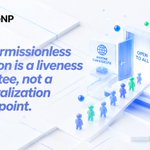


When an Impact Protocol cohort launches, its nonprofit beneficiaries and distribution percentages are permanently defined in the smart contracts.
That means no administrator, including EvolveNP, can later replace beneficiaries, change their allocations, or redirect their distributions.
This is an intentional part of our design.
Rather than asking nonprofits to trust that funding decisions won't change, we're building infrastructure where those commitments are enforced by code.
The result is a transparent, predictable funding structure that nonprofits and participants can independently verify.
Automation shouldn't come at the expense of safety.
Our Impact Protocol is designed to automate recurring funding for nonprofits, but that doesn't mean executing trades regardless of market conditions.
Every scheduled conversion is subject to predefined safeguards, including liquidity, pricing, and slippage checks.
If market conditions fall outside acceptable parameters, the system is designed to delay execution rather than force an unfavorable trade.
Because automation should remove the need for manual intervention, not the safeguards that protect the process.
After a successful funding cycle, the Treasury holds fewer tokens. When its balance drops below 30% of supply, the Impact Fee resumes on subsequent trades.
Collect below the threshold. Stop at the threshold. Distribute from reserves. Resume when the balance falls.
Stopping the Impact Fee doesn't stop nonprofit funding.
During scheduled funding cycles, the Treasury can convert 2% of its Cohort-token holdings into USDC for its nonprofits, when safety checks permit.
Those distributions use reserves already collected.
Charity tokens have long used transaction fees to fund their causes. But in many models, those fees continue collecting regardless of how much funding the project has accumulated or directed toward its cause.
We took a different approach: a fee that turns off automatically.
Every Cohort in EvolveNP's Impact Protocol collects a 1% Impact Fee on buys and sells to build its Protocol Treasury.
Once that Treasury holds at least 30% of total token supply, the fee automatically shuts off. It's a rule established at launch.
What happens when the person managing a nonprofit’s wallet leaves?
That matters when you’re building a protocol whose beneficiary addresses cannot change after launch. The organization may receive funding for years. Its staff and board may look very different along the way.
Every nonprofit beneficiary in an EvolveNP Cohort must use a Safe multisig wallet, set up before deployment.
This allows the organization to share responsibility for its funds through multiple approvals. With the required approvals, it can also add or replace authorized signers without changing the wallet address.
When a treasurer leaves or responsibilities change, the nonprofit can update who manages the wallet. The protocol continues sending USDC to the same address.
We cannot redirect that funding to a different wallet. The nonprofit can manage who is authorized to access it.
Fixed beneficiaries should not mean being tied forever to the people who happened to work there on launch day.
🤖 Made with AI

Charity tokens showed that Web3 communities will rally around real causes. But each project built its own rules for fees, treasury decisions, beneficiaries, and reporting.
You could love the mission but not trust the token. Or trust the token’s design but feel nothing for the mission. Finding a cause you connected with meant evaluating another project’s rules all over again.
We’re standardizing Impact Tokens through the Impact Protocol: one core funding structure reused across missions. Each Cohort has its own community and verified nonprofits. Beneficiaries and allocations are fixed at deployment, and USDC distributions are visible onchain.
As new missions launch, the core funding rules stay the same. What you learn about how one Cohort funds its nonprofits carries over to the next.
Know the rules. Verify where the funds go. Choose a mission you believe in.
We are excited to announce that we have officially joined @stofdn as a Corporate Founding Member! 🎉
We’re looking forward to connecting with the broader tokenized asset ecosystem and sharing how we’re applying onchain infrastructure to nonprofit funding and philanthropy.
A big step for EvolveNP, and we’re excited for what’s ahead! 🚀
🤖 Made with AI

A meme can bring thousands of people together. They give it an identity, build a culture around it, and keep it alive through their participation.
That ability to turn a shared idea into a community is powerful. What could it do for a cause those people believe in?
We’re building the Impact Protocol to connect that community activity to nonprofit funding.
Each community has a token tied to a mission. Trading activity generates an Impact Fee, which accumulates in its Treasury. Under preset conditions, funding cycles convert a fixed portion of those holdings into USDC for verified nonprofits.
People get a mission to rally around. Nonprofits get an additional source of funding. And the community can verify where those funds go.
That’s what we’re building Impact Tokens for: communities whose activity can help change something beyond the market.
Before trusting any token, ask: who can change its rules after launch?
If an admin can replace the contract code, they can rewrite the system people joined. The fees, transfer rules, and control over funds can all change after you’ve decided to participate.
So we built a narrowly limited emergency process for updating approved Uniswap endpoint addresses.
It requires preset failure conditions and a third-party co-sign. The permission extends only to those integration addresses. It does not unlock the core contracts for upgrades.
The fee, funding-cycle rules, nonprofit wallets, and allocations remain fixed throughout the repair. Once the connection passes the required checks, normal operation can resume.
We designed the protocol to limit how much the community needs to trust us, while keeping a way to respond if an external integration fails. Fixing that connection should never require giving us control over everything else.
Nonprofit funding should not depend on someone deciding when treasury assets should be sold or where the proceeds should go.
That kind of discretion creates uncertainty, even when the people controlling it have good intentions.
We deliberately take those decisions out of the operating process. Each nonprofit funding cycle converts a fixed 2% of the Protocol Treasury’s Cohort Token holdings, and the resulting USDC is distributed to predetermined nonprofit wallets according to fixed splits.
Chainlink Automation initiates the cycle when the required timing and market conditions are satisfied. The contracts enforce the amount, conditions, recipients, and allocations.
No one wakes up and decides that today is a good day to sell. No administrator can redirect the proceeds somewhere else.
Automation is not just a convenience here. It is what turns nonprofit funding from a discretionary treasury decision into a predefined protocol function.
🤖 Made with AI

EvolveNP’s earliest model was one nonprofit, one token.
The connection was direct, but it tied the organization too closely to the token. We wanted nonprofits to remain beneficiaries of the protocol rather than participants in token operations.
This separation is designed to reduce the token-related legal, compliance, and operational burden placed on nonprofits while creating a broader community around a shared cause.
It also allows funding to reach multiple small and midsized organizations that traditional fundraising can often overlook.