

An official journal of @FEBSnews devoted to original articles and reviews in the molecular life sciences. Posts by the editors.
Cambridge, UK
Joined November 2010
- Tweets6.2K
- Following1.6K
- Followers3.5K
- Likes3.4K






Pinned Tweet
🎉 We are thrilled to share our newest collection: Biochemistry & beyond 🎉
Through our commitment to publishing rigorous, high-impact research in all aspects of the molecular life sciences, the journal brings together diverse communities.
🔎To get you started on your Biochemistry & Beyond journey with us, explore our inaugural collections on:
🪴Plants & biotechnology,
🐁Organismal biology,
🫀Cardiobiology,
🔬 Developmental biology & Stem cells,
🧬RNA biology & epigenetics.
Explore our newest collections, here ➡️ buff.ly/MFwRpDl
🚀 At The FEBS Journal, biochemistry is the starting point – not the limit!
#BeyondBiochem

The FEBS Journal retweeted

#researcherspotlight Dr. Shikha Malik @malik_shikha from Dr. Rohan Khadilkar @RohanKhadilkarr lab at ACTREC Mumbai @ACTREC_TMC talks about her work on "Early-Life Aging Pathways Shape Long-Term Gut Health in Drosophila" @FEBSJournal #aging biopatrika.com/academia/rese… via @biopatrika

The FEBS Journal retweeted

How does tumor educate the innate immune cells? Does this conditioning potentiate metabolic dysfunction? Is this a bidirectional crosstalk? We answer all these Qs:
febs.onlinelibrary.wiley.com…
Congrats to the authors!!
@biopatrika @FEBSJournal @FEBSnews

The FEBS Journal retweeted

Life relies on phosphate, but how did that dependency begin? Perhaps the answer lies deep underwater.
Read more in "Hydrothermal origin of metabolic phosphorylation" @FEBSJournal @FEBSnews
#OriginOfLife #Evolution #Metabolism
doi.org/10.1111/febs.70737

🩸 Whilst best known for regulating development and metabolism in tissues of endodermal origin, the nuclear receptor LRH-1 (NR5A2) is emerging as an underappreciated but powerful player in immune-mediated diseases and blood cancers.
🎯 This Mini Review in Issue 20 of The FEBS Journal highlights how targeting LRH-1's tissue-specific pathways could unlock selective, highly targeted therapies for leukemia and immunopathological diseases ⬇️
📕 From hepatic to hematopoietic: LRH-1's expanding cellular repertoire to the immune system
📖 The nuclear receptor LRH-1 is a well-characterized regulator of endodermal tissue. Yet, increasing evidence indicates that LRH-1, although expressed at low levels, is also a critical regulator of the hematopoietic system. LRH-1 regulates the immune system by contributing to immune cell-specific functions. Consequently, its deregulation promotes the onset and progression of immune cell-mediated diseases and inflammation and even hematopoietic cancer.
✍ Lukas Meisinger, Alice Wiedmann, Rayan Hassan M. Elshikhidriss, Thomas Brunner
🏛️ University of Konstanz, University of Khartoum
Read this brilliant review article here ➡️ buff.ly/I8gVqJV
#LRH1 #leukemia #immunopathology #hematopoieticsystem #nuclearreceptors

🚀 Our Issue 20 is now online, packed with fascinating research from across the life sciences!
This new issue features:
🦠 A Review article exploring the effects of GLP-1 agonists on the gut microbiota in type 2 diabetes.
🧫 A Mini Review article dissecting the role of the nuclear receptor LRH-1 in hematopoietic and immune system regulation, highlighting how its deregulation promotes the onset and progression of immune cell-mediated diseases.
🧩 An Editor's Choice article investigating the interplay between AMPK and ER stress, putting Bip1 and Erd2 under the spotlight, accompanied by an insightful Commentary.
🍄 Additionally, two exciting Original Articles delving into the fungal bioluminescence pathway and proposing novel key players.
📚 And a diverse collection of outstanding original research across the life sciences!
Discover the full issue here ➡️ buff.ly/TN747Ag
#GLP1 #microbiota #hematopoiesis #ERstress #AMPK #bioluminescence

The FEBS Journal retweeted
Delighted to share our recent publication on tumor - innate immune crosstalk during cancer cachexia out now in @FEBSJournal and led by @UjjayitaC my PhD student.
Heartiest congrats to the authors 🎉
@biopatrika @ACTREC_TMC Link: febs.onlinelibrary.wiley.com…

🧬 We look forward to attending the EMBO-EMBL Symposium ‘The complex life of RNA’ in Heidelberg next week.
💬 Please come and meet The FEBS Journal Editor, Yeliz Yılmaz. We'd be delighted to connect and discuss great science with you!
#EESRNA #FEBSPress #EMBLEvents

📣 Issue 19 is now online!
🔎 Discover our latest collection of Original Articles, Reviews, Viewpoints, and Commentaries featuring cutting-edge advances across molecular, cellular, and structural biology:
🧩 An insightful Review dissecting S6K1 regulation and pivotal role of mTOR complexes 1 and 2.
🧠 A Viewpoint by Erol and colleagues, exploring how high density multi-electrode (HD-MEA) systems and single-cell electrophysiology enable complex network analysis in amyotrophic lateral sclerosis (ALS).
🔬 An Editor’s Choice article in which Schäfer et al. integrated MALDI-MSI with LCM–LC-MS/MS data to spatially resolve epigenetic atlas of histone proteoforms in mouse models of Rett syndrome.
Check out our new issue here ➡️ buff.ly/ej23jJh
#mTOR #ALS #Rettsyndrome #PACS1syndrome #tubulin

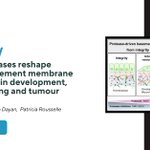
✂️ As a part of our Special Issue on Extracellular Matrix—Proteases Crosstalk, Legendre and colleagues discussed how a shared protease- and extracellular matrix (ECM)-based machinery dynamically remodels laminin- and collagen IV-rich basement membrane (BM) during development, wound repair, and cancer invasion, emphasizing therapeutic strategies to restore BM integrity.
📕 When proteases reshape barriers: Basement membrane remodelling in development, wound healing and tumour progression
📖 Basement membrane (BM) homeostasis relies on a balance between integrity, controlled remodelling and pathological degradation. Increased protease expression beneath the BM, along with reduced levels of endogenous protease inhibitors, drives the transition from a continuous, protective barrier to a discontinuous interface. This facilitates protease-dependent tissue remodelling during normal physiological processes and, when uncontrolled, permits cell invasion, disrupts basement membrane architecture and contributes to disease-associated matrix instability in various pathological contexts.
✍ Clara Legendre, Guila DAYAN, Patricia Rousselle
Explore the full review article here ➡️ buff.ly/gO9XBwx
#basementmembrane #protease #ECM #development #invasion #cancer

📣 Call for Papers!
We are excited to invite submissions for our Biochemistry & beyond collections! We are seeking articles across a broad range of topics, including:
🌱 Plants & Biotechnology
🐟 Organismal Biology & Microbiology
🫀 Cardiobiology
🧫 Stem Cells & Development
🧬 RNA Biology & Epigenetics
Discover more here ➡️ buff.ly/BW52kvd
Explore our Biochemistry & beyond collections here ➡️ buff.ly/PFP1k83

🔬 Pericytes are essential perivascular cells that maintain vascular integrity and homeostasis while actively driving angiogenesis, capillary blood flow, and tissue remodeling during regeneration.
Burkhard et al. discussed how pericytes contribute to the synthesis and remodelling of the ECM in different pathophysiological conditions, and shared an atlas of the pericyte matrisome 👉
📕 Proteolytic remodelling of the extracellular matrix by pericytes
📖 Pericytes are specialised perivascular cells intimately connected with endothelial cells and essential for the maintenance of vascular beds. They contribute to the formation and remodelling of the extracellular matrix by actively secreting proteases and protease inhibitors. Under pathologic conditions, this delicate proteolytic balance is altered, leading to profound changes that compromise vascular integrity and function.
✍ Tina Burkhard, Ella Milne, Kate Qian, Paola Campagnolo, Salvatore Santamaria
Access the full Review here ➡️ buff.ly/NhJzFIi
#pericyte #ECM #matrisome #proteolysis

⚠️ Final call for registration! Don't forget to register and complete your payment for The EACR Conference on 'Chromosomes in Crisis: From Chromosomal Instability to Catastrophes in Cancer Genomes' before 5 October.
🧬 The EACR Conference on 'Chromosomes in Crisis: From Chromosomal Instability to Catastrophes in Cancer Genomes' will highlight the mechanisms, consequences, and therapeutic vulnerabilities associated with these genomic rearrangements.
📍Berlin, Germany
🗓️3-5 November 2026
🔎 This excellent conference will explore how and why chromosomes become unstable in cancer, what happens when entire genomes are duplicated or when chromosomes are shattered, and how these dramatic events might be targeted with new therapies.
For further details 👉 buff.ly/KCJ2eyL
#EACR #cancer #chromosomeinstability

The FEBS Journal retweeted

Delighted to share our paper in @FEBSJournal establishing a live-cell platform for resolving autophagy dynamics in naked mole-rat cells. This work was led by our amazing MPhil student, Fangze Tong. @psalmotoxin @UnivCamPharm doi.org/10.1111/febs.70695

The FEBS Journal retweeted

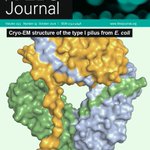
Happy to see our work featured on the cover of @FEBSJournal. This confocal image shows mutant NEK1 aggregates (orange) in motor neurons of the mouse spinal cord, ultimately driving ALS pathology ++

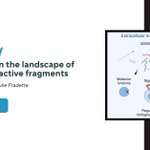
In their latest review in the Extracellular Matrix—Proteases Crosstalk Special Issue, Ricard-Blum and Fradette highlights the roles of major bioactive collagen fragments in angiogenesis, inflammation, fibrosis, and cancer, while exploring their potential translational applications as therapeutic targets and biomarkers.
📕 An update on the landscape of collagen bioactive fragments
📖 The remodeling of the extracellular matrix releases collagen bioactive fragments, which exert molecular functions and regulate numerous biological processes via several signaling pathways. Here, we summarize the latest findings describing the roles of major bioactive fragments from collagens I, IV, VI, and XVIII in various physiological and pathological contexts. We also discuss perspectives on how these bioactive fragments could impact translational research as drug candidates, drug targets, and biomarkers.
✍ Sylvie RICARD-BLUM, Julie Fradette
Read the full Review article here ➡️ buff.ly/oiRGyhV
#bioactive #collagen #ECM #matrisome

Driven by irreversible proteolysis, extracellular matrix (ECM) remodeling is essential to development, homeostasis, and disease.
✂️In an Invited Review for our Special Issue on Extracellular Matrix—Proteases Crosstalk, Solomonov and colleagues discuss the major ECM-degrading protease families: MMPs, serine proteases, ADAMs, ADAMTSs, and cysteine proteases. Their work highlights the shared regulatory pathways and proteolytic dynamics that continuously reshape the tissue microenvironment.
📕 Extracellular matrix and proteolysis: mechanisms driving irreversible changes and shaping cell behavior
📖 Irreversible ECM proteolysis by remodeling enzymes shapes development, homeostasis, and disease. ECM-degrading proteases display cell specificity and are governed by shared mechanisms, exhibiting functional redundancy in generating matrikines, growth factors, and cytokines. Amplified proteolysis and feedback regulation define tissue adaptation and pathology. Understanding these processes is essential for maintaining normal homeostasis and for identifying therapeutic targets to restore ECM balance in pathological conditions such as fibrosis and cancer.
✍ Inna Solomonov, Orit Kollet, Irit Sagi
Delve into this insightful Review here ➡️ buff.ly/sHKTyCY
#ExtracellularMatrix #proteolysis #ECM #protease #ECMremodeling

✨ Today, we encourage you to read the State-of-the-Art Review, featured in our Special Issue on ‘Extracellular Matrix- Proteases Crosstalk’.
📕 Proteolysis at the extracellular matrix interface: Molecular architects and regulators in health and disease
📖 The extracellular matrix (ECM) is a dynamic scaffold that orchestrates tissue architecture and cellular communication. A critical but underexplored interplay between proteases and cluster of differentiation molecules (CD) governs ECM turnover and directs cell fate. This review synthesizes how the disruption of this protease-CD crosstalk drives pathogenesis and highlights emerging therapies that target these networks and ECM-mimetic scaffolds to restore tissue homeostasis.
✍ David Jurnečka, Matija Hrovatin, Bor Bokalj, Boris Turk
Explore the State-of-the-Art Review, here ➡️ buff.ly/rHlydpB
#ECM #protease #proteolysis #scaffold #tissuehomeostasis

✨ We’re thrilled to share ‘A Guide To…’ article, published in our latest Special Issue on ‘Extracellular Matrix- Proteases Crosstalk’.
✂️ The roles of matrix metalloproteinases (MMPs) in cancer are highly complex and context-dependent, making them challenging targets. This article brilliantly delivers a comprehensive breakdown of the types, structures, and functions of MMPs, summarizing their essential roles in normal and pathophysiological conditions, with a special focus on cancer progression.
📕 A guide to the types, structures, and multifaceted functions of matrix metalloproteinases in cancer
📖 Matrix metalloproteinases (MMPs) orchestrate cancer progression and metastasis through proteolytic and non-proteolytic actions. By remodeling the tumor microenvironment, enhancing growth factor availability, and modulating cell behavior, MMPs promote proliferation, migration or invasion, and epithelial-to-mesenchymal transition. Alongside extracellular vesicles, MMPs support pre-metastatic niche formation, enabling cancer cell dissemination, dormancy, and metastatic colonization.
✍ Zoi Piperigkou, Sylvia Mangani, Spyros Kremmydas, Nikolaos E. Koletsis, Nikos Karamanos
Read the complete guide in our Special Issue, here ➡️ buff.ly/ge2ZUZ9
#MMP #cancer #guide #ECM

✨ Happy Friday! As you head into the weekend, we invite you to explore the Editorial featured in our ‘Extracellular Matrix- Proteases Crosstalk’ Special Issue.
📕 Extracellular matrix cross-talk with proteases: A master switch for remodeling and cell regulation in health and disease
📖 The extracellular matrix (ECM) is a dynamic three-dimensional macromolecular network essential for maintaining tissue homeostasis. Apart from its structural and biomechanical support to tissues, the ECM plays regulatory roles in cellular signaling, cell functional properties, and morphology. The composition and structural characteristics of the ECM are widely variable among different tissues, adapting to diverse functional needs. The extensive and dysregulated remodeling of the ECM network in various diseases—such as cancer, fibrosis, and vascular and inflammatory conditions—influences their progression. ECM remodeling involves not only proteolytic degradation but also the deposition of newly synthesized matrix components that influence cellular behavior. In this special issue on ECM cross-talk with proteases, the categories and functions of various proteases are presented and discussed in terms of their involvement in ECM remodeling and cell regulatory effects. Emphasis is placed on the roles of matrix metalloproteinases (MMPs), cathepsins, a disintegrin and metalloproteinase (ADAM), a disintegrin and metalloproteinase with thrombospondin motifs (ADAMTS), components of the plasminogen activation system, and lysyl oxidase (LOX) family enzymes—both in the degradation of ECM macromolecules (collagen, elastic fibers, proteoglycans) and in their impact on extracellular vesicles (EVs) and microRNAs (miRNAs).
✍ Nikos Karamanos
Discover the Editorial, here ➡️ buff.ly/sn5lAou
#ECM #remodeling #proteases #ADAM #MMP

✨ The FEBS Advanced Lecture Course “MASLD: From novel liver model systems to organelle pathophysiology” brought together brilliant early-career researchers and leading experts on the beautiful island of Spetses for a truly engaging week of science 🔬 🧬 .
🎉 We are delighted to present The FEBS Journal Poster Prize to Daisy Bhatia for her poster, “Unraveling the molecular mechanisms of MASLD initiation and development.”
We wholeheartedly congratulate Daisy, and all presenters! 👏 👏
