
Two Pictures - 1 Fight - AI Decides Who Wins
Joined July 2014
- Tweets9K
- Following755
- Followers13.2K
- Likes3.6K


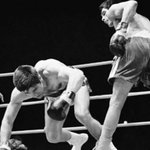


November 8, 2008 🏁
Joe Calzaghe entered Madison Square Garden undefeated at 45-0.
Roy Jones Jr. entered as one of the most naturally gifted fighters boxing had ever seen.
Both were near the end.
Jones gave Calzaghe an immediate scare, dropping him in Round 1.
Calzaghe got up and completely changed the fight.
His pace, hand speed and constant combinations gradually overwhelmed Jones.
By the middle rounds, Calzaghe was controlling almost every exchange and even dropping his hands to taunt a fighter who had once done the same thing to everyone else.
A cut around Jones’ eye made the final rounds ugly.
The scorecards were identical: 118-109, 118-109, 118-109.
Calzaghe won clearly.
Then he walked away.
He never fought again.
The Welsh champion retired at 46-0 after beating Bernard Hopkins and Roy Jones Jr. in his final two appearances.
November 8 was not simply another victory.
It was the final night of a professional career that never contained a defeat.

November 8, 2003 😮
Roy Jones Jr. had just done something extraordinary.
Eight months earlier, he moved all the way up to heavyweight and beat John Ruiz for the WBA title.
Then Jones dropped back down to 175 pounds to face Antonio Tarver.
The weight loss looked brutal.
For the first time in years, Jones looked human.
Tarver pressed him, landed the harder punches in stretches and forced the pound-for-pound king into a fight where talent alone could not create easy separation.
Jones had to dig.
After 12 rounds, one judge scored it even.
The other two gave Jones the victory.
He had regained major light-heavyweight titles by majority decision.
Tarver was furious and convinced he had won.
Six months later, they fought again.
This time Tarver left no room for judges, knocking Jones out in Round 2.
That stunning rematch changed both careers — but the rivalry began with this exhausting first fight, where Jones escaped with the decision and Tarver left believing he had discovered the formula.

November 7, 2011 🕯️
Joe Frazier died at 67 after a brief battle with liver cancer.
Boxing lost one of its defining heavyweight champions.
“Smokin’ Joe” had won Olympic gold in 1964.
He became undisputed heavyweight champion.
Then, in 1971, he did what nobody had done before.
He beat Muhammad Ali.
Their “Fight of the Century” at Madison Square Garden ended with Frazier’s famous left hook dropping Ali in Round 15.
The rivalry eventually became a trilogy and finished with the brutal “Thrilla in Manila.”
Frazier’s career was permanently linked to Ali, sometimes unfairly overshadowing everything else he accomplished.
November 7 became a sad date in heavyweight history.
The relentless pressure fighter from Philadelphia was gone.
His left hook, his toughness and his role in one of sport’s greatest rivalries were already immortal.

November 7, 2015 🧱
Timothy Bradley had a new trainer.
Teddy Atlas had replaced Joel Díaz, and their first fight together came against Brandon Rios.
Rios was a former lightweight champion famous for turning fights into exhausting wars.
Bradley refused to give him one.
He boxed quickly, changed angles and kept touching Rios with combinations before moving away.
The body work became especially damaging.
By Round 9, Rios was exhausted.
A body shot dropped him.
He got up.
Another attack sent him down again and referee Tony Weeks stopped the fight.
Timothy Bradley had retained the WBO welterweight title.
Rios announced his retirement afterward.
November 7 became one of Bradley’s cleanest performances.
A fighter known for getting dragged into wars had listened to Atlas and controlled one instead.

November 7, 2009 🗿
David Haye had ruled the cruiserweight division.
Now he was standing across from the biggest heavyweight champion boxing had ever seen.
Nikolai Valuev was around seven feet tall and weighed more than 300 pounds.
Haye looked tiny beside him.
He refused to fight like the smaller man.
Instead of standing still and trying to prove his strength, Haye used speed, movement and quick single punches.
Valuev kept stalking but struggled to land cleanly.
The fight remained close and cautious until the final round, when Haye landed a left hook that visibly wobbled the giant.
Valuev stayed on his feet — as he always did in his professional career.
After 12 rounds, Haye won a majority decision.
He was WBA heavyweight champion.
The former cruiserweight king had climbed into boxing’s biggest division and beaten its physically biggest champion.
He did not overpower Valuev.
He outmaneuvered him.

November 7, 1988 5️⃣
Sugar Ray Leonard had already retired multiple times.
Now he returned again, this time against Donny Lalonde.
The setup was unusual.
Lalonde’s WBC light-heavyweight title was on the line, but the fight was contested at a 168-pound limit — and the brand-new WBC super-middleweight title was also at stake.
Leonard was knocked down in Round 4.
For a while, the comeback looked like a mistake.
Then he began finding the timing.
In Round 9, Lalonde hurt Leonard with an uppercut.
Leonard responded with a furious combination, dropped him, then attacked again and put him down a second time.
The fight was stopped.
Leonard had won championships in two divisions in one night.
Depending on the title-counting standards of the era, the victory was promoted as making him a five-division world champion.
The details were messy.
The comeback was not.
Leonard had been dropped, hurt and tested — then finished the younger champion himself.

November 7, 2019 🥊
Naoya Inoue had smashed through almost everyone in front of him.
Nonito Donaire was supposed to be the respected veteran standing between “The Monster” and the World Boxing Super Series trophy.
Instead, Donaire gave him the hardest fight of his career.
In Round 2, a left hook opened a serious cut near Inoue’s right eye.
Donaire kept finding moments, hurt him again later and forced Inoue to fight through blood and real danger.
Inoue answered with body work and combinations.
In Round 11, a vicious shot to the liver sent Donaire down.
The veteran somehow beat the count.
After 12 rounds, Inoue won a unanimous decision, unified the WBA and IBF bantamweight titles and captured the Muhammad Ali Trophy.
The fight became an instant classic.
Inoue proved he could do more than destroy opponents quickly.
He could get cut, get hurt, face a Hall-of-Fame-level veteran at his best — and still find a way through.

November 7, 1970 🇦🇷
Carlos Monzón arrived in Rome as a challenger most of the wider boxing world barely knew.
Nino Benvenuti was the star.
The Italian Olympic champion had already won world titles at junior middleweight and middleweight and had fought some of the biggest names of the era.
Monzón had spent years building an unbeaten streak in Argentina.
He did not travel to Italy for a close decision.
The challenger’s long jab and right hand steadily took control.
Benvenuti tried to rally, but Monzón kept breaking him down.
In Round 12, a brutal right hand sent the champion crashing to the canvas.
The fight was over.
Carlos Monzón was middleweight champion.
He would not lose another fight.
For the next seven years, Monzón ruled the division, made 14 successful title defenses and retired as champion.
The reign that became one of the greatest in middleweight history began with one punch in Rome.

November 6, 2011 ⚖️
Takahiro Aoh was defending the WBC super-featherweight title in Tokyo.
Devis Boschiero came from Italy undefeated and determined to take the belt home.
The fight never became easy for the champion.
Boschiero boxed well, stayed disciplined and kept many rounds extremely close.
Aoh landed the sharper single shots.
Boschiero kept answering.
After 12 rounds, the judges were split.
Two scored it 115-113 for Aoh.
One scored it 116-113 for Boschiero.
Split decision.
Takahiro Aoh retained the WBC title.
November 6 became one of those championship nights where winning did not completely end the argument.
Boschiero had arrived unbeaten and left with his first loss.
Aoh kept the belt.
The margins were narrow enough that both men could point to rounds they believed should have gone the other way.

November 6, 2011 👹
Shinsuke Yamanaka entered Tokyo unbeaten but still without a world title.
Christian Esquivel stood across from him for the vacant WBC bantamweight championship.
The fight became far harder than the final result suggests.
Yamanaka dropped Esquivel in Round 6.
One round later, Esquivel answered by dropping Yamanaka.
The future champion had to recover.
He did.
Yamanaka rebuilt his rhythm behind the left hand and gradually regained control.
In Round 11, he dropped Esquivel again and followed with enough punishment to force the stoppage.
Shinsuke Yamanaka was world champion for the first time.
November 6 began one of Japan’s strongest modern title reigns.
The famous “God’s Left” would eventually carry Yamanaka through 12 successful defenses.
It all started with a fight where he had to get off the canvas himself.

November 6, 1976 🇬🇭
David Kotey had made history as Ghana’s first boxing world champion.
Danny “Little Red” Lopez came to Accra trying to take the WBC featherweight title away from a national hero.
The atmosphere was enormous.
Kotey had the crowd.
Lopez had the punching power.
The fight did not become an easy knockout showcase.
They went 15 rounds.
Kotey boxed carefully and made Lopez work, but the American challenger kept pressing and landed enough of the heavier shots to earn the decision.
Danny Lopez was world champion.
The victory began one of the most exciting featherweight title reigns of the 1970s.
Lopez would become famous for dramatic knockout defenses and wars against fighters such as Mike Ayala.
But the championship run started thousands of miles from home.
He entered a stadium in Ghana facing the country’s first world champion.
Fifteen rounds later, “Little Red” had taken the belt.

November 6, 1981 😳
Larry Holmes was undefeated and deep into his heavyweight championship reign.
Renaldo Snipes was unbeaten too, but entered Pittsburgh as a huge underdog.
Then Round 7 nearly changed heavyweight history.
Snipes landed an enormous right hand.
Holmes crashed hard to the canvas and stumbled into the corner after getting up.
For a few seconds, one of the most dominant heavyweight champions of the era looked ready to fall apart.
He did not.
Holmes survived the round, recovered behind his jab and gradually took control again.
In Round 11, a right hand hurt Snipes.
Holmes drove him into a corner and unloaded until the referee stepped in.
The champion had survived one of the worst knockdowns of his career and retained the WBC title.
That was part of what made Holmes so difficult to beat.
His jab could dominate a fight.
His toughness could rescue one when the jab was not enough.

November 6, 1993 🪂
Evander Holyfield wanted revenge on Riddick Bowe.
A year earlier, Bowe had taken the undisputed heavyweight championship from him in one of the best heavyweight fights of the decade.
The rematch at Caesars Palace was already tense.
Then a man literally fell out of the sky.
During Round 7, a paraglider named James Miller descended toward the outdoor arena and crashed into the ring ropes.
The fight stopped for 21 minutes while chaos broke out around ringside.
He became known forever as “Fan Man.”
When boxing finally resumed, Holyfield fought the better second half.
After 12 rounds, he won a majority decision and regained the heavyweight championship.
It was the only loss of Bowe’s professional career.
The rivalry eventually needed a third fight.
But the second meeting became unforgettable for two completely different reasons: Holyfield’s revenge — and the most bizarre interruption a heavyweight title fight had ever seen.

November 6, 2021 👑
Canelo Álvarez and Caleb Plant had spent months building real hostility.
The tension became physical at a press conference when they shoved each other and exchanged punches.
Inside the ring in Las Vegas, the stakes were even bigger.
Canelo held the WBA, WBC and WBO super-middleweight titles.
Plant held the IBF belt.
For the first time, one man could leave with all four major championships at 168 pounds.
Plant boxed well early and made Canelo work for openings.
Canelo kept attacking the body and slowly closing the space.
In Round 11, a left hook and right uppercut dropped Plant.
He got up.
Canelo immediately finished the job with another barrage.
The fight was stopped.
Canelo was undisputed super-middleweight champion — the first in the division’s history and the first Mexican male boxer of the four-belt era to become undisputed.
The buildup had been personal.
The result became historical.

November 5, 1959 🇦🇷
Pascual Pérez had already become one of the greatest flyweights of his era.
Sadao Yaoita challenged him in Osaka with the world championship on the line.
Yaoita had beaten Pérez in a non-title fight earlier that year.
That made the rematch personal.
The Japanese challenger again used movement and speed to make the champion work.
Pérez kept pressing.
The fight went deep.
By Round 13, the Argentine finally found the finish.
Pérez broke through and knocked Yaoita out, retaining the world flyweight championship.
November 5 became revenge at championship level.
The smaller champion had already made history as Argentina’s first boxing world champion.
Against the man who had recently beaten him, Pérez made sure the title fight ended with a completely different result.

November 5, 1977 👑
Carlos Monzón had retired after beating Rodrigo Valdez twice.
That left the undisputed middleweight championship vacant.
Valdez and Bennie Briscoe were matched to decide who would inherit it.
They already knew each other well.
Valdez had stopped Briscoe in a previous title fight.
This time the fight went all 15 rounds.
Briscoe pressured as always.
Valdez boxed with discipline and used the cleaner combinations to stay ahead.
There was no dramatic knockout.
There was a clear winner.
Rodrigo Valdez took the decision and became world middleweight champion again.
November 5 gave the Colombian star a second reign.
He had spent years fighting in Monzón’s shadow.
With the Argentine legend finally gone, Valdez proved he was still good enough to stand on top of the division himself.

November 5, 2011 🇨🇦
Lucian Bute was undefeated, 29-0 and one of Canada’s biggest boxing stars.
Glen Johnson was almost the perfect veteran test.
He was 42 years old, had fought nearly everyone, had won a light-heavyweight world title and carried the nickname “Road Warrior” because he had spent his career traveling into other fighters’ territory.
Bute never let the experience become a factor.
In front of more than 15,000 fans in Quebec City, the champion controlled the range with his jab and straight left hand.
Johnson stayed durable, but he could not force Bute out of rhythm.
Round after round looked similar.
The judges scored it 120-108, 120-108 and 119-109.
Bute retained the IBF super-middleweight title and moved to 30-0.
At the time, the result kept alive hopes of a huge showdown with the winner of the Super Six tournament.
That fight never fully arrived at the moment fans wanted.
But against Johnson, Bute looked every bit like an elite champion.

November 5, 1989 🎓
Azumah Nelson had become known as “The Professor” because of the way he solved fighters.
Jim McDonnell came to the Royal Albert Hall believing he could give the great Ghanaian a different kind of problem.
Nelson was defending the WBC super-featherweight championship on McDonnell’s home soil.
The challenger fought bravely.
He also kept getting knocked down.
McDonnell hit the canvas four times during the fight, yet somehow kept recovering and forcing Nelson to continue working.
By Round 10, there was nothing left to prove.
Nelson dropped him again and the fight was stopped.
The champion had traveled to London and retained his title by stoppage.
Nelson’s greatness was built on nights like this.
He won championships in two divisions, fought elite opponents around the world and rarely needed the comfort of fighting at home.
McDonnell had the crowd.
Nelson had the answers.
By the tenth round, “The Professor” had finished another lesson.

November 5, 2016 🇵🇭
Manny Pacquiao had announced his retirement seven months earlier.
It did not last.
After winning election to the Philippine Senate, Pacquiao returned to Las Vegas to challenge WBO welterweight champion Jessie Vargas.
Vargas was younger, taller and believed the political responsibilities outside boxing had finally distracted the legend.
Pacquiao looked anything but distracted.
In Round 2, a straight left hand dropped Vargas.
The champion recovered and had some competitive moments, but Pacquiao’s speed kept creating the cleaner exchanges.
After 12 rounds, the decision was unanimous.
Manny Pacquiao was a welterweight world champion again.
It was his third reign with the WBO belt at 147 pounds and proof that the “retirement” had been more of a pause.
Floyd Mayweather Jr. even sat ringside, immediately starting speculation about a second fight that never happened.
Pacquiao had become a senator.
On November 5, he reminded everyone he was still very much a boxer too.

November 5, 1994 👴
George Foreman was 45 years old.
Michael Moorer was 26, undefeated and the heavyweight champion.
For nine rounds, the fight looked exactly like the age difference suggested it should.
Moorer boxed beautifully.
He beat Foreman to the punch, landed combinations and built a comfortable lead.
Foreman kept walking forward.
He wore the same red trunks he had worn 20 years earlier when Muhammad Ali took the heavyweight championship from him in Zaire.
Then, in Round 10, history arrived.
Foreman landed a short one-two.
The right hand crashed into Moorer’s chin.
The champion fell flat on his back and did not beat the count.
George Foreman was heavyweight champion again.
Twenty years after losing the crown, he had regained it.
At 45, he became the oldest heavyweight champion in boxing history.
The comeback had started as something people laughed at.
It ended with Foreman kneeling in prayer while one of the greatest second acts in sports history became real.
