

🌏︎ Founder of AttentionLabs (2.7B+ views). Advanced YouTube strategy for the largest personal-brands on YouTube (and sharing lessons).
Oxford, United Kingdom
Joined August 2015
- Tweets4.1K
- Following1.3K
- Followers5K
- Likes2.4K




Ed Mylett had Alex Hormozi on his show three times.
His first two episodes with Hormozi got:
“The ultimate guide to building an insanely profitable business feat. Alex Hormozi.” 188,000 views.
“Maximizing returns: the power of real leverage in your life feat. Alex Hormozi.” 23,000 views.
His third, “The most valuable 64 minutes you’ll spend this year (Hormozi x Mylett),” got 359,795 views, 49 times his usual.
Ten months before that episode, a compilation channel that recuts podcast clips posted “The most valuable 40 minutes you’ll spend this year (Hormozi x Williamson),” which got 786,000 views.
Podcast hosts tend to ignore these channels. They test titles on your guests every week. Read them.

Alex Becker’s biggest YouTube video ever came out in 2020. It was titled “This Isn’t Fun But It Makes Me $2k A Hour” and got 3 million views.
Five years later, he used the same title pattern on his business channel:
“It SUCKS... But It Makes $1M/Year EASY”
“You’ll HATE It, But It Will Make You Rich In A Year”
“It’s BORING, But It’ll Make You A Millionaire FAST”
He made five videos with this pattern between June and September 2025. The first of the five is now the most-viewed video on that channel.
The pattern warns you before it promises.
Before hunting for a new title, check whether your best title has a few more videos in it.

Daniel Faraday retweeted

My advice to creators: YouTube is launching some incredible tools. You don’t need to use all of them on every video to be successful. It’s unrealistic, just make good videos and use the tool if it makes sense.
Not sure what intro is better? Test it
Not sure what thumbnail is best? Test it
This doesn’t mean you need to do it for every video.

YouTube just released a 43-minute video discussing Dynamic Thumbnails, A/B testing, and YouTube’s algorithm. Here are the 7 most interesting insights so you don't need to watch it yourself:
1. Thumbnail A/B Testing
YouTube doubles down on not showing CTR in A/B tests, as they don't want creators to be optimizing for the click, as it may hurt the overall watch experience of the video.
2. Shorts A/B Testing
YouTube is going to allow us to pick 2 to 3 Shorts to test against each other. They will then show each of them to a different segment of the audience. You will then get retention data like watch time, but also the retention graphs for those videos. From a past interview, we already learned that you'll have up to 7 days to select which version you want. (Even though this wasn't mentioned in this interview, I wanted to add this here because it's an interesting insight that I don't think a lot of people are aware of.)
3. Dynamic Thumbnails
When touching on dynamic thumbnails, Todd highlights that they are designing their system to dynamically adjust who and how many people get to see which thumbnail, which is different from the current thumbnail A/B testing (where it's pretty much an even split randomly across who sees it).
He says that the way it works is that there will be some randomness introduced to make sure they learn new things, but ultimately, they want to start shifting traffic towards the direction that is working, or, in this case, the thumbnail that is working.
If a particular thumbnail works well, YouTube is going to put more impressions towards that thumbnail, and by doing so, YouTube reduces the risk of messing up a thumbnail test. Over time, the test will get better at learning from failures and reducing impressions on thumbnails that fail by leaning more towards what's already working.
On top of this, dynamic thumbnails will also consider audience segments and see which thumbnails work better for which segments. They will use factors such as location and whether somebody has watched the channel before. These factors are something that Todd refers to as segment features.
But the conversation also kind of hinted towards the fact that it's not as rigorous as we would want it to be (for example, segment features it's based on interest). It seems to be hinting that most of the factors are going to be towards the more measurable things that YouTube already has.
4. Back Catalog Optimization
In the interview, they briefly touch on back catalog optimization, but they don't go too deep into this one. We already know from a previous announcement that this has everything to do with their Ask Studio features, which allow creators to have AI involved in optimizing their back catalog for them by creating new thumbnails, etc.
5. Hyperpersonalization
In the interview, they touch on another thing that they also touched on before: YouTube is actually becoming a hyper-personalized platform where different things are weighted differently for different people in the algorithm.
What this means in simple terms is that, for one viewer, it may be more important how clickable a video is, while for another, it's much more important how satisfying a video is. This is something that YouTube has recently been pushing a lot more in their interviews.
To translate this even further, this means that there's no single unifying metric that people should be looking at to understand what worked. Other than views ofcourse.
6. Custom Feeds
Later in the video, Todd talks about custom feeds and how the algorithm will work for those custom feeds. As we currently already know a lot about how the home feed works and the other recommendations, he says that it uses similar technology to what we use for the regular home feed, but it's a lot more language-based.
What this means is that when a user sets up the custom feeds, they type out or use their voice to say what they're looking for, and it can be pretty abstract. The algorithm will do an interpretation by using language modeling to understand and generalize into a vibe of what the person may actually be looking for.
It's important to know here (and he mentions this as well) that this isn't just strictly keyword matching, but it is more about the interpretation of what the user is looking for.
And if the user wants to see more popular stuff in their custom feeds, they can highlight this one, but it will also make it easier to match viewers with less popular stuff.
7. New Creator Discovery
At some point, the conversation shifts towards how new creators can get discovered today. The first thing Todd highlights is that new creators should stop focusing on metrics, and they should focus on finding purpose and figuring out what kind of content they want to make.
This hints towards the idea that metrics in Studio are not as valuable once you start out as a creator, which I do agree with.
Then Todd talks about discoverability for new creators. He says that parts of the recommendation system are looking for videos that they don't know much about because maybe the channel they're uploaded to has zero subscribers. There's not really anybody who has watched the channel before. And they know that.
In order to give these videos an on-ramp to success on YouTube, they need to give these videos a chance. They have something called exploration.
An exploration is when viewers show up on the home feed. Every once in a while, they're going to show that person a video that YouTube themselves don't really know much about. Then, when this person likes the video, it's going to show it to more people like this person. This is how on-ramps work.
YouTube is always trying to balance exploring new stuff that they don't know much about and serving stuff that has already been successful for years.
Now, this breakdown was an interpretation mixed with exact things that they have referred to, but I wanted to highlight this one, as there were some interesting things in this video. I wanted to keep everybody up to date with what's going on.


Jeff Su used this title formula in six videos:
“Learn 80% of [tool] in under [X] minutes.”
Compared with his usual views:
• Perplexity: 7.4 times as many
• NotebookLM: 6.1 times as many
• Claude Cowork: 6 times as many
• Notion: 0.4 times as many
People had just heard of Perplexity, NotebookLM, and Claude Cowork, but did not know how to use them. Notion had been around for years, and Jeff had already made plenty of Notion videos.
The formula worked as a shortcut into a new tool, not one people already knew.

Business YouTube titles run in eras, and most are already over.
I tracked four title patterns across every long-form upload from big operator channels. On a typical channel, dollar amounts peaked at 20% of titles, numbered lists at 14%, and “rich” or “millionaire” at 9%. All three peaked between 2021 and 2023 and are lower now.
“AI” was in none of a typical channel’s titles in 2022. In 2026, it was in 8% of titles.
The formula you’re copying has a birth year. Check it’s not about to die.

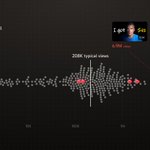
Dan Martell is known for 20-minute videos. But his two most-viewed videos on his long-form channel are under 1 minute:
• “Give me 58 sec, I’ll delete your fear of rejection.” 12M views
• “Give me 54 seconds and I’ll make you dangerously motivated.” 6.9M views
His typical video gets about 208K views.
He posted six videos under 100 seconds as regular uploads, not Shorts. Their median was 1.7M views.
The titles make a simple deal: give me less than a minute, and get help with something valuable.
The last two of the six got 117K and 143K views.

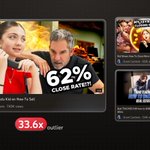
Grant Cardone has been selling sales training for decades.
His biggest sales video in the last three years is not him closing anyone.
It’s “Dad Home Schools Kid on How To Sell,” with his kid on a phone and Grant leaning over her shoulder. The thumbnail says “62% close rate.” It has 740K views, 33 times his usual.
His second biggest sales video is “Kid Shows How To Close More Deals.” The third is “Dad Teaches Kid how to Underwrite Real Estate Deal.”
All three have a kid learning in them.
Watching an expert be impressive is easy to scroll past. Watching a beginner get better in 14 minutes is hard to stop.
If you teach, put a learner on camera.

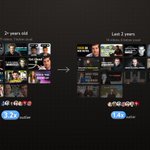
In 2023, Dan Koe’s “How To Get Ahead Of 99% Of People” got 1.7M views, 8.6× his usual. Mark Manson’s “Forget Monk Mode. Here’s How to Actually Beat 99% of People” got 4.9M.
Then other creator-educator channels used “99%” too. I found 25 such titles across 16 channels.
• 2+ years old: 3.2× the channel’s usual views
• Last 2 years: 1.4×
• Codie Sanchez’s latest: 0.48×
• Mark Manson’s latest: 0.83×
A promise stands out when nobody else is making it. Once 16 channels use “99%,” it becomes the default.

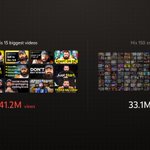
I sorted Alex Hormozi’s last 300 long videos. His 15 biggest got 41.2M views. His 150 smallest got 33.1M put together. I left out this year’s uploads, which haven’t had time to grow.
Hormozi shows up every week, giving him enough shots. But the weeks don’t count equally. A few videos carry the channel. Spend more time on the ideas than on the schedule.

Charlie Morgan posted about a third as many long-form videos in 2024. A typical video got about 14 times as many views.
2022: 150 videos, 4.2K typical views
2024: 54 videos, 59K typical views
His total long-form views were higher too. His breakout year came with fewer posts.

Steven Bartlett’s clip channel matches most founders’ main channels.
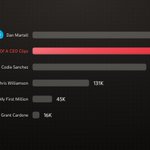
The Diary of a CEO has a second channel for clips. This year, it posted about one clip a day from episodes Steven had already recorded. A typical clip got 300K views.
Dan Martell’s main channel got 301K views, Codie Sanchez’s 263K, Chris Williamson’s 131K, My First Million’s 45K, and Grant Cardone’s 16K.
“The real reason AI is already escaping” got 2.2M views.
Long conversations can support a second clips channel. Most founders throw that content away.

Nick Saraev’s most-viewed video is a free course. It is a 4-hour-11-minute YouTube course called “CLAUDE CODE FULL COURSE 4 HOURS.” It has 2.6M views.
His next two biggest videos are 6 hours and 2 hours long.
I checked his 200 most recent long videos:
• 17 over 2 hours: 189K median views
• Everything shorter: 33K views
The long videos are free full courses on tools people are trying to learn: Claude Code, n8n, and AI agents.
If you teach a skill, your longest video may be your best ad for your paid product. My guess is it wins because it is the closest thing people can get to that product for free.

Alex Hormozi changed his YouTube upload day.
In 2023, he posted 59 long videos. 49 went up on Wednesday.
This year, he posted 49 videos. Only 4 went up on Wednesday. Friday now has the most uploads, and the rest are spread across the week.
I checked his latest 300 YouTube uploads. Wednesday was his fixed day for about 2 years. Then he stopped treating it as fixed.
So “What’s the best day to post?” is the wrong question. Post when the video is ready.

Steven Bartlett’s The Diary Of A CEO saw typical episode views rise from 573K in 2022 to 2.1M in 2023, a 3.6× increase with about the same number of uploads.
They did not return to 573K: typical episode views reached 2.7M in 2024 and 3.5M in 2025.

Grant Cardone’s biggest video ever came out in 2017. It was called “Who is Grant Cardone really?” and has 10.57M views.
In January 2025, he made a new video called “Who is Grant Cardone?” It asked the same question, one word shorter.
It reached 1.37M views. His typical video around then got 43K, so this got 31.8× his normal views.
It was one of only two videos from the last two years in his all-time top 30.
He used his best old idea for people who missed it in 2017.
Check your Popular tab. Your next big video idea may already be there.

Andy Elliott posted 300 long YouTube videos in under two years. He posted at least 3 a week.
Five had more than 100K views. 207 stayed under 10K. The typical video got 5,900 views.
All five hits were sales training. Videos about men’s lives, mentors, and motivation never broke through.
Posting a lot did not find him a new audience. It gave sales training more chances to reach people.
If you post 3 times a week, make most posts about what people already come to you for.

Ali Abdaal’s channel posted 150 videos since May 27.
From 2022 to 2024, its usual videos were long interviews with Daniel Priestley, Alex Hormozi, and Nir Eyal, and the channel is Ali Abdaal – Lifestyle Business Academy, posting about eight a week. A usual video got 27K views.
The new videos are short solo lessons like “The Three Forms of Leverage.” A usual video gets 4.4K views, one-sixth as many.
Ali chose volume. If this brings people to his course, it might be working. But each new video is getting seen less.

Alex Hormozi and Leila Hormozi posted 5 hit posts again. All 5 had the same or almost the same titles on X, and got fewer views the second time.
Alex’s Dave Ramsey interview:
2023: 1.8M views
2025: 299K views
“Best year of your life”:
1.9M → 1.1M views
Leila’s “Success Is Hard Until You Build Systems Like This”:
828K → 259K views
People who made the first post popular may have already seen the same content.
If you post the same idea again, give people a new reason to click, not just a new date.

My First Million grew every year without a viral year.
Sam Parr and Shaan Puri’s typical episode got 10K views in 2021, 24K in 2022, 37K in 2023, 39K in 2024, and 49K in 2025. The show had over 100 episodes each year, and after 2022, no year more than doubled the one before.
Mark Tilbury’s typical video views fell by two thirds in 2022. Dan Martell’s dropped to 3.5K before taking off. My First Million kept climbing slowly.

My First Million is a podcast. Its most-viewed video ever was:
“This guy copy-pasted Warren Buffett’s strategy (and became a billionaire).”
Shaan Puri interviewed Mohnish Pabrai for 2 hours. It got 3,384,755 views.
A typical episode since then gets 42K, so this got 80 times as many.
A podcast about fresh ideas had its biggest hit with a guest who copied Warren Buffett. You don’t have to be original to win. Sometimes, showing people a shortcut works best.
