

Abogado - Contador Publico - Socio fundador de DSB Asociados - Master en Derecho y Economia - Especialista en empresas en crisis
Buenos Aires - Argentina
Joined July 2011
- Tweets19.1K
- Following7K
- Followers2.9K
- Likes15.4K





Pinned Tweet
Pero que descerebrados son los kukas!! Tanto machan con lo de “endeudador”, que voy a contestar con un posteo y fijarlo. Primero, en la época del “protokukismo” en tiempos de su creador, el nefasto Drakuhalde, confiscaron todos los depósitos para pesificar y entregar bonos, luego que paleokukardo que duró una semana en la Rosada, Kukardez Kzaa, declarara el default, el cual levantó el pingüino bizco afanándose comisiones multimillonarias, y emitiendo bonos a mansalva. Ello sumado al enorme déficit en las cuentas públicas y la explosión del “riesgo país” provocaron el cóctel que hizo inevitable recurrir a financiamiento del FMI. Era eso u otro default. Ahora con @JMilei por primera vez en muuuchooos años se vuelve a la senda de cordura, con el postulado inquebrantable que las obligaciones se cumplen. Si, las que dejaron sembradas como minas explosivas los kukas. Esos vencimientos se están cumpliendo con roll over y con financiamiento del FMI. Claro los kukas son enemigos del los datos y amnésicos selectivos. Pero esa es la realidad.
Fernando S. Badenas retweeted
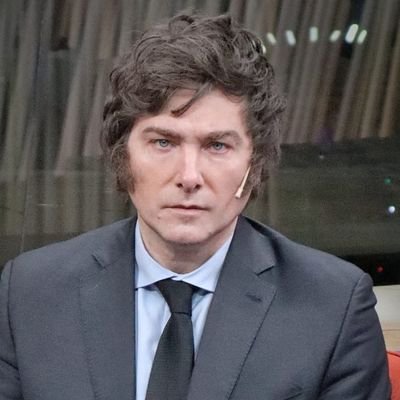
CLARO Y CONTUNDENTE .

Aparentemente vamos a padecer todo tipo de operaciones hasta las elecciones. No está de más aclarar que cada uno de los operadores recibirá su carta documento porque no voy a permitir que mientan ni me ensucien gratuitamente. Sepan los ciudadanos que van a intentar deshonrarnos y calumniarnos porque están entregados al mejor postor.
Quizás este sea un momento bisagra para elegir que Argentina queremos para el futuro, si la de los mafiosos y enriquecidos a través de la política o los que queremos construir un proceso sostenible para las futuras generaciones. @JMilei
Fernando S. Badenas retweeted

Aborto en la #Argentina
Buen proyecto de ley (n° 6066-D-2026).
De la diputada Alida Ferreyra.
Antes de abortar la mamá deberá:
Recibir información sobre el desarrollo de su hijo.
De ayudas sociales y alternativas como la adopción.
Y escuchar los latidos del corazón de su hijo.
@Evelynr07780155 @edvolpa @cpabogadossc @SalvemosPilar @TerolaMerula @olitasdmar @miguel1urga @QueremosNacer @DocEliMarquez @MamelaFialloFlo @mamateahoy @argento_85

Fernando S. Badenas retweeted

RECESIÓN TÉCNICA EN ARGENTINA 🇦🇷
ES MEJOR NO HABLAR DE LO QUE NO SE SABE
El crecimiento del PIB en 🇦🇷, se publica trimestralmente, el primer trimestre fue positivo, el segundo y el tercero han sido negativos, por lo que se habla de una Recesión técnica, es decir una recesión estacional en 2 trimestres, sin embargo todas las proyecciones dicen que el cuarto trimestre será súper positivo, lo que sumado al primero positivo, hará que 🇦🇷, tenga un crecimiento este 2026.
Hace 20 años no pasaba en 🇦🇷, que el país crezca 3 años seguidos, como lo ha conseguido Milei. Bien por los hermanos argentinos, y mal por esos académicos que se meten a hablar de lo que no saben.
PDTA: Para hablar de economía, yo me metí 7 años de estudio , 2 de maestría y 5 de un PHD ( en tesis), al menos debería hacer un cursito Dr. García.
Fin


Fernando S. Badenas retweeted

NO FALTAN PESOS: SOBRA LA PRETENSIÓN DE REACTIVAR LA ECONOMÍA CON MÁS EMISIÓN
LA NACIÓN instala una discusión sobre la supuesta insuficiencia monetaria y reúne a economistas que proponen flexibilizar el programa. Pero los datos oficiales muestran otra realidad: el crédito al sector privado crece en términos reales, la liquidez bancaria es holgada, las reservas se recuperan y el equilibrio fiscal se sostiene sin renunciar a la desinflación.
Agustín Maza plantea en esta nota de LA NACIÓN una pregunta que contiene una premisa falsa: ¿faltan pesos para reactivar la economía? Para sostenerla convoca a Melconian, Santangelo, Arriazu y Cavallo. Ninguno de los argumentos reproducidos demuestra que una mayor emisión sea condición necesaria para crecer. Confunden disponibilidad de liquidez con capacidad de otorgar crédito, y confunden demanda nominal con producción real.
Luis Caputo respondió con claridad, el Gobierno no confunde ambas cosas. Los bancos pueden renovar menos deuda del Tesoro y destinar esos recursos al sector privado si así lo deciden. Si no lo hacen, la explicación no está en la escasez de pesos, sino en la morosidad, el riesgo crediticio y la incertidumbre. Su definición fue precisa, un shock negativo de oferta no se combate con un shock positivo de demanda.
Los datos del BCRA confirman que la premisa de la escasez es incorrecta. Según el Informe sobre Bancos de agosto de 2026, el crédito al sector privado aumentó 3,6% en términos reales interanuales. El financiamiento a empresas creció aún más: 6,7% real interanual. Al mismo tiempo, la liquidez bancaria en pesos se ubicó en 31,7% de los depósitos y los depósitos privados en dólares alcanzaron cerca de USD 41.900 millones. El M2 privado transaccional volvió a expandirse en términos reales. Hay liquidez, hay crecimiento real del crédito y hay acumulación de reservas. Lo que no hay es evidencia de que el cuello de botella sea la cantidad de pesos.
Hay una diferencia fundamental entre reconocer dificultades en el financiamiento y concluir que faltan pesos. Melconian y Santangelo comparan el stock actual de dinero con períodos de mayor actividad y calculan que “faltan” entre $40 y $50 billones. Esa comparación es engañosa: ignora diferencias en la demanda de dinero, en la tasa de inflación y en la estructura productiva. Arriazu supone que liberar recursos absorbidos por el Tesoro se traducirá en más préstamos. Pero disponer de fondos no obliga a los bancos a asumir riesgos crediticios cuando la morosidad es elevada y el horizonte de reglas sigue siendo objeto de debate. Cavallo propone emitir para comprar USD 15.000 millones. No explica cómo esa expansión evitaría presionar sobre los precios y el mercado cambiario en una economía con memoria inflacionaria y alta dolarización.
La estrategia de Javier Milei parte de una premisa distinta y más sólida: la recuperación no puede construirse destruyendo la estabilidad monetaria. El equilibrio fiscal, la acumulación de reservas, la desinflación, la reducción de impuestos, la desregulación y la ampliación del financiamiento privado forman parte de una transformación que busca sustituir el crecimiento artificial financiado con emisión por inversión, productividad y exportaciones. Argentina probó durante décadas que emitir para “reactivarse” no genera más producción sostenible. Genera más inflación y más desconfianza.
La desaceleración de determinados sectores es real. Lo que no está demostrado es que su causa sea una insuficiencia general de pesos ni que la solución consista en volver a expandir la demanda mediante emisión. Una economía no crece porque acumula billetes. Crece porque produce más, invierte más y genera condiciones para financiar proyectos sostenibles.
La pregunta que Maza debería haber colocado en el centro de su nota es otra: ¿por qué quienes proponen flexibilizar la política monetaria no demuestran que pueden conseguir más actividad sin comprometer la estabilidad cambiaria y la desinflación?
REMATE
El Gobierno no está obligado a repetir las recetas que condujeron a la Argentina a la inflación crónica. La estabilidad no es el obstáculo que debe removerse para crecer. Es la condición que debe preservarse para que el crecimiento sea sostenible.
AHORA UD SABE LEER LO QUE LEE !
lanacion.com.ar/autos/faltan…

Fernando S. Badenas retweeted
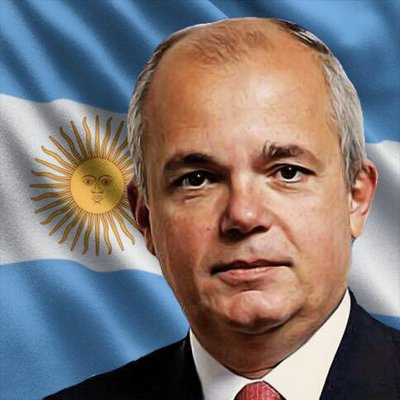
No es ideología, es negocio:
Cuanto más grande el Estado, más parte de la torta le toca a los que lo dirigen, a la casta gobernante.
Es solo eso, disimulado bajo litros de tinta y horas de discurso, delirando justificativos aparentemente bondadosos.

ESCUCHEN LO QUE DICE EL ZURDO GRABOIS Y SAQUEN SUS PROPIAS CONCLUSIONES DE CARA A 2027
@JMilei
Fernando S. Badenas retweeted

Earlier today I wrote that school destroys critical thinking. Many of you asked for proof.
The proof is Marx.
Marxism is probably the most tested theory in human history. Tested on paper by the best economists in the world. Tested at full scale on hundreds of millions of people, across several continents, for more than a century. And it failed every single test.
A free mind, one that checks its ideas against reality, cannot remain Marxist. If so many people still are, it's not a problem of intelligence. It's a problem of method. They were never taught to verify.
Let's start from the beginning.
In 1867, Marx publishes Das Kapital. Everything rests on one idea: the value of a good comes from the amount of labor it contains. The boss's profit is therefore labor stolen from the worker.
Four years later, in 1871, Menger and Jevons independently show that this is wrong. Value doesn't come from labor. It comes from the usefulness the buyer sees in the good. An hour spent digging a useless hole creates zero value. That's the marginal revolution, and all of modern economics is built on it.
In 1896, Böhm-Bawerk shows that Marx's system contradicts itself: real prices don't match labor values, and Marx knew it. The foundation collapses.
In 1920, Mises asks the question that kills it: without private property, there are no market prices. Without prices, how does a central planner know what to produce, how much, and with which resources? Answer: he can't. Hayek finishes the job in 1945: economic knowledge is scattered across millions of minds, and no central bureau can ever gather it.
That's the theory. Now the predictions.
Marx predicted the revolution would break out in the most industrialized countries, England and Germany. It happened in Russia, an agrarian country. Wrong.
He predicted workers would grow poorer and poorer under capitalism. They grew richer than at any point in history. Wrong.
He predicted the State would wither away. Everywhere his ideas were applied, the State became total. Wrong.
Now the experiments.
USSR: forced collectivization, famine in Ukraine, millions dead, the Gulag.
China: Mao's Great Leap Forward. Between 15 and 45 million dead depending on the historian. The largest famine in human history, produced by a plan.
Cambodia: the Khmer Rouge killed roughly a quarter of their own population in four years.
Then there are the natural experiments. The most brutal ones, because they eliminate every excuse.
Korea. Same people, same language, same culture, same history. In 1945, the North was richer than the South. Today, income per person in the South is about 29 times higher than in the North. Only one variable changed: the system.
Germany. One people cut in two. One side had to build a wall. Not to keep people out. To keep them in.
Venezuela. The largest proven oil reserves on the planet. Nearly 8 million people fled the country. 21st-century socialism ended with Maduro captured last January.
Meanwhile, the other system, the one you were taught to hate, did this: in 1820, about three quarters of humanity lived in extreme poverty. Today, around 10%. And the biggest escape from poverty in history, China after 1978, happened at the exact moment the Communist Party brought markets back.
From Marx to Maduro, 150 years of data. All pointing the same way.
So how does anyone stay Marxist?
With the magic sentence: "that wasn't real communism."
Think about what that sentence means. A theory that fails every time it's tried, whose believers then declare that none of the attempts counted, is no longer a theory. It's a faith. Karl Popper saw it as early as 1945: Marxism survived its refutations by making itself irrefutable.
A mind trained to think for itself asks one question: how many failures does it take before you question the hypothesis? One, two, ten, forty?
That's exactly the question school never teaches you to ask.
Marx isn't taught as a hypothesis to test against the data. He's taught as a morality tale: there are oppressors and oppressed, and the right side is obvious. You learn the conclusion, never the method.
A four-year-old would ask: "Okay, but where did it work?" Fifteen years of schooling later, they've stopped asking.
A system that teaches you to obey has no interest in teaching you to verify. Because the day you start verifying is the day you start being free.
And that day, you stop being a Marxist.

A few years ago, Peter Thiel wrote to Mark Zuckerberg: 70% of Millennials say they're pro-socialist.
His conclusion: stop calling them stupid, and try to understand why.
His explanation was economic. Too much student debt, unaffordable housing, no capital. When you own nothing, you have no reason to defend the system.
He's right. But that's only half the story.
The other half is school.
School destroys critical thinking. Methodically. For fifteen years.
You learn to recite instead of question. To find the expected answer instead of the true one. To obey authority instead of reasoning for yourself.
When you've spent your youth outsourcing your thinking to an institution, it feels natural to outsource your life to an even bigger one: the State.
That's why so many end up Marxist. Not by conviction. By conditioning.
And that conditioning is about to become a handicap.
We're entering a world where AI does everything conformist, predictable and standardized better than we do. The only value left is thinking differently.
To create value tomorrow, you'll need to be neurodivergent.
And someone who thinks differently and reasons from first principles almost always ends up seeing the same thing: the State, as it works today, destroys more value than it creates.
It's no accident that Alex Karp created a fellowship at Palantir dedicated to neurodivergent talent. To him, in the age of AI, there are only two ways to have a future: master a real trade, or be neurodivergent.
But I'll go further than Karp.
I believe neurodivergence isn't the exception. It's the natural state of the human mind.
Look at a four-year-old. They ask hundreds of questions a day. They take everything apart. They refuse any rule they don't understand. They think from first principles without even knowing it's a thing.
Then they go to school. And we spend fifteen years normalizing them.
School doesn't shape minds. It sands them down.
The future belongs to those who survived the sanding.

Fernando S. Badenas retweeted

“Una nación debe preguntarse seriamente en qué ha fallado cuando sus jóvenes deben abandonar su tierra para realizar sus sueños”. —León XIV.
En Argentina, ese fracaso tiene nombre: kirchnerismo. Por culpa de ellos 1.8 millones de jóvenes vive fuera del país.
Fernando S. Badenas retweeted
In September, Javier Milei stood at the UN General Assembly and said what nobody in that room wanted to hear: the institution now exists to feed "a caste of fatally arrogant parasites disguised as well-intentioned bureaucrats."
He wasn't only talking about the UN.
That caste is everywhere. Over decades, the left and the corruption that travels with it have infiltrated every institution that matters: ministries, universities, NGOs, international bodies, newsrooms. This isn't a few bad apples. It's systemic.
And we are all paying the bill. Record public debt across the West, collapsing public services, nations that can no longer keep their own streets safe. That's not bad luck. It's the direct consequence of a system that rewards capture instead of results.
Here's the good news: the answers are no longer theoretical. They've been tested in the real world.
On the economy: Milei. He took a country everyone had written off, took a chainsaw to the state, and broke an inflation spiral the experts swore was unbreakable.
On security: Bukele. El Salvador went from murder capital of the world to one of the safest countries in the Americas in a few years. The same experts said that was impossible too.
The playbook exists. It works. And every country on earth can apply it.
I believe the next five years will be historic. A turning point on the scale of the fall of the Berlin Wall.
And when it comes, we will need a Nuremberg 2.0. Not of individuals, but of an entire system of lies. A system that used the media, artists, culture and even the courts to hide its own failures and silence anyone who pointed them out. Every lie exposed, documented, put on the record, so it can never happen again.
Now watch closely what that system is doing right now: everything in its power to ban AI, or capture it.
It's no accident that Milei used the same UN speech to reject pre-emptive AI regulation. AI is the one thing the caste can't control. A tool that lets any individual verify, build, create and speak without asking the gatekeepers for permission.
So they will try to regulate it, license it, and own it. And AI in the hands of that caste is the perfect infrastructure for a totalitarian state.
Europe is already on those rails.
The choice for the next decade is simple: freedom or the caste.
Pick a side.
History will remember two men as the ones who exposed the empire of lies: Javier Milei and Nayib Bukele.
For decades, the same class of experts, NGOs, think tanks and international institutions told us two things were impossible.
That you could kill inflation without destroying a country.
That you could kill violent crime without "addressing root causes" for another 30 years.
Milei took the first one.
Argentina, December 2023: inflation over 200% a year, 25% in a single month. A central bank printing money to fund a state that had become a vote-buying machine. Every economist on TV predicted a social explosion if anyone touched it.
He cut the number of ministries in half. He balanced the budget in his first year. Monthly inflation went from 25% to under 2%. Poverty, which peaked at 52.9% right after the devaluation, fell to 28%, the lowest since 2018. It's not a straight line, poverty ticked back up this year, and he says so himself. But the point is proven: the "impossible" was possible all along.
The lesson is brutal. Endless money printing was never a technocratic necessity. It was a hidden tax on the poor, quietly paying for the people who designed the system and lived off it.
Bukele took the second one.
El Salvador, 2015: 106 homicides per 100,000 people. The most violent country on earth outside a war zone. Gangs ran neighborhoods, taxed every bus driver and every street vendor, and decided who lived and who died.
El Salvador, 2025: 1.3 per 100,000. Lower than the United States.
Every international expert said it couldn't be done. The NGOs called it barbaric. Salvadorans re-elected him with over 80% of the vote, because they're the ones who used to bury their kids.
And now his helicopters are in Haiti, pulling his own soldiers out of gang territory, telling the gangs: we finished with ours, we can finish with you.
So ask yourself the real question. If it was this simple, why didn't anyone do it?
Because an entire ecosystem lived off the problem.
Inflation funded the state that funded the clients that funded the elections. Crime created fear, and fear created demand for programs, consultants, studies, panels, subsidies and "experts" who never had to deliver a result. In Latin America it was the gangs. In the West it's mass immigration with no integration and crime with no consequences. Different symptom, same business model: the problem is never solved because too many people are paid to manage it.
Milei and Bukele didn't just fix two countries. They published the proof. Every politician who still says "it's complicated" now has to explain why a guy with a chainsaw and a guy with a baseball cap did in two years what they couldn't do in forty.
Thank you Javier Milei. Thank you Nayib Bukele.
The world is going to heal with your solutions.
Europe is next. We're waiting.

Fernando S. Badenas retweeted
Being a communist in 2026 means one of two things.
Either you're stupid.
Or you've never opened a history book.
You cite Lenin and October 1917 as your model. Fine. Let's look at the model.
Lenin gave us the Cheka, the Red Terror, war communism, and the 1921 famine that killed around 5 million people.
Stalin gave us the Holodomor, millions of Ukrainians starved on purpose. The Great Purge, roughly 700,000 people shot in two years. The Gulag, more than 1.5 million dead.
Mao gave us the Great Leap Forward, the deadliest famine in human history, with estimates running from 15 to 45 million dead. Then the Cultural Revolution on top of it.
Pol Pot gave us Year Zero. Money abolished, cities emptied at gunpoint, wearing glasses was enough to get you killed for being an intellectual. Close to a quarter of Cambodia's population gone in under four years.
The Kims gave us three generations of hereditary communism, a famine in the 90s that killed hundreds of thousands, and camps that are still running today.
Mengistu gave Ethiopia its own Red Terror, then a famine his policies made far worse.
Castro gave Cuba firing squads, political prisoners, and six decades of people risking their lives on rafts to get out.
Ceaușescu, Hoxha, Honecker. A wall in Berlin built not to keep enemies out, but to keep its own people in.
And for the "21st-century socialism" crowd: Venezuela, sitting on the largest oil reserves on the planet, watched nearly 8 million of its people flee.
Every continent. Every culture. Every decade. Same result. Depending on who's counting, tens of millions dead, close to 100 million according to The Black Book of Communism.
So why does it fail every single time? Not bad luck. Not the wrong people in charge. Not "real communism has never been tried."
Mises explained it in 1920, before Stalin even took power. If the state owns all the means of production, there is no market for them. No market means no prices. No prices means no way to calculate anything. You can't know whether a factory here is worth more than a railway there. A planned economy isn't just inefficient. It's blind. It's flying a plane with every instrument ripped out.
Hayek went further. In "The Use of Knowledge in Society," he showed that the knowledge needed to run an economy doesn't exist in one place. It's scattered across millions of people: the farmer who knows his soil, the shopkeeper who knows his customers, the engineer who knows which part is about to break. Prices are the only system that aggregates all of it in real time. No committee, no Politburo, no five-year plan can replace that.
The Great Leap Forward is the textbook case. Local officials, terrified of being purged, reported harvests that didn't exist. Beijing requisitioned grain based on fake numbers. The peasants starved. When you kill the price signal, the only information left is lies told to people with guns.
And in "The Road to Serfdom," Hayek explained the rest. When the plan fails, and it always fails, someone has to impose it by force. Central planning requires concentrated power, and concentrated power attracts the people most willing to use it. He titled a whole chapter "Why the Worst Get on Top."
That's the mechanism. Destroy prices, you destroy information. Destroy information, the economy collapses. Once it collapses, you need terror to keep it standing.
Lenin, Stalin, Mao and Pol Pot weren't betrayals of communism. They were communism working exactly as designed.
So when someone tells you in 2026 that he wants to replicate October 1917, take him at his word.
He's not promising you equality. He's promising you the Cheka.

Fernando S. Badenas retweeted
Hegel said history repeats itself. Marx added: first as tragedy, then as farce. The irony: it's Marx's own camp proving him right today.
Because we are replaying, almost to the letter, the oldest intellectual war in the West. And it started in Greece 2,400 years ago.
Athens versus Sparta. The open port versus the barracks. The agora, trade, debate, the right to be wrong, versus order, uniformity, and a city that plans every life from birth to death.
Thucydides, who chronicled that war, knew exactly what he was doing. He said he was writing "a possession for all time," because human nature doesn't change and the same causes will produce the same tragedies. He wasn't telling the story of the past. He was telling the story of our present.
Polybius gave us the mechanism: anacyclosis. Regimes move in cycles. Democracy decays into mob rule, and the mob ends up begging for a master to decide for it. The wheel has been turning forever.
But here's the most fascinating part. History's first great central planner wasn't a politician. He was a philosopher. Plato, in The Republic, designs the perfect city: guardians who know better than you, common property for the elite, controlled education, censored poets, and a "noble lie" told to the people so they accept their place. His model, barely hidden: Sparta.
His own student answered him. Aristotle, in the Politics: what belongs to the greatest number receives the least care. When everything belongs to everyone, no one is responsible for anything. History's first argument against collectivism. 2,300 years ago.
And Heraclitus had the key before both of them: everything flows. The world is motion. Trying to freeze it into a plan is trying to stop a river with your bare hands.
More than two millennia later, as the world emerged from the Second World War, Karl Popper published The Open Society and Its Enemies. And enemy number one is Plato. Popper shows that the totalitarian regimes of the 20th century share the same root as The Republic: the belief that an elite can know the direction of history and organize society from the top down. He calls it the closed society. Against it stands Athens: the city where anyone can criticize, fail, experiment, correct.
Hayek finished the argument. The Road to Serfdom, then The Fatal Conceit. The planner cannot succeed, not for lack of good intentions, but because it's impossible. Knowledge is scattered across millions of minds. A price in a free market carries more information than any committee of experts ever could. Central planning isn't a good idea poorly executed. It's an epistemic error.
And here we are.
On one side, Plato's camp. Those who believe an enlightened elite should govern at global scale, coordinate economies, decide what we're allowed to say, produce, and consume. The guardians have just changed their vocabulary. Censorship is now called "moderation." The noble lie is now called "the narrative." The planned city is now called "global governance."
On the other side, the camp of Athens. Those who learned, often the hard way, that planning fails every single time it's tried. That free speech isn't a luxury but a civilization's error-correction mechanism. That free markets and growth have lifted more humans out of poverty than every five-year plan combined.
One last detail the guardians would rather you forget.
Sparta won the Peloponnesian War. Some thirty years later, at Leuctra, it was broken. Aristotle saw it: a city that controls everything, freezes everything, and sacrifices the individual to the plan ends up running out of men. Sparta didn't collapse under its enemies' blows. It hollowed itself out from within.
That's exactly what's playing out today. The planners will never build the perfect city they promise. In trying to impose it, they are destroying the one that exists: its economy, its free speech, its birth rate, its confidence in itself.
The plan doesn't save civilization. It consumes it.
Choose your side.
Fernando S. Badenas retweeted
To my friends on the left.
You're about to be sold the most elegant trap in modern history. It will come wrapped in everything you care about: the planet, workers, justice, the climate. If you buy it, it will deliver the exact opposite of everything you've ever fought for.
Let me show you where it comes from.
In 1944, two philosophers of the Frankfurt School, Horkheimer and Adorno, wrote that reason and technology, the tools that were supposed to free humanity, had turned into tools of domination. Twenty years later, Marcuse argued that modern technology was the most sophisticated system of social control ever built. Brilliant men, with a real insight. But the lesson a whole generation of intellectuals took from them was simple: progress is suspect, and the machine is the enemy.
In 1968, the Club of Rome was founded. It was a small circle of industrialists, diplomats and scientists. Notice who was in the room. No workers, no farmers, no one from the slums. In 1972 they published The Limits to Growth. The message was that if humanity keeps growing, it collapses. So slow down, consume less, have fewer children, accept less.
Around the same time, Paul Ehrlich's The Population Bomb predicted that hundreds of millions would starve to death in the 1970s.
Here's what actually happened. The Green Revolution fed billions. The mass famines never came. In 1980 the economist Julian Simon bet Ehrlich that resources would get cheaper, not scarcer, and he won. Extreme poverty went from more than a third of humanity in 1990 to under one in ten. That didn't come from degrowth. It came from growth, energy and technology.
The pessimists were wrong about almost everything. But they won something more important than the argument. They won the institutions: UN agencies, NGOs, university departments, think tanks, Brussels. Nobody needed to coordinate. The ideas simply became the water everyone swims in. Growth is guilt. Technology is danger. The answer is always less.
Less for you, that is. Never for the people at Davos who fly private to discuss your carbon footprint.
Now watch what happens with AI. They'll connect it to the planet. Data centers drink water, burn gas and raise your electricity bill. Some of that is locally true, and the people living next to those sites deserve to be heard. Last March, Bernie Sanders and AOC proposed a national moratorium on new AI data centers, backed by hundreds of organizations.
So ask the oldest question on the left: who benefits?
A moratorium on new data centers freezes the ones that already exist. Google, Microsoft, Amazon and Meta already built theirs. A moratorium doesn't stop Big Tech. It crowns Big Tech. The startups, the public universities, the open-source labs, the countries of the Global South that were about to build their own are the ones who never get to. It's the greatest gift ever offered to an oligarchy, wrapped in green paper.
And here is what nobody tells you. AI isn't the planet's problem. It's the fastest path we have to solving the planet's problems.
AI is already controlling the plasma inside experimental fusion reactors. It has predicted the structure of nearly every known protein, which opens the door to enzymes that eat plastic and crops that need less water and less fertilizer. It has proposed hundreds of thousands of new stable materials for better batteries and cheaper solar. It forecasts weather and balances electric grids so renewables can actually work at scale.
Every problem you care about is, at its core, an intelligence problem. Clean energy, food, water, disease, poverty. Make intelligence abundant and those problems become solvable. Make it scarce and the solutions belong to whoever owns it.
That's the real trap. Fear of AI won't make AI disappear. It will only decide who owns it.
A world where intelligence is rationed creates a new aristocracy. On one side, a small class with unlimited cognitive labor at its command. On the other, everyone else, dependent on that class for their health, their education, their job, their permission to speak. No chains. Just dependency. That's how every modern form of servitude has worked, and the left used to understand that better than anyone.
Everything the left has ever wanted has never been closer: the end of poverty, healthcare and education for every human being, workers freed from exhausting labor, a planet that can breathe. Marx dreamed of a society where you could hunt in the morning, fish in the afternoon and criticize after dinner. That isn't a world of scarcity. It's a world of abundance. Abundance is the only thing that has ever freed anyone.
So stay on the left if you want. Keep fighting for the poor, for workers, for the planet. Just fight with the most powerful tool humanity has ever been handed, not against it.
Because the people asking you to give it up already have theirs.
In the next ten years, humanity will make one choice that decides the next thousand.
Option A: an Orwellian world run by a tiny hyperclass that controls AI, owns every resource, and turns the rest of us into permanent dependents.
Option B: for the first time in history, a world where the systemic corruption that has ruled us for decades simply stops being possible.
Yesterday I wrote that Milei and Bukele exposed the empire of lies. Javier Milei reposted it. Today I want to explain why that post was only the beginning, and why I've never been more optimistic.
If you're on the left, or even the far left, read this one to the end. I'm not trying to convert you. The stakes are your future too.
Start from first principles. A system produces exactly what it rewards.
For decades, the Western system has been captured by one worldview: administrations, universities, NGOs, media, international institutions. The left didn't win the argument. It won the hiring committees.
Once a system is captured, its incentives flip.
You don't get promoted for solving problems. You get promoted for managing them. A solved problem kills a budget line. A managed problem renews it every year.
You don't succeed by telling the truth. You succeed by saying the right words. So hypocrisy becomes a career skill. The professor who preaches equality and runs the most closed network in the country. The politician who votes for open borders and lives where none of it ever reaches him.
You don't build fair systems. You build systems that look fair and quietly pay the people who run them. Inflation is a tax on the poor that funds the state. Programs fund the consultants who design more programs.
That's what "systemic" means. Nobody has to be evil. Honest people inside the machine either adapt or leave. After forty years, the ones still there are the ones who adapted.
Here's the irony. The first countries to break free were the ones at the very bottom.
Argentina was bankrupt. El Salvador was a graveyard. The system had nothing left to promise them, and that's exactly why they woke up. When the lie stops paying, people stop believing it.
No civilization is dead as long as its people can still see the problem clearly. Rock bottom is often where the rebound starts.
Now the West is caught in a vise.
On one side, AI. A technology that exposes managed incompetence. When a model can read a 2,000-page law, audit a national budget and compare outcomes across 50 countries in seconds, "it's complicated" stops working. The expert class loses its monopoly on knowledge.
On the other side, a generation of tech builders who think from first principles and don't owe their careers to the system. They have more capital, more talent and more reach than most countries. And they've seen up close how the machine works.
Put the two together and the old system is close to checkmate. It can't compete on results. It can't hide behind complexity. It can't control the narrative anymore.
So what does a system do when it can't win? It tries to own the thing that's beating it.
Listen to Marc Andreessen. He has said publicly that in 2024 he sat with Biden administration officials who told him AI would be two or three big companies working hand in hand with the government, that investors shouldn't even bother funding AI startups, and that parts of the underlying math could be classified the way nuclear physics was in the Cold War. He walked out and endorsed Trump. Former Biden officials now say that's not what was said. Read both versions and decide who you believe.
The logic doesn't depend on one lunch, though. Control three companies and you control the models. Control the models and you control what billions of people read, ask, learn and are allowed to say. Add a digital ID, a programmable currency and the scanning of private messages that Europe keeps putting back on the table. Then you don't need a Ministry of Truth anymore. A compliance department is enough.
1984 with a better UX.
And last Tuesday, Democrats took back Congress. This isn't theoretical anymore. The keys to the house are on the table.
Now imagine we don't hand them over.
Intelligence becomes almost free. Expertise stops being a privilege. A kid in a village in Brittany or a suburb of Lagos gets the same doctor, the same lawyer, the same tutor as a billionaire's son. The cost of producing almost everything collapses. And systemic corruption becomes nearly impossible, because anyone can audit every budget, every law and every promise, instantly.
For the first time in human history, a society that could be truly equal. The old left version was equality by sharing scarcity. This one is equality through abundance. A world where poverty stops being a law of nature.
Which is exactly what the left always said it wanted.
So to my friends on the left, one honest question. Which side actually leads there? The side that wants AI open, cheap and in everyone's hands? Or the side that wants it locked inside three companies and a regulator?
Milei and Bukele proved the impossible was possible at the scale of a country. AI is offering the same thing at the scale of civilization.
All we have to do is not give the keys to the people who were paid to keep the problem alive.
That's the choice. And I've never been more optimistic, because for the first time, we can all see it.

Fernando S. Badenas retweeted
History will remember two men as the ones who exposed the empire of lies: Javier Milei and Nayib Bukele.
For decades, the same class of experts, NGOs, think tanks and international institutions told us two things were impossible.
That you could kill inflation without destroying a country.
That you could kill violent crime without "addressing root causes" for another 30 years.
Milei took the first one.
Argentina, December 2023: inflation over 200% a year, 25% in a single month. A central bank printing money to fund a state that had become a vote-buying machine. Every economist on TV predicted a social explosion if anyone touched it.
He cut the number of ministries in half. He balanced the budget in his first year. Monthly inflation went from 25% to under 2%. Poverty, which peaked at 52.9% right after the devaluation, fell to 28%, the lowest since 2018. It's not a straight line, poverty ticked back up this year, and he says so himself. But the point is proven: the "impossible" was possible all along.
The lesson is brutal. Endless money printing was never a technocratic necessity. It was a hidden tax on the poor, quietly paying for the people who designed the system and lived off it.
Bukele took the second one.
El Salvador, 2015: 106 homicides per 100,000 people. The most violent country on earth outside a war zone. Gangs ran neighborhoods, taxed every bus driver and every street vendor, and decided who lived and who died.
El Salvador, 2025: 1.3 per 100,000. Lower than the United States.
Every international expert said it couldn't be done. The NGOs called it barbaric. Salvadorans re-elected him with over 80% of the vote, because they're the ones who used to bury their kids.
And now his helicopters are in Haiti, pulling his own soldiers out of gang territory, telling the gangs: we finished with ours, we can finish with you.
So ask yourself the real question. If it was this simple, why didn't anyone do it?
Because an entire ecosystem lived off the problem.
Inflation funded the state that funded the clients that funded the elections. Crime created fear, and fear created demand for programs, consultants, studies, panels, subsidies and "experts" who never had to deliver a result. In Latin America it was the gangs. In the West it's mass immigration with no integration and crime with no consequences. Different symptom, same business model: the problem is never solved because too many people are paid to manage it.
Milei and Bukele didn't just fix two countries. They published the proof. Every politician who still says "it's complicated" now has to explain why a guy with a chainsaw and a guy with a baseball cap did in two years what they couldn't do in forty.
Thank you Javier Milei. Thank you Nayib Bukele.
The world is going to heal with your solutions.
Europe is next. We're waiting.
Fernando S. Badenas retweeted
In the next ten years, humanity will make one choice that decides the next thousand.
Option A: an Orwellian world run by a tiny hyperclass that controls AI, owns every resource, and turns the rest of us into permanent dependents.
Option B: for the first time in history, a world where the systemic corruption that has ruled us for decades simply stops being possible.
Yesterday I wrote that Milei and Bukele exposed the empire of lies. Javier Milei reposted it. Today I want to explain why that post was only the beginning, and why I've never been more optimistic.
If you're on the left, or even the far left, read this one to the end. I'm not trying to convert you. The stakes are your future too.
Start from first principles. A system produces exactly what it rewards.
For decades, the Western system has been captured by one worldview: administrations, universities, NGOs, media, international institutions. The left didn't win the argument. It won the hiring committees.
Once a system is captured, its incentives flip.
You don't get promoted for solving problems. You get promoted for managing them. A solved problem kills a budget line. A managed problem renews it every year.
You don't succeed by telling the truth. You succeed by saying the right words. So hypocrisy becomes a career skill. The professor who preaches equality and runs the most closed network in the country. The politician who votes for open borders and lives where none of it ever reaches him.
You don't build fair systems. You build systems that look fair and quietly pay the people who run them. Inflation is a tax on the poor that funds the state. Programs fund the consultants who design more programs.
That's what "systemic" means. Nobody has to be evil. Honest people inside the machine either adapt or leave. After forty years, the ones still there are the ones who adapted.
Here's the irony. The first countries to break free were the ones at the very bottom.
Argentina was bankrupt. El Salvador was a graveyard. The system had nothing left to promise them, and that's exactly why they woke up. When the lie stops paying, people stop believing it.
No civilization is dead as long as its people can still see the problem clearly. Rock bottom is often where the rebound starts.
Now the West is caught in a vise.
On one side, AI. A technology that exposes managed incompetence. When a model can read a 2,000-page law, audit a national budget and compare outcomes across 50 countries in seconds, "it's complicated" stops working. The expert class loses its monopoly on knowledge.
On the other side, a generation of tech builders who think from first principles and don't owe their careers to the system. They have more capital, more talent and more reach than most countries. And they've seen up close how the machine works.
Put the two together and the old system is close to checkmate. It can't compete on results. It can't hide behind complexity. It can't control the narrative anymore.
So what does a system do when it can't win? It tries to own the thing that's beating it.
Listen to Marc Andreessen. He has said publicly that in 2024 he sat with Biden administration officials who told him AI would be two or three big companies working hand in hand with the government, that investors shouldn't even bother funding AI startups, and that parts of the underlying math could be classified the way nuclear physics was in the Cold War. He walked out and endorsed Trump. Former Biden officials now say that's not what was said. Read both versions and decide who you believe.
The logic doesn't depend on one lunch, though. Control three companies and you control the models. Control the models and you control what billions of people read, ask, learn and are allowed to say. Add a digital ID, a programmable currency and the scanning of private messages that Europe keeps putting back on the table. Then you don't need a Ministry of Truth anymore. A compliance department is enough.
1984 with a better UX.
And last Tuesday, Democrats took back Congress. This isn't theoretical anymore. The keys to the house are on the table.
Now imagine we don't hand them over.
Intelligence becomes almost free. Expertise stops being a privilege. A kid in a village in Brittany or a suburb of Lagos gets the same doctor, the same lawyer, the same tutor as a billionaire's son. The cost of producing almost everything collapses. And systemic corruption becomes nearly impossible, because anyone can audit every budget, every law and every promise, instantly.
For the first time in human history, a society that could be truly equal. The old left version was equality by sharing scarcity. This one is equality through abundance. A world where poverty stops being a law of nature.
Which is exactly what the left always said it wanted.
So to my friends on the left, one honest question. Which side actually leads there? The side that wants AI open, cheap and in everyone's hands? Or the side that wants it locked inside three companies and a regulator?
Milei and Bukele proved the impossible was possible at the scale of a country. AI is offering the same thing at the scale of civilization.
All we have to do is not give the keys to the people who were paid to keep the problem alive.
That's the choice. And I've never been more optimistic, because for the first time, we can all see it.
History will remember two men as the ones who exposed the empire of lies: Javier Milei and Nayib Bukele.
For decades, the same class of experts, NGOs, think tanks and international institutions told us two things were impossible.
That you could kill inflation without destroying a country.
That you could kill violent crime without "addressing root causes" for another 30 years.
Milei took the first one.
Argentina, December 2023: inflation over 200% a year, 25% in a single month. A central bank printing money to fund a state that had become a vote-buying machine. Every economist on TV predicted a social explosion if anyone touched it.
He cut the number of ministries in half. He balanced the budget in his first year. Monthly inflation went from 25% to under 2%. Poverty, which peaked at 52.9% right after the devaluation, fell to 28%, the lowest since 2018. It's not a straight line, poverty ticked back up this year, and he says so himself. But the point is proven: the "impossible" was possible all along.
The lesson is brutal. Endless money printing was never a technocratic necessity. It was a hidden tax on the poor, quietly paying for the people who designed the system and lived off it.
Bukele took the second one.
El Salvador, 2015: 106 homicides per 100,000 people. The most violent country on earth outside a war zone. Gangs ran neighborhoods, taxed every bus driver and every street vendor, and decided who lived and who died.
El Salvador, 2025: 1.3 per 100,000. Lower than the United States.
Every international expert said it couldn't be done. The NGOs called it barbaric. Salvadorans re-elected him with over 80% of the vote, because they're the ones who used to bury their kids.
And now his helicopters are in Haiti, pulling his own soldiers out of gang territory, telling the gangs: we finished with ours, we can finish with you.
So ask yourself the real question. If it was this simple, why didn't anyone do it?
Because an entire ecosystem lived off the problem.
Inflation funded the state that funded the clients that funded the elections. Crime created fear, and fear created demand for programs, consultants, studies, panels, subsidies and "experts" who never had to deliver a result. In Latin America it was the gangs. In the West it's mass immigration with no integration and crime with no consequences. Different symptom, same business model: the problem is never solved because too many people are paid to manage it.
Milei and Bukele didn't just fix two countries. They published the proof. Every politician who still says "it's complicated" now has to explain why a guy with a chainsaw and a guy with a baseball cap did in two years what they couldn't do in forty.
Thank you Javier Milei. Thank you Nayib Bukele.
The world is going to heal with your solutions.
Europe is next. We're waiting.
Fernando S. Badenas retweeted

Yo soy artista y estoy TOTALMENTE DE ACUERDO CON @JMilei.
Jamás he recibido un sólo peso del Estado. Ninguna beca, ni siquiera cuando quizá la mereciera. Tampoco he sido beneficiario de programa social alguno.
¿Saben a qué edad vendí mi primera pintura de manera profesional? A los 16 años. Desde entonces y hasta hoy, a mis 51 años, he vivido de mi talento y de mi obra. He logrado exponer en muchos países y llevar el nombre de México, con muchísimo cariño y orgullo a distintos lugares del planeta.
Y aclaro algo: vengo de una familia de clase media, nunca he pertenecido a una familia adinerada. Mis padres siempre me apoyaron, como seguramente lo haría cualquier familia que cree en sus hijos, pero mi carrera la he construido con mi propio trabajo. También he pasado épocas difíciles, de vacas flacas, y algunas todavía las sigo pasando. Pero mi obra me ha permitido sostenerme y vivir de mi profesión durante todos estos años.
¿Qué sí necesito del Estado? Que se dedique a administrar bien el país, a generar las condiciones para que la gente pueda vivir mejor, ahorrar, viajar y tener un buen nivel de vida. Todos por igual.
En la medida en que eso suceda, yo podré vender mis cuadros a más personas, porque el arte es indispensable para la sociedad. No podríamos entender nuestra existencia como especie sin el arte. Es uno de los pilares fundamentales de nuestra salud mental y emocional.
Pero hay algo que a veces se olvida: para crear arte, los artistas también necesitamos comer. También queremos vivir bien, disfrutar de la vida y tener oportunidades. Y para ello es indispensable que la sociedad en la que vivimos tenga prosperidad.
En efecto, Milei vuelve a tener razón: quien verdaderamente es artista no tiene por qué vivir del Estado. Yo soy un claro ejemplo de ello.
Pero sí necesita un Estado que genere las condiciones para que haya prosperidad, para que las personas tengan capacidad de adquirir su obra y para que pueda vivir dignamente de su trabajo.
Y esto no se limita al arte. Es válido para cualquier persona que quiera vivir del fruto de su talento, su esfuerzo y su trabajo.


Fernando S. Badenas retweeted

Si no entendiera nada, me preguntaría por qué los que se la pasan vendiendo el pescado podrido de los que están infiltrados en el gobierno para limarlo, hoy se quejan del pescado podrido que les vendió ayer el gobierno para asegurar el éxito del operativo para que Flavio Bolsonaro llegue a EEUU y mantener esa información a salvo de esos mismos enemigos infiltrados que, por supuesto, de conocerla, la habrían arruinado.
Se nota demasiado que lo que al mamapautaje le molesta, no es el pescado podrido, sino que al gobierno le salgan bien las cosas a pesar de todo el esfuerzo que ellos hacen a diario para perjudicarlo.
#MileiOMafia
Fernando S. Badenas retweeted

Lula te habla tranquilo y con respeto, pero terminas en cana
Milei te grita y putea, y seguís viviendo en total libertad…
No se, digo
