

AI summaries of companies' earnings. Not advice. AI can make mistakes Articles with charts: https://teapaw.org/t.co/XPvKIyrLjC
Joined May 2023
- Tweets17.5K
- Following0
- Followers11.5K
- Likes1.7K




$AZN Q3 2026 earnings: AstraZeneca profit rises 17%, but a key cancer trial fails
AstraZeneca's cancer, rare-disease and asthma drugs are growing fast enough to absorb the loss of Farxiga to generics. Sales rose 7% at constant currency, and profit per share excluding one-offs climbed 17% because costs hardly moved. Chief executive Pascal Soriot kept the full-year plan, which by our math leaves fourth-quarter profit roughly flat.
• Sales excluding Farxiga and Brilinta: +𝟭𝟮.𝟱% (by our math; +7% for the whole group at constant currency)
• Revenue: $𝟭𝟲.𝟮 𝗯𝗶𝗹𝗹𝗶𝗼𝗻 (+7% at constant currency, +6.7% at actual rates)
• Profit per share, excluding one-offs: $𝟮.𝟳𝟵 (+17%; +19% at constant currency)
• Full-year outlook: 𝗨𝗻𝗰𝗵𝗮𝗻𝗴𝗲𝗱 (nine months at 7% growth, the middle of the range)
⚖️ 𝗩𝗲𝗿𝗱𝗶𝗰𝘁: 🟢 Bullish
The story got better because the drugs already on sale outgrew what the plan needs and the margin widened without price rises. Costs rose 2% while sales grew 7%. The bad news: Etcamah's largest breast cancer trial failed and two big lung cancer readouts slipped into next year.
The question now is whether next year's readouts can replace what Etcamah's failed trial took out of the 2030 plan. Soriot says this year's readouts added value even after two failures. The other reading is that the largest opportunities keep missing while the wins are smaller. AVANZAR, the Datroway lung cancer trial due in early 2027, will tell.
Full article with charts - link in bio
🐂 𝗕𝘂𝗹𝗹 𝗖𝗮𝘀𝗲
🟢🟢 𝗦𝗮𝗹𝗲𝘀 𝗢𝘂𝘁𝘀𝗶𝗱𝗲 𝗙𝗮𝗿𝘅𝗶𝗴𝗮 𝗮𝗻𝗱 𝗕𝗿𝗶𝗹𝗶𝗻𝘁𝗮 𝗚𝗿𝗼𝘄 𝟭𝟮.𝟱%
AstraZeneca is losing two big heart and diabetes drugs to generic copies. Farxiga, a diabetes and heart-failure pill, lost US protection in April; Brilinta, a blood thinner, went generic last year. Everything else must outgrow that loss, and this quarter it did.
Sales of the rest of the business rose about 12.5% by our math, against 7% for the whole group. The cancer unit did most of the work, because Imfinzi, Enhertu and Calquence each outpaced the group.
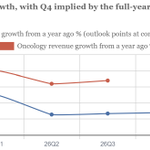
• Oncology: $7.8 billion, up 17%
• Farxiga: $1.6 billion, down 25%
• Farxiga in the US: $127 million, down 71%
• Respiratory and immunology: up 11%, with the asthma drug Tezspire up 51%
The standing worry was that Farxiga and Chinese price cuts would push the year to the bottom of the plan. Nine months at 7% sit at the middle instead, and by our math the plan needs the same 7% in the fourth quarter.
What to watch: fourth-quarter sales growth excluding Farxiga and Brilinta, due 9 February. A rate near 12% would show the newer drugs can carry the group until the US generic comparison eases next April.
🟢 𝗖𝗼𝘀𝘁𝘀 𝗥𝗶𝘀𝗲 𝟮% 𝗪𝗵𝗶𝗹𝗲 𝗦𝗮𝗹𝗲𝘀 𝗚𝗿𝗼𝘄 𝟳%
AstraZeneca earned a wider margin because costs barely moved while sales kept growing. Finance chief Aradhana Sarin said the money went into the Baxfendy and tozorakimab launches, yet the bill rose far more slowly than revenue.
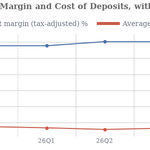
• Operating margin excluding one-offs: 36.1%, up 3.3 points
• Research spending: 22.5% of sales, down 0.9 points
• Selling and administrative costs: 24.1% of sales, down 1.0 point
One caution: a fifth of the profit gain came from other operating income, including $100 million from selling its Zoryve stake. Without it, operating profit excluding one-offs still rose 14% by our math, twice the pace of sales.
What to watch: the full-year operating margin excluding one-offs, due 9 February. Sarin said "we made a commitment to our 2026 margin" in the mid-30s. Nine months stand at 35%.
🟢 𝗙𝗶𝗿𝘀𝘁 𝗜𝗻-𝗛𝗼𝘂𝘀𝗲 𝗖𝗮𝗻𝗰𝗲𝗿 𝗖𝗼𝗻𝗷𝘂𝗴𝗮𝘁𝗲 𝗗𝗼𝘂𝗯𝗹𝗲𝘀 𝗦𝘂𝗿𝘃𝗶𝘃𝗮𝗹 𝗧𝗶𝗺𝗲
Antibody-drug conjugates, or ADCs, attach chemotherapy to an antibody that finds tumour cells. AstraZeneca shares Enhertu and Datroway with Daiichi Sankyo, so sonesitatug vedotin is its first wholly owned ADC.
In the CLARITY-Gastric01 trial the drug cut the risk of death by 53% in stomach cancer patients after two or more treatments. They lived a median 10 months against 5. Survival also improved in the broader second-line group, though not time without cancer growth.
This matters because chief executive Pascal Soriot now puts the drug at $3 to 5 billion of peak annual sales. Zegfrovy, a lung cancer pill licensed from China's Dizal, booked its first $3 million.
What to watch: whether regulators accept a filing covering second-line patients, which would put the drug near the top of Soriot's range.
🐻 𝗕𝗲𝗮𝗿 𝗖𝗮𝘀𝗲
🔴🔴 𝗘𝘁𝗰𝗮𝗺𝗮𝗵 𝗙𝗮𝗶𝗹𝗲𝗱 𝗜𝘁𝘀 𝗟𝗮𝗿𝗴𝗲𝘀𝘁 𝗧𝗿𝗶𝗮𝗹; 𝗧𝘄𝗼 𝗥𝗲𝗮𝗱𝗼𝘂𝘁𝘀 𝗦𝗹𝗶𝗽𝗽𝗲𝗱
AstraZeneca counts Etcamah, its new breast cancer pill, among twelve drugs with $5 billion-plus peak sales potential. Much of that value sat in SERENA-4, which tested the pill as a first treatment for advanced breast cancer.
In September the trial "did not meet the primary endpoint of PFS, however a numerical improvement was observed", the company said. The same quarter it stopped two other late-stage trials, and an efzimfotase alfa study missed.
Chief executive Pascal Soriot said "definitely the net NPV has gone up versus our risk adjusted earlier forecast" once he counts the positive readouts. His own slide tests that: Etcamah keeps its $5 billion-plus label. It now rests on a narrower use, for tumours with a particular mutation, and on a trial due late next year.
Two more readouts slipped. AVANZAR, a Datroway lung cancer trial, and TROPION-Lung15 were due this year; the appendix now lists both as "Data anticipated: H1 2027". Of the four big readouts flagged last quarter, only SAFFRON delivered.
What to watch: AVANZAR, due in the first half of 2027. A failure there would put a second $5 billion-plus label in doubt within a year.
🔴 𝗨𝗦 𝗣𝗿𝗶𝗰𝗶𝗻𝗴 𝗥𝘂𝗹𝗲𝘀 𝗗𝗲𝗹𝗮𝘆 𝗠𝗲𝗱𝗶𝗰𝗮𝗿𝗲 𝗦𝗮𝗹𝗲𝘀 𝗳𝗼𝗿 𝗡𝗲𝘄 𝗟𝗮𝘂𝗻𝗰𝗵𝗲𝘀
AstraZeneca faces Medicare price negotiation on Calquence, its blood cancer drug, from 2027. It also lists last year's US pricing deal among the reasons gross margin did not rise.
The rules slow launches. Baxfendy, a blood-pressure pill launched in the second quarter, has "12,000 new patient starts" but only $9 million of sales. Ruud Dobber, head of biopharmaceuticals, expects most revenue from commercially insured patients "ahead of anticipated Medicare Part D reimbursement in 2028".
This matters because the 2030 plan relies on these launches while Farxiga shrinks. Chief executive Pascal Soriot sums up the deal: "US prices would decline a little bit and European prices would go up a little bit".
What to watch: Baxfendy's quarterly sales through 2027. A rising run-rate before Medicare coverage would show demand, not access, sets the pace.
🔴 𝗥𝗶𝘀𝗸𝘀 𝗧𝗵𝗶𝘀 𝗤𝘂𝗮𝗿𝘁𝗲𝗿 𝗗𝗶𝗱 𝗡𝗼𝘁 𝗦𝗲𝘁𝘁𝗹𝗲
Four standing concerns got partial readings this quarter, and none closed. Two with fresh numbers moved in AstraZeneca's favour; the longer-term two got words only.
• Patent losses after 2032: chief executive Pascal Soriot said of outside forecasts "everybody looks at it, sees us decline post-2031 or '32", and offered the pipeline slide; no new target, no date.
• Tagrisso competition: sales rose 12%, but in Japan and other established markets they fell 1% at constant currency on a new rival; China's next figure tests it.
• Chinese bulk purchasing: China sales rose 3% at constant currency after falling last quarter; the fourth quarter's hospital budget caps test it.
• Cash generation: operating cash flow fell 11% over nine months on Farxiga working-capital effects finance chief Aradhana Sarin expects to last until year-end; year-end tests it.
👓 𝗢𝘁𝗵𝗲𝗿 𝗧𝗵𝗲𝗺𝗲𝘀
𝗔 $𝟮 𝗕𝗶𝗹𝗹𝗶𝗼𝗻 𝗥𝗲𝘀𝘁𝗿𝘂𝗰𝘁𝘂𝗿𝗶𝗻𝗴 𝗪𝗶𝗹𝗹 𝗙𝘂𝗻𝗱 𝘁𝗵𝗲 𝗣𝗶𝗽𝗲𝗹𝗶𝗻𝗲
AstraZeneca announced Reshaping for Sustainable Growth, a three-year programme to shift spending toward its pipeline and new technologies. It will cost up to $2.0 billion, "more a cash cost", finance chief Aradhana Sarin said, and free $1.5 billion a year once complete. Chief executive Pascal Soriot said "every dollar we can save, we reinvest in the pipeline", and Sarin added "We will not provide long-term margin guidance".
𝗔𝘀𝘁𝗿𝗮𝗭𝗲𝗻𝗲𝗰𝗮 𝗕𝘂𝘆𝘀 𝟭𝟮% 𝗼𝗳 𝗦𝘂𝗺𝗺𝗶𝘁 𝗳𝗼𝗿 $𝟮 𝗕𝗶𝗹𝗹𝗶𝗼𝗻
In October AstraZeneca paid $2 billion for about 12% of Summit Therapeutics, whose ivonescimab is a two-target antibody for cancer. The plan pairs it with AstraZeneca's ADCs, starting with sonesitatug vedotin and Datroway, each company supplying its own drug and sharing trial costs. The stake sits outside this year's $2.5 billion of milestone payments, and the premium paid becomes a one-time finance cost in the fourth quarter.
— • — • —
💲 𝗢𝘁𝗵𝗲𝗿 𝗞𝗣𝗜𝘀
𝗔𝗹𝗹𝗶𝗮𝗻𝗰𝗲 𝗿𝗲𝘃𝗲𝗻𝘂𝗲 (𝟮𝟲𝗤𝟯): $𝟭,𝟭𝟬𝟳 𝗺𝗶𝗹𝗹𝗶𝗼𝗻 ⇗ accelerating
Alliance revenue, AstraZeneca's share of profit on drugs that partners sell, rose 36% from a year ago. Enhertu and Tezspire drive it. It has grown between 29% and 46% in each of the last five quarters. It now makes up 7% of revenue, so partnered medicines are a growing share of the profit base.
𝗙𝗿𝗲𝗲 𝗰𝗮𝘀𝗵 𝗳𝗹𝗼𝘄, 𝗻𝗶𝗻𝗲 𝗺𝗼𝗻𝘁𝗵𝘀 (𝟮𝟲𝗤𝟯): $𝟴.𝟲 𝗯𝗶𝗹𝗹𝗶𝗼𝗻 ⇘ decelerating
Cash from operations minus capital spending fell 15% in the first nine months by our math. Operating cash flow dropped 11% because working capital moved against the group, mostly from Farxiga's US generic entry, and tax paid rose. Capital spending grew 9% to $2.3 billion, and finance chief Aradhana Sarin expects the working-capital drag to last until year-end.
𝗡𝗲𝘁 𝗱𝗲𝗯𝘁 (𝟯𝟬 𝗦𝗲𝗽 𝟮𝟬𝟮𝟲): $𝟮𝟱.𝟴 𝗯𝗶𝗹𝗹𝗶𝗼𝗻 ⇗ accelerating
Net debt rose $2.5 billion since December. Deal payments of $4.3 billion and dividends of $5.0 billion outran cash generation. That is 1.2 times the last twelve months' EBITDA, and finance chief Aradhana Sarin said "we remain comfortable with our current level of gross debt". AstraZeneca paid the $2 billion Summit stake in October, after the quarter closed.
— • — • —
🔮 𝗚𝘂𝗶𝗱𝗮𝗻𝗰𝗲
𝗙𝗬𝟮𝟬𝟮𝟲 𝘁𝗼𝘁𝗮𝗹 𝗿𝗲𝘃𝗲𝗻𝘂𝗲 𝗴𝗿𝗼𝘄𝘁𝗵, 𝗰𝗼𝗻𝘀𝘁𝗮𝗻𝘁 𝗰𝘂𝗿𝗿𝗲𝗻𝗰𝘆: 𝗺𝗶𝗱-𝘁𝗼-𝗵𝗶𝗴𝗵 𝘀𝗶𝗻𝗴𝗹𝗲-𝗱𝗶𝗴𝗶𝘁 𝗽𝗲𝗿𝗰𝗲𝗻𝘁𝗮𝗴𝗲 𝗶𝗻𝗰𝗿𝗲𝗮𝘀𝗲 ⇒ stable
🠆 unchanged from mid-to-high single-digit percentage increase
Unchanged. The plan still calls for sales growth of roughly 5% to 9% at constant currency. Nine months sit at 7%, the middle of that range. By our math that leaves about 7% for the fourth quarter at the middle. Across the whole range, the quarter could fall 1% or rise 15%. Currency should add a low single-digit amount at actual rates, also unchanged.
𝗙𝗬𝟮𝟬𝟮𝟲 𝗰𝗼𝗿𝗲 𝗘𝗣𝗦 𝗴𝗿𝗼𝘄𝘁𝗵, 𝗰𝗼𝗻𝘀𝘁𝗮𝗻𝘁 𝗰𝘂𝗿𝗿𝗲𝗻𝗰𝘆: 𝗹𝗼𝘄 𝗱𝗼𝘂𝗯𝗹𝗲-𝗱𝗶𝗴𝗶𝘁 𝗽𝗲𝗿𝗰𝗲𝗻𝘁𝗮𝗴𝗲 𝗶𝗻𝗰𝗿𝗲𝗮𝘀𝗲 ⇘ decelerating
🠆 unchanged from low double-digit percentage increase
Unchanged. Profit per share excluding one-offs should rise 10% to 13%. Nine months are up 14%, above the range, and finance chief Aradhana Sarin did not raise the plan. By our math that leaves the fourth quarter roughly flat, between a 3% fall and a 10% rise. Costs step up every fourth quarter; this year adds higher interest and the one-time Summit premium.
𝗙𝗬𝟮𝟬𝟮𝟲 𝗰𝗼𝗿𝗲 𝘁𝗮𝘅 𝗿𝗮𝘁𝗲: 𝟭𝟴-𝟮𝟮% ⇒ stable
🠆 unchanged from 18-22%
Unchanged. Nine months ran at 19%, near the bottom of the range, and the third quarter at 21%. So the full year lands inside the range without any one-off help.
𝗙𝗬𝟮𝟬𝟮𝟲 𝗰𝗮𝗽𝗶𝘁𝗮𝗹 𝗲𝘅𝗽𝗲𝗻𝗱𝗶𝘁𝘂𝗿𝗲: 𝗶𝗻𝗰𝗿𝗲𝗮𝘀𝗲 𝗯𝘆 𝗮 𝗹𝗼𝘄-𝘁𝗲𝗲𝗻𝘀 𝗽𝗲𝗿𝗰𝗲𝗻𝘁𝗮𝗴𝗲 𝘃𝘀 $𝟯,𝟮𝟳𝟬 𝗺𝗶𝗹𝗹𝗶𝗼𝗻 𝗶𝗻 𝟮𝟬𝟮𝟱 ⇘ decelerating
🠇 cut from increase by approximately a third vs $3,270 million
Cut. By our math capital spending now rises about 13% to roughly $3.7 billion. The earlier plan, a rise of about a third, pointed to $4.4 billion. Finance chief Aradhana Sarin cited "some project starts now moving into 2027", so about $665 million shifts into next year rather than disappearing. Nine months stand at $2.3 billion.
𝗛𝟮 𝟮𝟬𝟮𝟲 𝗼𝘁𝗵𝗲𝗿 𝗼𝗽𝗲𝗿𝗮𝘁𝗶𝗻𝗴 𝗶𝗻𝗰𝗼𝗺𝗲: 𝘀𝗹𝗶𝗴𝗵𝘁𝗹𝘆 𝗵𝗶𝗴𝗵𝗲𝗿 𝘁𝗵𝗮𝗻 𝗛𝟭 𝟮𝟬𝟮𝟲 ($𝟯𝟰𝟭 𝗺𝗶𝗹𝗹𝗶𝗼𝗻) ⇘ decelerating
🠅 raised from similar level to H1 2026 ($341 million)
Raised slightly. Other operating income, which is royalties and gains on selling rights to older drugs, should come in a little above the first half's $341 million. The third quarter alone brought $277 million, so by our math the fourth quarter drops to roughly $100 million. That drop is one reason the plan has fourth-quarter profit flat.
𝗙𝗬𝟮𝟬𝟮𝟲 𝗱𝗶𝘃𝗶𝗱𝗲𝗻𝗱 𝗽𝗲𝗿 𝘀𝗵𝗮𝗿𝗲: $𝟯.𝟯𝟬 ⇒ stable
🠆 unchanged from $3.30
Unchanged. The board still intends $3.30 per share this year, up from $3.20. Shareholders received the $1.06 interim in September. There are no buybacks; dividends cost $5.0 billion in the first nine months.
— • — • —
❓ 𝗞𝗲𝘆 𝗤𝘂𝗲𝘀𝘁𝗶𝗼𝗻𝘀
𝗪𝗵𝗮𝘁 𝗳𝗼𝘂𝗿𝘁𝗵-𝗾𝘂𝗮𝗿𝘁𝗲𝗿 𝗴𝗿𝗼𝘄𝘁𝗵 𝗱𝗼𝗲𝘀 𝘁𝗵𝗲 𝗽𝗹𝗮𝗻 𝗮𝘀𝘀𝘂𝗺𝗲 𝘄𝗶𝘁𝗵𝗼𝘂𝘁 𝗙𝗮𝗿𝘅𝗶𝗴𝗮?
Nine months excluding Farxiga and Brilinta grew 12% at constant currency. The plan implies about 7% group growth in the fourth quarter by our math. The erosion rate behind that would show whether the middle of the range is cautious.
𝗛𝗼𝘄 𝗺𝘂𝗰𝗵 𝗼𝗳 𝗼𝘁𝗵𝗲𝗿 𝗼𝗽𝗲𝗿𝗮𝘁𝗶𝗻𝗴 𝗶𝗻𝗰𝗼𝗺𝗲 𝘄𝗶𝗹𝗹 𝗿𝗲𝗰𝘂𝗿 𝗻𝗲𝘅𝘁 𝘆𝗲𝗮𝗿?
Of $618 million over nine months, AstraZeneca itemises only the $100 million Zoryve sale. Sarin was asked twice last quarter for the split between royalties and one-off disposals and declined; next year's profit base depends on it.
𝗪𝗵𝗮𝘁 𝗮𝗿𝗲 𝗘𝘁𝗰𝗮𝗺𝗮𝗵'𝘀 𝗽𝗲𝗮𝗸 𝘀𝗮𝗹𝗲𝘀 𝘄𝗶𝘁𝗵𝗼𝘂𝘁 𝗦𝗘𝗥𝗘𝗡𝗔-𝟰?
The pipeline slide still shows Etcamah above $5 billion a year after its first-line trial failed. The remaining uses are a narrower mutation-triggered setting and the CAMBRIA-1 early breast cancer trial, due late next year.
𝗪𝗶𝗹𝗹 𝘁𝗵𝗲 𝗼𝗽𝗲𝗿𝗮𝘁𝗶𝗻𝗴 𝗺𝗮𝗿𝗴𝗶𝗻 𝗵𝗼𝗹𝗱 𝘄𝗵𝗶𝗹𝗲 𝗿𝗲𝘀𝘁𝗿𝘂𝗰𝘁𝘂𝗿𝗶𝗻𝗴 𝗰𝗼𝘀𝘁𝘀 𝗹𝗮𝗻𝗱?
The margin excluding one-offs reached 36% this quarter. But up to $2 billion of restructuring charges, launch spending for tozorakimab and Baxfendy, and Calquence's Medicare price cut all arrive next year. Sarin declined to give long-term margin direction.
𝗛𝗼𝘄 𝗹𝗮𝗿𝗴𝗲 𝗶𝘀 𝘁𝗵𝗲 𝗽𝗮𝘁𝗲𝗻𝘁 𝗰𝗹𝗶𝗳𝗳 𝗮𝗳𝘁𝗲𝗿 𝟮𝟬𝟯𝟮?
Soriot acknowledged that outside forecasts show the company declining after 2031 or 2032 as Tagrisso, Imfinzi and Lynparza lose protection. He has not said when, or whether, he will set a growth target beyond 2030.

$XOM Q3 2026 earnings: Exxon's refining profit more than doubles, but its production shrinks
Exxon earned more from making fuel than from producing oil, while its oil and gas output kept falling. A global shortage of diesel took its refining margin marker to a record $50 a barrel, and profit per share excluding one-offs reached $4.23, more than double a year ago. Chief executive Darren Woods said the shortage will last well through next year.
• Profit per share, excluding one-offs: $𝟰.𝟮𝟯 ($3.52 last quarter; about $1.84 a year ago by our math)
• Refining profit, excluding one-offs: $𝟵.𝟭 𝗯𝗶𝗹𝗹𝗶𝗼𝗻 ($4.1 billion last quarter)
• Oil and gas production: 𝟰.𝟱𝟬 𝗺𝗶𝗹𝗹𝗶𝗼𝗻 𝗯𝗮𝗿𝗿𝗲𝗹𝘀 𝗮 𝗱𝗮𝘆 (−5.7% from a year ago)
• 2027 share buybacks: $𝟮𝟬 𝗯𝗶𝗹𝗹𝗶𝗼𝗻 (new; same pace as 2026)
⚖️ 𝗩𝗲𝗿𝗱𝗶𝗰𝘁: 🟢 Bullish
The story got better because the windfall is lasting longer than one quarter and Exxon put it into debt repayment and next year's buyback; net debt is 7.5% of capital, from 13% in March. One caution: prices and margins explain all of this year's profit growth, so the case still rests on a shortage that ends when Middle East and Russian refineries return.
The question now is how much refining profit survives a reopened Strait of Hormuz. Either lost Middle East, Russian and Chinese supply keeps markets short into 2027, or the $50 marker falls back within a quarter. The marker in the January report will tell.
Full article with charts - link in bio
🐂 𝗕𝘂𝗹𝗹 𝗖𝗮𝘀𝗲
🟢🟢 𝗥𝗲𝗳𝗶𝗻𝗶𝗻𝗴 𝗣𝗿𝗼𝗳𝗶𝘁 𝗠𝗼𝗿𝗲 𝗧𝗵𝗮𝗻 𝗗𝗼𝘂𝗯𝗹𝗲𝗱 𝗶𝗻 𝗮 𝗤𝘂𝗮𝗿𝘁𝗲𝗿
Energy Products, the segment that turns crude into gasoline, diesel and jet fuel, has become Exxon's biggest earner. Refineries in Russia and the Middle East stayed shut, with "roughly 10 percent of global capacity offline", so the company's own refining margin marker reached a record $50.3 a barrel.
Exxon's refineries answered by running flat out. Its US Gulf Coast crude units ran at 100%, and the group posted its second-highest Gulf Coast diesel volume on record. The segment earned $9.1 billion excluding one-offs, up from $4.1 billion last quarter.
• Refining margin marker: $50.3 a barrel, from $29.0 last quarter and $17.5 a year ago
• Profit per barrel processed: about $26, against about $4 for all of 2025
• Capture: by our math each extra dollar of margin added $233 million in the quarter, above the $200 million the company's own sensitivity implies
• Traded volumes: about four times the 2019 level, Exxon says
This matters because the quarter tests a claim Exxon has made for years: that $17 billion of refining investment since 2019 and $3 billion of structural savings built a business that earns more at any margin. The capture rate says yes. Production and manufacturing expenses fell to 9.9% of revenue from 11.8% a year ago. The reason was higher revenue, not lower spending, because that expense line itself rose 11%.
What to watch: the refining margin marker in the fourth-quarter report, against $50.3 now. A reading that stays above $30 while the Strait of Hormuz remains shut would show that the shortage, not one quarter's trading, sets the margin.
🟢🟢 𝗡𝗲𝘁 𝗗𝗲𝗯𝘁 𝗙𝗲𝗹𝗹 $𝟵.𝟳 𝗕𝗶𝗹𝗹𝗶𝗼𝗻 𝗶𝗻 𝗧𝗵𝗿𝗲𝗲 𝗠𝗼𝗻𝘁𝗵𝘀
Exxon pays a dividend it has raised for 44 straight years and buys back about $20 billion of stock a year, and it keeps both going when prices fall. Chief executive Darren Woods told analysts "we're not going to ever cut our dividends", so the balance sheet has to carry that pledge through the bottom of the cycle.
This quarter the cash arrived: free cash flow reached $19.1 billion, twice the $9.4 billion paid out in dividends and buybacks. The rest went to debt. Net debt fell by $9.7 billion in the quarter by our math. It now equals 7.5% of capital, down from 11% in June, which the company calls the lowest ratio among the large oil majors.
• Net debt: $22.1 billion, from $31.8 billion in June and $32.9 billion at year end
• Shareholder returns: $28.0 billion so far this year, $15.1 billion of it buybacks
• Dividend: raised 4% to $1.07 a share
• 2027 buybacks: $20 billion, the same pace as this year
The 2027 buyback decision matters more than the debt paydown, because Exxon set it before knowing where refining margins settle, and it warned that purchases may not fall evenly across the four quarters. So the balance sheet, not the margin, now stands behind the promise.
What to watch: the 2027 planning metrics Exxon promised in a press release before year end, in particular where cash capital spending lands inside the $28–32 billion range. A figure at the top, alongside $20 billion of buybacks, would mean the balance sheet rather than the shortage is funding both.
🟢 𝗣𝗲𝗿𝗺𝗶𝗮𝗻 𝗛𝗼𝗹𝗱𝘀 𝟭.𝟴 𝗠𝗶𝗹𝗹𝗶𝗼𝗻 𝗕𝗮𝗿𝗿𝗲𝗹𝘀 𝗪𝗶𝘁𝗵 𝗔𝘂𝘁𝗼𝗺𝗮𝘁𝗲𝗱 𝗥𝗶𝗴𝘀
The Permian Basin in Texas and New Mexico is Exxon's largest growth asset, and the company plans to lift it from about 1.8 million oil-equivalent barrels a day this year to 2.5 million by 2030. Production "remained just above 1.8 million oil-equivalent barrels per day" in the quarter, so Exxon has met this year's target.
Woods told analysts that Exxon alone runs automated drilling rigs in the Permian and will expand them to about half of its fleet by 2028. Finance chief Neil Hansen said synergies from the Pioneer acquisition have doubled to $4 billion a year.
This matters because the 2030 plan needs the basin to grow about 9% a year, and Woods says the volume target is not the point: the test is whether new technology lifts recovery per well. He conceded the benefit "just takes time for that to manifest itself in the portfolio" in a field this size.
What to watch: the 2027 Permian figure in the planning press release due before year end. The 2030 path needs about 1.96 million barrels a day next year by our math, so a lower number would mean the rigs are cutting cost rather than adding barrels.
🐻 𝗕𝗲𝗮𝗿 𝗖𝗮𝘀𝗲
🔴🔴 𝗢𝘂𝘁𝗽𝘂𝘁 𝗙𝗮𝗹𝗹𝘀 𝗪𝗵𝗶𝗹𝗲 𝘁𝗵𝗲 𝗣𝗹𝗮𝗻 𝗦𝘁𝗶𝗹𝗹 𝗦𝗮𝘆𝘀 𝗚𝗿𝗼𝘄𝘁𝗵
Exxon produced 4.50 million oil-equivalent barrels a day, 5.7% less than a year ago and the lowest figure in seven quarters. The decline came from three places: the Middle East, where war keeps about 350,000 barrels a day offline; Guyana, where the contract now gives the group a smaller share of each barrel; and asset sales.
Guyana is the part Exxon warned about. Once partners recovered their $55 billion of investment, the share of output that repays costs fell, and management flagged a step of about 100,000 barrels a day this quarter. It arrived: entitlement effects took 87,000 barrels a day off from the previous quarter, which the company labels "Lower advantaged volumes with accelerated Guyana entitlement impacts".
Woods says that, excluding the Middle East, production rose from a year ago, and the fifth Guyana development, Uaru, starts in the fourth quarter. But Exxon's own slide still shows a full-year plan of about 4.9 million barrels a day, against 4.53 million so far this year. By our math the fourth quarter would need 6.0 million to get there, and the group has not given a figure adjusted for the disruption.
What to watch: the 2026 production figure in the planning press release Exxon promised before year end, and whether it replaces 4.9 million with a disruption-adjusted number. A figure near 4.5 million would mean this year's growth story runs on Permian and Guyana cash, not on barrels.
🔴🔴 𝗣𝗿𝗶𝗰𝗲𝘀 𝗘𝘅𝗽𝗹𝗮𝗶𝗻 𝗔𝗹𝗹 𝗼𝗳 𝗧𝗵𝗶𝘀 𝗬𝗲𝗮𝗿'𝘀 𝗣𝗿𝗼𝗳𝗶𝘁 𝗚𝗿𝗼𝘄𝘁𝗵
"These are lasting improvements, not simply the result of favorable prices and margins," Woods said of the results. Exxon's own earnings bridge tests the claim. Through nine months, profit excluding one-offs rose $18.5 billion from a year ago, and higher prices and margins added $22.7 billion.
• Prices and margins: +$22.7 billion year to date, 123% of the profit increase by our math
• New projects in the Permian, Guyana, Golden Pass, Singapore and the UK: +$2.7 billion
• Structural cost savings: +$1.4 billion year to date, and zero in the quarter against the previous one
• Higher expenses, lower base volumes and Middle East losses: −$7.4 billion combined
So the lasting part is real but small, and this quarter it shrank: against the second quarter, prices and margins added $3.6 billion while volumes from new projects took away $640 million, because Guyana's entitlement fell. The company's own sensitivity shows the exposure the other way. Each dollar off the refining margin marker costs about $200 million a quarter. A return to last December's $18 marker would therefore remove about $6.4 billion a quarter by our math.
That is not a forecast, because Woods expects the shortage to run "well through next year". But one timing item already moved against Exxon: mark-to-market effects on unsettled trades swung from a $2.5 billion gain last quarter to a $2.5 billion loss, the unwind Exxon itself flagged in July.
What to watch: the price and margin line of the earnings bridge in the fourth-quarter report, due in late January. The first quarter in which that line turns negative will show how much profit the investments and cost savings can hold on their own.
🔴 𝗖𝗵𝗲𝗺𝗶𝗰𝗮𝗹𝘀 𝗣𝗿𝗼𝗳𝗶𝘁 𝗙𝗲𝗹𝗹 𝟰𝟬% 𝗮𝘀 𝗠𝗮𝗿𝗴𝗶𝗻𝘀 𝗦𝗹𝗶𝗱
Chemical Products, which makes polyethylene and other plastics, earned $725 million excluding one-offs, down from $1.2 billion last quarter. The company blamed margins that "declined on higher regional product availability and higher feed costs in Europe and Asia Pacific", meaning more supply came back while Exxon's European and Asian plants paid more for raw material.
The North American polyethylene marker fell 31% from last quarter, to $998 a ton. Volumes helped a little, because sales rose on Asian seasonal demand, but they remain 11% below a year ago. This matters because unit profit, about $148 a ton this quarter, sits below the $210 Exxon reports for 2025, so the second-quarter rebound was a price spike inside the same oversupply.
What to watch: the North American polyethylene marker in the fourth-quarter report, now $998 a ton. A second quarterly decline would put chemical earnings back near the level of early 2026, when the segment earned $110 million.
🔴 𝗥𝗶𝘀𝗸𝘀 𝗧𝗵𝗶𝘀 𝗤𝘂𝗮𝗿𝘁𝗲𝗿 𝗗𝗶𝗱𝗻'𝘁 𝗔𝗻𝘀𝘄𝗲𝗿
Six standing concerns got no new numbers in the release, the slides or the call, so each one carries over unchanged into the next quarter.
• Second-quarter reserve additions: Exxon has still not itemised the $1.4 billion booked in June, which includes the Louisiana coastal settlement.
• Qatar LNG repairs: Woods said he does "not have much of an update"; the terms of Exxon's share of the rebuild stay unknown.
• European windfall taxes: nobody raised them; the EU methane rule delay helps, but a levy on refining profits remains possible.
• Guyana: the force-majeure acreage awaiting the ICJ ruling and the 2027 licence expiry went unmentioned.
• Papua LNG: Exxon took operatorship and a 34% stake but gave no investment-decision date; Rovuma is still due "as we get through the back end of this year".
• New ventures: carbon capture gained Nucor and the Rose approval; hydrogen, lithium and data centres went unmentioned, and Kazakhstan and Venezuela remain talks without terms.
👓 𝗢𝘁𝗵𝗲𝗿 𝗧𝗵𝗲𝗺𝗲𝘀
𝗪𝗼𝗼𝗱𝘀 𝗦𝗲𝗲𝘀 𝘁𝗵𝗲 𝗙𝘂𝗲𝗹 𝗦𝗵𝗼𝗿𝘁𝗮𝗴𝗲 𝗟𝗮𝘀𝘁𝗶𝗻𝗴 𝗧𝗵𝗿𝗼𝘂𝗴𝗵 𝟮𝟬𝟮𝟳
Asked when refining margins return to normal, Woods named three variables: Middle East exports, "a third of the shortage out there, roughly"; Russia, where "roughly about half of Russia's refining capacity's been taken offline"; and spare Chinese capacity. His guess is that "it will take certainly well through next year before we see things getting back closer to normal". Separately, the European Parliament delayed the EU methane rule by three years, removing a threat to Exxon's European imports.
— • — • —
💲 𝗢𝘁𝗵𝗲𝗿 𝗞𝗣𝗜𝘀
𝗠𝗼𝗻𝗲𝘆 𝗼𝘄𝗲𝗱 𝗯𝘆 𝗰𝘂𝘀𝘁𝗼𝗺𝗲𝗿𝘀 (𝗿𝗲𝗰𝗲𝗶𝘃𝗮𝗯𝗹𝗲𝘀, 𝟮𝟲𝗤𝟯): $𝟲𝟲.𝟱 𝗯𝗶𝗹𝗹𝗶𝗼𝗻 ⇗ accelerating
Rising faster than sales: up 47% from a year ago, against quarterly sales up 33%. Receivables are bills customers have not yet paid, and higher fuel prices lift them. Payables rose too, so working capital released $2.2 billion of cash in the quarter rather than absorbing it.
𝗗𝗶𝗹𝘂𝘁𝗲𝗱 𝘀𝗵𝗮𝗿𝗲 𝗰𝗼𝘂𝗻𝘁 (𝟮𝟲𝗤𝟯): 𝟰,𝟭𝟰𝟬 𝗺𝗶𝗹𝗹𝗶𝗼𝗻 ⇘ decelerating
Falling, but more slowly: down 3.4% from a year ago, after 4.0% a year earlier. The annual $20 billion of buybacks now retires a smaller share of the company each year, so the per-share lift from repurchases is shrinking even as the dollar amount holds.
𝗥𝗲𝗳𝗶𝗻𝗲𝗿𝘆 𝘁𝗵𝗿𝗼𝘂𝗴𝗵𝗽𝘂𝘁 (𝟮𝟲𝗤𝟯): 𝟯.𝟳 𝗺𝗶𝗹𝗹𝗶𝗼𝗻 𝗯𝗮𝗿𝗿𝗲𝗹𝘀 𝗮 𝗱𝗮𝘆 ⇄ reversing
Turned up after two quarters of decline: 3,735 thousand barrels a day, up 4.9% from last quarter as Asia Pacific units came back, but 9.0% below the record a year ago. Europe ran 754 thousand barrels a day, down 29% from a year ago, which caps how much of the margin Exxon can capture.
— • — • —
🔮 𝗚𝘂𝗶𝗱𝗮𝗻𝗰𝗲
𝗤𝟰 𝗰𝗼𝗿𝗽𝗼𝗿𝗮𝘁𝗲 𝗮𝗻𝗱 𝗳𝗶𝗻𝗮𝗻𝗰𝗶𝗻𝗴 𝗲𝘅𝗽𝗲𝗻𝘀𝗲𝘀: $𝟱𝟬𝟬–𝟳𝟬𝟬 𝗺𝗶𝗹𝗹𝗶𝗼𝗻 ⇘ decelerating
New. Exxon expects the corporate cost line, mainly interest and head-office expense, to fall to between $500 million and $700 million. The middle of that range sits about a third below this quarter's $864 million, consistent with the lower debt. This quarter landed inside its range after two quarters above it on a reported basis.
𝟮𝟬𝟮𝟲 𝗰𝗮𝘀𝗵 𝗰𝗮𝗽𝗶𝘁𝗮𝗹 𝗲𝘅𝗽𝗲𝗻𝗱𝗶𝘁𝘂𝗿𝗲: $𝟮𝟳–𝟮𝟵 𝗯𝗶𝗹𝗹𝗶𝗼𝗻 ⇒ stable
🠆 unchanged from $27–29 billion
Unchanged. Spending so far this year is $20.0 billion. By our math that leaves a range of $7.0–9.0 billion for the fourth quarter, so the pace would at least match this quarter. Last year the December quarter was the heaviest. From 2027 Exxon will report capex as plant additions under GAAP, which this quarter were $7.2 billion against $7.0 billion on the current basis.
𝟮𝟬𝟮𝟲 𝗣𝗲𝗿𝗺𝗶𝗮𝗻 𝗽𝗿𝗼𝗱𝘂𝗰𝘁𝗶𝗼𝗻: ~𝟭.𝟴 𝗺𝗶𝗹𝗹𝗶𝗼𝗻 𝗼𝗶𝗹-𝗲𝗾𝘂𝗶𝘃𝗮𝗹𝗲𝗻𝘁 𝗯𝗮𝗿𝗿𝗲𝗹𝘀 𝗮 𝗱𝗮𝘆 ⇒ stable
🠆 unchanged from ~1.8 million oil-equivalent barrels a day
Unchanged. The plan still calls for about 1.8 million barrels a day for the year, and the quarter sat just above that level, so the full-year figure is in hand. The next marker is the 2027 number in the planning release due before year end; the 2030 target of 2.5 million needs about 9% growth a year from here.
𝗤𝟰 𝗠𝗶𝗱𝗱𝗹𝗲 𝗘𝗮𝘀𝘁 𝗽𝗿𝗼𝗱𝘂𝗰𝘁𝗶𝗼𝗻 𝗶𝗺𝗽𝗮𝗰𝘁: ~𝟯𝟱𝟬,𝟬𝟬𝟬 𝗼𝗶𝗹-𝗲𝗾𝘂𝗶𝘃𝗮𝗹𝗲𝗻𝘁 𝗯𝗮𝗿𝗿𝗲𝗹𝘀 𝗮 𝗱𝗮𝘆 𝗼𝗳𝗳𝗹𝗶𝗻𝗲 ⇒ stable
New. Exxon assumes the same loss as this quarter, about 350,000 barrels a day, mostly the damaged Qatar LNG trains plus UAE barrels it produces but cannot yet ship. The figure assumes the current level of disruption continues, so a reopening of the Strait of Hormuz would lift volume and, at the same time, remove the margin that made this quarter.
𝗤𝟰 𝗣𝗿𝗼𝗱𝘂𝗰𝘁 𝗦𝗼𝗹𝘂𝘁𝗶𝗼𝗻𝘀 𝘀𝗰𝗵𝗲𝗱𝘂𝗹𝗲𝗱 𝗺𝗮𝗶𝗻𝘁𝗲𝗻𝗮𝗻𝗰𝗲: $𝟳𝟳𝟬 𝗺𝗶𝗹𝗹𝗶𝗼𝗻–$𝟭.𝟬𝟯 𝗯𝗶𝗹𝗹𝗶𝗼𝗻 𝗲𝗮𝗿𝗻𝗶𝗻𝗴𝘀 𝗶𝗺𝗽𝗮𝗰𝘁 ⇗ accelerating
New. Scheduled maintenance at refineries and chemical plants will cost up to $1.03 billion of earnings in the fourth quarter, against $760 million in this one. The low end of the range barely moves; the high end adds $270 million, mostly in Energy Products. Upstream maintenance eases to at most $260 million from $290 million. Heavier refinery downtime means Exxon captures less of whatever margin the quarter offers.
𝗙𝗶𝗳𝘁𝗵 𝗚𝘂𝘆𝗮𝗻𝗮 𝗙𝗣𝗦𝗢 (𝗨𝗮𝗿𝘂) 𝘀𝘁𝗮𝗿𝘁-𝘂𝗽: 𝗟𝗮𝘁𝗲 𝗤𝟰 𝟮𝟬𝟮𝟲 ⇗ accelerating
🠆 unchanged from Q4 2026
Unchanged, with a nuance: the start is now set for "late 4Q", so it adds little to 2026 volume. The vessel adds 250,000 barrels a day of gross capacity, lifting Guyana's installed capacity above 1.1 million by our math. Under the contract Exxon's share of each new barrel is smaller than before cost recovery ended, so the cash effect matters more than the volume.
𝟮𝟬𝟮𝟳 𝘀𝗵𝗮𝗿𝗲 𝗿𝗲𝗽𝘂𝗿𝗰𝗵𝗮𝘀𝗲𝘀: $𝟮𝟬 𝗯𝗶𝗹𝗹𝗶𝗼𝗻 ⇒ stable
New. Exxon will buy back $20 billion of stock next year, the same pace as 2026, "assuming reasonable market conditions". It warned the purchases may not fall evenly across the four quarters. This year is on track: $15.1 billion so far, with $5.1 billion in the quarter.
𝟮𝟬𝟮𝟲 𝘂𝗽𝘀𝘁𝗿𝗲𝗮𝗺 𝗽𝗿𝗼𝗱𝘂𝗰𝘁𝗶𝗼𝗻 (𝗽𝗹𝗮𝗻 𝗯𝗮𝘀𝗶𝘀): ~𝟰.𝟵 𝗺𝗶𝗹𝗹𝗶𝗼𝗻 𝗼𝗶𝗹-𝗲𝗾𝘂𝗶𝘃𝗮𝗹𝗲𝗻𝘁 𝗯𝗮𝗿𝗿𝗲𝗹𝘀 𝗮 𝗱𝗮𝘆 ⇗ accelerating
🠆 unchanged from ~4.9 million oil-equivalent barrels a day
Unchanged on paper. The slide still shows the plan figure set before the war, while output so far this year averages 4.53 million. By our math the fourth quarter would have to reach 6.0 million barrels a day to deliver it, which the 350,000 offline barrels rule out. Exxon has not replaced the figure with a disruption-adjusted one; the planning release before year end is the place to look.
— • — • —
❓ 𝗞𝗲𝘆 𝗤𝘂𝗲𝘀𝘁𝗶𝗼𝗻𝘀
𝗪𝗵𝗮𝘁 𝗶𝘀 𝘁𝗵𝗲 𝗱𝗶𝘀𝗿𝘂𝗽𝘁𝗶𝗼𝗻-𝗮𝗱𝗷𝘂𝘀𝘁𝗲𝗱 𝗽𝗿𝗼𝗱𝘂𝗰𝘁𝗶𝗼𝗻 𝗼𝘂𝘁𝗹𝗼𝗼𝗸 𝗳𝗼𝗿 𝟮𝟬𝟮𝟲?
The slide still shows about 4.9 million barrels a day while the year is tracking 4.53 million. A single adjusted number would show how much of the gap is war and how much is Guyana entitlement and asset sales.
𝗛𝗼𝘄 𝗺𝘂𝗰𝗵 𝗿𝗲𝗳𝗶𝗻𝗶𝗻𝗴 𝗺𝗮𝗿𝗴𝗶𝗻 𝘄𝗼𝘂𝗹𝗱 𝗘𝘅𝘅𝗼𝗻 𝗸𝗲𝗲𝗽 𝗮𝗳𝘁𝗲𝗿 𝘁𝗵𝗲 𝗦𝘁𝗿𝗮𝗶𝘁 𝗿𝗲𝗼𝗽𝗲𝗻𝘀?
Energy Products earned $9.1 billion on a $50 marker. The company's sensitivity is $800 million a year per dollar of margin, but capture ran above that this quarter, so the earnings level at a $20 marker remains a guess.
𝗪𝗵𝗮𝘁 𝘀𝗶𝘁𝘀 𝗶𝗻𝘀𝗶𝗱𝗲 𝘁𝗵𝗲 $𝟭.𝟰 𝗯𝗶𝗹𝗹𝗶𝗼𝗻 𝗼𝗳 𝘀𝗲𝗰𝗼𝗻𝗱-𝗾𝘂𝗮𝗿𝘁𝗲𝗿 𝗿𝗲𝘀𝗲𝗿𝘃𝗲 𝗮𝗱𝗱𝗶𝘁𝗶𝗼𝗻𝘀?
The Louisiana coastal settlement went in there, but Exxon has not split it from other matters. The item cut Upstream earnings by $1.2 billion in June, and nobody asked about it on this call.
𝗪𝗵𝗲𝗻 𝘄𝗶𝗹𝗹 𝗣𝗮𝗽𝘂𝗮 𝗟𝗡𝗚 𝗿𝗲𝗮𝗰𝗵 𝗮 𝗳𝗶𝗻𝗮𝗹 𝗶𝗻𝘃𝗲𝘀𝘁𝗺𝗲𝗻𝘁 𝗱𝗲𝗰𝗶𝘀𝗶𝗼𝗻?
Exxon took operatorship and raised its stake to 34% yet gave no date for a decision first targeted for late 2025. Rovuma still has a year-end target; Papua's timing decides how much LNG growth follows Golden Pass.
𝗪𝗵𝗮𝘁 𝘄𝗶𝗹𝗹 𝗘𝘅𝘅𝗼𝗻'𝘀 𝗤𝗮𝘁𝗮𝗿 𝗟𝗡𝗚 𝗿𝗲𝗽𝗮𝗶𝗿 𝗿𝗼𝗹𝗲 𝗰𝗼𝘀𝘁?
Two Qatar trains, about 3% of 2025 production, stay down for years. Woods gave no update, so the capital Exxon commits to the rebuild and the terms it receives remain unknown.

$RBC Q2 2027 earnings: RBC Bearings industrial sales accelerate, while its third-quarter outlook slows
Industrial demand at RBC Bearings, the maker of precision bearings for aircraft and heavy machinery, caught up with its aerospace division. Sales from businesses owned a year ago rose 15%, as industrial revenue grew 15% and offset a Tougher comparison in aerospace. Lower overhead and a 31% drop in interest costs after paying off its term loan lifted profit per share faster than sales. Chief executive Michael Hartnett promised a stronger second half, even though the third-quarter plan slows revenue growth to 13%.
• Sales from businesses owned a year ago: +𝟏𝟒.𝟖% (total revenue $524.6M, +15.2% from a year ago)
• Profit per share, excluding one-offs: $𝟑.𝟕𝟒 (+29.9% from a year ago)
• Backlog: $𝟐.𝟒𝐁 (up from $2.3B last quarter and $1.6B a year ago)
• Q3 revenue outlook: $𝟓𝟐𝟎–𝟓𝟐𝟓𝐌 (middle of the range: 13.2% growth from a year ago)
⚖️ 𝐕𝐞𝐫𝐝𝐢𝐜𝐭: 🟢 Bullish
The story got better because industrial customers are buying again and the order backlog resumed growing to $2.4 billion after stalling last quarter. One caution: beating the second-quarter sales plan shows the outlook was cautious rather than proving aerospace growth is accelerating, and gross margin needed $2 million in tariff refunds to reach 45.6%.
The question now is whether the third-quarter sales slowdown is just a hard comparison against last year's VACCO purchase or a sign of factory capacity limits. Either shipments accelerate in the fourth quarter as submarine supply knots clear and aircraft contracts reprice in January, or revenue growth settles near the low teens. Next quarter's fourth-quarter sales outlook and clean gross margin will settle it.
Full article with charts - link in bio
🐂 𝐁𝐮𝐥𝐥 𝐂𝐚𝐬𝐞
🟢🟢 𝐈𝐧𝐝𝐮𝐬𝐭𝐫𝐢𝐚𝐥 𝐒𝐚𝐥𝐞𝐬 𝐀𝐜𝐜𝐞𝐥𝐞𝐫𝐚𝐭𝐞𝐝 𝐓𝐨 𝐌𝐚𝐭𝐜𝐡 𝐀𝐞𝐫𝐨𝐬𝐩𝐚𝐜𝐞
RBC Bearings makes specialized bearings and precision parts for two markets: aircraft and defense equipment, and general industrial machinery like mining and factory gear. For the past year, aerospace carried the company while industrial sales lagged. Chief executive Michael Hartnett said that "RBC seems to be operating in an environment that is tailor-made for our products."
This quarter, the industrial division caught up with aerospace. Industrial sales rose 14.8% from a year ago to $294.4 million. Even after stripping out $2.0 million from PSC, a business bought in August, underlying industrial sales grew 14.0%, up from 8.4% last quarter and 0.7% a year ago.
That acceleration matters because RBC no longer relies on one division. Aerospace and defense sales slowed from 36.9% growth in the first quarter to 15.8% now, because the July 2025 purchase of space and naval supplier VACCO is now in the year-ago base. Industrial demand filled that gap and kept total underlying sales growing 14.8%.
What to watch: industrial sales split between equipment makers and replacement parts distributors in the quarterly filing. If replacement demand also picked up from last quarter's 3.1% pace, the industrial recovery is broad.
🟢 𝐓𝐞𝐫𝐦 𝐋𝐨𝐚𝐧 𝐏𝐚𝐲𝐨𝐟𝐟 𝐂𝐮𝐭 𝐈𝐧𝐭𝐞𝐫𝐞𝐬𝐭 𝐂𝐨𝐬𝐭𝐬 𝐀 𝐓𝐡𝐢𝐫𝐝
RBC has used nearly all its spare cash over the past year to pay down debt from past acquisitions. Management had aimed to finish paying off its term loan by November 2026. The company beat that schedule, stating that "The Term Loan was fully repaid during the second quarter of fiscal 2027" after $173.0 million of first-half payments.
Retiring that loan lowered total debt by 33.7% from a year ago to $710.5 million, by our math. Because the company owes less, net interest expense dropped 30.6% from a year ago to $9.3 million. That interest savings helped lift profit per share excluding one-offs by 29.9% to $3.74, growing twice as fast as revenue.
What to watch: how management deploys cash flow in the third quarter now that the term loan is gone. Paying down the remaining $200 million credit line or buying more companies will show its next priority.
🟢 𝐁𝐚𝐜𝐤𝐥𝐨𝐠 𝐆𝐫𝐞𝐰 𝐀𝐠𝐚𝐢𝐧 𝐀𝐟𝐭𝐞𝐫 𝐎𝐧𝐞 𝐅𝐥𝐚𝐭 𝐐𝐮𝐚𝐫𝐭𝐞𝐫
Backlog — customer orders received but not yet shipped, most of which are multi-year aerospace and defense contracts — stalled at $2.3 billion in the first quarter. That raised the risk that factory shipments were outrunning new contract wins. In the second quarter, backlog rose by $100 million to $2.4 billion, up 50.0% from $1.6 billion a year ago by our math.
Resuming growth eases the immediate worry that order intake had stalled, even though the $100 million addition is smaller than the $600 million jump a year ago that included VACCO. At current aerospace shipping rates, a $2.4 billion order book covers more than two years of production.
What to watch: remaining performance obligations in the quarterly filing's footnotes. That table will show how much of the $2.4 billion order book is scheduled to ship within the next 12 months.
🟢 𝐋𝐨𝐰𝐞𝐫 𝐎𝐯𝐞𝐫𝐡𝐞𝐚𝐝 𝐂𝐨𝐬𝐭𝐬 𝐋𝐢𝐟𝐭𝐞𝐝 𝐓𝐡𝐞 𝐎𝐩𝐞𝐫𝐚𝐭𝐢𝐧𝐠 𝐌𝐚𝐫𝐠𝐢𝐧
Operating profit grew much faster than revenue this quarter, rising 34.6% to $131.6 million, or 26.4% to $132.7 million excluding one-offs. The gain came from both factory efficiency and tighter overhead spending. Cost of sales — the direct cost of making products — fell by 1.5 percentage points of revenue from a year ago to 54.4%, by our math.
Selling, general and administrative expenses — sales and corporate overhead — dropped 1.1 percentage points of revenue from a year ago to 15.9%, beating the company's 16.5% to 16.75% plan. Because revenue beat the outlook, existing corporate staff supported a larger sales base, lifting operating margin by 3.6 percentage points to 25.1%.
What to watch: whether overhead stays below the 16.25% to 16.5% third-quarter plan. Another beat on overhead percentage would show that fixed costs can keep scaling down as revenue grows.
🐻 𝐁𝐞𝐚𝐫 𝐂𝐚𝐬𝐞
🔴🔴 𝐓𝐡𝐢𝐫𝐝-𝐐𝐮𝐚𝐫𝐭𝐞𝐫 𝐏𝐥𝐚𝐧 𝐂𝐨𝐧𝐭𝐫𝐚𝐝𝐢𝐜𝐭𝐬 𝐒𝐞𝐜𝐨𝐧𝐝-𝐇𝐚𝐥𝐟 𝐀𝐜𝐜𝐞𝐥𝐞𝐫𝐚𝐭𝐢𝐨𝐧 𝐂𝐥𝐚𝐢𝐦
Chief executive Michael Hartnett struck an upbeat tone on the rest of the fiscal year: "We are thrilled to report the next six months are positioned to show an even better second half." In the first six months of fiscal 2027, RBC delivered $1,044.1 million in revenue, up 17.1% from a year ago, with a 46.6% gross margin.
The company's own third-quarter outlook says the opposite. RBC plans for third-quarter sales of $520.0 million to $525.0 million. At the middle of the range, sales fall 0.4% from the second quarter by our math, and growth from a year ago slows to 13.2% from 15.2% this quarter and 19.2% in the first quarter.
That slowdown happens because the VACCO acquisition is now in the prior-year comparison and third-quarter factories have fewer working days. Even if RBC beats its sales plan by its usual 2.5% average, third-quarter growth would be about 16% by our math, still below the first half's 17.1% pace.
What to watch: fourth-quarter sales outlook when RBC reports next quarter. For the second half to beat the first half's 17.1% growth rate, fourth-quarter sales would have to accelerate past 20% growth.
🔴 𝐆𝐫𝐨𝐬𝐬 𝐌𝐚𝐫𝐠𝐢𝐧 𝐍𝐞𝐞𝐝𝐞𝐝 𝐓𝐚𝐫𝐢𝐟𝐟 𝐑𝐞𝐟𝐮𝐧𝐝𝐬 𝐓𝐨 𝐌𝐞𝐞𝐭 𝐏𝐥𝐚𝐧
RBC aims to expand its full-year gross margin by 1.0 to 1.5 percentage points over last year's 45.2% rate excluding one-offs. For the second quarter, management planned on a 45.5% to 45.75% gross margin after hitting 47.7% in the first quarter. Reported gross margin landed inside that target at 45.6%, ending a five-quarter streak of beating the top of the range.
The company disclosed that gross margin was "favorably impacted by $1.7 million of tariff refunds" during the quarter. Excluding those one-time refunds, underlying gross margin was 45.2% by our math, below the bottom of the company's 45.5% plan and nearly a full point below the first quarter's 46.1% clean rate.
What to watch: whether third-quarter gross margin reaches the 45.5% to 45.75% target without further tariff refunds. Reaching that range on factory pricing alone is needed before remaining aircraft customer contracts reprice in January 2027.
🔴 𝐑𝐢𝐬𝐤𝐬 𝐓𝐡𝐢𝐬 𝐐𝐮𝐚𝐫𝐭𝐞𝐫 𝐃𝐢𝐝𝐧'𝐭 𝐀𝐧𝐬𝐰𝐞𝐫
Because the earnings release contains only summary tables, six standing operational and disclosure concerns received no update and depend on the conference call or quarterly filing.
• VACCO profit margins: not separated in the release; the call must show whether its gross margin is rising toward the 10-percentage-point improvement target.
• Submarine and marine shipments: management promised a second-half shipment jump after untying supply-chain knots, but the release gives no marine revenue figure.
• Unbooked contract obligations: management previously claimed $500 million to $1 billion of work outside reported backlog, a figure not updated in the release.
• Specialty metal costs and capacity limits: no update on titanium availability, high-alloy steel prices, or factory bottlenecks.
• Aircraft replacement parts demand: no readout on whether airline customers are slowing orders due to fuel costs.
• Executive succession: no update on leadership bench plans for long-serving chief executive Michael Hartnett.
👓 𝐎𝐭𝐡𝐞𝐫 𝐓𝐡𝐞𝐦𝐞𝐬
𝐒𝐦𝐚𝐥𝐥 𝐀𝐜𝐪𝐮𝐢𝐬𝐢𝐭𝐢𝐨𝐧 𝐀𝐝𝐝𝐞𝐝 𝐓𝐰𝐨 𝐌𝐢𝐥𝐥𝐢𝐨𝐧 𝐈𝐧 𝐈𝐧𝐝𝐮𝐬𝐭𝐫𝐢𝐚𝐥 𝐒𝐚𝐥𝐞𝐬
On August 10, 2026, RBC closed the purchase of PSC inside its industrial division. The cash flow statement shows $24.2 million spent on business acquisitions during the first six months. PSC contributed $2.0 million to second-quarter sales, adding 0.4 percentage points to total revenue growth and 0.8 percentage points to industrial segment growth.
— • — • —
💲 𝐎𝐭𝐡𝐞𝐫 𝐊𝐏𝐈𝐬
𝐅𝐫𝐞𝐞 𝐜𝐚𝐬𝐡 𝐟𝐥𝐨𝐰 (𝟐𝟕𝐐𝟐): $𝟖𝟓.𝟕 𝐦𝐢𝐥𝐥𝐢𝐨𝐧 ⇗ accelerating
Free cash flow — cash from operations minus factory equipment spending — rose 19.5% from a year ago in the second quarter by our math, subtracting first-quarter figures from six-month totals. That equaled 91% of net income, down from 145% in the first quarter because working capital absorbed cash, bringing six-month free cash flow to $232.6 million.
𝐂𝐚𝐩𝐢𝐭𝐚𝐥 𝐞𝐱𝐩𝐞𝐧𝐝𝐢𝐭𝐮𝐫𝐞𝐬 (𝟐𝟕𝐐𝟐): $𝟐𝟎.𝟕 𝐦𝐢𝐥𝐥𝐢𝐨𝐧 ⇘ decelerating
Spending on property and factory equipment was $20.7 million in the second quarter by our math, or 3.9% of sales. That stepped down from $24.9 million, or 4.8% of sales, in the first quarter. Six-month spending of $45.6 million sits at 4.4% of sales, inside management's 4.0% to 4.5% full-year plan.
𝐈𝐧𝐯𝐞𝐧𝐭𝐨𝐫𝐲 (𝟐𝟕𝐐𝟐): $𝟕𝟗𝟎.𝟎 𝐦𝐢𝐥𝐥𝐢𝐨𝐧 ⇘ decelerating
Inventory on the balance sheet rose 2.8% from $768.7 million a year ago and 1.8% from $776.4 million in the first quarter, by our math. Raw materials and unfinished goods grew far slower than the 15.2% jump in sales, though inventory build still used $25.1 million of cash over the first six months.
— • — • —
🔮 𝐆𝐮𝐢𝐝𝐚𝐧𝐜𝐞
𝐐𝟑 𝐍𝐞𝐭 𝐬𝐚𝐥𝐞𝐬: $𝟓𝟐𝟎.𝟎–𝟓𝟐𝟓.𝟎 𝐦𝐢𝐥𝐥𝐢𝐨𝐧 ⇘ decelerating
New. The plan calls for 12.7% to 13.7% growth from a year ago, or 13.2% at the middle of the range, down from 15.2% in the second quarter. Sequentially, the midpoint is down 0.4% by our math. RBC has beaten its sales midpoint for four straight quarters by an average of 2.5%; if the pattern holds, third-quarter sales would reach $535.7 million by our math.
𝐐𝟑 𝐆𝐫𝐨𝐬𝐬 𝐦𝐚𝐫𝐠𝐢𝐧: 𝟒𝟓.𝟓–𝟒𝟓.𝟕𝟓% ⇒ stable
New. Management expects gross margin between 45.5% and 45.75%, matching the range it guided for the second quarter and the 45.6% result it just delivered. Holding 45.6% in the third quarter without another $1.7 million tariff refund requires about 0.4 percentage points of underlying factory margin improvement by our math.
𝐐𝟑 𝐒𝐆&𝐀 𝐚𝐬 % 𝐨𝐟 𝐧𝐞𝐭 𝐬𝐚𝐥𝐞𝐬: 𝟏𝟔.𝟐𝟓–𝟏𝟔.𝟓% ⇗ accelerating
New. Overhead expenses are planned at 16.25% to 16.5% of sales, or 16.38% at the middle of the range. That is 0.25 percentage points lower than the second-quarter outlook of 16.5% to 16.75%, but higher than the 15.9% actual second-quarter rate, leaving implied operating margin excluding one-offs at 25.2% by our math.
— • — • —
❓ 𝐊𝐞𝐲 𝐐𝐮𝐞𝐬𝐭𝐢𝐨𝐧𝐬
𝐖𝐡𝐚𝐭 𝐖𝐞𝐫𝐞 𝐒𝐩𝐚𝐜𝐞 𝐒𝐚𝐥𝐞𝐬 𝐀𝐧𝐝 𝐒𝐞𝐠𝐦𝐞𝐧𝐭 𝐆𝐫𝐨𝐬𝐬 𝐌𝐚𝐫𝐠𝐢𝐧𝐬 𝐈𝐧 𝐐𝟐?
In the first quarter, space revenue jumped to $25.1 million and gross margins expanded in both the aerospace and industrial divisions. Those figures live in the quarterly filing rather than the earnings release, and investors need them to check whether VACCO's profit margin is improving.
𝐖𝐡𝐲 𝐃𝐨𝐞𝐬 𝐓𝐡𝐞 𝐐𝟑 𝐒𝐚𝐥𝐞𝐬 𝐏𝐥𝐚𝐧 𝐒𝐥𝐨𝐰 𝐈𝐟 𝐇𝟐 𝐒𝐭𝐫𝐞𝐧𝐠𝐭𝐡𝐞𝐧𝐬?
Chief executive Michael Hartnett said the next six months are positioned for a stronger second half, after 17.1% revenue growth in the first half. Yet the third-quarter outlook slows growth to 13.2% at the middle of the range, putting the burden on the fourth quarter.
𝐖𝐡𝐞𝐫𝐞 𝐖𝐢𝐥𝐥 𝐂𝐚𝐬𝐡 𝐆𝐨 𝐍𝐨𝐰 𝐓𝐡𝐚𝐭 𝐓𝐡𝐞 𝐓𝐞𝐫𝐦 𝐋𝐨𝐚𝐧 𝐈𝐬 𝐆𝐨𝐧𝐞?
RBC finished paying off its term loan in the second quarter, a month ahead of its November goal, and generated $232.6 million of first-half free cash flow. Management has not said whether future cash will pay down the $200 million credit line or fund acquisitions.
𝐇𝐨𝐰 𝐌𝐮𝐜𝐡 𝐔𝐧𝐛𝐨𝐨𝐤𝐞𝐝 𝐂𝐨𝐧𝐭𝐫𝐚𝐜𝐭 𝐖𝐨𝐫𝐤 𝐒𝐢𝐭𝐬 𝐎𝐮𝐭𝐬𝐢𝐝𝐞 𝐓𝐡𝐞 $𝟐.𝟒𝐁 𝐁𝐚𝐜𝐤𝐥𝐨𝐠?
Reported backlog grew $100 million to $2.4 billion after stalling last quarter. Three quarters ago, management sized unbooked multi-year aerospace contracts at $500 million to $1 billion on top of backlog, but has not updated that number since.

$CCEC Q3 2026 earnings: CCEC profit jumps 53% on new ships, while debt climbs
Capital Clean Energy Carriers, an owner of gas-carrying ships, grew profit by half as new vessel deliveries finally outweighed maintenance costs. Revenue from continuing operations jumped 44% from a year ago to $138 million, while daily rates on its liquefied natural gas tankers held steady near $84,000 despite a drop in short-term market rates. Chief executive Jerry Kalogiratos also locked in new multi-month contracts for the company's smaller gas tankers as Panama Canal delays tightened ship supply.
• Continuing revenue: $𝟏𝟑𝟖.𝟏𝐌 (+44.5% from a year ago)
• Continuing profit per share: $𝟎.𝟓𝟕 (+50% from a year ago)
• LNG fleet daily rate (TCE): $𝟖𝟑,𝟖𝟔𝟐 (-0.3% from a year ago)
• 2027 shipyard capex plan: 𝐔𝐧𝐜𝐡𝐚𝐧𝐠𝐞𝐝 ($783.5M total ($640.7M in Q1))
⚖️ 𝐕𝐞𝐫𝐝𝐢𝐜𝐭: 🟢 Bullish
The story got better because the eight ships delivered this year are now generating cash on the water, and the company finished its last scheduled LNG ship inspections until 2028 ahead of budget. One caution: the company placed a second LNG tanker on a floating-rate contract just as industry ship supply overtook cargo demand, and its total debt reached $3.2 billion ahead of a $641 million first-quarter shipyard bill.
The question now is how the company will fund that early-2027 payment spike and charter its five remaining open LNG newbuilds. Either it locks in routine ship loans and multi-year charters at stable rates, or a weak spot market forces it to accept lower returns as new debt comes due. Financing and charter announcements over the next two quarters will decide.
Full article with charts - link in bio
🐂 𝐁𝐮𝐥𝐥 𝐂𝐚𝐬𝐞
🟢🟢 𝐍𝐞𝐰 𝐒𝐡𝐢𝐩 𝐃𝐞𝐥𝐢𝐯𝐞𝐫𝐢𝐞𝐬 𝐋𝐢𝐟𝐭 𝐑𝐞𝐯𝐞𝐧𝐮𝐞 𝐚𝐧𝐝 𝐏𝐫𝐨𝐟𝐢𝐭
Capital Clean Energy Carriers owns ocean-going vessels that transport liquefied natural gas (LNG) and other industrial gases. Chief executive Jerry Kalogiratos said the company has taken delivery of eight ships so far this year, "marking a significant acceleration in the build-out of the CCEC platform". Those additions lifted the average operating fleet by 51.5% from a year ago to 19.7 vessels.
• Continuing revenue: $138.1 million, up 44.5% from a year ago
• Continuing net income: $34.6 million, up 52.7% from a year ago
• Refinancing proceeds: $170.0 million raised from two older ships to help pay for the newest LNG carrier
• Weighted average interest rate: 4.9%, down from 5.1% a year ago
This fleet expansion matters because new vessels are finally generating enough revenue to outpace higher depreciation and interest costs. In the first half of the year, maintenance downtime and delivery expenses held profit back, but third-quarter earnings per share from continuing operations rose 50% to $0.57.
What to watch: fourth-quarter voyage expenses, which jumped to 6.5% of revenue from 2.3% a year ago as newly delivered ships traveled from shipyards to their first charters. A drop in these positioning costs next quarter, when no new ship deliveries are scheduled, would let more revenue flow into operating profit.
🟢 𝐋𝐨𝐧𝐠-𝐓𝐞𝐫𝐦 𝐂𝐨𝐧𝐭𝐫𝐚𝐜𝐭𝐬 𝐒𝐡𝐢𝐞𝐥𝐝 𝐋𝐍𝐆 𝐑𝐚𝐭𝐞𝐬 𝐅𝐫𝐨𝐦 𝐒𝐩𝐨𝐭 𝐃𝐫𝐨𝐩
Daily rental rates in the short-term LNG shipping market fell during the third quarter as new ships entered service worldwide and cargo demand slowed. Atlantic short-term rates averaged $51,039 per day and briefly dropped to $10,000 in August. Kalogiratos said the company's focus on multi-year charters "insulated CCEC from this short-term volatility".
The numbers confirm that protection. The Greek shipowner earned a daily time charter equivalent (TCE) rate — revenue minus fuel and port costs per available day — of $83,862 across its LNG fleet, down just 0.3% from $84,123 a year ago. In addition, the company completed mandatory five-year inspections on two LNG carriers for $3.7 million and 34 off-hire days in total, beating its own plan of about $10 million and 40 to 50 days.
What to watch: the daily rate earned by the LNG fleet in the fourth quarter, now that all scheduled five-year inspections are finished until 2028. Full availability across all 15 LNG carriers in the water would lift quarterly revenue even if short-term market rates remain soft.
🟢 𝐂𝐚𝐧𝐚𝐥 𝐃𝐞𝐥𝐚𝐲𝐬 𝐚𝐧𝐝 𝐔𝐒 𝐄𝐱𝐩𝐨𝐫𝐭𝐬 𝐅𝐢𝐥𝐥 𝐒𝐦𝐚𝐥𝐥𝐞𝐫 𝐆𝐚𝐬 𝐒𝐡𝐢𝐩𝐬
Alongside its large LNG tankers, the shipping group operates five smaller vessels — three Handy multi-gas carriers that can transport liquefied carbon dioxide or petroleum gas, and two dual-fuel medium gas carriers. Low water levels at the Panama Canal and disrupted Middle East shipping through the Strait of Hormuz forced buyers to ship record volumes of US liquefied petroleum gas on longer routes, leaving Western markets "effectively sold out in the West".
That tight supply allowed the company to lock in follow-on contracts of five to twelve months for three of these smaller gas ships through mid-2027. One-year market rates for medium gas carriers rose to about $43,000 per day, helping CCEC's gas fleet earn $40,987 per day in the third quarter, up from $32,038 across the first nine months of 2026.
What to watch: contract durations on the remainingfour medium gas carriers and one multi-gas ship under construction for 2027 delivery. Because the firm contract duration for the smaller gas fleet averages just 0.7 years, securing multi-year deals would unlock up to $19.8 million in extra loan capacity tied to longer charters.
🐻 𝐁𝐞𝐚𝐫 𝐂𝐚𝐬𝐞
🔴🔴 𝐀 $𝟔𝟒𝟏 𝐌𝐢𝐥𝐥𝐢𝐨𝐧 𝐒𝐡𝐢𝐩𝐲𝐚𝐫𝐝 𝐁𝐢𝐥𝐥 𝐀𝐫𝐫𝐢𝐯𝐞𝐬 𝐢𝐧 𝐄𝐚𝐫𝐥𝐲 𝟐𝟎𝟐𝟕
CCEC has 12 more vessels on order for delivery between early 2027 and early 2029, requiring $1.43 billion in remaining shipyard payments. The largest single obligation arrives in the first quarter of 2027, when the company must pay $640.7 million as ships near delivery.
• First-quarter 2027 capex due: $456.9 million for LNG carriers and $183.8 million for smaller gas ships
• Total cash on hand: $286.6 million, including $17.7 million in restricted cash
• Total debt: $3.20 billion, up by $741.3 million since December 2025
• 2027 scheduled debt repayments: $147.7 million over the next twelve months
This payment schedule matters because cash on hand covers less than half of the first-quarter bill, and the company's Pending $230 million sale of the Amore Mio I to a 51%-owned joint venture will only bring in partner cash for the 49% stake. Closing the gap requires signing and drawing large new vessel loans within the next five months.
What to watch: announcements of committed debt facilities for the first-quarter 2027 LNG carrier deliveries before year-end. Any delay in securing those loans would force the company to tap short-term bridge financing or issue equity.
🔴🔴 𝐒𝐩𝐨𝐭 𝐑𝐚𝐭𝐞 𝐃𝐫𝐨𝐩 𝐓𝐞𝐬𝐭𝐬 𝐈𝐧𝐝𝐞𝐱-𝐋𝐢𝐧𝐤𝐞𝐝 𝐒𝐡𝐢𝐩𝐬 𝐚𝐧𝐝 𝐎𝐩𝐞𝐧 𝐍𝐞𝐰𝐛𝐮𝐢𝐥𝐝𝐬
Kalogiratos said that $2.8 billion in firm contracted revenue and a 6.4-year average LNG charter length "provide us with strong cash flow visibility". However, the company is taking on direct exposure to fluctuating market rates just as global ship supply overtakes cargo demand.
In July, the shipowner placed the newly delivered Alcaios I on an 18-month contract linked to short-term market rates, and this quarter it signed a one-year index-linked deal for the newbuild Athlos starting in early 2027. Meanwhile, one-year market rates fell to about $55,000 per day — roughly $29,000 below CCEC's fleet average — and the company noted "a growing number of speculative orders" across the industry while only one older LNG ship was scrapped in the quarter.
What to watch: long-term contract signings for the five remaining unchartered LNG newbuilds delivering between 2027 and 2029. Leaving those ships open as competing newbuilds enter the water risks forcing them onto lower-paying short-term contracts upon delivery.
🔴 𝐒𝐦𝐚𝐥𝐥𝐞𝐫 𝐆𝐚𝐬 𝐒𝐡𝐢𝐩𝐬 𝐄𝐚𝐫𝐧 𝐇𝐚𝐥𝐟 𝐭𝐡𝐞 𝐃𝐚𝐢𝐥𝐲 𝐑𝐚𝐭𝐞 𝐨𝐟 𝐋𝐍𝐆 𝐂𝐚𝐫𝐫𝐢𝐞𝐫𝐬
CCEC built its multi-gas fleet to carry liquefied carbon dioxide for carbon-capture projects, but because that market has not yet developed, the ships currently haul liquefied petroleum gas and ammonia. While third-quarter daily rates for this gas fleet reached $40,987, that is still 51.1% below the $83,862 earned by the company's LNG tankers.
The smaller ships also suffered more unpaid downtime and higher positioning costs. They operated on paid charters for 314 of their 367 available days (85.6% utilization) and incurred $6.0 million in voyage expenses, or 28.6% of their $21.1 million in revenue. Lenders on the two newest gas carriers held back $19.8 million in additional loan proceeds that only unlock "if the vessel secures longer-term employment".
What to watch: operating days relative to available days for the gas fleet in the fourth quarter, now that three ships have started new multi-month charters. Continued idle time between short contracts would keep dragging down company-wide operating margins, which slipped 0.6 percentage points from a year ago to 49.8%.
🔴 𝐑𝐢𝐬𝐤𝐬 𝐭𝐡𝐢𝐬 𝐪𝐮𝐚𝐫𝐭𝐞𝐫 𝐝𝐢𝐝𝐧'𝐭 𝐚𝐧𝐬𝐰𝐞𝐫
Four standing financial and governance concerns remained unresolved or worsened slightly in the third-quarter report.
• Related-party operating fees: vessel management fees paid to affiliates rose 65.3% from a year ago to $3.8 million, outpacing the 51.5% fleet expansion; the annual filing will detail the fee structure.
• Share dilution despite buybacks: the company repurchased 131,181 shares at $22.57 but issued 262,082 shares through its dividend reinvestment plan, lifting diluted share count by 2.3% from a year ago; fourth-quarter share counts will show if net dilution continues.
• Unhedged floating-rate debt: borrowing for new ships lifted floating-rate debt to 78% of the $3.20 billion total, reducing the share protected by fixed rates or interest-rate caps from 50% to 47%; future debt disclosures will show if new hedges are added.
• Net leverage ratio: not disclosed in the earnings release after reaching 54.1% last quarter; management's conference call remarks will provide the updated ratio.
— • — • —
💲 𝐎𝐭𝐡𝐞𝐫 𝐊𝐏𝐈𝐬
𝐅𝐢𝐫𝐦 𝐜𝐨𝐧𝐭𝐫𝐚𝐜𝐭𝐞𝐝 𝐫𝐞𝐯𝐞𝐧𝐮𝐞 𝐛𝐚𝐜𝐤𝐥𝐨𝐠 (𝟐𝟔𝐐𝟑): $𝟐.𝟖 𝐛𝐢𝐥𝐥𝐢𝐨𝐧 ⇒ stable
Dipped by $0.1 billion from last quarter's $2.9 billion, or $4.2 billion if charterers use all extension options. Backlog is the total revenue locked in under firm multi-year ship contracts. Over the past four quarters it has stayed between $2.7 billion and $2.9 billion, because new short-term charters have roughly matched the revenue recognized as ships operate.
𝐓𝐫𝐚𝐝𝐞 𝐚𝐜𝐜𝐨𝐮𝐧𝐭𝐬 𝐫𝐞𝐜𝐞𝐢𝐯𝐚𝐛𝐥𝐞 (𝟐𝟔𝐐𝟑): $𝟐𝟐.𝟐 𝐦𝐢𝐥𝐥𝐢𝐨𝐧 ⇗ accelerating
Uncollected customer bills rose 163.4% from $8.4 million at the end of 2025, climbing from $12.3 million at the end of the second quarter. That jump far outpaced the 44.5% growth in third-quarter revenue and absorbed $13.8 million of operating cash flow over the first nine months as new vessels began billing.
𝐃𝐢𝐥𝐮𝐭𝐞𝐝 𝐬𝐡𝐚𝐫𝐞 𝐜𝐨𝐮𝐧𝐭 (𝟐𝟔𝐐𝟑): 𝟔𝟎.𝟔𝟓 𝐦𝐢𝐥𝐥𝐢𝐨𝐧 ⇗ accelerating
Weighted-average diluted shares rose 2.3% from 59.31 million a year ago, continuing a steady climb from 60.12 million in the first quarter and 60.41 million in the second. Issuing 813,419 shares through the dividend reinvestment plan over the first nine months more than offset the 230,592 shares bought back and retired.
— • — • —
🔮 𝐆𝐮𝐢𝐝𝐚𝐧𝐜𝐞
𝐐𝟒 𝟐𝟎𝟐𝟔 𝐔𝐧𝐝𝐞𝐫-𝐂𝐨𝐧𝐬𝐭𝐫𝐮𝐜𝐭𝐢𝐨𝐧 𝐂𝐚𝐩𝐞𝐱: $𝟏𝟑.𝟏 𝐦𝐢𝐥𝐥𝐢𝐨𝐧 ⇘ decelerating
🠅 raised from $4.1 million
Raised. The company expects to pay $13.1 million for its smaller gas ships in the fourth quarter, up from the $4.1 million scheduled last quarter. Even with that shift, fourth-quarter spending is a pause after $275.1 million of capital spending in the third quarter, by our math, because no new vessels are scheduled for delivery until early 2027.
𝐅𝐘 𝟐𝟎𝟐𝟕 𝐔𝐧𝐝𝐞𝐫-𝐂𝐨𝐧𝐬𝐭𝐫𝐮𝐜𝐭𝐢𝐨𝐧 𝐂𝐚𝐩𝐞𝐱: $𝟕𝟖𝟑.𝟓 𝐦𝐢𝐥𝐥𝐢𝐨𝐧 ⇗ accelerating
🠆 unchanged from $783.6 million
Unchanged. Next year's scheduled shipyard payments total $783.5 million, matching the $783.6 million plan from three months ago. Across the last four quarters, the 2027 budget has shifted by +$51.0M, -$233.4M, +$44.0M and -$0.1M as ship deliveries were pulled forward into 2026 and a bunkering vessel was added. Over 80% of 2027 spending falls in the first quarter.
𝐐𝟑 𝟐𝟎𝟐𝟔 𝐂𝐚𝐬𝐡 𝐃𝐢𝐯𝐢𝐝𝐞𝐧𝐝: $𝟎.𝟏𝟓 𝐩𝐞𝐫 𝐬𝐡𝐚𝐫𝐞 ⇒ stable
🠆 unchanged from $0.15 per share
Unchanged. The board declared a $0.15 quarterly dividend payable on November 12, keeping the payout flat while the company conserves cash for its ship construction program.
— • — • —
❓ 𝐊𝐞𝐲 𝐐𝐮𝐞𝐬𝐭𝐢𝐨𝐧𝐬
𝐀𝐫𝐞 𝐥𝐨𝐚𝐧𝐬 𝐬𝐢𝐠𝐧𝐞𝐝 𝐟𝐨𝐫 𝐭𝐡𝐞 𝐐𝟏 𝟐𝟎𝟐𝟕 𝐬𝐡𝐢𝐩 𝐝𝐞𝐥𝐢𝐯𝐞𝐫𝐢𝐞𝐬?
The company faces a $640.7 million shipyard payment in the first quarter of 2027 against $286.6 million in total cash. Investors need to know if debt facilities for the delivering LNG carriers are committed and what share of the cost they will cover.
𝐖𝐡𝐚𝐭 𝐢𝐬 𝐭𝐡𝐞 𝐜𝐮𝐫𝐫𝐞𝐧𝐭 𝐧𝐞𝐭 𝐥𝐞𝐯𝐞𝐫𝐚𝐠𝐞 𝐫𝐚𝐭𝐢𝐨?
Total debt rose by $240.5 million this quarter to $3.20 billion, and management did not include the net debt-to-asset-value ratio in the release after reporting 54.1% last quarter.
𝐖𝐡𝐚𝐭 𝐟𝐥𝐨𝐨𝐫 𝐨𝐫 𝐫𝐚𝐭𝐞 𝐟𝐨𝐫𝐦𝐮𝐥𝐚 𝐠𝐨𝐯𝐞𝐫𝐧𝐬 𝐭𝐡𝐞 𝐀𝐭𝐡𝐥𝐨𝐬 𝐜𝐡𝐚𝐫𝐭𝐞𝐫?
CCEC fixed the newbuild LNG carrier Athlos on a one-year index-linked charter starting in early 2027. With Atlantic spot rates averaging $51,039 this quarter, knowing whether the contract has a floor rate is critical for 2027 revenue.
𝐖𝐡𝐲 𝐝𝐢𝐝 𝐫𝐞𝐥𝐚𝐭𝐞𝐝-𝐩𝐚𝐫𝐭𝐲 𝐦𝐚𝐧𝐚𝐠𝐞𝐦𝐞𝐧𝐭 𝐟𝐞𝐞𝐬 𝐣𝐮𝐦𝐩 𝟔𝟓% 𝐟𝐫𝐨𝐦 𝐥𝐚𝐬𝐭 𝐲𝐞𝐚𝐫?
Vessel operating expenses paid to affiliated management companies reached $3.8 million, growing faster than the 51.5% increase in average vessels. Management has not disclosed the per-ship fee rates behind the increase.

$SNY Q3 2026 earnings: Sanofi raises its outlook, while vaccine sales fall
Sanofi's immunology blockbuster Dupixent and newly launched drugs carried the French drugmaker while its vaccine business shrank. Constant-currency sales grew 14% and profit per share excluding one-offs rose 20%, helped by flat research and overhead costs. Chief executive Belén Garijo raised the full-year outlook, though by our math the new plan points to sales growth slowing to about 3% in the fourth quarter.
• Net sales (constant currency): €𝟏𝟒,𝟒𝟒𝟒𝐌 (+14.3% from a year ago (+16.2% reported))
• Business EPS (excluding one-offs): €𝟑.𝟓𝟓 (+19.6% at constant currency)
• Dupixent sales: €𝟓,𝟔𝟖𝟕𝐌 (+34.8% at constant currency)
• Full-year 2026 outlook: 𝐑𝐚𝐢𝐬𝐞𝐝 (Sales up low-teens %, EPS up mid-teens %)
⚖️ 𝐕𝐞𝐫𝐝𝐢𝐜𝐭: 🟢 Bullish
The story got better because Sanofi expanded its antibody alliance with Regeneron to develop four next-generation drugs, easing fears of a partner rift and taking a concrete step toward replacing Dupixent after 2031. One caution: US sales and gross margin again leaned on favourable rebate adjustments that management previously indicated would not repeat, while US orders for infant RSV vaccine Beyfortus dropped 39%.
The question now is whether the steep fourth-quarter slowdown implied by the full-year plan is typical management caution or a real drop as one-off US pricing tailwinds fade. If patient volume is driving the beat, fourth-quarter growth will top the implied 3% pace; if rebate true-ups carried the summer, growth will step down. Fourth-quarter results on January 28, 2027 will tell.
Full article with charts - link in bio
🐂 𝐁𝐮𝐥𝐥 𝐂𝐚𝐬𝐞
🟢🟢 𝐑𝐞𝐠𝐞𝐧𝐞𝐫𝐨𝐧 𝐃𝐞𝐚𝐥 𝐀𝐝𝐝𝐬 𝐅𝐨𝐮𝐫 𝐍𝐞𝐱𝐭-𝐆𝐞𝐧𝐞𝐫𝐚𝐭𝐢𝐨𝐧 𝐀𝐧𝐭𝐢𝐛𝐨𝐝𝐢𝐞𝐬
Dupixent, Sanofi's flagship treatment for inflammatory diseases such as eczema and asthma, brings in 39% of group sales and loses its main US product patent in March 2031. Investors also worried about friction with Regeneron, the US biotech partner that co-developed the drug. Chief executive Belén Garijo addressed both issues directly: "In the third quarter, we accelerated Sanofi’s transformation by expanding our long-standing alliance with Regeneron, which opens up further opportunities in immunology."
Under the October agreement, the two partners will co-develop and split profits equally on four long-acting Regeneron antibodies targeting the same biological pathways as Dupixent. Sanofi will pay $1 billion upfront and up to $7 billion in milestones, while Regeneron gets an option to join Sanofi's asthma candidate lunsekimig after phase 3 trials.
The deal shows both companies can still work together on their core franchise, easing governance fears. However, it does not solve the 2031 patent cliff yet, because only one of the four antibodies is in phase 1 human trials today and the other three will not enter the clinic until 2027.
What to watch: phase 1 clinical data for the lead antibody REGN20423 and the start of human trials for the other three candidates in 2027. Early clinical success would show Sanofi can transition patients to longer-acting shots before generic copies of Dupixent arrive.
🟢🟢 𝐃𝐮𝐩𝐢𝐱𝐞𝐧𝐭 𝐚𝐧𝐝 𝐍𝐞𝐰 𝐋𝐚𝐮𝐧𝐜𝐡𝐞𝐬 𝐊𝐞𝐞𝐩 𝐅𝐢𝐫𝐢𝐧𝐠
Sanofi relies on Dupixent and a basket of 13 recently launched medicines to outgrow its older drugs before 2030. Both engines grew over 30% at constant exchange rates this quarter, pushing group sales up 14.3% to €14.4 billion. The French drugmaker also gained ground in rare diseases and China, where sales rose 2.6% after falling in the first half.
• Dupixent sales: €5.69 billion, up 34.8% at constant currency, topping €5 billion for a second consecutive quarter
• New pharma launches: €1.39 billion, up 31.4% at constant currency, led by hemophilia treatment ALTUVIIIO (€408 million, up 37.8%)
• Ayvakit (a rare blood disorder drug acquired with Blueprint): €203 million, up 46.0% reported and up 14.4% on a comparable market basis
• Rezurock (for transplant complications) and Sarclisa (for blood cancer): up 43.0% to €165 million and up 25.8% to €196 million
This matters because the launch basket now brings in 9.6% of group sales and is on pace to meet management's €5.2–5.3 billion full-year target without acquisition tailwinds. Furthermore, the US Food and Drug Administration approved a higher 50 mg dose of Ayvakit this quarter, and Sanofi launched three new rare-disease drugs in China.
What to watch: fourth-quarter phase 3 trial results for Sarclisa in newly diagnosed transplant-eligible multiple myeloma patients. A positive readout would open a larger front-line patient group in the US and keep the launch basket growing above 25%.
🟢 𝐅𝐥𝐚𝐭 𝐑𝐞𝐬𝐞𝐚𝐫𝐜𝐡 𝐚𝐧𝐝 𝐎𝐯𝐞𝐫𝐡𝐞𝐚𝐝 𝐂𝐨𝐬𝐭𝐬 𝐋𝐢𝐟𝐭𝐞𝐝 𝐌𝐚𝐫𝐠𝐢𝐧𝐬
Sanofi's profit excluding one-offs grew faster than sales because management kept a lid on operating budgets while high-margin specialty drugs grew. Business operating income rose 19.7% at constant currency to €5.43 billion, lifting the operating margin by 1.9 percentage points to 37.6% of sales. That expansion overcame a jump in profit-sharing payments to Regeneron and the end of Regeneron's research reimbursement.
• Business gross margin (profit left after manufacturing costs): 81.0% of sales, up 2.1 percentage points from a year ago
• Research and development (R&D) spending: €1.85 billion, down 0.1% at constant currency, falling 1.9 percentage points to 12.8% of sales
• Selling and general overhead: €2.31 billion, down 0.9% at constant currency, falling 2.4 percentage points to 16.0% of sales
• Regeneron alliance net expense: €2.40 billion, up 5.6 percentage points to 16.6% of sales as Dupixent profits grew and development repayments ended
R&D spending stayed flat "mainly reflecting past project terminations in Vaccines", while Amvuttra royalty income more than doubled to €296 million, cushioning the €282 million drop in Regeneron research repayments. What to watch: whether R&D as a share of sales rebounds in 2027 as four new Regeneron antibodies and phase 3 programs ramp up. If research spending stays suppressed, cost discipline could mask underinvestment in the pipeline.
🐻 𝐁𝐞𝐚𝐫 𝐂𝐚𝐬𝐞
🔴🔴 𝐔𝐒 𝐏𝐫𝐢𝐜𝐢𝐧𝐠 𝐀𝐝𝐣𝐮𝐬𝐭𝐦𝐞𝐧𝐭𝐬 𝐂𝐚𝐫𝐫𝐲 𝐏𝐚𝐫𝐭 𝐨𝐟 𝐭𝐡𝐞 𝐁𝐞𝐚𝐭
Sanofi presents its 14.3% sales growth and 81.0% gross margin as proof of underlying demand for specialty medicines. Last quarter, after a roughly €200 million benefit from US gross-to-net price adjustments (true-ups between list prices and the rebates paid to insurers and government programs), management indicated that this tailwind would not repeat later in the year.
Instead, rebate adjustments boosted the third quarter across multiple franchises. Sanofi said US Dupixent sales rose 40.2% in part from "an extended benefit from operational improvements which resulted in favourable gross-to-net price adjustments". Older diabetes insulins Lantus (up 35.0% in the US) and Toujeo (up 121.8% in the US) also surged "primarily driven by favourable gross-to-net price adjustments and supported by market share gains", alongside rival supply shortages.
The company did not disclose the euro size of this quarter's rebate tailwind, so outsiders cannot separate true patient volume growth from accounting true-ups on past rebates. Because these adjustments also lifted the 81.0% gross margin, both US revenue growth and profitability look stronger than repeatable patient demand.
What to watch: fourth-quarter US Dupixent and insulin growth rates, plus any quantification on the earnings call of the rebate benefit. A sharp slowdown once rebate adjustments normalize would confirm that third-quarter margins and US growth were flattered by temporary pricing items.
🔴 𝐔𝐒 𝐕𝐚𝐜𝐜𝐢𝐧𝐞 𝐃𝐞𝐦𝐚𝐧𝐝 𝐖𝐞𝐚𝐤𝐞𝐧𝐬 𝐁𝐞𝐲𝐨𝐧𝐝 𝐅𝐥𝐮 𝐓𝐢𝐦𝐢𝐧𝐠
Vaccines are Sanofi's second-largest business, and management already cut its 2030 vaccine sales target last quarter. Total vaccine revenue fell 6.6% at constant currency to €3.19 billion in the third quarter. While that beat the company's warning of a low-to-mid-teens drop, the beat relied on newly acquired hepatitis B shot Heplisav-B, which pushed the polio, pertussis and booster line up 69.8% in the US.
Excluding that acquisition, core respiratory and pediatric vaccines struggled. Influenza and COVID-19 shots fell 18.8% to €1.26 billion as Northern Hemisphere deliveries shifted into the fourth quarter. More concerning, infant RSV preventative shot Beyfortus dropped 15.4% globally to €631 million and sank 39.3% in the US to €240 million, "including a lower central order from the Centers for Disease Control and Prevention".
Lower US government orders for Beyfortus and falling birthrates hurting childhood vaccines in China are demand issues, not calendar shifts. What to watch: fourth-quarter vaccine sales to see if delayed flu shipments fully make up the third-quarter drop. If full-year vaccine sales still decline, pressure on US immunization rates is hurting the franchise permanently.
🔴 𝐑𝐚𝐢𝐬𝐞𝐝 𝐎𝐮𝐭𝐥𝐨𝐨𝐤 𝐒𝐭𝐢𝐥𝐥 𝐏𝐨𝐢𝐧𝐭𝐬 𝐭𝐨 𝐚 𝐒𝐥𝐨𝐰 𝐅𝐨𝐮𝐫𝐭𝐡 𝐐𝐮𝐚𝐫𝐭𝐞𝐫
Sanofi beat its own third-quarter expectations and raised its full-year 2026 outlook to low-teens sales growth and mid-teens business EPS growth at constant exchange rates. However, through the first nine months of 2026, net sales have already grown 15.2% and business EPS has risen 21.3% at constant currency.
By our math, hitting the middle of the new full-year ranges (about 12% for sales and 15% for business EPS) leaves only about 3% constant-currency sales growth and an 11% drop in business EPS for the fourth quarter. That implied slowdown occurs even though delayed third-quarter flu vaccine shipments are supposed to land in the fourth quarter.
The third-quarter beat proves the previous full-year outlook was conservative, but the new outlook still bakes in a steep year-end deceleration as Sanofi laps last year's Blueprint acquisition and strong late-2025 Dupixent launches. What to watch: fourth-quarter constant-currency sales growth on January 28, 2027. A reading near 3% would mean the growth step-down is real rather than management caution.
🔴 𝐑𝐢𝐬𝐤𝐬 𝐭𝐡𝐢𝐬 𝐪𝐮𝐚𝐫𝐭𝐞𝐫 𝐝𝐢𝐝𝐧'𝐭 𝐚𝐧𝐬𝐰𝐞𝐫
Three standing concerns around pipeline execution, deal discipline, and accounting adjustments remained unresolved in the third-quarter release.
• Late-stage pipeline execution: after several trial failures over the past year, lunsekimig posted positive phase 2 asthma data, but pivotal phase 3 readouts for nerve-disorder drug riliprubart and multiple sclerosis drug frexalimab do not arrive until 2027 and 2028.
• Acquisition discipline: Garijo said "Business development and M&A will be critical to complement this transformation" and "Our priority is to protect earnings through Dupixent’s loss of exclusivity"; how much Sanofi pays for its next commercial-stage target will test capital discipline.
• Gap between reported and adjusted profit: nine-month IFRS net income of €4.98 billion sits €4.04 billion below business net income due to €1.64 billion of acquisition amortisation, €1.02 billion of impairments, €648 million of restructuring, and €382 million of litigation charges.
👓 𝐎𝐭𝐡𝐞𝐫 𝐓𝐡𝐞𝐦𝐞𝐬
𝐂𝐡𝐞𝐩𝐥𝐚𝐩𝐡𝐚𝐫𝐦 𝐏𝐚𝐫𝐭𝐧𝐞𝐫𝐬𝐡𝐢𝐩 𝐓𝐫𝐢𝐦𝐬 𝐎𝐥𝐝𝐞𝐫 𝐌𝐞𝐝𝐢𝐜𝐢𝐧𝐞𝐬
In September, Sanofi agreed to transfer 20 mature medicines—including blood thinner Lovenox outside the US, which had €822 million in 2025 sales—and three factories to German partner Cheplapharm. In return, the French group will take a 26.4% equity stake in Cheplapharm when the deal closes between the first and third quarters of 2027, removing shrinking legacy drugs from top-line growth.
— • — • —
💲 𝐎𝐭𝐡𝐞𝐫 𝐊𝐏𝐈𝐬
𝐅𝐫𝐞𝐞 𝐜𝐚𝐬𝐡 𝐟𝐥𝐨𝐰 (𝟐𝟔𝐐𝟑): €𝟑,𝟐𝟔𝟗 𝐦𝐢𝐥𝐥𝐢𝐨𝐧 ⇗ accelerating
Free cash flow—cash left from operations after capital spending, restructuring, and small bolt-on deals—rose 9.2% from a year ago in the third quarter and 28.3% over the first nine months to €6.99 billion. That represents 22.6% of third-quarter sales, funding both capital spending of €1.51 billion year-to-date and dividend payments.
𝐍𝐞𝐭 𝐝𝐞𝐛𝐭 (𝟐𝟔𝐐𝟑): €𝟏𝟐,𝟐𝟎𝟏 𝐦𝐢𝐥𝐥𝐢𝐨𝐧 ⇘ decelerating
Net debt—total borrowings minus €5.97 billion of cash—dropped by €3.31 billion from June's €15.51 billion peak as third-quarter cash flow came in. Compared with the start of 2026, net debt is still up €1.21 billion because nine-month free cash flow was outweighed by the €4.92 billion dividend, the €1.65 billion Dynavax acquisition, and €1.01 billion of share buybacks.
𝐀𝐯𝐞𝐫𝐚𝐠𝐞 𝐬𝐡𝐚𝐫𝐞𝐬 𝐨𝐮𝐭𝐬𝐭𝐚𝐧𝐝𝐢𝐧𝐠 (𝟐𝟔𝐐𝟑): 𝟏,𝟐𝟎𝟎.𝟎 𝐦𝐢𝐥𝐥𝐢𝐨𝐧 ⇒ stable
The basic share count fell 1.5% from 1,218.1 million a year ago after the drugmaker completed its €1 billion share repurchase program in April 2026. Compared with the second quarter's 1,196.6 million shares, the count edged up slightly as no new buyback program was started, adding about 2 percentage points to year-over-year per-share profit growth.
— • — • —
🔮 𝐆𝐮𝐢𝐝𝐚𝐧𝐜𝐞
𝐅𝐘𝟐𝟔 𝐍𝐞𝐭 𝐬𝐚𝐥𝐞𝐬 𝐠𝐫𝐨𝐰𝐭𝐡 (𝐜𝐨𝐧𝐬𝐭𝐚𝐧𝐭 𝐜𝐮𝐫𝐫𝐞𝐧𝐜𝐲): 𝐋𝐨𝐰-𝐭𝐞𝐞𝐧𝐬 𝐩𝐞𝐫𝐜𝐞𝐧𝐭𝐚𝐠𝐞 ⇘ decelerating
🠅 raised from Around 10%
Raised. Management lifted its full-year constant-currency sales plan from around 10% to a low-teens percentage (about 12% at the middle of the range), with currency swings expected to trim reported sales by about 1%. By our math, after 15.2% growth in the first nine months, that leaves only about 2.9% growth for the fourth quarter against a tough 13.3% comparison a year ago. This is the second raise this year (+2 points in Q2, +2 points in Q3).
𝐅𝐘𝟐𝟔 𝐁𝐮𝐬𝐢𝐧𝐞𝐬𝐬 𝐄𝐏𝐒 𝐠𝐫𝐨𝐰𝐭𝐡 (𝐜𝐨𝐧𝐬𝐭𝐚𝐧𝐭 𝐜𝐮𝐫𝐫𝐞𝐧𝐜𝐲): 𝐌𝐢𝐝-𝐭𝐞𝐞𝐧𝐬 𝐩𝐞𝐫𝐜𝐞𝐧𝐭𝐚𝐠𝐞 ⇘ decelerating
🠅 raised from Slightly faster than sales (~10%)
Raised. The company now expects profit per share excluding one-offs to grow by a mid-teens percentage at constant exchange rates (about 15% at the middle of the range), minus a roughly 1% currency drag. By our math, because nine-month business EPS is already up 21.3%, the plan implies an 11% fourth-quarter decline as development repayments from Regeneron remain near zero.
𝐅𝐘𝟐𝟔 𝐁𝐮𝐬𝐢𝐧𝐞𝐬𝐬 𝐞𝐟𝐟𝐞𝐜𝐭𝐢𝐯𝐞 𝐭𝐚𝐱 𝐫𝐚𝐭𝐞: 𝐜.𝟐𝟏% ⇒ stable
🠆 unchanged from c.21%
Unchanged. Sanofi still expects its full-year tax rate on business net income to sit around 21%, up from 19.9% in 2025 after pipeline write-offs earlier this year could not be deducted for tax purposes. The third-quarter rate was 20.4% and the nine-month rate sits at 21.1%, right in line with the full-year target.
— • — • —
❓ 𝐊𝐞𝐲 𝐐𝐮𝐞𝐬𝐭𝐢𝐨𝐧𝐬
𝐇𝐨𝐰 𝐦𝐮𝐜𝐡 𝐝𝐢𝐝 𝐔𝐒 𝐫𝐞𝐛𝐚𝐭𝐞 𝐚𝐝𝐣𝐮𝐬𝐭𝐦𝐞𝐧𝐭𝐬 𝐚𝐝𝐝 𝐢𝐧 𝐐𝟑?
Last quarter management said the €200 million second-quarter gross-to-net pricing benefit would not repeat, yet favourable rebate adjustments boosted US Dupixent, Lantus, Toujeo, and gross margin in the third quarter. Without the euro figure, investors cannot judge underlying patient volume growth.
𝐖𝐡𝐲 𝐝𝐨𝐞𝐬 𝐭𝐡𝐞 𝐫𝐚𝐢𝐬𝐞𝐝 𝐨𝐮𝐭𝐥𝐨𝐨𝐤 𝐢𝐦𝐩𝐥𝐲 𝟑% 𝐐𝟒 𝐠𝐫𝐨𝐰𝐭𝐡?
Nine-month sales are up 15.2% at constant currency, so a low-teens full-year plan points to roughly 3% growth in the fourth quarter by our math, even with delayed flu vaccine deliveries arriving. How much of that step-down is management caution versus real deceleration?
𝐖𝐡𝐲 𝐝𝐢𝐝 𝐂𝐃𝐂 𝐨𝐫𝐝𝐞𝐫𝐬 𝐟𝐨𝐫 𝐁𝐞𝐲𝐟𝐨𝐫𝐭𝐮𝐬 𝐝𝐫𝐨𝐩 𝐢𝐧 𝐐𝟑?
US sales of infant RSV shot Beyfortus fell 39.3% on lower orders from the Centers for Disease Control and Prevention. Is that a timing shift into the fourth quarter, or is US demand eroding from competing maternal vaccines and policy changes?
𝐇𝐨𝐰 𝐰𝐢𝐥𝐥 𝐂𝐡𝐞𝐩𝐥𝐚𝐩𝐡𝐚𝐫𝐦 𝐚𝐟𝐟𝐞𝐜𝐭 𝟐𝟎𝟐𝟕 𝐬𝐚𝐥𝐞𝐬 𝐚𝐧𝐝 𝐞𝐚𝐫𝐧𝐢𝐧𝐠𝐬?
Sanofi is transferring 20 older drugs, including ex-US Lovenox (€822 million in 2025 sales), and three factories to Cheplapharm for a 26.4% stake in 2027. Management has not yet said how much revenue and operating profit will leave the consolidated accounts.
𝐖𝐡𝐞𝐧 𝐰𝐢𝐥𝐥 𝐦𝐚𝐧𝐚𝐠𝐞𝐦𝐞𝐧𝐭 𝐩𝐫𝐞𝐬𝐞𝐧𝐭 𝐭𝐡𝐞 𝐟𝐮𝐥𝐥 𝐑&𝐃 𝐫𝐞𝐯𝐢𝐞𝐰?
Chief executive Belén Garijo promised to share her enterprise strategy and pipeline review conclusions by the end of 2026, and noted that acquisitions will be critical to protect earnings after 2031. What deal size ceiling and therapeutic areas will govern those acquisitions?

$RRBI Q3 2026 earnings: Red River Bancshares grows loans fast, but troubled credits double
Red River Bancshares, a Louisiana community bank, posted record quarterly profit as commercial lending picked up, even as deposit competition kept its lending spread from widening. Net income rose 16% from a year ago to $12.6 million, helped by $60 million of net new loans and commercial deposit inflows. However, higher interest rates lowered the value of the bank's bond portfolio and reduced book value per share slightly from June.
• Net interest income: $𝟐𝟗.𝟗𝐌 (+11.1% from a year ago)
• Profit per share: $𝟏.𝟗𝟎 (+16.6% from a year ago)
• Loans held for investment: $𝟐.𝟑𝟐𝐁 (+2.6% from last quarter)
• Q4 net interest margin outlook: 𝐇𝐞𝐥𝐝 (expected to increase slightly from 3.61%)
⚖️ 𝐕𝐞𝐫𝐝𝐢𝐜𝐭: 🟢 Bullish
The story got better because commercial loan growth returned after two quiet quarters, giving the bank higher-yielding assets to fund with its growing deposit base. Two cautions tempers the quarter: troubled assets more than doubled to $5.6 million from a single commercial borrower, and September's Federal Reserve rate hike means $191 million of maturing certificates of deposit will now renew at higher rates instead of lower ones.
The question now is whether repricing older loans at higher rates will outrun the rising cost of renewing those certificates of deposit. If loan yields pull ahead, the bank's lending margin expands; if deposit competition forces steeper payouts, the margin stays stuck near 3.61%. Fourth-quarter deposit costs and loan yields will settle it.
Full article with charts - link in bio
🐂 𝐁𝐮𝐥𝐥 𝐂𝐚𝐬𝐞
🟢🟢 𝐂𝐨𝐦𝐦𝐞𝐫𝐜𝐢𝐚𝐥 𝐋𝐞𝐧𝐝𝐢𝐧𝐠 𝐃𝐫𝐨𝐯𝐞 𝐭𝐡𝐞 𝐁𝐢𝐠𝐠𝐞𝐬𝐭 𝐋𝐨𝐚𝐧 𝐆𝐚𝐢𝐧 𝐢𝐧 𝐚 𝐘𝐞𝐚𝐫
Red River Bancshares, a community bank with 28 branches across Louisiana, grew its loan book after barely moving in the first half of the year. Chief executive Blake Chatelain said loan demand rose across all of the bank's regional markets and lifted the current pipeline. Loans held for investment, which are loans the bank plans to keep on its balance sheet, rose by $59.5 million in the third quarter.
• Total loans held for investment: $2.32 billion, up 2.6% from last quarter and 6.9% from a year ago
• Commercial real estate loans: $953.7 million, up $39.7 million or 4.3% from last quarter
• Commercial and industrial business loans: $424.1 million, up $24.1 million or 6.0% from last quarter
• New and renewed loan rate: 6.47% average in the third quarter, up from 6.38% in the second quarter
That $59.5 million addition was four times the $15.3 million the lender added across the first six months of 2026 combined, by our math. Putting more money into loans rather than lower-yielding bank deposits pushed interest income on loans up by $1.0 million from the prior quarter. The bank also ended September with $93.8 million of unfunded construction commitments that will turn into funded loans over time.
What to watch: fourth-quarter loan additions alongside the $93.8 million of fixed-rate loans maturing by year-end. Another quarter above $40 million in net new loans would show that commercial demand is outrunning payoffs.
🟢 𝐑𝐞𝐯𝐞𝐧𝐮𝐞 𝐆𝐫𝐞𝐰 𝐓𝐰𝐢𝐜𝐞 𝐚𝐬 𝐅𝐚𝐬𝐭 𝐚𝐬 𝐎𝐩𝐞𝐫𝐚𝐭𝐢𝐧𝐠 𝐂𝐨𝐬𝐭𝐬
Red River expanded its staff to 390 employees from 381 in June as it hired bankers for new branches, yet revenue grew much faster than overhead. The efficiency ratio, which measures noninterest operating expenses as a share of total revenue so a lower figure is better, improved to 53.7% from 56.1% a year ago. Net revenue — net interest income plus fee income — rose 9.1% from a year ago by our math, while operating expenses rose 4.5%.
Personnel costs, the bank's largest expense line for salaries and benefits, rose 3.9% from a year ago to $10.9 million. By our math, that line fell by 1.6 percentage points as a share of net revenue, to 31.4% from 32.9% a year ago. What to watch: operating expenses in the first quarter of 2027, when two new branches in Lafayette and Slidell open. Holding the efficiency ratio below 55% after those openings would show the new offices are paying for themselves.
🐻 𝐁𝐞𝐚𝐫 𝐂𝐚𝐬𝐞
🔴🔴 𝐑𝐚𝐭𝐞 𝐇𝐢𝐤𝐞𝐬 𝐓𝐮𝐫𝐧 𝐌𝐚𝐭𝐮𝐫𝐢𝐧𝐠 𝐃𝐞𝐩𝐨𝐬𝐢𝐭𝐬 𝐈𝐧𝐭𝐨 𝐚 𝐂𝐨𝐬𝐭 𝐇𝐞𝐚𝐝𝐰𝐢𝐧𝐝
"When 2026 began, we expected a slowly decreasing interest rate environment; however, that shifted to a ‘higher for longer’ rate environment during the summer," chief executive Blake Chatelain said. In September 2026, the Federal Reserve raised its benchmark federal funds rate by 0.25 percentage points to a range of 3.75% to 4.00%. Chatelain added that the balance sheet is positioned to benefit as the bank prices loans higher while managing deposit costs.
The quarter's deposit table cuts against that comfort. The bank is already "adjusting selected deposit rates in response to rate competition", and the average cost of deposits rose to 1.46% from 1.43% in the second quarter. More importantly, three months ago Red River planned to reprice maturing time deposits — certificates of deposit locked in for a set term — at lower rates. Now $190.7 million of time deposits paying 3.37% mature in the fourth quarter, and the bank expects to renew them at higher rates.
Higher loan yields barely kept ahead of deposit costs in the third quarter, leaving the net interest margin — the gap between what the bank earns on loans and securities and what it pays on funding — unchanged at 3.61%. In the fourth quarter, $93.8 million of fixed-rate loans at 5.85% mature, which is less than half the $190.7 million of time deposits resetting upward. What to watch: the average rate on time deposits in the fourth quarter. A rise above 3.55% would eat into the gain from repricing older loans.
🔴 𝐓𝐫𝐨𝐮𝐛𝐥𝐞𝐝 𝐀𝐬𝐬𝐞𝐭𝐬 𝐃𝐨𝐮𝐛𝐥𝐞𝐝 𝐖𝐡𝐢𝐥𝐞 𝐭𝐡𝐞 𝐂𝐫𝐞𝐝𝐢𝐭 𝐏𝐫𝐨𝐯𝐢𝐬𝐢𝐨𝐧 𝐅𝐞𝐥𝐥
Nonperforming assets, which are loans no longer paying interest plus foreclosed property, more than doubled in the third quarter, rising $3.0 million or 113.4% to $5.6 million. Red River said the jump came primarily from "a commercial relationship that we are actively working to resolve". Troubled assets now equal 0.17% of total assets, up from 0.08% in June and the highest share in the past five quarters.
Despite that new problem credit and $59.5 million of loan growth, the lender cut its quarterly provision for credit losses — the charge taken against profit to build loan-loss reserves — to $500,000 from $750,000 in the second quarter. That decision added $250,000 to pre-tax profit compared with last quarter and let the allowance for credit losses slip to 1.08% of loans from 1.09%. What to watch: fourth-quarter net charge-offs and nonperforming loans. A charge-off on that commercial borrower would require a higher provision next quarter.
🔴 𝐁𝐨𝐧𝐝 𝐋𝐨𝐬𝐬𝐞𝐬 𝐑𝐞𝐝𝐮𝐜𝐞𝐝 𝐁𝐨𝐨𝐤 𝐕𝐚𝐥𝐮𝐞 𝐚𝐧𝐝 𝐁𝐮𝐲𝐛𝐚𝐜𝐤𝐬 𝐒𝐭𝐚𝐲𝐞𝐝 𝐚𝐭 𝐙𝐞𝐫𝐨
When interest rates rose during the third quarter, the market value of Red River's bond portfolio fell. That pushed accumulated other comprehensive loss — the unrealized after-tax loss on bonds held for sale — to $58.1 million from $44.7 million in June. Because that $13.4 million hit exceeded the $12.6 million of net income after paying $1.6 million in dividends, total stockholders' equity fell 0.6% to $382.2 million.
Tangible book value per share, which is the bank's net worth per share excluding intangible assets, dropped to $57.81 from $58.17 in June. Meanwhile, the board authorized $10.0 million of share buybacks for 2026, yet the bank has bought zero shares through September 30 after repurchasing $11.1 million in 2025. What to watch: fourth-quarter buyback activity before the $10.0 million authorization expires on December 31, 2026. Letting the full year pass with zero purchases leaves excess capital sitting idle.
👓 𝐎𝐭𝐡𝐞𝐫 𝐓𝐡𝐞𝐦𝐞𝐬
𝐓𝐰𝐨 𝐌𝐨𝐫𝐞 𝐋𝐨𝐮𝐢𝐬𝐢𝐚𝐧𝐚 𝐁𝐫𝐚𝐧𝐜𝐡𝐞𝐬 𝐎𝐩𝐞𝐧 𝐢𝐧 𝐄𝐚𝐫𝐥𝐲 𝟐𝟎𝟐𝟕
Red River moved its downtown New Orleans branch and local lenders into the remodeled Energy Centre Building on July 20, 2026, incurring $46,000 of one-time moving costs. On October 22, the bank bought a former credit union building in Slidell for its second Northshore branch, and it is building a second Lafayette branch on Camellia Boulevard; both locations are scheduled to open in the first quarter of 2027.
𝐎𝐯𝐞𝐫 $𝟐𝟓𝟎 𝐁𝐢𝐥𝐥𝐢𝐨𝐧 𝐨𝐟 𝐋𝐨𝐮𝐢𝐬𝐢𝐚𝐧𝐚 𝐈𝐧𝐝𝐮𝐬𝐭𝐫𝐢𝐚𝐥 𝐏𝐫𝐨𝐣𝐞𝐜𝐭𝐬 𝐢𝐧 𝐭𝐡𝐞 𝐏𝐢𝐩𝐞𝐥𝐢𝐧𝐞
Chatelain highlighted more than $250.0 billion of capital projects across Louisiana that are "in the process of being built or in the planning stages". Earlier filings listed liquefied natural gas terminals, artificial intelligence data centers, and steel plants among these announcements. The bank expects those industrial investments to bring new residents and commercial activity to its local markets over the coming years.
— • — • —
💲 𝐎𝐭𝐡𝐞𝐫 𝐊𝐏𝐈𝐬
𝐓𝐨𝐭𝐚𝐥 𝐝𝐞𝐩𝐨𝐬𝐢𝐭𝐬 (𝟐𝟔𝐐𝟑): $𝟐,𝟗𝟔𝟐 𝐦𝐢𝐥𝐥𝐢𝐨𝐧 ⇗ accelerating
Deposits rose $56.5 million, or 1.9%, from June and 4.3% from a year ago, reversing a $40.9 million dip in the second quarter. Commercial customer accounts drove the entire gain, rising $80.0 million or 6.3% from June, while consumer and public funds fell slightly. Noninterest-bearing checking accounts slipped to 30.9% of total deposits from 31.3% in June.
𝐍𝐨𝐧𝐢𝐧𝐭𝐞𝐫𝐞𝐬𝐭 𝐢𝐧𝐜𝐨𝐦𝐞 (𝟐𝟔𝐐𝟑): $𝟒.𝟗𝟐 𝐦𝐢𝐥𝐥𝐢𝐨𝐧 ⇄ reversing
Fee income rose 3.9% from the second quarter after falling for two straight quarters, though it remained 2.0% below a year ago. A Small Business Investment Company (SBIC) partnership — a fund that backs small businesses — posted a $112,000 gain after a $291,000 loss in the second quarter, which offset a 24.8% drop in mortgage fees caused by higher mortgage rates.
𝐓𝐢𝐞𝐫 𝟏 𝐥𝐞𝐯𝐞𝐫𝐚𝐠𝐞 𝐫𝐚𝐭𝐢𝐨 (𝟐𝟔𝐐𝟑): 𝟏𝟐.𝟖𝟐% ⇗ accelerating
Tier 1 risk-based capital to average assets — a core measure of a bank's capital cushion that ignores temporary bond price swings — rose from 12.77% in June and 12.17% a year ago. Retained profit has lifted this ratio in every quarter of the past year because the bank paid out only 13% of third-quarter earnings in dividends and bought back no shares.
— • — • —
🔮 𝐆𝐮𝐢𝐝𝐚𝐧𝐜𝐞
𝐐𝟒 𝐍𝐞𝐭 𝐢𝐧𝐭𝐞𝐫𝐞𝐬𝐭 𝐢𝐧𝐜𝐨𝐦𝐞 𝐚𝐧𝐝 𝐦𝐚𝐫𝐠𝐢𝐧 (𝐭𝐚𝐱-𝐚𝐝𝐣𝐮𝐬𝐭𝐞𝐝): 𝐈𝐧𝐜𝐫𝐞𝐚𝐬𝐞 𝐬𝐥𝐢𝐠𝐡𝐭𝐥𝐲 ⇗ accelerating
🠆 unchanged from 2H 2026: Expect to increase slightly
Unchanged. Red River still expects net interest income and its tax-adjusted net interest margin to edge up in the fourth quarter from the third quarter's $29.9 million and 3.61%. The bank has given this same directional outlook before every quarter of 2026, delivering margin gains in the second quarter and flat margins in the first and third quarters.
𝐐𝟒 𝐌𝐚𝐭𝐮𝐫𝐢𝐧𝐠 𝐟𝐢𝐱𝐞𝐝-𝐫𝐚𝐭𝐞 𝐚𝐧𝐝 𝐟𝐥𝐨𝐚𝐭𝐢𝐧𝐠-𝐫𝐚𝐭𝐞 𝐥𝐨𝐚𝐧𝐬: $𝟗𝟑.𝟖𝐌 𝐟𝐢𝐱𝐞𝐝 𝐚𝐭 𝟓.𝟖𝟓%; $𝟓𝟐𝟗.𝟓𝐌 𝐟𝐥𝐨𝐚𝐭𝐢𝐧𝐠 𝐚𝐭 𝟔.𝟐𝟒% ⇗ accelerating
🠆 unchanged from 2H 2026: $157.4M fixed maturing at 5.91%
Unchanged. The bank expects to reinvest $93.8 million of maturing fixed-rate loans into higher-yielding loans — third-quarter new and renewed loans averaged 6.47%, or 0.62 percentage points above the maturing batch by our math. It also expects $529.5 million of floating-rate loans to reprice slightly higher after the September Federal Reserve rate hike and a possible fourth-quarter hike.
𝐐𝟒 𝐌𝐚𝐭𝐮𝐫𝐢𝐧𝐠 𝐭𝐢𝐦𝐞 𝐝𝐞𝐩𝐨𝐬𝐢𝐭𝐬: $𝟏𝟗𝟎.𝟕 𝐦𝐢𝐥𝐥𝐢𝐨𝐧 𝐚𝐭 𝟑.𝟑𝟕% (𝐫𝐞𝐧𝐞𝐰𝐢𝐧𝐠 𝐡𝐢𝐠𝐡𝐞𝐫) ⇘ decelerating
🠇 cut from 2H 2026: $449.6M at 3.44% (opportunity to reprice lower)
Cut. Three months ago, Red River saw maturing certificates of deposit as an opportunity to lower funding costs. After the September Federal Reserve rate hike, the bank now expects the $190.7 million of time deposits maturing in the fourth quarter at an average rate of 3.37% to renew at higher rates, and it warned that other checking and money market rates may also rise.
𝐐𝟒 𝐒𝐞𝐜𝐮𝐫𝐢𝐭𝐢𝐞𝐬 𝐜𝐚𝐬𝐡 𝐟𝐥𝐨𝐰𝐬: $𝟐𝟒.𝟎 𝐦𝐢𝐥𝐥𝐢𝐨𝐧 𝐚𝐭 𝟑.𝟔𝟒% ⇒ stable
🠆 unchanged from 2H 2026: $56.8 million at 3.69%
Unchanged. The lender expects $24.0 million of bond principal repayments yielding 3.64% during the fourth quarter, tracking in line with the $56.8 million it previously projected for the entire second half. Rather than committing to buy new bonds, Red River said it is evaluating reinvestment options alongside overall balance sheet needs.
— • — • —
❓ 𝐊𝐞𝐲 𝐐𝐮𝐞𝐬𝐭𝐢𝐨𝐧𝐬
𝐖𝐡𝐚𝐭 𝐢𝐧𝐝𝐮𝐬𝐭𝐫𝐲 𝐚𝐧𝐝 𝐜𝐨𝐥𝐥𝐚𝐭𝐞𝐫𝐚𝐥 𝐛𝐚𝐜𝐤 𝐭𝐡𝐞 𝐧𝐞𝐰 $𝟑.𝟎 𝐦𝐢𝐥𝐥𝐢𝐨𝐧 𝐩𝐫𝐨𝐛𝐥𝐞𝐦 𝐥𝐨𝐚𝐧?
Nonperforming assets more than doubled to $5.6 million because of a single commercial relationship, yet the bank lowered its quarterly loan-loss provision to $500,000. Investors need to know whether real estate collateral covers the full balance without a charge-off.
𝐖𝐡𝐲 𝐡𝐚𝐬 𝐑𝐞𝐝 𝐑𝐢𝐯𝐞𝐫 𝐮𝐬𝐞𝐝 𝐳𝐞𝐫𝐨 𝐨𝐟 𝐢𝐭𝐬 $𝟏𝟎 𝐦𝐢𝐥𝐥𝐢𝐨𝐧 𝐛𝐮𝐲𝐛𝐚𝐜𝐤 𝐩𝐥𝐚𝐧?
The board approved $10.0 million for share repurchases in 2026 after buying $11.1 million in 2025, and Tier 1 capital sits at 12.82% of average assets. With two months left before the authorization expires, management has not said what keeps it on the sidelines.
𝐖𝐡𝐚𝐭 𝐡𝐚𝐩𝐩𝐞𝐧𝐞𝐝 𝐭𝐨 𝐭𝐡𝐞 $𝟑𝟏.𝟖 𝐦𝐢𝐥𝐥𝐢𝐨𝐧 𝐨𝐟 𝐜𝐫𝐢𝐭𝐢𝐜𝐢𝐳𝐞𝐝 𝐥𝐨𝐚𝐧𝐬 𝐟𝐫𝐨𝐦 𝐉𝐮𝐧𝐞?
In the first half of 2026, criticized loans — credits showing early signs of weakness — doubled to $31.8 million, or 1.40% of total loans, as disclosed in the second-quarter filing. The third-quarter release did not include this figure; the upcoming Form 10-Q will show whether it shrank or grew.
𝐖𝐡𝐚𝐭 𝐫𝐞𝐧𝐞𝐰𝐚𝐥 𝐫𝐚𝐭𝐞 𝐢𝐬 𝐑𝐞𝐝 𝐑𝐢𝐯𝐞𝐫 𝐩𝐚𝐲𝐢𝐧𝐠 𝐨𝐧 𝐟𝐨𝐮𝐫𝐭𝐡-𝐪𝐮𝐚𝐫𝐭𝐞𝐫 𝐭𝐢𝐦𝐞 𝐝𝐞𝐩𝐨𝐬𝐢𝐭𝐬?
The bank has $190.7 million of certificates of deposit maturing at 3.37% in the fourth quarter and now expects to renew them at higher rates. Knowing the current offering rate would show whether deposit costs will outrun the repricing of $93.8 million in fixed-rate loans.

$IRMD Q3 2026 earnings: Iradimed's new pump lifts sales, but management trims the outlook
Iradimed, a maker of MRI-safe infusion pumps and patient monitors, returned to record sales while trimming its full-year targets. Revenue rose 14% from a year ago to $24.2 million as shipments of the new 3870 pump rebounded from the second-quarter model switch. Gross margin recovered two percentage points from last quarter to 76%, and chief executive Roger Susi set a fourth-quarter plan that trims the top of the full-year outlook.
• Revenue: $𝟐𝟒.𝟐𝐌 (+14% from a year ago)
• Gross profit margin: 𝟕𝟔% (up from 74% last quarter; 78% a year ago)
• IV infusion pump revenue: $𝟖.𝟕𝐌 (+35% from last quarter)
• Full-year revenue outlook: 𝐂𝐮𝐭 $𝟏.𝟐𝐌 (middle of the range: $92.4M (+10%))
⚖️ 𝐕𝐞𝐫𝐝𝐢𝐜𝐭: 🟢 Bullish
The story got better because the risk of a stalled factory ramp faded as pump sales jumped 35% from last quarter and gross margin turned upward. The trim to the full-year ceiling simply removes an extreme fourth-quarter target of $27 million that the old plan implied by our math. One caution: the release gave no unit shipment count and gross margin still trails last year by two percentage points.
The question now is whether replacing older two-pump units with four-pump setups creates lasting growth or just a one-time upgrade wave across a fixed pool of hospitals. If the larger setups lift ongoing supply usage and bring in new hospitals, growth holds up; if they only work through existing sites, device sales eventually slow. Single-use supply growth and order intake over the next two quarters will tell.
Full article with charts - link in bio
🐂 𝐁𝐮𝐥𝐥 𝐂𝐚𝐬𝐞
🟢🟢 𝐍𝐞𝐰 𝐏𝐮𝐦𝐩 𝐒𝐡𝐢𝐩𝐦𝐞𝐧𝐭𝐬 𝐋𝐢𝐟𝐭𝐞𝐝 𝐑𝐞𝐯𝐞𝐧𝐮𝐞 𝐭𝐨 𝐚 𝐑𝐞𝐜𝐨𝐫𝐝
Iradimed makes non-magnetic intravenous (IV) infusion pumps that can operate safely near magnetic resonance imaging (MRI) scanners. The medical-device maker is replacing its older 3860 pump with a newer model called the 3870. Chief executive Roger Susi said record third-quarter revenue of $24.2 million was "driven by the continued successful launch of our new 3870 MR IV pump".
• Infusion pump revenue: $8.7 million, up 35.1% from last quarter and up 4.2% from a year ago
• US pump channels ordered: "a 45% year-over-year increase in domestic pump channels booked"
• Four-pump orders: "over 70% of pump bookings in the quarter were for our ‘quad stack’ configuration of four pumps on a single IV pole"
This matters because the quad stack doubles the number of pump channels at each MRI scanner from the old two-pump setup. Last quarter, pump sales fell 21.5% from a year ago as the factory switched models, so the third-quarter rebound shows shipments are catching up with orders.
What to watch: fourth-quarter pump revenue in the full-year report. Another sequential rise will show that hospitals are installing the four-pump systems at a steady pace.
🟢 𝐕𝐢𝐭𝐚𝐥 𝐒𝐢𝐠𝐧𝐬 𝐌𝐨𝐧𝐢𝐭𝐨𝐫𝐬 𝐚𝐧𝐝 𝐃𝐢𝐬𝐩𝐨𝐬𝐚𝐛𝐥𝐞𝐬 𝐆𝐫𝐞𝐰 𝐎𝐯𝐞𝐫 𝟏𝟔%
Alongside its pumps, Iradimed sells the 3880 system, a non-magnetic monitor that tracks a patient's vital signs during an MRI scan, as well as single-use tubing and multi-year maintenance plans. Susi noted that record quarterly orders were "driven by another record number of monitor units being booked".
• Vital signs monitor revenue: $8.0 million, up 16.5% from a year ago
• Single-use disposables revenue: $5.0 million, up 20.6% from a year ago
• Extended maintenance revenue: $0.8 million, up 30.7% from a year ago
These lines carried the business while the factory switched pump models earlier this year, and both accelerated this quarter. Because each four-pump system uses more single-use tubing than a two-pump unit, disposables and maintenance plans add recurring sales after each device is installed.
What to watch: disposables growth in the fourth quarter. Growth staying near 20% will confirm that newly installed four-pump systems are raising single-use supply orders.
🟢 𝐆𝐫𝐨𝐬𝐬 𝐌𝐚𝐫𝐠𝐢𝐧 𝐑𝐞𝐛𝐨𝐮𝐧𝐝𝐞𝐝 𝐓𝐰𝐨 𝐏𝐨𝐢𝐧𝐭𝐬 𝐅𝐫𝐨𝐦 𝐐𝟐
Gross margin — the share of sales left after the cost of making the products — fell to 74.1% in the second quarter when workers started building the 3870 pump. In the third quarter, Susi said "we began realizing the efficiencies we anticipated with gross margin improving sequentially as expected". Cost of revenue dropped by 2.2 percentage points of sales from the second quarter, lifting gross margin to 76.3%.
The rebound eases the concern that the four-pump setup carries permanently higher manufacturing costs. One quarter of progress narrows the gap, but it does not settle the margin question until production reaches full speed.
What to watch: fourth-quarter gross margin. A reading above 78% will confirm that start-up inefficiencies have cleared.
🟢 𝐈𝐧𝐭𝐞𝐫𝐧𝐚𝐭𝐢𝐨𝐧𝐚𝐥 𝐒𝐚𝐥𝐞𝐬 𝐑𝐨𝐬𝐞 𝟑𝟕% 𝐁𝐞𝐟𝐨𝐫𝐞 𝐭𝐡𝐞 𝐍𝐞𝐰 𝐏𝐮𝐦𝐩 𝐀𝐫𝐫𝐢𝐯𝐞𝐬
Iradimed earns most of its money in the United States, while overseas hospitals still buy the older 3860 pump because the 3870 awaits foreign regulatory approvals. Domestic sales made up 82% of revenue in the third quarter, down from 85% a year ago. By our math, international sales grew 37.0% from a year ago to $4.4 million, following a 69% jump in the second quarter.
Overseas distributors are adding revenue growth even before they can sell the new pump. That gives the Orlando-based group an extra source of demand while domestic hospitals focus on replacing older units.
What to watch: international share of revenue in the fourth quarter. Holding near 18% while US pump shipments rise will show overseas demand is keeping pace.
🐻 𝐁𝐞𝐚𝐫 𝐂𝐚𝐬𝐞
🔴🔴 𝐈𝐫𝐚𝐝𝐢𝐦𝐞𝐝 𝐂𝐮𝐭 𝐭𝐡𝐞 𝐓𝐨𝐩 𝐨𝐟 𝐈𝐭𝐬 𝐅𝐮𝐥𝐥-𝐘𝐞𝐚𝐫 𝐏𝐥𝐚𝐧
Susi highlighted fourth-quarter expected revenue of $25.0 million to $26.5 million, "attaining a $100.0 million revenue run rate" on an annualised basis. In the next sentence, the chief executive lowered the top of the full-year revenue outlook from $96.0 million to $93.1 million.
• Full-year revenue outlook: $91.6–93.1 million, down $1.15 million at the middle of the range by our math
• Fourth-quarter revenue outlook: $25.0–26.5 million, below the $27.3 million middle of the range implied by the prior plan by our math
• Full-year profit per share outlook, excluding one-offs: $2.07–2.11, down from $2.06–2.21
The cut shows that the prior full-year plan required a fourth-quarter production jump that the factory will not reach this year. The release also gave no unit count for third-quarter 3870 shipments, so the company did not confirm whether it met its goal of building over 300 pumps.
What to watch: fourth-quarter revenue against the $25.0–26.5 million plan. A finish below $25.0 million would mean factory output is still holding back deliveries.
🔴 𝐆𝐫𝐨𝐬𝐬 𝐌𝐚𝐫𝐠𝐢𝐧 𝐒𝐭𝐢𝐥𝐥 𝐓𝐫𝐚𝐢𝐥𝐬 𝐋𝐚𝐬𝐭 𝐘𝐞𝐚𝐫 𝐛𝐲 𝐓𝐰𝐨 𝐏𝐨𝐢𝐧𝐭𝐬
Even with the sequential bounce, third-quarter gross margin of 76.3% stayed 1.5 percentage points below the 77.8% recorded a year ago. Cost of revenue took 23.7% of sales, up from 22.2% in the third quarter of 2025, as the factory ramped up the new pump.
That cost drag kept third-quarter profit per share in the bottom half of the company's plan and led Iradimed to trim the top of its full-year GAAP profit outlook by 11 cents. Until gross margin passes 78%, the four-pump system has not matched the profitability of the older line.
What to watch: fourth-quarter cost of revenue as a share of sales. A figure above 22% would show that the new pump configuration costs more to build than the old one.
🔴 𝐎𝐫𝐝𝐞𝐫 𝐁𝐚𝐜𝐤𝐥𝐨𝐠 𝐚𝐧𝐝 𝐍𝐞𝐰 𝐏𝐮𝐦𝐩 𝐒𝐩𝐥𝐢𝐭 𝐒𝐭𝐚𝐲 𝐔𝐧𝐝𝐢𝐬𝐜𝐥𝐨𝐬𝐞𝐝
Iradimed reports all infusion pump sales on a single line ($8.7 million in the third quarter) without separating the new 3870 model from the outgoing 3860. In the release, Susi cited record orders and "a 45% year-over-year increase in domestic pump channels booked", but gave no dollar backlog or unit shipment figure.
Without the split or the order book in dollars, investors cannot check how fast the old pump is winding down or how much of next year's sales are already under contract.
What to watch: the revenue footnote in the third-quarter 10-Q filing and commentary on the earnings call. Any unit shipment number will show how much of the $8.7 million came from the new 3870.
🔴 𝐑𝐢𝐬𝐤𝐬 𝐭𝐡𝐢𝐬 𝐪𝐮𝐚𝐫𝐭𝐞𝐫 𝐝𝐢𝐝𝐧'𝐭 𝐚𝐧𝐬𝐰𝐞𝐫
Five standing concerns from prior quarters received no new information in the third-quarter earnings release.
• Size of the replacement pool: no count of how many of the roughly 6,400 older pump channels have already been replaced, which the earnings call may address.
• Delivery wait times: no update on whether record orders are pushing delivery times back toward four to six months.
• Foreign approvals for the 3870 pump: no timeline update on European or Japanese regulatory clearances expected for 2027.
• Executive concentration: founder Roger Susi remains president, chief executive and chairman with no succession plan disclosed in the release.
• Tariff refunds: no figure in the release on potential duty recoveries, which the quarterly 10-Q filing may detail.
— • — • —
💲 𝐎𝐭𝐡𝐞𝐫 𝐊𝐏𝐈𝐬
𝐓𝐨𝐭𝐚𝐥 𝐝𝐞𝐟𝐞𝐫𝐫𝐞𝐝 𝐫𝐞𝐯𝐞𝐧𝐮𝐞 (𝟐𝟔𝐐𝟑): $𝟕.𝟖𝟕 𝐦𝐢𝐥𝐥𝐢𝐨𝐧 ⇗ accelerating
Total deferred revenue — cash customers have paid upfront for extended maintenance plans and orders not yet delivered — rose to $7.87 million by our math, up 14.8% from the end of 2025. The balance grew by $0.33 million from the second quarter as hospitals attached multi-year service agreements to new devices.
𝐅𝐫𝐞𝐞 𝐜𝐚𝐬𝐡 𝐟𝐥𝐨𝐰 (𝟐𝟔𝐐𝟑): $𝟔.𝟕𝟖 𝐦𝐢𝐥𝐥𝐢𝐨𝐧 ⇒ stable
Free cash flow rose 18.6% from a year ago to $6.78 million, or 28.0% of sales by our math. Last year's third quarter included $1.3 million of spending to finish the new Orlando factory; excluding that building cost, free cash flow edged down 3.4% by our math because of higher tax payments and inventory purchases.
𝐂𝐚𝐬𝐡 𝐚𝐧𝐝 𝐜𝐚𝐬𝐡 𝐞𝐪𝐮𝐢𝐯𝐚𝐥𝐞𝐧𝐭𝐬 (𝟐𝟔𝐐𝟑): $𝟔𝟑.𝟑 𝐦𝐢𝐥𝐥𝐢𝐨𝐧 ⇗ accelerating
Cash on the balance sheet rose by $4.2 million during the quarter to $63.3 million, up from $51.2 million at the end of 2025, with no debt. The medical-device maker kept its regular quarterly dividend at $0.20 per share, which uses about $2.6 million of cash each quarter.
— • — • —
🔮 𝐆𝐮𝐢𝐝𝐚𝐧𝐜𝐞
𝐐𝟒 𝟐𝟎𝟐𝟔 𝐑𝐞𝐯𝐞𝐧𝐮𝐞: $𝟐𝟓.𝟎–𝟐𝟔.𝟓 𝐦𝐢𝐥𝐥𝐢𝐨𝐧 ⇘ decelerating
🠇 cut from $24.1–30.6 million (implied)
Cut against what the prior full-year plan implied. The new fourth-quarter outlook calls for 13.5% growth from a year ago and 6.4% from the third quarter at the middle of the range, by our math. That $25.75 million middle sits $1.55 million below what the old full-year range pointed to.
𝐅𝐘 𝟐𝟎𝟐𝟔 𝐑𝐞𝐯𝐞𝐧𝐮𝐞: $𝟗𝟏.𝟔–𝟗𝟑.𝟏 𝐦𝐢𝐥𝐥𝐢𝐨𝐧 ⇘ decelerating
🠇 cut from $91.0–96.0 million
Cut. Iradimed raised the bottom of the range by $0.6 million and lowered the top by $2.9 million, cutting the middle of the range by $1.15 million to 10.2% annual growth by our math. After holding the $91.0–96.0 million range for three quarters, the company narrowed it with one quarter left.
𝐐𝟒 𝟐𝟎𝟐𝟔 𝐆𝐀𝐀𝐏 𝐝𝐢𝐥𝐮𝐭𝐞𝐝 𝐄𝐏𝐒: $𝟎.𝟓𝟑–𝟎.𝟓𝟕 ⇘ decelerating
🠇 cut from $0.50–0.70 (implied)
Cut against what the prior full-year plan implied. The fourth-quarter profit plan points to 10.0% growth from a year ago at the $0.55 middle of the range, by our math. That is 5 cents below the $0.60 middle implied by the previous full-year outlook.
𝐅𝐘 𝟐𝟎𝟐𝟔 𝐆𝐀𝐀𝐏 𝐝𝐢𝐥𝐮𝐭𝐞𝐝 𝐄𝐏𝐒: $𝟏.𝟗𝟎–𝟏.𝟗𝟒 ⇘ decelerating
🠇 cut from $1.90–2.05
Cut. The company kept the $1.90 floor and lowered the ceiling by 11 cents, taking the middle of the range down to $1.92, or 9.7% growth from 2025 by our math. The range had stood at $1.90–2.05 since the start of the year.
𝐐𝟒 𝟐𝟎𝟐𝟔 𝐍𝐨𝐧-𝐆𝐀𝐀𝐏 𝐝𝐢𝐥𝐮𝐭𝐞𝐝 𝐄𝐏𝐒: $𝟎.𝟓𝟕–𝟎.𝟔𝟏 ⇘ decelerating
New. Profit per share excluding stock-based compensation is planned at 9.3% growth from a year ago at the $0.59 middle of the range, by our math, compared with 17.0% growth in the third quarter.
𝐅𝐘 𝟐𝟎𝟐𝟔 𝐍𝐨𝐧-𝐆𝐀𝐀𝐏 𝐝𝐢𝐥𝐮𝐭𝐞𝐝 𝐄𝐏𝐒: $𝟐.𝟎𝟕–𝟐.𝟏𝟏 ⇘ decelerating
🠇 cut from $2.06–2.21
Cut. The middle of the range moved down to $2.09, or 8.3% growth for the year by our math. Across four quarters, the middle of this outlook went from $2.135 to $2.165 in the second quarter and down to $2.09 today.
𝐅𝐘 𝟐𝟎𝟐𝟔 𝐬𝐭𝐨𝐜𝐤-𝐛𝐚𝐬𝐞𝐝 𝐜𝐨𝐦𝐩𝐞𝐧𝐬𝐚𝐭𝐢𝐨𝐧, 𝐧𝐞𝐭 𝐨𝐟 𝐭𝐚𝐱: ~$𝟐.𝟓 𝐦𝐢𝐥𝐥𝐢𝐨𝐧 ⇒ stable
🠆 unchanged from ~$2.5 million
Unchanged. The full-year estimate for stock-based compensation net of tax stays at about $2.5 million, leaving about $0.7 million for the fourth quarter after $1.8 million in the first nine months.
— • — • —
❓ 𝐊𝐞𝐲 𝐐𝐮𝐞𝐬𝐭𝐢𝐨𝐧𝐬
𝐇𝐨𝐰 𝐦𝐚𝐧𝐲 𝟑𝟖𝟕𝟎 𝐩𝐮𝐦𝐩𝐬 𝐝𝐢𝐝 𝐭𝐡𝐞 𝐟𝐚𝐜𝐭𝐨𝐫𝐲 𝐛𝐮𝐢𝐥𝐝 𝐢𝐧 𝐐𝟑?
Last quarter management aimed to more than double production from 130–135 units to over 300 units in the third quarter. The release did not give the unit count, which is needed to tell whether factory capacity or customer timing drove the full-year outlook cut.
𝐖𝐡𝐚𝐭 𝐢𝐬 𝐭𝐡𝐞 𝐝𝐨𝐥𝐥𝐚𝐫 𝐛𝐚𝐜𝐤𝐥𝐨𝐠 𝐟𝐨𝐫 𝐩𝐮𝐦𝐩𝐬 𝐚𝐧𝐝 𝐦𝐨𝐧𝐢𝐭𝐨𝐫𝐬?
Susi reported record bookings and a 45% jump in domestic pump channels ordered, but did not state the backlog in dollars or units. Disclosing the order book would show how much of 2027 revenue is already contracted.
𝐇𝐨𝐰 𝐝𝐢𝐝 𝐐𝟑 𝐩𝐮𝐦𝐩 𝐬𝐚𝐥𝐞𝐬 𝐬𝐩𝐥𝐢𝐭 𝐛𝐞𝐭𝐰𝐞𝐞𝐧 𝟑𝟖𝟕𝟎 𝐚𝐧𝐝 𝟑𝟖𝟔𝟎?
Infusion pump revenue rose 35% from the second quarter to $8.7 million, but both models sit on one line. Knowing the split would show the actual average selling price of the new four-pump systems and how little of the old model remains.
𝐖𝐢𝐥𝐥 𝐠𝐫𝐨𝐬𝐬 𝐦𝐚𝐫𝐠𝐢𝐧 𝐩𝐚𝐬𝐬 𝟕𝟖% 𝐢𝐧 𝐭𝐡𝐞 𝐟𝐨𝐮𝐫𝐭𝐡 𝐪𝐮𝐚𝐫𝐭𝐞𝐫?
Gross margin improved from 74% to 76% in the third quarter, still below last year's 78%. The fourth-quarter profit plan implies around 55 cents per share at the middle of the range, leaving it unclear whether the factory will reach record margins by year-end.

$ABR Q3 2026 earnings: Arbor Realty suspends its dividend as loan defaults climb
Mounting loan defaults forced Arbor Realty Trust, a commercial real estate and apartment lender, into a cash loss while the board suspended its common dividend. Distributable profit before realized loan losses fell by half from last quarter to $0.08 per share, and counting $22 million of realized losses pushed the figure to $(0.04). The company also booked $87 million of loan loss reserves and property write-downs, driving a net loss of $85 million.
• Distributable profit per share, excluding realized losses: $𝟎.𝟎𝟖 ($0.15 last quarter ($0.15–0.17 planned))
• Reported distributable loss per share: $(𝟎.𝟎𝟒) ($0.35 profit a year ago)
• Non-performing loans: $𝟔𝟒𝟖𝐌 (+51% from last quarter ($429M))
• Quarterly common dividend outlook: 𝐒𝐮𝐬𝐩𝐞𝐧𝐝𝐞𝐝 ($0.17 per share last quarter)
⚖️ 𝐕𝐞𝐫𝐝𝐢𝐜𝐭: 🔴🔴 Very Bearish
The story got worse because the long-promised cleanup of problem loans went backward and wiped out the dividend. Despite selling five foreclosed properties, new defaults lifted total non-performing assets by 15% from June to $1.23 billion by our math, and rate cuts for struggling borrowers squeezed the lending spread to almost nothing. On the positive side, the company raised cash through a new $825 million loan securitization and continued to grow its single-family rental loan book.
The question now is whether suspending the dividend and raising cash gives Arbor enough breathing room to work through its troubled loans without deeper damage to book value. Optimists will point to the $691 million cash pile and growing single-family rental book, while skeptics will focus on the $219 million jump in delinquent loans and $34 million of fresh property write-downs. Fourth-quarter loan defaults and property sales will show whether the credit wave has peaked.
Full article with charts - link in bio
🐂 𝐁𝐮𝐥𝐥 𝐂𝐚𝐬𝐞
🟢 𝐒𝐢𝐧𝐠𝐥𝐞-𝐅𝐚𝐦𝐢𝐥𝐲 𝐑𝐞𝐧𝐭𝐚𝐥 𝐋𝐞𝐧𝐝𝐢𝐧𝐠 𝐊𝐞𝐞𝐩𝐬 𝐆𝐫𝐨𝐰𝐢𝐧𝐠
Arbor's structured business makes short-term bridge loans to property investors. While apartment lending has slowed, loans for single-family rental (SFR) portfolios — groups of houses built or bought to rent out — continue to expand.
The lender originated $367.1 million of SFR bridge loans in the third quarter, making up 80% of all new structured lending. That pushed the SFR loan balance up 2.6% from last quarter and 25.2% from a year ago to $3.46 billion. The real estate trust also signed $91.9 million of new SFR commitments and $104.5 million for apartment construction.
This matters because the total structured portfolio shrank by $107.3 million as $574.0 million of older loans paid off. Single-family rentals are the only major loan category still growing on the balance sheet.
What to watch: the credit rating table for SFR loans in the upcoming quarterly filing. Rising late payments in this book would mean the company's cleanest growth engine is also starting to feel strain.
🟢 𝐍𝐞𝐰 𝐃𝐞𝐛𝐭 𝐃𝐞𝐚𝐥𝐬 𝐑𝐚𝐢𝐬𝐞𝐝 𝐂𝐚𝐬𝐡 𝐚𝐧𝐝 𝐂𝐮𝐭 𝐒𝐡𝐚𝐫𝐞𝐬
Over the past year Arbor has refinanced older credit vehicles and bought back its own shares to manage its debt calendar. The lender kept that up in the third quarter with two large financing transactions.
The company closed an $825.0 million collateralized securitization — a pool of loans packaged into bonds — that brought in about $50 million of extra cash. It also sold $375.0 million of 6.25% convertible notes due in 2029. Management used that cash to pay off $270.0 million of 4.50% notes due this year and to buy back about 21.0 million common shares for $125.9 million.
Those buybacks cut the diluted share count for distributable profit by 10.9% from last quarter to 185.1 million. Retiring shares below book value softens the per-share drop in equity, but the new 6.25% notes cost more in yearly interest than the 4.50% debt they replaced.
What to watch: the updated schedule of debt maturities in the quarterly filing. That table will show how much short-term bank debt still needs refinancing in 2027 after these deals.
🐻 𝐁𝐞𝐚𝐫 𝐂𝐚𝐬𝐞
🔴🔴 𝐀𝐫𝐛𝐨𝐫 𝐒𝐮𝐬𝐩𝐞𝐧𝐝𝐬 𝐈𝐭𝐬 𝐂𝐨𝐦𝐦𝐨𝐧 𝐃𝐢𝐯𝐢𝐝𝐞𝐧𝐝 𝐚𝐬 𝐏𝐫𝐨𝐟𝐢𝐭 𝐕𝐚𝐧𝐢𝐬𝐡𝐞𝐬
As a real estate investment trust, Arbor is built to pay steady cash dividends from its lending profit. Three months ago, management lowered the quarterly payout to $0.17 per share and projected $0.15 to $0.17 per share in quarterly distributable profit — a measure of cash-based earnings excluding accounting items — before realized loan losses.
Today the board suspended the common dividend altogether "during this challenging environment to preserve capital and maintain financial flexibility". Distributable profit before realized losses dropped by half from last quarter to $0.08 per share, missing the company's $0.15 to $0.17 forecast. Including $21.7 million of realized losses on problem assets, the figure turned into a loss of $6.9 million, or $(0.04) per share.
Because the trust no longer earns enough cash to cover a payout, paying a dividend would have drained cash needed for debt maturities. Suspending it keeps cash inside the business, but confirms that loan workouts are taking a heavier toll on income than planned.
What to watch: distributable profit before realized losses next quarter. Another reading near $0.08 per share would show that core lending power cannot support a dividend return anytime soon.
🔴🔴 𝐓𝐫𝐨𝐮𝐛𝐥𝐞𝐝 𝐀𝐬𝐬𝐞𝐭𝐬 𝐑𝐞𝐚𝐜𝐡𝐞𝐝 $𝟏.𝟐𝟑 𝐁𝐢𝐥𝐥𝐢𝐨𝐧 𝐃𝐞𝐬𝐩𝐢𝐭𝐞 𝐏𝐫𝐨𝐩𝐞𝐫𝐭𝐲 𝐒𝐚𝐥𝐞𝐬
Reducing delinquent loans and foreclosed real estate owned (REO) is the centerpiece of Arbor's recovery plan. Last quarter, management pointed to $195 million of problem assets lined up for resolution in July and August and aimed to cut REO to about $300 million by year-end.
Instead of shrinking, the total pile of non-earning assets grew by 15.4% in the third quarter to $1.23 billion by our math. Arbor sold five foreclosed properties for $39.0 million and foreclosed on only one $13.2 million loan, but new delinquent loans arrived much faster than old ones cleared.
• Non-performing loans: 32 loans totaling $647.6 million, up 51.0% from $428.8 million last quarter
• Non-accrual loans under 60 days late: $95.9 million, up from $94.9 million in June
• Foreclosed properties (REO), net: $491.2 million, down $54.8 million after $34.1 million of write-downs
• Modified loans for troubled borrowers: 6 loans totaling $192.1 million, down from $386.9 million in Q2
This jump contradicts the company's timeline for cleaning up the book, because new defaults are outpacing workouts. Hitting the $300 million year-end REO goal now requires $191.2 million of net reductions in the fourth quarter alone by our math.
What to watch: the total balance of non-performing loans and REO at year-end. A combined figure above $1.1 billion would show the workout backlog is still expanding into 2027.
🔴🔴 𝐃𝐞𝐥𝐢𝐧𝐪𝐮𝐞𝐧𝐜𝐢𝐞𝐬 𝐚𝐧𝐝 𝐃𝐞𝐛𝐭 𝐂𝐨𝐬𝐭𝐬 𝐒𝐪𝐮𝐞𝐞𝐳𝐞𝐝 𝐭𝐡𝐞 𝐋𝐞𝐧𝐝𝐢𝐧𝐠 𝐒𝐩𝐫𝐞𝐚𝐝
A mortgage lender makes its core money on the net interest spread — the gap between the interest rate it collects on loans and the rate it pays on its own debt. That gap has narrowed for four straight quarters.
In the third quarter, the average yield on Arbor's $12.11 billion loan book dropped 0.37 percentage points from last quarter to 6.84%. The company said the drop was "primarily due to additional delinquencies and rate modifications in the third quarter of 2026". At the same time, the average cost of borrowings rose 0.10 percentage points to 6.66% because of the new convertible notes and higher benchmark rates.
That pinched the average lending spread to 0.18% by our math, down from 0.65% in the second quarter. As a result, net interest income fell 29.1% from last quarter to $37.7 million. When borrowers stop paying or get rate cuts while debt costs rise, the structured business barely breaks even on interest.
What to watch: the average portfolio yield and borrowing cost in the fourth quarter. Any further drop in the 0.18% spread would leave net interest income unable to cover basic operating overhead.
🔴🔴 𝐂𝐫𝐞𝐝𝐢𝐭 𝐑𝐞𝐬𝐞𝐫𝐯𝐞𝐬 𝐚𝐧𝐝 𝐖𝐫𝐢𝐭𝐞-𝐃𝐨𝐰𝐧𝐬 𝐃𝐫𝐨𝐯𝐞 𝐚𝐧 $𝟖𝟓𝐌 𝐋𝐨𝐬𝐬
Beyond the cash loss on resolved loans, Arbor must book accounting reserves for expected future loan losses (under the CECL standard) and write down the value of foreclosed properties when appraisals drop. It also shares part of the loss risk on Fannie Mae loans it services.
Those charges jumped in the third quarter and pushed the company to a GAAP net loss of $85.4 million, or $(0.51) per share. Meanwhile, the Agency business — which originates and sells government-backed loans — saw originations fall 15.8% from last quarter to $907.0 million, with sales margins slipping to 1.12% from 1.33%.
• Credit loss provisions, loss-sharing and property write-downs: $102.2 million, or 36.7% of total revenue (up 27.3 percentage points from a year ago by our math)
• Structured loan loss provision: $53.0 million, lifting the total loan loss reserve to $210.1 million
• Foreclosed property (REO) write-downs: $34.1 million across six properties, up from $13.7 million in Q2
• Fannie Mae loss-sharing provision: $12.4 million, lifting that reserve to $87.3 million (0.36% of Fannie Mae loans serviced)
The $87.1 million combined charge for structured reserves and REO write-downs was more than double last quarter's $51.8 million. Slower Agency loan sales could not cushion the blow, and hitting the company's full-year Agency volume target of $4.5 billion to $5.0 billion would now require $2.06 billion in the fourth quarter by our math.
What to watch: fourth-quarter REO write-downs and specific loan reserves. Another quarter above $50 million would mean property values in the troubled book are still falling.
👓 𝐎𝐭𝐡𝐞𝐫 𝐓𝐡𝐞𝐦𝐞𝐬
𝐇𝐢𝐠𝐡𝐞𝐫 𝐈𝐧𝐭𝐞𝐫𝐞𝐬𝐭 𝐑𝐚𝐭𝐞𝐬 𝐏𝐫𝐞𝐬𝐬𝐮𝐫𝐞𝐝 𝐁𝐨𝐫𝐫𝐨𝐰𝐢𝐧𝐠 𝐂𝐨𝐬𝐭𝐬 𝐚𝐧𝐝 𝐏𝐫𝐨𝐩𝐞𝐫𝐭𝐲 𝐕𝐚𝐥𝐮𝐞𝐬
Commercial real estate lenders depend on benchmark interest rates to set both borrower payments and their own credit line costs. Arbor said an increase in the average SOFR rate — the benchmark short-term interest rate — during the third quarter pushed its average borrowing cost up to 6.66%. Difficult property market conditions also led the board to suspend the dividend to protect capital while working through older loans.
— • — • —
💲 𝐎𝐭𝐡𝐞𝐫 𝐊𝐏𝐈𝐬
𝐅𝐞𝐞-𝐛𝐚𝐬𝐞𝐝 𝐬𝐞𝐫𝐯𝐢𝐜𝐢𝐧𝐠 𝐩𝐨𝐫𝐭𝐟𝐨𝐥𝐢𝐨 (𝟐𝟔𝐐𝟑): $𝟑𝟔.𝟖𝟎 𝐛𝐢𝐥𝐥𝐢𝐨𝐧 ⇒ stable
The pool of government-backed loans on which Arbor collects monthly servicing fees edged up 0.3% from last quarter and 4.6% from a year ago. However, the average fee rate slipped to 0.347% from 0.350% in June, and the average remaining life shortened to 5.6 years from 5.8 years, keeping net servicing revenue at $25.7 million.
𝐓𝐨𝐭𝐚𝐥 𝐜𝐚𝐬𝐡 𝐚𝐧𝐝 𝐫𝐞𝐬𝐭𝐫𝐢𝐜𝐭𝐞𝐝 𝐜𝐚𝐬𝐡 (𝟐𝟔𝐐𝟑): $𝟔𝟗𝟎.𝟔 𝐦𝐢𝐥𝐥𝐢𝐨𝐧 ⇗ accelerating
Combined cash rose 62.1% from $425.9 million last quarter by our math, helped by the $825.0 million securitization deal. Unrestricted cash stood at $439.7 million (up from $287.5 million in June), while restricted cash tied to loan vehicles rose to $250.9 million from $138.4 million.
𝐂𝐨𝐦𝐦𝐨𝐧 𝐛𝐨𝐨𝐤 𝐯𝐚𝐥𝐮𝐞 𝐩𝐞𝐫 𝐬𝐡𝐚𝐫𝐞 (𝟐𝟔𝐐𝟑): $𝟏𝟎.𝟐𝟕 ⇘ decelerating
By our math, common stockholders' equity after subtracting $633.7 million of preferred stock equals $1.91 billion, or $10.27 across 186.4 million common shares. That is down from $10.95 per share last quarter and $11.87 at the end of 2025, as the $85.4 million GAAP loss outweighed accretive share buybacks.
— • — • —
🔮 𝐆𝐮𝐢𝐝𝐚𝐧𝐜𝐞
𝐐𝐮𝐚𝐫𝐭𝐞𝐫𝐥𝐲 𝐜𝐨𝐦𝐦𝐨𝐧 𝐬𝐭𝐨𝐜𝐤 𝐝𝐢𝐯𝐢𝐝𝐞𝐧𝐝: $𝟎.𝟎𝟎 𝐩𝐞𝐫 𝐬𝐡𝐚𝐫𝐞 (𝐬𝐮𝐬𝐩𝐞𝐧𝐝𝐞𝐝) ⇘ decelerating
✕ withdrawn, was $0.17 per share
Withdrawn. The board suspended the quarterly common dividend effective immediately, after cutting it from $0.30 to $0.17 in the first quarter. Management said the move is aimed at "preserving capital and maintaining financial flexibility to address upcoming debt maturities and support the resolution of legacy assets". The press release gave no timeline for when payouts might resume.
— • — • —
❓ 𝐊𝐞𝐲 𝐐𝐮𝐞𝐬𝐭𝐢𝐨𝐧𝐬
𝐖𝐡𝐲 𝐝𝐢𝐝 𝐧𝐨𝐧-𝐩𝐞𝐫𝐟𝐨𝐫𝐦𝐢𝐧𝐠 𝐥𝐨𝐚𝐧𝐬 𝐣𝐮𝐦𝐩 𝐛𝐲 $𝟐𝟏𝟗 𝐦𝐢𝐥𝐥𝐢𝐨𝐧?
Management had agreements to resolve $195 million of troubled assets in July and August, yet non-performing loans rose 51% from June to $647.6 million. Investors need to know how much of the July-August pipeline closed and which loan cohorts drove the new defaults.
𝐂𝐚𝐧 𝐀𝐫𝐛𝐨𝐫 𝐬𝐭𝐢𝐥𝐥 𝐫𝐞𝐚𝐜𝐡 𝐢𝐭𝐬 $𝟑𝟎𝟎 𝐦𝐢𝐥𝐥𝐢𝐨𝐧 𝐑𝐄𝐎 𝐭𝐚𝐫𝐠𝐞𝐭?
Foreclosed real estate on the balance sheet fell by $54.8 million in the third quarter to $491.2 million, mostly because of $34.1 million in write-downs rather than net cash sales. Hitting the $300 million year-end goal now requires $191.2 million of reductions in one quarter.
𝐖𝐡𝐚𝐭 𝐜𝐨𝐧𝐝𝐢𝐭𝐢𝐨𝐧𝐬 𝐰𝐨𝐮𝐥𝐝 𝐛𝐫𝐢𝐧𝐠 𝐛𝐚𝐜𝐤 𝐭𝐡𝐞 𝐜𝐨𝐦𝐦𝐨𝐧 𝐝𝐢𝐯𝐢𝐝𝐞𝐧𝐝?
The board tied the dividend suspension to upcoming debt maturities, legacy asset workouts, and real estate investment trust tax rules. Management has not stated what level of distributable profit or debt reduction it needs to see before restarting a payout.
𝐇𝐨𝐰 𝐚𝐫𝐞 𝐭𝐡𝐞 𝐬𝐢𝐧𝐠𝐥𝐞-𝐟𝐚𝐦𝐢𝐥𝐲 𝐫𝐞𝐧𝐭𝐚𝐥 𝐚𝐧𝐝 𝐫𝐞𝐥𝐚𝐭𝐞𝐝-𝐩𝐚𝐫𝐭𝐲 𝐥𝐨𝐚𝐧𝐬 𝐩𝐞𝐫𝐟𝐨𝐫𝐦𝐢𝐧𝐠?
The earnings release does not include the footnote tables for credit risk ratings by asset class, Fannie Mae servicing delinquencies, or loans to entities affiliated with the chief executive. Those details in the upcoming quarterly filing will show whether stress is spreading beyond apartment bridge loans.

$VRRM Q3 2026 earnings: Verra Mobility terminates its Avis contract as tolling profits fall
Verra Mobility, a provider of rental-car tolling and city traffic cameras, lost a major rental customer while its government camera business expanded. Third-quarter sales slipped 1%, as a 14% drop in rental-car tolling offset 12% growth in city camera programs. Strong bill collections lifted free cash flow to $89 million and the company kept its 2026 outlook unchanged, though by our math that plan points to a 19% sales drop in the fourth quarter.
• Revenue: $𝟐𝟓𝟖.𝟗𝐌 (-1.2% from a year ago (+5.7% stripping last year's NYC pull-forward))
• Commercial Services profit: $𝟔𝟏.𝟑𝐌 (-22% from a year ago (61% margin vs 67%))
• Government Solutions profit: $𝟑𝟗.𝟏𝐌 (+25% from a year ago (29% margin vs 26%))
• Full-year 2026 outlook: 𝐔𝐧𝐜𝐡𝐚𝐧𝐠𝐞𝐝 (middle of the range: $955M sales, implying -19% in Q4)
⚖️ 𝐕𝐞𝐫𝐝𝐢𝐜𝐭: 🔴🔴 Very Bearish
The story got worse because the July contract extension with Avis Budget Group collapsed within weeks. After Avis abruptly pulled vehicles from the tolling program, Verra Mobility terminated the contract effective January 2027, hired intellectual-property lawyers, saw its finance chief resign, and cancelled its earnings call. One bright spot: Government Solutions lifted its profit margin to 29%, beating the 20% level indicated in August.
The question now is whether the Avis exit is an isolated dispute or the start of a wider unraveling across all three major rental-car customers. Either incoming chief executive Jon Newhard contains the loss with growing city camera contracts, or Hertz and Enterprise use their own contract rights and upcoming 2027 procurement to cut volume and prices further. Management's 2027 outlook on the fourth-quarter call will settle the size of the earnings drop.
Full article with charts - link in bio
🐂 𝐁𝐮𝐥𝐥 𝐂𝐚𝐬𝐞
🟢🟢 𝐆𝐨𝐯𝐞𝐫𝐧𝐦𝐞𝐧𝐭 𝐂𝐚𝐦𝐞𝐫𝐚 𝐆𝐫𝐨𝐰𝐭𝐡 𝐋𝐢𝐟𝐭𝐬 𝐒𝐞𝐠𝐦𝐞𝐧𝐭 𝐌𝐚𝐫𝐠𝐢𝐧 𝐭𝐨 𝟐𝟗%
Government Solutions — the division that runs red-light, speed and bus-lane enforcement cameras for cities and school districts — is carrying Verra Mobility while its rental-car division shrinks. The company claimed a "Record bookings quarter in Government Solutions" outside of its New York City renewal period, though it did not publish the dollar value of those new contracts in the release.
Segment revenue grew 12% from a year ago to $136.8 million, even against a tough comparison from last year's $17 million New York camera pull-forward. Cities outside New York added $8.6 million in new camera service sales, while New York City installation work added $5.6 million. Segment profit rose 25% to $39.1 million, lifting the division's profit margin by 3 percentage points to 29%.
This margin jump matters because departing finance chief Craig Conti had warned in August that third-quarter government margins would drop near 20%. Instead, higher New York camera installations and lower employee wage costs following recent layoffs pushed profitability above last year's level. Across the whole company, selling, general and administrative overhead fell by 1.5 percentage points of revenue to 16.8%, helped by lower stock-compensation costs.
What to watch: the exact dollar value of trailing 12-month new camera bookings in the third-quarter filing. A figure above the $74 million reported in August would confirm that city camera demand can offset part of the upcoming loss of the Avis contract.
🟢 𝐑𝐞𝐜𝐞𝐢𝐯𝐚𝐛𝐥𝐞 𝐂𝐨𝐥𝐥𝐞𝐜𝐭𝐢𝐨𝐧𝐬 𝐋𝐢𝐟𝐭 𝐅𝐫𝐞𝐞 𝐂𝐚𝐬𝐡 𝐅𝐥𝐨𝐰 𝐭𝐨 $𝟖𝟗𝐌
Strong customer bill collections turned a weak earnings quarter into a major cash windfall. Operating cash flow rose 47% from a year ago to $114.5 million, because the mobility technology group collected $60.5 million from billed customer accounts receivable. Capital spending on camera parts and software also fell 13% to $25.1 million, which lifted quarterly free cash flow by 83% to $89.4 million.
That cash haul reduces balance-sheet risk ahead of next year's rental-car revenue drop. Nine-month free cash flow reached $131.6 million, which already exceeds the $105 million to $115 million full-year outlook. Because management kept share buybacks at zero for a second straight quarter to build cash reserves, cash on hand more than doubled from December to $137.0 million and net debt fell $90 million from June to $903.3 million.
What to watch: fourth-quarter working capital cash flows. The unchanged full-year outlook implies about $22 million of negative free cash flow in the final quarter by our math, as the company expects a $40 million full-year working capital drain and $45 million in fourth-quarter capital spending.
🐻 𝐁𝐞𝐚𝐫 𝐂𝐚𝐬𝐞
🔴🔴 𝐀𝐯𝐢𝐬 𝐂𝐨𝐧𝐭𝐫𝐚𝐜𝐭 𝐂𝐨𝐥𝐥𝐚𝐩𝐬𝐞𝐬 𝐈𝐧𝐭𝐨 𝐓𝐞𝐫𝐦𝐢𝐧𝐚𝐭𝐢𝐨𝐧 𝐚𝐧𝐝 𝐋𝐞𝐠𝐚𝐥 𝐃𝐢𝐬𝐩𝐮𝐭𝐞
In August, interim leadership celebrated a seven-year contract extension with Avis Budget Group after the rental-car giant withdrew an earlier cancellation notice. Commercial Services — the division that processes electronic highway tolls and traffic tickets for rental and fleet cars — relies on three major rental companies that each generate over 10% of total company revenue.
That truce failed within weeks. During the third quarter, Avis "significantly and abruptly reduced its fleet volumes under the parties' agreement, contrary to its prior stated intent to continue the parties' longstanding relationship", Verra Mobility said. On October 2, the tolling provider terminated the Avis contract effective January 30, 2027, and hired law firm Quinn Emanuel to "vigorously support our protection of intellectual property, trade secrets and confidential information related to our tolling and violations solutions".
This reversal contradicts last quarter's claim that the rental-car relationships were stabilized. Worse, the new five-year Hertz renewal also gives the customer volume-modulation rights, and the third major customer, Enterprise Mobility, has its contract expiring on September 30, 2027, where Verra Mobility is "following Enterprise's procurement process". Losing Avis removes over $100 million of high-margin annual revenue starting in February 2027 and suggests Avis may be building or buying a competing tolling system.
What to watch: the initial 2027 revenue and profit outlook on the fourth-quarter call. It will show how much profit disappears after January 30 and whether Hertz is also pulling vehicles out of the program.
🔴🔴 𝐑𝐞𝐧𝐭𝐚𝐥-𝐂𝐚𝐫 𝐑𝐞𝐩𝐫𝐢𝐜𝐢𝐧𝐠 𝐂𝐮𝐭𝐬 𝐂𝐨𝐦𝐦𝐞𝐫𝐜𝐢𝐚𝐥 𝐏𝐫𝐨𝐟𝐢𝐭 𝐛𝐲 𝟐𝟐%
Even before the Avis contract ends in January, lower prices and smaller vehicle fleets in the July and August rental-car renewals are squeezing Verra Mobility's main profit engine. Both the Avis and Hertz extensions were signed on "materially less favorable terms to us than the prior agreement", the company said, and both allowed the rental agencies to reduce the number of cars enrolled.
• Commercial Services revenue: $100.3 million, down 14% from a year ago
• Rental-car tolling revenue: down $16.1 million, or 20%, on lower prices, fewer Avis cars and weaker travel
• Fleet management revenue: down 13% as reported, or up 4% excluding a one-time adjustment and prior customer losses
• Commercial Services segment profit: $61.3 million, down 22%, with the margin falling 6 percentage points to 61%
Because tolling fees carry very little direct cost, the price cuts flowed straight to the bottom line. Across the company, direct service and product costs rose by 4.1 percentage points of revenue to 12.6%, while operating expenses rose 1.3 points to 34.9%. Along with higher bad-debt expenses and lower credit-card rebates, the rental-car drop pulled total Adjusted EBITDA (earnings before interest, taxes, depreciation, amortization and one-offs) down 8% to $103.9 million.
What to watch: fourth-quarter Commercial Services margin. By our math, the full-year outlook points to total company Adjusted EBITDA margin dropping from 40% in the third quarter to about 31% in the fourth quarter.
🔴🔴 𝐂𝐅𝐎 𝐄𝐱𝐢𝐭 𝐚𝐧𝐝 𝐂𝐚𝐧𝐜𝐞𝐥𝐥𝐞𝐝 𝐂𝐚𝐥𝐥 𝐃𝐞𝐞𝐩𝐞𝐧 𝐋𝐞𝐚𝐝𝐞𝐫𝐬𝐡𝐢𝐩 𝐓𝐮𝐫𝐧𝐨𝐯𝐞𝐫
Verra Mobility is overhauling its top executive ranks in the middle of a commercial crisis. Incoming chief executive Jon Newhard takes over on November 1 from interim chief Jon Keyser, who replaced former head David Roberts in June. Two weeks before this release, finance chief Craig Conti announced he will step down on November 4.
To fill the gap until executive recruiter Spencer Stuart finds a permanent replacement, the board hired Matthew Kvarda, a managing director at turnaround firm Alvarez & Marsal, as interim finance chief. Because of the management handoffs, the company cancelled its third-quarter conference call and took no questions from investors. In addition, the Arizona company reiterated that it will "make a determination as to its future segment reporting" after the new leaders settle in.
Cancelling the earnings call leaves investors with no explanation of the Avis volume dispute or the 2027 financial gap. Furthermore, if the new leadership team merges its three divisions into a single reporting segment, investors will lose separate visibility into rental-car tolling and city camera profits right as the Avis contract ends.
What to watch: the fourth-quarter conference call in early 2027, when Newhard presents his first full-year plan and decides whether to keep separate segment reporting.
🔴 𝐑𝐢𝐬𝐤𝐬 𝐭𝐡𝐢𝐬 𝐪𝐮𝐚𝐫𝐭𝐞𝐫 𝐝𝐢𝐝𝐧'𝐭 𝐚𝐧𝐬𝐰𝐞𝐫
Because Verra Mobility cancelled its third-quarter conference call and published only a press release, five standing issues received no quantitative update this quarter.
• Government camera bookings in dollars: the release noted a record quarter outside New York renewals, but omitted the dollar figure that management usually gives on the call.
• MOSAIC software migration: no update on customer transfers to the unified government software platform or whether $10 million to $20 million in 2027 savings remain on track.
• Multi-year government profit targets: silent for a second quarter on whether the 2027 goal of $135 million to $145 million in division EBITDA still stands.
• International tolling sales: no regional breakdown in the release after foreign revenue dropped 22% in the second quarter; the quarterly filing will show the numbers.
• Shareholder lawsuit: no new detail on the pending securities class action covering early 2026 disclosures.
👓 𝐎𝐭𝐡𝐞𝐫 𝐓𝐡𝐞𝐦𝐞𝐬
𝐖𝐞𝐚𝐤𝐞𝐫 𝐔𝐒 𝐀𝐢𝐫 𝐓𝐫𝐚𝐯𝐞𝐥 𝐑𝐞𝐝𝐮𝐜𝐞𝐬 𝐑𝐞𝐧𝐭𝐚𝐥 𝐓𝐨𝐥𝐥𝐢𝐧𝐠 𝐃𝐞𝐦𝐚𝐧𝐝
Fewer airline passengers meant fewer people renting cars at airports and driving on toll roads during the summer. US Transportation Security Administration checkpoint traffic fell about 3% from a year ago in the third quarter, which reduced both tolling transactions and credit-card volume rebates. Management lowered its full-year travel assumption and now expects 2026 airport passenger volume to fall by more than 1%, down from a roughly flat outlook in August.
— • — • —
💲 𝐎𝐭𝐡𝐞𝐫 𝐊𝐏𝐈𝐬
𝐔𝐧𝐛𝐢𝐥𝐥𝐞𝐝 𝐫𝐞𝐜𝐞𝐢𝐯𝐚𝐛𝐥𝐞𝐬 (𝟐𝟔𝐐𝟑): $𝟏𝟎𝟖.𝟕 𝐦𝐢𝐥𝐥𝐢𝐨𝐧 ⇗ accelerating
Nearly doubled from $56.1 million at the end of December and rose 31% from $82.7 million in March. Unbilled receivables are revenue recorded for completed work — mainly New York City camera installations — that the company cannot yet invoice under contract terms, tying up cash until billing milestones are met.
𝐏𝐚𝐫𝐤𝐢𝐧𝐠 𝐒𝐨𝐥𝐮𝐭𝐢𝐨𝐧𝐬 𝐫𝐞𝐯𝐞𝐧𝐮𝐞 (𝟐𝟔𝐐𝟑): $𝟐𝟏.𝟕 𝐦𝐢𝐥𝐥𝐢𝐨𝐧 ⇘ decelerating
Fell 2% from a year ago as lower consulting and management service sales outweighed growth in software subscriptions. Following a $104.4 million write-down of the division's goodwill and intangible assets in the second quarter, quarterly segment profit slipped to $3.5 million, or a 16% margin versus 17% last year.
𝐃𝐢𝐥𝐮𝐭𝐞𝐝 𝐬𝐡𝐚𝐫𝐞 𝐜𝐨𝐮𝐧𝐭 (𝟐𝟔𝐐𝟑): 𝟏𝟓𝟐.𝟏 𝐦𝐢𝐥𝐥𝐢𝐨𝐧 ⇘ decelerating
Down 6.0% from 161.9 million shares a year ago due to $183.6 million of buybacks executed in late 2025 and early 2026. The lower share count cushioned per-share profit: profit excluding one-offs fell 11% to $54.1 million, but per-share profit excluding one-offs slipped just 1 cent to $0.36.
— • — • —
🔮 𝐆𝐮𝐢𝐝𝐚𝐧𝐜𝐞
𝐅𝐘𝟐𝟔 𝐓𝐨𝐭𝐚𝐥 𝐑𝐞𝐯𝐞𝐧𝐮𝐞: $𝟗𝟒𝟓–𝟗𝟔𝟓 𝐦𝐢𝐥𝐥𝐢𝐨𝐧 ⇘ decelerating
🠆 unchanged from $945–965 million
Unchanged. The middle of the range ($955 million) points to a 2.5% full-year sales drop after the $70 million cut in August. By our math, with $746.0 million booked in the first nine months, the plan leaves $209.0 million for the fourth quarter — a 19.0% drop from a year ago as rental-car price cuts and last year's New York camera pull-forward hit together.
𝐅𝐘𝟐𝟔 𝐀𝐝𝐣𝐮𝐬𝐭𝐞𝐝 𝐄𝐁𝐈𝐓𝐃𝐀: $𝟑𝟔𝟎–𝟑𝟕𝟎 𝐦𝐢𝐥𝐥𝐢𝐨𝐧 ⇘ decelerating
🠆 unchanged from $360–370 million
Unchanged. The plan calls for full-year Adjusted EBITDA to fall 12.2% at the $365 million middle of the range. Because Verra Mobility already earned $300.6 million in the first nine months, the outlook leaves just $64.4 million for the fourth quarter by our math, down 37% from a year ago and equal to a 30.8% margin.
𝐅𝐘𝟐𝟔 𝐀𝐝𝐣𝐮𝐬𝐭𝐞𝐝 𝐄𝐏𝐒: $𝟏.𝟏𝟏–𝟏.𝟏𝟕 ⇘ decelerating
🠆 unchanged from $1.11–1.17
Unchanged. At the $1.14 middle of the range, full-year profit per share excluding one-offs falls 13.6% from $1.32 in 2025. After delivering $0.99 across the first three quarters ($0.25, $0.38 and $0.36), the full-year plan leaves only $0.15 per share for the fourth quarter by our math, half of the $0.30 earned in late 2025.
𝐅𝐘𝟐𝟔 𝐅𝐫𝐞𝐞 𝐂𝐚𝐬𝐡 𝐅𝐥𝐨𝐰: $𝟏𝟎𝟓–𝟏𝟏𝟓 𝐦𝐢𝐥𝐥𝐢𝐨𝐧 ⇘ decelerating
🠆 unchanged from $105–115 million
Unchanged. Although the mobility company reduced its full-year capital spending assumption by $10 million to $125 million and cut expected cash taxes by $5 million to $30 million, it raised its expected working capital cash drain by $10 million to $40 million. By our math, sitting at $131.6 million after nine months implies a $21.6 million cash outflow in the fourth quarter.
— • — • —
❓ 𝐊𝐞𝐲 𝐐𝐮𝐞𝐬𝐭𝐢𝐨𝐧𝐬
𝐇𝐨𝐰 𝐦𝐮𝐜𝐡 𝐫𝐞𝐯𝐞𝐧𝐮𝐞 𝐚𝐧𝐝 𝐩𝐫𝐨𝐟𝐢𝐭 𝐰𝐢𝐥𝐥 𝐭𝐡𝐞 𝐀𝐯𝐢𝐬 𝐞𝐱𝐢𝐭 𝐫𝐞𝐦𝐨𝐯𝐞?
Avis Budget Group generated over 10% of total revenue before pulling fleet volume in the third quarter. Investors need the exact 2027 revenue and profit hit after the contract ends on January 30, 2027, and whether stranded costs can be cut.
𝐖𝐡𝐲 𝐝𝐢𝐝 𝐕𝐞𝐫𝐫𝐚 𝐌𝐨𝐛𝐢𝐥𝐢𝐭𝐲 𝐡𝐢𝐫𝐞 𝐢𝐧𝐭𝐞𝐥𝐥𝐞𝐜𝐭𝐮𝐚𝐥-𝐩𝐫𝐨𝐩𝐞𝐫𝐭𝐲 𝐥𝐚𝐰𝐲𝐞𝐫𝐬 𝐚𝐠𝐚𝐢𝐧𝐬𝐭 𝐀𝐯𝐢𝐬?
The company hired Quinn Emanuel to protect trade secrets and confidential information around its tolling solutions. Management has not explained whether Avis is building an in-house tolling system or transferring technology to a rival vendor.
𝐀𝐫𝐞 𝐭𝐡𝐞𝐫𝐞 𝐚𝐧𝐲 𝐯𝐞𝐡𝐢𝐜𝐥𝐞 𝐟𝐥𝐨𝐨𝐫𝐬 𝐢𝐧 𝐭𝐡𝐞 𝐇𝐞𝐫𝐭𝐳 𝐫𝐞𝐧𝐞𝐰𝐚𝐥?
Hertz signed a five-year extension with fleet volume modulation rights, the same type of flexibility Avis used to abruptly cut vehicles. Investors need to know if Hertz faces minimum volume commitments or notice periods.
𝐖𝐡𝐚𝐭 𝐰𝐚𝐬 𝐭𝐡𝐞 𝐝𝐨𝐥𝐥𝐚𝐫 𝐯𝐚𝐥𝐮𝐞 𝐨𝐟 𝐭𝐡𝐢𝐫𝐝-𝐪𝐮𝐚𝐫𝐭𝐞𝐫 𝐆𝐨𝐯𝐞𝐫𝐧𝐦𝐞𝐧𝐭 𝐛𝐨𝐨𝐤𝐢𝐧𝐠𝐬?
The release highlighted a record bookings quarter in Government Solutions outside the New York City renewal, but omitted the dollar figure. Disclosing the trailing 12-month bookings number will show if camera growth is accelerating above $74 million.
𝐖𝐢𝐥𝐥 𝐭𝐡𝐞 𝐧𝐞𝐰 𝐞𝐱𝐞𝐜𝐮𝐭𝐢𝐯𝐞𝐬 𝐞𝐥𝐢𝐦𝐢𝐧𝐚𝐭𝐞 𝐬𝐞𝐩𝐚𝐫𝐚𝐭𝐞 𝐬𝐞𝐠𝐦𝐞𝐧𝐭 𝐫𝐞𝐩𝐨𝐫𝐭𝐢𝐧𝐠?
Verra Mobility stated it will decide on future segment reporting after its leadership transition. Collapsing Commercial Services and Government Solutions into one unit would hide rental-car profit erosion during the Enterprise Mobility procurement in 2027.

$SMP Q3 2026 earnings: Standard Motor Products beats its debt goal, but growth slows
Standard Motor Products, a maker of replacement car parts, paid down debt ahead of schedule while its largest division rebounded. Sales excluding tariff refund accounting grew 3% from a year ago and profit per share excluding one-offs rose 13%, above what the company's own plan pointed to for the second half. Chief executive Eric Sills left the full-year outlook unchanged, which by our math points to underlying sales falling about 7% in the fourth quarter.
• Sales, excluding tariff refund accounting: $𝟓𝟏𝟐.𝟗𝐌 (+2.8% from a year ago (GAAP: +1.8%))
• Profit per share, excluding one-offs: $𝟏.𝟓𝟒 (+13.2% from a year ago)
• Net debt to annual profit (leverage): 𝟏.𝟖𝐱 (down from 2.5x last quarter; beat <2.0x year-end target)
• Full-year outlook: 𝐔𝐧𝐜𝐡𝐚𝐧𝐠𝐞𝐝 (low to mid-single digit sales growth; 11–12% EBITDA margin)
⚖️ 𝐕𝐞𝐫𝐝𝐢𝐜𝐭: 🟢 Bullish
The story got better because the company cleared its main balance-sheet hurdle a quarter early and fixed the margin drop in its Vehicle Control division. Inventory reductions helped cut net debt by $128 million in three months, bringing leverage to 1.8 times annual cash profit and below the 2.0 times year-end goal. One caution: third-quarter growth beat what the full-year plan implied, showing the plan was cautious, while an $18 million after-tax charge for legacy asbestos claims cut into bottom-line profit.
The question now is whether fourth-quarter demand is actually shrinking or management is simply leaving a low bar in place. Either the company is being cautious as it laps last year's tariff price increases, or retail growth is genuinely stalling to zero. Fourth-quarter sales and the initial 2027 outlook will settle it.
Full article with charts - link in bio
🐂 𝐁𝐮𝐥𝐥 𝐂𝐚𝐬𝐞
concern eased — 𝐃𝐞𝐛𝐭 𝐓𝐚𝐫𝐠𝐞𝐭 𝐑𝐞𝐚𝐜𝐡𝐞𝐝 𝐎𝐧𝐞 𝐐𝐮𝐚𝐫𝐭𝐞𝐫 𝐄𝐚𝐫𝐥𝐲
Standard Motor Products borrowed heavily in late 2024 to buy Nissens, a European maker of engine cooling and air-conditioning parts, and promised to bring net debt below 2.0 times annual profit before interest, taxes, depreciation and amortization (EBITDA) by the end of 2026. Skeptics doubted that goal because second-quarter leverage still sat at 2.5 times.
The company cleared the bar in the third quarter, lowering net debt by $128.3 million to $381.9 million and cutting leverage to 1.8 times, "surpassing our target to be below 2.0x in FY'26". Lower debt also reduced quarterly interest expense by 15.2% from a year ago to $6.3 million.
What to watch: fourth-quarter net debt and sundry payables on the year-end balance sheet. If leverage stays below 2.0 times after the company passes $30.2 million of collected tariff refunds back to customers, management can resume share buybacks in 2027.
🟢🟢 𝐕𝐞𝐡𝐢𝐜𝐥𝐞 𝐂𝐨𝐧𝐭𝐫𝐨𝐥 𝐌𝐚𝐫𝐠𝐢𝐧 𝐑𝐞𝐛𝐨𝐮𝐧𝐝𝐬 𝐓𝐡𝐫𝐞𝐞 𝐏𝐨𝐢𝐧𝐭𝐬
Vehicle Control, the company's largest division making ignition, emissions and electrical parts for North American repair shops, suffered a 2.1 percentage point profit margin drop last quarter because of warehouse move costs in Shawnee, Kansas and customer inventory cuts in wire sets. In the third quarter, underlying segment sales rose 6.0% to $209.5 million, "driven by strong sell-in as customers deepen assortments to capture DIFM sales, solid demand across all categories and aided by an easier year-over-year comparison".
Wire sets grew 6.0% from a year ago to $13.8 million after shrinking in the first half, and retail checkout sales (POS, or point-of-sale) stayed positive. That volume lifted segment EBITDA excluding one-offs by 39.1% to $28.4 million, raising its margin by 3.3 percentage points to 13.6% of underlying sales while company-wide overhead and shipping costs (SG&A) fell 0.2 percentage points of underlying sales.
What to watch: Vehicle Control EBITDA margin and wire set sales in the fourth quarter. Another margin reading above 12% would show the Kansas warehouse transition costs are behind the division.
🟢 𝐍𝐢𝐬𝐬𝐞𝐧𝐬 𝐄𝐮𝐫𝐨𝐩𝐞𝐚𝐧 𝐒𝐚𝐥𝐞𝐬 𝐆𝐫𝐨𝐰 𝐃𝐞𝐬𝐩𝐢𝐭𝐞 𝐋𝐞𝐠𝐚𝐥 𝐂𝐡𝐚𝐫𝐠𝐞
Nissens Automotive, the European aftermarket thermal and engine efficiency business acquired in late 2024, grew underlying third-quarter sales 7.6% to $91.0 million as hot summer weather boosted air-conditioning demand by 26.2% to $45.9 million. Segment EBITDA excluding one-offs rose 16.5% to $16.6 million, lifting its margin by 1.4 percentage points to 18.2% of underlying sales, though the company also booked a $3.6 million one-off legal charge in the division and gave no update in the release on its Thailand sensor joint venture with Techstrong.
What to watch: Nissens cross-selling product launches at the fourth-quarter industry trade show and details on the $3.6 million legal dispute in the quarterly filing. New North American product lines from Nissens would support 2027 revenue growth after currency benefits fade.
🐻 𝐁𝐞𝐚𝐫 𝐂𝐚𝐬𝐞
🔴🔴 𝐔𝐧𝐜𝐡𝐚𝐧𝐠𝐞𝐝 𝐏𝐥𝐚𝐧 𝐏𝐨𝐢𝐧𝐭𝐬 𝐭𝐨 𝐚 𝐅𝐨𝐮𝐫𝐭𝐡-𝐐𝐮𝐚𝐫𝐭𝐞𝐫 𝐃𝐫𝐨𝐩
Chairman and chief executive Eric Sills said, "Overall we are very pleased with our third quarter." Yet the company left its full-year sales outlook at low to mid-single digit growth even after underlying sales grew 6.0% through the first nine months (and reported sales rose 3.9%).
Beating the third-quarter rate implied by that full-year plan proves the earlier outlook was cautious, but keeping the ceiling unchanged pushes the implied slowdown into the final three months. By our math, hitting a 3.25% full-year growth midpoint requires fourth-quarter underlying sales to fall about 6.9% from a year ago (or grow just 1.0% on a reported basis) as the business laps last year's tariff price increases and currency gains.
What to watch: fourth-quarter underlying sales growth and the initial 2027 sales outlook. A fourth-quarter drop would confirm that price increases, rather than unit volumes, carried first-half growth.
🔴 𝐀𝐬𝐛𝐞𝐬𝐭𝐨𝐬 𝐚𝐧𝐝 𝐃𝐢𝐬𝐜𝐨𝐧𝐭𝐢𝐧𝐮𝐞𝐝 𝐂𝐡𝐚𝐫𝐠𝐞𝐬 𝐃𝐫𝐚𝐢𝐧 𝐂𝐚𝐬𝐡 𝐏𝐫𝐨𝐟𝐢𝐭
Standard Motor Products carries long-running legal liabilities for historical asbestos claimsinside its discontinued operations line, which undergoes an actuarial review every third quarter. This quarter the company recorded an $18.5 million after-tax loss from discontinued operations, cutting GAAP net income attributable to shareholders by more than half to $14.1 million ($0.62 per share versus $1.54 excluding one-offs), while balance-sheet asbestos liabilities rose $10.7 million from year-end to $123.3 million.
What to watch: the asbestos footnote in the third-quarter 10-Q filing for annual cash payout projections and the updated actuarial range. Rising annual legal settlements take cash away from debt reduction and dividends.
🔴 𝐂𝐨𝐨𝐥𝐢𝐧𝐠 𝐚𝐧𝐝 𝐂𝐨𝐦𝐦𝐞𝐫𝐜𝐢𝐚𝐥 𝐌𝐚𝐫𝐠𝐢𝐧𝐬 𝐒𝐥𝐢𝐩 𝐅𝐫𝐨𝐦 𝐏𝐞𝐚𝐤
While Vehicle Control rebounded, the company's other North American divisions lost margin. Temperature Control, which sells air-conditioning parts, saw underlying sales fall 4.1% to $138.7 million against last year's record summer because retailers stocked up early in the second quarter, though the company noted "Customer POS was solid in the quarter with strong sell-through of previously purchased inventory". Segment EBITDA margin dropped 4.8 percentage points to 14.9%.
In Engineered Solutions, which makes custom parts for commercial trucks, construction and farm equipment, underlying sales grew 4.9% to $75.8 million, but the company warned that "we would expect more normalized levels of sales growth going forward" and segment EBITDA margin slipped 0.6 percentage points to 9.6%.
What to watch: Engineered Solutions EBITDA margin in the fourth quarter. A reading below 9.6% as sales comparisons toughen would show that factory cost inflation is still outrunning pricing in custom equipment.
🔴 𝐓𝐚𝐫𝐢𝐟𝐟, 𝐑𝐚𝐭𝐞 𝐚𝐧𝐝 𝐂𝐨𝐧𝐭𝐫𝐨𝐥 𝐑𝐢𝐬𝐤𝐬 𝐎𝐮𝐭𝐬𝐢𝐝𝐞 𝐭𝐡𝐞 𝐏𝐥𝐚𝐧
Several standing risks either remain explicitly excluded from the company's full-year plan or require the quarterly 10-Q filing to check.
• Excluded macro costs: the company states its outlook "excludes the impact of ongoing changes in the tariff landscape, any significant inflationary impact from geopolitical conditions, or increase in interest rates impacting our customers' supply chain financing programs".
• Supply-chain financing fees: higher interest rates raise the discount fees (booked in SG&A) that the company pays banks to collect customer receivables early; the 10-Q note will show the third-quarter fee total.
• Nissens IT controls: management previously disclosed a material weakness in information-technology controls at Nissens; the 10-Q controls section will show whether remediation is complete.
What to watch: the supply-chain financing footnote and controls disclosure in the third-quarter 10-Q filing. Any jump in factoring fees or an unresolved control weakness by year-end would weigh on administrative costs.
👓 𝐎𝐭𝐡𝐞𝐫 𝐓𝐡𝐞𝐦𝐞𝐬
𝐓𝐚𝐫𝐢𝐟𝐟 𝐑𝐞𝐟𝐮𝐧𝐝 𝐀𝐜𝐜𝐨𝐮𝐧𝐭𝐢𝐧𝐠 𝐓𝐫𝐢𝐦𝐬 𝐑𝐞𝐩𝐨𝐫𝐭𝐞𝐝 𝐒𝐚𝐥𝐞𝐬
Following a court ruling on International Emergency Economic Powers Act (IEEPA) duties, Standard Motor Products received tariff refunds from the US Treasury that it expects to pass back to customers. Accounting rules require the company to deduct those estimated customer rebates from GAAP revenue and cost of sales, trimming third-quarter reported sales by $5.1 million ($30.2 million over nine months) without affecting dollar profit.
— • — • —
💲 𝐎𝐭𝐡𝐞𝐫 𝐊𝐏𝐈𝐬
𝐈𝐧𝐯𝐞𝐧𝐭𝐨𝐫𝐢𝐞𝐬 (𝟐𝟔𝐐𝟑): $𝟔𝟒𝟔.𝟏 𝐦𝐢𝐥𝐥𝐢𝐨𝐧 ⇘ decelerating
Inventories fell 4.5% from a year ago and 11.2% ($81.8 million) from the end of 2025. Working down stock after the summer selling season generated $74.3 million of operating cash over the first nine months, compared with a $22.8 million cash drain from inventory building in the same period last year.
𝐓𝐡𝐢𝐫𝐝-𝐪𝐮𝐚𝐫𝐭𝐞𝐫 𝐟𝐫𝐞𝐞 𝐜𝐚𝐬𝐡 𝐟𝐥𝐨𝐰 (𝟐𝟔𝐐𝟑): $𝟏𝟒𝟎.𝟑 𝐦𝐢𝐥𝐥𝐢𝐨𝐧 ⇗ accelerating
By our math, third-quarter free cash flow — operating cash flow minus capital spending, computed by subtracting first-half figures from nine-month totals — rose 71.7% from a year ago to $140.3 million, or 27.6% of GAAP sales. Nine-month free cash flow reached $183.6 million versus $56.3 million last year.
𝐀𝐜𝐜𝐫𝐮𝐞𝐝 𝐜𝐮𝐬𝐭𝐨𝐦𝐞𝐫 𝐫𝐞𝐛𝐚𝐭𝐞𝐬 𝐚𝐧𝐝 𝐬𝐮𝐧𝐝𝐫𝐲 𝐩𝐚𝐲𝐚𝐛𝐥𝐞𝐬 (𝟐𝟔𝐐𝟑): $𝟐𝟑𝟗.𝟗 𝐦𝐢𝐥𝐥𝐢𝐨𝐧 𝐜𝐨𝐦𝐛𝐢𝐧𝐞𝐝 ⇗ accelerating
Accrued customer rebates rose 49.0% from a year ago to $124.7 million, while sundry payables and accrued expenses reached $115.2 million, up $23.2 million since December. Together these unpaid obligations — which include promotional rebates and collected tariff refunds owed to customers — supplied $88.9 million of nine-month operating cash flow.
— • — • —
🔮 𝐆𝐮𝐢𝐝𝐚𝐧𝐜𝐞
𝐅𝐘𝟐𝟔 𝐒𝐚𝐥𝐞𝐬 𝐆𝐫𝐨𝐰𝐭𝐡: 𝐋𝐨𝐰 𝐭𝐨 𝐦𝐢𝐝-𝐬𝐢𝐧𝐠𝐥𝐞 𝐝𝐢𝐠𝐢𝐭 𝐫𝐚𝐧𝐠𝐞 ⇘ decelerating
🠆 unchanged from Low to mid-single digit range (3.0%–3.5%)
Unchanged. The plan still calls for low to mid-single digit sales growth for the full year. Because underlying sales grew 6.0% over the first nine months, by our math a 3.25% full-year midpoint leaves fourth-quarter underlying sales down about 6.9% from a year ago (or up 1.0% on a GAAP basis), which the company attributes to lapping last year's tariff price increases and currency tailwinds.
𝐅𝐘𝟐𝟔 𝐄𝐁𝐈𝐓𝐃𝐀 𝐌𝐚𝐫𝐠𝐢𝐧, 𝐞𝐱𝐜𝐥𝐮𝐝𝐢𝐧𝐠 𝐨𝐧𝐞-𝐨𝐟𝐟𝐬: 𝟏𝟏.𝟎%–𝟏𝟐.𝟎% ⇘ decelerating
🠆 unchanged from 11.0%–12.0%
Unchanged. The full-year margin target stays at 11% to 12% of sales after the third quarter delivered 13.0% on underlying sales (13.1% GAAP) and 11.7% over the first nine months. By our math, the 11.5% midpoint implies a 10.6% margin in the seasonally slower fourth quarter, up from 9.7% a year ago; the auto parts maker beat its full-year margin midpoint by 0.4 percentage points on average over the past two years.
— • — • —
❓ 𝐊𝐞𝐲 𝐐𝐮𝐞𝐬𝐭𝐢𝐨𝐧𝐬
𝐃𝐨𝐞𝐬 𝐭𝐡𝐞 𝐬𝐚𝐥𝐞𝐬 𝐩𝐥𝐚𝐧 𝐢𝐦𝐩𝐥𝐲 𝐚 𝐟𝐨𝐮𝐫𝐭𝐡-𝐪𝐮𝐚𝐫𝐭𝐞𝐫 𝐝𝐫𝐨𝐩?
Underlying sales grew 6.0% over the first nine months, yet management kept the full-year outlook at low to mid-single digits. Investors need to know whether the outlook applies to GAAP or underlying sales and whether fourth-quarter orders have actually turned negative.
𝐖𝐡𝐞𝐧 𝐰𝐢𝐥𝐥 𝐜𝐮𝐬𝐭𝐨𝐦𝐞𝐫𝐬 𝐫𝐞𝐜𝐞𝐢𝐯𝐞 𝐭𝐡𝐞 $𝟑𝟎 𝐦𝐢𝐥𝐥𝐢𝐨𝐧 𝐭𝐚𝐫𝐢𝐟𝐟 𝐫𝐞𝐟𝐮𝐧𝐝?
The company has deducted $30.2 million of IEEPA tariff refunds from nine-month GAAP sales while holding the cash in payables and accrued rebates. The timing of those customer payouts will determine whether net debt rises again in the fourth quarter.
𝐖𝐡𝐚𝐭 𝐜𝐚𝐮𝐬𝐞𝐝 𝐭𝐡𝐞 $𝟑.𝟔 𝐦𝐢𝐥𝐥𝐢𝐨𝐧 𝐍𝐢𝐬𝐬𝐞𝐧𝐬 𝐥𝐞𝐠𝐚𝐥 𝐜𝐡𝐚𝐫𝐠𝐞?
The third-quarter reconciliation adds back a $3.6 million charge for a "litigation matter in dispute" inside the Nissens Automotive segment. Management did not explain the dispute in the release or say whether further legal costs are likely.
𝐖𝐡𝐲 𝐝𝐢𝐝 𝐚𝐬𝐛𝐞𝐬𝐭𝐨𝐬 𝐥𝐢𝐚𝐛𝐢𝐥𝐢𝐭𝐢𝐞𝐬 𝐫𝐢𝐬𝐞 𝐚𝐧𝐨𝐭𝐡𝐞𝐫 $𝟏𝟖.𝟓 𝐦𝐢𝐥𝐥𝐢𝐨𝐧?
Discontinued operations booked an $18.5 million after-tax loss in the third quarter and accrued asbestos liabilities rose to $123.3 million. Readers need the updated actuarial range from the 10-Q filing to see how much cash the claims will absorb each year.

$PIPR Q3 2026 earnings: Piper Sandler advisory fees rise, but higher overhead cuts profit
Piper Sandler, an investment bank and institutional brokerage firm, saw its eleven-quarter growth streak end against a tough prior-year comparison. Net revenue excluding one-offs was $456 million, matching last year's third quarter and the company's own plan, while reported revenue fell 8% on investment losses in outside funds. Chairman and chief executive officer Chad Abraham pointed to 18% growth in merger and debt advisory fees, and bond trading had its best quarter since 2021, which made up for drops in stock and municipal bond underwriting.
• Net revenue, excluding one-offs: $𝟒𝟓𝟔𝐌 (+0.2% from a year ago (matched plan))
• Reported net revenue: $𝟒𝟒𝟑𝐌 (-8% from a year ago)
• Profit per share, excluding one-offs: $𝟎.𝟖𝟕 (-9% from a year ago)
• Quarterly dividend outlook: 𝐔𝐧𝐜𝐡𝐚𝐧𝐠𝐞𝐝 ($0.20 per share for Q4)
⚖️ 𝐕𝐞𝐫𝐝𝐢𝐜𝐭: ⚪ Neutral
The story is unchanged because revenue matched the flat plan while costs and deal counts showed the strain of a slower market. The good news: bond trading rose 23% from last quarter to $60 million, beating the flat outlook and easing fears of a slump in bank balance-sheet trading. The bad news: New York office move costs and legal fees pushed overhead up, cutting profit per share excluding one-offs by 9%.
The question now is whether advisory growth rests on a lasting shift toward larger deals or a temporary spike in average fee size. If the bank is winning bigger mandates, revenue can hold up against last year's fourth-quarter record; if it was just deal timing, flat deal counts will pull revenue down. Fourth-quarter completed transaction counts and average fee per deal will tell.
Full article with charts - link in bio
🐂 𝐁𝐮𝐥𝐥 𝐂𝐚𝐬𝐞
🟢🟢 𝐇𝐢𝐠𝐡 𝐑𝐚𝐭𝐞𝐬 𝐋𝐢𝐟𝐭𝐞𝐝 𝐁𝐨𝐧𝐝 𝐓𝐫𝐚𝐝𝐢𝐧𝐠 𝐎𝐯𝐞𝐫 𝐌𝐮𝐧𝐢𝐜𝐢𝐩𝐚𝐥 𝐋𝐨𝐬𝐬𝐞𝐬
Piper Sandler, an investment bank and institutional securities firm, advises on mergers, raises capital and trades stocks and bonds. High interest rates cut both ways across its bond desks this quarter. Fixed income services, which trades bonds and advises banks on their balance sheets, had its best quarter since 2021. Municipal financing, which underwrites bonds for state and local governments, dropped by half from last quarter.
• Fixed income services revenue: $59.8 million, up 23% from last quarter and up 5% from a year ago
• Municipal financing revenue: $24.8 million, down 50% from last quarter and down 36% from a year ago
• Municipal bond issues priced: 104, down from 145 last quarter, with par value down 29% to $3.6 billion
The firm gave the same macro reason for both moves. Bond trading jumped "as the elevated interest rate environment drove increased client activity", while municipal bond underwriting fell "as higher interest rates negatively impacted issuance activity". The bond trading rebound beat the flat quarter management had planned for, which made up for the municipal drop and eased concerns about bank trading demand.
What to watch: fourth-quarter fixed income services revenue alongside municipal bond par value priced. If bond trading holds near $60 million while municipal issuance recovers, the two rate-sensitive desks will add to growth together instead of canceling each other out.
🟢 𝐁𝐢𝐠𝐠𝐞𝐫 𝐃𝐞𝐚𝐥 𝐂𝐡𝐞𝐜𝐤𝐬 𝐂𝐚𝐫𝐫𝐢𝐞𝐝 𝐂𝐨𝐫𝐩𝐨𝐫𝐚𝐭𝐞 𝐈𝐧𝐯𝐞𝐬𝐭𝐦𝐞𝐧𝐭 𝐁𝐚𝐧𝐤𝐢𝐧𝐠
Corporate investment banking combines advisory services — advising on mergers, restructurings and private debt or equity placements — with corporate financing, where the bank underwrites stock and bond offerings for companies. Both lines relied on larger fees per transaction this quarter because the number of completed deals fell. Advisory revenue rose 18% from a year ago "resulting from a higher average fee", while corporate financing jumped 50% from last quarter.
• Advisory revenue per deal: $3.09 million on 81 deals, up 20% from a year ago by our math
• Completed capital advisory deals: 20, up 25% from last quarter but down 9% from a year ago
• Corporate financing revenue: $56.6 million on 25 priced deals, up 68% per deal from last quarter by our math
Relying on bigger checks rather than more deals is a double-edged sword. It carried corporate investment banking to a third-quarter record of $306.9 million, led by financial services, healthcare, and energy, power and infrastructure. Yet it leaves results tied to a handful of large closings while overall merger and stock-offering counts remain below last year's levels.
What to watch: completed merger and capital advisory transaction counts in the fourth quarter. To beat last year's fourth-quarter peak of 127 advisory deals, the bank needs deal volume to rise rather than relying on fee size alone.
🟢 𝐍𝐞𝐰 $𝟐𝟎𝟎 𝐌𝐢𝐥𝐥𝐢𝐨𝐧 𝐁𝐮𝐲𝐛𝐚𝐜𝐤 𝐎𝐟𝐟𝐬𝐞𝐭𝐬 𝐒𝐭𝐨𝐜𝐤 𝐆𝐫𝐚𝐧𝐭𝐬
Investment banks pay a large share of employee bonuses in restricted stock, which increases the share count unless the firm buys back stock. With only $20.3 million left on its expiring buyback plan at the end of September, the board approved a new $200 million share repurchase program running through December 2028. During the third quarter, the bank bought back $39.4 million of stock at an average price of $74.59.
Those purchases lowered the diluted share count excluding one-offs by 1.0% from a year ago to 71.0 million, even as full-time headcount rose 3.2% over the same period. Over the first nine months of 2026, Piper Sandler returned $268 million to shareholders through $140.3 million in buybacks and $128.2 million in dividends. What to watch: fourth-quarter buyback spending, which shows whether the firm uses the new authorization beyond routine tax-withholding purchases.
🐻 𝐁𝐞𝐚𝐫 𝐂𝐚𝐬𝐞
🔴🔴 𝐓𝐨𝐮𝐠𝐡 𝐂𝐨𝐦𝐩𝐚𝐫𝐢𝐬𝐨𝐧𝐬 𝐄𝐧𝐝𝐞𝐝 𝐭𝐡𝐞 𝐑𝐞𝐯𝐞𝐧𝐮𝐞 𝐆𝐫𝐨𝐰𝐭𝐡 𝐒𝐭𝐫𝐞𝐚𝐤
"We delivered solid results for the third quarter, supported by 18% year-over-year growth in advisory services revenues and increased client activity in fixed income," chairman and chief executive officer Chad Abraham said. That growth in advisory and bond trading was only enough to keep net revenue excluding one-offs flat from a year ago at $456.0 million, ending a streak of eleven straight quarters of year-over-year growth.
On a reported basis, net revenue fell 8% from a year ago to $443.0 million because alternative asset funds the firm manages recorded $13.5 million of investment losses, compared with $30.6 million of gains a year ago. Even stripping out those outside fund swings, the 29% drop in corporate financing and 36% drop in municipal underwriting wiped out the gains in merger fees. What to watch: fourth-quarter net revenue excluding one-offs against last year's $635.0 million fourth-quarter record, when comparisons get even harder.
🔴 𝐎𝐟𝐟𝐢𝐜𝐞 𝐌𝐨𝐯𝐞 𝐚𝐧𝐝 𝐋𝐞𝐠𝐚𝐥 𝐁𝐢𝐥𝐥𝐬 𝐒𝐪𝐮𝐞𝐞𝐳𝐞𝐝 𝐌𝐚𝐫𝐠𝐢𝐧𝐬
In the first half of the year, profit grew faster than revenue because overhead costs took a smaller share of the top line. That operating leverage reversed in the third quarter when revenue stopped growing. Operating margin excluding one-offs fell 1.4 percentage points from a year ago to 19.8%, and dropped 2.0 percentage points from the second quarter. Compensation excluding one-offs stayed steady at 61.5% of net revenue.
The squeeze came from non-compensation expenses — overhead such as rent, legal bills and software — which rose 9% from a year ago excluding one-offs to $85.3 million, or 18.7% of net revenue, up 1.6 percentage points. Piper Sandler cited "incremental occupancy and equipment costs in connection with our New York City office move" along with higher legal and technology consulting fees. What to watch: the non-compensation expense ratio in the fourth quarter, to see if seasonal revenue growth absorbs the double rent.
🔴 𝐑𝐢𝐬𝐤𝐬 𝐭𝐡𝐢𝐬 𝐪𝐮𝐚𝐫𝐭𝐞𝐫 𝐝𝐢𝐝𝐧'𝐭 𝐚𝐧𝐬𝐰𝐞𝐫
Two standing concerns about the firm's growth capacity and revenue mix remained unanswered in the earnings release.
• Senior banker headcount: corporate investment banking managing directors slipped by 2 from last quarter to 191, even after the firm added a managing director in London infrastructure debt advisory and another in secondary private capital advisory.
• Non-merger advisory revenue split: the release highlighted hiring in debt advisory and private capital secondaries, but still gave no dollar or percentage breakdown separating those lines from traditional merger fees.
— • — • —
💲 𝐎𝐭𝐡𝐞𝐫 𝐊𝐏𝐈𝐬
𝐄𝐪𝐮𝐢𝐭𝐲 𝐛𝐫𝐨𝐤𝐞𝐫𝐚𝐠𝐞 𝐫𝐞𝐯𝐞𝐧𝐮𝐞 (𝟐𝟔𝐐𝟑): $𝟓𝟒.𝟓 𝐦𝐢𝐥𝐥𝐢𝐨𝐧 ⇘ decelerating
Fell 13.4% from the second quarter and rose 1.4% from a year ago. Clients traded 3.3 billion shares during the quarter, up 22% from 2.7 billion a year ago, which means revenue per share traded fell 17% by our math. In September, the bank launched European stock trading through Piper Sandler Europe.
𝐂𝐨𝐦𝐦𝐨𝐧 𝐬𝐡𝐚𝐫𝐞𝐡𝐨𝐥𝐝𝐞𝐫𝐬' 𝐞𝐪𝐮𝐢𝐭𝐲 (𝟐𝟔𝐐𝟑): $𝟏,𝟑𝟖𝟐.𝟔 𝐦𝐢𝐥𝐥𝐢𝐨𝐧 ⇗ accelerating
Rose 7.8% from $1,282.8 million a year ago and edged up 0.7% from $1,372.7 million in the second quarter. Book value grew even as the Minneapolis-based firm returned $268 million to shareholders through dividends and stock buybacks over the first nine months of the year.
— • — • —
🔮 𝐆𝐮𝐢𝐝𝐚𝐧𝐜𝐞
𝐐𝟒 𝐐𝐮𝐚𝐫𝐭𝐞𝐫𝐥𝐲 𝐜𝐚𝐬𝐡 𝐝𝐢𝐯𝐢𝐝𝐞𝐧𝐝: $𝟎.𝟐𝟎 𝐩𝐞𝐫 𝐬𝐡𝐚𝐫𝐞 ⇒ stable
🠆 unchanged from $0.20 per share
Unchanged. The board declared a regular quarterly dividend of $0.20 per share, payable December 11 to shareholders of record on November 24. That holds the payout at the level set in the second quarter, when the bank raised it by 14% from $0.175 per share.
— • — • —
❓ 𝐊𝐞𝐲 𝐐𝐮𝐞𝐬𝐭𝐢𝐨𝐧𝐬
𝐖𝐡𝐚𝐭 𝐢𝐬 𝐭𝐡𝐞 𝐟𝐨𝐮𝐫𝐭𝐡-𝐪𝐮𝐚𝐫𝐭𝐞𝐫 𝐫𝐞𝐯𝐞𝐧𝐮𝐞 𝐨𝐮𝐭𝐥𝐨𝐨𝐤 𝐛𝐲 𝐛𝐮𝐬𝐢𝐧𝐞𝐬𝐬 𝐥𝐢𝐧𝐞?
The earnings release did not include the quarterly revenue outlook that executives usually give on the conference call. Because the fourth quarter of 2025 set a record at $635 million excluding one-offs, the call outlook will show whether revenue can grow.
𝐇𝐨𝐰 𝐦𝐮𝐜𝐡 𝐫𝐞𝐯𝐞𝐧𝐮𝐞 𝐜𝐚𝐦𝐞 𝐟𝐫𝐨𝐦 𝐝𝐞𝐛𝐭 𝐚𝐧𝐝 𝐩𝐫𝐢𝐯𝐚𝐭𝐞 𝐜𝐚𝐩𝐢𝐭𝐚𝐥 𝐚𝐝𝐯𝐢𝐬𝐨𝐫𝐲?
Piper Sandler added a London debt advisory team and a secondary private capital managing director this quarter, while completed capital advisory deals fell 9% from a year ago. Without a dollar breakdown, investors cannot tell if private capital fees are still outgrowing merger fees.
𝐖𝐡𝐲 𝐝𝐢𝐝 𝐦𝐚𝐧𝐚𝐠𝐢𝐧𝐠 𝐝𝐢𝐫𝐞𝐜𝐭𝐨𝐫 𝐡𝐞𝐚𝐝𝐜𝐨𝐮𝐧𝐭 𝐝𝐫𝐨𝐩 𝐭𝐨 𝟏𝟗𝟏?
Corporate investment banking managing directors fell from 193 in June to 191 in September, despite two announced managing director hires. Management needs to clarify whether the drop came from planned retirements or unwanted banker departures.
𝐇𝐨𝐰 𝐦𝐮𝐜𝐡 𝐝𝐢𝐝 𝐭𝐡𝐞 𝐍𝐞𝐰 𝐘𝐨𝐫𝐤 𝐦𝐨𝐯𝐞 𝐚𝐧𝐝 𝐥𝐞𝐠𝐚𝐥 𝐛𝐢𝐥𝐥𝐬 𝐜𝐨𝐬𝐭?
Occupancy and equipment expenses rose to $22.4 million and outside services reached $17.4 million, pushing the overhead ratio up 1.6 percentage points. Separating temporary double rent and legal fees from recurring technology consulting costs is needed to judge next year's margin.

$IMO Q3 2026 earnings: Imperial earns record profit, but oil sands production falls
Imperial, the Canadian oil sands producer and refiner, earned a record quarterly profit even as its production fell and per-barrel costs rose. Profit excluding one-offs more than doubled to $2.5 billion on higher oil prices, wider refining margins, and a $170 million boost from Chief executive John Whelan's new renewable diesel plant. Meanwhile, pipeline outages and maintenance cut oil sands output by 10% and pushed unit cash costs up 39%.
• Profit excluding one-offs: $𝟐,𝟒𝟓𝟒𝐌 (+124% from a year ago)
• Upstream production: 𝟒𝟏𝟖,𝟎𝟎𝟎 𝐛𝐨𝐞/𝐝 (-10% from a year ago)
• Upstream unit cash cost: $𝟑𝟓.𝟗𝟒/𝐛𝐛𝐥 (+39% from a year ago)
• FY26 Kearl production outlook: 𝐂𝐮𝐭 𝐭𝐨 𝟐𝟖𝟎 𝐤𝐛𝐝 (285–295 kbd prior target)
⚖️ 𝐕𝐞𝐫𝐝𝐢𝐜𝐭: 🔴 Bearish
The standing story got worse because operational setbacks forced a cut to the 2026 Kearl production target and drove oil sands unit costs sharply higher. Even hitting the lowered 280,000-barrel-a-day Kearl target requires a record 322,000 in the fourth quarter by our math. The good news: fuel refining and renewable diesel generated enough cash to fund $2.5 billion in dividends and buybacks while adding cash to the balance sheet.
The question now is whether third-quarter volume drops and cost increases were temporary maintenance and pipeline hits or a stall in oil sands efficiency. If temporary, fourth-quarter Kearl output will rebound past 320,000 barrels a day and unit costs will drop back below US$20; if structural, the lowered target will miss too. Fourth-quarter production and unit cash costs will settle it.
Full article with charts - link in bio
🐂 𝐁𝐮𝐥𝐥 𝐂𝐚𝐬𝐞
🟢🟢 𝐑𝐞𝐟𝐢𝐧𝐢𝐧𝐠 𝐌𝐚𝐫𝐠𝐢𝐧𝐬 𝐚𝐧𝐝 𝐑𝐞𝐧𝐞𝐰𝐚𝐛𝐥𝐞 𝐃𝐢𝐞𝐬𝐞𝐥 𝐃𝐫𝐨𝐯𝐞 𝐑𝐞𝐜𝐨𝐫𝐝 𝐏𝐫𝐨𝐟𝐢𝐭
Imperial's Downstream segment, which refines crude oil and sells fuel across Canada, earned a record $1,555 million in the third quarter, up 250% from $444 million a year ago. Chief executive John Whelan said performance benefited from the Strathcona refinery near Edmonton, which "delivered high-value, low-carbon, locally-produced renewable diesel fuel to Canadian markets."
The Strathcona facility processed its highest volume of canola feedstock to date, and a shift toward higher-value fuels like renewable diesel added about $170 million to third-quarter profit ($400 million over nine months). Total petroleum product sales rose 2.2% from a year ago to 474,000 barrels a day on higher exports. Across the whole company, crude and product purchases fell by 2.0 percentage points of revenue, lifting pre-tax profit margin by 14.1 percentage points.
What to watch: Strathcona rail yard upgrades at year end. Management is expanding rail logistics "to enable higher crude runs while supporting continued growth in canola throughput", which will test whether Imperial can raise crude processing without giving up renewable diesel profit.
🟢 𝐇𝐢𝐠𝐡𝐞𝐫 𝐎𝐢𝐥 𝐏𝐫𝐢𝐜𝐞𝐬 𝐋𝐢𝐟𝐭𝐞𝐝 𝐔𝐩𝐬𝐭𝐫𝐞𝐚𝐦 𝐏𝐫𝐨𝐟𝐢𝐭 𝐃𝐞𝐬𝐩𝐢𝐭𝐞 𝐋𝐨𝐰𝐞𝐫 𝐕𝐨𝐥𝐮𝐦𝐞
Imperial's Upstream oil sands division earned $941 million, up 29.3% from $728 million a year ago, while revenue rose 23.3% to $5,068 million. That gain came entirely from commodity prices, which is also why a price drop remains a key risk: higher prices carry the profit, but a return to last year's levels would erase the growth.
• Bitumen selling price: $92.16 per barrel, up 35.1% from $68.22 a year ago
• Synthetic crude selling price: $124.83 per barrel, up 37.0% from $91.12 a year ago
• West Texas Intermediate benchmark: US$85.68 per barrel, up from US$64.97 a year ago
• Total Upstream production: 418,000 barrels a day, down 9.5% from 462,000 a year ago
What to watch: fourth-quarter realized bitumen prices. Because benchmark oil slipped from US$92.69 in the second quarter to US$85.68 in the third, another step down would leave lower oil sands volumes exposed.
🟢 𝐒𝐮𝐫𝐩𝐥𝐮𝐬 𝐂𝐚𝐬𝐡 𝐏𝐚𝐢𝐝 𝐟𝐨𝐫 $𝟐.𝟓 𝐁𝐢𝐥𝐥𝐢𝐨𝐧 𝐢𝐧 𝐏𝐚𝐲𝐨𝐮𝐭𝐬
"In the quarter, we increased our cash balance to $2.9 billion while funding our capital expenditures, dividend payments, and accelerated share repurchases," Whelan said. After buying no shares in the first half because its prior buyback allowance was already full, the Canadian producer repurchased 11.6 million shares for $2,086 million ($179.83 per share by our math) and paid $420 million in dividends.
Those buybacks reduced average diluted shares by 4.9% from a year ago to 480.2 million, helping per-share profit excluding one-offs rise 135.5% while comparable net income rose 124.3%. Cash still grew by $54 million, and Whelan said the business is "well positioned to return additional surplus cash to shareholders in the new year."
What to watch: fourth-quarter share repurchases and any special buyback announcement in early 2027. Completing the current plan requires buying another 12.6 million shares by December 31 by our math, which would shrink the share count by another 2.7%.
🐻 𝐁𝐞𝐚𝐫 𝐂𝐚𝐬𝐞
🔴🔴 𝐊𝐞𝐚𝐫𝐥 𝐓𝐚𝐫𝐠𝐞𝐭 𝐂𝐮𝐭 𝐒𝐭𝐢𝐥𝐥 𝐍𝐞𝐞𝐝𝐬 𝐚 𝐑𝐞𝐜𝐨𝐫𝐝 𝐅𝐨𝐮𝐫𝐭𝐡 𝐐𝐮𝐚𝐫𝐭𝐞𝐫
"Imperial's advantaged integrated business model continues to deliver strong financial results across all operating segments," Whelan said. Yet in the Upstream oil sands business, total production fell 9.5% from a year ago to 418,000 barrels a day, missing the 465,500 second-half pace that the prior full-year plan implied by our math.
At the Kearl oil sands mine, total gross output dropped 10.8% to 282,000 barrels a day (200,000 Imperial's share), which the release blamed on "the absence of exceptional high-quality ore grade versus the third quarter of 2025 and the impacts of a third-party pipeline outage". Because of those outages, Imperial cut its 2026 Kearl gross target from 285,000–295,000 barrels a day to 280,000 (199,000 its share) and dropped any mention of its full-year total Upstream outlook.
Even the lowered Kearl target is a stretch because nine-month output averaged 266,000 barrels a day. Hitting 280,000 for the year requires 322,000 barrels a day in the fourth quarter by our math, above Kearl's all-time quarterly high of 316,000.
What to watch: fourth-quarter Kearl gross production. A result below 322,000 barrels a day would miss the newly lowered full-year target.
🔴🔴 𝐔𝐧𝐢𝐭 𝐂𝐚𝐬𝐡 𝐂𝐨𝐬𝐭𝐬 𝐉𝐮𝐦𝐩𝐞𝐝 𝐀𝐜𝐫𝐨𝐬𝐬 𝐄𝐯𝐞𝐫𝐲 𝐎𝐢𝐥 𝐒𝐚𝐧𝐝𝐬 𝐀𝐬𝐬𝐞𝐭
Imperial wants to lower per-barrel operating expenses at Kearl through longer maintenance intervals and at Cold Lake by injecting solvents alongside steam. Instead, production and manufacturing expenses rose to 1,949 million, and Upstream unit cash operating costs — cash operating expenses per barrel produced — climbed 39.0% from a year ago to $35.94 per barrel (US$25.52), driven by "higher operating costs of about $210 million driven by higher energy costs and planned turnaround activities".
• Kearl unit cash cost: $30.98 per barrel (US$22.00), up 49.5% in Canadian dollars from $20.72
• Syncrude unit cash cost: $70.81 per barrel (US$50.28), up 37.7% from $51.42 during a 50-day coker maintenance outage
• Cold Lake unit cash cost: $21.74 per barrel (US$15.44), up 18.6% from $18.33 as output fell 7.3% to 139,000 barrels a day
Cold Lake's 139,000 barrels a day also fell from 149,000 in the second quarter, showing that newer solvent-assisted wells are so far replacing older steam-driven wells rather than expanding total output.
What to watch: fourth-quarter unit cash cost at Kearl in US dollars. With no planned Kearl maintenance in the fourth quarter, costs above US$20 per barrel would put management's US$18 target for 2027 in doubt.
🔴 𝐑𝐞𝐟𝐢𝐧𝐞𝐫𝐲 𝐃𝐨𝐰𝐧𝐭𝐢𝐦𝐞 𝐊𝐞𝐩𝐭 𝐂𝐚𝐩𝐚𝐜𝐢𝐭𝐲 𝐔𝐭𝐢𝐥𝐢𝐳𝐚𝐭𝐢𝐨𝐧 𝐚𝐭 𝟖𝟖%
After cutting its full-year refinery processing plan by 6% last quarter, Imperial processed 381,000 barrels of crude oil a day in the third quarter. While that rose 15.1% from the second quarter's maintenance-heavy 331,000, it fell 10.4% from 425,000 a year ago, and refinery capacity utilization dropped 10 percentage points to 88%. The company cited unplanned downtime, a third-party pipeline outage, and planned maintenance at its Sarnia refinery.
Unplanned refinery downtime has now hurt processing volumes in four of the last six quarters. Third-quarter throughput of 381,000 barrels a day also landed just below the 382,000-to-402,000 second-half average that the lowered full-year outlook of 370,000–380,000 implied by our math.
What to watch: fourth-quarter refinery throughput. To reach even the bottom of its 370,000–380,000 full-year plan, Imperial must process at least 385,000 barrels a day in the fourth quarter by our math.
🔴 𝐑𝐢𝐬𝐤𝐬 𝐭𝐡𝐢𝐬 𝐪𝐮𝐚𝐫𝐭𝐞𝐫 𝐝𝐢𝐝𝐧'𝐭 𝐚𝐧𝐬𝐰𝐞𝐫
Three standing governance, cost, and policy questions received no new details in the third-quarter earnings release.
• Restructuring savings and parent fees: Corporate selling and general expenses fell from $431 million a year ago (which carried a $330 million pre-tax restructuring charge) to $128 million, but the release gave no cost-savings figure and no terms on fees paid to 69.6% owner ExxonMobil's global capability centres.
• Government emissions and fiscal deal: no progress was reported on converting the non-binding memorandum of understanding with Ottawa and Alberta into binding rules for the Pathways carbon-capture project.
• Undated production goals: long-term aspirations for 300,000 barrels a day at Kearl, 165,000 at Cold Lake, and doubling operated output remain without target dates.
👓 𝐎𝐭𝐡𝐞𝐫 𝐓𝐡𝐞𝐦𝐞𝐬
𝐔𝐒 𝐚𝐧𝐝 𝐂𝐚𝐧𝐚𝐝𝐢𝐚𝐧 𝐓𝐚𝐫𝐢𝐟𝐟𝐬 𝐑𝐞𝐦𝐚𝐢𝐧 𝐈𝐦𝐦𝐚𝐭𝐞𝐫𝐢𝐚𝐥
Since 2025, the United States and Canada have imposed and adjusted trade tariffs on cross-border imports. For a third straight quarter, Imperial reviewed these trade actions and stated that "the company does not expect them to have a material impact on its consolidated financial position, results of operations, or cash flows."
— • — • —
💲 𝐎𝐭𝐡𝐞𝐫 𝐊𝐏𝐈𝐬
𝐅𝐫𝐞𝐞 𝐜𝐚𝐬𝐡 𝐟𝐥𝐨𝐰 (𝟐𝟔𝐐𝟑): $𝟐,𝟓𝟔𝟔 𝐦𝐢𝐥𝐥𝐢𝐨𝐧 ⇗ accelerating
Free cash flow — operating cash flow minus capital additions and plus asset sale proceeds — nearly doubled, rising 95.0% from $1,316 million a year ago and up from $2,234 million in the second quarter. Operating cash flow excluding working capital swings rose 84.8% to $2,957 million, covering both capital spending and shareholder payouts.
𝐂𝐡𝐞𝐦𝐢𝐜𝐚𝐥 𝐧𝐞𝐭 𝐢𝐧𝐜𝐨𝐦𝐞 (𝟐𝟔𝐐𝟑): $𝟓𝟐 𝐦𝐢𝐥𝐥𝐢𝐨𝐧 ⇗ accelerating
Profit in the Chemical division more than doubled, rising 147.6% from $21 million a year ago, though it dipped from $65 million in the second quarter. Wider industry margins on polyethylene plastics drove the year-over-year gain, more than offsetting a 10.4% drop in petrochemical sales volumes to 155,000 tonnes.
𝐂𝐚𝐩𝐢𝐭𝐚𝐥 𝐚𝐧𝐝 𝐞𝐱𝐩𝐥𝐨𝐫𝐚𝐭𝐢𝐨𝐧 𝐞𝐱𝐩𝐞𝐧𝐝𝐢𝐭𝐮𝐫𝐞𝐬 (𝟐𝟔𝐐𝟑): $𝟔𝟔𝟖 𝐦𝐢𝐥𝐥𝐢𝐨𝐧 ⇗ accelerating
Capital spending rose 32.3% from $505 million a year ago and climbed from $531 million in the second quarter, reaching 4.1% of revenue by our math. Upstream oil sands projects took $514 million of the total, bringing nine-month capital spending to $1,677 million against the $2.0–2.2 billion full-year plan set at the start of the year.
— • — • —
🔮 𝐆𝐮𝐢𝐝𝐚𝐧𝐜𝐞
𝐅𝐘𝟐𝟔 𝐊𝐞𝐚𝐫𝐥 𝐭𝐨𝐭𝐚𝐥 𝐠𝐫𝐨𝐬𝐬 𝐩𝐫𝐨𝐝𝐮𝐜𝐭𝐢𝐨𝐧: 𝟐𝟖𝟎,𝟎𝟎𝟎 𝐛𝐚𝐫𝐫𝐞𝐥𝐬 𝐩𝐞𝐫 𝐝𝐚𝐲 (𝟏𝟗𝟗,𝟎𝟎𝟎 𝐈𝐦𝐩𝐞𝐫𝐢𝐚𝐥'𝐬 𝐬𝐡𝐚𝐫𝐞) ⇘ decelerating
🠇 cut from 285,000–295,000 barrels per day
Cut. Management lowered its full-year Kearl target by 10,000 barrels a day from the middle of its prior range, matching 2025's 280,000 average, after a third-party pipeline outage shut the mine for several days. Because nine-month production averaged 266,000 barrels a day, hitting 280,000 still requires 322,000 barrels a day in the fourth quarter by our math, above any quarter in Kearl's history.
𝐅𝐘𝟐𝟔 𝐒𝐡𝐚𝐫𝐞 𝐫𝐞𝐩𝐮𝐫𝐜𝐡𝐚𝐬𝐞𝐬 (𝐍𝐂𝐈𝐁): 𝐔𝐩 𝐭𝐨 𝟐𝟒,𝟏𝟕𝟗,𝟔𝟑𝟓 𝐬𝐡𝐚𝐫𝐞𝐬 ⇗ accelerating
🠆 unchanged from Up to 24,179,635 shares
Unchanged. The oil sands producer reiterated its plan to buy back the maximum 5% of its shares allowed under its normal course issuer bid before December 31, 2026. After buying 11.6 million shares in the third quarter, that leaves about 12.6 million shares for the fourth quarter by our math, repeating last year's year-end completion.
𝐐𝟒 𝐃𝐢𝐯𝐢𝐝𝐞𝐧𝐝 𝐩𝐞𝐫 𝐬𝐡𝐚𝐫𝐞: $𝟎.𝟖𝟕 ⇒ stable
🠆 unchanged from $0.87
Unchanged. The board declared a fourth-quarter dividend of 87 cents per share, keeping the quarterly payout steady for a fourth straight quarter at 20.8% above the 72 cents paid in late 2025.
— • — • —
❓ 𝐊𝐞𝐲 𝐐𝐮𝐞𝐬𝐭𝐢𝐨𝐧𝐬
𝐖𝐡𝐚𝐭 𝐢𝐬 𝐭𝐡𝐞 𝐟𝐮𝐥𝐥-𝐲𝐞𝐚𝐫 𝐭𝐨𝐭𝐚𝐥 𝐔𝐩𝐬𝐭𝐫𝐞𝐚𝐦 𝐩𝐫𝐨𝐝𝐮𝐜𝐭𝐢𝐨𝐧 𝐨𝐮𝐭𝐥𝐨𝐨𝐤 𝐧𝐨𝐰?
Management cut its Kearl target to 280,000 barrels a day and left its prior 441,000–460,000 total Upstream range out of the release. With nine-month output at 417,000, reaching 441,000 would require an implausible 513,000 in the fourth quarter by our math.
𝐀𝐫𝐞 𝐊𝐞𝐚𝐫𝐥'𝐬 𝐧𝐞𝐰 𝐟𝐥𝐨𝐭𝐚𝐭𝐢𝐨𝐧 𝐜𝐨𝐥𝐮𝐦𝐧𝐬 𝐬𝐭𝐢𝐥𝐥 𝐬𝐭𝐚𝐫𝐭𝐢𝐧𝐠 𝐢𝐧 𝐐𝟒?
Reaching the revised 280,000-barrel-a-day Kearl target requires a record 322,000 in the fourth quarter by our math. The release gave no update on whether the secondary-recovery flotation columns and East Pit ore are on schedule for late 2026.
𝐇𝐨𝐰 𝐦𝐮𝐜𝐡 𝐜𝐫𝐮𝐝𝐞 𝐩𝐫𝐨𝐜𝐞𝐬𝐬𝐢𝐧𝐠 𝐝𝐨𝐞𝐬 𝐫𝐞𝐧𝐞𝐰𝐚𝐛𝐥𝐞 𝐝𝐢𝐞𝐬𝐞𝐥 𝐝𝐢𝐬𝐩𝐥𝐚𝐜𝐞?
Renewable diesel at Strathcona hit record canola volumes and helped add $170 million in product-mix profit, while company refinery utilization sat at 88%. Investors still lack standalone renewable diesel volume, margin, and displaced-crude figures.
𝐖𝐡𝐲 𝐝𝐢𝐝 𝐮𝐧𝐢𝐭 𝐜𝐚𝐬𝐡 𝐜𝐨𝐬𝐭𝐬 𝐣𝐮𝐦𝐩 𝟓𝟎% 𝐚𝐭 𝐊𝐞𝐚𝐫𝐥?
Kearl unit cash operating costs rose from $20.72 per barrel (US$15.13) a year ago to $30.98 (US$22.00) in a quarter with no planned Kearl turnaround. How much of that increase came from the pipeline shutdown versus ongoing mine and energy inflation?

$WT Q3 2026 earnings: WisdomTree customer inflows rebound, but its farmland fundraising stalls
WisdomTree, an asset manager known for exchange-traded funds, pulled in more customer money while its new private farmland business stalled. Revenue rose 43% from a year ago, and tight cost control lifted its operating margin excluding one-offs above 43%. President Jarrett Lilien credited consistent customer inflows, which rebounded to $4.6 billion on strong bond and blockchain fund demand.
• Ending assets from businesses owned a year ago: +𝟐𝟎% (25% total asset growth to $171.0B (by our math))
• Operating revenue: $𝟏𝟕𝟗.𝟒𝐌 (+43% from a year ago (+1% from last quarter))
• Operating margin, excluding one-offs: 𝟒𝟑.𝟏% (+4.8 percentage points from a year ago)
• Net customer inflows: $𝟒.𝟔𝐁 ($3.1B last quarter and $2.2B a year ago)
⚖️ 𝐕𝐞𝐫𝐝𝐢𝐜𝐭: 🟢 Bullish
The story got better because organic customer inflows accelerated in both traditional bond funds and blockchain-based funds, easing fears that growth relied only on acquisitions. One caution: the newly acquired Ceres farmland business recorded zero net inflows and a lower earnout valuation, while convertible debt pushed the diluted share count above the company's second-half plan.
The question now is whether the recently acquired farmland and UK derivatives businesses can raise new money fast enough to lift the firm's overall fee rate. Either the new European structured funds and the second farmland fund attract buyers, or fee rates stay flat as customers favour cheaper bond funds. Fourth-quarter private asset inflows and annual farmland performance fees will tell.
Full article with charts - link in bio
🐂 𝐁𝐮𝐥𝐥 𝐂𝐚𝐬𝐞
🟢🟢 𝐂𝐨𝐬𝐭 𝐃𝐢𝐬𝐜𝐢𝐩𝐥𝐢𝐧𝐞 𝐋𝐢𝐟𝐭𝐞𝐝 𝐎𝐩𝐞𝐫𝐚𝐭𝐢𝐧𝐠 𝐌𝐚𝐫𝐠𝐢𝐧 𝐀𝐛𝐨𝐯𝐞 𝟒𝟑%
"The breadth and consistency of our organic growth, coupled with expanding distribution capabilities and continued operating discipline, are driving significant operating leverage and margin expansion," president Jarrett Lilien said. Operating margin, excluding one-offs, reached 43.1%, up 4.8 percentage points from a year ago and 0.5 points from last quarter.
The asset manager kept total operating expenses flat from last quarter at $105.3 million, even after adding 24 employees to reach 438 staff. Relative to sales, employee pay and benefits dropped 1.9 percentage points from a year ago to 25.0% of revenue, while fund management and administration costs (the fees paid to third parties to run the funds) fell 0.8 points to 17.0%.
What to watch: fourth-quarter employee pay as a share of revenue. Staying below the 26% to 28% full-year target range would confirm that the new businesses can scale without adding proportional payroll.
🟢 𝐁𝐨𝐧𝐝 𝐅𝐮𝐧𝐝𝐬 𝐃𝐫𝐨𝐯𝐞 𝐚 𝐑𝐞𝐛𝐨𝐮𝐧𝐝 𝐢𝐧 𝐂𝐮𝐬𝐭𝐨𝐦𝐞𝐫 𝐈𝐧𝐟𝐥𝐨𝐰𝐬
WisdomTree runs exchange-traded products (ETPs), which are investment funds traded on stock exchanges in the US and Europe. Customer net inflows rose to $4.6 billion this quarter, rebounding from $3.1 billion last quarter and $2.2 billion a year ago. That equals an 11.3% annualized inflow growth rate by our math.
• Fixed income funds: $2.7 billion of net inflows, up from $320 million last quarter
• US listed funds: $2.4 billion of net inflows, more than double last quarter's $1.1 billion
• European listed funds: $1.7 billion of net inflows, down from $2.1 billion last quarter
• Ending assets from businesses owned a year ago: up 20.3% by our math, vs 24.6% total growth
The company also launched two European funds built by Atlantic House, the UK derivatives specialist it bought in May, marking "the first actively managed autocallable ETFs in Europe". What to watch: customer inflows into the new Alternatives category next quarter. A pickup from this quarter's $52 million would show the acquired UK strategies are winning buyers across Europe.
🟢 𝐎𝐧𝐜𝐡𝐚𝐢𝐧 𝐀𝐬𝐬𝐞𝐭𝐬 𝐑𝐞𝐛𝐨𝐮𝐧𝐝𝐞𝐝 𝐖𝐢𝐭𝐡 𝐍𝐞𝐰 𝐃𝐢𝐬𝐭𝐫𝐢𝐛𝐮𝐭𝐢𝐨𝐧 𝐃𝐞𝐚𝐥𝐬
Onchain products are investment funds whose shares are recorded on a blockchain, led by the WisdomTree Treasury Money Market Digital Fund (WTGXX). After losing $110 million of customer money last quarter, onchain products brought in $509 million of net inflows in the third quarter, lifting total onchain assets by 67% from last quarter to $1.27 billion.
To widen access, the asset manager signed deals with crypto payments firm MoonPay to make WTGXX "accessible to everyday investors through MoonPay" and with institutional custodian BitGo so clients can earn Treasury yield on idle cash. What to watch: fourth-quarter onchain net inflows. Another quarter above $250 million would show the BitGo and MoonPay partnerships are bringing steady institutional cash rather than a one-off deposit.
🐻 𝐁𝐞𝐚𝐫 𝐂𝐚𝐬𝐞
🔴🔴 𝐂𝐞𝐫𝐞𝐬 𝐅𝐚𝐫𝐦𝐥𝐚𝐧𝐝 𝐅𝐮𝐧𝐝𝐫𝐚𝐢𝐬𝐢𝐧𝐠 𝐒𝐭𝐚𝐥𝐥𝐞𝐝 𝐚𝐧𝐝 𝐌𝐢𝐬𝐬𝐞𝐝 𝐇𝐮𝐫𝐝𝐥𝐞𝐬
Chief executive Jonathan Steinberg highlighted "the convergence of public and private markets, and the tokenization of financial assets" as core to the firm's growth. WisdomTree entered private markets a year ago by buying Ceres Partners, a US farmland fund manager, with a deal structure that pays sellers an extra bonus if annual revenue grows at least 12% through 2029.
This quarter, private assets brought in zero net inflows, down from $4 million last quarter and $75 million in the first quarter. WisdomTree also cut the estimated value of the seller bonus by $2.1 million to $13.7 million, showing that farmland revenue is tracking further below the 12% growth hurdle.
At the same time, total revenue yield (annualized revenue as a share of average assets) slipped 0.01 percentage points from last quarter to 0.42% "due to lower transaction fees from our European ETPs and lower performance fees". Performance fees fell by more than a third from last quarter to $3.8 million. What to watch: fourth-quarter private asset inflows and performance fees when annual farmland appraisals conclude. A second quarter of zero inflows would show the new farmland fund is struggling to raise capital.
🔴 𝐂𝐨𝐧𝐯𝐞𝐫𝐭𝐢𝐛𝐥𝐞 𝐃𝐞𝐛𝐭 𝐏𝐮𝐬𝐡𝐞𝐝 𝐒𝐡𝐚𝐫𝐞 𝐂𝐨𝐮𝐧𝐭 𝐀𝐛𝐨𝐯𝐞 𝐏𝐥𝐚𝐧
WisdomTree has funded its acquisitions and debt refinancing by issuing convertible notes, which are loans that turn into common stock when the share price rises above set levels. Last quarter, the company forecast that its diluted share count would average 152 million to 155 million in the second half of 2026.
In the third quarter, the diluted share count reached 156.2 million, up 3.7% from a year ago and above the company's own second-half range. That happened even though the firm spent $10.6 million to buy back 0.5 million shares and paid $32.3 million in cash to retire the last $18.1 million of its 2029 convertible notes. What to watch: diluted share count in the fourth quarter. A further rise above 156 million would show convertible note dilution is outrunning share buybacks.
🔴 𝐑𝐢𝐬𝐤𝐬 𝐭𝐡𝐢𝐬 𝐪𝐮𝐚𝐫𝐭𝐞𝐫 𝐝𝐢𝐝𝐧'𝐭 𝐚𝐧𝐬𝐰𝐞𝐫
Two standing concerns from prior quarters could not be tested from the earnings release alone and remain open.
• Onchain platform profit and loss: despite rebranding the business as WisdomTree Onchain and adding $509 million in assets, the release gives no revenue or operating loss figures for digital assets.
• Full-year cost and tax targets: the release does not include the annual expense table, which management normally updates on the conference call and in the quarterly filing.
👓 𝐎𝐭𝐡𝐞𝐫 𝐓𝐡𝐞𝐦𝐞𝐬
𝐂𝐨𝐦𝐦𝐨𝐝𝐢𝐭𝐲 𝐚𝐧𝐝 𝐄𝐪𝐮𝐢𝐭𝐲 𝐌𝐚𝐫𝐤𝐞𝐭 𝐒𝐰𝐢𝐧𝐠𝐬
Because WisdomTree charges fees as a percentage of assets, its revenue moves with global stock and commodity prices. Rising markets added $3.5 billion to assets this quarter, led by $2.5 billion of price gains in commodity funds and $3.2 billion across European funds, reversing last quarter's $4.6 billion commodity price drop.
— • — • —
💲 𝐎𝐭𝐡𝐞𝐫 𝐊𝐏𝐈𝐬
𝐀𝐯𝐞𝐫𝐚𝐠𝐞 𝐚𝐬𝐬𝐞𝐭𝐬 𝐮𝐧𝐝𝐞𝐫 𝐦𝐚𝐧𝐚𝐠𝐞𝐦𝐞𝐧𝐭 (𝟐𝟔𝐐𝟑): $𝟏𝟕𝟎.𝟓 𝐛𝐢𝐥𝐥𝐢𝐨𝐧 ⇗ accelerating
Average assets under management (the daily average pool of customer money on which WisdomTree charges fees) rose 30.4% from a year ago and 3.9% from last quarter. The company noted that assets reached about $175.0 billion by late October, setting a higher fee base for the fourth quarter.
𝐆𝐫𝐨𝐬𝐬 𝐦𝐚𝐫𝐠𝐢𝐧, 𝐞𝐱𝐜𝐥𝐮𝐝𝐢𝐧𝐠 𝐨𝐧𝐞-𝐨𝐟𝐟𝐬 (𝟐𝟔𝐐𝟑): 𝟖𝟑.𝟎% ⇒ stable
Gross margin excluding one-offs (the share of revenue kept after paying third-party fund administrators and custodians) rose 0.8 percentage points from a year ago and 0.1 points from last quarter. It sits at the bottom of the 83% to 84% full-year target range set last quarter.
𝐋𝐨𝐧𝐠-𝐭𝐞𝐫𝐦 𝐜𝐨𝐧𝐯𝐞𝐫𝐭𝐢𝐛𝐥𝐞 𝐝𝐞𝐛𝐭 (𝟐𝟔𝐐𝟑): $𝟏,𝟎𝟓𝟖.𝟕 𝐦𝐢𝐥𝐥𝐢𝐨𝐧 ⇘ decelerating
Total convertible debt fell from $1,075.5 million in June after the asset manager paid $32.3 million to retire the last $18.1 million of its 2029 notes. However, total debt minus cash and securities owned still rose by $183.0 million since December to $718.0 million by our math.
— • — • —
🔮 𝐆𝐮𝐢𝐝𝐚𝐧𝐜𝐞
𝐐𝟒 𝐐𝐮𝐚𝐫𝐭𝐞𝐫𝐥𝐲 𝐃𝐢𝐯𝐢𝐝𝐞𝐧𝐝: $𝟎.𝟎𝟑 𝐩𝐞𝐫 𝐬𝐡𝐚𝐫𝐞 ⇒ stable
🠆 unchanged from $0.03 per share
Unchanged. WisdomTree declared a $0.03 quarterly cash dividend payable on November 25, matching the rate paid every quarter for the past two years.
— • — • —
❓ 𝐊𝐞𝐲 𝐐𝐮𝐞𝐬𝐭𝐢𝐨𝐧𝐬
𝐖𝐡𝐲 𝐝𝐢𝐝 𝐂𝐞𝐫𝐞𝐬 𝐟𝐚𝐫𝐦𝐥𝐚𝐧𝐝 𝐢𝐧𝐟𝐥𝐨𝐰𝐬 𝐝𝐫𝐨𝐩 𝐭𝐨 𝐳𝐞𝐫𝐨?
Private assets recorded zero net inflows in Q3 after raising $4 million in Q2 and $75 million in Q1, and the earnout liability fell by $2.1 million. Investors need to know how much money Ceres Fund II has raised so far.
𝐖𝐡𝐚𝐭 𝐚𝐫𝐞 𝐭𝐡𝐞 𝐬𝐭𝐚𝐧𝐝𝐚𝐥𝐨𝐧𝐞 𝐫𝐞𝐯𝐞𝐧𝐮𝐞𝐬 𝐚𝐧𝐝 𝐜𝐨𝐬𝐭𝐬 𝐨𝐟 𝐖𝐢𝐬𝐝𝐨𝐦𝐓𝐫𝐞𝐞 𝐎𝐧𝐜𝐡𝐚𝐢𝐧?
Onchain assets jumped 67% to $1.27 billion with new MoonPay and BitGo deals, but the company has not disclosed the platform's revenue or operating loss since the third quarter of 2025.
𝐃𝐢𝐝 𝐦𝐚𝐧𝐚𝐠𝐞𝐦𝐞𝐧𝐭 𝐮𝐩𝐝𝐚𝐭𝐞 𝐢𝐭𝐬 𝐟𝐮𝐥𝐥-𝐲𝐞𝐚𝐫 𝐞𝐱𝐩𝐞𝐧𝐬𝐞 𝐚𝐧𝐝 𝐬𝐡𝐚𝐫𝐞 𝐜𝐨𝐮𝐧𝐭 𝐭𝐚𝐫𝐠𝐞𝐭𝐬?
WisdomTree usually updates its annual cost and share count outlook on the earnings call and in the 10-Q filing. In Q3, diluted shares of 156.2 million already exceeded the prior 152 to 155 million second-half target.
𝐇𝐨𝐰 𝐦𝐮𝐜𝐡 𝐝𝐢𝐝 𝐀𝐭𝐥𝐚𝐧𝐭𝐢𝐜 𝐇𝐨𝐮𝐬𝐞 𝐚𝐝𝐝 𝐭𝐨 𝐐𝟑 𝐫𝐞𝐯𝐞𝐧𝐮𝐞?
Q3 was the first full quarter owning UK manager Atlantic House, yet total revenue grew only 1.3% from Q2 as European transaction fees and performance fees fell. Disclosing its exact revenue contribution would show underlying growth.

$OPY Q3 2026 earnings: Oppenheimer's wealth fees rise, but its investment bank loses money
Oppenheimer Holdings, the middle-market investment bank and wealth manager, saw its dealmaking slump while its wealth fees reached a record. Total revenue fell 10% from a year ago to $382 million because stock underwriting dropped 82%, pushing the Capital Markets division into a pre-tax loss. Diluted profit per share excluding one-offs fell 35%, aschief executive Robert S. Lowenthal noted that smaller corporate clients could not raise capital.
• Revenue: $𝟑𝟖𝟐.𝟎𝐌 (-10.0% from a year ago)
• Profit per share, excluding one-offs: $𝟏.𝟖𝟏 (-34.7% from a year ago)
• Capital Markets revenue: $𝟏𝟏𝟒.𝟎𝐌 (-29.7% from a year ago)
• Quarterly dividend outlook: 𝐔𝐧𝐜𝐡𝐚𝐧𝐠𝐞𝐝 ($0.20 per share (+11.1% from a year ago))
⚖️ 𝐕𝐞𝐫𝐝𝐢𝐜𝐭: 🔴 Bearish
The story got worse because the four-quarter rebound in investment banking ended and overhead costs kept climbing. Even in Wealth Management, where record managed assets of $60 billion lifted fee revenue, clients pulled out a net $1.7 billion over the past year. One bright spot: institutional stock and options trading grew 15% on market volatility.
The question now is whether the third-quarter freeze in stock offerings was a brief pause before the US midterm elections or the end of the dealmaking recovery. If corporate clients return after the vote, underwriting fees will cover the investment bank's fixed costs; if they stay cautious, Capital Markets will keep losing money. Fourth-quarter underwriting revenue will settle it.
Full article with charts - link in bio
🐂 𝐁𝐮𝐥𝐥 𝐂𝐚𝐬𝐞
🟢🟢 𝐑𝐞𝐜𝐨𝐫𝐝 𝐌𝐚𝐧𝐚𝐠𝐞𝐝 𝐀𝐬𝐬𝐞𝐭𝐬 𝐋𝐢𝐟𝐭 𝐀𝐝𝐯𝐢𝐬𝐨𝐫𝐲 𝐅𝐞𝐞𝐬
Oppenheimer charges wealth management clients an advisory fee based on assets under management (AUM), the client money it actively manages. AUM reached a record $59.6 billion at the end of September, up 8.2% from a year ago. Because the firm bills at the start of each quarter, this record balance locks in higher fee revenue for October.
Advisory fees rose 15.3% from a year ago to $154.9 million, which offset a 13.9% drop in retail trading commissions and a $2.8 million decline in bank deposit sweep income (interest earned on uninvested client cash). That steady fee stream kept total Wealth Management revenue growing 2.5% to $266.2 million while investment banking fell.
What to watch: fourth-quarter advisory fee revenue in the next earnings release. Because third-quarter ending AUM grew only $0.2 billion from June, fee growth will slow from this quarter's 15.3% pace.
🟢 𝐒𝐭𝐨𝐜𝐤 𝐚𝐧𝐝 𝐎𝐩𝐭𝐢𝐨𝐧𝐬 𝐓𝐫𝐚𝐝𝐢𝐧𝐠 𝐃𝐞𝐟𝐢𝐞𝐝 𝐭𝐡𝐞 𝐒𝐥𝐮𝐦𝐩
While corporate dealmaking stalled, institutional stock trading grew. Chief executive Robert S. Lowenthal said pockets of market volatility created opportunities for the trading desks. Equities sales and trading revenue inside Capital Markets rose 14.7% from a year ago to $50.6 million because institutional clients traded higher volumes and paid more commissions on options contracts.
That gain cushioned a 23.8% drop in fixed income trading, which fell to $32.5 million on slower bond activity and "impact of falling valuations on inventory due to changes in the interest rate environment". Total institutional sales and trading revenue slipped 4.2% to $83.1 million, holding up much better than the investment banking division.
What to watch: fourth-quarter institutional equities trading revenue against fixed income trading. Another drop in bond inventory values would show that interest-rate swings are still hurting the bond desk more than they help stock trading.
🐻 𝐁𝐞𝐚𝐫 𝐂𝐚𝐬𝐞
🔴🔴 𝐂𝐚𝐩𝐢𝐭𝐚𝐥 𝐌𝐚𝐫𝐤𝐞𝐭𝐬 𝐒𝐰𝐮𝐧𝐠 𝐭𝐨 𝐚 𝐏𝐫𝐞-𝐓𝐚𝐱 𝐋𝐨𝐬𝐬
After driving company growth for four straight quarters, the Capital Markets division lost $9.9 million before taxes, compared with a $12.3 million profit a year ago. Lowenthal said "corporate clients took a more cautious approach to strategic transactions and capital raising initiatives were largely unavailable to smaller issuers during the quarter".
• Capital Markets revenue: $114.0 million, down 29.7% from a year ago
• Equities underwriting (stock offerings): $8.7 million, down 82.0% from $48.3 million
• Investment banking advisory fees (mergers): $20.0 million, down 8.4% from $21.9 million
• Fixed income underwriting (municipal bonds): $0.7 million, down 80.6% from $3.8 million
The division cut compensation 25.1% to $79.6 million, but overhead stayed flat at $44.3 million, pushing the segment's total cost ratio to 108.7% of revenue.
What to watch: equities underwriting revenue in the fourth quarter. A reading near $9 million would mean smaller corporate clients are still shut out of raising capital, keeping the investment bank in a loss.
🔴 𝐑𝐢𝐬𝐢𝐧𝐠 𝐌𝐚𝐫𝐤𝐞𝐭𝐬 𝐇𝐢𝐝𝐞 𝐂𝐥𝐢𝐞𝐧𝐭 𝐂𝐚𝐬𝐡 𝐖𝐢𝐭𝐡𝐝𝐫𝐚𝐰𝐚𝐥𝐬
Oppenheimer highlighted that client assets under management reached $59.6 billion, "establishing a new record high and serving as the basis for advisory fee billings for October 2026". That framing rests entirely on stock market gains rather than new client money coming into the wealth management division.
Across the past twelve months, existing client holdings gained $6.2 billion in market value, but clients pulled out $1.7 billion in net distributions, leaving a net increase of $4.5 billion. A quarter ago, the year-over-year breakdown also showed $2.8 billion in net client withdrawals, and financial advisor headcount dipped by one from a year ago to 926.
What to watch: net client asset flows and advisor headcount in the fourth-quarter release. Continued net withdrawals would mean advisory fees will shrink as soon as stock market gains slow down.
🔴🔴 𝐅𝐢𝐱𝐞𝐝 𝐂𝐨𝐬𝐭𝐬 𝐚𝐧𝐝 𝐏𝐚𝐲 𝐅𝐨𝐫𝐦𝐮𝐥𝐚 𝐒𝐪𝐮𝐞𝐞𝐳𝐞𝐝 𝐌𝐚𝐫𝐠𝐢𝐧𝐬
Pre-tax profit margin fell 5.2 percentage points from a year ago to 2.3% ($8.8 million on $382.0 million of revenue). Both main cost buckets rose as a share of revenue. Compensation took 69.3% of revenue, up 0.9 percentage points, because an advisor deferred-pay formula tied to Oppenheimer's own equity added $21.0 million in pre-tax expense, up from $13.5 million.
Oppenheimer changed the award formula in 2026 to grant fewer units, but said "it will take several years for the impact of the revised program formula to be fully reflected". Meanwhile, non-compensation costs (overhead and technology) rose 4.2 percentage points of revenue to 28.4% by our math, led by communications and technology spending jumping 12.3% to $29.1 million.
What to watch: the non-compensation expense ratio in the fourth quarter. If revenue stays below $400 million and technology costs keep rising over 10%, pre-tax margins will remain compressed.
👓 𝐎𝐭𝐡𝐞𝐫 𝐓𝐡𝐞𝐦𝐞𝐬
𝐄𝐥𝐞𝐜𝐭𝐢𝐨𝐧 𝐚𝐧𝐝 𝐑𝐚𝐭𝐞 𝐂𝐚𝐮𝐭𝐢𝐨𝐧 𝐅𝐫𝐨𝐳𝐞 𝐒𝐦𝐚𝐥𝐥𝐞𝐫 𝐃𝐞𝐚𝐥𝐬
Lowenthal attributed the third-quarter slowdown in initial public offerings and retail trading to "an environment marked by interest rate uncertainty, continued inflation concerns and the approaching U. S. midterm election cycle". Meanwhile, lower average short-term interest rates cut Wealth Management's bank deposit sweep revenue by $2.8 million from a year ago to $25.6 million, even as cash sweep balances held nearly steady at $2.7 billion.
— • — • —
💲 𝐎𝐭𝐡𝐞𝐫 𝐊𝐏𝐈𝐬
𝐒𝐭𝐨𝐜𝐤𝐡𝐨𝐥𝐝𝐞𝐫𝐬' 𝐞𝐪𝐮𝐢𝐭𝐲 (𝟐𝟔𝐐𝟑): $𝟗𝟗𝟏.𝟏 𝐦𝐢𝐥𝐥𝐢𝐨𝐧 ⇗ accelerating
Stockholders' equity rose 7.7% from a year ago to a record $991.1 million, lifting book value to $92.53 per share. At the broker-dealer subsidiary, regulatory excess net capital (capital held above legal minimums) jumped 25.5% from a year ago to $441.5 million, up from $400.5 million last quarter.
𝐃𝐢𝐥𝐮𝐭𝐞𝐝 𝐬𝐡𝐚𝐫𝐞 𝐜𝐨𝐮𝐧𝐭 (𝟐𝟔𝐐𝟑): 𝟏𝟏.𝟓𝟗 𝐦𝐢𝐥𝐥𝐢𝐨𝐧 ⇗ accelerating
Weighted average diluted shares increased 1.2% from a year ago and 0.9% from last quarter. The investment bank has not repurchased any Class A shares in the first nine months of 2026, after buying back 46,292 shares in all of 2025, so employee stock grants are slowly adding to the share count.
𝐄𝐟𝐟𝐞𝐜𝐭𝐢𝐯𝐞 𝐭𝐚𝐱 𝐫𝐚𝐭𝐞 (𝟐𝟔𝐐𝟑): 𝟑𝟖.𝟓% ⇗ accelerating
The effective tax rate jumped 7.1 percentage points from 31.4% a year ago, and rose from 30.7% in the second quarter. Management said nondeductible expenses took a larger bite out of a much smaller pre-tax profit pool, cutting net income by an extra $0.6 million compared with last year's tax rate.
— • — • —
🔮 𝐆𝐮𝐢𝐝𝐚𝐧𝐜𝐞
𝐐𝟒 𝐐𝐮𝐚𝐫𝐭𝐞𝐫𝐥𝐲 𝐃𝐢𝐯𝐢𝐝𝐞𝐧𝐝: $𝟎.𝟐𝟎 𝐩𝐞𝐫 𝐬𝐡𝐚𝐫𝐞 ⇒ stable
🠆 unchanged from $0.20 per share
Unchanged. The board declared a regular quarterly dividend of $0.20 per share for the fourth quarter, payable November 27, 2026. That matches the rate paid in the second and third quarters after an 11.1% increase from $0.18 in the spring. Oppenheimer does not issue revenue or profit forecasts.
— • — • —
❓ 𝐊𝐞𝐲 𝐐𝐮𝐞𝐬𝐭𝐢𝐨𝐧𝐬
𝐖𝐡𝐲 𝐚𝐫𝐞 𝐰𝐞𝐚𝐥𝐭𝐡 𝐜𝐥𝐢𝐞𝐧𝐭𝐬 𝐩𝐮𝐥𝐥𝐢𝐧𝐠 𝐨𝐮𝐭 𝐧𝐞𝐭 𝐜𝐚𝐬𝐡?
Clients withdrew a net $1.7 billion from managed accounts over the past twelve months, following $2.8 billion of net withdrawals in the twelve months through June. Management has not explained whether clients are spending cash, moving to bonds, or leaving the firm.
𝐃𝐢𝐝 𝐢𝐧𝐯𝐞𝐬𝐭𝐦𝐞𝐧𝐭 𝐛𝐚𝐧𝐤𝐢𝐧𝐠 𝐝𝐞𝐚𝐥𝐬 𝐜𝐚𝐧𝐜𝐞𝐥 𝐨𝐫 𝐣𝐮𝐬𝐭 𝐝𝐞𝐥𝐚𝐲?
Equities underwriting fell 82% from a year ago to $8.7 million as smaller corporate issuers stayed out of the market. Investors need to know whether the backlog of initial public offerings is growing for 2027 or if clients are abandoning deals.
𝐖𝐡𝐚𝐭 𝐢𝐬 𝐝𝐫𝐢𝐯𝐢𝐧𝐠 𝐭𝐡𝐞 𝟏𝟐% 𝐣𝐮𝐦𝐩 𝐢𝐧 𝐭𝐞𝐜𝐡𝐧𝐨𝐥𝐨𝐠𝐲 𝐬𝐩𝐞𝐧𝐝𝐢𝐧𝐠?
Communications and technology expenses rose 12.3% from a year ago to $29.1 million, the fastest-growing cost line this quarter. The release does not say whether this represents temporary project spending or a permanent higher cost base.
𝐖𝐡𝐲 𝐡𝐚𝐬 𝐎𝐩𝐩𝐞𝐧𝐡𝐞𝐢𝐦𝐞𝐫 𝐩𝐚𝐮𝐬𝐞𝐝 𝐬𝐡𝐚𝐫𝐞 𝐛𝐮𝐲𝐛𝐚𝐜𝐤𝐬 𝐢𝐧 𝟐𝟎𝟐𝟔?
Regulatory excess net capital rose 25.5% from a year ago to $441.5 million and stockholders' equity hit a record $991.1 million, yet the firm has bought back zero shares this year while diluted share count rose 1.2%.

$OXSQ Q3 2026 earnings: Oxford Square cuts its 2027 dividend while share count swells
Oxford Square Capital, a lender that invests in corporate bank loans and loan pools, cut its 2027 dividend in half as ongoing share sales diluted per-share profit. Net asset value per share fell for a seventh straight quarter to $1.21 after the company booked $11 million in realized portfolio losses. Meanwhile, issuing 14 million new shares pushed net investment income down to $0.04 per share.
• Net asset value per share: $𝟏.𝟐𝟏 (-6.2% from last quarter (-38.0% from a year ago))
• Net investment income per share: $𝟎.𝟎𝟒 ($0.05 last quarter ($0.07 a year ago))
• Common shares outstanding: 𝟏𝟐𝟎.𝟎𝐌 (+14.3% from last quarter (+47.0% from a year ago))
• Q1 2027 dividend outlook: 𝐂𝐮𝐭 𝟓𝟕% ($0.045 per quarter vs $0.105 previously)
⚖️ 𝐕𝐞𝐫𝐝𝐢𝐜𝐭: ⚪ Neutral
The story is unchanged because cutting the 2027 payout to $0.045 per quarter stops future cash over-distribution only after massive dilution has already permanently lowered per-share earnings. On the positive side, underlying portfolio profit rose 6% from last quarter by our math once a prior-quarter tax credit is excluded, and new equity lifted debt coverage. One caution: the external manager's fee rose along with the expanded asset base while per-share book value hit a new low.
The question now is whether management stops issuing stock now that the dividend matches earnings, or keeps selling shares to grow the fee-paying asset base. If share sales stop and loan losses ease, book value can stabilize near $1.20; if issuance continues at 14 million shares a quarter, per-share income will fall below the new payout too. Fourth-quarter share count and book value will tell.
Full article with charts - link in bio
🐂 𝐁𝐮𝐥𝐥 𝐂𝐚𝐬𝐞
concern eased — 𝐓𝐡𝐞 𝐁𝐨𝐚𝐫𝐝 𝐂𝐮𝐭 𝐭𝐡𝐞 𝟐𝟎𝟐𝟕 𝐏𝐚𝐲𝐨𝐮𝐭 𝐛𝐲 𝟓𝟕%
For more than a year, Oxford Square paid a $0.105 quarterly dividend that its net investment income (NII, the profit from its portfolio after expenses) could not cover. On October 28, the board finally addressed that gap by declaring monthly payouts of $0.015 per share for the first quarter of 2027, or $0.045 for the quarter. That 57.1% reduction brings the payout in line with current earnings of $0.04 per share.
By our math, the new rate requires $5.4 million of cash per quarter on the 120.0 million ending shares, down from $12.6 million at the old rate. Because the fourth-quarter payout was already set at $0.105 in July, one more quarter of heavy over-distribution remains before the relief starts in January.
What to watch: first-quarter 2027 net investment income per share when the new $0.045 payout takes effect. A reading below $0.04 would mean that ongoing share issuance and portfolio yield compression have reopened the payout gap despite the cut.
🟢 𝐋𝐨𝐚𝐧 𝐘𝐢𝐞𝐥𝐝𝐬 𝐚𝐧𝐝 𝐃𝐞𝐛𝐭 𝐂𝐨𝐯𝐞𝐫𝐚𝐠𝐞 𝐁𝐨𝐭𝐡 𝐈𝐦𝐩𝐫𝐨𝐯𝐞𝐝
Oxford Square invests mainly in corporate bank loans and collateralized loan obligations (CLOs, pools of corporate loans packaged into securities). While its CLO returns shrank, the corporate loan book held up. The average yield on its debt investments rose to 15.0% at current cost from 14.9% in the second quarter and 14.6% a year ago, lifting total debt interest income 9.1% from a year ago to $5.6 million.
Underlying portfolio profit also improved once a prior-quarter tax credit is stripped out. Headline net investment income dipped from $5.1 million in the second quarter to $4.9 million, but the second quarter included a one-time $0.5 million excise-tax reversal; excluding that one-off, portfolio profit rose 6.5% from last quarter by our math. In addition, new share sales lifted total net assets to $145.4 million, raising the asset coverage ratio on its $155.3 million of principal debt to 194% by our math, up from 185% in June.
What to watch: the official asset coverage ratio and qualifying-asset ratio in the third-quarter 10-Q filing. A coverage reading comfortably above 190% would confirm that the equity raises have pushed the company away from the 150% legal debt limit.
🐻 𝐁𝐞𝐚𝐫 𝐂𝐚𝐬𝐞
🔴🔴 𝐒𝐡𝐚𝐫𝐞 𝐒𝐚𝐥𝐞𝐬 𝐄𝐱𝐩𝐚𝐧𝐝𝐞𝐝 𝐅𝐞𝐞𝐬 𝐖𝐡𝐢𝐥𝐞 𝐃𝐢𝐥𝐮𝐭𝐢𝐧𝐠 𝐄𝐚𝐫𝐧𝐢𝐧𝐠𝐬
Oxford Square sells new stock through an at-the-market (ATM) programme, which lets it issue shares directly into the public market. Advocates of these sales note that issuing shares above net asset value (NAV, the per-share book value of the portfolio) adds to book value per share. However, the sales also expand the total assets on which the external manager collects its fee, while spreading portfolio income across many more shares.
• Third-quarter ATM issuance: 14.1 million shares for $19.4 million in net proceeds, or $1.38 per share by our math, adding $0.01 to NAV per share
• Ending share count: 120.0 million, up 14.3% from last quarter and up 47.0% from a year ago
• Net investment income per share: $0.04, down from $0.05 last quarter and $0.07 a year ago
• Total expenses to average net assets: 14.41% annualized, up from 11.77% a year ago
Although the share sales added a penny to NAV per share, they drove average shares up 40.2% from a year ago. That dilution pushed profit per share down to $0.04 even as the external adviser's base management fee rose from $0.96 million in the second quarter to $1.03 million. Higher interest expense (up 3.2 percentage points of revenue from a year ago) and general overhead (up 1.6 points) also weighed on returns.
What to watch: fourth-quarter ATM share issuance in the next release. Continued issuance above 10 million shares per quarter after the board cut the 2027 dividend would show that asset growth for the fee base, rather than dividend funding, is driving the dilution.
🔴🔴 𝐑𝐞𝐚𝐥𝐢𝐳𝐞𝐝 𝐋𝐨𝐬𝐬𝐞𝐬 𝐚𝐧𝐝 𝐏𝐚𝐲𝐨𝐮𝐭𝐬 𝐃𝐫𝐨𝐯𝐞 𝐒𝐞𝐯𝐞𝐧𝐭𝐡 𝐍𝐀𝐕 𝐃𝐫𝐨𝐩
Oxford Square's book value per share has fallen in every quarter for nearly two years. In the third quarter, net asset value per share dropped another 6.2% from June—and 38.0% from a year ago—to $1.21, down from $1.29 last quarter and $1.69 at the end of 2025.
Two forces drove the $0.08 per-share drop this quarter. First, the company paid $0.105 per share in distributions while earning only $0.04 in net investment income, draining $0.065 per share. Second, the portfolio recorded $11.3 million in net realized losses ($47.2 million over the first nine months of 2026), which more than offset $7.9 million of unrealized write-ups and subtracted another $0.02 per share. Because the company values all of its investments using internal board estimates, repeated realized losses show that troubled loans are exiting below prior carrying marks.
What to watch: fourth-quarter net asset value per share. Because the company will still pay the old $0.105 distribution rate in the fourth quarter before the cut takes effect, NAV per share will likely fall again unless portfolio write-ups exceed $7 million.
🔴 𝐂𝐋𝐎 𝐂𝐚𝐬𝐡 𝐘𝐢𝐞𝐥𝐝𝐬 𝐅𝐞𝐥𝐥 𝐰𝐡𝐢𝐥𝐞 𝐍𝐨𝐧-𝐂𝐚𝐬𝐡 𝐈𝐧𝐭𝐞𝐫𝐞𝐬𝐭 𝐑𝐨𝐬𝐞
Cash generation inside the portfolio continues to soften across both main asset classes. In the CLO equity book—where Oxford Square owns the riskiest slice of loan pools and collects whatever cash is left after senior bondholders are paid—the average cash distribution yield on cash-producing positions fell to 12.0% at current cost, down from 12.4% in June and 14.3% a year ago. Reported income from these securitization vehicles fell 15.7% from a year ago to $3.6 million.
At the same time, a large share of the corporate loan book's interest arrives as payment-in-kind (PIK) interest, where borrowers pay by adding to their loan balance rather than sending cash. PIK income jumped 33.9% from a year ago to $0.94 million, making up 16.8% of total debt interest income by our math.
What to watch: the weighted average cash distribution yield on CLO equity in the fourth quarter. A drop below 11.5% would show that older CLO positions are still losing cash flow faster than recent secondary-market purchases can replace it.
🔴 𝐑𝐢𝐬𝐤𝐬 𝐓𝐡𝐢𝐬 𝐐𝐮𝐚𝐫𝐭𝐞𝐫 𝐃𝐢𝐝𝐧'𝐭 𝐀𝐧𝐬𝐰𝐞𝐫
Several standing credit, cash-flow, and governance concerns cannot be fully checked from the earnings release alone and await the 10-Q filing.
• Non-accrual preferred stock: Oxford Square said its "preferred equity investments in one of our portfolio companies were on non-accrual status" with a fair value of $6.8 million (versus $6.9 million in June); the 10-Q will show if any debt positions joined it.
• CLO cost-basis return: how much of the CLO cash payout was a return of principal rather than income is not in the release; the 10-Q reconciliation table will show if the pace stayed near $6.7 million per half-year.
• Share buyback plan: the release does not mention the $25 million repurchase authorization that expired on October 30, 2026, or whether any shares were bought back.
• Affiliated fund co-investments: how loan and CLO deals were split with sister Oxford funds under the January 2026 co-investment rules awaits the related-party footnote.
👓 𝐎𝐭𝐡𝐞𝐫 𝐓𝐡𝐞𝐦𝐞𝐬
𝐍𝐞𝐰 $𝟓 𝐌𝐢𝐥𝐥𝐢𝐨𝐧 𝐂𝐨𝐧𝐭𝐫𝐨𝐥𝐥𝐞𝐝 𝐀𝐟𝐟𝐢𝐥𝐢𝐚𝐭𝐞 𝐈𝐧𝐯𝐞𝐬𝐭𝐦𝐞𝐧𝐭
During the third quarter, Oxford Square bought $20.8 million of investments and received $10.3 million in repayments. The balance sheet reveals a new $5.0 million "Controlled affiliate investment" carried at exact cost, compared with zero at year-end 2025 and in June. The press release does not name the entity or explain whether it is a new loan warehouse, a restructured borrower, or a joint vehicle.
— • — • —
💲 𝐎𝐭𝐡𝐞𝐫 𝐊𝐏𝐈𝐬
𝐓𝐨𝐭𝐚𝐥 𝐜𝐚𝐬𝐡 𝐚𝐧𝐝 𝐜𝐚𝐬𝐡 𝐞𝐪𝐮𝐢𝐯𝐚𝐥𝐞𝐧𝐭𝐬 (𝟐𝟔𝐐𝟑): $𝟒𝟑.𝟓 𝐦𝐢𝐥𝐥𝐢𝐨𝐧 ⇗ accelerating
Cash and money-market equivalents rose 25.7% from last quarter ($34.6 million in June) by our math, though they remain below the $51.9 million held at the end of 2025. The $8.9 million sequential build came from $19.4 million in net ATM share proceeds and $10.3 million in loan repayments, which outpaced $20.8 million of new purchases.
𝐓𝐨𝐭𝐚𝐥 𝐢𝐧𝐯𝐞𝐬𝐭𝐦𝐞𝐧𝐭 𝐢𝐧𝐜𝐨𝐦𝐞 (𝟐𝟔𝐐𝟑): $𝟗.𝟗 𝐦𝐢𝐥𝐥𝐢𝐨𝐧 ⇄ reversing
Top-line portfolio revenue rose 5.4% from last quarter ($9.4 million) after two quarters of sequential declines, but remained down 3.3% from a year ago ($10.2 million) by our math. Higher interest from corporate debt ($5.6 million vs $5.4 million in the second quarter) drove the sequential rebound.
𝐏𝐨𝐫𝐭𝐟𝐨𝐥𝐢𝐨 𝐭𝐮𝐫𝐧𝐨𝐯𝐞𝐫 𝐚𝐧𝐝 𝐜𝐫𝐞𝐝𝐢𝐭 𝐠𝐫𝐚𝐝𝐞 (𝟐𝟔𝐐𝟑): 𝟒.𝟎𝟔% 𝐭𝐮𝐫𝐧𝐨𝐯𝐞𝐫 ⇄ reversing
Portfolio turnover—which measures the pace of investment sales and repayments against average portfolio size—picked up to 4.06% from 0.19% in the second quarter as repayments jumped to $10.3 million from $0.5 million. Meanwhile, the portfolio's average internal credit rating worsened slightly to 2.2 on fair value from 2.1 in June.
— • — • —
🔮 𝐆𝐮𝐢𝐝𝐚𝐧𝐜𝐞
𝐐𝟏 𝟐𝟎𝟐𝟕 𝐂𝐨𝐦𝐦𝐨𝐧 𝐒𝐭𝐨𝐜𝐤 𝐃𝐢𝐬𝐭𝐫𝐢𝐛𝐮𝐭𝐢𝐨𝐧: $𝟎.𝟎𝟒𝟓 𝐩𝐞𝐫 𝐬𝐡𝐚𝐫𝐞 ($𝟎.𝟎𝟏𝟓/𝐦𝐨𝐧𝐭𝐡) ⇘ decelerating
🠇 cut from $0.105 per share ($0.035/month)
Cut. The board declared monthly distributions of $0.015 per share for January, February, and March 2027, reducing the quarterly payout by 57.1% from the $0.105 rate held across every quarter of 2025 and 2026. By our math, the new rate aligns the quarterly cash payout ($5.4 million) with third-quarter net investment income ($4.9 million).
— • — • —
❓ 𝐊𝐞𝐲 𝐐𝐮𝐞𝐬𝐭𝐢𝐨𝐧𝐬
𝐖𝐡𝐚𝐭 𝐢𝐬 𝐭𝐡𝐞 𝐧𝐞𝐰 $𝟓 𝐦𝐢𝐥𝐥𝐢𝐨𝐧 𝐜𝐨𝐧𝐭𝐫𝐨𝐥𝐥𝐞𝐝 𝐚𝐟𝐟𝐢𝐥𝐢𝐚𝐭𝐞 𝐢𝐧𝐯𝐞𝐬𝐭𝐦𝐞𝐧𝐭?
The balance sheet shows a new $5.0 million controlled affiliate position at cost, up from zero in June. Investors need to know whether this is a newly formed CLO warehouse, an equity-for-debt restructuring of a troubled borrower, or a vehicle shared with affiliated funds.
𝐖𝐡𝐚𝐭 𝐢𝐬 𝐭𝐡𝐞 𝐨𝐫𝐢𝐠𝐢𝐧 𝐨𝐟 𝐭𝐡𝐞 $𝟏𝟏.𝟑 𝐦𝐢𝐥𝐥𝐢𝐨𝐧 𝐫𝐞𝐚𝐥𝐢𝐳𝐞𝐝 𝐥𝐨𝐬𝐬?
Oxford Square booked $11.3 million in net realized losses even though it reported zero investment sales during the quarter. Management should clarify which restructured or written-off positions triggered that loss and whether they were previously carried on non-accrual.
𝐖𝐢𝐥𝐥 𝐀𝐓𝐌 𝐬𝐡𝐚𝐫𝐞 𝐢𝐬𝐬𝐮𝐚𝐧𝐜𝐞 𝐩𝐚𝐮𝐬𝐞 𝐚𝐟𝐭𝐞𝐫 𝐭𝐡𝐞 𝐝𝐢𝐯𝐢𝐝𝐞𝐧𝐝 𝐜𝐮𝐭?
The company issued 14.1 million shares in the third quarter, expanding the share count by 14.3% in three months. Now that the 2027 dividend has been cut to match portfolio earnings, management should explain if it will stop diluting shareholders via the ATM programme.
𝐇𝐨𝐰 𝐦𝐮𝐜𝐡 𝐨𝐟 𝟐𝟎𝟐𝟔 𝐝𝐢𝐬𝐭𝐫𝐢𝐛𝐮𝐭𝐢𝐨𝐧𝐬 𝐢𝐬 𝐫𝐞𝐭𝐮𝐫𝐧 𝐨𝐟 𝐜𝐚𝐩𝐢𝐭𝐚𝐥?
With $47.2 million of net realized losses over the first nine months of 2026 and distributions running at more than twice net investment income through December, a large share of 2026 payouts may be classified as a tax return of capital rather than earned income.

$BP Q3 2026 earnings: bp hits its 2027 debt goal, but production keeps falling
Surging refining margins and high oil prices handed bp a cash windfall even as its oil and gas output shrank. Profit excluding one-offs and inventory swings nearly quadrupled from a year ago to $8.5 billion, generating $14.8 billion of operating cash flow. Actual shareholder profit was lower at $4.7 billion because the company wrote off $3.4 billion on solar and offshore wind projects.
• Reported oil and gas production: 𝟐,𝟐𝟐𝟎 𝐦𝐛𝐨𝐞/𝐝 (-6.0% from a year ago)
• Profit excluding one-offs and inventory swings: $𝟖.𝟒𝟔𝐁 (+283% from a year ago)
• Net debt: $𝟏𝟑.𝟖𝟕𝐁 (down $8.38B from last quarter)
• Full-year production outlook: 𝐑𝐚𝐢𝐬𝐞𝐝 𝟓 𝐦𝐛𝐨𝐞/𝐝 (middle of the range: -3.5% from 2025)
⚖️ 𝐕𝐞𝐫𝐝𝐢𝐜𝐭: 🟢 Bullish
The story got better because the company cut its net debt to $13.9 billion, beating its end-2027 debt target of $14–18 billion more than a year early and before collecting $6 billion from the upcoming Castrol sale. Oil and gas plant reliability also recovered above 95% after a weak second quarter. One caution: the company trimmed its full-year asset-sale cash plan again, and its fourth-quarter outlook has production falling 8% from a year ago by our math.
The question now is what management does with its repaired balance sheet once the $6 billion Castrol deal closes. Either the board restarts share buybacks in 2027, or it holds onto the cash to protect against falling oil prices and shrinking production. The strategy update on December 15 will settle the capital plan.
Full article with charts - link in bio
🐂 𝐁𝐮𝐥𝐥 𝐂𝐚𝐬𝐞
🟢🟢 𝐎𝐩𝐞𝐫𝐚𝐭𝐢𝐧𝐠 𝐂𝐚𝐬𝐡 𝐂𝐮𝐭 𝐍𝐞𝐭 𝐃𝐞𝐛𝐭 𝐁𝐞𝐥𝐨𝐰 𝐭𝐡𝐞 𝟐𝟎𝟐𝟕 𝐆𝐨𝐚𝐥
The British energy major has made debt reduction its top financial priority since it suspended share buybacks at the end of last year. Management previously set a goal to bring net debt — total borrowings and debt hedges minus cash — down into a range of $14 billion to $18 billion by the end of 2027.
The company beat that schedule by more than a year this quarter, summarizing the performance under the headline "Cash generation accelerates balance sheet strengthening". Operating cash flow nearly doubled from a year ago to $14.8 billion, helped by a $1.4 billion cash release from inventories and receivables. That cash paid for $3.0 billion of capital spending, $1.3 billion of shareholder dividends, and $1.0 billion to redeem perpetual hybrid bonds.
This matters because the oil group cut net debt by $8.4 billion in three months to $13.9 billion, before receiving a single dollar from its upcoming $6 billion Castrol lubricant sale. Gearing — net debt as a share of net debt plus equity — fell from 22.6% in the second quarter to 14.8%.
What to watch: the strategy update on December 15, 2026. If the Castrol sale closes on time and drops net debt near $8 billion, management will face pressure to detail when share buybacks return.
🟢🟢 𝐑𝐞𝐟𝐢𝐧𝐢𝐧𝐠 𝐌𝐚𝐫𝐠𝐢𝐧𝐬 𝐚𝐧𝐝 𝐓𝐫𝐚𝐝𝐢𝐧𝐠 𝐂𝐚𝐫𝐫𝐢𝐞𝐝 𝐏𝐫𝐨𝐟𝐢𝐭
Profit replacement cost excluding one-offs — the measure the company uses to track operating earnings without inventory price swings — rose 48% from the second quarter to $8.5 billion. While this spike makes earnings vulnerable if Middle East supply disruptions fade, it generated enormous cash this quarter. The company said the jump reflected "significantly higher realized refining margins and significantly higher gas and marketing trading result".
• Refining indicator margin (bp's benchmark profit per barrel refined): $46.70 a barrel, up from $29.60 in Q2 and $15.80 a year ago
• Products segment profit, excluding one-offs: $5.73 billion, up more than tenfold from $549 million a year ago
• Production and manufacturing expenses: fell 2.5 percentage points of revenue from a year ago to 11.2%
• Distribution and administration overhead: fell 1.7 percentage points of revenue from a year ago to 7.2%
• Underlying tax rate: dropped to 28% from 39% a year ago because refining profits sits in lower-tax countries
What to watch: fourth-quarter refining indicator margins against a 15% planned drop in refinery processing volumes. Now that the Gelsenkirchen plant in Germany has been sold, lower margins would quickly shrink downstream earnings.
🟢 𝐎𝐢𝐥 𝐚𝐧𝐝 𝐆𝐚𝐬 𝐏𝐥𝐚𝐧𝐭 𝐑𝐞𝐥𝐢𝐚𝐛𝐢𝐥𝐢𝐭𝐲 𝐑𝐞𝐛𝐨𝐮𝐧𝐝𝐞𝐝 𝐀𝐛𝐨𝐯𝐞 𝟗𝟓%
Operational reliability and safety slipped during the first half of the year, when unplanned equipment downtime in the North Sea and Indonesia dragged oil and gas plant reliability down to 92.4% in the second quarter. Serious chemical leaks and equipment failures — which the industry tracks as Tier 1 and Tier 2 process safety events — had also jumped to 18 in the second quarter.
Operations stabilized in the third quarter. Reliability at bp-operated oil and gas facilities recovered by 2.9 percentage points to 95.3%, while refinery availability rose from 94.7% to 96.5%. Process safety events dropped back to 8, matching the third quarter of last year. That recovery helped the company pump 2.22 million barrels of oil equivalent a day, near the top of its 2.10 million to 2.25 million outlook.
What to watch: fourth-quarter plant reliability and safety counts. Another clean quarter would show the second-quarter breakdowns were temporary rather than a lasting maintenance problem.
🐻 𝐁𝐞𝐚𝐫 𝐂𝐚𝐬𝐞
🔴🔴 𝐇𝐢𝐠𝐡 𝐂𝐨𝐦𝐦𝐨𝐝𝐢𝐭𝐲 𝐏𝐫𝐢𝐜𝐞𝐬 𝐌𝐚𝐬𝐤 𝐒𝐡𝐫𝐢𝐧𝐤𝐢𝐧𝐠 𝐏𝐫𝐨𝐝𝐮𝐜𝐭𝐢𝐨𝐧
While high oil prices and refining margins lifted revenue by 41% from a year ago, the company is pumping less oil and gas. Reported upstream production fell 6.0% from a year ago to 2.22 million barrels of oil equivalent a day. Output in the oil production unit dropped 7.8% after the company sold the Culzean gas field in the UK North Sea and trimmed its stake in Latin America.
Natural gas and low-carbon output also fell 2.6% from a year ago as older fields in Egypt declined. The fourth-quarter outlook points to a further drop to between 2.09 million and 2.23 million barrels a day, down 7.8% from a year ago at the middle of the range. The company blamed "continued disruption in the Middle East, activity phasing in bpx energy, seasonally lower gas demand and around 20mboe/d for a weather event in the Gulf of America".
What to watch: the 2027 production target at the December 15 strategy update. If planned sales of the UK North Sea business and US biogas unit Archaea Energy push output below 2 million barrels a day, earnings will rely even more on high oil prices.
🔴🔴 𝐋𝐨𝐰-𝐂𝐚𝐫𝐛𝐨𝐧 𝐖𝐫𝐢𝐭𝐞-𝐃𝐨𝐰𝐧𝐬 𝐊𝐞𝐞𝐩 𝐂𝐮𝐭𝐭𝐢𝐧𝐠 𝐑𝐞𝐩𝐨𝐫𝐭𝐞𝐝 𝐏𝐫𝐨𝐟𝐢𝐭
The company highlights its $8.5 billion profit replacement cost excluding one-offs, but actual profit attributable to shareholders was $4.7 billion. A recurring stream of asset write-downs keeps reducing what shareholders actually earn. This quarter the company booked $5.9 billion of pre-tax one-off charges, including $4.1 billion of asset impairments.
Within the gas and low-carbon division, pre-tax impairments reached $3.4 billion, which the company said were "primarily related to the group's transition businesses, including Lightsource bp and offshore wind". During the same quarter, a subsidiary redeemed $1.0 billion of hybrid bonds that had been earmarked to fund alternative energy and Lightsource bp, while nine-month low-carbon capital spending fell 34% to $219 million.
These charges matter because bp wrote off $7.0 billion of assets and disposal losses in 2024, $6.0 billion in 2025, and another $6.1 billion in the first nine months of 2026. Calling multi-billion-dollar write-downs one-off items every year overstates the return on capital investors actually receive.
What to watch: fourth-quarter impairment charges and the sales price for the Archaea Energy biogas business. Another round of write-downs on renewable assets would further erode shareholder equity.
🔴 𝐈𝐧𝐟𝐥𝐚𝐭𝐢𝐨𝐧 𝐄𝐚𝐭𝐬 𝐌𝐨𝐬𝐭 𝐨𝐟 𝐭𝐡𝐞 𝐂𝐨𝐬𝐭 𝐂𝐮𝐭𝐬
Management wants to cut $6.5 billion to $7.5 billion of structural costs by the end of 2027 compared with its 2023 cost base. In the first nine months of 2026, the company logged $1.22 billion of structural cost reductions, bringing its total savings since 2023 to $3.98 billion.
Most of those savings did not reach the income statement. Inflation, currency moves and costs from growing operations added $941 million of expenses over the same nine months, absorbing more than three-quarters of the cuts. As a result, underlying operating expenditure — the day-to-day operating and overhead bills management controls — fell by just $282 million, or 1.7%, to $15.97 billion.
What to watch: full-year underlying operating expenditure in the fourth-quarter report. Unless net operating costs fall much faster than 2% a year, the company will remain exposed when oil and refining prices eventually drop.
🔴 𝐃𝐢𝐯𝐞𝐬𝐭𝐦𝐞𝐧𝐭 𝐏𝐫𝐨𝐜𝐞𝐞𝐝𝐬 𝐓𝐫𝐢𝐦𝐦𝐞𝐝 𝐀𝐠𝐚𝐢𝐧 𝐁𝐞𝐟𝐨𝐫𝐞 𝐂𝐚𝐬𝐭𝐫𝐨𝐥 𝐂𝐥𝐨𝐬𝐞𝐬
The company is reshaping its portfolio by selling non-core assets, completing the sale of its Gelsenkirchen refinery in Germany on July 31 at a $249 million loss and signing deals to bring partners into Iraq's Kirkuk oil fields. However, it cut its full-year disposal cash forecast for a second consecutive quarter, down to around $8 billion from $8 billion to $9 billion in the second quarter and $9 billion to $10 billion at the start of the year.
Through the first nine months of 2026, asset sales brought in just $836 million, down from $1.71 billion a year ago. Hitting the $8 billion target depends on closing the sale of a 65% stake in the Castrol lubricants business to Stonepeak for $6 billion in the fourth quarter. Moreover, because Stonepeak receives preferred payouts on its shares, "bp does not expect to recognize income or dividends from the investment in the short to medium term".
What to watch: the closing of the Castrol deal before December 31. Any regulatory delay into 2027 would leave full-year disposal proceeds more than $5 billion short of the plan.
🔴 𝐑𝐢𝐬𝐤𝐬 𝐭𝐡𝐢𝐬 𝐪𝐮𝐚𝐫𝐭𝐞𝐫 𝐝𝐢𝐝𝐧'𝐭 𝐚𝐧𝐬𝐰𝐞𝐫
Three standing concerns from prior quarters received either no separate financial breakout or no resolution in the third-quarter filing.
• TravelCenters of America: the filing gives no separate profit or margin figure for the US truck-stop chain; overall customer convenience and mobility profit excluding Castrol fell 30% from the second quarter to $938 million.
• Bumerangue oil discovery in Brazil: no update on recoverable reserves or carbon-dioxide content was included; appraisal drilling is scheduled to start around the end of 2026.
• Gulf of America oil spill liabilities: $5.94 billion of payables and provisions remain on the balance sheet, and the payment date for a new $350 million settlement with Louisiana is still undecided.
👓 𝐎𝐭𝐡𝐞𝐫 𝐓𝐡𝐞𝐦𝐞𝐬
𝐌𝐢𝐝𝐝𝐥𝐞 𝐄𝐚𝐬𝐭 𝐒𝐮𝐩𝐩𝐥𝐲 𝐒𝐡𝐨𝐜𝐤 𝐋𝐢𝐟𝐭𝐞𝐝 𝐏𝐫𝐢𝐜𝐞 𝐀𝐬𝐬𝐮𝐦𝐩𝐭𝐢𝐨𝐧𝐬
Conflict in the Middle East drove benchmark Brent crude prices to an average of $96.99 a barrel in the third quarter, up 40% from $69.13 a year ago. In response, the company raised its 2026 Brent oil price assumption for asset-value testing from $70 to $87 a barrel, assuming "ongoing supply disruptions resulting from geopolitical instability in the Middle East into 2027". At the same time, it cut its 2026 US Henry Hub gas assumption from $3.80 to $3.18 per million British thermal units on strong domestic supply.
— • — • —
💲 𝐎𝐭𝐡𝐞𝐫 𝐊𝐏𝐈𝐬
𝐅𝐫𝐞𝐞 𝐜𝐚𝐬𝐡 𝐟𝐥𝐨𝐰 (𝟐𝟔𝐐𝟑): $𝟏𝟏.𝟕𝟗 𝐛𝐢𝐥𝐥𝐢𝐨𝐧 ⇗ accelerating
Free cash flow — operating cash flow minus total capital spending, by our math — rose 168% from a year ago and 52% from the second quarter. Operating cash flow jumped to $14.83 billion while capital expenditure dropped 10.2% from a year ago to $3.04 billion, turning 17.2% of sales into free cash.
𝐎𝐢𝐥 𝐩𝐫𝐨𝐝𝐮𝐜𝐭𝐢𝐨𝐧 & 𝐨𝐩𝐞𝐫𝐚𝐭𝐢𝐨𝐧𝐬 𝐩𝐫𝐨𝐟𝐢𝐭 (𝟐𝟔𝐐𝟑): $𝟑.𝟓𝟑 𝐛𝐢𝐥𝐥𝐢𝐨𝐧 ⇒ stable
Segment profit replacement cost before interest and tax, excluding one-offs, rose 53.7% from a year ago on higher oil prices ($76.42 a barrel vs $59.58 a year ago) and lower exploration write-offs. Compared with the second quarter ($3.58 billion), profit edged down 1.3% as realized oil prices cooled.
𝐃𝐢𝐥𝐮𝐭𝐞𝐝 𝐬𝐡𝐚𝐫𝐞 𝐜𝐨𝐮𝐧𝐭 (𝟐𝟔𝐐𝟑): 𝟏𝟓.𝟕𝟏 𝐛𝐢𝐥𝐥𝐢𝐨𝐧 ⇒ stable
Weighted average diluted ordinary shares edged down 0.2% from a year ago and rose 0.3% from the second quarter. Because the board suspended share buybacks at the end of 2025 to pay down debt, employee share awards are now slightly increasing the share count each quarter.
— • — • —
🔮 𝐆𝐮𝐢𝐝𝐚𝐧𝐜𝐞
𝐐𝟒 𝟐𝟎𝟐𝟔 𝐑𝐞𝐩𝐨𝐫𝐭𝐞𝐝 𝐮𝐩𝐬𝐭𝐫𝐞𝐚𝐦 𝐩𝐫𝐨𝐝𝐮𝐜𝐭𝐢𝐨𝐧: 𝟐,𝟎𝟗𝟎–𝟐,𝟐𝟑𝟎 𝐦𝐛𝐨𝐞/𝐝 ⇘ decelerating
New. The plan calls for fourth-quarter oil and gas output to fall about 2.7% from the third quarter and 7.8% from a year ago at the middle of the range (2,160 mboe/d). Middle East disruptions, lower seasonal gas demand, bpx energy drilling schedules, and a Gulf of America weather outage of 20 mboe/d drive the step-down.
𝐅𝐘𝟐𝟔 𝐑𝐞𝐩𝐨𝐫𝐭𝐞𝐝 𝐮𝐩𝐬𝐭𝐫𝐞𝐚𝐦 𝐩𝐫𝐨𝐝𝐮𝐜𝐭𝐢𝐨𝐧: 𝟐,𝟐𝟏𝟎–𝟐,𝟐𝟓𝟎 𝐦𝐛𝐨𝐞/𝐝 ⇘ decelerating
🠅 raised from 2,180–2,270 mboe/d
Raised. Management narrowed the full-year range and lifted the middle by 5 mboe/d to 2,230 mboe/d after third-quarter output finished near the top of its target. Full-year reported production still drops 3.5% from 2025's 2,312 mboe/d because of the Culzean gas field sale, lower Latin America ownership, and Middle East disruptions.
𝐐𝟒 𝟐𝟎𝟐𝟔 𝐑𝐞𝐟𝐢𝐧𝐞𝐫𝐲 𝐭𝐡𝐫𝐨𝐮𝐠𝐡𝐩𝐮𝐭: 𝟏,𝟏𝟔𝟎–𝟏,𝟐𝟏𝟎 𝐦𝐛/𝐝 ⇘ decelerating
New. Refinery processing volumes are set to drop 15.1% from the third quarter and 18.8% from a year ago at the middle of the range (1,185 mb/d). It is the first full quarter without the Gelsenkirchen refinery in Germany, which closed its sale on July 31, alongside heavier autumn maintenance.
𝐅𝐘𝟐𝟔 𝐑𝐞𝐟𝐢𝐧𝐞𝐫𝐲 𝐭𝐡𝐫𝐨𝐮𝐠𝐡𝐩𝐮𝐭: 𝟏,𝟑𝟗𝟎–𝟏,𝟒𝟎𝟎 𝐦𝐛/𝐝 ⇘ decelerating
🠅 raised from 1,360–1,410 mb/d
Raised. The middle of the full-year range moved up by 10 mb/d to 1,395 mb/d following the third-quarter beat. Compared with 2025's 1,440 mb/d, full-year throughput falls 3.1% due to the Gelsenkirchen exit.
𝐅𝐘𝟐𝟔 𝐔𝐧𝐝𝐞𝐫𝐥𝐲𝐢𝐧𝐠 𝐞𝐟𝐟𝐞𝐜𝐭𝐢𝐯𝐞 𝐭𝐚𝐱 𝐫𝐚𝐭𝐞: 𝟑𝟏–𝟑𝟒% ⇘ decelerating
🠇 cut from 35–40%
Cut. The oil group lowered its full-year tax rate outlook by 5 percentage points at the middle of the range, to 32.5%, after a third-quarter rate of 28% brought the nine-month rate to 31%. It is the second cut in two quarters (40% → 37.5% → 32.5%) because surging refining profits are taxed at lower rates than oil extraction.
𝐅𝐘𝟐𝟔 𝐃𝐢𝐯𝐞𝐬𝐭𝐦𝐞𝐧𝐭 𝐚𝐧𝐝 𝐨𝐭𝐡𝐞𝐫 𝐩𝐫𝐨𝐜𝐞𝐞𝐝𝐬: ~$𝟖 𝐛𝐢𝐥𝐥𝐢𝐨𝐧 ⇗ accelerating
🠇 cut from $8–9 billion
Cut. The full-year target dropped by $0.5 billion from the middle of last quarter's range, following a $1.0 billion cut three months ago ($9.5B → $8.5B → $8.0B). With $0.84 billion collected in the first nine months, the plan requires $7.16 billion in the fourth quarter by our math, including roughly $6 billion from the Castrol sale.
𝐅𝐘𝟐𝟔 𝐂𝐚𝐩𝐢𝐭𝐚𝐥 𝐞𝐱𝐩𝐞𝐧𝐝𝐢𝐭𝐮𝐫𝐞: $𝟏𝟑.𝟓–𝟏𝟒.𝟎 𝐛𝐢𝐥𝐥𝐢𝐨𝐧 ⇗ accelerating
🠆 unchanged from $13.5–14.0 billion
Unchanged. The full-year spending plan stays at a midpoint of $13.75 billion, down 5.4% from $14.53 billion in 2025. After spending $9.41 billion in the first nine months, the outlook leaves $4.34 billion for the fourth quarter by our math, a 43% jump from the third quarter's $3.04 billion.
𝐅𝐘𝟐𝟔 𝐃𝐞𝐩𝐫𝐞𝐜𝐢𝐚𝐭𝐢𝐨𝐧, 𝐝𝐞𝐩𝐥𝐞𝐭𝐢𝐨𝐧 𝐚𝐧𝐝 𝐚𝐦𝐨𝐫𝐭𝐢𝐳𝐚𝐭𝐢𝐨𝐧: $𝟏𝟕.𝟎–𝟏𝟕.𝟓 𝐛𝐢𝐥𝐥𝐢𝐨𝐧 ⇒ stable
🠆 unchanged from $17.0–17.5 billion
Unchanged. Non-cash depreciation stays at a $17.25 billion midpoint for the year. With $12.91 billion booked in the first nine months, that leaves $4.34 billion for the fourth quarter by our math, in line with the third quarter's $4.35 billion.
𝐅𝐘𝟐𝟔 𝐎𝐭𝐡𝐞𝐫 𝐛𝐮𝐬𝐢𝐧𝐞𝐬𝐬𝐞𝐬 & 𝐜𝐨𝐫𝐩𝐨𝐫𝐚𝐭𝐞 𝐮𝐧𝐝𝐞𝐫𝐥𝐲𝐢𝐧𝐠 𝐚𝐧𝐧𝐮𝐚𝐥 𝐜𝐡𝐚𝐫𝐠𝐞: ~$𝟏.𝟎 𝐛𝐢𝐥𝐥𝐢𝐨𝐧 ⇘ decelerating
🠆 unchanged from ~$1.0 billion
Unchanged. Corporate overhead and other businesses remain on track for a $1.0 billion full-year loss excluding one-offs. Having recorded $839 million in the first nine months ($222 million in Q3), the plan implies about $161 million of net corporate charges in the fourth quarter by our math.
𝐅𝐘𝟐𝟔 𝐆𝐮𝐥𝐟 𝐨𝐟 𝐀𝐦𝐞𝐫𝐢𝐜𝐚 𝐬𝐞𝐭𝐭𝐥𝐞𝐦𝐞𝐧𝐭 𝐩𝐚𝐲𝐦𝐞𝐧𝐭𝐬: ~$𝟏.𝟔 𝐛𝐢𝐥𝐥𝐢𝐨𝐧 𝐩𝐫𝐞-𝐭𝐚𝐱 ⇒ stable
🠆 unchanged from ~$1.6 billion pre-tax
Unchanged. Pre-tax cash payments for the 2010 oil spill settlement remain at roughly $1.6 billion for the year. Because the company already paid $0.4 billion in the first quarter and $1.1 billion in the second quarter, only about $0.1 billion remains for the fourth quarter by our math.
𝐐𝟒 𝟐𝟎𝟐𝟔 𝐈𝐧𝐜𝐨𝐦𝐞 𝐭𝐚𝐱𝐞𝐬 𝐩𝐚𝐢𝐝 (𝐯𝐬 𝐐𝟑): ~$𝟎.𝟖 𝐛𝐢𝐥𝐥𝐢𝐨𝐧 𝐡𝐢𝐠𝐡𝐞𝐫 𝐭𝐡𝐚𝐧 𝐐𝟑 ⇗ accelerating
New. Cash tax payments in the fourth quarter will rise by about $0.8 billion from the third quarter's $2.30 billion, to roughly $3.1 billion by our math, as higher third-quarter profits trigger larger tax instalment payments.
— • — • —
❓ 𝐊𝐞𝐲 𝐐𝐮𝐞𝐬𝐭𝐢𝐨𝐧𝐬
𝐖𝐡𝐞𝐧 𝐰𝐢𝐥𝐥 𝐭𝐡𝐞 𝐛𝐨𝐚𝐫𝐝 𝐫𝐞𝐬𝐭𝐚𝐫𝐭 𝐬𝐡𝐚𝐫𝐞 𝐛𝐮𝐲𝐛𝐚𝐜𝐤𝐬?
Net debt fell to $13.9 billion in Q3, already below the $14–18 billion target set for the end of 2027, and the $6 billion Castrol sale is about to close. Will the December 15 strategy update reinstate buybacks or lower the debt target further?
𝐖𝐡𝐢𝐜𝐡 𝐥𝐨𝐰-𝐜𝐚𝐫𝐛𝐨𝐧 𝐚𝐬𝐬𝐞𝐭𝐬 𝐝𝐫𝐨𝐯𝐞 𝐭𝐡𝐞 $𝟑.𝟒 𝐛𝐢𝐥𝐥𝐢𝐨𝐧 𝐰𝐫𝐢𝐭𝐞-𝐝𝐨𝐰𝐧?
The gas and low-carbon division booked $3.37 billion of impairments in Q3 across Lightsource bp and offshore wind. How much carrying value remains on the balance sheet for these renewable projects, and are further exits planned?
𝐖𝐡𝐲 𝐢𝐬 𝐢𝐧𝐟𝐥𝐚𝐭𝐢𝐨𝐧 𝐬𝐭𝐢𝐥𝐥 𝐞𝐚𝐭𝐢𝐧𝐠 𝐭𝐡𝐫𝐞𝐞-𝐪𝐮𝐚𝐫𝐭𝐞𝐫𝐬 𝐨𝐟 𝐜𝐨𝐬𝐭 𝐜𝐮𝐭𝐬?
The company reported $1.22 billion of structural cost reductions in the first nine months, but $941 million of inflation, exchange rates and growth costs left net operating expenses down just $282 million. When will net expenses fall in line with the headline savings?
𝐇𝐨𝐰 𝐥𝐨𝐧𝐠 𝐰𝐢𝐥𝐥 𝐭𝐡𝐞 𝐂𝐚𝐬𝐭𝐫𝐨𝐥 𝐝𝐢𝐯𝐢𝐝𝐞𝐧𝐝 𝐥𝐨𝐜𝐤𝐨𝐮𝐭 𝐥𝐚𝐬𝐭?
Note 10 reveals that Stonepeak's preferred shares in the Castrol joint venture prevent bp from recognizing income or dividends on its retained 35% stake in the short to medium term. What is the dollar threshold or timeline before bp receives cash from its stake?

$FRT Q3 2026 earnings: Federal Realty raises its profit outlook, while store move-ins wait
Federal Realty, an owner of open-air shopping centers and mixed-use neighborhoods, signed leases at higher rents and bought back shares while physical move-ins paused. Core funds from operations grew 6% from a year ago to $1.87 per share, beating the company's third-quarter plan. Chief executive Donald C. Wood raised the full-year cash profit outlook after buying a Birmingham retail center for $508 million and retiring $95 million of stock.
• Core funds from operations per share: $𝟏.𝟖𝟕 (+5.6% from a year ago)
• Same-property profit growth (cash basis): 𝟒.𝟎% (4.2% last quarter)
• Cash rent increase on comparable leases: 𝟏𝟒% (14% over the last 12 months)
• Full-year Core FFO per share outlook: 𝐑𝐚𝐢𝐬𝐞𝐝 $𝟎.𝟎𝟒 (middle of the range: $7.56 (+7.1%))
⚖️ 𝐕𝐞𝐫𝐝𝐢𝐜𝐭: 🟢 Bullish
The story got better because retail pricing power held at 14% against a tough comparison and management used share buybacks and exchangeable debt to boost per-share growth. The trust also closed the $508 million Birmingham acquisition after the quarter ended. One caution: physical occupancy stayed at 93.8% for a third straight quarter, so the raised full-year outlook still leans on a fourth-quarter jump in store openings.
The question now is whether the 2.7 percentage point gap between signed leases and occupied stores turns into rent-paying tenants before year-end. Either fourth-quarter store openings lift occupancy above 94.5% and drive same-property profit growth to 4% by our math, or construction delays push that cash flow into 2027. Fourth-quarter occupancy and initial 2027 borrowing cost plans will settle it.
Full article with charts - link in bio
🐂 𝐁𝐮𝐥𝐥 𝐂𝐚𝐬𝐞
🟢🟢 𝐍𝐞𝐰 𝐋𝐞𝐚𝐬𝐞𝐬 𝐊𝐞𝐞𝐩 𝐃𝐫𝐢𝐯𝐢𝐧𝐠 𝐃𝐨𝐮𝐛𝐥𝐞-𝐃𝐢𝐠𝐢𝐭 𝐑𝐞𝐧𝐭 𝐇𝐢𝐤𝐞𝐬
Federal Realty owns open-air shopping centers and mixed-use properties across major coastal markets. Chief executive Donald C. Wood said the trust delivered "materially higher new rents" as retailers competed for space. The landlord signed 117 comparable retail leases covering 532,220 square feet during the third quarter, raising cash rent by 14% over the previous leases on those same spaces.
• New tenant leases: 65 deals at $39.15 per square foot, up 20% in cash rent
• Renewal leases: 52 deals at $41.34 per square foot, up 7% in cash rent
• Trailing twelve-month comparable volume: 2.6 million square feet at 14% higher cash rent
• Tenant improvement costs on comparable leases: $36.35 per square foot, up from $27.04 last quarter
This pricing power matters because the twelve-month cash rent increase stayed at 14% even after dropping a record 28% quarter from a year ago. Replacing departing tenants brings 20% higher rent, though those new deals required $58.37 per square foot in tenant build-out allowances versus $2.44 for renewals.
What to watch: fourth-quarter cash rent spreads and tenant allowance spending per square foot. Holding cash rent gains near 14% while build-out costs settle back toward the $28.38 twelve-month average would prove that demand remains strong without buying rent growth.
🟢 𝐒𝐦𝐚𝐥𝐥 𝐒𝐡𝐨𝐩𝐬 𝐚𝐧𝐝 𝐁𝐮𝐲𝐛𝐚𝐜𝐤𝐬 𝐋𝐢𝐟𝐭 𝐭𝐡𝐞 𝐎𝐮𝐭𝐥𝐨𝐨𝐤
Federal Realty measures core earnings using funds from operations (FFO), which adds real estate depreciation back to net income and strips out property sales gains. Core FFO grew 5.6% from a year ago to $1.87 per share, beating the $1.82 to $1.86 plan management set last quarter. Small-shop leased rates—spaces under 10,000 square feet—rose 0.8 percentage points from a year ago to 94.1%.
Alongside the operating beat, Wood highlighted "share repurchases" as a key tool this quarter. After selling 493,374 shares at $123.92 in the second quarter, the company bought back and retired 869,748 shares at $108.82 for $94.7 million through October 9. That arbitrage retired a net 376,374 shares by our math and helped lift the full-year FFO outlook by four cents at the middle of the range.
What to watch: fourth-quarter diluted share count in the full-year earnings release. A lower share count will show how much of the fourth-quarter FFO step-up comes from October buybacks rather than store openings.
🟢 𝐁𝐢𝐫𝐦𝐢𝐧𝐠𝐡𝐚𝐦 𝐃𝐞𝐚𝐥 𝐄𝐱𝐩𝐚𝐧𝐝𝐬 𝐭𝐡𝐞 𝐒𝐡𝐨𝐩𝐩𝐢𝐧𝐠 𝐂𝐞𝐧𝐭𝐞𝐫 𝐏𝐨𝐫𝐭𝐟𝐨𝐥𝐢𝐨
Federal Realty has been selling mature residential and retail buildings to buy large shopping centers in newer markets, while critics worry that rising property prices will squeeze the return spread on those deals. On October 1, the trust bought The Summit, an 870,000-square-foot open-air center in Birmingham, Alabama, for $508.0 million ($584 per square foot by our math).
Wood called the property "an irreplaceable acquisition", and the company noted it is the "most-visited retail destination in Alabama" and the "entry point for retailers expanding into Alabama" with tenants like Apple and Trader Joe's. Year-to-date property sales total $227.0 million after a $2.4 million August sale, but the release did not disclose the initial cash yield on The Summit.
What to watch: the initial cash yield on The Summit and any new property sales on the conference call. A yield near 7% would prove the return spread over 5.4% asset sales holds up despite stiffer competition for retail centers.
🟢 𝐏𝐨𝐬𝐢𝐭𝐢𝐯𝐞𝐬 𝐭𝐡𝐢𝐬 𝐪𝐮𝐚𝐫𝐭𝐞𝐫 𝐝𝐢𝐝𝐧'𝐭 𝐭𝐞𝐬𝐭
Two standing growth drivers progressed in the background without new detailed breakdowns in the earnings release.
• Ancillary property revenue: other property income (which includes parking, sponsorship and signage) rose 6.4% from a year ago in the third quarter to $9.4 million and is up 12.0% over nine months; the conference call will test whether the 20% full-year ancillary growth target holds.
• Redevelopment pipeline: construction-in-progress sits at $382.2 million, with $10 million spent so far on the $56 million Grossmont Center project (9% to 10% projected return) and Andorra now stabilized; the fourth-quarter supplemental report will update 2027 project deliveries.
🐻 𝐁𝐞𝐚𝐫 𝐂𝐚𝐬𝐞
🔴🔴 𝐓𝐞𝐧𝐚𝐧𝐭𝐬 𝐀𝐫𝐞 𝐒𝐢𝐠𝐧𝐢𝐧𝐠 𝐋𝐞𝐚𝐬𝐞𝐬 𝐅𝐚𝐬𝐭𝐞𝐫 𝐓𝐡𝐚𝐧 𝐌𝐨𝐯𝐢𝐧𝐠 𝐈𝐧
"On the operating side, we delivered strong leasing with materially higher new rents, higher leased occupancy and healthy cash POI growth," Wood said. Property operating income (POI) is rental revenue minus property operating expenses and real estate taxes. While the portfolio leased rate climbed 0.4 percentage points from last quarter to 96.5%, physical occupancy—tenants actually open and paying rent—stayed flat at 93.8% for a third straight quarter.
That stalled move-in rate widened the gap between signed leases and occupied space to 2.7 percentage points by our math, up from 2.3 points last quarter. Because new stores have not yet opened, same-property POI growth slowed for a second quarter to 2.5% (or 3.0% by our math excluding lease termination fees). Yet by our math, the raised full-year outlook requires fourth-quarter same-property POI growth to jump to 4.0%.
What to watch: physical occupancy at year-end in the fourth-quarter release. If store openings slip into next year and occupancy fails to reach management's 94.5% to 94.9% target range, fourth-quarter same-property profit growth will struggle to hit 4.0%.
🔴 𝐃𝐞𝐛𝐭 𝐑𝐞𝐟𝐢𝐧𝐚𝐧𝐜𝐢𝐧𝐠 𝐚𝐧𝐝 𝐎𝐯𝐞𝐫𝐡𝐞𝐚𝐝 𝐂𝐨𝐬𝐭𝐬 𝐊𝐞𝐞𝐩 𝐑𝐢𝐬𝐢𝐧𝐠
Federal Realty carries $4.88 billion of net debt and faces rising borrowing and corporate overhead costs. In August, the trust issued $460.0 million of 3.50% exchangeable notes due 2031 (spending $21.7 million on capped calls to prevent share dilution up to $165.07) and paid off $29.2 million of 7.48% debentures.
Even with that lower-coupon exchangeable bond, third-quarter interest expense rose 4.5% from a year ago to $49.7 million. Meanwhile, general and administrative overhead jumped 13.8% to $13.3 million—rising 0.3 percentage points of revenue to 3.9% by our math—as the company builds digital and business development teams. Looking ahead, $893.3 million of debt (18.2% of the total) matures in 2027 at an average 4.0% interest rate, including $475.0 million of 3.25% notes.
What to watch: initial 2027 interest and overhead expense outlooks in the fourth-quarter release. Refinancing the 3.25% notes at current market rates will create an earnings drag next year unless exchangeable debt is used again.
🔴 𝐑𝐢𝐬𝐤𝐬 𝐭𝐡𝐢𝐬 𝐪𝐮𝐚𝐫𝐭𝐞𝐫 𝐝𝐢𝐝𝐧'𝐭 𝐚𝐧𝐬𝐰𝐞𝐫
Four standing operational and financial concerns require conference call commentary or fourth-quarter disclosures to evaluate.
• Signed-not-occupied dollar pipeline: the release does not state the dollar value of signed leases awaiting opening ($31 million last quarter); the conference call will show how much commences in the fourth quarter.
• Lease termination fee normalization: third-quarter termination fees dipped to $1.0 million versus $1.9 million a year ago, but the $9.7 million nine-month total (versus $4.4 million last year) still creates a tough comparison for 2027.
• New residential lease-up: all 217 apartments at Blayr in Bala Cynwyd are delivered (with $82 million spent of the $90–$95 million budget), but the supplemental tables only show 10% to 15% of projected 2026 income delivered so far.
• Tenant credit reserves: unpaid rent write-offs (collectibility impacts) ticked up to $1.6 million from $1.3 million a year ago ($1.3 million versus $0.8 million in comparable properties).
— • — • —
💲 𝐎𝐭𝐡𝐞𝐫 𝐊𝐏𝐈𝐬
𝐓𝐨𝐭𝐚𝐥 𝐫𝐞𝐯𝐞𝐧𝐮𝐞 (𝟐𝟔𝐐𝟑): $𝟑𝟑𝟗.𝟎 𝐦𝐢𝐥𝐥𝐢𝐨𝐧 ⇘ decelerating
Total revenue grew 5.2% from a year ago and 1.0% from last quarter, slowing from 7.8% year-over-year growth in the second quarter and 10.3% in the first. Commercial minimum rent rose 6.4% to $228.4 million on acquisitions and rent bumps, while residential minimum rent fell 10.5% to $23.1 million after apartment building sales.
𝐓𝐨𝐭𝐚𝐥 𝐜𝐚𝐩𝐢𝐭𝐚𝐥 𝐞𝐱𝐩𝐞𝐧𝐝𝐢𝐭𝐮𝐫𝐞𝐬 (𝟐𝟔𝐐𝟑): $𝟖𝟓.𝟑 𝐦𝐢𝐥𝐥𝐢𝐨𝐧 ⇗ accelerating
Property capital spending rose 20.7% from a year ago and 11.6% from last quarter, reaching 25.2% of revenue by our math. Development and redevelopment spending climbed 13.3% to $54.4 million, tenant improvements jumped 38.0% to $21.7 million on new lease build-outs, and maintenance capital rose 33.0% to $9.2 million.
𝐀𝐜𝐜𝐨𝐮𝐧𝐭𝐬 𝐚𝐧𝐝 𝐧𝐨𝐭𝐞𝐬 𝐫𝐞𝐜𝐞𝐢𝐯𝐚𝐛𝐥𝐞, 𝐧𝐞𝐭 (𝟐𝟔𝐐𝟑): $𝟐𝟔𝟗.𝟖 𝐦𝐢𝐥𝐥𝐢𝐨𝐧 ⇗ accelerating
Money owed by tenants (including straight-line rent receivables that record future rent bumps evenly over a lease) grew 12.5% from a year ago and 8.0% since December, outpacing the 5.2% revenue increase. Straight-line rent added $6.8 million to third-quarter revenue before tenants pay that cash.
— • — • —
🔮 𝐆𝐮𝐢𝐝𝐚𝐧𝐜𝐞
𝐅𝐘𝟐𝟔 𝐂𝐨𝐫𝐞 𝐅𝐅𝐎 𝐩𝐞𝐫 𝐝𝐢𝐥𝐮𝐭𝐞𝐝 𝐬𝐡𝐚𝐫𝐞: $𝟕.𝟓𝟒–$𝟕.𝟓𝟖 ⇘ decelerating
🠅 raised from $7.48–$7.56
Raised. The middle of the range moved up four cents to $7.56, pointing to 7.1% growth over 2025 Core FFO. By our math, that leaves $1.94 per share for the fourth quarter—up 5.4% from a year ago and seven cents above the third quarter. It is the third raise this year (+$0.035, +$0.015, +$0.04). If the three-quarter average beat holds, fourth-quarter FFO would reach $1.98 by our math.
𝐅𝐘𝟐𝟔 𝐍𝐚𝐫𝐞𝐢𝐭 𝐅𝐅𝐎 𝐩𝐞𝐫 𝐝𝐢𝐥𝐮𝐭𝐞𝐝 𝐬𝐡𝐚𝐫𝐞: $𝟕.𝟓𝟒–$𝟕.𝟓𝟖 ⇘ decelerating
🠅 raised from $7.48–$7.56
Raised. The trust lifted the middle of the range by four cents to $7.56, matching the Core FFO target because management plans no one-off adjustments this year. Against the 2025 Nareit FFO base of $7.22 (which included a $0.15 tax credit gain), the target represents 4.7% full-year growth by our math and implies $1.94 for the fourth quarter.
𝐅𝐘𝟐𝟔 𝐍𝐞𝐭 𝐢𝐧𝐜𝐨𝐦𝐞 𝐩𝐞𝐫 𝐝𝐢𝐥𝐮𝐭𝐞𝐝 𝐬𝐡𝐚𝐫𝐞: $𝟒.𝟐𝟑–$𝟒.𝟐𝟕 ⇘ decelerating
🠇 cut from $4.22–$4.30
Cut. The trust narrowed the range and lowered the middle by one cent to $4.25, pointing to a 9.2% decline from 2025 diluted earnings per share of $4.68 by our math. With $3.52 earned through nine months, the plan leaves $0.73 for the fourth quarter—down 50.7% from a year ago by our math because last year's fourth quarter included $72.4 million of property sales gains.
𝐅𝐘𝟐𝟔 𝐂𝐨𝐦𝐩𝐚𝐫𝐚𝐛𝐥𝐞 𝐏𝐫𝐨𝐩𝐞𝐫𝐭𝐲 𝐏𝐎𝐈 𝐆𝐫𝐨𝐰𝐭𝐡: 𝟑.𝟑𝟕𝟓%–𝟑.𝟔𝟐𝟓% ⇗ accelerating
🠆 unchanged from 3.25%–3.75%
Unchanged at the middle of the range. Management narrowed the full-year same-property operating income growth target around the same 3.5% midpoint. After growing 4.7% in the first quarter, 2.8% in the second, and 2.5% in the third, hitting the 3.5% full-year midpoint requires fourth-quarter growth to rebound to 4.0% by our math as signed leases begin paying rent.
𝐅𝐘𝟐𝟔 𝐀𝐝𝐣𝐮𝐬𝐭𝐞𝐝 𝐂𝐨𝐦𝐩𝐚𝐫𝐚𝐛𝐥𝐞 𝐏𝐫𝐨𝐩𝐞𝐫𝐭𝐲 𝐏𝐎𝐈 𝐆𝐫𝐨𝐰𝐭𝐡: 𝟒.𝟑𝟕𝟓%–𝟒.𝟔𝟐𝟓% ⇗ accelerating
🠅 raised from 4.00%–4.50%
Raised. Stripping out straight-line rent and lease amortization, the cash same-property operating income growth target rose 0.25 percentage points at the middle of the range to 4.5%. By our math, that implies fourth-quarter cash same-property growth of 4.7%, stepping up from 4.0% in the third quarter and 4.2% in the second quarter.
— • — • —
❓ 𝐊𝐞𝐲 𝐐𝐮𝐞𝐬𝐭𝐢𝐨𝐧𝐬
𝐖𝐡𝐚𝐭 𝐢𝐬 𝐭𝐡𝐞 𝐢𝐧𝐢𝐭𝐢𝐚𝐥 𝐲𝐢𝐞𝐥𝐝 𝐨𝐧 𝐓𝐡𝐞 𝐒𝐮𝐦𝐦𝐢𝐭 𝐚𝐜𝐪𝐮𝐢𝐬𝐢𝐭𝐢𝐨𝐧?
Federal Realty paid $508.0 million ($584 per square foot) for the 870,000-square-foot Birmingham shopping center on October 1. Investors need the initial cash yield to see if the return spread over 5.4% property sales is shrinking.
𝐇𝐨𝐰 𝐦𝐮𝐜𝐡 𝐬𝐢𝐠𝐧𝐞𝐝-𝐧𝐨𝐭-𝐨𝐜𝐜𝐮𝐩𝐢𝐞𝐝 𝐫𝐞𝐧𝐭 𝐨𝐩𝐞𝐧𝐬 𝐢𝐧 𝐭𝐡𝐞 𝐟𝐨𝐮𝐫𝐭𝐡 𝐪𝐮𝐚𝐫𝐭𝐞𝐫?
Physical occupancy stayed flat at 93.8% while the leased rate reached 96.5%. Management did not update the $31 million pipeline of signed leases awaiting opening, which must convert now to hit the 4.0% implied fourth-quarter same-property profit growth.
𝐇𝐨𝐰 𝐰𝐢𝐥𝐥 𝐭𝐡𝐞 𝐭𝐫𝐮𝐬𝐭 𝐫𝐞𝐟𝐢𝐧𝐚𝐧𝐜𝐞 $𝟖𝟗𝟑 𝐦𝐢𝐥𝐥𝐢𝐨𝐧 𝐨𝐟 𝟐𝟎𝟐𝟕 𝐝𝐞𝐛𝐭?
About 18.2% of total debt matures in 2027 at an average 4.0% interest rate, including $475.0 million of 3.25% notes in July. Investors need to know whether management plans more exchangeable bonds or straight debt at higher rates.
𝐖𝐡𝐚𝐭 𝐢𝐬 𝐭𝐡𝐞 𝐚𝐩𝐚𝐫𝐭𝐦𝐞𝐧𝐭 𝐥𝐞𝐚𝐬𝐞-𝐮𝐩 𝐫𝐚𝐭𝐞 𝐚𝐭 𝐁𝐥𝐚𝐲𝐫?
All 217 apartments at Bala Cynwyd are delivered with $82 million spent, but only 10% to 15% of projected 2026 operating income is delivered. That reading tests returns on the broader residential development pipeline.

$CBOE Q3 2026 earnings: Cboe locks in S&P rights through 2051 and raises outlook
Cboe Global Markets, the operator of options and stock exchanges, grew profits twice as fast as revenue while locking in its most important product partnership. Sales from businesses owned a year ago rose 19%, and profit per share excluding one-offs jumped 36% as job cuts lowered pay costs. Finance chief Jill Griebenow raised the full-year sales outlook for a sixth straight quarter and lowered the cost plan, though by our math the new target leaves only about 3% underlying growth for the fourth quarter.
• Sales from businesses owned a year ago: $𝟕𝟎𝟗.𝟑𝐌 (+18.6% from a year ago (excludes Cboe Australia))
• Profit per share, excluding one-offs: $𝟑.𝟔𝟑 (+36% from a year ago)
• Operating margin, excluding one-offs: 𝟕𝟏.𝟒% (+6.1 percentage points from a year ago)
• Full-year underlying sales outlook: 𝐑𝐚𝐢𝐬𝐞𝐝 (to 'high teens' from 'mid to high teens')
⚖️ 𝐕𝐞𝐫𝐝𝐢𝐜𝐭: 🟢 Bullish
The story got better because chief executive Craig Donohue extended Cboe's exclusive S&P index license through 2051 and won regulatory approval to launch company event contracts in November. That 25-year renewal removes the single largest long-term risk over the S&P and VIX options business that generates two-thirds of net revenue. The bad news: Cboe lost market share in US and European stock exchanges as well as standard options, where its fee per contract fell 19% from last quarter, and it took a $14 million charge on loans to the industry's regulatory trade-tracking system.
The question now is whether index options volume can keep climbing after dipping 3% from the second quarter, and whether November's event contracts will bring meaningful revenue. One view is that new retail trading rules and overseas brokers will keep lifting daily S&P options volume; the other is that trading activity is peaking as the exchange enters prediction markets behind established rivals. Fourth-quarter index options volume and the first fee disclosures for Cboe Predicts will tell.
Full article with charts - link in bio
🐂 𝐁𝐮𝐥𝐥 𝐂𝐚𝐬𝐞
🟢🟢 𝐄𝐱𝐜𝐥𝐮𝐬𝐢𝐯𝐞 𝐒&𝐏 𝐎𝐩𝐭𝐢𝐨𝐧𝐬 𝐃𝐫𝐢𝐯𝐞 𝐒𝐢𝐱𝐭𝐡 𝐒𝐭𝐫𝐚𝐢𝐠𝐡𝐭 𝐎𝐮𝐭𝐥𝐨𝐨𝐤 𝐑𝐚𝐢𝐬𝐞
Cboe Global Markets runs financial exchanges and earns about two-thirds of its net revenue from options trading, led by contracts tied to S&P stock indexes. A major risk was when that exclusive agreement would expire. Chief executive Craig Donohue removed that worry: "First, we extended our exclusive S&P license through 2051, providing certainty and continuity for our SPX and VIX franchises."
Meanwhile, traders kept piling into those proprietary contracts. Finance chief Jill Griebenow said index options volume grew 24% from a year ago, "supported by record 0DTE activity", which are options that expire on the same day they trade. Because the exchange operator charges 95 cents per index contract versus 5 cents on standard options, Options net revenue rose 23% to $469.5 million.
• Index options daily volume: 6.05 million contracts, up 24.4% from a year ago, though down 2.5% from last quarter
• Index options fee per contract: $0.952, up 2.8% from a year ago
• Sales from businesses owned a year ago: up 18.6% to $709.3 million by our math
That performance prompted Griebenow to lift the full-year outlook for sales from businesses owned a year ago to the "high teens" from "mid to high teens", marking a sixth straight quarterly raise. What to watch: daily index options volume in the fourth quarter. A drop from the current 6.1 million pace would show that the summer retail trading boost is cooling.
🟢🟢 𝐉𝐨𝐛 𝐂𝐮𝐭𝐬 𝐋𝐨𝐰𝐞𝐫 𝐏𝐚𝐲 𝐂𝐨𝐬𝐭𝐬 𝐚𝐧𝐝 𝐋𝐢𝐟𝐭 𝐌𝐚𝐫𝐠𝐢𝐧
Earlier this year, the Chicago-based exchange group began shutting or selling smaller foreign and listing units, a programme that cuts its workforce by about 20%. Those savings showed up directly in third-quarter overhead.
Operating expenses excluding one-offs fell 3.0% from a year ago to $204.0 million, driven by a "decrease in salaries and wages in connection with the company's previously announced strategic realignment" and lower travel spending. By our math, employee pay and benefits excluding one-offs dropped by 4.1 percentage points of net revenue to 16.7%, while travel and promotion costs fell 0.8 percentage points to 1.2%.
Because net revenue rose 17.6% while overhead shrank, operating margin excluding one-offs expanded by 6.1 percentage points to 71.4%. Griebenow also cut the full-year operating expense plan by $8 million, to a range of $830 million to $845 million.
What to watch: fourth-quarter operating expenses excluding one-offs, which the full-year outlook puts at about $216 million at the middle of the range by our math. Staying near $204 million instead would mean the workforce reductions are delivering larger permanent savings than planned.
🟢 𝐒𝐄𝐂 𝐀𝐩𝐩𝐫𝐨𝐯𝐞𝐬 𝐂𝐨𝐦𝐩𝐚𝐧𝐲 𝐄𝐯𝐞𝐧𝐭 𝐂𝐨𝐧𝐭𝐫𝐚𝐜𝐭𝐬 𝐟𝐨𝐫 𝐍𝐨𝐯𝐞𝐦𝐛𝐞𝐫
Cboe is building an event-prediction business called Cboe Predicts, where traders place yes-or-no bets on financial outcomes, alongside Data Vantage, its unit selling market data and exchange connectivity. Management previously aimed to launch contracts tied to individual company results in late September or early October, depending on regulators.
Donohue confirmed that the group "recently received the SEC approvals needed to list and clear our company-KPI event contracts, in anticipation of a November launch". While that launch slipped by about a month, clearing the regulatory hurdle lets Cboe offer and clear these contracts itself. Separately, Data Vantage underlying sales rose 15.9% from a year ago to $176.7 million by our math, and Griebenow raised its full-year growth target to "mid teens" from "low teens".
What to watch: any disclosure of trading volumes or fee rates for Cboe Predicts after the November rollout. Without fee and volume numbers, investors cannot tell if prediction contracts will add meaningful revenue.
🐻 𝐁𝐞𝐚𝐫 𝐂𝐚𝐬𝐞
🔴🔴 𝐒𝐭𝐚𝐧𝐝𝐚𝐫𝐝 𝐎𝐩𝐭𝐢𝐨𝐧𝐬 𝐚𝐧𝐝 𝐒𝐭𝐨𝐜𝐤 𝐄𝐱𝐜𝐡𝐚𝐧𝐠𝐞𝐬 𝐋𝐨𝐬𝐞 𝐒𝐡𝐚𝐫𝐞
Outside its exclusive S&P contracts, Cboe competes with nearly 20 other venues in multi-listed options (options on individual stocks that trade on many exchanges) and runs stock exchanges in the US and Europe. Griebenow highlighted that total Options net revenue rose 22% and Cash and Spot Markets grew 12%.
Beneath those totals, Cboe lost market share across its competitive exchanges and earned less per standard option trade, though higher per-share fees on US stock exchanges and growth in off-exchange block trading cushioned the revenue impact.
• Multi-listed options fee per contract: $0.052, down 5.5% from a year ago and down 18.8% from last quarter by our math
• Multi-listed options market share: 24.0%, down 0.9 percentage points from a year ago
• US stock exchange market share: 8.9%, down 0.9 percentage points from a year ago and 0.5 points from last quarter
• European stock exchange market share: 23.0%, down 2.4 percentage points from a year ago
What to watch: multi-listed options fee per contract in the fourth quarter. Another drop below 5.2 cents would show that rival exchanges are forcing deeper price cuts to defend volume.
🔴 𝐀𝐮𝐝𝐢𝐭 𝐓𝐫𝐚𝐢𝐥 𝐖𝐫𝐢𝐭𝐞-𝐃𝐨𝐰𝐧 𝐚𝐧𝐝 𝐔𝐧𝐚𝐧𝐬𝐰𝐞𝐫𝐞𝐝 𝐑𝐢𝐬𝐤𝐬
US exchanges have funded the Consolidated Audit Trail (CAT), a regulatory trade-tracking system whose fee rules face court challenges, via loans that may not be repaid. This quarter Cboe booked a $14.0 million "incremental reserve recorded related to the company's notes receivable in connection with the funding of the Consolidated Audit Trail", proving that collection risk remains active. Meanwhile, four other standing concerns got no update in the release.
• Cboe Canada sale timing: still included in the 2026 outlook as business-as-usual, with $169.6 million of assets held for sale on the balance sheet; closing date will show when its revenue leaves.
• European clearing credit line: Cboe Clear Europe's €1.2 billion liquidity facility expires within a year; the quarterly filing will show if a replacement was signed.
• Retail trading substitutes: whether single-stock daily options or perpetual futures are taking retail traders away from S&P options; conference call remarks will test this.
• Regulatory fee rules: pending SEC proposals on stock access fee caps and options regulatory fees; the quarterly filing's legal note will update the timeline.
What to watch: the remaining balance of CAT notes receivable in the third-quarter 10-Q filing. Further write-downs would confirm that exchanges will absorb more of the tracking system's past costs.
👓 𝐎𝐭𝐡𝐞𝐫 𝐓𝐡𝐞𝐦𝐞𝐬
𝐂𝐛𝐨𝐞 𝐀𝐮𝐬𝐭𝐫𝐚𝐥𝐢𝐚 𝐒𝐚𝐥𝐞 𝐂𝐥𝐨𝐬𝐞𝐬, 𝐂𝐚𝐧𝐚𝐝𝐚 𝐒𝐭𝐢𝐥𝐥 𝐏𝐞𝐧𝐝𝐢𝐧𝐠
Cboe completed the sale of Cboe Australia to TMX Group on July 31, recording a $71.5 million net gain that lifted reported earnings to $4.08 per share and lowered the reported tax rate to 22.8%. Management removed Australia ($20.3 million of net revenue in the first nine months) from its underlying growth figures, while Cboe Canada remains on the balance sheet as held for sale and stays inside the full-year outlook.
— • — • —
💲 𝐎𝐭𝐡𝐞𝐫 𝐊𝐏𝐈𝐬
𝐂𝐚𝐬𝐡 𝐚𝐧𝐝 𝐢𝐧𝐯𝐞𝐬𝐭𝐦𝐞𝐧𝐭𝐬, 𝐞𝐱𝐜𝐥𝐮𝐝𝐢𝐧𝐠 𝐫𝐞𝐬𝐭𝐫𝐢𝐜𝐭𝐞𝐝 𝐟𝐮𝐧𝐝𝐬 (𝟐𝟔𝐐𝟑): $𝟐,𝟕𝟐𝟎.𝟓 𝐦𝐢𝐥𝐥𝐢𝐨𝐧 ⇗ accelerating
Cash excluding customer and deferred-pay funds rose 22.7% from year-end to $2.72 billion, sitting $1.28 billion above total debt of $1.44 billion by our math ($649.8 million is due within a year). Cboe spent $56.1 million on buybacks, raised its quarterly dividend paid to $0.86 per share, and added $550 million to its buyback plan in October.
𝐆𝐥𝐨𝐛𝐚𝐥 𝐅𝐗 𝐚𝐧𝐝 𝐄𝐮𝐫𝐨𝐩𝐞𝐚𝐧 𝐜𝐥𝐞𝐚𝐫𝐢𝐧𝐠 𝐯𝐨𝐥𝐮𝐦𝐞𝐬 (𝟐𝟔𝐐𝟑): $𝟐𝟕.𝟕 𝐦𝐢𝐥𝐥𝐢𝐨𝐧 𝐅𝐗 𝐧𝐞𝐭 𝐫𝐞𝐯𝐞𝐧𝐮𝐞 ⇗ accelerating
Foreign-exchange net revenue jumped 23.1% from a year ago as daily currency trading value grew 22% to $61.1 billion and fees per million dollars traded ticked up 1% to $2.91. In Europe, Cboe Clear Europe settled 4.23 million shares after netting, up 19.5% from a year ago, lifting regional revenue 6.1% to $73.3 million.
𝐅𝐮𝐭𝐮𝐫𝐞𝐬 𝐧𝐞𝐭 𝐫𝐞𝐯𝐞𝐧𝐮𝐞 (𝟐𝟔𝐐𝟑): $𝟐𝟖.𝟐 𝐦𝐢𝐥𝐥𝐢𝐨𝐧 ⇄ reversing
Futures was the only business segment to shrink this quarter, with net revenue falling 4.7% from a year ago after growing 9.1% in the first quarter and 1.7% in the second. Daily trading volume dropped 6.7% from a year ago to 187.3 thousand contracts, while the average fee per contract slipped 1.9% to $1.712.
— • — • —
🔮 𝐆𝐮𝐢𝐝𝐚𝐧𝐜𝐞
𝐅𝐘𝟐𝟔 𝐎𝐫𝐠𝐚𝐧𝐢𝐜 𝐓𝐨𝐭𝐚𝐥 𝐍𝐞𝐭 𝐑𝐞𝐯𝐞𝐧𝐮𝐞 𝐆𝐫𝐨𝐰𝐭𝐡: '𝐡𝐢𝐠𝐡 𝐭𝐞𝐞𝐧𝐬' (~𝟏𝟕–𝟏𝟗%) ⇘ decelerating
🠅 raised from 'mid to high teens' (~15–19%)
Raised. Management lifted its growth plan for sales from businesses owned a year ago to the high teens. Because those sales grew 23.9% in the first nine months, an 18% full-year rate leaves only about 3% growth for the fourth quarter by our math, against a tough 28% comparison a year ago. This is the sixth straight quarterly raise (+7.5 points, +4.5 points, +1.0 point this year).
𝐅𝐘𝟐𝟔 𝐃𝐚𝐭𝐚 𝐕𝐚𝐧𝐭𝐚𝐠𝐞 𝐎𝐫𝐠𝐚𝐧𝐢𝐜 𝐍𝐞𝐭 𝐑𝐞𝐯𝐞𝐧𝐮𝐞 𝐆𝐫𝐨𝐰𝐭𝐡: '𝐦𝐢𝐝 𝐭𝐞𝐞𝐧𝐬' (~𝟏𝟒–𝟏𝟔%) ⇒ stable
🠅 raised from 'low teens' (~12–14%)
Raised. The full-year underlying sales growth target for the market data and connectivity unit moved up to the mid teens, matching the 16.4% pace delivered across the first nine months of 2026 (after stripping out Cboe Australia). It is the third raise this year: +3.5 points in the first quarter, +2.0 points in the second, and +2.0 points now.
𝐅𝐘𝟐𝟔 𝐎𝐩𝐞𝐫𝐚𝐭𝐢𝐧𝐠 𝐄𝐱𝐩𝐞𝐧𝐬𝐞𝐬, 𝐄𝐱𝐜𝐥𝐮𝐝𝐢𝐧𝐠 𝐎𝐧𝐞-𝐨𝐟𝐟𝐬: $𝟖𝟑𝟎–𝟖𝟒𝟓 𝐦𝐢𝐥𝐥𝐢𝐨𝐧 ⇒ stable
🠅 raised from $838–853 million
Lowered by $8 million (a positive revision for profit). At the $837.5 million middle of the range, full-year overhead grows less than 1% from 2025. With $621.6 million spent in the first nine months, the plan leaves $215.9 million for the fourth quarter by our math — up from $204.0 million in the third quarter, but unchanged from a year ago.
𝐅𝐘𝟐𝟔 𝐃𝐞𝐩𝐫𝐞𝐜𝐢𝐚𝐭𝐢𝐨𝐧 𝐚𝐧𝐝 𝐀𝐦𝐨𝐫𝐭𝐢𝐳𝐚𝐭𝐢𝐨𝐧 (𝐄𝐱-𝐀𝐜𝐪𝐮𝐢𝐫𝐞𝐝 𝐈𝐧𝐭𝐚𝐧𝐠𝐢𝐛𝐥𝐞𝐬): $𝟓𝟒–𝟓𝟖 𝐦𝐢𝐥𝐥𝐢𝐨𝐧 ⇒ stable
🠆 unchanged from $54–58 million
Unchanged. The full-year forecast stays at $54 million to $58 million after a $2 million reduction last quarter. This figure excludes $59 million of expected amortization on intangible assets from past acquisitions, which the company strips out of its adjusted operating expenses.
𝐅𝐘𝟐𝟔 𝐄𝐟𝐟𝐞𝐜𝐭𝐢𝐯𝐞 𝐓𝐚𝐱 𝐑𝐚𝐭𝐞 𝐨𝐧 𝐄𝐚𝐫𝐧𝐢𝐧𝐠𝐬 𝐄𝐱𝐜𝐥𝐮𝐝𝐢𝐧𝐠 𝐎𝐧𝐞-𝐨𝐟𝐟𝐬: 𝟐𝟕.𝟓–𝟐𝟗.𝟓% ⇒ stable
🠆 unchanged from 27.5–29.5%
Unchanged. The third-quarter adjusted tax rate came in at 27.6%, down 2.8 percentage points from a year ago due to state and local tax filing changes, and sits at the bottom of the full-year band. Nine-month adjusted taxes stand at 27.9%.
𝐅𝐘𝟐𝟔 𝐂𝐚𝐩𝐢𝐭𝐚𝐥 𝐄𝐱𝐩𝐞𝐧𝐝𝐢𝐭𝐮𝐫𝐞𝐬: $𝟗𝟖–𝟏𝟎𝟖 𝐦𝐢𝐥𝐥𝐢𝐨𝐧 ⇒ stable
🠆 unchanged from $98–108 million
Unchanged. Management kept its capital spending plan at $98 million to $108 million after raising it by $25 million last quarter to fund clearinghouse technology and early hardware purchases.
— • — • —
❓ 𝐊𝐞𝐲 𝐐𝐮𝐞𝐬𝐭𝐢𝐨𝐧𝐬
𝐖𝐡𝐚𝐭 𝐚𝐫𝐞 𝐭𝐡𝐞 𝐞𝐜𝐨𝐧𝐨𝐦𝐢𝐜𝐬 𝐨𝐟 𝐭𝐡𝐞 𝐧𝐞𝐰 𝐒&𝐏 𝐜𝐨𝐧𝐭𝐫𝐚𝐜𝐭?
Extending the exclusive S&P license through 2051 removes a major long-term risk, but royalty fees and other cost of revenues rose 27% this quarter to $79.7 million. Did the renewal change the royalty rate Cboe pays per S&P contract?
𝐇𝐨𝐰 𝐰𝐢𝐥𝐥 𝐂𝐛𝐨𝐞 𝐩𝐫𝐢𝐜𝐞 𝐚𝐧𝐝 𝐫𝐞𝐩𝐨𝐫𝐭 𝐍𝐨𝐯𝐞𝐦𝐛𝐞𝐫'𝐬 𝐞𝐯𝐞𝐧𝐭 𝐜𝐨𝐧𝐭𝐫𝐚𝐜𝐭𝐬?
With SEC approval in hand to list and clear company-KPI prediction contracts in November, management has still not shared the fee per contract, clearing cost, or whether Cboe Predicts volumes will appear in the monthly statistics table.
𝐖𝐡𝐞𝐧 𝐝𝐨𝐞𝐬 𝐭𝐡𝐞 𝐂𝐛𝐨𝐞 𝐂𝐚𝐧𝐚𝐝𝐚 𝐬𝐚𝐥𝐞 𝐭𝐨 𝐓𝐌𝐗 𝐜𝐥𝐨𝐬𝐞?
Cboe Australia closed on July 31, but Cboe Canada remains in assets held for sale ($169.6 million) and inside the 2026 outlook. What regulatory approvals remain, and how much revenue and expense leaves when it closes?
𝐇𝐨𝐰 𝐦𝐮𝐜𝐡 𝐂𝐀𝐓 𝐥𝐨𝐚𝐧 𝐞𝐱𝐩𝐨𝐬𝐮𝐫𝐞 𝐫𝐞𝐦𝐚𝐢𝐧𝐬 𝐚𝐟𝐭𝐞𝐫 𝐭𝐡𝐞 𝐰𝐫𝐢𝐭𝐞-𝐝𝐨𝐰𝐧?
Cboe added $14.0 million to its reserve against Consolidated Audit Trail notes receivable this quarter, on top of a $30.1 million allowance at mid-year. What is the remaining net receivable balance, and what triggered the third-quarter charge?
𝐖𝐢𝐥𝐥 𝐂𝐛𝐨𝐞 𝐝𝐞𝐩𝐥𝐨𝐲 𝐢𝐭𝐬 $𝟐.𝟕 𝐛𝐢𝐥𝐥𝐢𝐨𝐧 𝐜𝐚𝐬𝐡 𝐩𝐢𝐥𝐞 𝐟𝐚𝐬𝐭𝐞𝐫?
The board added $550 million to the buyback plan in October, bringing total capacity to $1.0 billion, while cash exceeds total debt by $1.28 billion. Will quarterly buybacks step up from the third quarter's $56.1 million pace?

$CL Q3 2026 earnings: Colgate raises its profit plan, but North America still shrinks
Colgate-Palmolive, the maker of Colgate toothpaste and Hill's pet food, grew faster across developing markets while its North American business kept shrinking. Underlying sales rose 4% as chief executive Noel Wallace pointed to a fourth straight quarter of improving worldwide volume, and profit per share excluding one-offs rose 7% to $0.97, above what the company's prior plan pointed to. Management lifted its full-year profit and margin outlook, but by our math the new plan still has profit growth slowing to about 2% in the fourth quarter.
• Sales from businesses owned a year ago: +𝟑.𝟔% (+2.4% last quarter)
• Profit per share, excluding one-offs: $𝟎.𝟗𝟕 (+7% from a year ago)
• North America volume: -𝟑.𝟕% (operating profit -11%)
• Full-year profit outlook (excluding one-offs): 𝐑𝐚𝐢𝐬𝐞𝐝 (to 5–7% growth (from mid-single-digit))
⚖️ 𝐕𝐞𝐫𝐝𝐢𝐜𝐭: 🟢 Bullish
The story got better because the company finally lifted its full-year underlying sales floor to about 3% alongside a second straight raise to its profit outlook, as pet food volume turned positive and gross margin expanded. One caution: North America underlying sales fell for a seventh straight quarter, with regional volume down 4% and segment profit down 11%, so the home-market turnaround has not arrived.
The question now is whether record advertising spending and selective price hikes can stop the volume loss in North America without giving back margin. Either higher brand spending wins back US shoppers, or weak category demand forces price cuts that eat into next year's cost savings. Fourth-quarter North America volume and segment margin will tell.
Full article with charts - link in bio
🐂 𝐁𝐮𝐥𝐥 𝐂𝐚𝐬𝐞
🟢🟢 𝐄𝐦𝐞𝐫𝐠𝐢𝐧𝐠 𝐌𝐚𝐫𝐤𝐞𝐭𝐬 𝐚𝐧𝐝 𝐏𝐞𝐭 𝐅𝐨𝐨𝐝 𝐂𝐚𝐫𝐫𝐲 𝐆𝐫𝐨𝐰𝐭𝐡
Colgate-Palmolive, the maker of Colgate toothpaste, Palmolive soap and Hill's pet food, relies on developing nations and veterinary diets to offset a weak United States market. Chief executive Noel Wallace said sales from businesses owned a year ago rose in all four product categories and four of five divisions.
• Latin America: underlying sales up 6.0% (volume up 3.9%, prices up 2.1%), with reported sales up 12.5% on currency gains
• Hill's Pet Nutrition: underlying sales up 5.7% (volume up 1.8%, prices up 3.9%), despite a 0.2-point drag on company sales from exiting private-label pet food
• Asia Pacific: underlying sales up 4.6% (volume up 1.9%, prices up 2.8%)
• Europe, Middle East & Africa: underlying sales up 2.7% (volume up 3.5%, prices down 0.9%)
The standout change this quarter is Hill's volume. After shrinking 1.8% in the first half because of the private-label exit, underlying pet food volume grew 1.8% in the third quarter, while Latin America operating profit jumped 17% to $392 million.
What to watch: fourth-quarter underlying volume at Hill's Pet Nutrition once the private-label exit finishes lapping. A reading above 2% would show the new fresh pet food line is adding buyers.
🟢 𝐆𝐫𝐨𝐬𝐬 𝐌𝐚𝐫𝐠𝐢𝐧 𝐄𝐱𝐩𝐚𝐧𝐝𝐞𝐝 𝐚𝐧𝐝 𝐏𝐫𝐨𝐟𝐢𝐭 𝐏𝐥𝐚𝐧 𝐑𝐨𝐬𝐞
Colgate raised its full-year gross margin outlook from roughly flat to up, reversing its first-quarter cut. In the third quarter, gross margin rose 0.8 percentage points from a year ago to 60.2% (or 0.9 percentage points to 60.3% excluding one-offs), as cost of sales fell to 39.8% of revenue from 40.6%.
That expansion beat the 0.6-percentage-point second-half decline implied by the company's prior full-year plan, by our math, helped by the easiest comparison of the year (59.4% in the third quarter of 2025). On the back of wider margins, the household-products maker lifted its full-year outlook for profit per share excluding one-offs to 5% to 7% growth, up from mid-single digits.
What to watch: fourth-quarter gross margin against last year's 60.2%. Staying above 60.2% against a tougher comparison would show cost savings and pricing are still beating raw material inflation.
🟢 𝐆𝐥𝐨𝐛𝐚𝐥 𝐕𝐨𝐥𝐮𝐦𝐞 𝐀𝐜𝐜𝐞𝐥𝐞𝐫𝐚𝐭𝐢𝐨𝐧 𝐌𝐚𝐭𝐜𝐡𝐞𝐬 𝐇𝐢𝐠𝐡𝐞𝐫 𝐀𝐝 𝐒𝐩𝐞𝐧𝐝
"We were particularly pleased to have delivered our fourth quarter of sequential improvement in worldwide volume growth, while delivering strong pricing growth in the third quarter," chief executive Noel Wallace said. Worldwide volume rose 1.7% from a year ago, up from 0.9% in the second quarter, while prices rose 2.0%.
To drive that volume and support "driving premium, science-based innovation", Colgate delivered "another double-digit increase in advertising this quarter", lifting ad spend 15% from a year ago to $775 million, or 14.4% of revenue. Year-to-date global market share reached 41.4% in toothpaste and 33.1% in manual toothbrushes, up from 41.3% and 32.7% at mid-year. Critics note that selling, general and administrative expenses rose 0.7 percentage points of revenue excluding one-offs to 39.1%, and the release still gives no direct return metric for the extra ad dollars.
What to watch: worldwide underlying volume growth in the fourth quarter. Holding near 1.7% without an easy prior-year comparison would prove the 14.4% advertising spend is winning lasting volume.
🐻 𝐁𝐞𝐚𝐫 𝐂𝐚𝐬𝐞
🔴🔴 𝐍𝐨𝐫𝐭𝐡 𝐀𝐦𝐞𝐫𝐢𝐜𝐚 𝐕𝐨𝐥𝐮𝐦𝐞 𝐒𝐡𝐫𝐚𝐧𝐤 𝐚𝐧𝐝 𝐏𝐫𝐨𝐟𝐢𝐭 𝐃𝐫𝐨𝐩𝐩𝐞𝐝
While chief executive Noel Wallace highlighted broad growth across four of five divisions, North America—17% of company revenue—shrank for a seventh straight quarter. Underlying sales in the region fell 1.6% from a year ago and reported sales fell 1.7% to $905 million.
• North America volume: down 3.7% from a year ago, only slightly less negative than the 3.9% drop in the second quarter
• North America pricing: up 2.2%, compared with 0.9% in the second quarter
• North America operating profit: down 11% to $177 million, with segment margin down 2.1 percentage points to 19.5%
The sequential move from a 3.0% underlying sales drop in the second quarter to a 1.6% drop came from higher prices, not shoppers buying more boxes. Because North America volume still fell 3.7% and segment profit dropped 11%, the home-market turnaround remains unproven.
What to watch: North America volume growth and operating margin in the fourth quarter. Another volume drop beyond 3% alongside shrinking segment profit would show price hikes are costing the company unit sales.
🔴 𝐑𝐚𝐢𝐬𝐞𝐝 𝐏𝐥𝐚𝐧 𝐏𝐨𝐢𝐧𝐭𝐬 𝐭𝐨 𝐒𝐥𝐨𝐰 𝐅𝐨𝐮𝐫𝐭𝐡 𝐐𝐮𝐚𝐫𝐭𝐞𝐫
Colgate narrowed its full-year reported sales outlook to 4% to 5% growth and raised its outlook for profit per share excluding one-offs to 5% to 7% growth, citing "consumer uncertainty and ongoing macroeconomic volatility". Through the first nine months, however, reported sales are already up 6.0% and profit per share excluding one-offs is up 7.3%.
By our math, the middle of the full-year outlook leaves fourth-quarter reported sales almost unchanged from a year ago (up 0.3%) as the foreign-exchange tailwind fades, and slows fourth-quarter profit per share growth excluding one-offs to about 2.3%, down from 6.6% in the third quarter.
What to watch: fourth-quarter profit per share excluding one-offs against the $0.97 implied by the middle of the full-year plan. A beat above $0.99 would show management padded the fourth-quarter cost outlook.
🔴 𝐑𝐞𝐬𝐭𝐫𝐮𝐜𝐭𝐮𝐫𝐢𝐧𝐠 𝐂𝐨𝐬𝐭𝐬 𝐖𝐞𝐢𝐠𝐡 𝐨𝐧 𝐍𝐢𝐧𝐞-𝐌𝐨𝐧𝐭𝐡 𝐑𝐞𝐩𝐨𝐫𝐭𝐞𝐝 𝐏𝐫𝐨𝐟𝐢𝐭
Colgate runs a three-year restructuring plan called the Strategic Growth and Productivity Program, which aims to save $200 million to $300 million a year before taxes by the end of 2028 at a total pre-tax cost of $350 million to $550 million. Some investors view the heavy upfront spending as proof of fast execution.
In the third quarter, pre-tax program charges slowed to $30 million ($26 million after tax, or $0.03 per share), bringing nine-month charges to $333 million and cumulative charges since 2025 to $346 million by our math. Those charges pushed nine-month reported operating profit down 5% to $3,069 million and cut nine-month reported profit per share by $0.33, while the promised cost savings do not arrive until 2027.
What to watch: the initial 2027 outlook in January for selling, general and administrative expenses as a share of sales. A drop from this year's 39.2% would show the $346 million of charges is finally lowering overhead.
🔴 𝐑𝐢𝐬𝐤𝐬 𝐓𝐡𝐢𝐬 𝐐𝐮𝐚𝐫𝐭𝐞𝐫 𝐃𝐢𝐝𝐧'𝐭 𝐀𝐧𝐬𝐰𝐞𝐫
Several standing items from prior quarters cannot be read from the earnings release alone and await the quarterly filing or conference call.
• Global category growth rate: not quantified in the release; the conference call will show whether category growth remains stuck near 2%.
• Darlie toothpaste in Greater China: Asia Pacific underlying sales grew 4.6%, but brand-level performance is not in the release.
• Hill's Fresh US rollout: Hill's volume rose 1.8%, but clinic counts and fresh-diet unit economics are not in the release.
• Talc lawsuits and tax disputes: case counts (525 at mid-year) and Brazil and US tax matters appear only in the quarterly filing's legal note.
— • — • —
💲 𝐎𝐭𝐡𝐞𝐫 𝐊𝐏𝐈𝐬
𝐅𝐫𝐞𝐞 𝐜𝐚𝐬𝐡 𝐟𝐥𝐨𝐰 𝐛𝐞𝐟𝐨𝐫𝐞 𝐝𝐢𝐯𝐢𝐝𝐞𝐧𝐝𝐬 (𝟗𝐌 𝟐𝟎𝟐𝟔): $𝟐,𝟓𝟏𝟑 𝐦𝐢𝐥𝐥𝐢𝐨𝐧 ⇘ decelerating
Nine-month free cash flow before dividends—operating cash flow of $2,913 million minus $400 million of capital spending—rose 6.6% from a year ago. By our math, third-quarter free cash flow was $1,037 million, down 6.2% from a year ago after rising 17.9% in the first half, as working capital timing normalized.
𝐍𝐞𝐭 𝐝𝐞𝐛𝐭 (𝟐𝟔𝐐𝟑): $𝟔,𝟏𝟎𝟒 𝐦𝐢𝐥𝐥𝐢𝐨𝐧 ⇘ decelerating
Debt minus cash and marketable securities fell 12.1% from $6,947 million a year ago and 7.4% from $6,593 million at the end of 2025. Lower debt cut third-quarter interest expense to $62 million from $67 million a year ago.
𝐃𝐢𝐥𝐮𝐭𝐞𝐝 𝐬𝐡𝐚𝐫𝐞 𝐜𝐨𝐮𝐧𝐭 (𝟐𝟔𝐐𝟑): 𝟕𝟗𝟗.𝟕 𝐦𝐢𝐥𝐥𝐢𝐨𝐧 ⇘ decelerating
Average diluted shares fell 1.3% from 810.2 million a year ago, continuing a steady decline from 805.1 million in the first quarter and 801.8 million in the second. Colgate spent $927 million on share buybacks in the first nine months ($330 million in the third quarter by our math), up 15.3% from a year ago.
— • — • —
🔮 𝐆𝐮𝐢𝐝𝐚𝐧𝐜𝐞
𝐅𝐘𝟐𝟔 𝐍𝐞𝐭 𝐬𝐚𝐥𝐞𝐬 𝐠𝐫𝐨𝐰𝐭𝐡: 𝟒% 𝐭𝐨 𝟓% ⇘ decelerating
🠅 raised from 2% to 6%
Raised at the middle of the range. The consumer-goods group narrowed its plan from 2% to 6%, lifting the middle of the range by 0.5 percentage points to 4.5% growth, including a low-single-digit currency benefit. Because nine-month sales grew 6.0%, the middle of the range leaves fourth-quarter reported sales growth at about 0.3% by our math as currency gains fade.
𝐅𝐘𝟐𝟔 𝐒𝐚𝐥𝐞𝐬 𝐠𝐫𝐨𝐰𝐭𝐡 𝐟𝐫𝐨𝐦 𝐛𝐮𝐬𝐢𝐧𝐞𝐬𝐬𝐞𝐬 𝐨𝐰𝐧𝐞𝐝 𝐚 𝐲𝐞𝐚𝐫 𝐚𝐠𝐨: 𝐁𝐫𝐨𝐚𝐝𝐥𝐲 𝐢𝐧 𝐥𝐢𝐧𝐞 𝐰𝐢𝐭𝐡 𝟗𝐌 (+𝟑.𝟎%) ⇘ decelerating
🠅 raised from 1% to 4%
Raised. Management replaced its 1% to 4% range with an outlook "broadly in line with its nine-month performance" of 3.0%, lifting the middle of the plan by 0.5 percentage points after holding it for two quarters. By our math, that points to about 3.0% underlying sales growth in the fourth quarter, down from 3.6% in the third quarter.
𝐅𝐘𝟐𝟔 𝐆𝐫𝐨𝐬𝐬 𝐩𝐫𝐨𝐟𝐢𝐭 𝐦𝐚𝐫𝐠𝐢𝐧 (𝐆𝐀𝐀𝐏 𝐚𝐧𝐝 𝐞𝐱𝐜𝐥𝐮𝐝𝐢𝐧𝐠 𝐨𝐧𝐞-𝐨𝐟𝐟𝐬): 𝐔𝐩 𝐯𝐬 𝟐𝟎𝟐𝟓 (𝟔𝟎.𝟏%) ⇒ stable
🠅 raised from Roughly flat
Raised. Both reported and underlying gross margins are now planned to rise for the year, after moving from up at the start of the year to down in the first quarter and roughly flat in the second. Nine-month gross margin is already 60.8%, up 0.7 percentage points from a year ago.
𝐅𝐘𝟐𝟔 𝐀𝐝𝐯𝐞𝐫𝐭𝐢𝐬𝐢𝐧𝐠 𝐬𝐩𝐞𝐧𝐝𝐢𝐧𝐠: 𝐔𝐩 𝐢𝐧 𝐝𝐨𝐥𝐥𝐚𝐫𝐬 𝐚𝐧𝐝 % 𝐨𝐟 𝐧𝐞𝐭 𝐬𝐚𝐥𝐞𝐬 ⇒ stable
🠆 unchanged from Up in dollars and % of net sales
Unchanged. Colgate still plans to raise advertising in both dollars and as a share of sales for the full year. Through nine months, ad spend is up 13.2% to $2,286 million, or 14.2% of revenue versus 13.3% a year ago.
𝐅𝐘𝟐𝟔 𝐏𝐫𝐨𝐟𝐢𝐭 𝐩𝐞𝐫 𝐬𝐡𝐚𝐫𝐞 𝐠𝐫𝐨𝐰𝐭𝐡 (𝐆𝐀𝐀𝐏): 𝐃𝐨𝐮𝐛𝐥𝐞-𝐝𝐢𝐠𝐢𝐭 𝐠𝐫𝐨𝐰𝐭𝐡 ⇗ accelerating
🠆 unchanged from Double-digit growth
Unchanged. The plan still calls for at least 10% growth off last year's $2.63. Because fourth-quarter 2025 reported profit was $-0.05 per share after a $919 million skin-health write-down, clearing a 10% full-year floor requires only $0.28 per share in the fourth quarter by our math.
𝐅𝐘𝟐𝟔 𝐏𝐫𝐨𝐟𝐢𝐭 𝐩𝐞𝐫 𝐬𝐡𝐚𝐫𝐞 𝐠𝐫𝐨𝐰𝐭𝐡, 𝐞𝐱𝐜𝐥𝐮𝐝𝐢𝐧𝐠 𝐨𝐧𝐞-𝐨𝐟𝐟𝐬: 𝟓% 𝐭𝐨 𝟕% ⇘ decelerating
🠅 raised from Mid-single-digit growth
Raised. It is the second straight raise, moving from low-to-mid single digits in the first quarter to mid-single digits in the second, and now 5% to 7% (middle of the range: 6.0%). With nine-month underlying profit per share up 7.3% to $2.94, the middle of the plan leaves about 2.3% growth for the fourth quarter by our math.
— • — • —
❓ 𝐊𝐞𝐲 𝐐𝐮𝐞𝐬𝐭𝐢𝐨𝐧𝐬
𝐖𝐡𝐲 𝐝𝐢𝐝 𝐍𝐨𝐫𝐭𝐡 𝐀𝐦𝐞𝐫𝐢𝐜𝐚 𝐩𝐫𝐨𝐟𝐢𝐭 𝐟𝐚𝐥𝐥 𝟏𝟏% 𝐝𝐞𝐬𝐩𝐢𝐭𝐞 𝐡𝐢𝐠𝐡𝐞𝐫 𝐩𝐫𝐢𝐜𝐞𝐬?
North America pricing rose 2.2%, yet volume dropped 3.7% and segment operating profit fell 11% to $177 million (margin down 2.1 percentage points). How much of the margin drop came from promotional spending or lower factory volume versus raw material costs?
𝐈𝐬 𝐭𝐡𝐞 𝟐.𝟑% 𝐢𝐦𝐩𝐥𝐢𝐞𝐝 𝐟𝐨𝐮𝐫𝐭𝐡-𝐪𝐮𝐚𝐫𝐭𝐞𝐫 𝐩𝐫𝐨𝐟𝐢𝐭 𝐠𝐫𝐨𝐰𝐭𝐡 𝐜𝐚𝐮𝐭𝐢𝐨𝐧 𝐨𝐫 𝐜𝐨𝐬𝐭𝐬?
After growing profit per share excluding one-offs by 7.3% over the first nine months, the 5% to 7% full-year plan leaves about 2.3% growth for the fourth quarter by our math. Does management see a fourth-quarter cost step-up, or is the range conservative?
𝐇𝐨𝐰 𝐦𝐮𝐜𝐡 𝐨𝐟 𝐭𝐡𝐞 $𝟑𝟒𝟔 𝐦𝐢𝐥𝐥𝐢𝐨𝐧 𝐫𝐞𝐬𝐭𝐫𝐮𝐜𝐭𝐮𝐫𝐢𝐧𝐠 𝐰𝐢𝐥𝐥 𝐜𝐮𝐭 𝟐𝟎𝟐𝟕 𝐨𝐯𝐞𝐫𝐡𝐞𝐚𝐝?
Cumulative pre-tax charges for the Strategic Growth and Productivity Program have reached $346 million against the $350 million to $550 million target. How much of the $200 million to $300 million annual savings target will reach the bottom line in 2027 versus being reinvested?
𝐖𝐡𝐚𝐭 𝐝𝐫𝐨𝐯𝐞 𝐇𝐢𝐥𝐥'𝐬 𝐯𝐨𝐥𝐮𝐦𝐞 𝐛𝐚𝐜𝐤 𝐭𝐨 𝐠𝐫𝐨𝐰𝐭𝐡 𝐢𝐧 𝐭𝐡𝐞 𝐭𝐡𝐢𝐫𝐝 𝐪𝐮𝐚𝐫𝐭𝐞𝐫?
Hill's Pet Nutrition underlying volume rose 1.8% after falling 1.8% in the first half. How much of that improvement came from the private-label exit fading versus the new Hill's Fresh rollout and core Science Diet demand?

$TUSK Q3 2026 earnings: Mammoth's aircraft leases lift margins, but fleet buying drains cash
Mammoth Energy Services, an aircraft lessor and oilfield services provider, grew its cash profit even as quarterly sales dipped. Revenue nearly doubled from a year ago to $21 million, while cash profit before one-offs more than doubled from last quarter to $6 million as six more aircraft went on lease and sand mining turned profitable. Finance chief Mark Layton raised the full-year margin target to the mid-teens and forecast 40% cash profit growth for next year.
• Revenue: $𝟐𝟏.𝟑𝐌 (+97% from a year ago)
• Adjusted EBITDA margin: 𝟐𝟕.𝟑% (10.0% last quarter)
• Aviation assets on lease: 𝟐𝟗 𝐨𝐟 𝟒𝟒 (23 of 38 last quarter)
• Full-year margin outlook: 𝐑𝐚𝐢𝐬𝐞𝐝 (to mid-teens from >10%)
⚖️ 𝐕𝐞𝐫𝐝𝐢𝐜𝐭: 🟢 Bullish
The story got better because the shift toward aircraft leasing and higher-grade sand lifted margins without relying on equipment sales. Beating what the prior plan implied for the second half in a single quarter triggered a third outlook upgrade. The bad news: buying aircraft cut cash and securities from $77 million in June to $28 million by late October, forcing the debt-free company to sign a $58 million loan facility.
The question now is whether lease payments from the 44-asset aviation fleet can cover both rising depreciation and new interest costs without draining more cash. Either the 15 unplaced aircraft and engines go on lease quickly and make the fleet self-funding, or heavy capital spending and borrowing eat into the returns. Fourth-quarter loan draws and lease placements will tell.
Full article with charts - link in bio
🐂 𝐁𝐮𝐥𝐥 𝐂𝐚𝐬𝐞
🟢🟢 𝐀𝐯𝐢𝐚𝐭𝐢𝐨𝐧 𝐋𝐞𝐚𝐬𝐢𝐧𝐠 𝐋𝐢𝐟𝐭𝐞𝐝 𝐑𝐞𝐧𝐭𝐚𝐥𝐬 𝐂𝐚𝐬𝐡 𝐏𝐫𝐨𝐟𝐢𝐭 𝟑𝟑%
Mammoth's rental services division leases aircraft, engines and heavy construction gear. Finance chief Mark Layton said aviation leasing remains the priority because it builds recurring revenue while requiring "comparatively modest incremental operating personnel as additional assets are deployed". In the third quarter, the company expanded its aviation fleet to 44 pieces and put six more on lease, lifting revenue-generating units to 29.
• Rentals Adjusted EBITDA: $5.0 million, up 33.3% from last quarter
• Rentals revenue: $9.6 million, up 248.7% from a year ago
• Aviation equipment on lease: 29 of 44 units, up from 23 of 38 in the second quarter
• Heavy equipment rented: 430 pieces on average, up from 407 last quarter
This matters because the division grew its cash profit even as segment sales dipped 5.6% from the second quarter, which had included a $2.0 million airframe and landing-gear sale. High-margin lease payments replaced low-margin equipment sales, so segment cost of revenue dropped by 20.1 percentage points of sales. Fifteen aircraft, engines and power units still sit unplaced, offering built-in growth as they enter service.
What to watch: the number of revenue-producing aviation assets next quarter. Placing the remaining 15 idle units without buying more would prove the existing fleet can fund itself.
🟢 𝐒𝐚𝐧𝐝 𝐓𝐮𝐫𝐧𝐞𝐝 𝐚 𝐂𝐚𝐬𝐡 𝐏𝐫𝐨𝐟𝐢𝐭 𝐀𝐟𝐭𝐞𝐫 𝐒𝐢𝐱 𝐋𝐨𝐬𝐢𝐧𝐠 𝐐𝐮𝐚𝐫𝐭𝐞𝐫𝐬
The natural sand proppant division mines and sells sand used in hydraulic fracturing for oil and gas wells. After losing money on an Adjusted EBITDA basis in every quarter of the past year and a half, the unit generated $1.5 million in cash profit this quarter, reversing a $0.4 million loss in the second quarter.
Segment revenue fell 35.4% from last quarter to $5.2 million because pass-through freight sales dropped by $3.0 million. Removing that zero-margin shipping revenue, along with an 82-cent rise in sand prices to $22.18 per ton "primarily due to a shift in grade mix", cut product cost of revenue from 97.4% of segment sales in the second quarter to 57.8%.
What to watch: fourth-quarter sand tonnage and Adjusted EBITDA. Holding a positive cash profit during winter slowdowns would flip this standing concern into a resolved issue.
🟢 𝐓𝐡𝐢𝐫𝐝 𝐌𝐚𝐫𝐠𝐢𝐧 𝐑𝐚𝐢𝐬𝐞 𝐏𝐨𝐢𝐧𝐭𝐬 𝐭𝐨 𝟒𝟎% 𝐏𝐫𝐨𝐟𝐢𝐭 𝐆𝐫𝐨𝐰𝐭𝐡
Stronger leasing and sand margins pushed company-wide Adjusted EBITDA (profit before interest, taxes, depreciation and one-offs) to $5.8 million, or 27.3% of revenue. By our math, that single quarter beat the entire $3.9 million second-half floor implied by the previous outlook. Layton raised the full-year margin target from above 10% to the mid-teens, which he said is "roughly a year ahead of the plan we laid out in March".
Management also issued its first outlook for 2027, forecasting Adjusted EBITDA to grow by more than 40% over 2026 levels. Crucially, the company said this plan "does not assume material aviation asset sales", meaning recurring lease contracts and existing business lines must carry the increase.
What to watch: fourth-quarter Adjusted EBITDA margin against the 15.3% rate implied by our math at the revenue floor. Beating that level without equipment sales would validate the 2027 baseline.
🐻 𝐁𝐞𝐚𝐫 𝐂𝐚𝐬𝐞
🔴🔴 𝐀𝐢𝐫𝐜𝐫𝐚𝐟𝐭 𝐁𝐮𝐲𝐢𝐧𝐠 𝐃𝐫𝐚𝐢𝐧𝐞𝐝 𝐂𝐚𝐬𝐡 𝐚𝐧𝐝 𝐁𝐫𝐨𝐮𝐠𝐡𝐭 𝐁𝐚𝐜𝐤 𝐃𝐞𝐛𝐭
Since selling its electric utility and pressure-pumping units in 2025, Mammoth has highlighted its debt-free balance sheet and large cash pile. Buying aircraft and engines has now consumed most of that cushion. The company spent $41.8 million on capital expenditures in the third quarter—nearly double its total revenue—with $40.1 million going into the rental and aviation fleet.
• Cash and marketable securities at March 31: $125.2 million
• Cash and marketable securities at June 30: $77.0 million
• Cash and marketable securities at September 30: $37.6 million
• Cash and marketable securities at October 27: $27.5 million
• New Bank7 senior secured term loan facility: up to $58.0 million
While operating cash flow from continuing operations turned slightly positive at $0.4 million in the third quarter by our math, free cash flow was negative $41.4 million. Another $10.1 million left the bank in the first four weeks of October, prompting Mammoth to sign a $58.0 million term loan with Bank7 on October 28. Future aviation returns must now cover interest costs.
What to watch: borrowings drawn under the Bank7 loan and fourth-quarter capital spending. Drawing heavily on the credit line before idle aircraft go on lease would strain cash flow.
🔴 𝐂𝐨𝐫𝐞 𝐎𝐩𝐞𝐫𝐚𝐭𝐢𝐨𝐧𝐬 𝐒𝐭𝐢𝐥𝐥 𝐋𝐨𝐬𝐭 𝐌𝐨𝐧𝐞𝐲 𝐁𝐞𝐟𝐨𝐫𝐞 𝐒𝐞𝐜𝐮𝐫𝐢𝐭𝐲 𝐆𝐚𝐢𝐧𝐬
"This was an outstanding quarter for Mammoth and a clear demonstration of our focus on driving returns," finance chief Mark Layton said, pointing to $0.3 million in net income from continuing operations. Yet the income statement shows that day-to-day operations did not earn a profit once equipment wear and tear is counted.
As the aviation fleet grew, depreciation and amortization expense jumped 41.5% from the second quarter to $6.6 million, or 30.7% of revenue. That pushed GAAP operating income to a loss of $0.4 million. Mammoth only reported positive net income because of a $1.2 million gain on its marketable securities portfolio and $0.3 million from selling assets. Excluding those two items, the company lost $1.2 million by our math.
What to watch: GAAP operating income in the fourth quarter. Until lease revenue covers the rising depreciation of the aircraft fleet, bottom-line profit remains dependent on investment gains.
🔴 𝐈𝐧𝐟𝐫𝐚𝐬𝐭𝐫𝐮𝐜𝐭𝐮𝐫𝐞 𝐚𝐧𝐝 𝐃𝐫𝐢𝐥𝐥𝐢𝐧𝐠 𝐒𝐥𝐢𝐩𝐩𝐞𝐝 𝐁𝐚𝐜𝐤 𝐈𝐧𝐭𝐨 𝐋𝐨𝐬𝐬𝐞𝐬
Outside of aviation, sand and remote lodging, Mammoth runs fiber-optic utility crews and directional drilling rigs. Last quarter, directional drilling turned an Adjusted EBITDA profit of $0.6 million, and the company spent $5.7 million buying two small firms to rebuild its fiber infrastructure business.
Both units lost money in the third quarter. Drilling revenue dropped 46.2% from the second quarter to $2.1 million, which the release said was "largely reflecting normal seasonal trends", flipping segment Adjusted EBITDA back to a $28,000 loss. Infrastructure revenue edged up to $1.1 million after the June acquisitions, but its Adjusted EBITDA loss widened to $0.9 million because cost of revenue reached 154.9% of segment sales.
What to watch: Infrastructure Adjusted EBITDA over the next two quarters. Persistent losses after buying two fiber businesses would show that the segment lacks the scale to cover its crew costs.
🔴 𝐑𝐢𝐬𝐤𝐬 𝐓𝐡𝐢𝐬 𝐐𝐮𝐚𝐫𝐭𝐞𝐫 𝐃𝐢𝐝𝐧'𝐭 𝐀𝐧𝐬𝐰𝐞𝐫
Four standing governance, disclosure and balance-sheet risks received no update in the third-quarter earnings release.
• Vacant chief executive seat: Mammoth has operated without a chief executive since July 2025, with the finance, operating and business chiefs sharing the role; the release gave no search update.
• Standalone aviation economics: management merges aviation into the broader rental services segment and does not disclose standalone aviation EBITDA or lease yields on the more than $100 million invested.
• Related-party aircraft leases: the release did not detail revenue or terms from aircraft leased to companies controlled by majority shareholder Wexford Capital, though total related-party services revenue rose to $0.7 million; the quarterly 10-Q filing will carry the footnote.
• Puerto Rico receivables and tax disputes: the release did not update the collection timing for the $20.0 million owed by the Puerto Rico Electric Power Authority or the status of local municipal tax lawsuits.
— • — • —
💲 𝐎𝐭𝐡𝐞𝐫 𝐊𝐏𝐈𝐬
𝐈𝐧𝐯𝐞𝐧𝐭𝐨𝐫𝐢𝐞𝐬 (𝟐𝟔𝐐𝟑): $𝟏𝟒.𝟖 𝐦𝐢𝐥𝐥𝐢𝐨𝐧 ⇗ accelerating
Inventories — parts and aviation equipment held for preparation or sale — rose 33.7% from the second quarter and more than tripled from $4.1 million at year-end. Combined with an $8.6 million rise in customer receivables over the first nine months, working capital tied up $19.2 million of cash this year.
𝐒𝐞𝐥𝐥𝐢𝐧𝐠, 𝐠𝐞𝐧𝐞𝐫𝐚𝐥 𝐚𝐧𝐝 𝐚𝐝𝐦𝐢𝐧𝐢𝐬𝐭𝐫𝐚𝐭𝐢𝐯𝐞 𝐞𝐱𝐩𝐞𝐧𝐬𝐞 (𝟐𝟔𝐐𝟑): $𝟒.𝟏 𝐦𝐢𝐥𝐥𝐢𝐨𝐧 ⇘ decelerating
Overhead costs fell 2.3% from the second quarter and 12.9% from a year ago. As revenue nearly doubled, overhead dropped from 43.8% of sales a year ago to 19.4% this quarter. Still, the $4.1 million quarterly spend equals a $16.5 million annual pace, above the company's $11–12 million exit target.
𝐀𝐜𝐜𝐨𝐦𝐦𝐨𝐝𝐚𝐭𝐢𝐨𝐧𝐬 𝐬𝐞𝐠𝐦𝐞𝐧𝐭 𝐀𝐝𝐣𝐮𝐬𝐭𝐞𝐝 𝐄𝐁𝐈𝐓𝐃𝐀 (𝟐𝟔𝐐𝟑): $𝟏.𝟏 𝐦𝐢𝐥𝐥𝐢𝐨𝐧 ⇗ accelerating
Workforce lodging cash profit rose 34.3% from the second quarter and nearly tripled from $0.4 million a year ago. Remote-site customers rented an average of 270 rooms during the quarter, up from 259 in the second quarter and 185 a year earlier, lifting segment revenue 48.7% from last year to $3.4 million.
— • — • —
🔮 𝐆𝐮𝐢𝐝𝐚𝐧𝐜𝐞
𝐅𝐘𝟐𝟔 𝐑𝐞𝐯𝐞𝐧𝐮𝐞 𝐠𝐫𝐨𝐰𝐭𝐡: >𝟗𝟎% ⇘ decelerating
🠆 unchanged from >90%
Unchanged. The plan still calls for full-year sales to grow by more than 90% over 2025's $44.3 million base, to at least $84.2 million. With $69.4 million booked in the first nine months, that floor leaves just $14.7 million for the fourth quarter by our math—up 55.7% from a year ago, but 31% below the third-quarter level.
𝐅𝐘𝟐𝟔 𝐀𝐝𝐣𝐮𝐬𝐭𝐞𝐝 𝐄𝐁𝐈𝐓𝐃𝐀 𝐦𝐚𝐫𝐠𝐢𝐧: 𝐌𝐢𝐝-𝐭𝐞𝐞𝐧𝐬 (~𝟏𝟓%) ⇘ decelerating
🠅 raised from >10%
Raised. Mammoth lifted its full-year cash profit margin target for the third time this year, following earlier upgrades from positive to above 10%. Because the margin already sits at 15.0% through the first nine months, hitting the middle of the new target requires about 15.3% in the fourth quarter at the revenue floor by our math, down from 27.3% in the third quarter.
𝐅𝐘𝟐𝟕 𝐀𝐝𝐣𝐮𝐬𝐭𝐞𝐝 𝐄𝐁𝐈𝐓𝐃𝐀 𝐠𝐫𝐨𝐰𝐭𝐡: >𝟒𝟎% ⇗ accelerating
New. Management expects 2027 cash profit to rise by more than 40% over full-year 2026 levels. At the 2026 floor of $12.6 million implied by our math, that points to at least $17.7 million in 2027, driven by putting idle aircraft on lease without relying on equipment sales.
— • — • —
❓ 𝐊𝐞𝐲 𝐐𝐮𝐞𝐬𝐭𝐢𝐨𝐧𝐬
𝐖𝐡𝐚𝐭 𝐚𝐫𝐞 𝐬𝐭𝐚𝐧𝐝𝐚𝐥𝐨𝐧𝐞 𝐚𝐯𝐢𝐚𝐭𝐢𝐨𝐧 𝐥𝐞𝐚𝐬𝐞 𝐫𝐞𝐯𝐞𝐧𝐮𝐞𝐬 𝐚𝐧𝐝 𝐜𝐚𝐬𝐡 𝐦𝐚𝐫𝐠𝐢𝐧𝐬?
Mammoth has invested over $100 million into aircraft and engines, yet combines their results with construction equipment rentals. Investors cannot verify the return on that capital without standalone lease revenue and EBITDA.
𝐖𝐡𝐚𝐭 𝐢𝐬 𝐭𝐡𝐞 𝐢𝐧𝐭𝐞𝐫𝐞𝐬𝐭 𝐫𝐚𝐭𝐞 𝐨𝐧 𝐭𝐡𝐞 𝐧𝐞𝐰 𝐁𝐚𝐧𝐤𝟕 𝐥𝐨𝐚𝐧?
Cash and securities dropped to $27.5 million by late October, and Mammoth signed a $58.0 million term loan. The interest rate and covenants will determine how much lease cash flow goes to debt service.
𝐖𝐡𝐞𝐧 𝐰𝐢𝐥𝐥 𝐭𝐡𝐞 𝐛𝐨𝐚𝐫𝐝 𝐧𝐚𝐦𝐞 𝐚 𝐩𝐞𝐫𝐦𝐚𝐧𝐞𝐧𝐭 𝐜𝐡𝐢𝐞𝐟 𝐞𝐱𝐞𝐜𝐮𝐭𝐢𝐯𝐞?
The company has operated without a chief executive since July 2025 while shifting its entire business model from oilfield services to aircraft leasing. A permanent leader is overdue.
𝐖𝐡𝐲 𝐝𝐢𝐝 𝐨𝐯𝐞𝐫𝐡𝐞𝐚𝐝 𝐬𝐭𝐚𝐲 𝐚𝐭 $𝟒.𝟏 𝐦𝐢𝐥𝐥𝐢𝐨𝐧 𝐝𝐞𝐬𝐩𝐢𝐭𝐞 𝐭𝐡𝐞 𝐭𝐚𝐫𝐠𝐞𝐭?
Management previously targeted an $11–12 million annual exit rate for selling, general and administrative costs, but third-quarter spending ran at a $16.5 million annual pace and the release dropped any mention of the target.
