
Docteur en Physique. Data Scientist NLP/time series.
Ile-de-France, France
Joined December 2018
- Tweets1.1K
- Following232
- Followers90
- Likes3K


Florent Storme retweeted

« Je n’ai plus mes règles depuis trois ans » : Océane Mahé se confie sur la gestion de son cycle menstruel sur le Tour de France femmes
➡️ l.leparisien.fr/3a8T

Florent Storme retweeted

Claude Science is incredible. I gave it some sequencing data, and in 8 hours it did a full analysis, generated figures, wrote a paper, submitted it for publication, got rejected, revised and resubmitted, got rejected again, it is now applying for positions in industry


Florent Storme retweeted

Filed in "photos which are terrifying if you know what they are, nonthreatening otherwise."

Florent Storme retweeted

Software engineers don’t just find cushy $200k+ jobs, they create them!
1. Be responsible for boring but critical code
2. Over the years, overcomplicate it
3. Be the only one who understands it
4. Costly to remove code; hiring replacement takes too long
Job security guaranteed.


Florent Storme retweeted

N'empêche Mark Cavendish pensait mettre un terme à sa carrière il y a 4 ans, il a connu la dépression, de grosses chutes mais a persévéré et a réussi à aller chercher sa 35ème victoire sur le Tour à 39 ans et ça c'est beau 🫶
Florent Storme retweeted
> paid 60k/year, worked at his company for 25 years
> IDE takes 30 minutes to open
> compiles for 2 hours just to segfault
> std::vector<int>::iterator::pointer::element_type
> just one more typedef bro
> 60 lines stacktrace for a missing ";"
> debug build: 4GB

Florent Storme retweeted

As per recent estimates, about 20.3% of pet cats and 18.1% of owners were seropositive for T. gondii. 6/10


Florent Storme retweeted

🌟 Evidemment ! Mathieu van der Poel décroche le titre de 𝗖𝗛𝗔𝗠𝗣𝗜𝗢𝗡 𝗗𝗨 𝗠𝗢𝗡𝗗𝗘 de gravel à Louvain #Leuven2024 #LesRP

Florent Storme retweeted

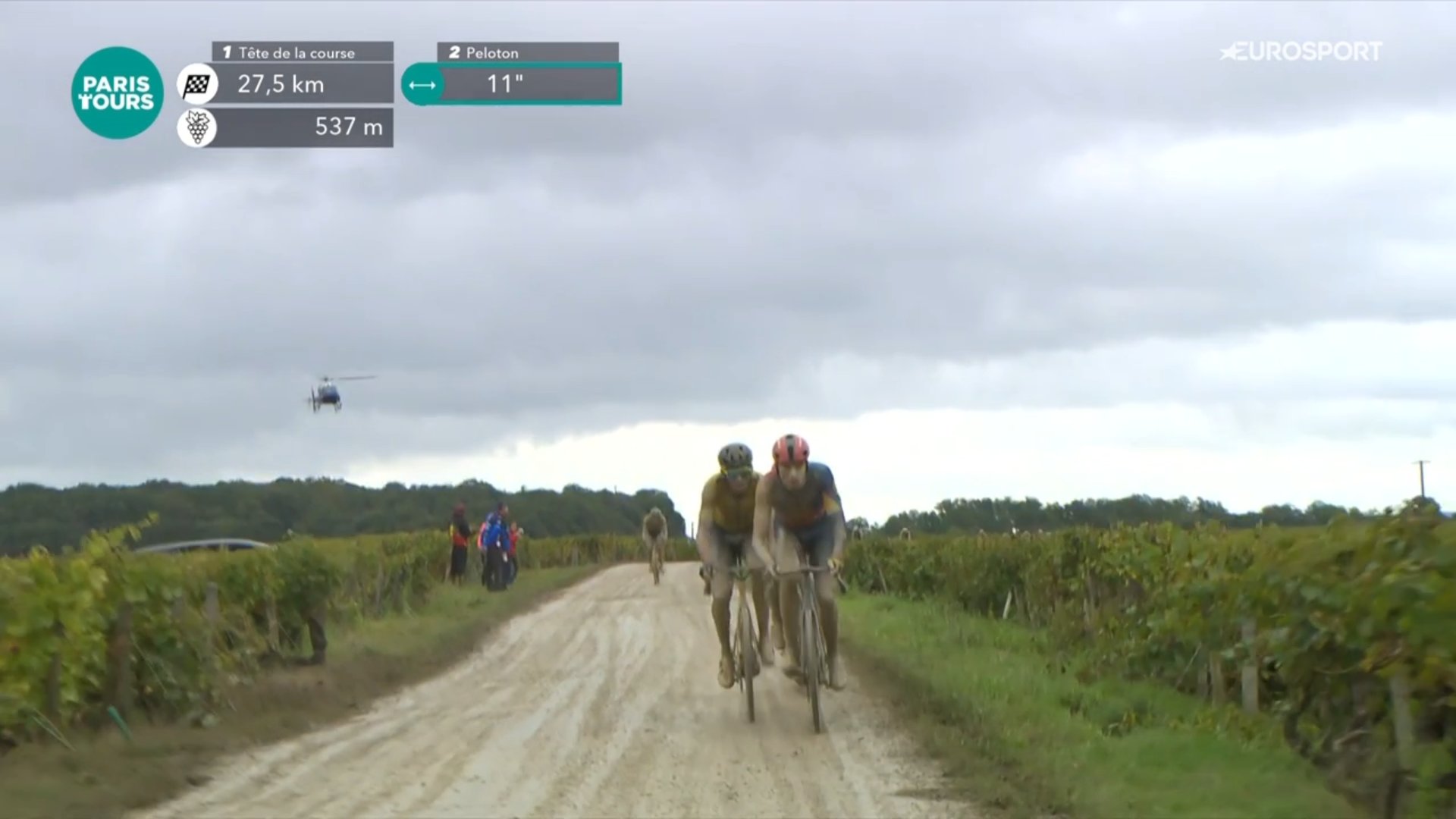
Sur #ParisTours, Christophe Laporte (Visma-Lease a Bike) a repris Mads Pedersen (Lidl-Trek) avec Mathias Vacek (Lidl-Trek). Le Danois avait attaqué à 70km et semble désormais dans le dur. Les visages des coureurs sont marqués par la boue, projetée par les chemins de vigne.


Florent Storme retweeted

What happens if your CPU gets something wrong? If it wakes up one day and decides 2+2=5?
Well, most of us will never have to worry about that. But if you work at a company the size of Google, you do, which is why this paper on "mercurial cores" is so fascinating.
What the authors report--and supposedly this is common knowledge at the hyperscalers--is that a couple cores per several thousand machines are "mercurial." Due to subtle manufacturing defects or old age, they give wrong answers for certain instructions. These can cause all sorts of impossible-to-diagnose issues. Some rare problems at Google that were traced back to bad CPUs include:
- Mutexes not working, causing application crashes
- Silent data corruption
- Garbage collectors targeting live memory, causing application crashes
- Kernel state corruption causing kernel panics
What makes CPUs go bad? It's very hard to tell. The authors posit that issues are becoming more frequent as CPUs get more complex, but there aren't solid numbers behind that. There are certainly strong relationships between frequency, temperature, voltage, and bad CPU behavior--most mercurial CPUs only cause problems under very specific conditions, but those conditions vary from CPU to CPU. Age is another source of problems, as older CPUs are more likely to exhibit problems.
Bad CPUs are an especially serious problem because they're very hard to detect. If cosmic rays flip bits in storage or on the network, that can be detected through error coding. But there's no analogy for a CPU that allows cheap online verification of its correctness. Instead, the best detection techniques involve monitoring for symptoms. If a core exhibits exceptionally high rates of process crashes or kernel panics relative to its fellows, that's a strong indication something is wrong with it. For the most critical applications, the authors propose triple modular redundancy--redoing each of its computations on three cores and majority-voting a reliable result.
More than anything, this paper is a call to action--letting everyone know that CPUs can fail. So now, if you ever find a bug you can't diagnose, you can blame the CPU! 🙂
