
Cheerful Economist, MoPo implementation nerd, Ted Lasso Fan, Techno-crat 🪩 Views must not be mistaken as the Bundesbank's, but are personal
Frankfurt am Main, Deutschland
Joined July 2015
- Tweets4.4K
- Following1.2K
- Followers4.1K
- Likes10K





Pinned Tweet
Zoltan Pozsar is one of the world’s most respected money market specialists and predicted the repo crisis in September 2019. Here he is getting it wrong, as he misses key aspects about the gold market and MoPo implementation in his analysis (1/18)🧵

FROM THE NEW ODD LOTS:
@tracyalloway and I talked with the legend, Zoltan Pozsar about the state of the world.
It was a wide ranging conversation, but he believes this moment could be the beginning of the end for US dollar global dominance.
bloomberg.com/news/articles/…
Florian M. Kern retweeted

For once, I feel qualified to talk about this since I both work at the Fed and teach Intermediate Macro. No textbook really does a good job at explaining how the Fed implements MP, and most seem stuck in the pre-2008 scarce reserves paradigm where the Fed uses OMO to set the FFR

In 2020, Fed researchers graded six economics textbooks on how the Fed actually implements monetary policy. Half scored below zero. The best got 6/12.
federalreserve.gov/econres/f…

Florian M. Kern retweeted

In 2020, Fed researchers graded six economics textbooks on how the Fed actually implements monetary policy. Half scored below zero. The best got 6/12.
federalreserve.gov/econres/f…
Florian M. Kern retweeted

The French really do deserve a medal of European friendship for pulling Germany along to confront a China shock that is far more Germany’s problem than their own.
Striking chart from excellent speech by @Isabel_Schnabel!

Florian M. Kern retweeted

Of course banks “create money”: mainstream economists have long understood as much. But they also know that, while banks don’t exactly “lend reserves,” at the margin a bank’s loan results in a corresponding reserve loss to rival banks—a fact Prof. Keen seems unable to grasp. 1/2


Florian M. Kern retweeted

„EU needs AI investments worth €500bn, von der Leyen says“
Why I think this is the wrong approach and what needs to change: A short rantsy thread /1
finance.yahoo.com/technology…

Florian M. Kern retweeted

The richer you are, the more you can borrow. You want to be as high up as possible on that chart.
Apparently very hard to understand for many..


Florian M. Kern retweeted
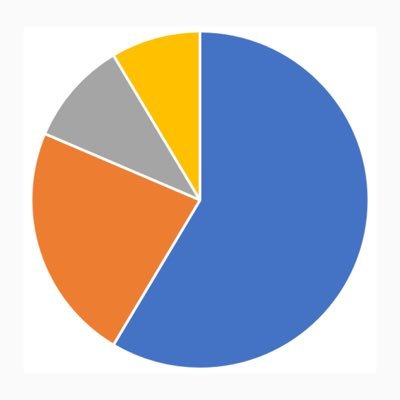
💳 Total debt per person: government, households and companies (Q1 2026)
1. 🇨🇭 Switzerland: $342,000
2. 🇳🇴 Norway: $274,000
3. 🇳🇱 Netherlands: $224,000
4. 🇺🇸 United States: $224,000
5. 🇩🇰 Denmark: $195,000
6. 🇨🇦 Canada: $183,000
7. 🇸🇪 Sweden: $178,000
8. 🇧🇪 Belgium: $173,000
9. 🇫🇷 France: $168,000
10. 🇦🇺 Australia: $166,000
11. 🇫🇮 Finland: $149,000
12. 🇮🇱 Israel: $134,000
13. 🇦🇹 Austria: $133,000
14. 🇬🇧 United Kingdom: $125,000
15. 🇩🇪 Germany: $122,000
16. 🇯🇵 Japan: $120,000
17. 🇳🇿 New Zealand: $105,000
18. 🇮🇹 Italy: $103,000
19. 🇪🇸 Spain: $90,000
20. 🇰🇷 South Korea: $84,000
21. 🇵🇹 Portugal: $75,000
22. 🇬🇷 Greece: $70,000
23. 🇨🇿 Czechia: $50,000
24. 🇭🇺 Hungary: $45,000
25. 🇨🇳 China: $44,000
26. 🇸🇦 Saudi Arabia: $41,000
27. 🇵🇱 Poland: $33,000
28. 🇨🇱 Chile: $32,000
29. 🇲🇾 Malaysia: $31,000
30. 🇷🇺 Russia: $23,000
31. 🇧🇷 Brazil: $21,000
32. 🇹🇭 Thailand: $18,000
33. 🇦🇷 Argentina: $15,000
34. 🇲🇽 Mexico: $13,000
35. 🇹🇷 Türkiye: $12,000
36. 🇨🇴 Colombia: $12,000
37. 🇿🇦 South Africa: $10,000
38. 🇮🇳 India: $4,700
39. 🇮🇩 Indonesia: $4,000
Gross debt of the government, households and non-financial companies, divided by total population. Not net of assets: household and company debt is owed by those borrowers, not by the state. Excludes financial hubs Luxembourg, Ireland, Hong Kong and Singapore.
Source: Bank for International Settlements; UN World Population Prospects 2024
Häufig wird ja gerade in 🇩🇪 argumentiert, das TPI würde Druck von den Parlamenten nehmen, was wiederum schlecht sein müsse.
Das @DezernatZ beschreibt hingegen, wie vom TPI auch Anreize für eine nationale Haushaltsführung im Sinne der Gemeinschaft ausgehen können - lesenswert 👇🏻

Frankreich zahlt für zehnjährige Staatsanleihen 1,4 Prozentpunkte mehr Zinsen, als der Markt kurzfristig erwartet. Nur auf dem Höhepunkt der Eurokrise war der Aufschlag höher. Erstmals liegt er auch über dem italienischen. Ist das ein Fall für die EZB?

1
300
Morality may be more interesting than accounting. But before arguing about the “right” fiscal balance, it helps to get the accounting constraints straight.
Views will always diverge on the policy prescription, but this is a great analysis @acemaxx
acemaxxanalytics.substack.co…
Wären wir uns einig, dass wir den gravierendsten Strukturbruch für unser Wirtschaftsmodell seit Jahrzehnten erleben, ließe sich zumindest das Risiko politischer Managementfehler reduzieren.


Florian M. Kern retweeted

Falls wir die deutsche Debatte (Spieler zu weiß oder zu wenig weiß, Spieler zu christlich oder zu muslimisch oder beides) durchgespielt haben, könnten wir Anleihen bei den Brasilianern nehmen: Weil die Evangelikalen die Katholiken verdrängt haben, hat die Seleção Abstand genommen von Wein, Weib und Gesang und seitdem geht es den Bach runter ... 👇

Brazil was better when their players were womanizers, drunkards and slightly out of shape. In other words, when they were behaving like Catholics— letting the power of friendship and good fun do the heavy lifting.
Evangelical Protestant sterilization has flattened their ball, ruined their samba, and obliterated their swag.
World historic aura loss.
You should never trust an expert (or an institution) who doesn't have a story about when they were wrong
"It is that the moment a belief becomes who you are, it stops being something you can update."

Sam Altman said the smartest scientists in AI are the ones who held the entire field back. The experts were the problem.
This is one of the most uncomfortable things he said all night.
Altman said the field was honestly held back by a generation of scientists who were too certain about what scaling would not produce. The people with the most credibility were the most wrong.
Then he explained why.
It was not about intelligence. It was about identity.
He said when you make your identity about a particular belief, that something will work or won't work, and then the data disproves you, you get stuck. You are too attached to the belief to let it go. You cannot see the truth anymore.
The smarter you are, the more confidently you defend the wrong position.
He pointed at the trolls who spent years saying scaling was a dead end, a fraud, a company destined to fail. The data kept proving them wrong. They kept repeating themselves anyway.
He called that a form of insanity.
Then he turned it around. He said it is a reminder in both directions. Including for the people who are currently right.
The lesson is not that experts are dumb.
It is that the moment a belief becomes who you are, it stops being something you can update.
(Watch the full talk on YouTube at Stanford Online channel)
314
Florian M. Kern retweeted

Thanks Dave.
Europe's concern about China's $1.2 trillion trade surplus, and its sectoral composition, is homegrown, not a function of Washington.
And for good reason. The data unequivocally show Europe is far more exposed than the US to China's supply glut.
1/

#EUCO long read:
For years EU policy toward China has been in line with American wishes. Tonight, leaders will discuss whether Europe should lessen trade ties with China, as Washington wants.
What would an independent EU-China policy look like? davekeating.substack.com/p/w…

Florian M. Kern retweeted

Korea's won is incredibly weak (global financial crisis or Korean BoP crisis levels ... ) even though Korea's fundamentals are sound (BoP has a massive surplus, fiscal debt is modest, etc).
Will be interesting to see if the Koreans can mount a defense this week ...
1/

Florian M. Kern retweeted
Wie aus dem Ziel besonders sparsam zu sein eine ganz besonders teure Wohnungspolitik wurde 👇von @selschulte @maxkrahe wirtschaftsdienst.eu/inhalt/…

Was in der Wohnungspolitik falsch läuft und wie es besser ginge – darüber schreibt @selschulte im @Zeitschrift_WD. Ein Must-read für alle, die wohnen.
Link zum Artikel im 1. Kommentar 👇

Florian M. Kern retweeted

1/9
Brilliant article by Martin Wolf on global imbalances. Wolf is one of the few economists who have an intuitive sense of the global economy as an economic system, which means he is also one of the few who understands how global imbalances work.
ft.com/content/72ab51ed-8dcc…

Florian M. Kern retweeted
Germany's reluctance to invest in productive infrastructure isn't a sign of thriftiness, nor does it help Germany keep its debt burden low. If the investment is productive – i.e. if it creates more economic value than it costs in economic resources – then almost by definition the investment will cause GDP to rise by more than the debt rises, and German's associated debt burden will actually decline.
The point is that if German infrastructure is in bad enough shape to have become a constraint on productivity growth – and almost everyone agrees that it is – then borrowing to fund infrastructure investment will not only accelerate productivity growth, it will also reduce the debt burden by creating more than enough additional real income to service the additional debt.
Granted that it is difficult for a large economy to change institutions and growth models, including fear of debt, that have been in place for decades, but sclerosis isn't strategy, and as East Asian economies fight to continue increasing their share of global manufacturing, while the US works to reverse the decline in its own manufacturing share, it is precisely countries like Germany, for whom manufacturing currently represents a much larger share of the economy than in the rest of Europe, that will pay the highest cost for doing nothing.
wsj.com/world/europe/germany…
Want to understand how market discipline in EU bank liabilities works in practice? This thread is for you 👇

1) You might have missed it but the EU just published the CMDI package – one of the most consequential pieces of bank regulation. It fixes something that has been really embarrassing about European banking regulation for more than a decade. And the impacts are huge.
2
305
BoE zu Leistungsbilanzungleichgewichten:
"IMF scenario analysis suggests that a well-designed combination of policy adjustments across the US, the euro area and China could raise global GDP while bringing current account gaps...closer to warranted levels"
bankofengland.co.uk/bank-ins…

Florian M. Kern retweeted

** Reducing the Fed's balance sheet **
Ten days ago, I was part of a discussion at @BrookingsInst on how to shrink the Fed's balance sheet with Darrell Duffie and @WenxinDu. I tried to lay out the discussion in terms that, hopefully, clarify it to a broader set of economists. Here are the main points: 🧵