

✏️ Drawing, sketches & visual ideas
Joined July 2026
- Tweets532
- Following81
- Followers4.4K
- Likes95

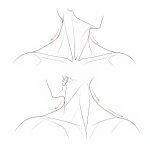




Keep the profile clean by connecting the forehead, nose, lips, chin, and neck with one clear rhythm.

Follow the main flow from the neck into the clavicles and shoulders. Use a few strong curves instead of many anatomy lines.

Start with the head mass and simple guides, then place the facial features before refining the hair and jaw.

Construct the arm with simple masses for the shoulder, upper arm, elbow, and forearm before adding muscle definition

Build the hairstyle from large flowing sections first, then add only a few smaller strands to create volume.
🤖 Made with AI

Build the torso from large masses first. Keep the chest, shoulders, waist, and arms connected through simple curves.
🤖 Made with AI

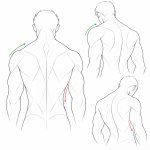
Think of the back as a few large shapes. Follow the shoulder blades, spine, and lat muscles instead of drawing every muscle line.

Muscles don’t work as isolated shapes. Look for the main curves connecting the shoulder, upper arm and forearm to create stronger, more natural anatomy.

Let the shoulders, hips, and legs shift naturally as the body moves. Small asymmetries make the walk feel more convincing.

From the side, focus on the rhythm from chest to shoulder to arm. Avoid making the silhouette too straight or rigid.

Keep layered clothing simple by focusing on the outer silhouette first. Add only the folds that explain volume and weight.

Start with the head shape and center line, then place the eyes, nose, and mouth using simple proportional guides.

Use one clear line of action for each pose. Relax the limbs and avoid making every joint feel equally stiff.

Build long hair as one large mass first. Divide it into a few flowing sections before adding individual strands.

Keep the chest, shoulders, and arms connected through large flowing shapes. Prioritize silhouette and gesture over muscle detail.

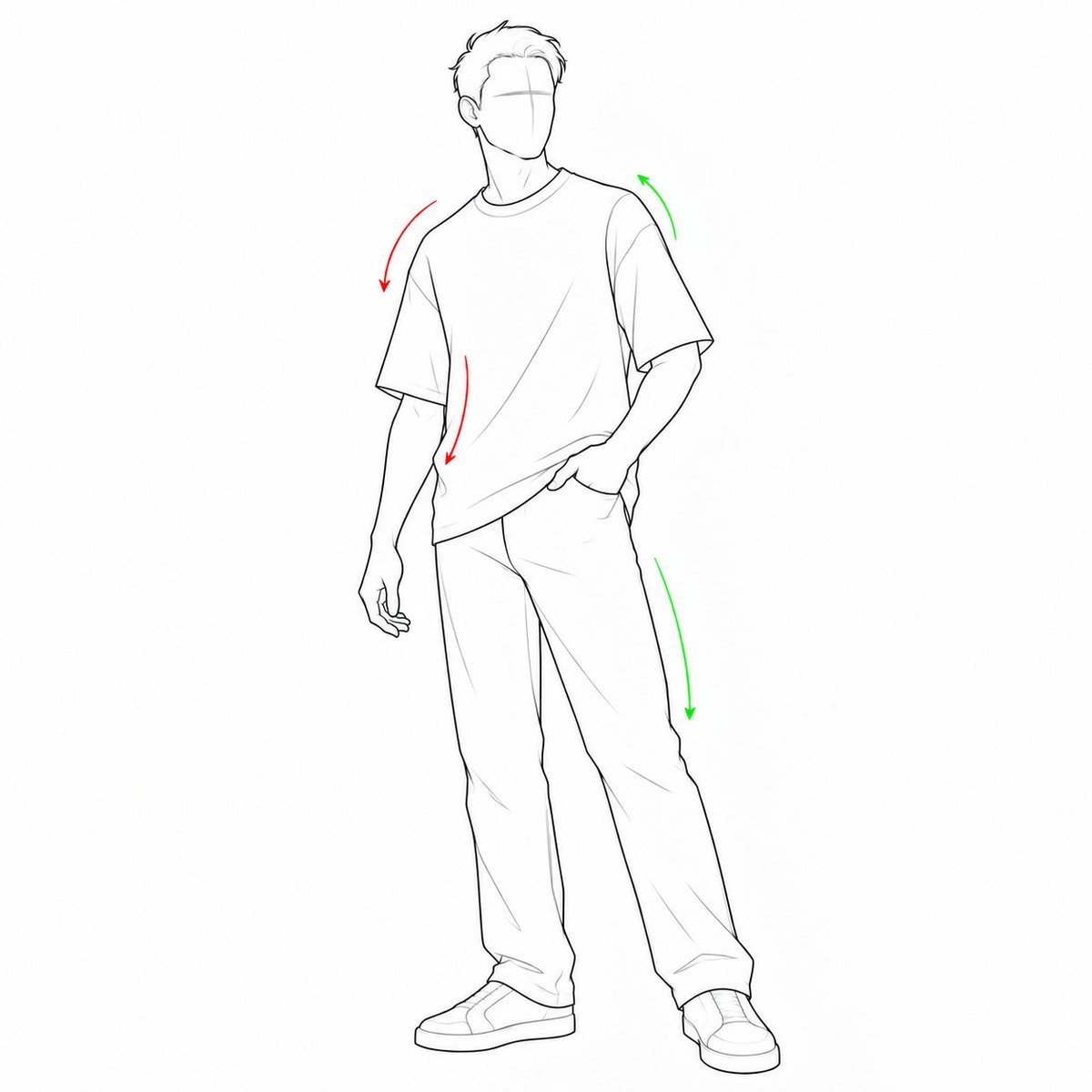
A natural standing pose works better when the shoulders, hips, and legs follow different rhythms instead of one straight axis.
Start with the main hair silhouette, then divide it into a few large locks before adding smaller strands.
🤖 Made with AI

Simplify the arm into long flowing masses, then let the wrist and hand continue that same direction.
🤖 Made with AI

Keep the torso connected through simple directional rhythms. Follow the neck, collarbone, chest, and abs as one continuous flow instead of treating each muscle separately.
🤖 Made with AI

