

Read more on Assyrians and their Kurdish neighbors who are rewriting history to advance their own agenda.
Joined May 2024
- Tweets6.4K
- Following72
- Followers445
- Likes3.5K



Remembering on this day of November 1, 1895 (and lasting for weeks) the broader Hamidian (that were mainly Kurdish Calvary) massacres began.
The Mobs of Kurdish and Ottoman irregulars launched coordinated attacks against the Christian population (primarily Armenians and Assyrians, but also local Greek Orthodox residents or Rum) of ancient Amida (Diyar Bekir), resulting in widespread killings, looting, and the destruction of indigenous neighborhoods.

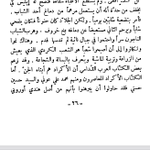
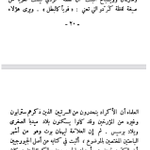
The massacres of Diyar Bekir [original Assyrian name Amid or Amida] happened on November 1, 1895 and continued for 4 days by Kurdish tribes. They attacked Diyar Bekir and all the surrounding Christian villages. The Kurdish tribal leaders (the aghas) led the simple, uneducated, naïve and illiterate Kurds at the time to perpetrate history’s worst massacres of Christians. During these massacres, the Christians lost all their lands in Diyar Bekir, Basheriyya, Gharzan, Moosh, Bitlis, Siirt, Batman and others and tens of thousands of the Assyrians and Armenians. (P. 24)
Source:
Abdul Masih Karabachi. The Shed Blood: The Assyrian [Syriacs] Massacres in Mesopotamia. Originally published in Syriac in 1997, Sweden. Translated to Arabic by Archbishop Theophilius G. Saliba. Mount Lebanon. 2005.
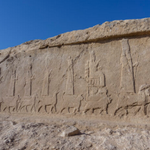
Tur Abdin, southeast Turkiye. Northern Mesopotamia.

Officially, the Yezidis security forces joined the Iraqi forces under the Prime Minister's authority. Peshmerga, get out from Sinjar.


I thought he was comedian. He turned to be much more. Where is Europe heading?
teapaw.org/Jean_Se67/status/21131…

Are we turning northern Iraq's Kurdish federal region from an officially Islamic region via the 2009 temporary constitution to an actual on the ground Islamic region?
teapaw.org/botanlezgn/status/2112…

Wenn das Tragen eines Kopftuchs unter den Bereich persönlicher Rechte und Freiheiten fällt – mit welchem Recht veranlassen dann die an dieser Kampagne beteiligten Lehrkräfte, dass die Töchter anderer Leute ein Kopftuch tragen? Es handelt sich hierbei um eine ganz offensichtlich ideologische Kampagne. Sie ist ein Versuch, das kurdische Volk durch religiös geprägte Ideologien und den Gedanken einer islamischen Glaubensgemeinschaft (Ummah) dazu zu bringen, sich in die Unterdrückung zu fügen. Es wirkt wie eine koloniale Kampagne, die darauf abzielt, die Menschen durch religiöse Indoktrination von ihrem Patriotismus zu entfremden!
@masrourbarzani
@Bafeltalabani
Al-Mas'udi spent much of his life expanding and editing the original text of his book titled "The Meadows of Gold and Mines of Gems" he published earlier, notably releasing a major revision in AD 947 (336 Islamic Hijriya). This AD 947 version serves as the basis for the surviving manuscripts we have today.
On page 31, the 10th century al-Mas'udi mentions the Assyrians of Mosul and Nineveh and says that they are the same al-Athuriyeen of his time.


Kurdish Hero Salim Masti
Who is Salim Masti, whose epics and heroism are celebrated in Kurdish songs?
He is Salim Mustafa al-Duski from the village of Bersefki in the Duhok Governorate, nicknamed "Slemeh Masti."
After the end of World War I (around 1922), a wealthy American named Roger Craig Cumberland (born 1894) arrived in Baghdad. He met with the Assyrians there, observed their circumstances, and stayed with them for about a year. During this time, he helped the poor and built a school for children. He then left Baghdad for Mosul, where he also lived for a short period among the Assyrians and others. He built a school for them and helped the city's poor.
In 1923, he headed north and stayed as a guest with an Assyrian family in Duhok, eventually settling in the city.Being wealthy, he engaged in charitable work and helped the poor in the city. His door was open to everyone, and he became acquainted with the people of Duhok, becoming one of them. He met with religious figures and Kurdish leaders and played a prominent role in Duhok society due to his humanitarianism and assistance to the poor. Cumberland agreed with Muhammad Abdul Rahman Akidi (whose grandfather massacred the Assyrian inhabitants of the village of Bablu in 1831 and occupied it during the massacres of Muhammad Mirkur the Kurd) to purchase the village of Bablu for 400 Turkish liras. He settled 40 Assyrian families there and also brought water to the neighborhoods of Dohuk, as well as to the Grand Mosque.
In response, Kurdish religious leaders felt that the Dohuk community was showing great interest in this "Christian" while they were being ignored. They decided to get rid of him and frame him.The imams of the mosques in Dohuk, whose names are listed below, convened:
1- Mullah Muhammad Akri
2- Mullah Muhammad Mahashi
3- Mullah Hussein Maranshi
4- Mullah Muhammad Bisfki.
They declared that Cumberland posed a danger to Muslims, that he was a missionary trying to convert Kurds to Christianity. They issued a fatwa calling for his death, even though he had not converted a single Kurd to Christianity. But this type of accusation was readily available in Kurdish society to level against any Christian who needed to be eliminated. So they searched for someone to carry out the task of getting rid of Cumberland.
At that time, Iraq was under British rule, and Dohuk was a district of Mosul.The Kurdish religious leaders found that the best person for the job was Salim Masti. They sent someone to him and asked him to come to the Grand Mosque in Dohuk. He came, and the matter was presented to him by the mosque's preacher, Muhammad Akri, and others. They told him that Cumberland was trying to eradicate Islam in Dohuk and convert the Kurds to Christianity.Salim Masti asked them, "Will I go to heaven if I kill him?" They replied, "Yes, whoever kills Cumberland will go to heaven because he is killing an infidel." Salim Masti agreed and returned to his village. He discussed the matter with his cousin, Saeed Masti, and asked him to accompany him on the mission. Saeed immediately agreed, since heaven was at stake.
The following day, June 12, 1938, Salim and his cousin Saeed went to Cumberland's house. Salim stood at the doorstep and said to his cousin, "I will go in and kill him, and you stay here. If he escaped from me, it will be your fate." Saeed replied to Salim, "I hope he escapes from you so I can kill him and go to heaven." Salim entered the house during the day. He shook hands with Cumberland, who welcomed him warmly, as was his custom with everyone, for he considered all the people of Dohuk as his family. The two sat and talked for a short while. Then Cumberland got up to bring refreshments himself, and as soon as he turned his back on the Kurd, he shot him in the back and killed him. Salim then left the house and found the guard dog, so he killed it too. He went down the stairs and found an Assyrian man running towards the house after hearing the gunshot, so he killed him as well and fled with his cousin.
This is the story of Salim Masti, for whom the Kurds composed poems of praise and songs of glorification. This is the hero who killed a peaceful, unarmed man after welcoming him into his home, believing him to be in need of help. And now, like other Kurdish murderers, this killer has become a symbol of heroism in Kurdish society.
(Adapted from Shirin Shingal page)
The crimes of the Kurds in Arab Sunni areas in 2016 as ISIS that never attacked the Kurdish region was ruling.
While the Kurdish leaders suppress the independent Assyrian political groups, the church leaders are completely submissive to, or on very friendly terms with, the Kurdish authorities. Idris Nechervan Barzani in a friendly moment with Patriarch Mar Awa III.


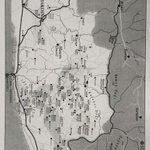
The 1910 British map of the people of the Middle East. As you see, there were no Kurds present south of Nisibin, which later fell in Turkiye's side of the Turkiye-Syria borders.
Qamishli, on the Syria side of those borders facing Nisibin, was built by the Assyrian refugees later post WWI, did not exist at the time.
The map is clear that there were no Kurds there, which is proven by the fact that the Kurds entered French mandated Syria post 1925 rebellion of Shaikh Sa'id in south Turkiye. The rebellion was destroyed, Shaikh Sai'd captured and executed, but thousands of Kurds crossed into Syria after 1925.
upload.wikimedia.org/wikiped…

There is no historical reference to a distinct people known under this exact term "Kurds" before the Sassanids (3rd - 7th centuries) applied the Middle Persian term Kwrt (meaning tent-dweller nomad) to all the nomads of the Zagros Mountains and Iran.
Meaning, the term Kwrt (later Kurt and Kurd) did not refer to some ethnic people, but a civic class in society.
I challenge anyone to provide ONE reliable historic reference to a distinct people known as Kurds BEFORE the Sassanid period.
While Kurdish nationalist of the 19th and 20th centuries frequently tried to link modern Kurds to ancient empires (such as connecting the Guti or the Medes directly to the Kurds), modern critical scholarship insists on separating folkloric or geographical continuity from strict linguistic or ethnic proof. It is natural that populations inhabited the same terrain, but sharing a landscape does not equate to a verified linguistic or direct genealogical lineage.
My New Paper:
Surāya is Asurāya from Ashurāya, meaning Assyrian.
fredaprim.com/pdfs/2026/Sura…

Naef Khalaf Sedu, the Yezidis representative in the Iraqi parliament during the burial ceremony of 41 Yezidi women. He talks about the continuous genocide against the Yezidis and the interference of the political groups in the Yezidi region, especially the Kurdish political groups. He asserts that Yezidis are neither Kurds nor Arabs. Yezidis are Yezidis. He also says Shingal (Sinjar) is Shingal, it is not Arabic, it is not Kurdish.
It has been a common tactic by the West that when it wants to commit into something big against a certain target country, they first advice the media to engage in a heavy propaganda to show that the target has committed some illegal act against humanity, like the US did towards Iraq having biological weapons, etc.
Have you noticed the volume of posts about a bomb attack via a drone on Masroor Barzani's personal office. The question is, was anybody killed? No, since it was empty.
I smell something fishy.
Why this amazing condemnation from allover the world that is flooding social media?
The question to ask, is the US building a different case against Iran or is it against Iraq? Is the US planning something big?