

Black American Homeland Authority Atlanta Durham Birmingham Charleston Memphis NewOrlean Predominant Black Population & Control over Contiguous Region of States
The South
Joined September 2014
- Tweets34.9K
- Following5.3K
- Followers4.6K
- Likes31.8K




BlackAmericanHomeland retweeted

Look at @scott_colom with a brilliant take. He’s willing to work with Trump and Republicans for the needs of the people! Common sense. Call the damn race Mississippi! ✊🏾🤞🏾
BlackAmericanHomeland retweeted

Not even sworn in yet, and Abdul El-Sayed has already launched the Habibi PAC. This is the same man who spent his campaign railing against AIPAC and the influence of political money. Apparently PACs are only a problem when they aren't yours.

Black, female, Democratic political talent in Georgia shows its strength youtube.com/shorts/n9YMDUZQP… via @YouTube
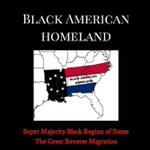
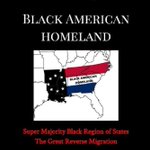
According to Frederick Delk, the State of Georgia was the key to establishing the Black American Homeland concept (NC, SC, GA, AL, MS, LA, AR, TN), a Super-Majority Black Region of States, and the Great Reverse Migration. This is just the beginning; millions more Foundational Black, Antebellum-Black / Anglo-Black / Anglo-Moor Americans are required to reverse-migrate into this 8 States Southern Region. This influx is necessary to maintain and improve upon their newfound U.S. constitutional powers within the region, allowing them to control the three branches of power (Executive, Legislature and State Supreme Court), state institutions, state court systems, state public school systems, State University and College Systems, State Prison Systems, State Regulatory Boards and Commissions, the Hierarchy of Authority, and 67% to 80% of the population, districts, and counties within these states.
The system requires tens of thousands of Foundational Black / Antebellum-Black Americans to run for political office on the state and local levels all over the region. It doesn't matter if you are an entertainer, a former professional athlete, an actor or actress, or a redeemed former prison inmate, or a high school drop-out with charisma, we need you to run for political office and serve your people within these states.
Want to understand the Black American Homeland concept and strategy? Pick up a copy of Frederick Delk's Black Paper: Black American Homeland, Super Majority Black Region of States, Great Reverse Migration on Amazon.com.
Reaching the top and staying there is a continuous battle and a relentless pursuit. - Frederick Delk

Democrats Turned Georgia Into Wakanda For Black Women – Prepare For Chaos youtu.be/zUN1JQ8vKKE?si=mn6K… via @YouTube
Open Letter to Foundational-Black / Antebellum-Black / Anglo-Black / Anglo-Moor American Men:
A Solution for Our Future It is difficult for Antebellum-Black / Anglo-Black American men to have confidence in a system or government in which they have no control. Antebellum-Black / Anglo-Black American men do not want to merely exist in a system where they are powerless and limited to working without influence. Instead, they desire full participation in a system that offers opportunities, respects their rights, and holds high expectations for them. They seek a structure where they have some degree of control, where laws and regulations are designed to benefit and address their specific needs and concerns.
For too long, Antebellum-Black / Anglo-Black / Anglo-Moor American men have been subjected to the abuses of the state and federal government, including biased policing, unfair court systems, mass incarceration, and negative media portrayals. They want to live in a system where businesses, corporations, and financial institutions support their efforts and value their contributions. Despite over 500 years of presence in North America, Black American men have rarely experienced widespread institutional support, except in the realm of sports for a select few Black men over the past 50 years.
From my observations and travels, I have seen how men of other nationality groups, Japanese, Korean, Chinese, Italian, and others, support and uplift their own in business and politics. No other group will prioritize the empowerment of Black men except Black men themselves. The reality is stark: the United States imprisons nearly 2 million Black men, while Nigeria, with a considerable larger Black male population, incarcerates fewer than 100,000. A government controlled by Black American men would not implement policies that lead to the mass imprisonment of its own people. Instead, it would create laws and regulations that facilitate educational attainment, business formation, corporate development, financial institution establishment, property ownership, political participation, and overall community security.
This transformation requires strategic intervention, planning, and the implementation of a governing system. Every successful nation is managed by a government with authority, a budget, the power to enact and enforce laws, regulate corporations and institutions, and levy taxes. It is unrealistic to believe that Black American men can effectively manage their communities without the support, power, and authority of their own government.
Fortunately, the United States operates under a federalist system, where power is shared between the federal and state governments. Given that Black Americans make up approximately 15% of the U.S. population, achieving control over the federal government is unlikely. However, the Black American population is large enough to obtain super majority status and political dominance in the 8 States Southern Region - North Carolina, South Carolina, Georgia, Alabama, Mississippi, Louisiana, Arkansas, and Tennessee.
Each of the 50 U.S. states functions with all characteristics of an independent nation, akin to Italy, France, Spain, or Great Britain. These states have their own constitutions, state defense forces, state and local courts, executive, legislative, and judicial branches, defined territories, economies, public schools, state universities and colleges, natural resources, and arable land. Most importantly, these states provide Black Americans with constitutional powers to make and enforce laws and regulations within their jurisdictions.
The 8 States Southern Region possesses first-world infrastructure, modern amenities, and competitive legal and economic systems, boasting an average Human Development Index (HDI) score of 0.896. However, Black Americans are currently dispersed across the country and are a minority in all 50 states, making it impossible to establish a secure sanctuary everywhere. Therefore, I advocate for 25 million Black American Men to consolidate their population into the 8 States Southern Region to attain political control over these states. This proportional regional strategy aligns with Black Americans’ share of the U.S. citizenship population: 50 states x 16% = 8 states.
Black American men must obtain, establish, and secure territory-land within the 8 States Southern Region, and the women will follow.
What Are the Incentives?
Power: Control over laws, governance, and institutions.
Wealth: Ownership of businesses, land, and financial institutions, Protection intellectual Property.
Respect: Self-determination and influence over policies. Support: Community upliftment and economic investment, Two Parent Black Family.
Security: Protection from systemic injustices, State Defense Forces, National Guards, Black State Militias, State Intelligence Agency.
Prisoner and Ex-Felon Rehabilitation Programs: Pardon and Expungement of criminal records of non-violent and non-serious violent offenders. Regain their Rights as full citizens.
Jobs: Increased employment opportunities within a self-sustaining economy.
Real Leadership: State Government-backed authority and decision-making roles.
Second Amendment Rights: Right to keep and bear Arms. A well-regulated militia is necessary to the security of the Black American Homeland aka 8 States Southern Region.
While this message primarily addresses Black men, it is evident that Black American women and children will benefit the most from a self-determined Black American homeland, just as white women and children reap the advantages of living in states where white men control governance. White women have benefited disproportionately from affirmative action, minority business grants, and DEI initiatives. It is time for Black Americans to create a system that prioritizes their own success and well-being.
Black Americans must establish their own Political Party #RenaissanceParty formerly the Black American Homeland Political Party to legally and legitimately control several states.
The path forward is clear. Great Reverse Migration, strategic consolidation, political control, self-governance, Black American Political Party, and cultural preservation within the 8 States Southern Region will provide Black American men with the power, opportunities, hierarchy of authority and respect they deserve.
I'm a Black Regionalist, Black Regionalism, Delkism
Black American Homeland
8 States Southern Region
Economic Community of Eight Southern States (NC SC GA AL MS LA AR TN)
Land area: 400,000 square miles
Counties: 688 - (75% Majority Black)
Population: 50 million
Human Development Index HDI Score: 0.896
Gross Regional Production GRP: $3.4 trillion
Demographics 2050: Black 80%, White 15%, Hispanic 3%, Asian and others 2%
Combined State Budgets: $400 billion per year and including Federal Government transfer payments $800 billion per year
Total Wealth or Value in the Region: $20 trillion
Nuclear Power Plants: 24
Oil Refineries: 33
State Defense Forces: Army, Navy, and Airforce
Atlanta Southern Stock Exchange: $2.5 Trillion in Market Capitalization
Ocean Access: Atlantic Ocean, Gulf of America, and the Mississippi River Forest Cover: 60% of the Region Major Metropolitan Cities: Atlanta, Charleston, Charlotte, Raleigh, Nashville, Memphis, New Orleans, Birmingham
8 Black Governors
16 Black US Senators
66 US Congressmen
80 Electoral College Votes
1,200 State Representatives and State Senators
109,000 other State, local and appointed positions including Judges
Nearly 3 million Black American State and Local Government Bureaucracy/Workers including teachers and others working in the Education department
#RenaissanceParty Formerly The Black American Homeland Political Party: with 5 to 7 Factions, All or most 110,000 State, Local and Appointed officials are aligned and pledge loyalty to the #RenaissanceParty
Renaissance Political Party Mascot - Black Panther Colors - Black, Red, Blue and White
My Projections for Super Majority Black States
Mississippi - 2036
Georgia - 2036
Louisiana - 2036
South Carolina - 2036
North Carolina - 2040
Alabama - 2040
Arkansas - 2044
Tennessee - 2048
Florida - 2060
Delaware - ?
Maryland - ?
Virginia - ?
By Frederick Delk
BlackAmericanHomeland retweeted
Power, Sovereignty, and Strategy: Analyzing US Supremacy, Global Geopolitics, and Frederick Delk’s Framework for Foundational Black / Antebellum-Black / Antebellum-Moor / Anglo-Black / Anglo-Moor Americans Americans
Introduction
In the architecture of global order, power is rarely monolithic. It is structured through layers of ideological, financial, institutional, and military dominance. To understand the trajectory of specific groups within the United States, particularly Foundational Black / Antebellum-Black / Anglo-Black Americans, analysts often examine the interplay between domestic or global racial hierarchies and global imperial structures. While "White Supremacy" is frequently analyzed as the foundational domestic matrix of American history, a compelling geopolitical argument suggest that US Supremacy is far more encompassing, durable, and powerful.
Rooted in the structural mechanics of international institutions, global financial systems, and unmatched military might, US Supremacy dictates the terms of engagement both domestically and globally. Within this framework, political strategist and thinker Frederick Delk has advanced a provocative thesis concerning the strategic interests of Foundational Black / Antebellum-Black / Anglo-Black / Anglo-Moor Americans. Delk argues that Anglo-Black / Anglo-Moor made a fundamental tactical error by prioritizing US Constitutional Rights "Civil Rights" over US Constitutional Powers "Civil Powers," leading to a dilution of their political leverage through mass immigration. To secure their future, Delk contends that Antebellum-Black / Antebellum-Moor / Anglo-Moor Americans must abandon the goal of dismantling a system they inherently benefit from, and instead pursue regional self-determination: attaining a super majority population and governing control over the 8 States Southern Region. This essay explores the dynamics of US Supremacy, the critiques of post-civil rights integration, and the strategic implications of Delk’s regional power model.
Part I: The Superiority of US Supremacy Over Domestic Racial Hierarchies
To evaluate Delk’s thesis, one must first distinguish between domestic racial supremacy and systemic global supremacy.
White supremacy is racial - it concerns a global or domestic hierarchy ranking human beings based on racial categories.
US supremacy is national/geopolitical - it concerns the supremacy, sovereignty, or dominant leadership of the United States of America over other countries in international affairs. US Supremacy functions as an international system of hegemony that supersedes domestic racial categories.
The structural pillars of US Supremacy are absolute and pervasive:
International Institutional Control: The post-World War II architecture, including the North Atlantic Treaty Organization (NATO), the World Bank, and the International Monetary Fund (IMF), was designed and continues to be directed by US geopolitical interests. These bodies regulate global development, security, and economic policy, ensuring alignment with Washington’s strategic goals.
Dollar and SWIFT Supremacy: The United States dollar serves as the world's primary reserve currency, granting the US unmatched economic leverage. Combined with dominance over the SWIFT (Society for Worldwide Interbank Financial Telecommunication) international payment messaging system, Washington holds the power to isolate economies, enforce sanctions, and dictate the terms of global trade.
Military Unilateralism: The US military-industrial complex maintains power projection capabilities across every continent and ocean, making it the most formidable military force in human history.
Because US Supremacy provides the foundational stability, currency value, and institutional protection that all domestic populations rely upon, Delk asserts that Foundational-Black / Antebellum-Black / Anglo-Black / Anglo-Moor Americans derive material benefits from this global hegemony. Far from wanting to dismantle the system, Foundational-Black / Anglo-Black Americans are inextricably tied to its continuation. If US Supremacy falters or collapses under the weight of geopolitical challenges from the Global South - such as China, India, Russia, Brazil, and BRICS-aligned nations - domestic stability will disintegrate, exposing all American populations, including Foundational-Black / Anglo-Black Americans to catastrophic fallout.
Part II: Civil Rights vs. Civil Powers: The Critique of Integration
A central pillar of Frederick Delk’s critique focuses on the strategic pivot made during the mid-20th-century Civil Rights Movement. Delk argues that by fighting primarily for US Constitutional Rights (Civil Rights), such as desegregation, voting access within existing structures, and integration, Antebellum-Black / Anglo-Black / Anglo-Moor Americans neglected the acquisition of US Constitutional Powers (Civil Powers).
US Constitutional Rights (Civil Rights) grant inclusion, access, and legal protections within a system controlled by others. US Constitutional Powers (Civil Powers), by contrast, grant structural sovereignty, institutional ownership, and governance. Delk contends that the fight for civil rights inadvertently triggered two major structural consequences:
The Dilution of Antebellum-Moor / Anglo-Moor American Political Capital: The moral force of the Civil Rights Movement pressured the United States to liberalize its immigration policies, most notably via the Immigration and Nationality Act of 1965. This opened the door for over 100 million non-white immigrants to enter the country.
Coalitional Displacement: These immigrant populations, rather than automatically aligning with Foundational-Black / Anglo-Black Americans against historical domestic hierarchies, often navigate existing political and economic structures by aligning with dominant white coalitions to secure upward mobility. Consequently, Foundational-Black / Anglo-Moor Americans find themselves sharing resources, benefits, and political representation with a vastly expanded non-white demographic pool, diluting their proportional share of power relative to their historic contributions and suffering under chattel slavery and segregation.
In Delk's view, modern political and economic gains are constantly fragmented because Antebellum-Black / Anglo-Black / Anglo-Moor Americans occupy a position of perpetual minority negotiation rather than sovereign institutional control.
Part III: The Regional Strategy: The 8-State Southern Region
To counter this dilution of power, Delk proposes a strategic paradigm shift: Foundational Black / Antebellum-Black / Anglo-Moor Americans must abandon integrationist dispersal and focus on obtaining a Super Majority Population and Governing Control over the 8 States Southern Region: North Carolina, South Carolina, Georgia, Alabama, Mississippi, Louisiana, Arkansas, and Tennessee.
The mechanics of this regional strategy leverage the structural design of American federalism:
The Three Branches of State Power: Securing governing control over the executive, legislative, and judicial branches within these eight states provides total authority over internal state affairs.
Constitutional Ratification Power: Under Article V of the US Constitution, states hold the power to ratify amendments. A concentrated bloc of eight cohesive states wields immense veto and ratification leverage over federal constitutional changes.
Economic and Regulatory Control: Control over the 8 States Southern Region grants authority to regulate intra-state (within the state) commerce, tax and govern corporations, manage local institutions, and dictate labor, education, and land policies.
Federal Apportionment: This regional concentration would yield considerable federal leverage, including 8 Foundational / Anglo-Black / Anglo-Moor American Governors, 16 US Senators, 66 US Congressmen, and 81 Electoral College votes, forming an immovable, disciplined voting bloc in national politics.
According to Delk, this is a reciprocal win-win model: the federal government is constitutionally and practically obligated to cooperate with a unified, economically vital Southern regional bloc, and the region in turn interacts systematically with Washington and the remaining 42 states. Rather than begging for concessions at the national level, Antebellum-Moor / Anglo-Moor Americans would negotiate as a sovereign regional power.
Part IV: Geopolitical Vulnerability and the Global South
Delk’s analysis extends beyond domestic borders to address how the international community perceives Foundational Black / Anglo-Black / Anglo-Moor Americans. As the unipolar dominance of the United States faces severe economic and geopolitical pressure from the Global South (including China, India, Iran, Brazil, Russia, Saudi Arabia and the broader BRICS alliance), opponents of US Supremacy view anyone participating in the American empire as part of the apparatus.
Foundational-Black / Anglo-Black Americans are deeply integrated into the structures of US power:
They make up a substantial portion of US military personnel (historically around 25%).
They hold US passports and earn wages denominated in US dollars.
Foundational-Black / Antebellum-Black / Anglo-Black / Anglo-Moor American culture commands unmatched global soft power and influence.
Because of this deep entanglement, foreign powers challenging US hegemony do not necessarily distinguish between domestic racial groups within the United States. In a post-American global order, the Global South may treat domestic American populations, including Foundational-Black / Anglo-Black Americans, with hostility, viewing them as beneficiaries of imperial extraction. This external reality makes the preservation and strengthening of US structural stability an existential necessity for Antebellum-Black / Anglo-Black Americans, while simultaneously reinforcing the urgency of internal consolidation. Without a distinct political party and regional base, Antebellum-Moor / Anglo-Black / Anglo-Moor Americans risk being collateral damage in a declining empire, having shared its burdens without retaining a proportional share of its governing command.
Conclusion
Frederick Delk’s framework challenges conventional political wisdom by reframing the struggle of Foundational Black / Anglo-Black Americans not as a battle against US Supremacy, but as a campaign for a proportional and sovereign stake within it (In other words, We Want In). By recognizing that global US Supremacy (Nationalism) outstrips domestic or international racial dynamics, and by diagnosing the historical error of prioritizing civil rights over civil powers, Delk presents a blueprint for regional self-determination.
Through the consolidation of political, economic, and institutional control over the 8 States Southern Region (Black American Homeland), Antebellum-Black / Antebellum-Moor / Anglo-Black / Anglo-Moor Americans can transition from a historically marginalized minority group into an organized regional power capable of demanding reciprocal agreements with the federal government, protecting its cultural and economic assets, and navigating an increasingly volatile global landscape.
Who is an Antebellum-Black / Foundational-Black / Antebellum-Moor / Anglo-Black / Anglo-Moor American? (Endonyms)
1. English Speaking - English is their first language, native language and mother tongue.
2. They bear English and/or Western surnames.
3. Mostly Protestant Christians, with Catholic, Hebrew and Muslim minority.
4. Practice and major contributors to American and Western Culture.
5. American citizens by War, Birthright and Sacrifice, not by Naturalization.
6. No ties, citizenship or affiliation with any African Tribes, Nations or Nationalities outside the USA.
7. They have various admixture of Black Native, Moors, African, European, Hispanic, and Asian Ancestry.
8. Prior to the outbreak of the Civil War (1861), an overwhelming majority, approximately 95% percent, of the Antebellum-Black / Antebellum-Moor American population resided in the 16 Southern States: Delaware, Maryland, Virginia, West Virginia (admitted in 1863), North Carolina, South Carolina, Georgia, Florida, Alabama, Mississippi, Louisiana, Texas, Arkansas, Tennessee, Kentucky, & Missouri.
9. They are Descendants of Black Natives, Negro, Freedmen, Moor, Creole, Mulatto, Quadroon, Octoroon and Melungeon who existed or resided in the United States of America before the Civil War (1776 - 1861) or (1500 - 1861).
10. The term Antebellum-Black / Antebellum-Moor American (Historical) is to differentiate from: Post-Bellum Black / African Americans whose families arrived in the USA several decades after the Civil War (1865).
11. Referred to as the Western Moor / Antebellum-Moor / Anglo-Moor Americans (Modern) to distinguish from: Eastern / Arabic-Moors from Medieval North-West Africa and Spain (Al-Andalus) who were Arabic speaking, bear Arabic names, practice Arabic culture and adhere strictly to Islamic Religious principles and laws.
12. Participated in all American Wars, including the Revolutionary War, the First Barbary War, the War of 1812, the Second Barbary War, the Mexican-American War, the American-Indian Wars, the American Civil War, the Spanish-American War, the Philippine-American War, World War I, World War II, the Korean War, the Vietnam War, and the Gulf Wars.
13. No group is more deeply rooted in American soil, more patriotic, or more invested in the nation's destiny than Foundational Black / Antebellum-Black / Antebellum-Moors / Anglo-Black / Anglo Moor Americans. Our loyalty is absolute; If the United States were to fall, we would remain here, fighting tirelessly to keep the American spirit alive, to preserve its existence.
14. To avoid accusations of xenophobia, Frederick Delk suggests that Foundational Black / Antebellum-Black / Anglo-Black / Anglo-Moor Americans coalesce with Post-Bellum Black Americans from English-speaking, French, Portuguese (Cape Verde) and Dutch-speaking Caribbean nations and dependent territories (Aruba, Bonaire, Curaçao, Antigua and Barbuda, Bermuda, the Bahamas, Barbados, the Cayman Islands, Dominica, Grenada, Saint Kitts and Nevis, Saint Lucia, Trinidad & Tobago, the US Virgin Islands, Jamaica, Cape Verdeans (Africa), Guadeloupe, Martinique, Saint Barthélemy, and Saint Martin) who are mostly English-speaking, bear English or Western surnames, practice Western culture, and are mostly Protestant Christians, some are Catholic. These groups are more likely to assimilate into our community than any other group unlike the Haitians and Africans). Their population is relatively small; including those whose families arrived or were born in the USA before December 31, 1979, could qualify as Anglo-Black / Anglo-Moor Americans.
Latin Anglus - Anglo - English Speaking
Hispanicus - Hispanic - Spanish Speaking
Moorus - Moor - Black
Antebellum - Before the War, specifically the Civil War (1776-1861)
Post-Bellum - After the War (1865)
Old English Lætar - Latter-day - recent arrival, present time, current, after, late
Moorish - Medieval Eastern Arab Moorish Islamic Culture and Society
Moorēsh or Mooresh - Modern Western Anglo Moorēsh Protestant Christian Culture and Society (Pronounce the same)
White Anglo-Saxon Protestant (WASP)
Black Anglo-Moor Protestant (BAMP)
Frederick Delk
BlackAmericanHomeland retweeted

When enough Black voters create a permanent Black Majority..
MIGRATE
ETHNO-AGGREGATE
ORGANIZE
VOTE
LEGISLATE
BLACK MAJORITY STATE
The WORLD will have no choice but to DELIVER for Black Southern Democrats #Blackocrats #DelineationDemocrats
AmericanReparations.org ⚖️
🤖 Made with AI

BlackAmericanHomeland retweeted

Why is anyone confused? When you build industries and create jobs, politicians prioritize you. You think they don’t pander to Silicon Valley executives and Hollywood’s trillion-dollar industries? Atlanta is the Black entertainment hub. Economic power creates political influence.

Georgia-gov elect @KeishaBottoms (D) announces filmmaker Tyler Perry is a part of her transition team
BlackAmericanHomeland retweeted

More Black Americans need to get involved in state and local politics especially in the south and especially Black men.


FBI Raided 220 Chinese-Run Nail Salons — What They Found Was Insane youtu.be/71F9h47a0Dg?si=2HIY… via @YouTube
Why Is the African Cuisine So Unappealing? youtu.be/rTbxaiiwQD0?si=vmyC… via @YouTube
American / Western Culture - Tool-assisted dining (cutlery, utensils, silverware, or flatware)
African Culture - Tactile dining (manual, fingers or bare-hand eating)
In Africa eating with utensils is considered acting White.
I had the opportunity to sample local dishes and cuisine in several African countries, though the flavors and textures didn't quite suit my personal taste. - Frederick Delk


BlackAmericanHomeland retweeted

मार....BSD वाले Zi हाD को 🖐️
इस MDR जात ने एक मासूम हिंदू लड़की को
भावनगर गुजरात के बस स्टैंड पर पटक पटक के बेरहमी से सिर्फ इसलिए जान से मार दिया क्यूंकि
उसने मुसलमान बनने से इनकार कर दिया.
अब इस सूअर का माकूल इलाज कर रही गुजरात पुलिस 🔥
भावनगर के कैदी भी इंतज़ार कर रहे✊
BlackAmericanHomeland retweeted

An African immigrant goes on a white Americans podcast and ask if Black Americans have “assimilated” to American culture.
Listen to what an actual White American & not the immigrant whites who want to be White Americans, respond to his question.
globalnation.inquirer.net/34…
Thousands of Chinese are deported from the Philippines every year.

They want Black Americans to be immigrants, soooo bad youtube.com/shorts/Knbp2BVrB… via @YouTube
BlackAmericanHomeland retweeted
US Constitutional Powers (Civil Powers) vs US Constitutional Rights (Civil Rights)
Rather than simply seeking US Constitutional Rights (Civil Rights), Foundational-Black / Antebellum-Black / Antebellum-Moor / Anglo-Black / Anglo-Moor Americans require US Constitutional Powers (Civil Powers). Antebellum-Black / Anglo-Black / Anglo-Moor Americans can exercise U.S. Constitutional Powers (Civil Powers) through establishing their own Political Party and obtaining a super majority population and governing control over the 8 States Southern Region (North Carolina, South Carolina, Georgia, Alabama, Mississippi, Louisiana, Arkansas, Tennessee). Third-world immigrants, non-white immigrants, and white women have reaped greater benefits from civil rights legislation than Foundational-Black / Anglo-Black / Anglo-Moor Americans because whoever controls the federal government and each of the 50 state apparatuses controls the distribution of public resources, licenses, permits, subsidies, grants, government contracts, Land, Bank charters, Corporate charters, judicial outcomes, occupational and professional licensing, entitlements, financial incentives, tax incentives, tax breaks, bailouts, second chances, guaranteed loans, business opportunities, government services, and systematic rewards and punishment.
Civil Liberties & Individual Freedoms (The Bill of Rights - Amendments 1 - 8)
Powers to the People, Reserved & Shared Powers to the States, Delegated & Shared Powers to the Federal Government (9th and 10th Amendments) Federalism
Civil Rights Amendments
13th
14th
15th
19th
24th
26th
Latin
Anglus - Anglo - English-speaking
Hispanicus - Hispanic - Spanish-speaking
Moorus - Moor - (English Definition) Wide open, and treeless, or sparsely wooded landscape or terrain that often features exposed rock formation and dramatic change in weather.
Anglo-Moorena - Anglo-Moora Anglo-Mauren - Feminine
Anglo-Moorus - Anglo-Moor - Anglo-Mooreno - Masculine
Mooropolis - Metro-Area
Mauropolitan - Society
Moori - Maury - Mauri - Slang
Antebellum - Before the War, specifically the Civil War (1776-1861)
Post-Bellum - After the Civil War (1865)
Old English
Læter - Latter-Day - recent arrival, current, present time, later, after
Dutch
Afrikaners/Boers - White South Africans
Moorish - Medieval Eastern Arabic-Moorish Islamic Culture & Society
Moorēsh or Mooresh - Modern Western/American Anglo Moorēsh Protestant Christian Culture and Society (Pronounce the same as Moorish)
White Anglo-Saxon Protestant (WASP)
Black Anglo-Moor Protestant
(BAMP)
Who is an Antebellum-Black / Foundational-Black / Antebellum-Moor / Anglo-Black / Anglo-Moor American? (Endonyms)
1. English Speaking - English is their first language, native language and mother tongue.
2. They bear English and/or Western surnames.
3. Mostly Protestant Christians, with Catholic, Hebrew and Muslim minority.
4. Practice and major contributors to American and Western Culture.
5. American citizens by War, Birthright and Sacrifice, not by Naturalization.
6. No ties, citizenship or affiliation with any African Tribes, Nations or Nationalities outside the USA.
7. They have various admixture of Black Native, Moors, African, European, Hispanic, and Asian Ancestry.
8. The term Antebellum-Black / Antebellum-Moor American (Historical) is to differentiate from: Post-Bellum Black / African Americans whose families arrived in the USA several decades after the Civil War (1865) and before December 31, 1979 and Latter-Day Black / African Americans whose families arrived in the USA on or after January 1, 1980.
9. Referred to as Western Moor / Antebellum-Moor / Anglo-Moor Americans (Modern) to distinguish from: Eastern Arabic-Moors from Medieval North-West Africa and Spain (Al-Andalus) who were Arabic speaking, bear Arabic names, practice Arabic culture and adhere strictly to Islamic Religious principles and laws.
-Frederick Delk


BlackAmericanHomeland retweeted
Frederick Delk advise Foundational Black / Antebellum-Black / Anglo-Black / Anglo-Moor Americans living in Detroit-Wayne County and other parts of Michigan to reverse migrate to the 8 States Southern Region (North Carolina, South Carolina, Georgia, Alabama, Mississippi, Louisiana, Arkansas and Tennessee). If you prefer cold weather, Arkansas, Tennessee and North Carolina, NW South Carolina, Northern Alabama, Northern Mississippi, North Louisiana and North of Atlanta Georgia can get very cold, but not Michigan cold.
Anglo = English-speaking
Frederick Delk


BlackAmericanHomeland retweeted

Absolutely! We should control the state ASAP. The power we would unleash for our benefit would be immense. #BlackMajorityState
