Ahora el sitio tiene versión en inglés, mejoras en la búsqueda, incluye también PDF de casi todas las cartas originales y la transcripción de las llamada telefónicas.
Y para los recién llegados al asunto UMMO, encontrarán un tutorial de uso del sitio.
ummo-ciencias.org/index.html
Hello everyone,
Today, we are pleased to share the work of Nicolas L, the creator of metasciences, whose project inspired the creation of Ummo-Sciences.
He has developed a unique and educational approach to presenting the letters, offering a fresh perspective that we are delighted to share with you.
If you would like to support his work, share your experience or suggest improvements, please feel free to contact Nicolas directly through the contact section of the metasciences website ([email protected]).
Enjoy exploring his work! ⤵️
metasciences.fr/
1. Oui, je suis dans leur rédaction. Pour faire court, j'ai établi (laboratoire) la preuve expérimentale de la fixation du krypton dans tous les chromosomes de 2 organismes pris au hazard en qtés EXACTEMENT conformes aux écrits U, soit 172 atomes/chromosome, quel qu'il soit.
Acabo de terminar un trabajo, donde trato de entender y explicar el significado de esta teoría de los IBOZOO UU que tanto interés ha siempre despertado entre los ummólogos.
La narración tiene dos niveles, uno didáctico y otro técnico. Ambos son necesarios.
ummo-ciencias.org/Analisis-T…
Acabo de terminar un trabajo, donde trato de entender y explicar el significado de esta teoría de los IBOZOO UU que tanto interés ha siempre despertado entre los ummólogos.
La narración tiene dos niveles, uno didáctico y otro técnico. Ambos son necesarios.
ummo-ciencias.org/Analisis-T…
Un nouveau billet vient de sortir sur #FuturEnFolie : du couteau laser UV au micro-ondes gravitationnel, la technologie Ummite dans toute sa splendeur.
futurenfolie.blogspot.com/20…
Illustration : JuliusH sur le site Pixabay
Sondage en cours dans le chat de la dernière vidéo live de Sentinel News :
youtube.com/live/5PUVv_6BmWc
"Est-ce que vous accepteriez de laisser la domination de votre pays à une civilisation non-humaine ?"
Allez voter...
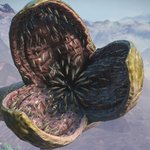
For those who want to know everything about the phoenixes, dragons and other flying reptiles in #NoMansSky.
A summary of my explorations :
skies-of-nms.blogspot.com/20…
Scientists have successfully grown living human skin around a robotic finger, giving it the ability to move, bend, and even heal itself.
Researchers at the University of Tokyo have brought science fiction closer to reality by covering a working robotic finger with living skin cultured from human cells.
Led by biohybrid engineer Shoji Takeuchi, the team submerged the robotic digit in a specialized mixture of collagen and human dermal fibroblasts, creating a supportive dermis layer. They then applied human keratinocyte cells to form a resilient outer epidermis.
The resulting living skin is not only flexible enough to withstand continuous joint movement without tearing, but it also develops natural wrinkles at the knuckles, mimicking the look and texture of a real human hand.
Beyond its lifelike appearance, this biohybrid skin possesses a remarkable ability to self-heal. When researchers made a small incision on the finger and applied a simple collagen bandage, the skin's fibroblast cells naturally merged the bandage back into the surrounding tissue, repairing the wound within a week.
While the technology currently requires continuous moisture to keep the living cells alive, the breakthrough opens new doors for medical testing, prosthetics, and the development of ultra-realistic humanoid robots that can interact safely and seamlessly in healthcare and service industries.
source: Kawai, M., Nie, M., Oda, H., Morimoto, Y., & Takeuchi, S. Living skin on a robot. Matter, 5(7), 2190-2208.
ALT Scientists have successfully grown living human skin around a robotic finger, giving it the ability to move, bend, and even heal itself.
Researchers at the University of Tokyo have brought science fiction closer to reality by covering a working robotic finger with living skin cultured from human cells.
Led by biohybrid engineer Shoji Takeuchi, the team submerged the robotic digit in a specialized mixture of collagen and human dermal fibroblasts, creating a supportive dermis layer. They then applied human keratinocyte cells to form a resilient outer epidermis.
The resulting living skin is not only flexible enough to withstand continuous joint movement without tearing, but it also develops natural wrinkles at the knuckles, mimicking the look and texture of a real human hand.