

We investigate how agricultural policy in Africa is shaped, who shapes it and why.
Africa
Joined May 2011
- Tweets4K
- Following1.1K
- Followers21.6K
- Likes1.8K


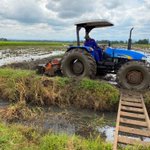



🌱Sub-Saharan Africa lags in the #GreenRevolution, with cereal yields trailing behind. A sustainable path forward requires #SoilFertility, improved cultivation & adaptive research.
Read more on how #Maize & #Rice can drive food security! 👉bit.ly/3EboYtc #Agriculture

🌾Northern Ghana’s agrarian transformation boosts efficiency but deepens inequalities. Small farms⤵️ from 78% to 36% (2000–2020), while elite-owned medium-large holdings ⤴️
Women, youth & smallholders face exclusion; inclusive policies are🔑
Read more: bit.ly/3E4e08t

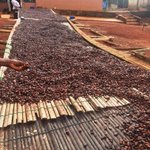
🌾Kenya’s agriculture is transforming! Commercialised farming is boosting incomes, creating jobs & driving rural growth. 🚜 But challenges like credit access, poor infrastructure & market volatility remain.
How can we unlock its full potential? Read more👉bit.ly/4gQYuf1

As 🇲🇼 embraces ag commercialisation, a study by APRA researchers reveals that this shift, while promising, may exacerbate inequalities within smallholder households.
Balancing progress with social equity is crucial for #SustainableDevelopment
More ➡️ tinyurl.com/4zkra5n4
Future Agricultures retweeted

Panel discussion underway at the #CCheFS webinar, focusing on community engagement lessons. Key takeaway: Collaborating with established groups like agri extension officers & community leaders in 🇰🇪& 🇬🇭 facilitates effective engagement & message delivery. #CommunityOutreach

Future Agricultures retweeted
Calling all food systems stakeholders! Have you registered for our #webinar tomorrow?
@ 8:00 EST/15:00 EAT, we’ll explore the significance of #SchoolMeals in driving sustainable change across African food systems🌍🫘
Be part of the conversation! bit.ly/44DkSTN

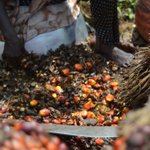
🍫📜 In 🇬🇭, #cocoa farming traditions are evolving. Shifting from extended family & community group reliance to nuclear family ownership & paid labour.
What's driving these changes?
Discover insights in our latest #blog🧐bit.ly/3VbUTzq

Future Agricultures retweeted

Why do we need a set of standards on crop-related crisis response?
By protecting & rebuilding crop-based livelihoods in a crisis, we contribute to:
🌱 #sustainable #food supply
🪙 potential sources of income for the very #poor
Read more, here: bit.ly/3U5A1s9

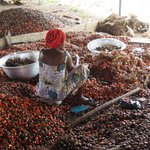
How does money - or the lack of it - impact farmer-based organisations (FBOs) in 🇬🇭 #oilpalm communities?
Our study reveals that #poverty breeds mistrust, weak or non-existent associational life, and undermines #FBO effectiveness
More insights▶️bit.ly/4cvBikx

Farmers trying to #commercialise in #Tanzania & #Zimbabwe are being 'squeezed' by increasingly erratic climate patterns & unfavourable policy environments.
Without public investment, they cannot cope - let alone adapt.
More in our latest blog➡️ bit.ly/47Shh4I

With 2 of the BIG 4 #oilpalm processing companies based in south-western #Ghana, you would think contract farming would help smallholders thrive 💸
In reality, formal contracts are a rarity
What is the context behind this? Find out in our latest #blog: bit.ly/3uaXQW6

HOW are #Food systems inequitable & WHY do inequities exist❓
@IDS_UK’s new Food #Report calls for marginalised people to be at centre of conversations on food system transformation 👏
Read the full report here 👇

Food systems are HIGHLY inequitable globally despite enough food. Hunger is normalised for many, yet diets are worsening & obesity is rising
Our new report analyses why inequities exist & identifies ways to build equitable food systems👇
ids.ac.uk/campaigns/food/

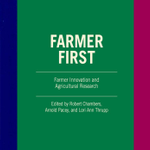
A trio of books - making the case that we must put #farmers first if more equitable, sustainable and productive food and farming systems are to be achieved - are now free to download! Find out more 👇: bit.ly/3rceQKf

To prioritise the needs of the most vulnerable, we must understand what causes #inequities in #FoodSystems
A new @IDS_UK #Report highlights 4 main areas of food inequity:
1⃣hunger
2⃣nutrition
3⃣livelihoods
4⃣territories
See more below👇
Ghana’s oil palm industry has consistently fallen short of its potential, despite continuous policy support – but why? Read our latest blog to find out more: bit.ly/44l14mE

Food systems have become disconnected from people. What are some of the factors preventing change or transformation? This video from @IDS_UK highlights some of the factors at play:
From South Africa🇿🇦 to Myanmar🇲🇲, and from Brazil🇧🇷 to Zambia🇿🇲, food systems have become disconnected from people.
WATCH our new video now
#foodequity
Agriculture in Sub-Saharan Africa is currently experiencing rapid transformation. Recent APRA research has been analysing changes in Ghana's Fumbisi Valley. Read our latest blog to find out more: bit.ly/3Pf207W

Land grabbing ten years on: a Call for Applications for small research grants
peasantjournal.org/news/land…
New APRA research investigated the relationship between agricultural practices, food security and nutrition in #Ghana, and what impact women’s empowerment had on these gains. Our #blog summarises the findings: bit.ly/3DBzW7V

Are smallholders more productive than medium-scale farmers? Our latest blog summarises the findings of APRA research in #Nigeria which investigated if and how productivity related to farm size: bit.ly/3VAvSM4
