

I'm an Artist/ Political Caricaturist creating mostly carricatures of famous or none famous people, who are in politics or trying to be one
Canada
Joined December 2009
- Tweets20.5K
- Following1.5K
- Followers568
- Likes25K


Pinned Tweet
#Armenia 1916 map! Where is #Azerbaijan
#TurkeyanAzerbaijan illegally occupying #Armenian Lands!
Wee #LIberated part of it calls #Artsakh

Gagikangelo 🇦🇲 ֎ #SanctionAzerbaijan retweeted

BREAKING: Armenian opposition forces plan to launch a coordinated street campaign on November 8, as three additional political groups join a nationwide unity initiative against Pashinyan’s government, according to “Strong Armenia” member Lilia Shushanyan.
Shushanyan, a public administration expert, announced the plans after meeting Narek Karapetyan, head of the “Strong Armenia” parliamentary faction.
She said opposition representatives would engage citizens in small groups to explain what they consider the damaging consequences of Pashinyan’s government’s policies. Other public actions are also planned.
Shushanyan identified three additional political forces she said had joined the initiative:
• The “Wings of Unity” party, led by former Human Rights Defender Arman Tatoyan
• The “Democratic Party of Armenia,” led by Aram Sargsyan
• The “Union for National Self-Determination,” led by Paruyr Hayrikyan
The development follows a November 4 meeting of opposition forces at the residence of “Strong Armenia” leader Samvel Karapetyan, shortly after his detention during a large-scale security operation.
Led by Narek Karapetyan and Aram Vardevanyan, the gathering produced a joint declaration calling for nationwide political consolidation despite differences among the parties.
The signatories agreed on four priorities: rejecting Azerbaijani President Ilham Aliyev’s demands for constitutional changes in Armenia; securing peace without unilateral concessions or territorial losses; protecting Armenian national identity and the Armenian Apostolic Church; and restoring democratic freedoms and rights.
On November 4, authorities searched 65 locations, including properties associated with Samvel and Narek Karapetyan. The following day, the Anti-Corruption Court ordered Samvel Karapetyan held in custody for one month.
The planned campaign marks the opposition’s next effort to translate its joint declaration into coordinated public action.

Gagikangelo 🇦🇲 ֎ #SanctionAzerbaijan retweeted

Ancient capital of Armenia Dvin founded in 335 AD by king Khosrov 3rd Kotak or the short. First completely build Christian capital of Armenia with its population 45 000 at its founding and reaching peak 100 000 during 7th century AD 📜☦️🏛🇦🇲


Gagikangelo 🇦🇲 ֎ #SanctionAzerbaijan retweeted

Before Islam, Egypt, Iraq, Syria, Lebanon, Turkey, Tunisia, Algeria, Libya, Albania, Bosnia and Kosovo were majority Christian. Not an opinion. It's history. Europe, America, pay attention.


Gagikangelo 🇦🇲 ֎ #SanctionAzerbaijan retweeted

Made in Stepanakert, in 2023.

ALT Zhengalav hats | Photo: Marut Vanyan


Gagikangelo 🇦🇲 ֎ #SanctionAzerbaijan retweeted

The Armenian National Committee-International (ANC-International) is calling on U.N. Security Council members and governments of all U.N. member states to reject Türkiye’s nomination of Feridun Sinirlioğlu for U.N. secretary-general.
armenianweekly.com/2026/11/0…


Gagikangelo 🇦🇲 ֎ #SanctionAzerbaijan retweeted
The similarities between Armenian Christian and Celtic symbols are truly fascinating.
#SacredSymbols
#SacredGeometry


Gagikangelo 🇦🇲 ֎ #SanctionAzerbaijan retweeted
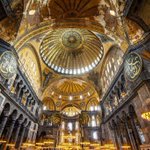
Here are the facts from ChatGPT, you can check it for yourself
The Armenian architect Trdat, the Balyan architectural dynasty, and Byzantine emperors of Armenian ancestry all played important roles in the city's architectural history. However, distinguishing original construction from later restoration is essential.
1. Hagia Sophia and the Armenian architect Trdat
Historically confirmed, with a correction
1. 532–537 AD: Hagia Sophia was constructed under Byzantine Emperor Justinian I. Its original architects were Anthemius of Tralles and Isidore of Miletus.
2. 558–562 AD: Following the collapse of the original dome, Isidore the Younger directed its reconstruction.
3. 989 AD: A major earthquake damaged the dome and its supporting structures.
4. Late 10th century: The Armenian architect Trdat (Տրդատ ճարտարապետ) was entrusted with their restoration.
This is supported by architectural historian Christina Maranci's research, published in the Journal of the Society of Architectural Historians in 2003. Turkey's own Ministry of Culture also identifies Trdat as the Armenian architect who reconstructed the western semidome and fifteen ribs of the main dome.
The Armenian Balyan family and Istanbul's grandest buildings
The Balyan family (Պալեաններ) was an Armenian dynasty of architects who worked for Ottoman sultans, particularly during the 18th and 19th centuries.
Their most famous works include:
Armenian architectural contribution
a. Dolmabahçe PalaceGarabet and Nigoğayos Balyan
b. Beylerbeyi PalaceSarkis and Agop Balyan
c. Çırağan PalaceSarkis Balyan
d. Ortaköy MosqueGarabet and Nigoğayos Balyan
Their contributions are documented by architectural historians and in the Balyan family archives. Cambridge-trained historian Alyson Wharton-Durgaryan devoted an entire scholarly book to their work, The Architects of Ottoman Constantinople.
Bloomsbury+2
The Byzantine Empire was ruled from 867 to 1056 by what historians call the Macedonian dynasty, founded by Emperor Basil I.
His Armenian ancestry is supported by medieval sources. The precise ancestry of his family remains debated, but historians including Peter Charanis emphasize its Armenian background.
Attalus+2
However, Theodosian Walls of Constantinople were originally constructed in the fifth century, centuries before Basil I. They cannot be credited to his dynasty.
Under Basil I, Constantinople experienced important architectural developments, including:
The Nea Ekklesia, a magnificent five-domed church completed in 880, now lost.
The Kainourgion, a lavish imperial palace building.
Restorations and improvements to existing imperial churches.
Regarding the claim that the Balyan family's descendants now live in Canada: I'm bying my prescribed medicine from Balian's pharmacy


Gagikangelo 🇦🇲 ֎ #SanctionAzerbaijan retweeted

Ethopian Orthidox Christian send an SOS to the world, begging the world to come to their rescue as Christians are being killed in their country.
Gagikangelo 🇦🇲 ֎ #SanctionAzerbaijan retweeted

«The peoples of the Orient give the inhabitants of Armenia (Arminyah) the name Armen and Armeny.
The Romans and Greeks called this same people Parthians. According to the Arab and Persian geographers, the land is divided into Upper and Lower Armenia.
The first, and the northernmost, lies between the lands of Allen and Khozar; it is known as Shirwan. Lower Armenia constitutes the southernmost region.
People praise their upright character, extol their intelligence, their skill in commercial enterprise, and their tireless diligence and their uninterrupted industriousness, a fund of [natural/innate] goodness that enables that facilitates their interaction with strangers and which stifles all quarrelling amongst them, provided that self-interest does not come into play.
The faults attributed to them are those common to almost all nations: a fondness for a good meal, wine, and, above all, money.
Yet, in fairness, it must be acknowledged that there are no people more capable of deep religious sentiment or more steadfast in their adherence to the teachings of Christianity.
Indeed, their churches are the most beautifully [adorned/decorated] in the whole of Orient.»
- Sitten, Gebräuche und Trachten der Osmanen: Nebst einem Abrisse der osmanischen Geschichte, von A. L. Castellan; Mit Erläuterungen aus morgenländischen Schriften von Herrn Langlès, Aus dem Französischen übersekt, Erster Theil, Leipzig, 1815.


Gagikangelo 🇦🇲 ֎ #SanctionAzerbaijan retweeted

Building No. 9 of the Ministry of Foreign Affairs (formerly the Shahrbani Palace in Tehran).
Constructed by Ghelich Baghlian, with architecture by Gabriel Guevrekian, in the year 1314 AP (1935).
Gabriel Guevrekian, the prominent Iranian Armenian architect. Born November 21, 1892 – died October 29, 1970.

Gagikangelo 🇦🇲 ֎ #SanctionAzerbaijan retweeted

The West Warns Armenia of Danger: World-Renowned Jeffrey Sachs
Here are some key takeaways from an interview conducted by my dear colleagues at 168. am with Professor Jeffrey Sachs—a world-renowned economist, Assistant to the UN Secretary-General, Director of the Center for Sustainable Development at Columbia University, President of the UN Sustainable Development Solutions Network, and former advisor to the governments of Poland, Russia, Estonia, Slovenia, and other countries.
We would advise those who speak on behalf of the West - without having a Western education, relevant experience, or the slightest understanding of international relations - to listen carefully. This man is the West. It is his advice that Western governments actually listen to.
Question: How will the war in Iran affect the Caucasus region? And what about TRIPP - does it guarantee Armenia's security?
Professor Sachs: Anyone getting involved with Mr. Trump right now needs to have their head examined. Go talk to Bahrain, Qatar, the Emirates, Saudi Arabia! Is it really a good idea? Ask them - did the US protect them? Does having a Trump project on your territory actually help you?
It’s a crazy idea, and I’m sorry to be so blunt. STAY AWAY FROM AMERICAN WARS. This is not the business the Caucasus needs, so stay away. Stay safe, stay out of this madness. America is playing games with the rest of the world.
The Caucasus is a magnificent, beautiful place with a thousand-year-old culture. Don't get dragged into American stupidity. Look at Trump yesterday—is that the kind of person you want to get involved with? You shouldn't.
You need good relations within the Caucasus, as well as with Russia, Turkey, and Iran. You let the US in - and you're inviting war. Please, don't do this.
The US doesn't care about a war on your territory. Look at Bahrain, Qatar, the Emirates. Trump said, "We’re leaving, and you guys figure it out yourselves."
Question: Our authorities say that this agreement guarantees Armenia's existence for 100 years.
Professor Sachs: That is very sad. Very sad, very, very sad. First of all, Armenia needs to exist for thousands of years - Armenia has already existed for thousands of years. Armenia will not find security by getting involved with Donald Trump. Please, take a serious look at yesterday's speech and just ask yourself—is this your partner?
You have to draw your own conclusion, but I'll give you my opinion: the answer is no.
And I already told the Gulf leaders this a few months ago: do not trust this, you will undermine your economy and your security. The United States is currently a rogue state. What kind of partner talks about bombing Iran back to the Stone Age?
Do you realize how risky this is, and yet you think the US is deeply committed to Armenia's security? Are you kidding? Among non-Armenian Americans, there are barely five people who know where Armenia is, and that includes Donald Trump. He doesn't know, and he doesn't care.
If your authorities are telling you that signing on to some "Trump highway" is security - oh my god! Come to your senses, please, pay attention! That is not security. Do not get dragged into American geopolitical games. Please, you are too beautiful and too vulnerable a country to get tangled up in American geopolitical games.
Every day I repeat Henry Kissinger's famous quote: "To be an enemy of America can be dangerous, but to be a friend is fatal." Please take note of this, be careful. And anything branded "Trump" or "Trumpian" is, in and of itself, a sign that you have likely miscalculated.
Gagikangelo 🇦🇲 ֎ #SanctionAzerbaijan retweeted

An incredibly important interview for any Armenian who is falling for the propaganda being spewed by Turks and Israelis larping as ‘Armenian influencers’

The West Warns Armenia of Danger: World-Renowned Jeffrey Sachs
Here are some key takeaways from an interview conducted by my dear colleagues at 168. am with Professor Jeffrey Sachs—a world-renowned economist, Assistant to the UN Secretary-General, Director of the Center for Sustainable Development at Columbia University, President of the UN Sustainable Development Solutions Network, and former advisor to the governments of Poland, Russia, Estonia, Slovenia, and other countries.
We would advise those who speak on behalf of the West - without having a Western education, relevant experience, or the slightest understanding of international relations - to listen carefully. This man is the West. It is his advice that Western governments actually listen to.
Question: How will the war in Iran affect the Caucasus region? And what about TRIPP - does it guarantee Armenia's security?
Professor Sachs: Anyone getting involved with Mr. Trump right now needs to have their head examined. Go talk to Bahrain, Qatar, the Emirates, Saudi Arabia! Is it really a good idea? Ask them - did the US protect them? Does having a Trump project on your territory actually help you?
It’s a crazy idea, and I’m sorry to be so blunt. STAY AWAY FROM AMERICAN WARS. This is not the business the Caucasus needs, so stay away. Stay safe, stay out of this madness. America is playing games with the rest of the world.
The Caucasus is a magnificent, beautiful place with a thousand-year-old culture. Don't get dragged into American stupidity. Look at Trump yesterday—is that the kind of person you want to get involved with? You shouldn't.
You need good relations within the Caucasus, as well as with Russia, Turkey, and Iran. You let the US in - and you're inviting war. Please, don't do this.
The US doesn't care about a war on your territory. Look at Bahrain, Qatar, the Emirates. Trump said, "We’re leaving, and you guys figure it out yourselves."
Question: Our authorities say that this agreement guarantees Armenia's existence for 100 years.
Professor Sachs: That is very sad. Very sad, very, very sad. First of all, Armenia needs to exist for thousands of years - Armenia has already existed for thousands of years. Armenia will not find security by getting involved with Donald Trump. Please, take a serious look at yesterday's speech and just ask yourself—is this your partner?
You have to draw your own conclusion, but I'll give you my opinion: the answer is no.
And I already told the Gulf leaders this a few months ago: do not trust this, you will undermine your economy and your security. The United States is currently a rogue state. What kind of partner talks about bombing Iran back to the Stone Age?
Do you realize how risky this is, and yet you think the US is deeply committed to Armenia's security? Are you kidding? Among non-Armenian Americans, there are barely five people who know where Armenia is, and that includes Donald Trump. He doesn't know, and he doesn't care.
If your authorities are telling you that signing on to some "Trump highway" is security - oh my god! Come to your senses, please, pay attention! That is not security. Do not get dragged into American geopolitical games. Please, you are too beautiful and too vulnerable a country to get tangled up in American geopolitical games.
Every day I repeat Henry Kissinger's famous quote: "To be an enemy of America can be dangerous, but to be a friend is fatal." Please take note of this, be careful. And anything branded "Trump" or "Trumpian" is, in and of itself, a sign that you have likely miscalculated.
Gagikangelo 🇦🇲 ֎ #SanctionAzerbaijan retweeted
📜🏛🇦🇲

Yervandashat – The Last Capital of the Yervanduni Kings
Yervandashat (Armenian: Երուանդաշատ, "Joy of Yervand") was founded by King Yervand IV, the last ruler of the Yervanduni (Orontid) dynasty, around 210–200 BC. He established the city to replace Armavir, which had served as the royal capital for centuries.
Why Was the Capital Moved?
Ancient Armenian tradition, supported by historical scholarship, suggests several reasons for the relocation:
The changing course of the Araks (Araxes) River, which reduced Armavir's strategic and economic advantages by affecting irrigation and river access.
The need to establish a stronger and better-defended royal center on a naturally fortified site.
A political and symbolic desire to reinforce the authority of the Yervanduni dynasty through the foundation of a new capital.
The Last Capital of the Yervanduni Dynasty
Yervandashat served as the capital of the Kingdom of Armenia until approximately 189–176 BC. During the decline of Seleucid authority following the Battle of Magnesia (190 BC), Artaxias I emerged as an independent ruler, ended Yervanduni rule, founded the Artaxiad dynasty, and established the new capital of **Artashat (Artaxata) around 176 BC.
Yervandashat therefore became the final capital of the Yervanduni dynasty, marking the end of one of Armenia's earliest native royal houses.
Urban Layout and Importance
Although only limited archaeological excavations have been carried out, historical and archaeological evidence indicates that Yervandashat was an impressive Hellenistic-era city.
It stood on a naturally fortified plateau overlooking the confluence of the Akhuryan and Araks rivers, providing excellent defensive and commercial advantages. The city was protected by substantial fortifications and likely contained:
Royal palaces
Administrative buildings
Religious sanctuaries
Public spaces influenced by Hellenistic urban planning
Its location at the crossroads of major trade routes made it an important center where Armenian, Iranian, and Hellenistic cultural traditions interacted.
Under the Artaxiads and Arsacids
Although it lost its status as the royal capital, Yervandashat remained an important regional city.
During the reign of Tigranes the Great (95–55 BC), the city appears to have retained strategic significance, although direct evidence that he rebuilt or extensively resettled Yervandashat is limited.
In the early 4th century AD, Tiridates III granted the city to the noble Kamsarakan family. It subsequently became the administrative center of the district of Arsharunik.
Destruction and Decline
During the campaigns of Shapur II in the 360s AD, Yervandashat suffered catastrophic destruction. Like several major Armenian cities, it was devastated, and many of its inhabitants were deported into the Sasanian Empire—a policy frequently employed to weaken Armenia while strengthening Persia with skilled craftsmen and settlers.
Although occupation continued for some time afterward, Yervandashat never regained its former political or economic importance.
Christian Heritage
Following Armenia's adoption of Christianity in AD 301, Yervandashat remained home to a Christian community.
Archaeological remains from the surrounding area include early church foundations, medieval cemeteries, and khachkars (cross-stones), demonstrating continued habitation well into the Middle Ages. Nearby ecclesiastical ruins, including the remains of an early basilica dating to the 4th–5th centuries, testify to the city's enduring religious significance.
Modern Legacy
Today, the site of ancient Yervandashat lies on both sides of the modern Armenian–Turkish border, with much of the ancient urban area located on the western bank of the Araks River in present-day eastern Turkey (historical Western Armenia).
The modern village of Yervandashat in Armenia's Armavir Province preserves the ancient name, while the archaeological remains across the river can still be observed from the Armenian side, although the historic site itself is difficult to access.
Historical Significance
Yervandashat represents the closing chapter of the Yervanduni dynasty, one of Armenia's earliest native royal houses. Although it served as the capital for only a few decades, it occupies an important place in Armenian history as the final royal center before the rise of the Artaxiad Kingdom.
Its surviving ruins, historical traditions, and enduring place name continue to symbolize the continuity of Armenian civilization across changing dynasties and empires.

Gagikangelo 🇦🇲 ֎ #SanctionAzerbaijan retweeted

The Armenian National Institute (ANI) is cited in Genocide Watch’s November 2026 Special Report, “The Armenian Genocide and international responses”:
“The Armenian National Institute states that Armenians participated in the economy and social life while living all over Türkiye, but non-Muslim populations experienced both legal and social inequalities.”
Examining the Genocide through @Genocide_Watch’s Ten Stages, the report recommends that the Turkish government formally recognize the Armenian Genocide and reject denial, and that governments and schools expand education and awareness.
Read more at genocidewatch.com
