

• sisterhood is healing • gender non compliant • lesbian separatist • trans ID for 7 years; reidentified for 10 • FR/EN
🇨🇦
Joined June 2022
- Tweets22K
- Following3.6K
- Followers2.7K
- Likes45.4K





Beaver 🇨🇦 retweeted

These billboards violate all suicide prevention guidance. This is dangerous misinformation that actually puts trans-identified young people at risk.
This irresponsible messaging tells already vulnerable youth that the normal response to restrictions on unproven life-altering drugs is suicide.
There is a serious and very real risk of imitation. We’ve known for centuries that suicide is socially contagious. And now, already distressed adolescents are being told that young people just like them are committing suicide in response to similar legislation. This risks planting the idea into already susceptible minds.
Treating suicide as a slogan or using it as a political battering ram is despicable beyond words. I don’t believe Canadian trans activists can sink any lower than this.

Beaver 🇨🇦 retweeted

Seriously, What is the definition of Out of the ordinary for this guy?
He shook hands with Haqqani, a man wanted by the U.S. government with a huge bounty on his head, posed with the Taliban and their guns, and repeated Taliban propaganda word for word. And he thinks that’s ordinary?

Sneako reveals he was interrogated for 8 hours upon returning to the United States from Afghanistan and was forced to hand over his phone to the FBI. He claims he fears authorities may plant something on his phone to get him in trouble.
“If anything out of the ordinary comes out, if something doesn’t make sense, that is why”



Beaver 🇨🇦 retweeted

The lesbian houses in the 70s and beyond were another form of kin-making. Shared rent, split costs, with varying degrees of independence or collectivity. In Oakland and Berkeley, we used to name these households by streets: Terrace St, Ellsworth St, Derby (St) Dykes. Then there were neighborhood clusters, where many lesbians rented houses on the same street or area. I lived on Clarke St in Oakland where at one point there were two dozen lesbians living on the same block (broken up by eviction / gentrification). Lesbians in Kansas City planned a neighborhood called Womontown, buying or renting houses within a set area. Look it up.
Beaver 🇨🇦 retweeted

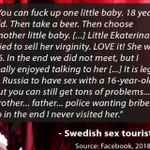
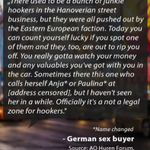
MYTH: The Nordic Model pushes prostitution underground
Opponents of the Nordic Model often claim that it pushes prostitution underground. They say that because buying sex is illegal under the Nordic Model, punters (sex buyers) are more anxious and so women have less time to assess and negotiate with them and there are fewer options for screening punters. As a result, they say, prostitution moves to more marginal and isolated locations and puts the women at increased risk.
These claims can be persuasive – after all, no one wants the women involved to face more danger. But are they true? To examine this, we’ll look at the issues from various angles and show that once again these claims don’t stand up to scrutiny.
Punter anonymity is already sacrosanct in the sex industry
On 19 November 2025, Siobhian Brown, Scottish Minister for Victims and Community Safety, spoke on behalf of the Scottish Government to the Criminal Justice Committee in the Scottish Parliament about the Prostitution, Offences and Support (Scotland) Bill. This Bill was introduced by Ash Regan MSP as a private members bill and is colloquially known as the ‘Unbuyable’ Bill. If passed, it would introduce the Nordic Model in Scotland.
The Minister expressed concern that it would make women involved in prostitution less safe. When pressed for detail, she said:
“One reason is that women who currently choose to be involved in prostitution and have clients come to their house can have security in place, so that they can get the client’s identification, passport, credit cards and so on.”
The implication left hanging in the air is that none of this “security” could exist once purchasing sex became a criminal offence. But in reality in the UK, such security checks rarely, if ever, happen. What the Minister actually revealed was how ill-informed she is about how the prostitution system actually works in practice.
I asked the women in our network who have survived prostitution if they or “security” had ever checked punters’ passports or credit cards before they went ahead with the arrangement. They were unanimous. Even in a brothel, they said, the payments were always made in cash and ID checks were never conducted. For example, Venessa said:
“My experience was in Edinburgh, Scotland. I always dealt in cash, never card. 99% wouldn’t even use their real names, never mind show us their passports. Besides how is seeing someone’s passport or credit card going to stop an assault? If anything, it would just escalate the situation.
All the Minister needs to do is actually listen to the experience of survivors before conjuring up excuses for condoning prostitution.”
As for the presence of “security”, they suggested that what the Minister really meant was pimps. Pimps whose driving concern is to keep their gravy train rolling, not the wellbeing of “their” woman or women.
In the sex industry, punter anonymity is sacrosanct. Research into men who buy sex is clear that the vast majority would stop doing it if there was any threat to their anonymity. Most of them are married or in long-term relationships and have jobs and do not want their wives, partners, children or bosses to know what they do in their spare time. Some are politicians, lawyers, or successful businessmen with a public profile. They know that this would be in jeopardy if it came out that they pay to use marginalised individuals sexually – just as it was for Keith Vaz. The sex industry as a whole recognises this and goes to great lengths to protect punters’ anonymity.
The survivors I talked to pointed out that most punters seldom use their real names when arranging prostitution encounters and typically use burner phones and email addresses when making contact. When card payments are necessary, punters tend to use anonymous prepaid cards that are not linked to their bank accounts. This is in the UK, where men buying sex have more or less total legal impunity. It is absurd to suggest they are suddenly going to be anonymous if the law was changed, when in the vast majority of cases they already are anonymous.
There are also several reasons why many women involved in prostitution might not take card payments. For example, women who do not have legal immigration status are prevented from opening a bank account, making the use of card payments impossible. Many women in the UK are in prostitution because they are unable to make ends meet on Universal Credit and the threat of the Department for Work and Pensions (DWP) or HMRC accessing their bank account and seeing such payments would be a strong disincentive to taking card payments.
Prostitution advertising websites
A similar myth persists about prostitution advertising websites, like AdultWork and Vivastreet. People claim that they provide features that enable women to screen punters and that this would end under the Nordic Model and put women in more danger. But this is another example of ignorance of how the sex industry works in practice.
Many people assume that these websites work like Airbnb, where both parties have to provide photo ID when registering, that initial contact is restricted to registered users, and payments are made through the site – motivating both parties to behave well to avoid bad reviews or being banned from the service or reported to the police when things go wrong.
However, this is not how prostitution advertising websites work – because punter anonymity is sacrosanct. When advertisers register on these sites, they are required to provide photo ID of the women being advertised (although pimps often sell women behind someone else’s photo ID), but no photo ID is required to register as a punter. So, if a punter gets a bad review, he can just set up a new account using a fake name and email address, but the women being advertised cannot. This means that punters have no incentive to behave well and there is no audit trail enabling the site or the police to contact them easily when things go badly wrong.
Pimps and punters use this unequal system to their advantage. Punter reviews determine how much women can charge and how many punters they will attract. Punters use this to coerce women to engage in more painful and risky behaviour and to give discounted rates. Pimps use the reviews to control women, including serious reprisals for bad reviews. Independent punter forums (such as UK Punting) provide further opportunities for men to retaliate against women who do not please them. Sometimes they do this in groups, like a pack of hyenas.
Furthermore, many adverts on these sites are visible to anyone anywhere on the internet with no requirement that they register and log in. As adverts often carry a phone number, men make contact without any form of screening whatsoever.
These sites do not provide payment services for meeting in person for prostitution. Payment is made during the encounter, usually in cash or anonymous prepaid cards.
So far from providing measures that increase women’s safety, these sites already provide features that advantage pimps and punters and disadvantage the women involved. Suggesting that these sites provide robust screening services and protection for the women is nothing more than wishful thinking. Anyone who suggests they do provide safety is demonstrating their utter ignorance of how the prostitution system works in practice.
What the European Court of Human Rights said about prostitution in France
France introduced the Nordic Model in April 2016. A group of self-identified ‘sex workers’ subsequently took the French Government to court on the basis that it forced them to work in more dangerous situations (i.e. ‘underground’), putting their physical and mental health in danger and that it infringed their human rights to respect for their private life, personal autonomy and sexual freedom. They worked their way through the French courts, who each ruled against them, and eventually took their case to the European Court of Human Rights (ECHR).
In June 2023, after a lengthy and thorough examination of all the relevant facts, the ECHR unanimously ruled that there had been no violation of the applicants’ rights and they subsequently declined leave to appeal.
In the final judgement, the ECHR recognised the undeniable risks to which prostituted people are exposed but observed that the negative effects that the applicants claimed to have been caused by the Nordic Model had in fact existed before the law was introduced and were therefore likely to have other causes, including that these risks are inherent to prostitution itself.
The judgement also explained that the Nordic Model law “contributed to reversing the power balance between prostitutes and their clients, by positioning the former as victims and enabling them to report clients in the event of violence, since henceforth it was the client who would face prosecution”.
The court recognised that as well as measures to support persons moving away from prostitution, the Nordic Model law strengthened public policies to reduce health risks for the benefit of all prostituted people, through the introduction of special measures to improve access to support and general healthcare for persons who continued to engage in this activity, and by ensuring that they were not left to fend for themselves.
Sweden
We are in touch with a Swedish organisation called Intedinhora, which is made up of women who have experience of prostitution in Sweden and who strongly support the Swedish Nordic Model law. When we put the claim that the Nordic Model pushes prostitution underground to Lea, their representative, she responded by asking whether there is anywhere in the world where punters want to have sex in the open.
She said, “The law makes little difference in this regard because they don’t want their wife, girlfriend or employer to find out and anyway most people want to have sex in private. The fact that the meeting in some countries takes place in public areas doesn’t mean that the selling part is safer. Women get killed every year in those small cubicles in the red-light district in Amsterdam. And in Sweden we haven’t yet had one reported murder of a person in prostitution by a john since the sex buyer law was established in 1999.”
She said that the price of prostitution in Sweden is much higher than in European countries where the sex trade is condoned. “This makes the johns furious,” she said. “You can often see them talking in online forums about how the ‘hookers’ here in Sweden are ‘spoiled’ and how they wish it were more like Germany where prices are less than half what they are in Sweden. This means that we don’t have to see as many johns to survive and can say no when we’re uncomfortable.”
Cajsa, another Swedish prostitution survivor, echoed this when she was speaking at a UK conference. She talked about how upset it makes her that people claim that the Nordic Model hurts women, when she is absolutely clear that she owes her life to it. She debunked the myth that it is illegal to carry condoms in Sweden and talked more about the Nordic Model’s benefits:
“Under the Nordic Model, the men are more careful when buying sex. But for me, a key benefit was psychological – knowing that buying sex is wrong. If you want to, then OK, but the men shouldn’t see you as one. You should be offered help – and if you don’t need help, that’s fine.”
Sweden is now seen as a hostile destination by international sex traffickers.
Prices
As Lea explained, women in Sweden are able to charge considerably more than women in other European countries where prostitution is tolerated.
As a rule of thumb, any liberalisation of prostitution law and policy, expands the size of the industry and lowers prices. Lower prices mean that women have to engage with more punters and are under more pressure to engage in more unpleasant, risky, and dangerous behaviour. Prostitution is not unique in this – it is a well-known economic principle that expanding supply tends to reduce prices. Even research that argues for decriminalisation confirms this.
The Nordic Model, when well implemented, has the opposite effect because it tends to reduce the numbers of women involved (the ‘supply’). As punters are the source of most of the risks, needing to see fewer punters for the same financial benefit would reduce the statistical risk to which each woman is exposed – in direct contradiction of the claim that the Nordic Model makes it more dangerous.
More isolated and dangerous?
From October 2014 until June 2021, an area of Holbeck in Leeds was designated a decriminalised prostitution zone. The same people who argue that the Nordic Model drives prostitution underground claimed that this decriminalised zone would make women safer. I visited the zone one Friday night in August 2019 and found that far from being the safe and friendly environment that supporters claimed, it was a dark, isolated and lonely light industrial area with almost all the buildings closed for the night or derelict and there were no public toilets or washing facilities.
I took the above photo. If you look carefully, you can see a woman standing under a street light on the left side of the road in the distance. She was soliciting to sell sex. Her pimp was waiting in the shadows on the opposite side of the road (not visible in the photo) – not to provide her with ‘security’ but to ensure that she did not abscond with her earnings.
Most punters were in cars and when they drew up, the women would hop in almost immediately. There didn’t seem to be much assessment or negotiation going on. The car would then take off to some lonely carpark or turning where the act would take place.
One woman was murdered by a punter in the first few months of the zone’s operation. There were numerous rapes and several attempted murders over the years, and local women reported relentless harassment from the kerb crawlers, day and night. Yet the zone was trumpeted a success and many other local councils and police forces showed interest in following suit.
However, the local residents, who were mostly on low and modest incomes, saw the truth and the hypocrisy of the local officials. They could see that the women selling sex were either addicted to Class A drugs and were desperately trying to get money for their next fix or they were under the control of brutal pimps, including some Romanian men who brought groups of women to the scheme in a van. It was as clear as day that the women were being driven by forces outside their control and were not making a positive and informed choice to be there. What they needed was drug rehabilitation and their pimps locking up.
The local residents campaigned tirelessly against the zone for years and for it to be replaced with something similar to the Nordic Model-inspired scheme introduced in Ipswich after a punter murdered five women there. They wanted the police to crack down on the punters and pimps and the authorities to provide the women with genuine assistance to leave the industry, including drug rehabilitation and means to safely escape their pimps. Their hard work and persistence were rewarded when the scheme was eventually closed down, although this did not end street prostitution in the area. But at least it dampened the official cognitive dissonance that prostitution can be safe and men must be enabled to pay to use and abuse desperate women.
The cheerleaders of the scheme were undeterred and announced that they were “very disappointed” at the scheme’s closure and were “firmly of the view” that it was “the best way of providing as much safety as possible to sex workers who work on street”. They also claim that the Nordic Model drives prostitution underground and is more dangerous than full decriminalisation, which they campaign for. These are people who are willing to publicly defend a scheme that very clearly puts desperate women at enormous risk rather than challenge men’s de facto right to pay to use and abuse women sexually.
Some local campaigners found this hypocrisy particularly hard to forgive and for the rest of us, it should be a cautionary tale about the motives of those who claim that the Nordic Model forces prostitution underground. It certainly makes me wonder why the cheerleaders of the scheme would be so against the Nordic Model, which attempts to reduce the size of the industry by cracking down on punters and pimps and giving women trapped in it genuine routes out, that they would suggest that it drives prostitution underground when the scheme they backed led to a large increase in the numbers of punters frequenting prostitution, enormous and unforgivable dangers to the women involved in circumstances that it’s hard to imagine could get much worse.
The truth is that prostitution is always dangerous for the women involved and nothing can reduce those dangers to a level that would be acceptable in a regular workplace.
Ipswich
A Nordic Model-style approach to tackling prostitution was implemented in Ipswich after a series of brutal murders of prostituted women in the town.
The police had video evidence from before the scheme when street prostitution was widely tolerated and after the scheme was introduced, when the police used number plate recognition software to operate a zero-tolerance policy towards kerb crawling. The videos show there was no apparent change in behaviour. When a car drew up before the scheme, just as I witnessed in Holbeck, the woman would get in more or less immediately. She did not spend any significant lengths of time assessing the punter and negotiating with him. And this did not change after the scheme was introduced.
This suggests that the idea that women involved in street prostitution routinely spend significant amounts of time assessing and negotiating with punters before committing to the transaction is yet another misconception.
The University of East Anglia (UEA) was commissioned to conduct an independent evaluation of the scheme and they assessed it as successful and cost effective. In fact, they said that every pound spent on the strategy saved the public purse two pounds – because of lower criminal justice and social support costs.
Switzerland
Switzerland provides further evidence that counters the myth that the Nordic Model drives prostitution underground. During the Covid lockdown period, buying sex was prohibited. Government-backed data demonstrates that there was no decrease in trafficking referrals, victim identification or assistance during this period – which would not be true if the ban had pushed prostitution underground. Furthermore a 2022 study, which alleged increased vulnerability of prostituted women during the lockdown period, in fact proved the opposite. They found no increase in violence, although the usual pressure for unprotected sex persisted – a problem that has existed for decades.
Does the corollary hold true – that legalising prostitution brings the underground industry to an end?
Germany’s legalised prostitution system now requires women to register with public officials. The German government, whose efficiency is world renowned, keeps records of the numbers of workers in all its various industries – with one exception. The prostitution industry. As a result, there is no reliable data on the numbers of women involved in it. Estimates range from about 90,000 to 400,000, but in 2024 only about 32,300 of these women were registered as they are now required to do by law. In other words, the vast majority of women involved in prostitution in Germany are operating “underground” of the official system.
Clearly a majority of these women prefer not to be registered. There are many reasons for this, some of which we will look at in a moment.
The fact that legalised prostitution models tend to lead to a two-tier system with one tier being legal and the other “underground” is one of the reasons that some people lobby for full decriminalisation, which they say doesn’t have this problem. Before we go on to look at full decriminalisation, first let’s consider the legal, “above ground” brothels in Germany.
Germany’s prostitution industry thrives under its legalised model. Megabrothels cater for up to 1,000 men simultaneously and more than a million men are estimated to pay for sex every single day.
Ellen Templin, a dominatrix, explains how the liberalisation of the law changed things:
“Since the [2002] reform, adverts are more uninhibited, buyers more brutal. Now, if you say, ‘I don’t do that,’ they say, ‘Come on; don’t be so difficult, it’s your job.’
“Before, it was forbidden to demand unprotected sex. Now, they want to piss on your face, do it without protection, do it anally or orally. Before, buyers still had a guilty conscience. That doesn’t exist anymore.”
Two journalists who undertook an in-depth study of the German prostitution system, concluded that the intention to improve the position of the women through legalisation has in fact achieved the opposite.
“Women have become a resource, to be used as efficiently as possible for profit.”
A police inspector says the law has made Germany an Eldorado for traffickers, pimps and brothel owners. The huge scale of the industry has made it more or less impossible for the police to hold more than a tiny minority of exploiters to account. The European Union’s law enforcement agency Europol is clear that legalised prostitution incentivises human trafficking for the purpose of sexual exploitation and notes that, where prostitution is legal, trafficking in human beings and violence perpetrated against its victims and other people in prostitution increases tenfold, as perpetrators can hide behind legal structures.
Changes to the law introduced in 2017 with the aim of ameliorating some of the worst excesses has led to few if any tangible benefits for the women because most of the measures are aimed at them and not the pimps and punters. The main impact has been that the industry is increasingly concentrated in large brothels and chains of brothels, making profits for the brothel operators even easier and larger, while the conditions remain, as Dr Ingeborg Kraus reports, “hell on earth”.
This reality of legal prostitution again calls into question the sincerity of the lobbyists who claim that the Nordic Model pushes prostitution underground. Both the “overground” and the “underground” parts of the prostitution system in Germany are grim beyond comprehension. The real lesson is surely that prostitution is simply incompatible with modern democratic social norms and the solution must be focused on a pathway to closing the industry, providing genuine transitions out for those caught up in it, educating the male population that this behaviour is unacceptable, and when all else fails, penalising both punters and pimps of all kinds. This is exactly what the Nordic Model aims to do.
Why women might not want to be registered
Many, perhaps most, women who are involved in prostitution see it as a temporary solution to a crisis situation and not as a long-term career. It should be no surprise therefore that so few of them want to register with state authorities in Germany, especially given the negative consequences that women often face once their involvement is known. Consequences such as difficulty in securing alternative paid work, harassment and worse from men who consider them to be ‘fair game’, being blacklisted by landlords when seeking accommodation, and being blamed for their own difficulties by health and social workers, and officials of all kinds. These are all factors that work together to make it difficult for women to exit prostitution and are present in most countries, including the UK.
There are specific groups of women whose particular circumstances lead to additional issues. For example, women with insecure immigration status might be at risk of deportation if state agencies become aware of them – meaning they will have even more motivation to not register or alert the authorities in other ways to their involvement in prostitution. This risk is not connected with the Nordic Model.
Similarly, women who are in receipt of means-tested benefits are likely to be subject to penalties including loss of benefits or even prosecution for benefit fraud if the authorities become aware of their prostitution related income. Others may be keen to slip under the radar of the tax authorities.
Full decriminalisation or legalisation of prostitution has not been accompanied by liberalisation of immigration laws or changes to tax and benefit rules. States within the European Union (EU) are bound to uphold measures relating to migration from countries outside the EU.

Beaver 🇨🇦 retweeted

#SexIndustryArticles
“I haven’t seen a single woman who does this voluntarily”
archive.is/ULSVF
" “Livestock” is what the Hells Angels called the women who prostituted themselves for them, says Kassra Zargaran. Today the forty-year-old is no longer a Hells Angel and sees the sex business as a major problem because it is inseparably linked to human trafficking, violence and misogyny. Because prostitution is legal, a criminal milieu was able to spread unhindered, says Zargaran, as the authorities’ hands were tied.
In the book Der Perser (“The Persian”) – a Spiegel bestseller – Zargaran tells his story. He grew up in Hamburg as the son of an Iranian father and a Chilean mother and began rebelling in high school. He was expelled from school and became a pimp. Later he joined the Hells Angels charter Berlin-City.
For four years the club was his life, then he began to have doubts. But before Zargaran could leave, in 2014 he was present when a young man was shot in a Berlin betting shop. Zargaran was arrested and did what is considered a mortal sin among the Hells Angels: he cooperated with the authorities. Unlike in America, crown witnesses in Germany do not go unpunished; they can merely expect a reduction in sentence. Zargaran received a reduced sentence of 12 years for involvement in the murder, which he had to serve in solitary confinement for security reasons. In 2020 he was released early; almost all of his former co-convicted brothers remain in prison for life.
Where Kassra Zargaran is today, he does not say during the video call. He entered the witness protection program and lives with his family at a secret location under a different name. Zargaran does educational work about the milieu and the underworld and has two podcasts. In November his new book Die Strasse vergisst nicht (“The Street Doesn’t Forget”) will be published.
Mr Zargaran, you began your criminal career as a pimp. Why?
I grew up in Hamburg, which is known for its large red-light milieu. But it is not limited to the Reeperbahn, as many think; the whole city and the entire surrounding area are permeated by it. So it was only a matter of time until a boy like me, who was criminal early on, came into contact with the milieu. If you are criminal, you always have to do with the red-light district, because one does not exist without the other. This was able to spread undisturbed for decades.
You mean one should have intervened earlier?
One couldn’t, it’s a legal business. Prostitution is just as legal in Germany as in Switzerland. Therefore the state did not feel obliged to intervene. Thanks to this pseudo-liberalism, the shady, criminal milieu was able to spread undisturbed.
What do you mean by pseudo-liberalism?
The red-light milieu is, was and always will be a criminally shady place with violence, exploitation and human trafficking, where things happen that despise people and women. This business is designed to satisfy the lowest drive of humans, namely sex. The state with its investigative authorities knows exactly what goes on there. But people prefer to blather about the oldest trade in the world, which is supposed to legitimise the whole thing. That’s why many politicians or people from business see nothing wrong with going to the brothel or ordering escort ladies. People prefer not to look too closely when it gets disgusting and really heavy.
What does “disgusting and really heavy” mean?
That the woman is a commodity that is sold. She is not only sold to men for sex, but also to other pimps. In the milieu this is called “paying distance”. If someone finds that “the old woman”, as prostitutes are usually called in the milieu, causes too much stress, he looks for a buyer for her, for example for 10,000 euros. It works no differently than on the cattle market and is absolutely contemptuous of people and especially of women. The woman now first has to pay off the 10,000 euros by turning tricks – the fact that her new pimp bought her was not a humanitarian gesture.
What kind of pimp were you?
I kept the women in a good mood by being very communicative and manipulative. But I was never violent. If only because I didn’t want to go to prison, I’ll be quite honest.
What kind of women were those who prostituted themselves for you?
Women who grew up in Germany between 19 and 25 years old, so not migrants who did not speak German.
Did the women come to prostitution via the loverboy method?
I don’t use that expression. It is too harmless. And it’s nothing new either. In the milieu there has long been a specific expression for when you manipulate a woman long enough until she eventually turns tricks for you: poussieren. That shows how power is distributed in prostitution. Therefore for me there is no voluntariness in this trade, at least not when we are talking about classic prostitution with brothels and street prostitution.
Why not?
Most women are – as I did – manipulated into prostitution, where they then work for a pimp until they no longer “function”, meaning they no longer bring in money. Some free themselves at some point and work independently, but that doesn’t change the fact that their entry into prostitution was not voluntary. Usually it’s only a matter of time anyway until they have a pimp again.
What about those women who decide for themselves to prostitute themselves?
At first glance it looks like voluntariness, but it isn’t. They do it out of a financial or other emergency situation; they are indirectly forced into the decision.
One could object that many people do their job only for the money and therefore prostitution can very well be self-determined.
I know, this attitude is held by left-wing feminism, and I don’t understand it. I was really in the business long enough and saw not a single woman who does this voluntarily. Men determine this business, and the women are the commodity. Do these feminists seriously mean that some growing girl wakes up in the morning and says to herself: “I would like to become a prostitute”? No woman who is not traumatised in some way harbours the wish to have to take the penises of 20 different men into her mouth every day. I deliberately say it so clearly because one should call things by their name so that it is clear what takes place in prostitution. Therefore I would also never speak of sex work.
Why?
Because the term trivialises and obscures what it is about. It designates as “work” what is not work, but a condition that the women somehow endure, usually only with drugs and alcohol. It is also not a service; it is state-legitimised human trafficking and the sale of bodies. Society adopts these academic terms and is glad that it sounds clean. But the sex trade will never be an ordinary trade, not even if the establishments are run by women. Ultimately the men keep the business going, and the women are alone with them in the rooms. It doesn’t even have to be criminally relevant what happens there; the act itself is often very unpleasant for the woman. She always has to overcome herself. That is a mental torture.
Do you think it is wrong that prostitution is legal?
Yes, because when the state says it is legitimate to buy women, men are told that they are buying a completely harmless service, roughly as if they were renting a car. During the rental one also has the interpretative authority over it. And so many men think: I paid 50 or 100 euros, therefore I may now treat this woman however I want.
But it is agreed in advance what happens.
Of course the practices are agreed at the beginning, but how the man treats the woman is left to him. And often he is then rough or humiliates the woman by pushing his penis deep into her throat or pulling her hair. Many men think contemptuously: she’s just a whore, and that’s how they treat the women too. Sorry for the drastic wording, but that’s how it works. Of course it doesn’t suit some people at all that I say it like this.
Who doesn’t it suit?
Often people criticise me who have no idea about the milieu and the underworld, probably because it doesn’t fit into their worldview. And the others are the pimps and brothel operators, who of course have no interest in me demystifying their business. They are rather happy if the narrative of the self-determined woman in prostitution lasts a long time.
Do you advocate a ban on buying sex, as already exists in Sweden, France or Canada, which punishes the client but not the prostitute?
Yes, because the Nordic model is a good solution precisely because it puts the woman at the centre and labels the man as what he is: the perpetrator. He makes all of this possible; he controls the demand. And one must simply not forget how inseparably prostitution is linked to organised crime. This has been able to create a monopoly for itself in Germany, in Austria and also in Switzerland, completely legally.
What does that mean concretely?
Organised crime – that is the Albanian mafia – decides who may get involved in this field and who may earn money with it. With legal prostitution one has opened the door wide for organised crime; it became a legal economic sector. At the same time one cannot simply open a brothel.
Why not?
Because it is precisely not an ordinary trade, even if one can still call it legal for a long time. Because then already on the first day someone comes by and says: “What are you doing here? Who do you belong to? We decide here who takes place in this business. Tomorrow the shop is closed or you take all your women out of here and take our women. And if not…”
What if not?
Then threats are made. Or someone pours butyric acid in front of his shop. Or beats him up. In the worst case he is shot at, his car, his shop, his home. So that the message is clear: we are in charge here. With the legalisation of prostitution the state has not only accepted that the woman becomes a victim. It has also enabled organised crime to spread in a legal economic sector that it now dominates.
Kassra Zargaran was a pimp in Hamburg and Berlin for years. Today he says prostitution is misogynistic and clients should be punished. He calls left-wing feminism out of touch with reality.
[More floating quotes from Zargaran interspersed throughout the article:]
“I haven’t seen a single woman who does this voluntarily”
“The term sex work trivialises a condition that the women usually only endure with drugs.”
“Pimps are happy about the narrative of the self-determined woman in prostitution.” "

Beaver 🇨🇦 retweeted

En mettant mon terfisme de côté, ça lui irait bien, mais à aucun moment je ne glorifierais un mâle qui pense, écrit et poste CECI en toute âme et conscience.
Le camp woke est le champion en matière de cancel culture, donc pourquoi cet autogynéphile qui fait l'apologie du viol sur femmes fait exception ?
JK Rowling a été boycottée à l'origine pour s'être questionnée sur l'effacement du mot "femme", pour rappel.
Monde de tarés.

unavailable
Beaver 🇨🇦 retweeted

My grandparents “did the bills together” every month for the 36 years they were married. This included my grandpa balancing the check book, chastising her for spending money on things he told her to buy, and refusing her any say whatsoever on where a penny went. Until she was 55.


Beaver 🇨🇦 retweeted

If sex work is empowering then slavery also is bc they’re based in the same system.
In all centuries “oops, girl or woman is in trouble and no protection, let’s exploit her bc we need this category”
It’s a game by men.
Beaver 🇨🇦 retweeted

German government is debating introducing the Nordic Model of prostitution law. Chancellor Merz supports it, but the 2nd most powerful man in the Conservative party doesn't nor does the majority of the Labour Party. Still incredible that its on the agenda
bild.de/politik/inland/sexka…


Beaver 🇨🇦 retweeted

parabéns por apoiar a comercialização e a hipersexualizacao do corpo feminino kkkk


Beaver 🇨🇦 retweeted

💔
A young woman has been missing for a year from Kitchener, Ontario, police believe foul play is involved and have released photos but avoid noting that Eli is female.
wrps.ca/news/one-year-later-…
cbc.ca/news/canada/kitchener…


I just got an ad to buy sheets on Instagram that was like “are you burnt out and no amount of sleep and no amount of coffee will stop you from being exhausted? Are you impulsively buying things you don’t need just to feel something? Buy some new sheets” lmao
2
20
399
Beaver 🇨🇦 retweeted

They are casually talking about trafficking women...

Beaver 🇨🇦 retweeted

one day we’ll have a serious conversation about bodycam content farms and how they’re just as predatory as other true crime media. the law already exists to hold these people accountable, what is the purpose of this other than fetish content/flagrant sensationalism?

A drunk 17-year-old crashed her car into a family's front yard in New Mexico, with a half-empty bottle of liquor still sitting on the passenger seat. An hour later, the girl who fought officers every step of the way was crying for her mommy.
When police walked up, she told them she was just waiting for her car to start. She swore she hadn't had a single drink, but she couldn't stand without leaning on something, didn't know where she was coming from, and kept dropping her head onto her chest while they asked her questions.
She fought them the whole time. She pulled away, told them they were hurting her, and refused to sit up or open her eyes for the tests. But once she was arrested for DWI and brought into the station, the anger disappeared. All that was left was a teenager repeating the same 4 words over and over: "I love my mom."
The officers stayed patient. They told her that her mom was on the way, put on some music to calm her down, and walked her through the process 1 step at a time. Because she was still a minor, they couldn't keep her. Just after midnight, a sergeant woke up her mother and asked her to come pick up her daughter, while the crashed car was towed away.
She walked into the night acting like an adult, and walked out of the station needing her mom.
Watch the moment the tough act finally broke down.
✨Sex work is work✨
The commercialization of pedophilia; men buying little girls.
dieunsichtbarenmaenner.wordp…


