

Senior scientist @IITalk 🧠 🐁 Neuroimaging, brain (dys)connectivity and autism @ERCGrantees
Rovereto, Italy
Joined July 2016
- Tweets2.1K
- Following1.1K
- Followers2.7K
- Likes3.6K



Pinned Tweet
How do cortical perturbations affect fMRI connectivity? Not necessarily as one would expect! Our new work @NatureComms shows that cortical inactivation may unexpectedly INCREASE fMRI connectivity! rdcu.be/cHKie
🧵below explains how. Spoiler: δ oscillations are key! 1/n

Alessandro Gozzi retweeted

1/ 🚨 Just out in @NatureNeuro! 🧠
We profiled >6,000 features of brain dynamics across humans + monkeys, mice, fish and worms 🧑🐒🐒🐁🐟🪱 to find a shared neural endpoint of anaesthesia: spatiotemporal isolation of local activity 🧵
🔗 doi.org/10.1038/s41593-026-0…

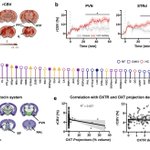
#Oxytocin is usually studied by giving it from the outside. But what happens when the brain releases its own?
In our latest, we found no single “oxytocin circuit”: instead, OXT reorganizes communication across the brain favoring salience-related states!
👉tinyurl.com/mryc8rp6

Alessandro Gozzi retweeted

Today @Google, we published work led by @m_codreanu on AI in Science, drawing on 15 million Gemini interactions, 2,600 specialised AI models & a 600-scientist survey. What did we find about how AI is changing science? Read on...

Alessandro Gozzi retweeted

🚨 Major update of autism genetics from Talkowski and Daly
Integrating information from 62,429 autism cases across study designs, ascertainment criteria, and genetic variant classes: identify 253 autosomal genes where damaging variants contribute to autism with high statistical confidence.
Subsets of the 253 genes are more associated with autism with or without DD/ID, and meta-analysis of cases ascertained for autism and those ascertained for developmental disorders identified 497 genes (including 150 that are not statistically significant in either cohort alone).
"These results support a genetic architecture of autism that is partially distinct and partially shared with other developmental outcomes."

Great to see this out. Satterstrom et al identify 253 genes associated with autism.
medrxiv.org/content/10.64898…

Alessandro Gozzi retweeted

Unlocking spontaneous cognition in the age of data science — a Comment article by Andrea I. Luppi, Helena M. Gellersen, Lorina Naci, Alessandro Gozzi & Daniel Bor
nature.com/articles/s41583-0…

Alessandro Gozzi retweeted
5/ Very grateful to my inspiring co-authors from across the spectrum of cognitive, clinical, and translational neuroscience: @hgellersen, @LorinaNaci, @Gozzi_Ale and @DanielBor
Read the full article here: doi.org/10.1038/s41583-026-0…
Alessandro Gozzi retweeted
1/ What can resting-state neuroimaging offer cognitive and translational neuroscience🧠?
Turns out: a lot! 🧵
Long in the making, short in the reading: “Unlocking spontaneous cognition in the age of data science" is out now in @NatRevNeurosci
rdcu.be/ftWBh
Alessandro Gozzi retweeted

Brain scans separated autism into two connectivity patterns—and each tracked a different biological pathway. @NatureNeuro medicalxpress.com/news/2026-…


Alessandro Gozzi retweeted
Our latest work is now out in @NatureNeuro 🎉
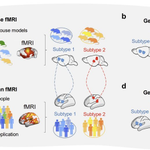
Using brain scans in 🐭mice and humans 👨 we show that variable patterns of brain activity in #autism reflect distinct underlying biological mechanisms!
👉nature.com/articles/s41593-0…

Alessandro Gozzi retweeted

Introducing the International Brain Lab AI Agent: an experimental tool that helps researchers analyze neural activity across the mouse brain using AI coding agents.
Please try it — we would love your feedback!
github.com/int-brain-lab/ibl…

Our latest work is now out in @NatureNeuro 🎉
Using brain scans in 🐭mice and humans 👨 we show that variable patterns of brain activity in #autism reflect distinct underlying biological mechanisms!
👉nature.com/articles/s41593-0…
An explainer of this study can be found here
👇
xitter.cf/Gozzi_Ale/status/18976…

Can we use brain scans to identify biologically distinct "autisms"? And If so, how?
In our latest cross-species study 🐭👨we dive into these questions!
Find out more here 👇👇
biorxiv.org/content/10.1101/…
Thread below 🧵 1/n

Deep thanks and congrats to lead authors
@MarcoPagani1985 @Valerio_Zerbi, our friends and co-investigators Adriana_Di_Martino & @MilhamMichael @childmindinstitute, @silvia__gini, and all the colleagues who kindly shared their mouse models and helped shape this story!
Alessandro Gozzi retweeted

Using fMRI from 20 mouse models and large human cohorts, a new study in @NatureNeuro identifies two dominant dysconnectivity patterns linked to distinct molecular signatures in #autism.
See our N&V on the latest work from @MarcoPagani1985 and @Gozzi_Ale: rdcu.be/fiSOL

Alessandro Gozzi retweeted

We’re advertising for a research assistant in my lab &
@LAND_IIT. Please get in touch and apply if interested. app.ncoreplat.com/jobpositio…
Alessandro Gozzi retweeted

Parsing autism spectrum heterogeneity through fMRI
nature.com/articles/s41593-0…

Alessandro Gozzi retweeted

Research suggests 2 dominant #brain functional connectivity #autism subtypes (under- and over-connectivity) separately implicating synaptic & immune pathways.
.
Read the full study: ow.ly/24av50Z0hzl
.
#MHAM2026 #MentalHealthAwarenessMonth #MentalHealthMonth @IITalk

Alessandro Gozzi retweeted

Organization of neuropeptide systems in the human brain | doi.org/10.1038/s41593-026-0…
Neuropeptides are functionally diverse signaling molecules in the brain and body.
@ericg_ceballos curates an atlas of neuropeptide receptors and relates it to brain function @NatureNeuro 🧩 🧠 ⤵️

Alessandro Gozzi retweeted
The Mammalian Architecture of Information Integration🧠🧬
For #BrainAwarenessWeek, excited to share our latest work about #Neuroscience of #Consciousness in @NatHumBehav:
nature.com/articles/s41562-0… 🧵👇
