

Grew up adjacent to the oil patch. Built GreaseBook for the pumpers & producers who kept it running. Now building TinyPumper. Simple scales. Fancy fails.
Oklahoma City
Joined May 2021
- Tweets869
- Following2K
- Followers736
- Likes3.2K



Pinned Tweet
Hey Oil & Gas Operators: Got a well that's too far off the beaten path to get a pumper by there reliably?
Moving a bunch of fluid at a particular lease and it's making you nervous?
Wanna supercharge your A-player pumpers and enable them to cover more ground/wells for you?
Simply wanna know what the heck is going on at any well at any time from wherever you're at?
If so, check out the video below...
PS hardware is from tinypumper.com
The oil patch loves a shiny new tool until it adds an hour to a pumper's day. Field adoption dies at the first sign of extra steps.
4
243
This Day in Oil and Gas History
November 25, 1875 — Cross Country Oil Transportation Begins
In the late 1800s, kerosene cost far less in the eastern United States than out west in Utah and Colorado.
Isaac Blake saw money in that gap.
On November 25, 1875, he formed the Continental Oil and Transportation Company in Ogden, Utah.
The company bought cheap kerosene in bulk back East and hauled it west to sell.
It soon bought two railroad tanker cars, reportedly the first of their kind to go so far west.
The tank cars let the company expand, moving kerosene from a Cleveland refinery to Colorado and on to California.
Standard Oil bought the company in 1885.
After the courts broke up the Standard Oil monopoly in 1911, Continental re-emerged as an independent company: Conoco.
A 2002 merger with Phillips Petroleum created the modern ConocoPhillips.

1
3
142
Enterprise software promises full field visibility but can't tell you if a pumper moved a valve. The oil patch runs on things no dashboard can track.
3
62
This Day in Oil and Gas History
November 23, 1951 — Mole Men Emerge From Oil Well in First Superman Movie
On November 23, 1951, the very first Superman movie hit the silver screen.
The plot of "Superman and the Mole Men" revolved around drilling the world's deepest oil well.
Clark Kent and Lois Lane, played by George Reeves and Phyllis Coates, visit Silsby, fictional home of the Havenhurst Experimental No. 1 well.
Instead of striking oil, the well, drilled past 32,000 feet, breaks into the underground home of the mole men.
When the bald creatures climb to the surface to explore, the townspeople panic.
Luckily, Superman is there to save the day and restore the peace.
The film was well received, and it marked George Reeves's first appearance as Superman.
He went on to play the character on television until 1958.
At the time of the film's release, the deepest real well in America reached 20,521 feet.
November 23, 1947 — Natalie O. Warren Sets Sail For the First Time
On November 23, 1947, the Natalie O. Warren set sail from Houston for Newark, New Jersey.
She was the first ship to carry liquefied petroleum gas, or LPG, by sea.
The Bethlehem Steel yard in Beaumont, Texas, had converted her from a dry-cargo freighter for the Warren Petroleum Corporation.
The experimental design held just over 38,000 barrels of LPG in 68 vertical pressure tanks.
The experiment was a big success.
The voyage led to the construction of many more LPG carriers.
Modern LPG ships can reportedly carry almost 20 times the load of the original Natalie O.


3
104
Most operators think more sensors mean better wells. In the oil field, twice the data often means twice the noise and half the clarity.
1
50
This Day in Oil and Gas History
November 22, 1905 — New Oilfield Leads to Tulsa Boom
On November 22, 1905, drillers struck oil south of Tulsa in the Indian Territory.
The Ida Glenn No. 1 became the discovery well of the famous Glenn Pool.
The well took its name from Ida Glenn, the Creek woman who owned the land and leased it for drilling.
The Glenn Pool soon out-produced the earlier Red Fork discovery a few miles to the north.
It even proved richer than the famous Spindletop field in Texas.
When Oklahoma became a state in 1907, it produced more oil than any other state in the Union.
That production earned Tulsa its lasting title: 'The Oil Capital of the World.'
Thanks to modern recovery techniques, the Glenn Pool field reportedly still produces today.
November 22, 2003 — Smithsonian Opens Permanent Exhibit on US Transportation
In 2003, the Smithsonian unveiled a new permanent exhibit on how transportation changed our country's history.
The National Museum of American History exhibit, called America on the Move, opened on November 22, 2003.
It includes real automobiles, a locomotive weighing roughly 200 tons, and other forms of transportation.
The exhibit sprawls across roughly 26,000 square feet of the museum.
Hundreds of objects trace the technology's advances through history.
The 22-million-dollar exhibition lets visitors see how transportation changed the United States, from horse and buggy to jetliners.
And of course, it shows the impact the oil and gas industry had on those changes.


4
338
This Day in Oil and Gas History
November 21, 1925 — Small Oil Companies Merge to Form Magnolia Petroleum
In 1925, a group of affiliated oil companies formally incorporated as the Magnolia Petroleum Company.
The move started a chain of events that would eventually feed into ExxonMobil.
The Magnolia name was not brand new: the companies had operated together as a joint-stock association since 1911.
Together they reportedly sold petroleum across the South through more than 500 gas stations.
Magnolia did not stay independent for long.
About a month after incorporation, Standard Oil of New York (Socony) traded its own stock for all of Magnolia's.
Magnolia continued as a subsidiary until 1959.
That year it merged into Socony Mobil Oil.
The Pegasus flying horse that Magnolia helped make famous became the lasting symbol of Mobil stations.
Mobil later joined the merger that created ExxonMobil.

1
4
364
There is no fast fix for labor scarcity in the field. Even the best software can't pump a well or swap out a separator.
5
259
The average lease runs better with a pumper who knows the wells than with a room full of analysts staring at a dashboard. The field doesn't answer to the office. It answers to uptime.
3
150
This Day in Oil and Gas History
November 20, 1930 — Conrad Hilton Adds a New Hotel to His Oil-Fueled Business
On November 20, 1930, Conrad Hilton opened his first high-rise hotel in El Paso, Texas.
The site reportedly once held the Sheldon Hotel, a famous headquarters for Mexican revolutionaries.
Construction had begun the year before and kept going despite the Great Depression.
Hilton had entered the hotel business a decade earlier in Cisco, Texas.
He went there to buy a bank, but when that deal fell through, he bought the Mobley Hotel instead.
Roughnecks from the nearby Ranger oilfield packed the Mobley, renting rooms in eight-hour shifts.
That oil boom bankrolled the rise of the Hilton hotel empire.

This Day in Oil and Gas History
November 19, 1927 — Iconic Phillips 66 is Unveiled
Phillips Petroleum was founded in 1917 to find and develop new oil fields.
For a decade, it stayed out of the refining and retail gasoline business.
That changed on November 19, 1927, when the company opened its first service station in Wichita, Kansas.
There it sold its new gasoline brand: Phillips 66.
The name came from a road test.
A car running on the new fuel, and carrying company officials, hit the then-speedy 66 miles per hour on historic Highway 66.
The famous route soon hosted many Phillips stations, and the brand reportedly added new stations at a breakneck pace.
By 1930, Phillips 66 gasoline was sold at 6,750 outlets in 12 states.
The fuel blended naphtha and gasoline at a higher gravity than earlier fuels.
That 'controlled volatility' made cold engines easier to start, so Phillips first advertised it as a winter gasoline.
The company soon dropped that angle and promoted it year-round.

2
133
Small operators can move fast because they aren't locked into three-year software contracts. Speed comes from saying no to complexity.
1
139
This Day in Oil and Gas History
November 17, 1949 — US Geological Survey Attempts To Locate Oil Reserves
In 1949, the United States Geological Survey reportedly launched a hunt for the nation's next great oilfields.
The project would investigate 22 states, plus the Alaska Territory, to map the most promising ground for petroleum exploration.
About 70 geologists reportedly took part, using some of the most advanced survey technology of the day.
The USGS went on to play a key role in locating the country's oil reserves and other natural resources.

10
1,126
Operators know when a system helps and when it reports on mistakes. The best field tools create accountability by making everything fast and visible, not by adding a new compliance task.
3
216
Oil and gas isn't short on tech. It's short on field tools that deliver clear gains without adding ten new headaches.
2
153
This Day in Oil and Gas History
November 15, 1952 — One Millionth Barrel of Oil Taken from the Williston Basin
Oil first showed up in the northern United States in Montana in the 1920s.
But production there stayed small for decades.
Amerada Petroleum reportedly began hunting the region in the late 1940s.
The big break came on April 4, 1951.
Amerada's Clarence Iverson No. 1 well struck oil in a wheat field near Tioga, North Dakota.
The well proved a huge new oil region: the Williston Basin, stretching across the Dakotas, Montana, and into Canada.
Within two months, 30 million acres were under lease.
Major fields followed in Williams, Mountrail, and McKenzie counties.
By late 1952, the young fields were reportedly producing around 350,000 barrels per month.
On November 15, 1952, the basin reportedly yielded its one millionth barrel of oil.
November 15, 1906 — The Federal Government Moves to Break Up Standard Oil
On November 15, 1906, the federal government moved to break up Standard Oil.
Pushed by popular demand, U.S. Attorney General Charles Bonaparte filed an antitrust suit against the oil monopoly.
Courts had ordered the trust dissolved back in 1892, but a corporate reorganization in New Jersey let it keep operating.
The government won in the lower court.
Standard Oil appealed, and the case went all the way to the Supreme Court.
In 1911, the court ordered Standard Oil separated into 34 different companies.


Enterprise platforms talk about full visibility. Operators just want to know which well needs a real visit and which can wait.
98
Legacy SCADA was built for big budgets and big teams. Small operators end up with too much screen and not enough signal.
89
This Day in Oil and Gas History
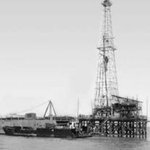
November 14, 1947 — First True Offshore Well Is Drilled
On November 14, 1947, the Kermac No. 16 well came in as the first offshore well drilled out of sight of land.
The platform stood in the Gulf of Mexico, about 10 miles off the Louisiana coast.
Brown and Root built it in about 20 feet of water, on sixteen pilings sunk 104 feet into the seafloor.
Dean McGee of Kerr-McGee led the project, with financial backing from Phillips Petroleum and Stanolind.
Shortly after drilling began, a hurricane with winds near 140 miles per hour swept through.
The crews evacuated, and the platform survived with little damage.
Drilling offshore required specialized equipment.
Kerr-McGee bought surplus military vessels and supplies to provide crew quarters and gear for the rig.
The experimental rig cost about $450,000 to complete.
The investment proved well worth it.
The well produced nearly 1,000 barrels of oil per day.
By the time it was plugged in 1984, it had produced 1.4 million barrels of oil and 307 million cubic feet of gas.
November 14, 1947 — Pipelines Built During WWII Sold To Private Company
The Big Inch and Little Big Inch pipelines were built during World War II, when German submarines were sinking oil tankers off the American coast.
The lines carried Texas oil and fuels overland, safely out of the U-boats' reach.
After the war ended, the government put the pipelines up for sale.
The buyer was the Texas Eastern Transmission Corporation, formed less than a year earlier for the specific purpose of buying the lines.
It paid just over $143 million for the two pipelines in 1947.
As part of the terms of the sale, both pipelines were converted to carry natural gas.
About ten years later, the Little Big Inch went back to moving petroleum products.

