

Ecological entomology research at Faculty of Science @science_charles and @BiologyCentre, Czech Republic. Led by @RobertTropek #ICEG
Czech Republic
Joined October 2018
- Tweets398
- Following528
- Followers846
- Likes988



Our expectations were only partly supported. Reduced pollinator service likely constrains reproduction near the summit, but some plants produced few or no seeds even after supplemental outcrossing. Increased selfing did not provide the expected reproductive assurance.

1
15
Pollinator visitation also declined towards the summit: visitation frequency, visitor morphospecies richness and functional-group richness were lowest at 3,800 m.
Seed production increased with visitation frequency, but pollen limitation and selfing did not.


1
1
20
Natural seed production peaked at 2,800 m and declined sharply towards the summit, while pollen limitation was highest at 3,800 m.
Yet neither autonomous nor geitonogamous selfing capacity showed a consistent elevational trend.

1
1
14
We tested this in poorly studied Afromontane grasslands on Mount Cameroon, combining a multi-species field pollination experiment with intensive visitor monitoring across 2,300–3,800 m: 7 plant species, 1,776 experimental flowers and 3,192 h of video.

1
3
22
Pollinator service often declines towards high elevations, which should reduce plant reproduction and increase pollen limitation.
If so, greater selfing could provide reproductive assurance. We expected ↓ seed production, ↑ pollen limitation and ↑ selfing towards the summit.

1
1
33
New paper from our group just published in Plant Biology! Based on MSc thesis of Dom Anýž.
How do reproductive success, pollen limitation, selfing capacity and pollinator visitation change along the full elevational gradient of Afromontane grasslands?
doi.org/10.1111/plb.70311

Insect Community Ecology Group retweeted

Want to conserve #birds, #mammals and other vertebrates? Then don’t forget their #insects. Our new Nature Reviews Biodiversity paper explores the many ways vertebrates depend on insects, for food, shelter, protection and much more - read about it here: jeffollerton.co.uk/2026/09/3…

An English press release is available here: natur.cuni.cz/en/news/12134
Tiskovou zprávu v češtině najdete zde: natur.cuni.cz/aktuality/1213…
1
14
Why does this matter? Climate change can alter where species occur and when plants flower or pollinators are active. We did not test future changes directly, but our results suggest that pollination networks will not all respond in the same way. 8/8

1
1
15
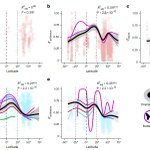
The strongest common thread was climate. Temperature and rainfall were generally better-supported predictors of specialisation than latitude, biodiversity or ecosystem productivity. Yet their effects were nonlinear and differed greatly among pollinator groups. 7/8

1
1
14
Nor was there one pattern for all pollinators. Bees, hoverflies, butterflies, moths and birds showed distinct geographical trends, often with several local peaks and dips. Lumping them together would hide much of this ecological variation. 6/8
1
1
15
The classic expectations were not supported. Specialisation neither consistently increase towards the Equator, nor towards the poles. Network-level and pollinator specialisation often peaked around 20–30° N, near the tropical–subtropical boundary. 5/8

1
1
21
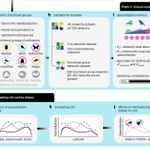
Besides the data size, we treated limits of previous studies: controlled sampling completeness, separated community-wide networks from group-focused ones, and analysed plants and pollinator groups separately. This distinguished broad trends from group-specific responses. 4/8

1
1
22
To test this, we compiled 3,415 quantitative networks with >110,000 links among 5,343 pollinator and 6,126 plant species across all major terrestrial biomes. The study brought together 142 researchers from 32 countries. 3/8

1
2
45
Specialisation is an evolutionary bargain. A close match can make feeding and pollen transfer highly efficient, but it also creates dependence on particular partners. Ecologists have long expected such close relationships to be especially common in the tropics. 2/8

1
1
58
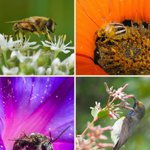
New study published in @NatureEcoEvo!
We assembled the largest global dataset of plant–pollinator networks to ask a simple question: do interactions become more specialised towards the tropics? doi.org/10.1038/s41559-026-0…
Study led by @SaileeSakhalkar @RobertTropek 1/8

We (@RobertTropek @MichalBartak2 ) have participated in this huge international study on butterfly range shifts on the global scale. Just published in @NatureEcoEvo, led by @shawan_c
#climatechange #biodiversity #butterflies
teapaw.org/shawan_c/status/208530…

Our new @NatureEcoEvo paper documents range shifts in 1,758 butterfly species across 105 countries, primarily due to climate change.
🦋80% expanded
🦋27% contracted
🦋22% shifted elevation
🦋342 showed multiple shift types.
doi.org/10.1038/s41559-026-0…
@MonashBiol @Monash_Science

Insect Community Ecology Group retweeted

I am very proud and honoured that one more moth species, Sineviella tropeki, was dedicated to me! Together with Sineviella maicheri, dedicated to my former student Dr. Vincent Maicher.


Insect Community Ecology Group retweeted
🏠🐝Hmyzí hotely: pomoc opylovačům, nebo jen dobře vypadající dekorace?🐝
Sepsali jsme o tom delší text na @Ekolist_cz, včetně rad, kde ho (ne)koupit, jak ho nejlíp udělat a umístit.
🧵Odkaz a shrnutí ve vlákně níže⬇️

