

https://teapaw.org/t.co/UIyebgizIR https://teapaw.org/t.co/P8LcsTcUSe 🫖
Joined June 2025
- Tweets637
- Following910
- Followers259
- Likes1.8K




Pinned Tweet
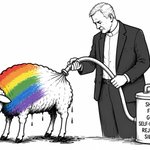
The Church of England loves helping working-class people, just don't expect to be treated as an equal.
Food parcels are welcome. Challenging authority isn't.
My latest blog on class, power and safeguarding. 🐑
guardingtheflock.com/post/a-…
#ChurchOfEngland #Classism #Safeguarding #GuardingtheFlock

I just received 3 brews from Gav on @buymeacoffee! buymeacoffee.com/guardingthe…

Guarding the Flock runs on safeguarding, stubbornness and an unreasonable amount of caffeine. ☕🐑
If you enjoy my blogs, fancy buying me a cuppa?
buymeacoffee.com/guardingthe…
Every coffee helps keep independent safeguarding voices heard. ❤️

Safeguarding is supposed to challenge power, not protect it.
But in the Church of England, asking difficult questions can quickly turn you from a competent professional into a problem to be managed.
You’re given a seat at the table, provided you know your place.
And if you refuse to know your place, they'll make damn sure you lose your seat.
Blog coming soon
🐑
GuardingtheFlock retweeted

Such a "bright lad" will realise that stalking and almost killing a girl in bright daylight = slap on the wrist.
And what about the bright girl who almost died? All the other bright girls who are stalked and attacked? What conclusions will they draw?
thetimes.com/uk/crime/articl…

GuardingtheFlock retweeted

🌟 Looking for a volunteer opportunity that makes a difference? Action on Spiritual Abuse are seeking service support team volunteers. This role will support people who have experienced spiritual abuse or who have been hurt in religious, spiritual or faith-based communities. 1/2

GuardingtheFlock retweeted

Question for Church folk. I'm writing about the impact of Martyn's Law on churches.
- Are you aware of this?
- How did you come to be aware of it? Did you receive any notification or guidance from your diocese or another organisation
Thank you!
bbc.co.uk/news/articles/cgj0…

If something went seriously wrong in your church, would your PCC or Trustees know what their legal responsibilities are?
Safeguarding is not simply about having policies in place. It's about good governance, accountability and effective leadership.
Empowering Trustees is a CPD-accredited training course from Guarding the Flock, designed for PCC members and charity trustees.
The training covers:
✔ Legal duties and Charity Commission requirements
✔ Safeguarding governance and accountability
✔ Managing risk and responding to serious incidents
✔ Effective scrutiny and challenging poor practice
✔ Building a safer safeguarding culture
A safeguarding policy is only as effective as the people responsible for overseeing it.
📅 Now taking bookings for PCCs, trustee boards and governance training sessions.
📩 Get in touch to discuss your training needs, availability and pricing.
Good safeguarding starts with good governance. 🐏
cpduk.co.uk/providers/guardi…
#Safeguarding #PCC #CharityTrustees #ChurchGovernance #GuardingTheFlock

GuardingtheFlock retweeted

When will the churches learn that failing to deal with the harm they have caused is not actually self-protective? People stop going to unsafe places & stop believing in hypocrites.

Portugal:Sex abuse claims against Catholic priests have all been shelved after national investigation
"In a nutshell, all claims made against Catholic priests still living have been archived." share.google/Rh5eiTnMWoqegCC…

GuardingtheFlock retweeted

The Bishop Problem. Where is the next Generation of Leaders coming from? - Surviving Church
GuardingtheFlock retweeted

The Church of England faces tough financial choices, but safeguarding is not optional. It protects people, drives learning and builds trust. Financial pressures are real, but sustained investment in skilled safeguarding must remain a priority.
churchtimes.co.uk/articles/2…

GuardingtheFlock retweeted

“So little theology or exegesis” sums up the current state of the CofE hierarchy.


GuardingtheFlock retweeted

The Church of England needs to read this—and answer its questions.
This safeguarding briefing asks whether institutional learning actually makes children safer. Completing an action plan is no substitute for demonstrating that people are better protected.
Its findings concern safeguarding partnerships. My challenge is to the Church.
From Kilburn, I ask our bishops: what do survivors experience differently because of the reforms we announce? Can they challenge episcopal decisions safely? Who can require answers—and consequences—when leadership fails?
Another policy, another training course, another “lessons learned” statement cannot settle this. Show us whose safety has improved and whose testimony has changed how power is exercised.
A Church that preaches repentance must accept accountability. Survivors should not have to spend their lives making us practise what we preach.
childsafeguarding.independen…
@ArchbishopSarah @CottrellStephen @TheOutsider40 @dioceseoflondon
#Safeguarding #Accountability #ChurchOfEngland
GuardingtheFlock retweeted
Have something to say about safeguarding, power or accountability in the Church?
Guarding the Flock is looking for more guest writers.
Huge thanks to Gilo @HseofSurvivors Malcolm Johnson @Child_abuse_law for their recent contributions.
Independent voices matter. Uncomfortable truths deserve to be heard.
🐑🐑🐑
#GuardingTheFlock #Safeguarding #SurvivorVoices #ChurchOfEngland #Accountability
GuardingtheFlock retweeted
The results are now official: I have been re-elected to General Synod to represent the clergy of the Diocese of London. Thank you to everyone who voted for me, whether as a first preference or further down the ballot. I am grateful for your trust, and will do my best to honour it. Congratulations, too, to my fellow representatives.
I also want to be honest. My first-preference vote was considerably lower than last time. I cannot know all the reasons, but I suspect my tendency to say plainly what I think has something to do with it. Diplomacy is not always my strongest suit. Some people will feel that I am too critical of bishops, or that my criticism becomes too personal. I need to take that seriously.
But bishops are individuals exercising considerable institutional power, within structures where meaningful accountability is too often weak. Their decisions have consequences for real people. We must be able to scrutinise those decisions, name failures and ask who takes responsibility. Criticism should be fair and specific. Episcopal office cannot confer immunity from it.
There is considerable continuity in this result: eight of the twelve were also elected for London in 2021. But I am deeply disappointed that the new clergy delegation appears to have no Black or other minority-ethnic members. In a diocese like London, that is a serious failure of representation, whatever combination of circumstances has produced it.
I serve in a neighbourhood where white residents are a minority, and with a majority-Black congregation whose life is deeply shaped by West African and Caribbean communities. These are people I love, learn from and am privileged to serve. Their faith, theological understanding and experience of racism belong at the heart of the Church’s deliberations.
I will work vigorously to ensure that what I hear and learn in our parish informs what I say and do in Synod. But my advocacy cannot substitute for Black people being there themselves, speaking, shaping decisions and exercising power. We need to ask what must change. I am also particularly sad that Amatu Christian-Iwuagwu has. It been returned even if we differ theologically on much. His voice was eloquent, searching and he has achieved much.
On LGBTQIA+ inclusion, London’s result still looks like something of a stalemate. Yet the question remains: why can those of us who want to affirm and celebrate queer lives not be given the freedom to do so? Why must our ministry remain constrained by convictions we do not share?
We are repeatedly asked to honour diversity within the Church. That must include space for congregations and clergy who believe that the love of same-sex couples can reveal the grace and faithfulness of God. What is it about queer people that makes our relationships, our vocations and our place in the Church the point at which diversity becomes intolerable?
These debates concern people sitting in our pews, serving at our altars, raising families and wondering whether the Church will ever receive their lives with joy.
I also want to thank those who stood with Together for the Church of England and were not elected especially Francesco Aresco, Brandon Fletcher-James, Ann Lynes and Martine Oborne. Thank you for offering your time, energy and convictions in the service of a more inclusive Church. I also extend my thanks to the unsuccessful Save the Parish candidates for their commitment to sustaining parish ministry. These are causes whose work continues well beyond an election, and I look forward to continuing that work together.
I return to Synod grateful for the opportunity to serve, conscious of my own limitations, and determined to keep bringing the realities of parish life into the room. There is much to love in this Church. There is also much that must change.
