

Research centered on behavioral ecology & conservation biology of marine predators under global change.
Nova Scotia, Canada
Joined February 2015
- Tweets5.3K
- Following141
- Followers2.2K
- Likes108


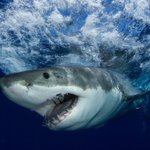




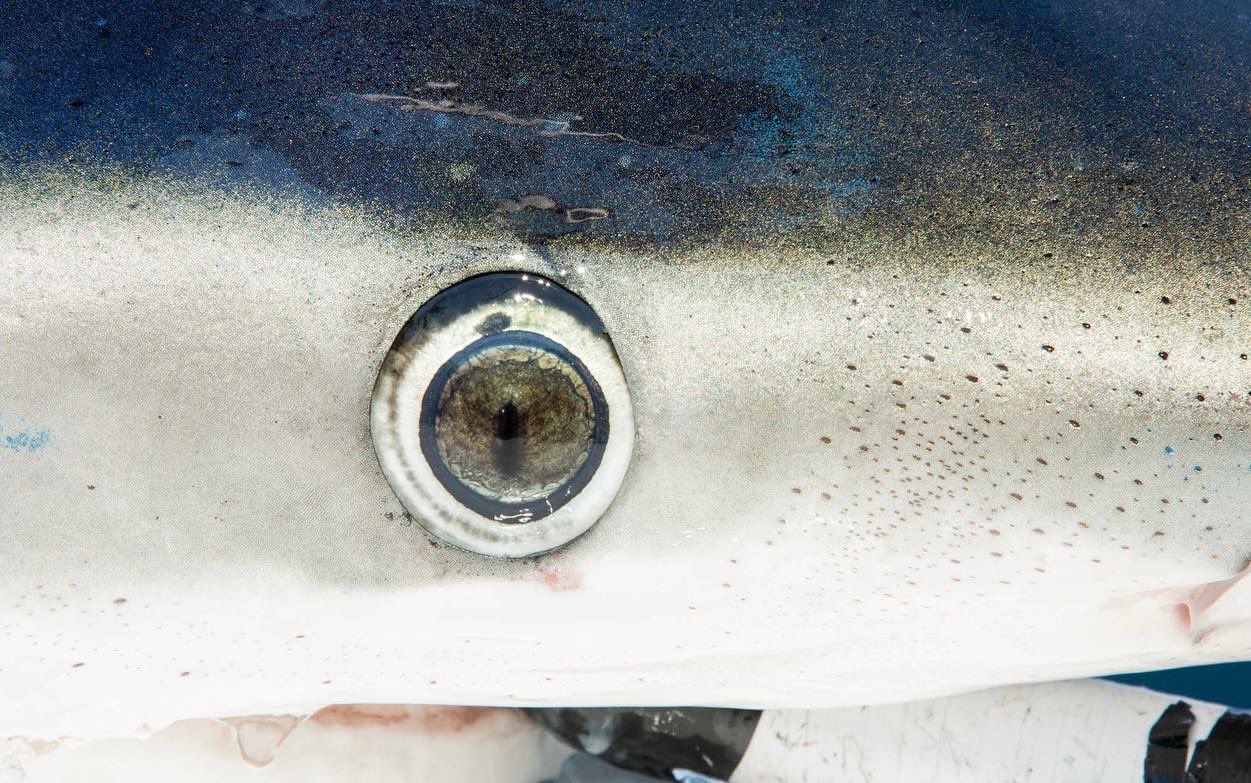
In sharks, countershading provides protection from predators and a competitive advantage while hunting for food. Check out the stark color contrast on this blue shark!


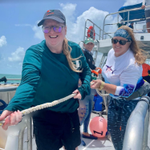
Early mornings, dark waters, tight lines, a rich seafaring history in a marine system where migratory sharks reign. Here's an authentic taste of shark tagging off Cape Cod.
Photographs by @NolaSeas of @LauraHopeM’s PhD work


White shark aggregation sites have driven ecotourism in South Africa for decades, but shark sightings have decreased exponentially since 2015. Heather Bowlby led a new collaborative study using simulation modeling to assess white shark population responses to mortality.

If the reduced frequency of sightings is related to a decline in regional abundance, the simulations indicate that annual mortality in the 10s of individuals would be enough to hinder population recovery.
doi.org/10.3389/fcosc.2022.9…

Shark research isn't always a 9-5 job, but getting up before the sunrise is worth it! We put satellite tags out on 9 blues, 2 makos, and 1 porbeagle during our field expedition in Cape Cod. See the progression of our team’s work up of each shark in these images!


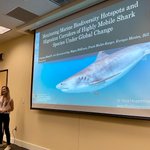
Our grad students (past and present) presented their work to @ElasmoSociety this past weekend! Their projects represent some of our lab’s most recent work studying urban sharks and how climate change is impacting shark population health and geolocations.


Led by the @dalyengellab, we participated in a study which analyzed 362 tagged tiger sharks to investigate reproductive migration and genetic relatedness.
frontiersin.org/articles/10.…

@CBSMiami did a segment on our recently published paper about urban sharks! In the video, @DrNeilHammer explains why the results of this study are unexpected. Click on the link below to read the full paper!
int-res.com/abstracts/meps/v…
We have 10 new sat tags deployed! The team is in Jupiter tagging silky sharks for Chelsea Black's PhD project to investigate multi species shark hotspots and movement patterns.
Thanks to Florida Shark Diving and to Tanner Mansell for capturing the sharks on film.
Are sharks urban “avoiders”, “exploiters”, or “adapters”?
Data suggests that sharks are what scientists term “urban adapters”; animals which become accustomed to highly populated areas and incorporate them as part of their typical habitat.
cbsnews.com/amp/news/shark-s…

@DrNeilHammer and Ph.D student Chelsea Black talked to @SharkScrapper about the Shark Research and Conservation Program, satellite tagging, and simple things people can do to support shark conservation.
youtu.be/kKHV4c51T7A
1
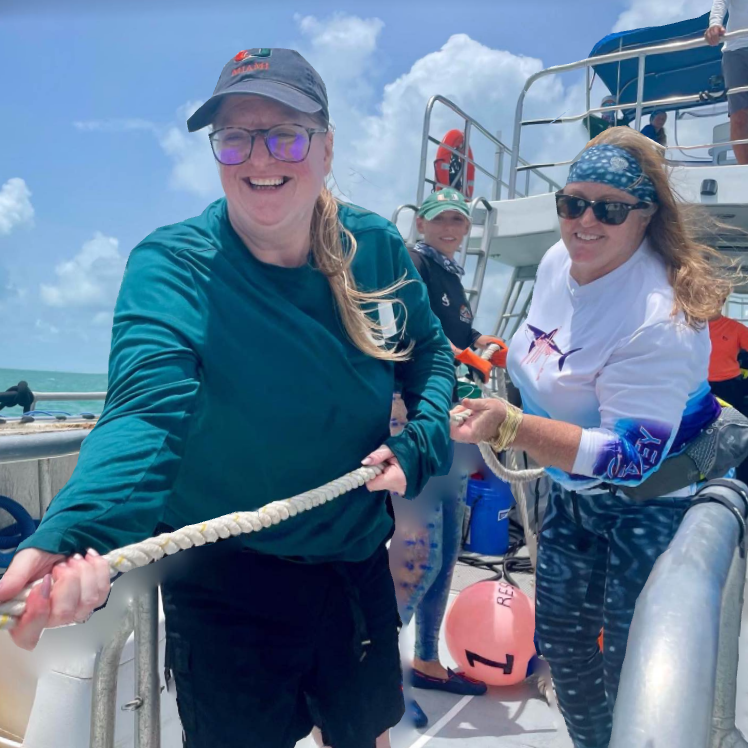
We had a wonderful weekend of tagging with @UMiamiRSMAS faculty and staff. Our participants were in their natural element on the water and did an amazing job!
Photo by Nola Schoder
4
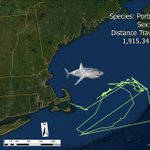
Check out this #sattaggedshark that's been tracking off the coast of Massachusetts!
With the @SulikowskiLab at Arizona State University, we've been tracking porbeagle movements along the northeastern coast of the US. This male measured 240 cm (almost 8ft) when he was tagged.

Hammerhead sharks have unique adaptations that have contributed to their evolutionary success, but these complex traits and behaviors may also be putting them at risk as human impact causes rapid change.

In 2014, @DrNeilHammer and collaborators published a review exploring how behavioral and physiological adaptations in hammerheads affect population vulnerability to fisheries. Click the link below to learn about their findings and suggestions for conservation strategies.
128 sharks tagged so far in 2022!
The SRC team gathered today for our semi-annual state of the lab meeting. We heard from graduate students on their research progress, and @DrNeilHammer gave us an overview of the most influential papers to come out of our lab this year.


Maintenance day! Some of our PhD students were out on the water this morning to check on the acoustic receivers in Mitch's array. These receivers pick up unique frequencies transmitted by acoustic telemetry tags affixed to turtles and sharks that pass through the Miami area.
Meet Thiago, our newest postdoc who joined the lab this past month! Using data from tagged marine animals such as sharks, fish, and turtles, he will map hotspots of marine biodiversity along the East Coast of the United States, the Gulf of Mexico, and the Caribbean.

Our MS candidate Abby performs assays to measure melatonin levels in shark plasma collected from blacktip and nurse sharks in downtown Miami and Biscayne Bay. She is investigating if and how artificial light at night changes nocturnal melatonin levels in sharks.
Today's Google Doodle for Earth Day shows the progressing effects of climate change on Earth's ecosystems. On this Earth Day, join the conversation and learn how we can work together to preserve the natural beauty and diversity of the planet we call home.
g.co/doodle/3hu2uuw
