

he/she
Dijon, France
Joined September 2021
- Tweets21.5K
- Following3.1K
- Followers256
- Likes104K







Hanling🏳️⚧️ retweeted

Wow, la réduction de la taille de la démonstration de l'hypothèse de Riemann est encore plus rapide qu'espérée.
On tiendrait déjà un "squelette de 40 pages" (une forme de carte logique) de l'ensemble de la preuve, permettant aux mathématiciens de mieux s'y retrouver.


Hanling🏳️⚧️ retweeted
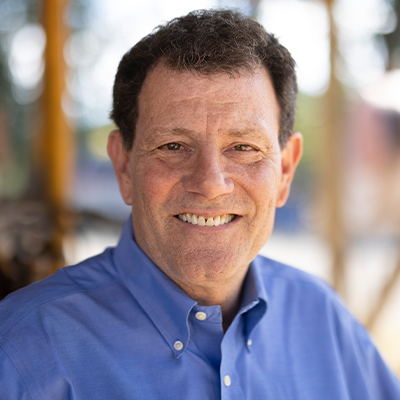
Elon Musk insists that no one died after he slashed humanitarian aid. So I went to the field in South Sudan -- where the cuts left one clinic I visited with no antibiotics, no running water, no aspirin, no hand sanitizer -- and found the graveyards filling because of his recklessness.
Moms die in childbirth, kids from malnutrition and everyone from lack of access to medical care. One of the greatest American programs was PEPFAR, which saved lives of people with HIV/AIDS with medicines costing just 12 cents a day. Now AIDS orphans are dying because of the way Musk cut the community health workers who made the system work.
I had invited Musk to come on a trip like this to see the consequences of aid cuts. He declined. But I renew my offer: Elon, I'm happy to travel with you to look at aid programs so you can push reform -- necessary! -- without killing hundreds of thousands of children.
And I hope that Democrats, who have been powerful critics of aid cuts, will use their new power in the new Congress not just to criticize Trump on this point but also to restore and revitalize lifesaving and transformative aid.
Here's a gift link to my column: nytimes.com/2026/11/28/opini… Thoughts welcome.

Hanling🏳️⚧️ retweeted
James Maynard (médaille Fields 2022) : "La preuve de l'hypothèse de Riemann montre, je crois, que l'IA possède des qualités que nous appellerions créatives - et un bon goût mathématique - si elles étaient celles d'un humain. Et elle va probablement continuer à progresser".


James Maynard, médaille Fields : "Aucun humain ne comprend la preuve de l'hypothèse de Riemann"
lexpress.fr/sciences-sante/s…


Hanling🏳️⚧️ retweeted

The mathematicians living through an AI revolution ft.trib.al/5GUX2tO

Hanling🏳️⚧️ retweeted

Санчез — мой премьер (я из Петербурга)

Basta de bulos con los migrantes. Son seres humanos.
Hemos escuchado a la Sra.Cayetana decir que los españoles nos debemos dedicar a procrear y los migrantes a trabajar. Esto es clasismo.
#ElDebate26 #VotaPSOE
Hanling🏳️⚧️ retweeted

Basta de bulos con los migrantes. Son seres humanos.
Hemos escuchado a la Sra.Cayetana decir que los españoles nos debemos dedicar a procrear y los migrantes a trabajar. Esto es clasismo.
#ElDebate26 #VotaPSOE
Hanling🏳️⚧️ retweeted
Terence Tao (médaille Fields 2006) : il va falloir valoriser moins ceux qui résolvent en premier les problèmes ouverts, et davantage ceux qui savent partager, expliquer les résultats, rédiger des manuels... laissons l'IA chasser les proies, et soyons plutôt les chefs cuisiniers.

Hanling🏳️⚧️ retweeted
Source :
teapaw.org/numberphile/status/212…

Something of an epic day getting to Oxford and back and editing into the night so I could get you this ASAP!!!
youtu.be/FMJrEzK1wz4

Hanling🏳️⚧️ retweeted
James Maynard (médaille Fields 2022) : on trouve des pépites dans cette preuve de l'hypothèse de Riemann, notamment une preuve plus simple et plus concrète des conjectures de Weil que celle de Pierre Deligne ; par là, cette démonstration relève déjà de l'extraordinaire.
Hanling🏳️⚧️ retweeted

В 2014 году Павел Дуров заявил, что ФСБ требовала от него удалить страницу Алексея Навального во «Вконтакте».
Как показала утечка документов Deutsche Bank, в 2018-2019 годах инвестором проекта Дурова по выпуску криптовалюты Telegram стала Наиля Аскер-заде — гражданская жена главы государственного банка ВТБ Андрея Костина — давнего героя расследований Навального.
istories.media/stories/2026/…

Hanling🏳️⚧️ retweeted

If you want to suggest Pope Francis fabricated his private encounters with evil, you should have the courage to do it with your name and face attached. open.substack.com/pub/letter…

Hanling🏳️⚧️ retweeted

Dario, I think it will be very helpful if you can publicly explain Anthropic’s detailed plan for indefinitely keeping humans meaningfully in charge of the ever-smarter AI that recursive self-improvement might produce (as opposed to a plan for “aligning” future AI that we cannot meaningfully control).

No, I do not believe that we should “surrender human free will” to AI systems, and it’s absurd to suggest that I do. I have written hundreds of pages of essays and a constant theme in them is the need for AI to be governed by legitimate democratic processes. For millennia (going all the way back to Greek and Roman philosophers), advocates of autocracy have claimed that it leads to better, faster, or more decisive decision-making than the messy process of democracy. Even if this were true (which I doubt!), we should never sacrifice legitimacy or self-determination at the altar of efficiency or security. This argument against autocracy applies word for word against governance by AI, and I feel equally strongly that turning over governance to AI is a bad idea.
No one who had carefully read my writing or my interviews could reasonably conclude that I believe anything different. For example in an interview on CBS a couple months ago, I specifically called for AI to be governed democratically. I call for the same in Policy on the AI Exponential, Machines of Loving Grace, and The Adolescence of Technology, and We Must Pace the Frontier. Machines of Loving Grace contains an extended section on using AI to revitalize democracy, and discusses the use of AI as an aid to citizens in their decision-making, "aggregat[ing] opinions and driv[ing] consensus among citizens, resolving conflict, finding common ground, and seeking compromise.” The clear and obvious implication is that humans should remain the ones making political and governance decisions. The Adolescence of Technology has an entire section on fighting against AI-driven tyranny, and I even discuss the danger of AI labs usurping power and come out strongly against it — by implication, this definitely includes an AI lab usurping power and giving it to AI itself!
If I thought any of this was a good idea, I would be advocating for it in public, just as I have not been afraid to advocate for many, many unpopular views over the last few years. But I am not advocating for it, because I think turning over governance to AI is a terrible idea.
Separately, I think there is frequent conflation (including in this article) between the idea of “surrendering human free will” to AI in some grand sense of global governance, and the more prosaic idea that as AI systems advance, they become capable of doing specific tasks in a more automated way. This is not AI “running the world,” but AI driving a car, designing a cancer drug, or writing software end-to-end. Here, my view is mixed. AI doing more complete or larger tasks is economically valuable and can drive important advances in software, medicine, transportation, energy, etc. It is clearly desirable in many cases and will save a lot of lives. But it has downsides as well, and in some areas it may not be worth it.
For example, using AI too autonomously to build the next generation of AI systems (known as recursive self-improvement, or RSI) may cause AI to improve faster than we can control or adjust to it, so we may want limits on this process. As we said publicly in early November, we don’t expect it to be safe for Claude to build successive frontier models fully autonomously, without meaningful human supervision or understanding. Second, in some contexts, using AI in too end-to-end a manner may be a cause of serious job disruption, and it may make sense to slow or even stop some AI deployments to give people more time to adapt. Third, while the use of AI for alignment research is an incredibly valuable tool, it must be done with caution, because we may not be able to trust the work of the AI system. Finally, in many cases, humans would simply prefer to do some activities themselves, so they can stay deeply engaged in what matters to them, even if AI can do those activities better. There are countless other examples and hard cases. I don’t think there are any easy answers here, nor is there (nor should there be) any single decision-maker: some of these decisions will be made by society, some by government, some by AI companies, and some in a decentralized manner by individuals expressing their own preferences as consumers, which may differ from the preferences of others.
I don't think that other AI leaders or AI companies have significantly different views from me on whether specific tasks should be automated. Certainly the products that they offer don’t differ materially in their orientation towards automation of tasks; every company seems to be releasing models more and more capable of task automation (as that’s been the general consequence of scaling up AI training), and every company claims to understand there are risks and downsides of such automation and to offer safeguards. If anything, Anthropic has been the most vocal and the most proactive about acknowledging these downsides and trying to address them. For instance, it’s fairly absurd to cite my statement that fully autonomous weapons might “one day be needed for the defense of democracy” as differing from that of other AI companies, when I was willing to risk Anthropic’s future as a company to refuse to allow our existing AI models to be used for autonomous weapons even in the face of legal sanctions, and no other AI company did the same.
To summarize, as applied to grand questions of how we govern increasingly capable AI, I have been vocal and consistent that AI needs to be governed by a legitimate, democratic process and that “surrendering human free will” to AI systems is a terrible idea. As applied to automation of specific tasks by or for people, my views are more mixed, but I don’t think they differ from those of other AI companies — most other companies seem to be offering similar products and confronting similar tradeoffs without having perfect answers to them. What is happening is that there’s a sort of vibes-based commercial and political positioning that some AI CEOs are engaging in, where they repeat slogans like “human control and agency,” or “AI should be just a tool,” without actually doing anything different in their products or taking seriously the difficult questions that lie behind these slogans.
Hanling🏳️⚧️ retweeted
Huang’s return is a terrible signal for US capitalism ft.trib.al/Jp3b0CP

Hanling🏳️⚧️ retweeted

Wow, they were considering using the Defense Production Act (aka the WarClaude act) to force NVIDIA to reinstate Jensen as CEO.

Hanling🏳️⚧️ retweeted

As a reminder, Dario Amodei has said explicitly that AI "may be deserving of important rights."


SCOOP: Top AI executives are pushing back against a common view inside Anthropic: that humanity should surrender some autonomy to AI systems, sources told Axios.
The debate on this view has picked up steam as top AI companies develop models certain employees consider too powerful to ever release.
Critics say this puts us on a slippery slope to forfeiting free will. Some take direct issue with what they've come to see as the worldview of Anthropic CEO Dario Amodei.
The argument: If AI can demonstrably make better decisions than humans, at what point does insisting on human control become irrational or even unethical?
My latest: axios.com/2026/11/24/anthrop…

Hanling🏳️⚧️ retweeted

If this rumors are true, it would explain why OpenAI and Anthropic are holding back their latest models:
Scott Aaronson says he's heard OpenAI or Anthropic may have found a way to factor large numbers in polynomial time.
Why this would be massive? RSA secures a huge chunk of the internet, and its whole security relies on factoring big numbers being impossible on normal computers. If an algorithm like this actually works on real key sizes, you wouldn't even need a quantum computer to break it. Fake software updates could pass signature checks, RSA-encrypted data could be read, and systems across the internet would have to migrate off RSA fast.
So yeah, something we expected might now actually happening.


Hanling🏳️⚧️ retweeted
NEW: Within hours of the release of Pope Francis’s private diary on Tuesday, some of the loudest voices on the Catholic right called the late pope unsettled and unfit for office.
One of them spread a bishop’s claim that Francis lied.
Many of the critics had spent years fighting his reforms, especially his restrictions on the Latin Mass and his opening to divorced and remarried Catholics.
The diary records three encounters with the devil and a two-year spiritual crisis that Francis wrote he survived by entrusting himself to God.
Pope Leo XIV, whom Francis called “an irreproachable man,” has kept those reforms in place. thelettersfromleo.com/p/pope…
Hanling🏳️⚧️ retweeted

Политик, который за вас боролся


Сотрудники ICE разлучают семьи жителей г. Нью-Йорка без выходных. И мы будем бороться с этим без выходных.
Жители Нью-Йорка могут позвонить на нашу горячую линию юридической помощи по вопросам иммиграции по номеру 1-800-354-0365 или набрать 311 и сказать «Immigration Legal» (юридическая помощь по вопросам иммиграции), чтобы получить бесплатную, безопасную и конфиденциальную помощь в любой день недели.
Наш город всегда готов защитить своих жителей.
Hanling🏳️⚧️ retweeted
our elephant
Сотрудники ICE разлучают семьи жителей г. Нью-Йорка без выходных. И мы будем бороться с этим без выходных.
Жители Нью-Йорка могут позвонить на нашу горячую линию юридической помощи по вопросам иммиграции по номеру 1-800-354-0365 или набрать 311 и сказать «Immigration Legal» (юридическая помощь по вопросам иммиграции), чтобы получить бесплатную, безопасную и конфиденциальную помощь в любой день недели.
Наш город всегда готов защитить своих жителей.