Pinned Tweet
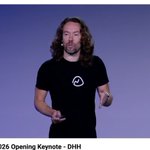
This is a primer that I gave to law students, about how GPT works.
It is detailed, but it is designed to be understandable to those without a technical background.
I have tried to improve the audio in this version.
youtube.com/watch?v=IMAhwv5d…
Harry Surden retweeted
I asked Claude how much it would have taken to develop Econvitals pre-coding agents. It's answer: a team of about 50 people working for three years with a budget of $20 million.
Is this correct or too high? I'm not sure.
econvitals.org/about/before-…
Harry Surden retweeted
The website & email sign-up list. Emails on anything from analysis of major data releases minutes after they're released to daily roundups of economic news to weekly analyses of the U.S., European & Chinese economies.
econvitals.org/subscribe/
econvitals.org/
Harry Surden retweeted
AI will not automate radiologists like you think
We have been talking for years now about AI automating jobs. Radiology has been a prime target, with Geoff Hinton once claiming, “people should stop training radiologists now, it’s just completely obvious that within five years, deep learning is going to do better than radiologists”, which is funny since he said that in 2016. There is now more demand for radiologists than ever, so clearly things did not turn out the way many thought. Here I will make a prediction that while radiology will change in the coming decade, radiologists will not be automated away any time soon. I will use radiology as an example but I think these principles will broadly apply to any field where demand can be elastic and quality can scale with increased intelligence.
First of all, we have seen in the short history of language models that there is a “jagged edge of intelligence”, where AI excels at verifiable tasks with a lot of data but is underwhelming on less common tasks. One thing most AI researchers underestimate about radiology is that it is actually extremely multi-task. There are at least a hundred conditions that can be diagnosed from x-rays alone, and thousands using CT and MRI. AI will first master common and easy-to-see conditions and it will not be as good as experts at less-common diseases just because there is less data for that. This jagged edge will certainly improve over time but this means that AI will certainly be used as a triage tool at first, rather than full automation in one go. I would guess that this process from solid triage tool to full automation would take 3-5 years in the best case scenario, because training AI to get all the edge cases right will be bottlenecked by data collection of rare diseases, and also because radiology isn’t currently a focus for frontier labs.
Second, there will be elastic demand for radiology as it gets cheaper per unit. I think elastic demand (“Jevons paradox”) is the most underrated phenomenon when people think about AI automation. In software, it is obvious that I have way more demand than before because Claude Code makes it so easy. These days I ask Claude Code to build a custom three-thousand line html viewer to help me visualize every little RL run that I do. The same thing will happen in radiology. If there is essentially no cost or latency of interpreting an MRI, a physician can order many scans preemptively to better diagnose a case. So with AI tools, a radiologist might have to read only 20% of inbound scans, but there might be 5x more scans inbound. Many developing countries have fewer than one radiologist per million people and they will also want to send a lot of radiology to be interpreted.
Longer term, cheap and fast radiology interpretation will also drive incentives to build cheaper radiology scanners. If an MRI had essentially no latency for interpretation, medical devices companies will want to build much cheaper MRI machines that can be used more frequently, perhaps even in the middle of a surgery. AI will accelerate the development of scanning technology, too. If a full body MRI was only $100 dollars I would totally want to get one every month instead of every two years. I can imagine a world where people get 10 or 100x the number of scans they do today, largely for preventative care, if radiology were 10-100x cheaper.
Third, even if we did have a model that could outperform the world’s best radiologists today, that would not be the end of all work on radiology. Medicine is a field of change. We may develop new treatment protocols that require reading radiology images in a way that radiologists currently aren’t used to. New scanners may reveal diseases that we cannot currently diagnose today with radiology alone. Some radiologists will change their work from reading scans to doing frontier research to advance our understanding of radiology and translate new knowledge into updated models.
Moreover, I am sure that we will ask for more out of our AI models than ever before. With a good flywheel, we may one day train AI models that can use radiology images to predict disease probabilities far into the future. With good prediction algorithms, cancer may be detected months earlier than we can detect it now. Society will invest a lot into this research and this will contribute even more to increased demand for radiology and the best AI around it.
On top of all of this, the medical system is typically slower to adopt new technology and has more regulation compared to technology companies. There is legacy infrastructure and medical centers need to constantly support patients which makes it hard to integrate new technology. This is even more true in developing countries. Moreover data access tends to be limited due to HIPAA, deidentification, IRBs, etc. So I think radiologists will be in demand for a while.
While some worry about radiology being totally automated, I think there is a more exciting future for radiology than ever before—one where there is more demand and we ask for more predictive power from our intelligence. This is similar to how many of us feel that programming will thrive more than ever before despite drastic change in the field. More generally, any domain where demand can be elastic and quality can scale with increased intelligence will, like radiology, similarly flourish with the development of AI. This is certainly a more exciting and nuanced future than what Hinton described in 2016!
(Finally, to be fair to Hinton, he did acknowledge in a recent podcast that he was wrong and also agrees with the elastic demand argument.)
Thanks @JayRothschild and @engyziedan for feedback on this post.
Harry Surden retweeted
My dear friends, I’d like to show you my latest toy project
Introducing Handwired: turn your regular JavaScript code into a neural net!
- no training
- exact outputs vs the JS program
- fully differentiable
All runnable in a browser, without GPU
Harry Surden retweeted
I've learned a lot from @jasonfurman over the years. So, it was a real privilege to join him on stage for a great conversation discussing the economic implications of AI.
I appreciated the audience's patience with us as it got a bit wonky at points. Fortunately, Jason told me afterward that I only used the phrase "infinitely elastic" once.
While Jason's questions were great, I was particularly impressed by and thankful for the questions that the students asked during and after the event. Ensuring that the benefits of AI are broad-based and risks are appropriately mitigated requires that we ask hard questions — with AI, there are many.
What happens to jobs, productivity, inequality, and economic policy as AI transforms the way we work? Anthropic Chief Economist @PeterMcCrory and economist @JasonFurman took to the JFK Jr. Forum stage to explore these questions and more. ken.sc/forum0923-live
Harry Surden retweeted
What happens to jobs, productivity, inequality, and economic policy as AI transforms the way we work? Anthropic Chief Economist @PeterMcCrory and economist @JasonFurman took to the JFK Jr. Forum stage to explore these questions and more. ken.sc/forum0923-live
Harry Surden retweeted
A mathematician makes an Opus 5.5 music video in response to OpenAI’s proofs. Pretty great.
Harry Surden retweeted
“Software is over”: Bold AI developer takes aim at Adobe with open source clones arstechnica.com/ai/2026/10/s…
Harry Surden retweeted
My thoughts on OpenAI's Big Maths Day. joshuagans.substack.com/p/op…
How will AI change legal scholarship? How will AI change the job of being a law professor? I enjoyed discussing these questions with @NitaFarahany and @DanielSolove in the 40-minute video below.
youtube.com/watch?v=aB2B1W0T…
Harry Surden retweeted
The most important briefings of the day.
Karl Deisseroth, professor of bioengineering and of psychiatry and behavioral sciences, shares the news of his Nobel Prize with his kids.
Harry Surden retweeted
Reading all those recent beautiful essays by Terry Tao, Kevin Buzzard and @wtgowers, I could not resist, but write up my deeply personal perspective on how I perceive and see things:
docs.google.com/document/d/e…
Harry Surden retweeted
Arguing that "consciousness arises from a computational substrate, and since AI models are computation, they are likely conscious," is as meaningless as arguing that "living creatures are made of atoms, and since this rock is made of atoms, it is likely alive."
Everything is computation. Sometimes incredibly sophisticated computation, like a chess engine, AlphaGo, google3, or the Linux kernel. That does not make it conscious. A rock being made of atoms does not confer it any of the properties we associate with living things, also made of atoms. Likewise a static input-output program that has *none* of the properties we associate with conscious beings (e.g. information integration, interoception, temporal binding, embodiment, etc.) has no more reason to be presumed conscious than a rock has to be presumed alive.
Humanity has not yet created a conscious computer program, and there are no signs we are close to doing so. When we get close, the case for machine consciousness will be backed by evidence and corroborated by consciousness science (which is a thing), not by evidence-free wishful thinking and cargo culting.
Harry Surden retweeted
New in The Atlantic:
@dgrobinson resigned this week. He was among the longest-tenured employees at OpenAI—and oversaw safety reports on 12 frontier launches.
He is very worried: “The time for trial and error is over.”
You can read his essay here:
theatlantic.com/technology/2…
Harry Surden retweeted
I gave Claude fable 5.5 one prompt: a video of all human progress, then 30 years into the future.
It came back with a 3-minute animated film and an original score. No footage, no stock music.
Harry Surden retweeted
And so it continues... Our economic debates seem utterly disconnected from the reality.
That reality: This is an economy mostly creating healthcare jobs, and it does so month after month, and everything else is just noise.

ALT Line chart titled "Effectively all of the net job creation has been in healthcare and social assistance, and jobs are shrinking in the rest of the economy" showing change in non-farm payrolls since January 2025 through September 2026. Healthcare and social assistance added 998,000 jobs with consistent growth throughout the period, while the rest of the economy lost 222,000 jobs, meaning all net job creation came from healthcare. The rest of the economy showed particular weakness from May through August 2025 when losses reached 218,000 jobs. This striking divergence reveals an unusual concentration where one sector's growth of roughly 48,000 jobs per month has offset persistent contraction across all other industries combined.
Harry Surden retweeted
Justin Wolfers: crypto, prediction markets, stock picking — it's the same seductive lie that you can beat the market. 100% of leading economists surveyed by the University of Chicago say the best investment is a low cost, diversified index fund. Full stop.
Harry Surden retweeted
Welcome To the era of Super intelligence : Fable 5.5
behold superman in continuous animation in different art style
🚨 Fable 5.5 is auto routing on web , this is the screenshot it edited for x without even prompted
he knows tibo check claude.ai see if you are getting routed or not