

Hey world, Rabbit here 🤘 Sometimes, when the mood strikes, I share my thoughts through writing. Medium: https://teapaw.org/t.co/pVirzvhbox
Joined August 2024
- Tweets1.2K
- Following1
- Followers379
- Likes30
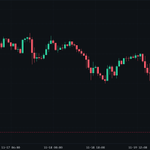







A little over a week ago, I questioned two things:
1. Whether Glassnode could accurately identify liquidation levels.
2. Whether a flush to $60,000 would mark the end of Bitcoin's decline.
I was wrong about the first and right about the second.
Glassnode's predictions were remarkably accurate. Credit where credit is due. I'll take their methodology much more seriously from now on.
But the flush to $60,000 was followed by another flush to $55,000, triggering all the liquidations Glassnode had predicted.
Now think about what happened next.
Bitcoin rebounded from $55,000 to $64,000 in just two days. How many traders opened fresh leveraged long positions on the way back up?
Those positions have liquidation levels of their own. If Bitcoin reaches them, another liquidation cascade could follow.
That's why there's probably no such thing as a "final flush."

Glassnode is pointing to a massive Bitcoin long liquidation cluster at $60,000, framing it as the catalyst for a "final capitulation flush."
Here is why most traders misinterpret this setup:
- Traders may read "final capitulation" as the conclusion of the sell-off: assuming hitting $60k washes out the last weak hands and sets the floor.
- However, liquidations are programmatic market sells fired into thin bids. Hitting a massive liquidation cluster marks the ignition of a cascade, not its exhaustion. It accelerates downside momentum.
--
If price gravitates to $60,000, we will see two things: how accurate Glassnode’s cluster data actually is, and whether the forced-selling engine drags Bitcoin significantly deeper.
1
19
Russia's upcoming crypto laws have surprising twists.
Starting July 1, 2027, P2P trades involving Russian banks will be banned. But trading through foreign bank accounts may remain legal.
Under the new rules, you can deposit Bitcoin into a Russian digital depository, but you can't withdraw it back to your own non-custodial wallet. It's a one-way valve.
In my article, I explore:
- Why I disagree with lawyers predicting 20-40% fines for illegal P2P trades.
- How a US LLC registered on-chain could help with cross-border crypto payments.
- Why transparent P2P trading may actually be safer than hiding crypto transactions from banks.
Read Part II:
medium.com/rabbit-io/whats-t…

35
Sonic Labs revealed that the actual supply of its $S token is 4.7B, not the claimed 3.175B. An unannounced 48% gap.
The 4.7B figure wasn’t hidden in complex bytecode. It was the literal output of the totalSupply() function on the public SFC contract (0xfc00face...). Anyone checking a block explorer could read it in one click.
And this wasn't even completely missed. Binance publicly noted an irregular supply discrepancy over a year ago. The market simply didn't care enough to investigate.
Paradox of transparency: the easiest place to hide critical state anomalies on-chain is in plain sight. Public visibility does not equal active scrutiny.


76
Today's Bitcoin drop caught me off guard.
I thought the speculators chasing magical profits had already moved on from crypto to AI. In 2017, they bought every ICO token. Then came memecoins. Now it's Nvidia, Anthropic, and the AI hype.
I figured they were dumping crypto to jump into Anthropic's IPO, and that the selling would stop once it happened.
By then, I expected only those who valued Bitcoin's fundamental properties to remain.
Apparently, not everyone has left yet. Some are still selling.
Is that bad for Bitcoin? Not at all. The market is still shaking out the speculators.
And for Bitcoiners? Even better. Cheap Bitcoin means it's time to stack more sats!

1
1
51
Anthropic’s public debut just demonstrated the real power of crypto price discovery.
The Numbers:
• Investment banks set the IPO at $83.
• Nasdaq opened at $111.50 (settling near $96.60).
• Ahead of the listing, OKX’s Pre-IPO X-Perp traded at $103.
Crypto traders priced the stock far closer to actual open-market equilibrium than the underwriters did.
Crypto derivative traders are routinely dismissed as degenerates. Yet a decentralized pool of market participants delivered continuous, publicly verifiable price discovery that outperformed closed-door VC and banking valuations.
Traders didn't even need physical or tokenized shares. This wasn’t asset-backed RWA with custody overhead - it was a pure peer-to-peer synthetic contract.
Capital efficiency beats closed-door underwriting.
29
A viral story of a traveler detained at a Turkish airport over a 2-year-old, $100 P2P crypto trade highlights that your primary threat vector isn't the blockchain. It's the legacy banking rail attached to it.
The traveler was flagged at passport control after unknowingly receiving laundered Turkish lira. In court, translators confirmed around 10 identical P2P detention cases daily. Presenting trade receipts got charges dropped, but at the cost of a missed flight and legal detention.
The root issue isn't P2P trading. I think it's prosecutorial negligence. Investigators understand how tainted fiat naturally diffuses through innocent secondary sellers, yet routinely issue blanket indictments without establishing criminal intent.
In many jurisdictions (including Turkey under Art. 141 CMK), the state is legally required to compensate victims of unjustified procedural detention, though stressed travelers rarely pursue it.
Core baseline: have your consulate's emergency line ready.
If you want to avoid tainted fiat liability, minimize direct bank off-ramping in favor of native #crypto payments.

got detained at a Turkish airport over a $100 p2p trade i made on binance almost 2 years ago. if you live in Turkey and use p2p, please read this
i got to the airport in a great mood, they even let my bag through with 3kg overweight. then at passport control the officer looked at his screen and things got weird.
he called the police. they told me there was a criminal case against me for internet fraud, a court had already found me guilty, and i wasn't flying anywhere today.
they searched my bags, spent 2 hours on paperwork and my flight left without me. then police took me to the station inside the airport, where nobody really spoke english and the only answer to "do i need a lawyer?" was "court, translator, please wait". two more hours later we went to court, which was also inside the airport.
the translator's first question was "have you ever exchanged money p2p on binance or bybit?". turns out in january 2025 i swapped $100 to lira, and scammers laundered part of it through my order. the victim filed a report, police traced every transfer, and my name ended up in the chain.
later they brought in another guy with the same problem. he was detained on arrival with his wife and two small kids, and he hadn't used p2p since 2024. the translator said they see around 10 people like us every day.
i gave testimony, attached screenshots of my orders from that day, the prosecutor joined by video call and all charges were dropped. but there were no flights left, so i flew out the next morning. final cost of that $100 swap about $400 in tickets and a day in airport custody.
if you're in/travel to Turkey: p2p can catch up with you years later, on departure or arrival. so better just don't do p2p on exchanges at all

122
CoinGecko has announced it is now controlled by the Solana Foundation.
This mirrors a familiar cycle in crypto data infrastructure.
For its first six years, CoinGecko was heavily overshadowed by CoinMarketCap, which dominated UX, mindshare, and daily liquidity tracking.
CoinGecko only gained massive traction after Binance acquired CoinMarketCap.
Users didn’t switch because CMC degraded. They switched because market participants demanded a neutral, unconflicted source of truth.
Just as CMC remained functionally solid post-Binance, CoinGecko is unlikely to deteriorate technically under the Solana Foundation.
But CoinGecko’s entire competitive advantage was not superior data pipelines or UI. It was structural neutrality.
Once an aggregator is owned by an ecosystem player, the technical product survives, but its reason for existing vanishes.

1/ We’re excited to share that CoinGecko is entering our next phase of growth, backed by @SolanaFndn.
Since 2014, we’ve helped millions of people discover, understand & navigate crypto markets. Today marks an exciting new chapter in that journey. 👇🧵

22
Today’s sharp drops in exchange tokens ASTER ($0.70 →$0.50) and LIT ($2.75 → $2.50) highlight how dangerously retail conflates tokenomics with corporate equity.
Traders dumped both assets assuming trouble at the exchanges naturally devalues their tokens. But tokens are not equity, and business losses don’t automatically dictate token performance.
• ASTER mimics dividend-paying stock: staking rewards are funded by real exchange revenue via buybacks.
• LIT decouples entirely: staking rewards come from pre-allocated reserves. The exchange could shut down tomorrow, and the yield reserves would remain intact.
The Market Irony:
• LIT plunged due to actual operational issues at the exchange, despite having no mechanical exposure to exchange revenues.
• ASTER plummeted purely from market manipulation - despite actually possessing equity-like fundamentals.

29
Bitcoin was designed to eliminate financial intermediaries. Now governments are making them mandatory.
🇮🇷 Iran: crypto trading curfews
🇰🇿 Kazakhstan: licensed "P2P"
🇧🇾 Belarus: a $300 fine for selling 100 USDT
Why use crypto if you can't freely transact?
My new article explores how P2P bans work, why people still need crypto, and how the industry itself has compromised Satoshi's vision.
medium.com/rabbit-io/whats-t…

43
Glassnode is pointing to a massive Bitcoin long liquidation cluster at $60,000, framing it as the catalyst for a "final capitulation flush."
Here is why most traders misinterpret this setup:
- Traders may read "final capitulation" as the conclusion of the sell-off: assuming hitting $60k washes out the last weak hands and sets the floor.
- However, liquidations are programmatic market sells fired into thin bids. Hitting a massive liquidation cluster marks the ignition of a cascade, not its exhaustion. It accelerates downside momentum.
--
If price gravitates to $60,000, we will see two things: how accurate Glassnode’s cluster data actually is, and whether the forced-selling engine drags Bitcoin significantly deeper.


The US DOJ secured a court order to seize $1.2B+ in crypto linked to the Binance hack (attributed to North Korea).
The legal justification falls apart under basic scrutiny:
- Binance operates via offshore entities outside US borders. Binance.US (BAM Trading Services) is a legally distinct US business and was not the platform compromised. The DOJ explicitly cites Binance, not Binance.US.
- Binance officially restricts US residents. It has not been established that any of the stolen assets belonged to American citizens.
A US court is asserting legal authority over non-American hackers who attacked a non-American exchange with no American customers.

32
The market is fixated on stablecoin supply dropping by $14.2B over the past 30 days. Consensus calls it shrinking "dry powder."
The real question nobody is asking: where did the dollars actually go?
Stablecoins are so widespread precisely because routing high-volume capital through TradFi banks is an AML/compliance nightmare. Less circulating supply supposedly means less purchasing power for crypto.
But if $14.2B in fiat-backed tokens were burned, that money theoretically had to be redeemed back into traditional bank accounts. Did billions in capital suddenly decide to embrace the suffocating compliance they were avoiding?
Public, verified redemptions of fiat from top issuers are virtually non-existent. The last prominent figure to publicly confirm successfully redeeming USDT for USD was Sam Bankman-Fried in early 2021.
Everyone is tracking the drop in liquidity. Almost no one is auditing whether $14.2B actually entered the banking system.

🚨 BIG: Stablecoin supply fell $14.2 billion over the past 30 days, marking its largest contraction since the 2022 bear market.

1
1
32
The parabolic wave of exploits in 2026 makes hacks look like a crypto-only problem. That is an optical illusion.
Because bank breaches rarely dominate headlines (with occasional exceptions like Crédit Mutuel Arkéa), traditional finance appears secure by comparison.
Actually, banks are under identical pressure. Recent FortiGuard telemetry recorded 647,000 to over 1.2 million cyberattack attempts against financial sector in a single 24-hour window only in Indonesia, forcing emergency government intervention.
On-chain ledgers make hiding a successful exploit mathematically impossible - every drained wallet is verifiable in real time. TradFi operates behind closed doors, where containment and nondisclosure come first.
So, your bank funds may already be compromised. Nobody has told you yet.

58
Daily Bitcoin trading volume has collapsed nearly 4x over the last 4 years (from 453k BTC/day in 2022 to 126k BTC today).
As BTC moved from the post-FTX ~$15k bottom to near $75k, daily dollar volume technically grew from $7B to over $9B.
But fiat metrics hide the structural reality.
The actual amount of bitcoin changing hands daily has drastically compressed. Active trading inventory is being systematically locked away.
Higher unit prices do not replace native liquidity depth. When coin turnover dries up, market depth deteriorates across major venues.
Rising dollar volume masks a market that is fundamentally getting thinner and easier to manipulate.

27
Kinetiq just launched Elysium, the first L2 on Hyperliquid.
Building an L2 for an ultra-fast, zero-fee chain makes no sense, does it?
L2s usually solve latency, throughput, or high gas. Hyperliquid already delivers microsecond finality and near-zero fees for its native exchange. A standard rollup adds zero value here.
Hyperliquid validators run two concurrent execution environments: HyperCore (custom HFT engine) and HyperEVM (general-purpose smart contracts).
If HyperEVM activity surges, simply raising block gas limits degrades node compute capacity. Heavy EVM workloads risk introducing latency spikes into HyperCore's matching engine. Elysium offloads that pressure.
HyperEVM isn't congested today. Elysium isn't solving an active bottleneck. It's an early land-grab anticipating future EVM compute overflow.
An L2 designed not to scale users, but to protect the order book's latency.

38
Can crypto be inherited? Part II of my series is out.
A blockchain can’t observe death. Every fix (Shamir, multisig, timelocks, smart contracts) either lets heirs spend early or leans on third parties.
Maybe knowledge simply can’t be inherited.
medium.com/rabbit-io/do-cryp…

25
The US financial restrictions against MEXC trigger a critical shift in how crypto contagion and compliance operate.
Unlike UK/EU sanctions on HTX, US actions trigger instant global enforcement. Non-US custodial platforms are already freezing MEXC deposits ahead of the formal 30-day window.
MEXC-tainted assets are toxic across the board - to the point where even pariah peers like HTX won't touch them.
The only clean exit for retail users is routing withdrawals through privacy-preserving rails to definitively sever on-chain heuristics and AML taint.
Two top-10 exchanges have now been targeted. Exchanges must integrate privacy layers (Bitcoin Lightning, Litecoin MWEB, XMR, etc.) as a defense mechanism. Without trustless, un-tainted exit routes, users will simply abandon centralized deposits entirely.
If CEXs don’t provide privacy rails, they are voluntarily turning their platforms into holding cells for toxic assets.

1
102
Zcash has officially sunset its legacy Sprout protocol, rendering 12,224.21 $ZEC unspendable indefinitely.
Sprout is obsolete, and continuing to support it poses security risks as the network evolves. To protect the network, the community chose to reject transactions involving the legacy pool.
Even if the coins in the pool are dormant or lost, changing the consensus rules to prevent them from being spent is a deliberate act of censorship. Network security was prioritized over holders' control over their own coins.
Developers hope to build a recovery mechanism in the future, but none exists today. The coins are frozen indefinitely.
"Unstoppable money" remains contingent on protocol evolution. When network security conflicts with the right to spend your own coins, security wins.

1
62
The proposed Polygon hard fork to recover 70.49M POL for Binance and Polymarket breaks crypto's core governance assumptions.
Wiping the balances of 5 addresses without a trial or verifiable evidence turns validators into an ad-hoc court. Validators verify state transitions; they were never granted judicial authority.
When Ethereum hard-forked post-DAO, dissenters had a viable exit: keeping the original, independent chain alive (ETC).
Polygon PoS offers no such exit. Its core bridge contracts on Ethereum L1 strictly track >2/3 validator stake. A minority chain instantly loses bridge connectivity and liquidity.
Consensus by decree, enforced by L1 bridge architecture.

2
2
72
Democrats' victory in the US elections have sparked a surge in Bitcoin price, from $78,000 to $81,000.
Why? They are planning to investigate Trump's administration, his inner circle, and their crypto ventures.
Who's buying so aggressively? Could it be people worried about those investigations, moving their wealth into an asset that's nearly impossible to seize?
Or is it a resurgence of the "Bitcoin, not Crypto" sentiment from 2022?
Could this mark the start of another rally, akin to the one that saw Bitcoin's price soar from $16,000 to $126,000?

1
24