

Independent reporting for American agriculture, natural resources, and rural business.
Colorado, USA
Joined January 2026
- Tweets2.3K
- Following581
- Followers446
- Likes7K





Pinned Tweet
High Country Observations works where agriculture, natural resources, regulation, technology, and rural business meet.
We provide consulting and field technology for the people and businesses working on the ground, while independently reporting on the systems shaping American land, water, food, wildlife, energy, and rural communities.
Our purpose is simple: understand how these systems actually work, help people navigate them, and bring practical solutions to the places where policy meets the real world.
1
4
277
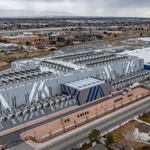
At least 15 data center and infrastructure proposals involving more than 17,000 acres of Western public land are drawing congressional scrutiny.
A U.S. senator is demanding that BLM identify the projects, their backers and how they'll be reviewed.
The agency has until November 20 to respond.
The growing demand for artificial intelligence infrastructure is creating a new debate over how federal public lands should be used.
Sen. Martin Heinrich of New Mexico has asked the Bureau of Land Management to disclose details about data center development proposals under consideration across the West.
In a November 6 letter, Heinrich cited reporting that BLM is reviewing at least 15 proposals involving more than 17,000 acres across six Western states.
Those figures include data centers and related infrastructure, potentially including transmission lines and access roads. They do not establish that all 17,000 acres would be covered by data center buildings.
The senator wants to know which companies are behind the proposals, where the projects would be located, what legal authority BLM intends to use and whether the public will have an opportunity to comment.
The agency has been asked to respond by November 20.
Data centers require substantial electricity, reliable infrastructure and, depending on their cooling systems, potentially significant water supplies.
Developers are searching for locations where large facilities can connect to power generation and transmission networks.
Federal land presents opportunities for infrastructure development, but it also supports grazing, wildlife habitat, recreation and other established uses.
The potential conflicts depend on individual project locations.
A transmission corridor crossing public land presents different questions than a large computing facility built directly on federal acreage.
Supporters of expanded domestic data center development point to investment, construction jobs and the importance of American computing capacity.
Critics question whether public land should be committed to private industrial facilities without transparent review of environmental impacts and competing uses.
No comprehensive list of these projects has been released in the senator's letter, and the cited proposals should not be treated as approved construction.
For ranchers, hunters and rural communities, the immediate issue is access to basic information, including where development is proposed, how much land it would occupy and what protections would apply.
BLM's November 20 response could provide the first clearer accounting of the proposals under consideration.


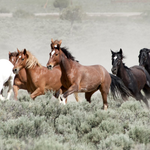
Recently gathered wild horses from Idaho's Challis range are being offered for adoption November 13–15.
The BLM is holding the event at its Challis off-range corral.
It's one part of the larger challenge of managing wild horse populations while protecting Western rangelands.
1
26
The Bureau of Land Management is offering recently gathered wild horses from Idaho's Challis area for adoption this weekend.
The event runs November 13–15 at the Challis Wild Horse Off-Range Corral.
The horses were removed from public rangelands and are now being made available for placement with private owners.
Federal wild horse management presents a difficult balancing act across the West.
Under the Wild Free-Roaming Horses and Burros Act, the BLM is responsible for protecting wild horses and burros while maintaining healthy public rangelands.
The agency establishes population objectives for individual management areas based on its assessment of available forage, water and other resources.
When populations exceed those objectives, BLM may gather horses and place them into holding facilities or adoption programs.
Those decisions remain controversial.
Supporters of gathers argue that excessive horse populations can damage vegetation, strain limited water sources and compete with livestock and native wildlife.
Critics question some population targets, the methods used to remove horses and the long-term reliance on federal holding facilities. They also advocate broader use of fertility-control programs.
Adoption offers another route for horses already removed from the range.
Qualified adopters take responsibility for feeding, housing, veterinary care and training. Many of the animals require experienced handling because they have had little or no contact with people.
The Challis event provides an opportunity for interested owners to see horses from a specific Western herd.
It does not, by itself, resolve the underlying questions about population management or rangeland capacity.
Those questions depend on monitoring, habitat conditions, fertility-control efforts and future management decisions.
For anyone considering adoption, consider whether you have the facilities, time and experience to work safely with an untrained wild horse.


19
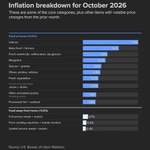
Wholesale food prices rose 1.3% in October after climbing 1.1% in September, according to new federal inflation data.
Higher transportation and production costs are putting renewed pressure on food suppliers.
Whether those increases reach grocery shelves will depend on retailers' margins and competition.
1
19
The cost of moving food through America's supply chain is showing renewed signs of inflation.
New federal producer-price data released November 13 show wholesale food prices increased 1.3% in October, following a 1.1% increase in September.
Those are two substantial monthly increases in a row.
The Producer Price Index measures prices received by domestic producers, rather than what consumers pay at grocery stores.
That distinction is important.
Food moves through several businesses before reaching a household: farms and ranches, processors, distributors, trucking companies and retailers.
Each faces different expenses and pricing pressures.
Higher diesel and transportation costs can increase the expense of delivering ingredients and finished products. Energy, labor, packaging and processing costs also influence wholesale prices.
Businesses must then decide whether to absorb those increases through smaller margins, negotiate with suppliers or raise their selling prices.
Not every wholesale increase reaches consumers, and changes in grocery prices often occur with a delay.
The latest data arrive while households are already paying more for several food categories than they did a year ago.
USDA's October Food Price Outlook showed grocery prices were 1.8% higher in September than in September 2025.
The increases have not been uniform.
Beef, fresh vegetables, coffee and other products have faced different supply and cost pressures, while egg prices have fallen substantially from last year's levels.
For Western consumers, transportation deserves particular attention.
Food often travels long distances between agricultural production areas, processing facilities, distribution centers and rural grocery stores.
Higher freight costs can be especially difficult for smaller retailers that lack the purchasing volume of major supermarket chains.
The October wholesale report does not establish how much grocery prices will rise in November or December.
But it provides an early indication that some food suppliers are facing higher costs again, even as consumers continue looking for relief at the checkout counter.


Moon Lake Reservoir in northeastern Utah has gained nearly 5,000 acre-feet of water since October 31.
Federal records show storage rising about 19% in less than two weeks.
The increase improves the reservoir's immediate storage position, though next year's irrigation outlook still depends on winter snowpack.
1
57
One of northeastern Utah's irrigation reservoirs has experienced a notable increase in stored water following the region's unusually wet autumn.
According to provisional Bureau of Reclamation records, Moon Lake Reservoir held 26,441 acre-feet on October 31.
By November 12, storage had climbed to 31,351 acre-feet.
That's an increase of 4,910 acre-feet, or approximately 19%, in less than two weeks.
Moon Lake sits in the Uinta Mountains and stores water from the Lake Fork River system for downstream agricultural use.
Reservoirs like Moon Lake are important because the timing of water availability rarely matches the timing of irrigation demand.
Snowmelt and runoff generally arrive earlier in the year, while farms need dependable deliveries throughout the growing season.
Stored water helps bridge that gap.
The recent increase reflects a period when incoming water exceeded releases and other storage losses.
Federal records show reservoir inflows declining from 423 cubic feet per second on November 1 to 157 cubic feet per second on November 12.
Releases also changed during the period, affecting how much water remained in storage.
The increase is encouraging for the reservoir's immediate position, but it does not establish what water deliveries will look like next summer.
Irrigation allocations depend on reservoir operating rules, downstream obligations, available storage and runoff from the coming winter's snowpack.
These figures are also provisional and may be revised by federal water managers.
For agricultural producers relying on stored mountain water, the next major indicators will be winter precipitation, snow-water equivalent and spring runoff forecasts.
Those measurements will provide a clearer picture of how much water the basin can deliver during the 2027 irrigation season.


11
Wyoming hunters who submitted deer, elk or moose for chronic wasting disease testing can now check their results online.
Results generally take up to three weeks.
If an animal tests positive, the state allows hunters to dispose of the meat without violating game-waste laws.
1
22
Wyoming Game and Fish is reminding hunters to check their chronic wasting disease test results as the state's fall hunting seasons progress.
The department issued the reminder November 12 for hunters who submitted tissue samples from harvested deer, elk or moose.
Results are generally available within three weeks through the hunter dashboard on the Wyoming Game and Fish website.
Chronic wasting disease is a fatal neurological disease affecting deer, elk, moose and other members of the deer family.
It is caused by abnormal proteins called prions and can spread through direct contact between animals and contamination of their environment.
No human infections have been confirmed, but public health agencies recommend against eating meat from an animal that tests positive.
For hunters, that creates a practical question about what to do with an animal after a positive test.
Wyoming allows hunters to dispose of CWD-positive meat without violating the state's laws against wasting game.
Hunters can print the positive test confirmation from their Game and Fish account as documentation authorizing disposal.
The department recommends taking the meat to an approved landfill rather than leaving carcass remains on the landscape.
Testing also provides information for wildlife managers.
By collecting samples across hunting areas, biologists can track where CWD is present, how common it is in different herds and how prevalence changes over time.
Those findings help inform long-term management decisions.
The November 12 announcement does not report a new outbreak or a sudden increase in infections. It is a reminder about testing and handling harvested animals.
Hunters who did not participate in the department's surveillance program can arrange testing through the Wyoming State Veterinary Laboratory.


23
The Department of the Interior just said the quiet part out loud.
It wants to shrink the federal estate by selling public lands to states, counties, and Tribes.
No list of parcels. No acreage number. Just a plan.
What that actually means for your allotment, your hunting access, and your county’s tax base is more complicated, and more limited, than the headline suggest.
Our newest Field Notes article covers the legal considerations and the impact should this strategy be implemented.
Read it for Free on our Substack: highcountryobservations.subs…


The Interior Department has announced plans to reduce federal land ownership across the West.
Its new strategy calls for selling public lands to states, local governments and Tribes.
No parcels or acreage targets have been identified, but the policy marks a significant shift in federal land management.
A new analysis identifies nearly $469 million in canceled federal funding affecting tribal communities.
Projects include renewable energy, agriculture and environmental work across the West.
In rural Alaska, a canceled $20 million wind project would have helped reduce dependence on costly diesel power.
Federal funding cuts are disrupting energy, agriculture and infrastructure projects across tribal communities, according to new research and reporting.
The Brookings Institution examined federal grant and contract cancellations associated with the Department of Government Efficiency and identified approximately $468.7 million in withdrawn funding affecting tribal nations and Native organizations.
Researchers reviewed 1,597 canceled grants and contracts, with environmental and natural-resource programs accounting for a substantial share of the losses.
Agricultural programs were also affected.
One example comes from Kotzebue, Alaska, a remote community north of the Arctic Circle where electricity generation depends heavily on diesel fuel.
The community receives fuel shipments during a limited seasonal window and faces high transportation and energy costs.
A $20 million federal grant had been awarded to support a wind-energy project intended to reduce diesel consumption.
That funding was canceled in May 2025, and the project remains stalled.
Local project officials estimated the development could have reduced diesel's share of electricity generation from approximately 75% to between 40% and 50%.
Those figures describe a projected benefit, not savings that were achieved.
Another affected project involved a $25 million solar grant intended to serve approximately 600 homes on the Hopi Reservation in Arizona.
The broader debate concerns federal spending priorities and the reliability of previously awarded funding.
The administration says it is reviewing grant programs to ensure appropriate use of taxpayer money. The EPA also reports awarding more than $351 million in tribal grants since the administration began.
Researchers and tribal representatives argue that canceling existing awards undermines infrastructure planning and federal commitments to tribal communities.
The Brookings analysis covers cancellations over an earlier period, so it does not mean all $468.7 million was cut this week.
For remote Western communities, the practical consequences can extend beyond individual projects.
Replacing diesel generation, improving water systems or developing agricultural infrastructure often requires years of planning and substantial upfront investment.
When committed funding disappears, communities must either locate replacement financing, reduce project scope or postpone construction.
In Kotzebue, officials are pursuing a smaller solar project while the larger wind development remains on hold.


31
Ranchland prices across the central and western Plains climbed nearly 10% over the past year, according to the Kansas City Fed.
Colorado, Wyoming and northern New Mexico saw gains approaching 15%.
Meanwhile, farm operating loans are averaging around 7.5% interest.
1
2
151
Ranchland continues to get more expensive across much of the West, even as farmers and ranchers face tight credit conditions.
The Federal Reserve Bank of Kansas City released its third-quarter agricultural credit survey on November 12, showing district ranchland values nearly 10% higher than a year earlier.
The strongest gains included Colorado, Wyoming and northern New Mexico, which the survey groups together. Ranchland values in that region increased nearly 15%.
At the same time, the average interest rate on farm operating loans reached approximately 7.5%, while agricultural real estate loans averaged around 7%.
Those rates remain well above their 20-year averages.
Higher cattle prices have helped support ranching income, but expensive land and borrowing costs present a different challenge for producers looking to expand.
Consider a rancher purchasing $1 million worth of additional ground.
At 7% interest, the annual interest expense alone would be approximately $70,000 before principal repayment, property taxes, improvements or operating expenses.
That is a substantial financial obligation for land that may not produce enough additional livestock revenue to cover the purchase.
Rising land values also have another side.
Existing landowners may benefit from stronger collateral values, improving their borrowing capacity and balance sheets.
But younger producers, tenants and families attempting to acquire their first ranch face a higher barrier to entry.
The survey also found that farm income and loan repayment rates continued declining, although at a slower pace than earlier in the year.
These figures represent lender survey estimates across the Kansas City Fed's district, not a uniform increase in every county or individual property.
The larger concern is the growing separation between what agricultural land costs and what livestock production alone can reasonably support.
For established ranchers, higher land values can strengthen wealth on paper, but for the next generation trying to buy into the business, they can make ownership increasingly difficult.


Nearly 66,000 acres of federal mineral rights in Colorado are under consideration for oil and gas leasing.
The BLM is reviewing 38 parcels for a March 2027 auction.
Public comments are open through December 10. Leasing would not automatically authorize drilling.
Colorado is entering another round of federal oil and gas leasing decisions, with nearly 66,000 acres of mineral rights under consideration.
On November 10, the Bureau of Land Management opened a 30-day public comment period covering 38 parcels totaling approximately 65,900 acres.
The parcels could be offered at a federal lease auction in March 2027.
This is not a completed lease sale.
The agency is still reviewing the parcels, and the final acreage offered could change before the auction.
The current proposal follows an earlier public scoping period in September, when BLM initially identified approximately 66,221 acres for consideration.
Federal oil and gas leasing gives companies an opportunity to acquire development rights to federally owned minerals.
Those minerals may lie beneath federally managed surface lands or privately owned property where the federal government retained the mineral estate.
A lease does not automatically authorize drilling.
Companies generally must obtain additional approvals before constructing well pads, roads, pipelines or other development infrastructure.
For Western communities, the economic questions extend beyond the auction itself, as oil and gas development can support jobs, local businesses and government revenue through royalties and taxes.
It can also create conflicts involving surface access, water use, wildlife habitat, grazing operations and nearby residents.
The actual consequences depend heavily on parcel locations, existing land uses and the conditions attached to individual leases.
Landowners and grazing permittees may have particular interests in understanding how proposed mineral development could affect their operations.
The public comment period gives affected communities an opportunity to raise site-specific concerns before the agency makes its final leasing decisions.
Comments close December 10, 2026.
The next milestones are BLM's final parcel review, any subsequent protest period and the proposed March 2027 auction.
For now, these 65,900 acres remain under consideration, not leased or approved for drilling.


Yosemite is closing Tioga Road and Glacier Point Road at 5 p.m. Thursday ahead of a Sierra Nevada winter storm.
Forecasters expect up to 18 inches of snow at higher elevations, with gusts reaching 50 mph.
The park hasn't announced when either road will reopen.
1
3
135
Winter weather is beginning to close some of the Sierra Nevada's most important mountain roads.
Yosemite National Park is scheduled to close Tioga Road and Glacier Point Road at 5 p.m. Thursday, November 12, ahead of an approaching winter storm.
Tioga Road crosses the park's high country and provides access between Yosemite Valley's western approaches and the eastern Sierra Nevada. Glacier Point Road leads to one of the park's best-known overlooks.
Both roads are vulnerable to heavy snow and ice because of their elevation.
The National Weather Service has issued a winter storm warning beginning Friday morning and continuing into early Tuesday.
Forecasters expect up to 18 inches of snow at higher elevations, along with wind gusts reaching 50 mph.
Travel could become difficult or impossible in exposed mountain areas.
Highway 108 over Sonora Pass is also scheduled to close temporarily Thursday.
For visitors, the closures mean that reaching Yosemite's eastern high country and Glacier Point by vehicle will no longer be possible while the roads remain closed.
The park has not announced reopening dates.
These closures are initially weather-related, although roads such as Tioga Pass often remain closed for extended periods once winter snow accumulates.
For travelers planning late-season trips, a temporary storm closure can become the beginning of the seasonal shutdown if subsequent conditions prevent reopening.
The storm will also deliver an early contribution to the Sierra Nevada snowpack, although one event cannot determine the winter's eventual water supply.


1
2
66
Horse owners: A Utah company is recalling up to 89 tons of hay cubes over possible botulism contamination.
Horses have fallen ill and died in Utah and neighboring states, though the cause remains unconfirmed.
The recall covers Laub's Grade A Mini Hay Cubes sold October 3–31.
1
53
Horse owners across parts of the Southwest are being warned about a feed recall following reports of serious illness and deaths in several states.
On November 10, the FDA published a voluntary recall by Laub's Feeding & Cubing of Beryl, Utah, involving up to 89 tons of Grade A Mini Hay Cubes.
The affected product was sold between October 3 and October 31, 2026.
The concern is possible contamination with Clostridium botulinum, a bacterium capable of producing a toxin that causes botulism.
Botulism can produce severe muscle weakness, difficulty swallowing, paralysis and potentially death in horses.
The investigation began after Utah agricultural officials received reports of several horses becoming sick on one farm, including three that died.
Additional reports followed from southern Utah, Nevada and Arizona.
However, investigators have not established that the recalled feed caused those illnesses or deaths.
Utah's Department of Agriculture and Food is collecting samples for laboratory testing. Final results are expected later this month.
The recalled cubes were sold at Laub's Paragonah Farm and its St. George feed store.
They were distributed in bulk and 1,500-pound totes, with possible secondary distribution into northern Arizona, Nevada and Southern California.
Because some customers may have resold or redistributed the product, its final destination is not fully known.
The FDA notice does not provide individual lot codes.
Horse owners who purchased Laub's Grade A Mini Hay Cubes during the affected period should stop feeding them immediately.
The company advises customers to return the product to its place of purchase. If returning it is not possible, the feed should be securely isolated from animals while owners seek further instructions.
Any horse showing weakness, difficulty swallowing, incoordination or other neurological symptoms needs immediate veterinary attention.
The investigation remains open, and laboratory testing will help determine whether the feed was responsible for the reported illnesses.


37