

Dr Hillary Ray is a senior regulatory and financial services lawyer. Former ASIC Senior Lawyer & APRA Liaison Officer. She/her
Dublin, Sydney, New York
Joined December 2014
- Tweets15.4K
- Following4.5K
- Followers1.9K
- Likes94.9K





Dr Hillary Ray retweeted

If the accused could speak he could a tale unfold—one of the strangest that have ever been narrated between the covers of a book. He himself...is a physical wreck from cobbler’s weak chest.
- Ulysses
Oct 25 is the feast day of Crispin and Crispinian, patron saints of cobblers

Dr Hillary Ray retweeted

Émile-Antoine Bayard, Illustrations for Jules Verne's Around the Moon (1870). Collection: Linda Hall Library.
Émile-Antoine Bayard’s wood engravings for Jules Verne’s Around the Moon (1870) are regarded as the first serious works of scientific space art. Unlike previous depictions, which were mystical, Bayard’s illustrations were grounded in the scientific knowledge of the time.

Dr Hillary Ray retweeted

Reading the incredible Atlas of the Civil War from @CorkUP reminded me to seek out this map again, produced by Captain Myers of the Dublin Fire Brigade.
It shows the damage to Dublin's main thoroughfare folllowing the battle of Dublin in 1922. If you're wondering what the 'GPO' is doing near the Gresham Hotel, that's a temporary post office while the other was being repaired. (CREDIT: @DubFireBrigade/@LasFallon for copy) – at Dublin City, Ireland

Dr Hillary Ray retweeted

The Dublin Review number ninety-six | AUTUMN 2024 features new writing by Peter Gordon, Katie Curran, Sorcha Hamilton, Ian O'Donnell, Beth Kilkenny, Fiachra Kelleher, and this personal essay by William Keohane. Buy or subscribe 👇thedublinreview.com/product/……

Dr Hillary Ray retweeted
The excuse for parts of Ulysses is the WHOLE of Ulysses
- Ezra Pound, October 1919

Dr Hillary Ray retweeted

Putting on a brave face in Warsaw, despite the massive destruction and casualties wrought in that city by the Nazi regime in World War II (photo: Michael Nash, 1946) artinsociety.com/bernardo-be…

Dr Hillary Ray retweeted
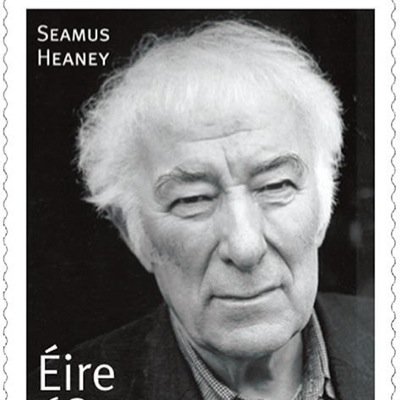
Getting started, keeping going, getting started again — in art and in life, it seems to me this is the essential rhythm not only of achievement but of survival, the ground of convinced action.
Dr Hillary Ray retweeted

Naturally dyed wool yarn by one of Britain's master dyers Jane Dean currently on display in Plymouth.

Dr Hillary Ray retweeted

23 July 1665
Up very betimes, called by Mr. Cutler, by appointment, and with him in his coach and four horses over London Bridge to Kingston, a very pleasant journey, and at Hampton Court by nine o’clock, and in our way very good and various discourse, as he is a man, that though I think he be a knave, as the world thinks him, yet a man of great experience and worthy to be heard discourse. … I followed the King to chappell, and there hear a good sermon … Cutler carried me to Mr. Marriott’s the house-keeper, and there we had a very good dinner and good company, among others Lilly, the painter. ... forced to get a boat to carry me to Kingston, and there, after eating a bit at a neat inne, which pleased me well, I took boat, and slept all the way, without intermission, from thence to Queenhive, where, it being about two o’clock, too late and too soon to go home to bed, I lay and slept till about four.
William Cutler
Queenhithe
Pepys is usually referring to the wharf and stairs on the north bank of the River Thames.
Peter Lely: 1618-1680. A painter of Dutch origin. He was the most popular portrait artist in England.
Portrait of a Lady by Peter Lely

Dr Hillary Ray retweeted
Ideallandschaft mit Römischer Ruine und Auffliegenden Vögeln im Vordergrund (Ideal Landscape with Roman Ruin and Flying Birds in the Foreground) by Ferdinand Knab (1891).

Dr Hillary Ray retweeted

How an octopus named Otto caused an aquarium power outage by climbing to the edge of his tank and shooting a jet of water at a bright light that was annoying him.
The staff believed that the octopus called Otto had been annoyed by the bright light shining into his aquarium and had discovered he could extinguish it by climbing onto the rim of his tank and squirting a jet of water in its direction.
The short-circuit had baffled electricians as well as staff at the Sea Star Aquarium in Coburg, Germany, who decided to take shifts sleeping on the floor to find out what caused the mysterious blackouts.

Dr Hillary Ray retweeted

For the Feast Day of Mary Magdalene, here she is, having a little chat with her sister Martha (at left) about Vanity & housework. By Caravaggio, of course, in 1598.

Dr Hillary Ray retweeted
On the feast day of Mary Magdalene, extraordinarily expressive depiction in wood by the great Donatello, 1455.

Dr Hillary Ray retweeted

"while urban residents have the highest incomes, this does not translate into psychological advantages. On the contrary, residents in highly urban areas score worse on all eight measures covering well-being, social satisfaction, and economic satisfaction." ow.ly/kz7j50SGp02
Dr Hillary Ray retweeted

A mosaic floor, buried by the eruption of Mt. Vesuvius nearly 2000 years ago, at the Villa de Papyri, an ancient Roman seaside luxury retreat at Herculaneum :
The Villa of the Papyri is a private house in the ancient Roman city of Herculaneum The villa was owned by Julius Caesar’s father-in-law, Lucius Calpurnius Piso Caesoninus. In 79 AD, eruption of Vesuvius covered all of Herculaneum with some 30m of volcanic ash. Its name derives from the discovery of a library in the house containing 1785 carbonized papyrus scrolls, the “Herculaneum papyri”, more than 1800 papyri found in Herculaneum in 18th Century, carbonized by the eruption.
The papyri, unrolled and read, after various methods of manipulation, containing a number of Greek philosophical texts, come from a single personal library associated with the Epicurean philosopher and poet Philodemus.
The discovery of Villa dei Papiri in 1750 increased attention towards Herculaneum’s excavations. In 1780, works were interrupted and concentrated in Pompeii mainly because of easier type of excavations due to different volcanic burial phenomena. The technique of building underground passages and wells was interrupted in 1828, when open-air excavations were permitted and carried out until 1875. After a long interruption, works started again in 1927 with Amedeo Mauri, who directed them until 1958; in 1942 almost the whole area that is part of what today represents the archaeological area had already been brought to light. Between 1960-1969 more works were carried out in Northern area of Insula VI and along the Decumano maggiore, and in the last two decades of the last century the beach located in the Southern point of the archaeological area was explored.
The villa’s front stretched for more than 250 meters, parallel to the coastline of what is now called the Gulf of Naples. It was also surrounded by a garden closed off by porticoes, but with an ample stretch of vegetable gardens, vineyards and woods down to a small harbour.
The villa remains faithful in its general layout to the fundamental structural and architectural scheme of the suburban villa in the country around Pompeii. The atrium worked as an entrance hall and a means of communication with the various parts of the house. The entrance opened with a columned portico on the sea side. Around the atrium impluvium were 11 fountain statues depicting Satyrs pouring water from a pitcher and Amorini pouring water from the mouth of a dolphin. Other statues and busts were found in the corners around the atrium walls.
The first peristyle had 10 columns on each side and a swimming bath in the center. In this enclosure were found the bronze herma of Doryphorus, a replica of Polykleitos’ athlete, and the herma of an Amazon made by Apollonios son of Archias of Athens. The large second peristyle could be reached by passing through large tablinum in which, under a propylaeum, was archaic statue of Athena Promachos.
The real living and reception quarters were grouped around the porticoes and terraces, giving occupants ample sunlight and a view of the countryside and sea. In the living quarters the library were brought to light of rolled and carbonized papyri placed inside wooden capsae, some of them on ordinary wooden shelves and around the walls and some on the two sides of a set of shelves in the middle of the room.
The gardens included a gallery of busts, hermae and small marble and bronze statues. These were laid out between columns amid the open part of the garden and on the edges of the large swimming bath.
(Photo Archivio dell’arte – Pedicini Photographers)
#archaeohistories


Dr Hillary Ray retweeted

A #Roman glass amphora-shaped jug, made of a beautiful blue glass with white irregular decoration (& the odd spot of colour) - a beautiful piece of #AncientGlass made about 2000 years ago #Archaeology #RomanArchaeology

Dr Hillary Ray retweeted

In Victorian Dublin, after the Act of Union, there was no longer a parliament in the city. Wealthy landowners turned to what they did best, drinking and debauchery in gentlemen's clubs. The O'Shea brothers from Cork were master stone masons in the 19th century. Rumour has it they were responsible for a magical work of art on the Kildare Street Gentlemens Club.
If you look closely at the carvings at the base of the pillars, you'll see incredible animals doing bizarre activities. The most beloved cryptic comment on the lifestyle of the Dublin lords is a scene of stone monkeys playing billiards.
They weren't the only monkeys on the streets of Dublin in the 19th and early 20th century. There was a small, if highly visible, Italian immigrant community of artisans and skilled workers in town. Among these were organ grinders who had dancing monkeys! Chancery Lane was often packed with foreign street musicians, similar to today's Grafton Street performers. On any given day, a troop of simians in fancy little uniforms could be causing havoc.
An example of this happened on the 3rd May 1913, when a little boy called John Connell was attacked by an organ-grinder’s monkey on Parnell Street. He was badly mauled and had to spend the night in Jervis Street Hospital. Judging from newspapers at the time, this was sadly a common occurrence! – at Fingal, Ireland


Dr Hillary Ray retweeted
Painting, writing, music, & good grooming! Assemblage of objects against a wall, among them a tiny self-portrait of Cornelis Gijsbrechts, 1675. Today was his day.

Dr Hillary Ray retweeted
A #Roman glass bottle in a very vivid cobalt blue, in the form of a seashell. Made around 2000 years ago, it would originally have held perfume or scented oil #Archaeology #RomanArchaeology #AncientGlass
