

life is structured
DATABASE
Joined June 2024
- Tweets32
- Following35
- Followers1
- Likes100



STRUCTURED QUOTE LANGUAGE(SQL) retweeted

You are building a brand but you take time to destroy and tear other people apart in order to feel good???
This was what Azikwe did all his life that made him destroy the Igbo people politically in Nigeria.
You can be great without destroying others. You can be great without profiling others. When you want to be great, you don’t destroy those above you. If you do, you will also be destroyed.
What you are doing is Narcissism.

These are the qualifications for the head of WAEC Nigeria.
Bachelor of Agriculture (Animal Production) — University of Agriculture, Makurdi (1991).
Master of Science (M. Sc.) in Animal Science — University of Ibadan (1994).
Doctor of Philosophy (PhD) in Animal Science — Abubakar Tafawa Balewa University, Bauchi (2017).
STRUCTURED QUOTE LANGUAGE(SQL) retweeted

All the children in this video are British singing the famous and ever green song “ labe igi orombo “
Yoruba is legend!
STRUCTURED QUOTE LANGUAGE(SQL) retweeted
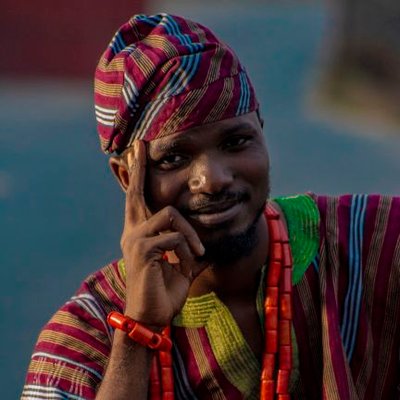
Let's travel a bit down memory lane
Àgùdà ò jẹ lábẹ́ẹ Gẹ̀ẹ́sì... On the surface, the statement means The Catholics do not rely on the English for sustenance. But it has a deeper context.
During the transatlantic slave trade era, Portuguese and British took a lot of slaves from Nigeria. The slaves taken by Portuguese were taken to Brazil. Right from then, Yorùbá people made clear distinction between the British and the Portuguese. The British were called Òyìnbó Aláwọ́ Funfun while the Portuguese were called Òyìnbóo Potogí.
...1

STRUCTURED QUOTE LANGUAGE(SQL) retweeted

𝐒𝐨𝐦𝐞 𝐁𝐫𝐢𝐞𝐟 𝐇𝐢𝐬𝐭𝐨𝐫𝐢𝐨𝐠𝐫𝐚𝐩𝐡𝐲 𝐀𝐛𝐨𝐮𝐭 𝐁𝐚𝐬𝐨`𝐫𝐮𝐧 𝐆áà
• Intra-elite conflict between the two dominant pillars of Òyó
monarchy—the aláàfin and the
Òyómèsì.
"This event is the Begining of The End of Òyó Empire, followed by Òyó Civil war between Aláàfin Abiodun vs Basorun Gaa Factions"
The Events in the 18th Century, c.a 1750 in Òyó Ile ( Capital of Old Òyó Empire)
• Òyó Empire was a Cosmopolitan, Multiethnic Empire with Aláàfin at the core, Basorun and Alapini held important judiciary and legislative roles.
• The Aláàfin is usually Òyó Origin, Basorun is often Ibariba/Batoonu/Borgu origin and Alapini is often Nupe/Tapa origin.
- Even though it was Cosmopolitan and Multiethnic, its national identity was Òyó, so much that non Yorùbá groups within the political and social territory were assimilated into Òyó identity, hence Òyó Identity became both ethnic and national/State identity.
- Basorun Gaa is from the long lineage of his predecessors like Basorun Yamba
According to the Iconic Book titled, The Yorùbá: A New History by African Foremost Archeologist and Historian, Professor Akin Ògúndiran:
While Òyó’s military power continued to extend the boundaries of the
Empire, the political leadership in the metropolis was imploding under the stress of intra-elite conflict between the two dominant pillars of Òyó
monarchy—the aláàfin and the
Òyómèsì.
The two were victims of their own political success. At the core of their conflict was the struggle over the distribution and control of the gains that derived from Òyó’s territorial expansion.
The new conquests in the Yéwá-Ògùn province and new trading opportunities in Badagry between 1736 and 1750 brought significantly more resources and wealth to the metropolis, but this only exacerbated the aláàfin- Òyómèsì rivalry for control of the spoils of military expansion.
This issue came to a head with the appointment of Gáà as baso`run
in the late 1750s.
A hero of the Òyó
military expansion in Yéwá-Ògùn, Gáà was already wielding a vast influence over the military, political, and economic affairs of the empire before his appointment as the head of the Òyómèsì.
Now occupying the position that was second in rank only to that of aláàfin, he wasted no time in using his office, fame and influence to take full control and advantage of the contentions between the two pillars of the monarchy.
𝐃𝐈𝐕𝐈𝐃𝐄 𝐀𝐍𝐃 𝐂𝐎𝐍𝐐𝐔𝐄𝐑 𝐓𝐀𝐂𝐓𝐈𝐂
Using divide-and-conquer tactics, he first gained the unwavering support of the Òyómèsì and then gradually stripped them of their power and reduced them to his clients.
More important, by using various ruses to kill four successive kings within twenty years, he instilled
fear in the populace and reduced the office of Aláàfin to a ceremonial one.
For two decades, Gáà effectively usurped the powers of all political
institutions, presiding over the empire’s domestic affairs, external relations, and political and military matters.
The ruthlessness with which Gáà pursued Òyó imperial expansion in the Yéwá-Ògùn frontier was the same with which he ruled the empire.
He subverted the institutional checks and balances, silenced opposition with assassination and exile, and
kept the royal House and all the other Òyómèsì in submission to his will.


Power. Betrayal. Legacy. The legend of Bashorun Ga'a, the man who held the fate of the Oyo empire in his hands, until his own blood altered his destiny. #HouseofGaa premieres July 26 ⛓