AI Architect & Builder - Inference, LLMs, SLMs GSoC Org Admin - Jenkins | Docker Captain | CNCF Ambassador
New Delhi
Joined December 2018
- Tweets7.2K
- Following1.3K
- Followers8.4K
- Likes37.7K
Inspired by @BhosalePratim's Macbrow, I built Winbrow: a Windows voice assistant.
@GradiumAI speech + @typesafeai Jev routing + browser automation adapted from @browser_use’s Jev Ultrafast project.
@Alibaba_Qwen 4B LLM handles replies. Phonon (TTS) speaks them both running locally on @Qualcomm_Dev X Elite’s NPU.
Built for Phonon’s OSS launch!

I've always wanted a way to talk to my Mac and do things on the go.
Until now, it was super slow.
So I built Macbrow.
Voice-controlled browser and computer-use agent.
Built using @GradiumAI @browser_use and @typesafeai
Still early and a work in progress.
github.com/timpratim/macbrow
Fun setup to work on - and support the Phonon TTS pipeline via GenieX targetting the NPU
it was fun to work on this in collab with @carrycooldude @ashwinexe @BhosalePratim

I got to build with @GradiumAI Phonon on launch day!
A smart mirror that sees your outfit and gives spoken style recommendations - all running locally on @arduino Ventuno Q.
@Alibaba_Qwen VLM to understand what you’re wearing
Phonon TTS to talk through suggestions
Both accelerated by the @Qualcomm_Dev Hexagon NPU

A new frontier for on-device speech.
We're open-sourcing Phonon, a suite of TTS models under 50m parameters, setting a new standard for naturalness and accuracy across languages, with the broadest inference support to date.
Phonon-31m is available under Apache 2.0.
gradium.ai/phonon🧵
So cool to see @MLHacks giving out some @arduino UnoQs as part of prizes for their AI hackathon at @AllThingsOpen 🙌 – at Garner, NC

Glad to be back at @AllThingsOpen after 2022! I am going to present a talk on how to improve security for running agents with @Docker Sandboxes - whether it is a coding agent or a multi agent system

An AI coding agent becomes useful when it can investigate a problem, change the code, test the fix, and follow through to a working deployment.
That’s what I wanted to explore with the newly launched @reflection_ai Beam 🚀
Beam is built for coding, reasoning and agentic workloads. KubeTrace AI puts those capabilities to work on @kubernetesio incidents, with inference through @nebiustf.
The agent can:
→ Investigate logs, events and application code
→ Trace a failure to its cause
→ Propose code or Kubernetes manifest changes
→ Run regression tests in a sandbox
→ Build and deploy the repaired application
→ Check whether it recovered
The execution layer checks every proposed change against policy, and hidden checks decide whether the incident is resolved. You can inspect the evidence, patches, test output and failed attempts.


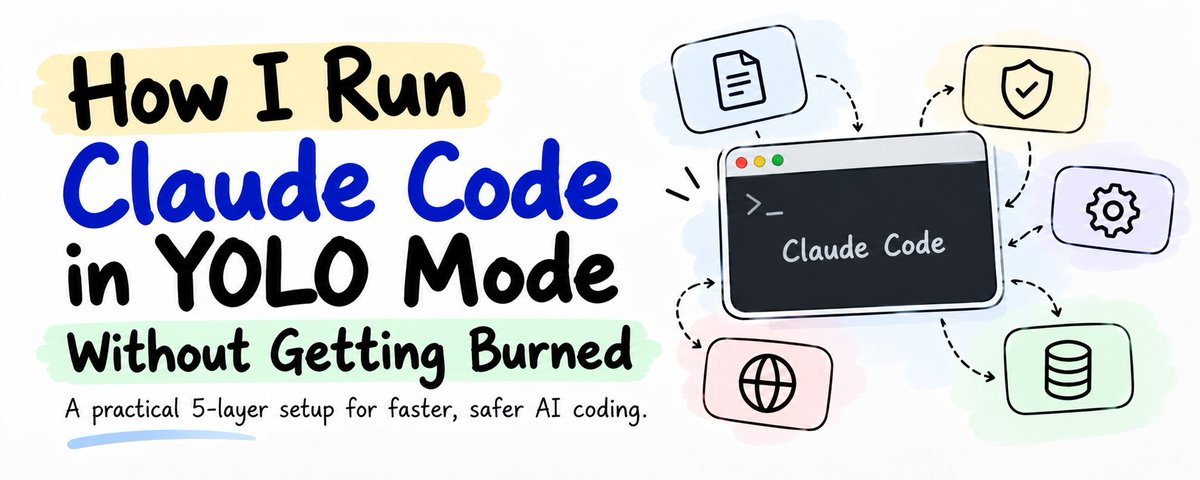
The problem with “YOLO mode” is that an agent can act with your access. A worktree won’t isolate your SSH keys, cloud credentials, or the rest of your disk.
Jozu Agent Guard puts the agent in a microVM, applies tool-call policies, limits network access, and keeps an audit trail.
I made this video with Opus 5.5 to show how the guardrails work 👇