

Explaining the biggest shifts happening across AI, markets, Bitcoin, debt, energy, and the global economy.
Global Markets
Joined February 2025
- Tweets2.6K
- Following81
- Followers385
- Likes3.5K






Pinned Tweet
$HOT is up nearly 22%, and this time there is an actual development behind the attention.
after years of waiting, HoloFuel has finally gone live.
but there's one detail about this launch that I think the market needs to understand.
>>
on November 1, Holo announced that HOT holders can begin migrating to HoloFuel.
the conversion is voluntary and offered at:
1 HOT → 1 HoloFuel
HoloFuel is designed to power payments across Holo's distributed hosting ecosystem.
That includes:
→ Decentralised hosting
→ AI chatbots
→ Digital identity tools
→ Mutual-credit accounting
→ Other services offered by network partners
This is important because Holo is finally moving from a long-running infrastructure concept towards an actual payment network.
>>
but here's the part I find particularly interesting.
HOT is not being burned in the migration.
Holo explicitly says that swapping HOT for HoloFuel does not burn the original ERC-20 tokens.
So this isn't a conventional token burn or a supply-reduction event.
It's a transition from an Ethereum-based token into a different economic system designed around HoloFuel.
>>
there's also a regulatory and operational distinction.
The migration mechanism is being operated by Net Zero FZC, which assumed the relevant redemption obligations from Holo Limited on November 1.
Holo's launch update says Net Zero is operating under a provisional licence from the Regulator of the Zanzibar Digital Free Zone.
That matters because holders need to understand who is actually operating the redemption process and which platform terms apply.
>>
my take
the launch is a genuine milestone, but it doesn't automatically establish demand for HOT or HoloFuel.
The real test starts now:
→ How many HOT holders actually migrate?
→ How much HoloFuel gets used for real services?
→ How many hosting providers and partners accept it?
→ Can Holo build an economy with recurring demand rather than relying on token speculation?
A successful launch is one thing.
A functioning economic network is something else.
>>
the interesting part of $HOT is no longer just the promise of decentralised hosting.
it's whether HoloFuel can turn that promise into an economy people actually use.
the migration has started. now adoption has to follow.

$SSV is up nearly 49%. an Ethereum staking infrastructure token with a market cap of around $35M.
but is this a recovery opportunity or just another speculative bounce?
>>
1. WHAT IS SSV NETWORK?
SSV uses Distributed Validator Technology (DVT) to make Ethereum staking more decentralised.
instead of relying on one machine or operator, validator responsibilities are distributed across multiple independent operators.
→ improves fault tolerance
→ reduces single-operator risk
→ strengthens Ethereum staking infrastructure
..
2. WHY IS IT PUMPING?
Binance screenshot:
→ Price: $2.364
→ 24-hour gain: +48.96%
SSV recently bounced from an all-time low around $1.48.
derivatives activity also suggests a possible short squeeze:
→ Open interest around $41M
→ Negative funding
→ Futures volume substantially higher than spot.
Community sentiment was approximately 67% bullish.
however, i couldn't establish one confirmed announcement explaining the rally.
..
3. FUNDAMENTALS
Latest DeFiLlama snapshot:
→ TVL: approximately $8.9B
→ 30-day fees: $247K
→ Protocol revenue: $240K
→ Holder revenue: $240K
SSV has a substantial Ethereum staking footprint.
but TVL has declined approximately 27% over 30 days.
also, TVL represents assets associated with validator infrastructure, not money owned by SSV holders.
..
4. TOKENOMICS
SSV underwent an important token-economic migration in April 2026.
→ ETH is now used for operator and network payments.
→ SSV is used for governance and staking.
→ ETH network fees contribute towards cSSV staking rewards.
Supply snapshot:
→ Circulating supply: approximately 14.7M SSV
→ Market cap at $2.364: approximately $34.8M
→ FDV: approximately $34.8M
there is no fixed maximum supply listed in current market data.
..
5. MY TAKE
the positives:
→ Established Ethereum staking infrastructure
→ Billions in associated validator assets
→ Real protocol revenue
→ New staking reward model
→ Relatively small market cap
the risks:
→ Declining TVL
→ More than 96% below ATH
→ Derivatives-driven price volatility
→ DAO funding and development concerns
→ No fixed maximum supply
what i'm watching:
→ Does spot volume confirm the rally?
→ Does TVL stabilise?
→ Are cSSV rewards sustainable?
→ Can SSV maintain development and ecosystem growth?
SSV is an interesting infrastructure project.
but a 49% rally doesn't automatically mean a trend reversal.
i'd rather see sustained spot demand and growing network activity before calling this a recovery.
keeping $SSV on the watchlist.

$LISTA is up 23.58%
what's driving this rally
Lista DAO has nearly $1B in TVL, but its token has a market cap below $50M
i looked at five things.
>>
1. WHY IS IT PUMPING?
there are two possible drivers.
Fundamentals:
→ Lista expanded its lending products to Robinhood Chain.
→ Users can borrow USDG against crypto and tokenised ETFs.
→ Fixed-rate lending and new collateral markets are expanding its ecosystem.
Trading activity:
between November 22–24:
→ Price rose approximately 64%.
→ Futures volume reached $328M.
→ Spot volume was only $27.3M.
→ Open interest increased by 261%.
funding turned heavily negative as traders positioned short.
this suggests a short squeeze amplified the rally.
>>
2. RETAIL SENTIMENT
The Tie's sentiment snapshot showed:
→ Sentiment score: 80/100
→ Positive posts: 52%
→ Negative posts: 28%
→ Social buzz: 2.9x normal.
attention is growing, but social sentiment doesn't necessarily mean retail investors are buying.
the futures activity suggests speculation is playing a major role.
>>
3. FUNDAMENTALS
Lista is a DeFi ecosystem focused on:
→ BNB liquid staking through slisBNB
→ Lending and borrowing
→ Stablecoins, including lisUSD
DeFiLlama snapshot:
→ TVL: approximately $970M
→ 30-day fees: $1.08M
→ Protocol revenue: $372K
→ Active loans: $366M
but TVL has declined around 24% in 30 days.
that's an important contradiction: the token is rising while protocol capital is falling.
>>
4. TOKENOMICS
→ Maximum supply: 1B LISTA
→ Circulating supply: approximately 430M
→ Circulating percentage: 43%
at $0.1111:
→ Market cap: approximately $47.8M
→ FDV: approximately $111M
a December supply movement of approximately 28.44M LISTA is also worth monitoring.
this is a scheduled transfer, not necessarily an immediate sale.
>>
5. MY TAKE
the positives:
→ Expanding lending ecosystem
→ Nearly $1B in TVL
→ Actual protocol revenue
→ Growing market attention
the concerns:
→ Declining TVL
→ Futures volume far exceeding spot volume
→ Concentrated token ownership
→ Upcoming supply movements
what i'm watching:
→ Does spot buying sustain the rally?
→ Does TVL stabilise?
→ Does open interest cool down?
→ Does actual protocol usage grow?
Lista has a real DeFi ecosystem, but the latest rally looks heavily influenced by leveraged trading.
i like the protocol story, but i'd be cautious about chasing the token at these levels.

3
236
Can $ZEC fall back to $400–500?
it's not as crazy as it sounds.
ZEC recently reached nearly $1,650. It's now facing a sharp correction, and the sell-off has been worse than BTC and XMR.
here's what worries me:
→ ETF outflows reached $29.78M in November.
→ Futures open interest is around $2B, making price movements more volatile.
→ RSI is around 39, while MACD remains negative.
→ ZEC has already shown it can lose 70% or more during a major correction.
..
levels i was watching since last 2 days
→ $888: immediate support (broken)
→ $876: 200-day EMA (broken)
→ $744: next major support (broken, went down to $699)
→ $500–570: previous trading range
→ $400–410: June's post-exploit low
if $744 breaks decisively, the $500s become a much more realistic possibility.
..
but there's a reason not to be too bearish.
→ NU7 upgrade is live, reducing block time from 75 to 25 seconds.
→ Grayscale's spot Zcash ETF gives institutions access.
→ The Zcash community is voting on a proposal to move 50,000 ZEC into the Network Sustainability Mechanism.
→ Major holders are still maintaining exposure.
..
my take
$400–500 is possible, but it would likely require another major market correction and further deterioration in ZEC sentiment.
i wouldn't assume that the previous low will automatically be retested.
for now, $744 is the level i'd watch most closely.
if it holds, ZEC could stabilise.
if it breaks, the $500s could come into play.
the question isn't whether ZEC can fall another 50%.
it's whether the fundamentals and institutional demand are strong enough to prevent it, which are but whod stop it from falling if btc dumps again.

1
119
$YB is up nearly 40%
but this isn't another ordinary DeFi token.
Yield Basis is trying to solve a problem that has existed in DeFi for years: impermanent loss.
and the way it does it is quite interesting.
>>
first, what is Yield Basis?
when you provide liquidity to a traditional AMM pool, you can end up with less value than simply holding the assets.
this is called impermanent loss.
Yield Basis is designed to reduce that problem.
it uses a 2x leveraged liquidity position, pairing BTC (or ETH) with borrowed crvUSD in Curve pools.
the goal?
→ maintain direct price exposure to the underlying asset
→ earn trading fees from providing liquidity
→ reduce the underperformance normally associated with impermanent loss
but this isn't risk-free. Borrowing costs, rebalancing costs and liquidity conditions all matter.
>>
now, look at the protocol numbers.
latest DeFiLlama snapshot:
→ TVL: approximately $77.8M
→ 30-day fees: approximately $393K
→ 30-day protocol revenue: approximately $155K
→ 30-day DEX volume: approximately $21.5M
there is real activity here.
but there's also something worth noticing.
TVL has fallen approximately 36.6% over the past 30 days.
so the protocol is generating fees, but its capital base has contracted significantly.
>>
what about the token?
YB is the ecosystem's governance and fee-sharing token.
holders can lock YB to receive veYB.
→ governance participation
→ voting on liquidity incentives
→ a share of protocol fees through veYB
this gives the token a connection to actual protocol activity.
>>
the supply picture is important too.
→ maximum supply: 1 billion YB
→ circulating supply: approximately 300 million
→ around 30% of maximum supply circulating
at the Binance screenshot price of $0.0638:
→ estimated market cap: approximately $19.1M
→ estimated FDV: approximately $63.8M
and there's another unlock to watch.
December 15:
→ approximately 33.6 million YB
→ around 3.4% of maximum supply
that's a meaningful addition relative to the current circulating supply.
>>
my take:
Yield Basis is interesting because it is addressing a genuine DeFi problem rather than simply attaching a new narrative to a token.
it has measurable TVL, trading fees and protocol revenue.
but there are two things I would watch closely:
→ can it stabilise TVL and continue generating sustainable fees?
→ can YB demand absorb ongoing emissions and future unlocks?
a token can have a useful role in a protocol and still struggle with supply pressure.
the interesting part isn't just whether YB can continue its rally.
it's whether Yield Basis can turn its liquidity model into sustainable protocol growth.

1
335
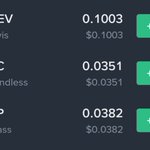
3 ZK tokens are suddenly among Binance's biggest gainers.
$BREV +74%
$ZKC +51%
$ZKP +27%
and here's what caught my attention
three relatively small tokens, working on different parts of zero-knowledge technology, are moving together.
is money rotating into ZK infrastructure?
or are traders simply chasing the same low-cap opportunity?
>>
first, a quick introduction to ZK.
imagine you want to prove you're over 18 without showing anyone your date of birth.
that's essentially the idea behind zero-knowledge proofs: proving something is true without revealing the underlying information.
in blockchain, this helps verify transactions, computations and private data while keeping sensitive information hidden.
>>
first, what connects these three?
all three work around zero-knowledge proofs.
but their products are quite different.
→ $BREV — Brevis
a ZK coprocessor and proof marketplace.
it allows applications to perform complex computations off-chain and verify the results on-chain.
→ $ZKC — Boundless
a decentralised proof-generation network.
provers stake ZKC as collateral to participate, and part of slashed collateral is burned.
→ $ZKP — zkPass
focused on private data verification.
it allows applications to verify information from existing web services without exposing the underlying private data.
same broad technology.
three different approaches.
>>
now look at the price action.
→ BREV: $0.1003, up 74%
→ ZKC: $0.0351, up 51%
→ ZKP: $0.0382, up 27%
and there's another important detail.
BREV listed around $0.44 in January.
even after today's rally, it's still approximately 77% below that level.
these aren't tokens coming from an established high-price base.
they've already experienced substantial declines.
>>
what about their market sizes?
using the circulating-supply estimates from the research snapshot:
→ BREV: approximately $25M market cap
→ ZKP: approximately $12M
→ ZKC: approximately $8M
these are relatively small market caps.
which means even moderate capital flows can produce dramatic price movements.
but it also means liquidity can disappear quickly when traders start taking profits.
>>
i looked for a common catalyst.
a major announcement?
a shared partnership?
a new listing?
i couldn't find one that explains all three moves.
so i'm not going to invent a narrative around today's rally.
what we have is a simultaneous move across three ZK-related tokens.
that could be sector rotation.
it could also be speculative traders chasing relatively thin order books.
>>
there are also supply questions.
→ BREV has investor vesting schedules to monitor.
→ ZKP has only around 31% of its maximum supply circulating.
→ ZKC also has substantial future supply to enter circulation.
so today's market caps don't tell the entire story.
future dilution matters too.
>>
my take
zero-knowledge technology has a genuine use case.
blockchains need ways to verify complex computations and private information without putting everything directly on-chain.
that's why these projects are worth following.
but a sector-wide pump doesn't automatically mean the sector is seeing real adoption.
what i'm watching
→ Do all three continue rising, or does one lead while the others fade?
→ Does spot volume support the move?
→ Are other ZK projects like $PROVE joining the rally?
→ Is actual proof-generation activity growing?
if the entire sector starts moving together, that's worth investigating.
if only a few small-cap tokens pump, it may simply be a liquidity-driven trade.
the technology is interesting.
now the market needs to show whether the demand is real.

1
3
494
$TFUEL was built to power decentralised video streaming.
now Theta wants it to play a role in AI computing too.
and that's an interesting pivot in a market where almost every project is trying to become an AI infrastructure play.
>>
first, what is Theta?
Theta Network is a blockchain and distributed infrastructure project.
its original idea was to make video delivery more efficient by allowing users to share spare bandwidth and computing resources.
instead of relying entirely on centralised infrastructure, the network incentivises participants to contribute resources.
but the ambition has expanded.
Theta is now developing infrastructure for:
→ AI computing
→ video delivery
→ decentralised storage
→ digital media and entertainment applications
its EdgeCloud product combines distributed computing resources with cloud infrastructure for AI and other workloads.
>>
now, what does TFUEL actually do?
TFUEL is the operational token of the Theta ecosystem.
it's used for:
→ transaction fees on the Theta blockchain
→ payments for services such as video relaying
→ payments for computing and network resources
→ rewards for network participants
one important distinction:
THETA is primarily the staking and governance token.
TFUEL is the token used to pay for network activity.
>>
but here's the part worth questioning.
Theta has a long history and a functioning network.
but the opportunity in AI computing is very different from simply having a decentralised video network.
the important question is whether Theta can attract developers and customers who are willing to pay for its computing services.
the technology alone isn't enough.
it needs sustained demand.
>>
and the tokenomics matter.
TFUEL has approximately 7.53B tokens in circulation.
unlike a fixed-supply token, TFUEL has ongoing issuance to reward network participants.
the estimated annual release from network rewards is around 386M tokens over the next 12 months.
that's roughly 5% of the current supply.
so the network needs to generate enough demand to absorb that continuing issuance.
>>
my take
Theta is an interesting project because it isn't starting from zero.
it already has a blockchain, a distributed edge network and an established position in video infrastructure.
the AI computing expansion gives it another market to pursue.
but I want to see actual customer demand, computing workloads and revenue.
not just AI announcements.
what i'm watching:
→ growth in EdgeCloud usage
→ real AI customers and workloads
→ TFUEL demand from network activity
→ whether usage can keep pace with token issuance
a video infrastructure project entering AI computing is an interesting story.
but the real test is whether customers actually pay to use it.

$0.01 → $0.0018.
that's what happened to $SOPH since my September post.
an 82% collapse.
and now it's suddenly up 40% in a day.
the token is pumping while the project is shutting down its own blockchain.
crypto never runs out of strange stories.
>>
remember, Sophon originally launched as a ZK-powered Layer 2.
it raised roughly $60–70M, had Binance Labs backing and tried to establish itself as another blockchain in the growing L2 market.
but the economics didn't work out.
maintaining the chain reportedly cost around $3.4M annually.
so the team made a radical decision:
stop running its own blockchain and focus on consumer applications instead.
>>
now the shutdown is getting real.
→ November 25: deadline for users to withdraw assets from the old Sophon chain.
→ November 30: planned permanent mainnet shutdown.
SOPH itself isn't disappearing.
Binance already migrated the token to Ethereum at a 1:1 ratio.
the old blockchain is going away. the Ethereum-based token remains.
>>
but what is Sophon building now?
the pivot is towards consumer finance, payments and AI-related products.
its first major product is Pyre.
and the proposed token model is quite different from the original one.
the idea:
product revenue → buy SOPH from the market → burn tokens.
in other words, if the products generate real revenue, that revenue could create buying pressure and reduce token supply.
but this is still a thesis that needs to be proven.
we need actual product adoption and revenue figures.
>>
and here's what makes the current price action interesting.
the token has lost around 82% since my previous post.
even after today's 40% bounce, it's still trading far below $0.01.
meanwhile, the project is approaching the final shutdown of its original network.
there's also continued token vesting, so additional supply remains a factor.
>>
my take
Sophon has already abandoned its original Layer 2 strategy.
now it has to prove that consumer applications can succeed where the blockchain couldn't.
the bull case is a successful pivot, real product revenue and buybacks that create value for SOPH.
the bear case is that the team shuts down the chain, but the new products fail to attract enough users or generate meaningful revenue.
a 40% pump doesn't answer that question.
neither does an 82% crash.
the next chapter depends on whether Sophon can build an actual business beyond its blockchain.


Until yesterday, $SOPH was just another crypto nobody was talking abt.
Today, it has more than doubled.
116% in 24 hours.
What the hell happened?
N did it crash in the past?
Yes. By 97%.
But here's the interesting part.
This isn't really the same SOPH story traders were buying into last year.
First, what even is SOPH?
Sophon launched as a ZK-powered Layer 2 blockchain. Basically, one of the many networks promising faster and cheaper crypto.
It raised roughly $60–70 million and had backing from Binance Labs.
But the market eventually lost interest.
After debuting near $0.11 in May 2025, SOPH fell to around $0.0033 by August 2026.
That's roughly a 97% drop from the top.
Then the team did something quite unusual.
They basically gave up on their own blockchain.
Sophon announced it would sunset its Layer 2 and shift its focus towards consumer apps built on Base.
The logic was simple.
Running the chain was reportedly costing around $3.4 million a year.
So instead of continuing to maintain another blockchain, the team decided to focus on building products people might actually use.
Its first product is Pyre, with plans around consumer finance, payments and AI.
And this is where the SOPH story gets more interesting.
The tokenomics are changing too.
Previously, SOPH was mainly a gas and staking token.
The proposed new model is different:
Product revenue → buy SOPH from the market → burn those tokens.
For someone new to crypto, that essentially means the idea is to connect the success of the actual products to the token.
If Sophon's apps make money, part of that revenue could potentially be used to buy SOPH and permanently remove those tokens from circulation.
Of course, there's a big catch.
This only matters if the products actually make meaningful revenue.
Binance has also migrated SOPH from the Sophon network to an Ethereum ERC-20 token, at a 1:1 ratio.
The move is important because SOPH is no longer tied to the network Sophon is shutting down.
Instead, it becomes part of the much larger Ethereum ecosystem.
There is another thing traders will be watching too.
Remaining Guardian/node rewards are scheduled to begin vesting as vSOPH on Ethereum later this month.
That's good for ecosystem continuity, but vesting and future unlocks can also mean more potential selling pressure.
And that's where the skepticism comes in.
Because SOPH's chart already tells a pretty brutal story:
$0.11 → $0.0033 → now a violent rebound.
Even after this latest pump, it remains massively below its old peak.
Binance also placed SOPH under its Monitoring Tag, meaning the exchange considers it a higher-risk asset and will continue reviewing whether it meets listing criteria.
So this isn't simply a forgotten altcoin randomly pumping.
SOPH is in the middle of a fairly radical pivot.
It raised millions to build a blockchain.
The blockchain didn't create enough value.
So the team decided to shut it down.
Now it is moving towards Base, building consumer apps and trying to redesign the token around real product revenue, buybacks and burns.
The bull case is pretty straightforward.
If Sophon's apps actually find users and generate revenue, SOPH could eventually become a bet on a real consumer-app business rather than just another Layer 2 token.
But the bear case is just as straightforward.
The blockchain failed to find product-market fit. Now the apps have to prove they can.
And until they do, a 116% daily pump is still just a pump.
Yesterday, almost nobody was looking at SOPH.
Today, everyone is.
The question now is whether traders are buying the beginning of a comeback story...
or simply the next chapter in a very volatile coin's history.

1
711
$ERA is up nearly 20%.
but there's a date worth keeping on the calendar.
November 17.
that's when another 26.4M ERA tokens are scheduled to unlock.
roughly 15% of the currently circulating supply.
so while traders are buying the rally, a sizeable amount of new supply is approaching the market.
>>
first, what exactly is Caldera?
Caldera builds infrastructure that allows projects to launch their own application-specific blockchains, or rollups.
think of it as infrastructure for teams that don't want to build an entire blockchain from scratch.
but its bigger idea is the Metalayer.
the problem with having hundreds of individual rollups is fragmentation.
different chains have separate liquidity, assets and users.
Caldera wants to connect these ecosystems through shared infrastructure and cross-rollup communication.
>>
and ERA has a role in that ecosystem.
it's designed for:
→ Metalayer utility and cross-rollup coordination
→ gas and network-related payments
→ node staking and security
→ governance
the idea is to make ERA useful across the network rather than simply being another governance token.
>>
now comes the interesting part.
the supply.
→ 1B maximum supply
→ approximately 175M circulating
→ 26.4M ERA scheduled to unlock on November 17
→ around 2.6% of total supply
→ approximately 15% of circulating supply
the unlock allocation includes private investors, insiders, the foundation and community-related allocations.
and this isn't the final unlock.
the vesting schedule continues well beyond November.
>>
so what am i watching?
Caldera is operating in an interesting sector.
rollup infrastructure and interoperability could become increasingly important as more applications launch their own chains.
but the token still needs to demonstrate that ecosystem growth creates meaningful demand for ERA.
and the upcoming unlock adds another variable.
>>
my take
a nearly 20% rally just before a sizeable unlock makes ERA worth watching.
but i wouldn't automatically interpret the rally as evidence of strong long-term demand.
the real questions are:
→ can Caldera attract more rollups and meaningful activity?
→ does Metalayer create actual demand for ERA?
→ how much of the November 17 unlock reaches the market?
→ can the price absorb the additional supply?
a growing infrastructure business is interesting.
but the token needs to capture some of that growth.
that's the difference i'm watching with ERA.

$GNS the bounce is back. but the bigger recovery is still missing.
i wrote about GNS on October 20, when it was trading around $0.555.
today, my Binance screenshot shows $0.40.
that's roughly 28% lower, despite another sharp 18% daily bounce.
so what has actually changed?
>>
let's look beyond the chart.
GNS powers gTrade, a decentralised leveraged-trading platform.
and the protocol is still generating meaningful activity:
→ ~$469M in perpetual volume over the last 30 days
→ ~$204K in trading fees
→ ~$148K in protocol revenue
→ ~$6.6M in TVL
there is a real product here, and it's generating revenue.
but there's another number i find important.
TVL has fallen around 20% over the past month.
so trading activity is substantial, but capital deposited in the protocol is moving in the wrong direction.
>>
now, what about the token?
GNS has a buyback-and-burn mechanism.
according to the project's token page, 54% of trading fees are allocated to buying back and permanently burning GNS.
the protocol also reports around $27K in holder revenue over the last 30 days.
that's actual value flowing through the token mechanism, not just a promise on a roadmap.
but it needs to be judged against selling pressure and liquidity.
>>
and the biggest concern from my previous post remains.
Binance's Monitoring Tag hasn't disappeared.
GNS is still facing heightened scrutiny, while the project also needs to rebuild confidence after exchange-related restrictions elsewhere.
a working protocol doesn't automatically guarantee a healthy token.
>>
so where does GNS stand now?
→ price is still below my October 20 reference point
→ protocol revenue and trading volume remain meaningful
→ TVL is declining
→ exchange risk remains
>>
my view..
i'm more interested in whether the protocol can turn its trading activity into sustainable token demand than whether GNS can print another 20% candle.
the next thing i want to see is TVL stabilising, revenue holding up and the exchange concerns becoming less of a threat.
because the real recovery isn't just getting the price back to $0.555.
it's rebuilding the confidence that was lost along the way.

$GNS is up nearly 40% today.
but here's what makes this rally interesting.
the token is pumping while its exchange risks haven't gone away.
and that creates a much more complicated story than a green candle.
>>
first, what is GNS?
Gains Network operates gTrade, a decentralised leveraged trading platform.
users can trade crypto and other markets without relying on a traditional centralised exchange.
and GNS isn't just a governance token.
its tokenomics are designed to connect protocol activity with token value through buybacks and burns.
the basic thesis?
more trading activity → more protocol revenue → more buybacks and burns.
but that only works if the platform can attract and sustain meaningful activity.
>>
now here's the uncomfortable part.
on September 4, Binance added GNS to its Monitoring Tag.
that means the token faces heightened scrutiny and potential delisting risk. it does not mean delisting is guaranteed.
Cryptocom also announced trading restrictions and delisting plans for GNS in September.
so while the token is attracting buyers, there are legitimate questions about its access to major trading venues and its liquidity.
>>
and then came the explosive move.
on October 13, GNS surged from around $0.37 to an intraday high near $0.86.
the following day, it fell sharply.
now it's climbing again.
that's the kind of volatility that gets attention, but it also makes chasing a green candle dangerous.
>>
so what am i watching?
→ whether gTrade's trading volume and revenue are actually growing
→ whether buybacks and burns are meaningful relative to selling pressure
→ whether GNS retains access to major exchanges
→ whether this rally can hold without another sharp reversal
because there's a genuine distinction here.
gTrade can have a useful product.
GNS can have deflationary tokenomics.
and the token can still struggle if liquidity and market access deteriorate.
the real question isn't whether GNS can pump 40% in a day.
it's whether the fundamentals can support the move while the risks remain.
that's what i'm watching with GNS.

3
232
$MITO
up nearly 29% in 24 hours.
but I still think the most interesting part of this token isn't the rally.
it's the gap between its market activity and the actual size of its ecosystem.
>>
first, look at the price history.
→ ~$0.065 at the end of 2025
→ ~$0.082 in May 2026
→ lost roughly 90% from there
→ fell to around $0.0065 in early November
→ now trading around $0.008–$0.009
that's a substantial bounce from the lows.
but let's be clear.
this is a recovery attempt, not a confirmed trend reversal.
MITO is still roughly 98% below its all-time high.
>>
→ the supply problem is still unresolved.
this was one of the biggest concerns in my previous post.
CoinMarketCap currently reports approximately 181M circulating MITO.
but other trackers, including DeFiLlama and CoinGecko, show approximately 480.6M.
that's a huge difference.
one analysis also reported that approximately 745M MITO had crossed the bridge to BNB Chain.
now, bridged tokens aren't necessarily sold or circulating in the market.
but this raises an important question:
which supply figure should investors actually use when calculating MITO's market cap?
at around $0.0084:
→ using 181M tokens gives a market cap of roughly $1.5M.
→ using 480.6M gives roughly $4M.
the difference is enormous.
and this is exactly why I don't like looking at market cap without understanding the underlying supply data.
>>
→ the TVL tells another story.
according to DeFiLlama, Mitosis currently has approximately $1.25M in TVL.
compare that with its historical peak of more than $441M in August 2025.
that's a dramatic decline.
meanwhile, daily trading volume has recently been running into the tens of millions.
so we have a token attracting substantial speculative trading activity while the underlying protocol has relatively little capital locked in it.
that's the disconnect I find most interesting.
>>
→ what about the November 28 unlock?
approximately 16.9M MITO tokens are scheduled to unlock.
at the current price, that's worth roughly $115K.
not particularly large in dollar terms.
but the unlock represents around 3.6% of the circulating supply reported by some trackers.
and it isn't the only monthly unlock.
more tokens are scheduled to enter circulation in December and beyond.
so the supply question isn't going away.
>>
so what's driving today's rally?
I looked for a fresh announcement, partnership or major product development that could explain the move.
I couldn't identify a confirmed catalyst.
which makes me cautious about calling this a fundamental recovery.
the volume is there.
the price momentum is there.
but the underlying TVL hasn't shown a comparable revival.
>>
my take:
MITO is an interesting case of how quickly a small-cap token can attract speculative attention.
but I want to see more than price appreciation.
I want to see TVL growing again.
I want transparent and consistent circulating-supply data.
and I want to understand whether the protocol is actually attracting liquidity rather than simply attracting traders to its token.
the next few weeks should be interesting.
if TVL starts recovering alongside the price, the story becomes more convincing.
if not, this could simply be another sharp bounce in a token that has already lost almost all of its previous valuation.
the real question isn't whether MITO can pump another 30%.
it's whether the project can rebuild the ecosystem behind the token.

$MITO is up, but the most interesting thing about this token isn't the price action.
it's the gap between the size of the market cap, the trading activity, and the actual liquidity sitting inside the protocol.
and that gap deserves attention.
>>
Mitosis is trying to solve a genuine DeFi problem:
liquidity is fragmented across chains, and assets deposited into one protocol often become difficult to reuse elsewhere.
Mitosis wants to make that capital programmable.
Users deposit assets into vaults and receive position tokens that can be deployed into different strategies.
Its two key mechanisms are:
→ EOL: ecosystem-owned liquidity, where capital allocation is governed by the community.
→ Matrix: curated liquidity campaigns designed to put deposited assets to work.
the ambition is to make liquidity more productive instead of leaving it isolated across chains.
>>
now look at the numbers.
CoinGecko currently reports:
→ Market cap: approximately $3.8M
→ Fully diluted valuation: approximately $7.9M
→ TVL: approximately $1.28M
→ 24h trading volume: approximately $8M
That is a striking volume-to-market-cap ratio.
But don't mistake trading activity for adoption.
A token can trade heavily without the underlying protocol attracting meaningful capital.
And with TVL still relatively small, Mitosis has a lot to prove.
>>
there's another issue: token supply.
Different market-data providers currently report materially different circulating supplies.
That makes market-cap comparisons unreliable until the discrepancy is reconciled.
The next scheduled unlock is November 28, with approximately 16.9M MITO tokens due to enter circulation>
That's another supply event worth watching.
>>
my concern is not whether Mitosis has an interesting DeFi concept.
it does.
the real question is whether it can attract enough capital, generate sustainable activity, and rebuild confidence around its token and treasury management.
There were also community concerns earlier this year around treasury movements and tMITO redemptions. Those concerns make transparency especially important.
>>
my take..
MITO is interesting because the valuation is small and the underlying idea addresses a real problem.
but a low market cap is not automatically undervaluation.
I want to see TVL growing, real usage across its liquidity products, clearer token-supply reporting, and the November unlock absorbed without significant selling pressure.
the opportunity is programmable liquidity. the risk is that the token runs ahead of the product.

5
1,184
$ZEC just had one of its biggest network upgrades in years.
And there's an interesting change that deserves attention.
Zcash activated its NU7 upgrade on November 5.
Two things stand out.
→ Transactions are getting faster.
The target block time has dropped from 75 seconds to 25 seconds.
That's a 3x reduction.
It makes the network more responsive, while keeping its existing 21 million ZEC supply cap intact.
→ A new fee mechanism is going live.
Under the Network Sustainability Mechanism, 60% of transaction fees are set aside in a public reserve.
The remaining 40% goes to miners.
This is designed to help support the network over the long term, as block rewards gradually decline.
But here's an important detail:
Those reserved fees aren't permanently burned. They're scheduled to become eligible for gradual reissuance through block rewards from around 2031.
So this isn't simply another token-burn announcement.
It's a change to how Zcash plans to fund its security in the future.
And the bigger picture is worth remembering.
Zcash isn't trying to compete only as another payment blockchain.
Its core proposition is privacy: allowing users to make transactions without exposing all their financial information publicly.
With growing attention on financial privacy, that remains an interesting market narrative.
My take:
NU7 is a meaningful technical upgrade, but it doesn't automatically translate into higher ZEC demand.
I'd watch whether faster transactions lead to more network usage, whether shielded activity grows and how the new fee mechanism performs.
The privacy narrative is interesting.
Now Zcash needs to turn that narrative into sustained adoption.
Is privacy becoming one of crypto's next major investment themes, or is ZEC's market still too dependent on speculation?
Just two months ago, $ZEC was trading around $300 after a major security scare.
And today, it has touched $1,000.
How?
But before that, do you know...
For years, regulators and exchanges treated privacy coins as something to avoid.
Now Wall Street has given one of them an ETF.
And Zcash holders are going crazy.
Grayscale's Zcash ETF, $ZCSH, began trading on NYSE Arca on August 25, giving regular brokerage investors exposure to ZEC without having to directly buy or custody the coin.
At the same time, Zcash went from being a largely forgotten privacy coin to one of crypto's biggest stories of 2026.
And the numbers are wild.
Just two months ago, ZEC was trading around $300.
By late August, it had climbed above $850.
And today...
$1,000.
So imagine being a Zcash holder.
Back in June:
A critical flaw was discovered.
ZEC crashed nearly 50% in about 48 hours, falling from around $624 to $309.
The kind of event that usually kills a crypto narrative.
But Zcash fixed the problem.
On July 28, the network activated its Ironwood upgrade, closing the vulnerable Orchard pool to new activity and strengthening how the supply behind shielded ZEC could be verified.
In crypto terms:
Security scare → emergency response → major upgrade.
Then the market started waking up.
From around $675 on August 21, ZEC touched roughly $867 within days.
Around the ETF launch, reports put the one-week move at roughly +66%.
And now comes the spicy twist.
Crypto's oldest privacy coins were supposed to become less relevant as regulation got stricter.
Instead, Zcash is becoming more institutionalized.
Other privacy coins have faced restrictions and delistings.
Meanwhile:
Zcash → security crisis → major upgrade → $1,000 comeback → Wall Street ETF.
For newcomers, Zcash was built around a simple question:
What if digital money didn't have to broadcast your entire financial life to the internet?
That idea became controversial.
But in an AI era, the argument is becoming interesting again.
Because as AI gets better at connecting wallets, transactions and patterns, public blockchain data becomes even easier to analyse at scale.
The irony?
The more powerful technology becomes at watching everything...
the more valuable privacy might become.
And ZEC holders are now sitting right in the middle of that narrative shift.
The biggest question isn't simply whether ZEC can hold $1,000.
It's whether this is just another privacy-coin rally...
Or whether the market is beginning to realise something bigger:
In a world where AI can analyse almost everything, privacy itself could become premium infrastructure.
And one of crypto's oldest coins may have just found a new reason to matter.
1
1
165
$CYBER is up more than 40% in 24 hrs.
but look closer.. this rally is getting interesting for a reason beyond the price.
CYBER had been trading around $0.25–$0.28 for much of the prev week.
Then the move started.
→ Nov 5: around $0.231 low
→ Nov 6: climbed as high as $0.374
→ Daily trading volume jumped from roughly $12.7M to nearly $30M.
That's a serious change in market activity.
>>
But here's the detail I find more interesting.
Open interest in CYBER perpetual futures surged by more than 300% in 24 hours.
At the same time, reported short liquidations exceeded long liquidations.
This suggests the rally wasn't simply a wave of spot buyers accumulating CYBER.
>>
There was a significant derivatives component too.
In other words, rising prices may have forced short positions to close, adding fuel to the move.
>>
But there's another side to this story also...
CYBER is the token behind Cyber, formerly CyberConnect.. a project building infrastructure for social applications, including its social Layer 2, developer tools and account infrastructure.
>>
The long-term idea is interesting
bringing social identity, applications and user-owned connections on-chain.
However, I haven't found a major new product announcement or partnership that convincingly explains this sudden price action.
And traders should pay attention to November 14.
A scheduled unlock is approaching, representing approximately 1.76% of total supply, or 2.88% of the currently circulating float.
That doesn't mean those tokens will immediately be sold. But after a rally this sharp, supply events matter.
>>My take
CYBER has momentum, liquidity is returning, and short covering appears to have contributed to the move.
But a derivatives-driven rally is not the same thing as a fundamental turnaround.
>>
The next things I'd watch
→ Can spot volume sustain the rally?
→ Does open interest remain elevated without excessive leverage?
→ Can price hold its breakout levels?
→ How does the market absorb the November 14 unlock?
A 40% move gets attention.
Sustained demand is what makes it interesting.
Is this the beginning of a genuine CYBER recovery, or another sharp speculative sqeeze..let's see

1
456
$RAY
Raydium has something many crypto projects still struggle to demonstrate:
actual revenue.
bt there's a catch.
some of its strongest growth is coming from a very specific corner of the Solana ecosystem.
n im not sure the market is paying enough attention to that concentration risk.
>>
let's look at Q3.
Raydium reported:
→ $7.99M in net revenue, up 264% QoQ.
→ $5.23M spent on RAY buybacks, up 203% QoQ.
→ $3.99B in tokenised-asset trading volume, up 91% QoQ.
those are impressive numbers.
bt here's where it gets interesting.
>>
tokenised assets accounted for around 20% of Raydium's Q3 trading volume.
yet they generated approximately 45% of its swap fees.
y?
because these markets often trade in higher-fee pools.
Raydium is no longer just a place for people to trade SOL and memecoins.
tokenised stocks are becoming a meaningful part of its business.
>>
there's another contributor.
LaunchLab, Raydium's launchpad, experienced a huge jump in activity after StonkFun moved its launches onto the platform in September.
StonkFun-related tokens generated approximately $2.81B in trading during September.
that's roughly 28% of Raydium's monthly volume.
this is where i'd be careful.
one integration can transform a quarter.
but what happens if that activity moves elsewhere?
we've seen similar launchpad growth stories reverse quickly before.
>>
now look at the token.
Raydium directs 12% of trading fees towards RAY buybacks.
In Q3, those buybacks reached $5.23M.
The cumulative amount reportedly crossed $204M.
that's meaningful value-accrual activity.
but buybacks cannot compensate indefinitely for declining protocol activity.
>>
n there are warning signs.
DefiLlama reported approximately $1.05B in TVL on November 4, down around 22% over 30 days.
so we have an interesting combination:
→ Strong Q3 revenue
→ Significant token buybacks
→ Growing tokenised-stock activity
→ Heavy dependence on certain trading channels
→ Recent TVL contraction
>>
my take
Raydium is one of the more interesting revenue stories in Solana DeFi.
but i want to see whether the Q3 performance can continue without depending so heavily on a small number of trading narratives and integrations.
the real test is whether tokenised assets become a durable business line rather than a temporary volume boost.
RAY has a revenue story. now it needs to prove that growth is repeatable.
ques is wud you rather own a DEX with real buybacks but concentrated growth, or one with broader but slower adoption?

1
2
183
$BMT
i wrote abt this token on oct 25.
back then, my concern was simple
the price was moving, but no confirmed fundamental catalyst.
but now, there's something worth looking at
»»
on nov 3, Binance reopened BMT withdrawals on both BNB Chain and Solana.
keep in mind, this wasn't a new listing.
but it did restore withdrawal functionality across two networks and brought fresh attention to the token.
today, BMT is up another 36% in the screenshot i'm looking at.
the question is whether this time the move has something more substantial behind it.
»»
because Bubblemaps itself is becoming more interesting.
the project is moving beyond its original wallet-visualisation product.
its newer tools are designed to help users identify suspicious token distributions, connected wallets and potential insider activity.
think about the problem this addresses.
crypto launches are increasingly difficult to evaluate.
a token can appear to have hundreds or thousands of holders, while a much smaller group of connected wallets may control a significant portion of the supply.
Bubblemaps wants to make those relationships visible.
that's a useful product direction.
»»
but i still separate two things:
the value of the product and the value of the token.
more people using Bubblemaps doesn't automatically mean more people need to buy or hold BMT.
that's the part the project still needs to demonstrate.
»»
so my watchlist has changed slightly.
→ does the recent volume persist after the Binance withdrawal update?
→ are spot buyers driving the move, or is this mostly short-term speculation?
→ is Bubblemaps gaining users and meaningful product adoption?
→ what concrete utility or value accrual can BMT holders expect?
»»
i was cautious at $0.028.
the rally to $0.051 didn't change my thesis.
and another sharp move doesn't change it either.
Bubblemaps is building in a sector with a genuine problem to solve.
now i want to see whether that product momentum translates into sustainable token demand.
the product may be getting stronger. the token still has to prove its case.
m still watching $BMT

$BMT
yesterday i wrote about it at $0.028.
then it ran as high as $0.051.
now it's back around $0.033.
still up from where i started watching.
but that round trip is exactly why i was cautious.
>>
in my last post, i asked one question
what's actually driving this move?
i still don't have a confirmed fundamental catalyst.
and the price action alone isn't an answer.
$0.028 → $0.051 → $0.033.
that's a massive intraday swing for a token that was already up sharply.
>>
here's what this move tells me.
attention is clearly there.
but attention can create demand without creating lasting value.
the moment buyers stop chasing, the same thin liquidity that pushed BMT higher can accelerate the drop.
and anyone buying the top of that spike has a very different experience from someone who bought before the move.
>>
so i'm still watching three things
→ does volume remain elevated after the pullback?
→ are large wallets accumulating or distributing?
→ does Bubblemaps give people a stronger reason to actually hold BMT?
because the product thesis hasn't changed.
Bubblemaps can be useful.
but that alone doesn't prove the token captures the value.
>>
i'm not calling the top.
and i'm not calling this a dip to buy.
the move to $0.051 showed how far momentum can take BMT.
the pullback shows why chasing it is dangerous.
now i want to see what happens when the excitement cools.
does real demand remain?
or was the rally the catalyst itself?

$MITO is up, but the most interesting thing about this token isn't the price action.
it's the gap between the size of the market cap, the trading activity, and the actual liquidity sitting inside the protocol.
and that gap deserves attention.
>>
Mitosis is trying to solve a genuine DeFi problem:
liquidity is fragmented across chains, and assets deposited into one protocol often become difficult to reuse elsewhere.
Mitosis wants to make that capital programmable.
Users deposit assets into vaults and receive position tokens that can be deployed into different strategies.
Its two key mechanisms are:
→ EOL: ecosystem-owned liquidity, where capital allocation is governed by the community.
→ Matrix: curated liquidity campaigns designed to put deposited assets to work.
the ambition is to make liquidity more productive instead of leaving it isolated across chains.
>>
now look at the numbers.
CoinGecko currently reports:
→ Market cap: approximately $3.8M
→ Fully diluted valuation: approximately $7.9M
→ TVL: approximately $1.28M
→ 24h trading volume: approximately $8M
That is a striking volume-to-market-cap ratio.
But don't mistake trading activity for adoption.
A token can trade heavily without the underlying protocol attracting meaningful capital.
And with TVL still relatively small, Mitosis has a lot to prove.
>>
there's another issue: token supply.
Different market-data providers currently report materially different circulating supplies.
That makes market-cap comparisons unreliable until the discrepancy is reconciled.
The next scheduled unlock is November 28, with approximately 16.9M MITO tokens due to enter circulation>
That's another supply event worth watching.
>>
my concern is not whether Mitosis has an interesting DeFi concept.
it does.
the real question is whether it can attract enough capital, generate sustainable activity, and rebuild confidence around its token and treasury management.
There were also community concerns earlier this year around treasury movements and tMITO redemptions. Those concerns make transparency especially important.
>>
my take..
MITO is interesting because the valuation is small and the underlying idea addresses a real problem.
but a low market cap is not automatically undervaluation.
I want to see TVL growing, real usage across its liquidity products, clearer token-supply reporting, and the November unlock absorbed without significant selling pressure.
the opportunity is programmable liquidity. the risk is that the token runs ahead of the product.
$POWR is making a move.
but this isn't another random DePIN token.
Powerledger is working on something much bigger: bringing electricity markets on-chain.
and the interesting part is that it already has real-world deployments.
>>
think about the problem.
millions of households and businesses are generating their own solar electricity.
but traditional energy markets weren't designed for thousands of smaller producers trading energy with one another.
Powerledger wants to change that.
its technology enables peer-to-peer energy trading, renewable energy tracking and transparent settlement.
and it isn't just a whitepaper.
→ Austria: peer-to-peer solar trading with Energie Steiermark
→ Thailand: rooftop solar trading through BCPG and MEA
→ Greece: renewable energy tracking with Metlen
→ Australia: partnerships and deployments involving the energy sector
these are real-world use cases, not just another AI or DePIN promise.
>>
now here's the part I find interesting.
Powerledger has moved its platform infrastructure to Solana.
and its official documentation describes POWR as the connective token across the ecosystem.
its intended roles include:
→ access to Powerledger platforms
→ participation across its energy markets
→ settlement and ecosystem utility
POWR is also available on Ethereum and Solana through Wormhole's Native Token Transfers.
so the project is connecting real-world energy infrastructure with two major blockchain ecosystems.
>>
but there's a market detail worth watching.
on November 1, POWR topped Upbit's gainers board with a reported 30% jump.
trading turnover reached approximately 29.3 billion Korean won.
and here's the catch..
Upbit accounted for roughly 67% of reported global spot volume in the latest market snapshot.
that concentration matters.
it suggests Korean exchange activity is playing a major role in the current price discovery.
I couldn't identify a fresh Powerledger announcement that fully explains the rally.
>>
wud be watching..
→ does buying spread beyond Upbit?
→ are new energy projects translating into actual platform usage?
→ does POWR capture meaningful demand as the ecosystem expands?
→ can the rally sustain itself once exchange-driven momentum cools?
bcz there's a difference between a company solving a real-world problem and its token capturing the economic value of that solution.
Powerledger has a real-world energy story.
now POWR needs to prove that the token is an essential part of that story.

4
438
$SPK is up nearly 18% today.
n bigger story isn't just the buybacks.
Spark's business is expanding, its buybacks r accelerating, but its quarterly net revenue actually declined.
>>
first, look at the business.
Spark's Q3 2026 numbers:
→ lending market share increased from 10.4% to 13.2%
→ its lending book grew 73% to $2.89B
→ borrower interest payments reached $16.05M
→ its allocated assets reached $3.71B
that's meaningful growth.
Spark is increasingly positioning itself as an on-chain capital allocator, moving stablecoin liquidity across lending markets, DeFi and real-world assets.
it's also expanding institutional distribution through partnerships involving Anchorage Digital, Robinhood and OKX.
>>
but here's the part I find interesting.
despite the growth, Q3 net revenue fell 30% to $4.41M.
why?
Spark reduced its distribution reward rate from 0.5% to 0.2% in July.
so the protocol was growing its lending business while generating less net revenue than the previous quarter.
this is an important distinction.
more capital deployed doesn't automatically mean more profit.
>>
now comes the SPK, the token angle.
Spark repurchased $2M worth of SPK during Q3, buying 106.9M tokens.
then, on October 28, another $4M buyback was reported.
the programme is funded through excess treasury capital.
but there's a detail many traders might miss:
repurchased SPK is held in the treasury.
it isn't automatically burned or permanently removed from supply.
so the important metric isn't just how much the protocol buys.
it's how consistently it can do so using sustainable surplus.
>>
and there's still a supply consideration.
SPK has a maximum supply of 10B tokens.
the next scheduled unlock is November 17, involving approximately 168.75M SPK.
that's around 1.7% of total supply.
buybacks are meaningful, but they need to be considered alongside future token distribution.
>>
here's what m watching
→ can Spark maintain its lending-market share?
→ does net revenue recover as the business expands?
→ do buybacks continue at a meaningful pace?
→ can institutional integrations translate into recurring demand?
→ how does the market absorb the November unlock?
my take: Spark is building a serious financial infrastructure business.
but the SPK investment thesis depends on whether that business can consistently generate surplus, support buybacks and create meaningful value for tokenholders.
the interesting question isn't whether Spark is growing.
it's whether SPK holders will benefit as it grows.
wud u rather buy a token backed by a growing business with future supply still coming, or wait for stronger evidence of token value capture?

3
465
$PARTI is up nearly 40%.
and there's something unusual happening beneath the rally.
the price is rising.
but open interest is falling.
that's a combination worth paying attention to.
>>
PARTI is the token of Particle Network, a project trying to solve one of Web3's biggest problems: fragmented chains.
its Universal Accounts aim to let users access assets across different networks without constantly bridging, switching wallets or managing multiple gas tokens.
the idea is simple:
one account. one balance. multiple chains.
and PARTI is designed to sit at the centre of that economy through gas, staking and liquidity-related utility.
>>
but here's what caught my attention.
on October 30:
→ PARTI gained more than 40% in 24 hours
→ Binance perpetual open interest fell around 24%
→ funding turned negative, meaning shorts were paying longs
→ at least $1.1M in positions were forcibly closed
this suggests the rally may have been amplified by short covering and liquidations.
in other words, some of the buying pressure may have come from traders being forced out of bearish positions.
that's very different from institutions or long-term investors suddenly accumulating.
>>
and there's another issue.
supply.
PARTI has a maximum supply of 1B tokens.
the next scheduled unlock is November 25, involving approximately 9.3M tokens.
that's not necessarily enough to derail a rally.
but it's worth tracking when a token has already moved so sharply in a short period.
>>
here's what I want to see next
→ does spot buying continue after the short squeeze?
→ does open interest rebuild alongside price?
→ are Universal Accounts attracting meaningful users and transactions?
→ can Particle turn PARTI's gas and liquidity utility into measurable token demand?
because there's a difference between a token rallying because shorts are getting squeezed and a token rallying because its ecosystem is becoming more valuable.
the first can happen in a day.
the second needs sustained evidence.

1
1
246
$LSK is up 29%.
but the real story isn't the rally.
it's a token trying to reinvent itself while its original blockchain prepares to shut down.
>>
on October 31, the Lisk Chain closes.
but LSK isn't disappearing.
Lisk is pivoting toward a business finance platform built around accounts, payments and financial operations for companies.
the token's new role?
a loyalty token that businesses can earn and eventually use for platform fees.
here's the catch: those token utilities are planned to roll out in 2027.
the market is trading the future before the full product is here.
>>
now, two developments make this more interesting.
1. the supply has already changed.
Lisk burned 100M LSK, cutting total supply from 400M to 300M.
that's a completed burn, not a proposal.
2. there's a new buyback program.
Lisk's official investor page lists a $4.388M buyback budget running from October 26 to December 31.
but a budget isn't the same as money already spent.
the actual amount purchased—and the price at which it's purchased—matters.
>>
here's the tension.
a 25% supply reduction and ongoing buybacks can improve the token's supply dynamics.
but neither guarantees sustainable demand.
the business still has to attract customers.
the token still needs meaningful utility.
and the market needs evidence that the new model can work.
>>
that's the real LSK thesis
the old chain is ending.
the supply has been reduced.
the buybacks have begun.
but the new token utility is still ahead.
if Lisk turns its finance platform into a real business and creates demand for LSK, this transition could be more than a speculative rally.
if adoption disappoints, scarcity alone may not be enough.
so what matters more to you here: the buyback and supply reduction, or waiting for proof that the new business model works?
because a token can survive a blockchain shutdown. the harder part is giving it a reason to be valuable afterward.

2
481