Ioannis Karakikes (@IKarakikes) header
Ioannis Karakikes (@IKarakikes) profile picture

Associate Professor @Stanford Department of Cardiothoracic Surgery, studying rare cardiomyopathies.

Stanford, CA
Joined May 2019
Photo by Ioannis Karakikes (@IKarakikes)Photo by Ioannis Karakikes (@IKarakikes)Photo by Ioannis Karakikes (@IKarakikes)Photo by Ioannis Karakikes (@IKarakikes)Photo by Ioannis Karakikes (@IKarakikes)Photo by Ioannis Karakikes (@IKarakikes)
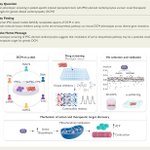
Excited to share our latest work using phenotypic screening to identify novel therapeutic targets for DCM @EHJ_ed, led by the talented @IsaacPerea academic.oup.com/eurheartj/a… @StanfordCVI @SnyderShot @salkinstitute @StanfordCTSurg @StanfordMed
4
17
1
66
1st issue of 2026! 📰 Check out our latest newsletter featuring dept highlights, faculty spotlights & initiatives, & resident updates: #MatchDay2026 results👩‍⚕️👨‍⚕️, new papers from @NganHuang, @HiesingerLab, @IKarakikes Labs🫀; awards from @MarfanFdn; & more! ow.ly/mmN850YF4mt
2
5
699
Peer review was supposed to be science’s quality filter, but somewhere along the way it started acting more like a bouncer who only lets in the regulars. It’s slow, it tends to favor established labs and familiar names, and it gets uncomfortable around anything too unconventional. Papers loaded with mountains of data tend to cruise through, while bold ideas that actually challenge the consensus get stuck in limbo or turned away at the door. The irony is that where a paper gets published almost never determines its real worth. What actually matters is what the scientific community does with it afterward, whether people cite it, argue with it, build on it, or use it to blow up a long-held assumption. That’s where the value lives, not in the journal’s logo. A major survey a few years back found that roughly 70% of researchers think the current system is fundamentally broken, and it’s not hard to see why. Publicly funded research hides behind paywalls, editors chase whatever topic is hot that month, and the whole incentive structure pushes toward safe bets over genuinely risky and potentially important work. Science has always been complicated and deeply human and full of ego and inertia, but the conversation is shifting.
Readers added context they thought people might want to know
La portada es falsa. Las fechas de la portada de la imagen corresponden a la edición doble de vacaciones. economist.com/weeklyedition/…
106
685
103
1,878
135,357
Ioannis Karakikes retweeted
Laminopathies and heart failure: can we predict risk earlier? New data define the natural history of LMNA cardiomyopathy and propose a model to predict severe heart failure events. Read more in #EHJ. doi.org/10.1093/eurheartj/eh… #HF #cardiotwitter @ESC_Journals @escardio
1
13
34
2,323
Ioannis Karakikes retweeted
Updated Guidance on Reopening of NIH Extramural Activities Following the October 1, 2025 - Lapse in Appropriations grants.nih.gov/grants/guide/…
15
3
34
11,797
New *Metabolism* paper: PHGDH gene therapy boosts cardiac serine biosynthesis, preserves heart function, prevents remodeling in DCM. 📄 authors.elsevier.com/a/1lv5P… @stanfordctsurg @StanfordCVI @salkinstitute @StanfordMed 🧵 Key points 👇
1
4
1
9
1,159
AAV9-PHGDH redirects glucose from glycolysis → serine biosynthesis → one-carbon metabolism. 💓 Preserved ejection fraction 🧱 Reduced fibrosis 🔋 Maintained mitochondrial metabolism
1
1
75
These results identify serine metabolism as a modifiable metabolic vulnerability in heart failure. Excited to see how metabolic reprogramming can open new therapeutic avenues!
1
63
We are excited to announce the next installment of our Greenstone Biosciences webinar series, featuring Dr. William Pu. Professor of Pediatrics at Harvard Medical School on Tuesday, October 28th. Learn more: linkedin.com/posts/greenston… Secure your spot: us06web.zoom.us/webinar/regi…
7
19
1,626
Check it out! ✨ New paper out in @StemCellsTM on the rapid manufacturing of angiogenic cellular collagen patches for ischemic cardiomyopathy. Authors incl. Eric Pfrender, @yshudo1007, et al. @StanfordCVI @Joseph_C_Wu @YuanjiaZhu @ardalal_MD ✨ Read more: ow.ly/4b6p50WZFMI
1
4
7
694
Using blood samples from patients, researchers at @StanfordMed developed a new hiPSC line for studying PHACE syndrome and screening therapeutics. Read the paper by @IKarakikes and colleagues from @stanfordctsurg & @StanfordCVI: sciencedirect.com/science/ar…
3
7
349
Ioannis Karakikes retweeted
SDR-seq is a droplet-based single-cell DNA-RNA sequencing platform for studying gene expression profiles linked to both noncoding and coding variants. @DLindenhofer @LarsMSteinmetz @embl nature.com/articles/s41592-0…
25
1
70
7,142
Ioannis Karakikes retweeted
Final call to register and submit abstracts for the @FASEBorg conference on the Mechanobiology of the Cell Nucleus (#MBNSRC) to be considered for platform presentations. The conference takes place in Melbourne, FL, Oct. 26-30, 2025. See more info at: events.faseb.org/event/Mecha…
2
6
16
2,457
Ioannis Karakikes retweeted
🌹Meet #ROSIE, our new AI that predicts spatial multi-protein expression straight from routine H&E images. Built on a large co‑staining dataset (>1k samples, 16M+ cells). It enables cell phenotyping & tissue structure insights w/o extra assays.
6
145
12
684
71,758
Ioannis Karakikes retweeted
🚨🚨Looking forward to this ISHR MCI Webinar in September! Register now so you don't miss out🔗👇🏼: bit.ly/Sept25MCI
6
18
1,161
Ioannis Karakikes retweeted
Job Alert: A stealth startup focused on non-cancer diagnostics is keen to hire a deep learning for genomics/bio engineer. I am an advisor for the startup & closely involved. Please see the job description below and get in touch if interested. Plz RT
3
23
80
13,024
Ioannis Karakikes retweeted
We are hiring postdocs. If you are passionate about using iPSC, CRISPR screens, organoids, and multiomics to understand cardiovascular disease and advance precision medicine.
8
23
3
67
11,381
Ioannis Karakikes retweeted
Please spread the word about this foundation dedicated to dilated cardiomyopathy caused by mutations in the LMNA gene. It helps connect patients and provide them with resources and connections to clinicians and researchers.
📣 We need your help! 💙 Download our flyer & spread the word about LMNA-related heart disease: ✅ Share online ✅ Hang in clinics & waiting rooms ✅ Send to your network Will you help us grow? 🌍 👉 lmnacardiac.org/help-us-rais… #LMNA #RareDisease #HeartHealth
1
11
27
3,752