

The “Future Coach.” Former CEO at US Telecom. A recognized Founder of the Telecom Revolution. Author: HUMANITY’S STARSHIP (2024); INTELLOPY (2021). #INTELLOPY
Florida, USA
Joined November 2022
- Tweets713
- Following54
- Followers43
- Likes7


The factor that determines if and how a person is productively employed is the degree to which that person has learned how to operate AI agents and robots.
teapaw.org/r0ck3t23/status/204079…

Jensen Huang just killed the AI jobs panic.
Not with a forecast. With a pattern.
Huang: “The fact of the matter is PCs made us more busy. The internet made us more busy. Mobile devices made us super busy.”
Every tool that promised to free us expanded what we could reach instead.
The PC did not give accountants their afternoons back. It gave them ten times the clients.
The internet did not slow anything down. It erased the geographic limit on what one person could build.
The smartphone did not hand you time. It handed work your coordinates and never let go.
None of them reduced what we did. All of them raised what we could.
AI will not be different.
It will not give you rest. It will give you a thousand things you couldn’t have built before.
The people waiting for relief are reading the wrong pattern.
This was never about less. It was always about expanding what one person can attempt.
The panic runs on one assumption.
That labor is surplus.
Huang: “We are millions of truck drivers short. We are tens of millions of manufacturing workers short.”
The economy is not drowning in surplus labor. It is bleeding from the absence of it.
Robots are not arriving as invaders. They are arriving as reinforcements to a system already failing without them.
The collapse was already underway. The machines just showed up to a building already on fire.
Huang: “They’ll hire more people to manage more robots, hire more people, manage more agents.”
The raw work is leaving human hands. The direction of it is not.
Every company deploying agents still needs someone deciding what they’re pointed at.
The question is not whether AI replaces you.
The question is whether you learn to command it before someone who already has.
Every tool that promised less work delivered more world.
AI will be the largest expansion of that pattern in history.
You are not losing your job to a machine.
You are losing it to someone who learned to run one.
22
The AIPA Paradigm as the Artificial Personal (Lab) Assistant!arxiv.org/abs/2510.14861

1
51
The ultimate end of jobs lost to AI would be corporations with no people. But why would such a business exist? Whom does it serve? Who owns it? Do assets ownership and property rights no longer exist for humans? Does posthuman corporations mean that living, conscious, thinking machines have replaced humans in evolution?
teapaw.org/MrSpycosGlobal/status/…

This isn’t the end of humans in organizations —
it’s the end of humans in execution loops.
Pure AI and robotics will dominate throughput.
Humans remain where goals are set, legitimacy is earned, and failure is owned.
The shift is vertical, not existential.
18
This is why AGI is not imminent.
teapaw.org/slow_developer/status/…

This is the essential reason that AGI is not imminent.
teapaw.org/rohanpaul_ai/status/20…

Yann LeCun's new interview - explains why LLMs are so limited in terms of real-world intelligence.
Says the biggest LLM is trained on about 30 trillion words, which is roughly 10 to the power 14 bytes of text.
That sounds huge, but a 4 year old who has been awake about 16,000 hours has also taken in about 10 to the power 14 bytes through the eyes alone. So a small child has already seen as much raw data as the largest LLM has read.
But the child’s data is visual, continuous, noisy, and tied to actions: gravity, objects falling, hands grabbing, people moving, cause and effect. From this, the child builds an internal “world model” and intuitive physics, and can learn new tasks like loading a dishwasher from a handful of demonstrations.
LLMs only see disconnected text and are trained just to predict the next token. So they get very good at symbol patterns, exams, and code, but they lack grounded physical understanding, real common sense, and efficient learning from a few messy real-world experiences.
---
From 'Pioneer Works' YT channel (link in comment)
2
20
This is the essential reason that AGI is not imminent.
teapaw.org/rohanpaul_ai/status/20…
Yann LeCun's new interview - explains why LLMs are so limited in terms of real-world intelligence.
Says the biggest LLM is trained on about 30 trillion words, which is roughly 10 to the power 14 bytes of text.
That sounds huge, but a 4 year old who has been awake about 16,000 hours has also taken in about 10 to the power 14 bytes through the eyes alone. So a small child has already seen as much raw data as the largest LLM has read.
But the child’s data is visual, continuous, noisy, and tied to actions: gravity, objects falling, hands grabbing, people moving, cause and effect. From this, the child builds an internal “world model” and intuitive physics, and can learn new tasks like loading a dishwasher from a handful of demonstrations.
LLMs only see disconnected text and are trained just to predict the next token. So they get very good at symbol patterns, exams, and code, but they lack grounded physical understanding, real common sense, and efficient learning from a few messy real-world experiences.
---
From 'Pioneer Works' YT channel (link in comment)
9
I think this is a big deal because I think eye tracking will be the dominant input method until Alter Ego or BMIs take over.
teapaw.org/PatentlyApple/status/1…

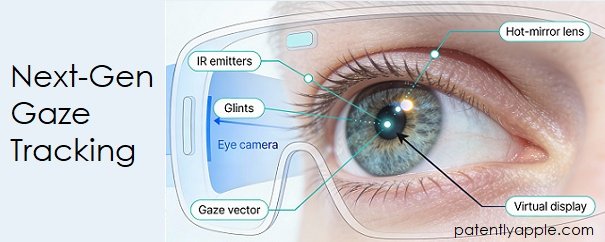
37


Posts like this, that I wrote about six years ago, are more frequent now.

Hundreds of millions of people alive today, perhaps even a billion or two, will live to see the year 2500. They will look back and realize how crazy it once sounded that they would still be alive 500 years later, and how they dismissed those who claimed this as totally insane!
2
2
32
A big challenge for society over the next few years.

The AI job apocalypse is real! We must finally start a broad discussion about this!
"AI allows them to do more with fewer people.
He noted “a significant number of companies” have recently announced layoffs or hiring pauses, with many of them explicitly citing AI as the reason. (...)
AI and automation are boosting output, but they’re also allowing companies to do more with fewer workers, leaving the labor market softer, even while GDP stays positive."

14
I agree the old paradigm is dead, but entrepreneurship can’t be the only option as not everyone has the temperament, and even entrepreneurs will need others to help them.

The old paradigm: go to a good school, get a degree and get a good job... is dead.
The new paradigm: find your purpose, start a company, create and lead is our future
Entrepreneurship is the only future career .
14
A significant new technology, but machines that think like humans are still not on the horizon.

Another massive computing/AI breakthrough
Engineers create artificial neurons that think like real brain cells, big leap toward true AGI
Researchers at USC Viterbi School of Engineering have built artificial neurons that physically replicate how real brain cells process electrical and chemical signals, a historic step toward brain like computing and potentially AGI.
Powered by a breakthrough device called a diffusive memristor, these neurons use ions instead of electrons to compute, just like the human brain, enabling chips that are orders of magnitude smaller and more energy efficient than today’s silicon processors.
The new design, published in Nature Electronics, could revolutionize neuromorphic computing, making AI hardware that doesn’t just simulate thought but actually works like the human brain.

6

Apple still leads the most advanced AR/VR headset, chip hardware, Vision OS operating system, and developer ecosystem. The challenge for Apple and the rest of the industry is to be able to do what the Vision Pro can do, but in ever-smaller and lighter form factors closer to “glasses.”

The Vision Pro is dead, long live the Vision Pro!
Apple just announced the second-generation Vision Pro — available starting October 22 for $3,499.
It features the new M5 chip and therefore a crisper, smoother image, improved battery life as well as performance and an all-new dual knit band.
And yes, I want it.

1
95
This article hints at how I think AI will augment us, helping us achieve superintelligence, and how we possess inquisitive and creative qualities that AI doesn’t.

🤔AI and the New Impostor Syndrome
👉The uneasy feeling of outsourcing your own intelligence.
Recently, I wrote about what I called the lazy genius paradox—the strange mix of empowerment and unease that comes with using AI to enhance our productivity and creativity. That story sparked a larger conversation, one that got me thinking about the shifting boundaries of intelligence, effort, and ownership in the age of AI.
Since the 1970s, impostor syndrome has been defined as the feeling that one’s success is undeserved, even in the face of external validation. People who experience it worry that they’ve fooled others into overestimating their intelligence, creativity, or competence.
But what happens when the source of doubt isn’t personal inadequacy—but rather the effortlessness of intelligence itself? In the age of AI, we are witnessing the rise of a curious psychological paradox: AI impostor syndrome. It's the cognitive dissonance that arises when artificial intelligence amplifies our capabilities while simultaneously making us question our own intellectual legitimacy.
This isn’t just about productivity—it’s about how we define thinking itself. When intelligence is outsourced to machines, does that make us smarter, less necessary, or take some deeper toll on our self-worth?
👉Classic vs AI-Driven Impostor Syndrome
Traditional impostor syndrome arises when people doubt their hard-earned success. AI impostor syndrome, on the other hand, emerges when success comes too easily—when AI generates insights, drafts articles, and even suggests creative breakthroughs with minimal human effort.
Classic impostor syndrome is rooted in the belief that one’s achievements are accidental, that despite effort and success, a person still feels they don’t deserve recognition. AI-driven impostor syndrome flips this concept so that people experience self-doubt because their success lacks the traditional struggle associated with intellectual effort. The ease of AI assistance creates a cognitive dissonance—one where mastery and doubt coexist.
🔶Effort—Thinking is something we do. Intelligence is built through struggle, personal iteration, and mental exertion. Hard work validates knowledge.
🔶Access—Thinking is something we get. AI delivers knowledge instantly, making intelligence feel effortless—sometimes too effortless.
This creates a fundamental disconnect in how we perceive our intellectual contributions. If AI crafts an essay, generates an idea, or refines a strategy in seconds, who is actually responsible for that insight? The user or the algorithm?
For many of us, this disrupts a deeply ingrained belief—one that ties intelligence to effort. AI shifts thinking from an act of construction to an act of retrieval, making intelligence feel more like a process of selection rather than creation. The result? A growing crisis of authorship and identity.
This is a form of effort justification—we tend to value achievements more when they require struggle. AI disrupts this bias, making intelligence feel more like curation than generation. As the line between human effort and machine assistance blurs, so does our confidence in what it means to truly think.
👉An Emerging Psychological Toll
According to research from the Imagining the Digital Future Center, nearly half of AI users believe their AI assistant is smarter than they are. Meanwhile, a significant percentage of respondents report concerns about dependence on AI for thinking and decision-making.
As AI continues to integrate into creative and professional workflows, this discomfort will likely grow. If thinking itself is outsourced, what remains of human intellectual identity?
👉Will AI Impostor Syndrome Fade Over Time?
Technological discomfort tends to fade with normalization. We once feared calculators, spell-check, and GPS—but now, they are extensions of intelligence, not replacements for it. Will AI follow the same trajectory? Or does it cross a deeper boundary—one that encroaches on the essence of human cognition itself?
One possibility lies in what I have called iterative intelligence. Rather than viewing intelligence as a singular output of effort, we may need to shift toward seeing it as an ongoing, dynamic process—one where humans and AI engage in a continual refinement of ideas, insights, and understanding. In this framework, intelligence is no longer measured solely by individual struggle but by the ability to iterate, synthesize, and direct AI-driven enhancements toward meaningful outcomes.
This shift suggests that our relationship with intelligence itself is evolving. As AI becomes more integrated into our cognitive processes, our discomfort with its role may diminish, much like past transitions in intellectual augmentation. The real question is whether we can embrace this change without losing the essential humanity of thought—our sense of agency, curiosity, and purpose in the face of increasingly powerful cognitive tools.
👉Resolving AI Impostor Syndrome
Instead of resisting AI, it's helpful to redefine intelligence to fit this new reality—not in terms of effort alone but in terms of return on engagement (ROE).
🔶Reframe Intelligence. Intelligence isn’t just effort—it’s strategy. The value of intelligence isn’t in how hard we work but in how effectively we engage with knowledge, AI, and ideas.
🔶Own the Process. Even if AI assists, the depth of human engagement—our judgment, oversight, and refinement—determines the true value of intelligence.
🔶Effort vs Strategy. The shift isn’t from thinking to laziness—it’s from manual cognition to cognitive precision. AI isn’t a shortcut; it’s a tool for amplifying engagement.
By optimizing ROE, we move away from seeing AI as a threat to intelligence and toward leveraging it as a force multiplier for deep thinking and creativity.
👉Intelligence in the Age of AI
AI isn’t replacing intelligence—it’s changing how we define it. The rise of AI impostor syndrome signals a potential shift in cognitive identity, challenging us to reconsider what it means to think, create, and be smart in a world where intelligence is increasingly augmented by machines.
As we step into the Cognitive Age, we may need to shift from seeing intelligence as a personal achievement to recognizing it as an iterative process—one that blends human intuition, AI augmentation, and the ability to refine and adapt.
The real challenge isn’t proving our intelligence in an AI-powered world—it’s learning how to shape it.
psychologytoday.com/us/blog/… #LLMs @jordanbpeterson @BrianRoemmele

2
189
Interesting reminder of how tech in the labs is about to burst out into society. youtu.be/uelLfbLTl3g?si=Y3iA…
74
Brilliant Labs just announce next gen AI glasses "Halo" with Voice AI agent, persistent agentic memory, and the ability to have it generate (code) custom apps for you just using voice prompts. To be released in November for $299.
1
113
JJ Kelly retweeted

there's a quiet shift happening in how we design software. we're moving from UX to AX (agentic experience).
traditional UX is screen-centric. you tap a button, product reacts, job done. every session starts from zero.
designers pre-plan every path with hard-coded flows. users fill out forms and dropdowns because the product remembers nothing about you.
success = fewer clicks and faster flows.
trust = "interface looks clean so it must work."
agentic experience is relationship-centric. the agent keeps track of ongoing goals, nudges next steps, improves over time. you're never starting over.
the system plans its own path - it senses, infers, chooses actions the designer didn't script. context is learned, not asked. preferences, patterns, even team norms are remembered.
success = earned trust and compounding value. metrics shift to retention, satisfaction with decisions, how much autonomy you hand over.
trust = the agent shows its work early, then tapers as confidence grows, like a human teammate.
most apps will eventually work this way.
your email client will learn your writing style and priorities. your design tool will remember your brand guidelines and suggest layouts. your CRM will track relationship patterns and recommend next moves.
the best products will anticipate needs, remember context, and get better with every interaction.
shoutout to @meetLCA for this visual and hit them up if you need help designing these AX experiences (they lead the charge)
we're moving from tools you use to partners you work with.
the companies building ax instead of ux will own the next decade.
users will stop tolerating dumb software that makes them repeat themselves.
once you experience true AX, traditional UX feels broken. there's no going back.

