

Product @Harvey | More Outsidey than Outdoorsy | 🇮🇪 in 🇺🇸
San Francisco
Joined February 2011
- Tweets2.8K
- Following697
- Followers1.7K
- Likes3.3K



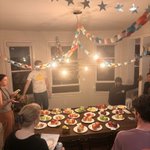

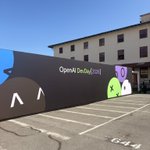
Day one at @harvey, with Aida now officially part of the team!
So grateful to build alongside these people, old teammates and new!
Couldn’t be more excited for what’s ahead!
🤖 Made with AI


2
13
542
Ian Johnson retweeted

@get_aida is joining Harvey.
Glean co-founder @piyprah, @atishdassarma, and their team will apply their search and machine learning expertise to help our agents organize and connect the information behind legal work.
Read more: harvey.ai/blog/aida-joins-ha…

Thrilled to share that I have joined @harvey
One of the things that pulled me to Aida was the belief that AI becomes far more useful when it actually understands the work you’re doing.
Couldn’t be more excited to keep building on that vision at Harvey.

Excited to welcome @piyprah @atishdassarma and the rest of the @get_aida team to Harvey.
Piyush co-founded Glean and we met a couple years ago when he was starting Aida.
At Aida, they were building Harvey for sales and a lot of the product and infrastructure they were building was things we had been planning.
He became someone I regularly turned to for advice when I was thinking through enterprise search and related technical strategies.
A couple months ago when we decided to focus more on these efforts they were the first team we turned to to help lead these.
Together we're going to build each firm its own ontology: a private context layer that connects all of its data and turns it into IP the firm owns.
That context makes every agent and model and product the firm uses better and stays private and portable through our APIs and will be able to run on-prem for firms that want full control.
A firm's context is its edge and the firms that own theirs will be the ones that stand apart.
3
21
809


"Immature poets imitate; mature poets steal; bad poets deface what they take, and good poets make it into something better, or at least something different. The good poet welds his theft into a whole of feeling which is unique, utterly different from that from which it was torn." - T.S. Eliot

convergence to the mean
when everyone looks at everyone else to decide what to make, we eventually stop making anything of our own.
we copy what works. borrow the language, the aesthetic, the features. we call it learning from the market, following best practices, staying competitive. together, everything starts to feel familiar. polished, interchangeable. nothing wrong. nothing alive.
the mean isn’t necessarily bad. it’s where everything lands when we remove the reasons for it to be different.
numbers are easier to compare than feelings, so we make things that produce numbers. we study what gets attention, then shape ourselves around it. eventually the feedback stops informing the work and starts authoring it. we’re no longer asking what we want to say. we’re asking what will be rewarded for saying.
ai makes this loop frictionless. it can draw from more references than we could see in a lifetime. but access to every perspective isn’t the same as having one. it hasn’t lived a particular life that makes one detail unbearable and another beautiful. when we ask it to choose for us without bringing any intention of our own, we get something plausible, easy to approve.
then we ship it, measure it, copy it, and feed it back into the next round. a tidal wave of mid.
this changes not just the work, but the people making it.
we describe ourselves in categories platforms can distribute and markets understand. designer. founder. creator. pick a niche. build a brand. be consistent. the parts that don’t fit become inconvenient, even when those contradictions might produce our most interesting work. we become easier to classify and harder to tell apart.
i think we need to approach making things more like artists.
an artist develops a perspective through the work. making, noticing, choosing, failing, returning. learning what matters even when nobody else cares. craft gives that perspective a form precise enough for someone else to experience.
the life outside the work matters too. the places you’ve lived, the people you’ve loved, the things you’re embarrassed to care about. these aren’t distractions from having something to say. they’re how you come to have something to say.
we understand this with music, paintings, photographs, movies. we expect a person to be present in the choices. we want to experience something we wouldn’t have encountered without them.
software can do this too.
a piece of software expresses beliefs about how life should feel. what deserves your attention. what you should be free to change. whether a task should feel like paperwork or play. even a small interaction can carry someone’s care, humor, or curiosity.
but we rarely talk about software as a medium. we talk about it as an industry. markets to capture, workflows to optimize, competitors to catch up with. we add a feature because someone else has it, without asking whether it belongs. products accumulate the same parts and lose what made them worth choosing.
underneath the branding, it’s all the same thing.
artists learn from others too. the question is whether you’re absorbing those influences into a point of view, or using them to avoid developing one.
what are you trying to let someone feel, understand, or do? why this particular shape? what have you noticed that the existing tools don’t seem to notice?
those questions don’t have answers you can borrow from a competitor’s roadmap.
if we can make almost anything, deciding what deserves to exist becomes more important, not less. speed gives us more chances to exercise judgment. it doesn’t remove the responsibility.
i don’t want a world where every person becomes a more efficient distributor of the same ideas. i want people to use these tools to go further into what they actually care about. to make things specific enough that we can feel someone behind them.
what is the point of everyone being able to make something, if we all end up making the same thing?
75


At this point the pitch decks are just a list of 80s horror movies with "but real" added to it. youtube.com/watch?v=pfAh5oQD…
1
107


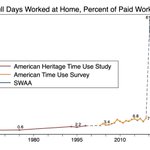
Remember when RTO mandates were going to kill remote work?
25.7% of US paid workdays are still worked from home. In 2019: 7.2%. At the 2020 peak: 61.5%.
The office clawed back most of the spike.

1
17
And one that didn't age well.
The 2022 curve had lab-grown shrimp at $4/kg by 2026-28.
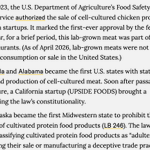
In 2026, cultivated meat isn't on sale anywhere in the US, and Florida, Alabama, Nebraska and South Dakota have banned it.

1
81
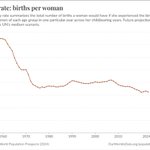
US fertility is ~1.6 kids per woman, down from 3.7 at the boomer peak. Replacement is 2.1.
Births: 3.61M in 2025 vs 4.32M in 2007. That's ~700k fewer babies a year.
Pair with the last post: more retirees, fewer future workers. The robots had better show up.

1
7
Roughly 2 of every 3 active satellites in orbit belong to one company.
~11,100 Starlink vs ~5,500 for everyone else combined (CelesTrak, Sept 2026).

1
9
