

Covering the U.S. sports betting industry, prediction markets, and their intersection. With news, features, and analysis on business, law, and policy.
U.S.A.
Joined April 2025
- Tweets3K
- Following181
- Followers3K
- Likes380





Pinned Tweet
A third party helping LSU hedge against potential bonus payments to football coach Lane Kiffin used bets on the team’s performance on Kalshi to offset exposure.
Similar trades were placed last month on South Carolina’s football team, again from a third party rather than the university, though the exact risk being hedged for those trades is less clear.

“These groups do not care about our athletes, our traditions, or Nebraska families. They see our state as another market and every phone as another casino."
Letter signed by iconic football coach Tom Osborne and 44 others say online sports betting will undermine integrity of sports.
ingame.com/nebraska-osb-oppo…

DraftKings CEO Jason Robins says the company is in a “win-win spot,” unlike most prediction markets or sportsbooks, where it should succeed regardless of how the Supreme Court views sports event contracts.
“If [sports contracts are] the whole business, which for us it is not, then that's obviously critical. There's nothing to look out to if the entire sports business is gone,” Robins said.
“On the other side, if you haven't done what we've done and invested and put ourselves in a position where we're meeting players in predictions now, then if a court decision goes the positive way, then that's a pretty tough spot to be in.


InGame retweeted

Gambling regulators are looking to regulate the wrong thing when it comes to AI. Latest for @InGameHQ ingame.com/regulators-artifi…

Exclusive: FanDuel told Congress in a letter obtained by InGame that it reviewed approximately 30 Cameo videos sent to VIP customers and says they were "customer-appreciation gestures" that "were not commissioned or sent to induce continued gambling."
The letter is FanDuel's third response to Sen. Blumenthal, Rep. Foushee, and Rep. Tonko.
FanDuel SVP Cory Fox wrote that the VIP program is "intended to provide enhanced service and encourage customers who choose to wager to use FanDuel rather than another platform ."
The company says the personalized gestures are subject to the same responsible gaming guidelines as any marketing or advertising.


According to an industry source with knowledge of its operations, DraftKings attributes other exchanges’ absence from college football player props not to a lack of demand or any risk of manipulation, but to logistical hurdles. Those could be regulatory caution like Kalshi’s, or limits in DraftKings’ market-making capacity.
DKeX users traded about 1.3 million contracts of standalone college football player props last Saturday. That was about 2.6% of DKeX’s single-leg college football volume that day. Those totals also exclude parlay-style combos, which made up about 74% of DKeX’s total volume last Saturday.
ingame.com/cfb-player-props-…


InGame retweeted

Plus, I learn that we can't yet wager on how long the next White House press secretary's tenure will last:
ingame.com/midterm-market-mo…

InGame retweeted
In this week's Midterm Market Monitor for @InGameHQ, I borrow liberally (double meaning intentional) from @keendawg's #BusinessOfBetting appearance and look at some live longshots, Senate and House control inching more to the left, and a dead heat in Georgia.

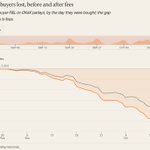
Polymarket US and DKeX launched parlays shortly before football season began, and have already seen billions in volume in around eight weeks of trading. Parlay taker stakes on both exchanges are in the hundreds of millions, and taker losses exceed $50 million on both platforms.
After Polymarket US first launched parlays Aug. 11, its takers had some early success. On Aug. 21, only the third day in which parlay taker stakes topped $1 million, takers won big, making a profit of $9.4 million after fees on stakes of $4.4 million – more than tripling their stakes, when it appears that parlay market makers may have mispriced some of their quotes.
This success could not be sustained, however.
ingame.com/parlay-takers-los…

Kalshi dominates the U.S. regulated prediction market space in terms of parlay volume and taker stakes. It set new records again this weekend with more than $8 billion in volume across Saturday and Sunday. More than $6 billion of that came from parlays.
ingame.com/parlay-takers-los…


Trading sports event contracts on prediction markets like Kalshi won’t protect consumers from federal gambling taxes, and market makers or the platforms themselves may be subject to eight times the legal gambling excise tax, researchers say.
While prediction markets are not taxed by states — although they will be in North Carolina starting Jan. 1, 2027 — a paper from a non-profit tax group suggests the federal government can make a case for taxing the entities like gambling.
Tax Analysts published the study, “Are Sports Event Contracts on Prediction Markets Gambling for Federal Tax Purposes?” on Oct. 1. Tax Analysts Senior Fellow Seth Hanlon, Senior Attorney and adviser Miles Johnson, Deputy Director Michael A. Kaercher, Senior Attorney and adviser Kyle Sweeney, and attorney-adviser at New York University’s School of Law Tax Law Center Sophia Yan authored the research.
