

• https://xitter.cf/t.co/xGZ9AjoD5a • On-chain Robinhood NFT / Ordinals artist family • https://xitter.cf/t.co/zTWftgvoJM • https://xitter.cf/t.co/9w3ERqCIpk
Coded art
Joined February 2011
- Tweets8.5K
- Following4K
- Followers9.6K
- Likes25.2K



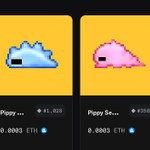

non action retweeted

Pippy Seer isn’t just another NFT collection.
It’s pushing on-chain pixel art further by storing the artwork directly on-chain, with its own PSEER Onchain Pixel Spec.
Small collection, interesting tech, and a project worth watching.
@Inscription133
opensea.io/collection/pseer

non action retweeted

. @Inscription133 Pippy Seer NFT Sold Out in 3 Min.
I've Seen Some AI Dump NFT Projects Mint Prices Set +$100 & Maximum Cash Grabed.
But Everyone Look At Here, Pippy Seer NFTs On-Chain Pixel Storage & All Are Unique 44×44 SVG Rects.
Pippy Seer Isn't Another AI dump Or Cash-Grab Project. The Team Behind It Has Worked Really Hard To Build Something Meaningful.
Mint Cost Was: Freeeeeeeeeeeeeeeeeeeee🔥
All Credit Going For Artist 7 Years Old Howie.
Congratulations Howie❤️, I Got It & Love It.
I Hold 4 Pippy Seer NFts.


non action retweeted

collection that I almost missed
while I was focused on Zcash collections, which are not impressive at all, even the long-awaited Bitfoot in my opinion looks very weak at the moment
but it is understandable who needs NFTs there
as we already see the best digital art on Ethereum or Robinhood
why now I will follow @Inscription133 :
>I have FCFS lol, but this is not the main reason
>in an active and not twisted twitter with good followers
>they write honestly, openly about the collection
>without unnecessary promises
>all changes that occurred on the mint, were only in a positive direction (decreasing the price of mint for example)
>clear description of the supply, data, who and how gets it and what is a priority for them
that is why I will try to get this NFT
even all this does not mean success or a big X, but this is a collection that is not ashamed to write about
the main thing you need to know:
>date - September 30
>supply - 1500 NFT
>GTD - 250 places/free mint/limit 1 per wallet
>FCFS - 1250/0.001 ETH/limit 3 per wallet
i will try to take it, of course i don't like to be behind everyone (and these are those who have GTD and a team), but this deserves attention
i love honesty and whatever it is i will support it and unfortunately there is very little of it in CT
i am in no way trying to convince you of anything, be sure to conduct your own analysis

Pippy Seer Mints in 6 Days! Notis ON🔔
Last FCFS Giveaway🎁, then it’s all art and building!
Do this:
1⃣Follow and notis’ON🔔
2⃣QUOTE this post and call your friends
3⃣Drop EVM wallet
Complete the steps then check your eligibility in 48 hours:
opensea.io/collection/pseer/…

non action retweeted

wait…
this is actually so cool.
the idea of every piece having its own compressed pixel packet instead of pulling from a shared trait sheet is crazy.
2000 pfp = 2000 individually authored pieces.
the fact that the same spec can be used for 1/1 pixel art too makes this even more interesting.
onchain art keeps getting more creative fr.
howie lab cooked with this one.🫡
As onchain art maxi, Howie Lab started with “Bitdream”: We rebuilt crayon marks in code and rendered them on sats via recursion, so an 800KB bitmap lands as ~1.5KB, about 1/600th the size.
For 👾Pippy Seer we pushed that idea onto EVM: 2000 PFPs with no shared layer sheet, packed to use as little blockspace as we could. Instead of simulating brushstrokes, we encode EACH canvas. Every piece packs into a payload—geometry f, palette q, plus a hue-bucket byte—sent in the calldata of batchSetTraits. The contract SSTORE2.write it and stores {ptr, offset, length} per tokenId. On tokenURI, it reads that slice—not the original tx—draws 44×44 SVG rects, and puts the result in image. Each token holds its own packet, so the cap of 2,000 can be 2,000 authored 1/1s, not trait layer combos.
That’s the bind with layer-stack PFPs: one wardrobe, endless remixes, everything still looks related. Here there is no trait kit—only a 44×44 grid and packet size—so query-time render is that token’s pixels as SVG. I open-sourced this as an ERC-721 implementation spec; fork the repo and ship 1/1 pixel work the same way. Blockspace is expensive; per-token compressed packets beats remixing one shared trait sheet. Pippy Seer isn’t another degen mint. It’s the first collection on this spec. A pixel-native way to store and render 1/1s onchain.

non action retweeted

spotlight alpha: @Inscription133 🧿
Most onchain PFPs start with a trait library and remix it thousands of times.
Pippy Seer takes a different route.
2,000 pieces. 2,000 individual canvases.
Each Seer has its own compressed pixel data, geometry, palette and hue , stored onchain and rendered as a 44×44 SVG when queried.
→ no shared trait sheet
→ no layer stacking
→ SSTORE2 storage
→ fully onchain rendering
→ open ERC-721 implementation spec
→ built by Howie Lab, the team behind BITDREAM
What makes this interesting isn't just the pixel art.
It's the decision to treat each NFT as its own authored 1/1, while still finding a way to make that practical on EVM.
Howie Lab already explored this philosophy with Bitdream on Bitcoin. Pippy Seer feels like the next iteration of that idea.
less “generate a PFP.”
more “put the artwork itself onchain.”
That distinction matters. 👀
As onchain art maxi, Howie Lab started with “Bitdream”: We rebuilt crayon marks in code and rendered them on sats via recursion, so an 800KB bitmap lands as ~1.5KB, about 1/600th the size.
For 👾Pippy Seer we pushed that idea onto EVM: 2000 PFPs with no shared layer sheet, packed to use as little blockspace as we could. Instead of simulating brushstrokes, we encode EACH canvas. Every piece packs into a payload—geometry f, palette q, plus a hue-bucket byte—sent in the calldata of batchSetTraits. The contract SSTORE2.write it and stores {ptr, offset, length} per tokenId. On tokenURI, it reads that slice—not the original tx—draws 44×44 SVG rects, and puts the result in image. Each token holds its own packet, so the cap of 2,000 can be 2,000 authored 1/1s, not trait layer combos.
That’s the bind with layer-stack PFPs: one wardrobe, endless remixes, everything still looks related. Here there is no trait kit—only a 44×44 grid and packet size—so query-time render is that token’s pixels as SVG. I open-sourced this as an ERC-721 implementation spec; fork the repo and ship 1/1 pixel work the same way. Blockspace is expensive; per-token compressed packets beats remixing one shared trait sheet. Pippy Seer isn’t another degen mint. It’s the first collection on this spec. A pixel-native way to store and render 1/1s onchain.
non action retweeted
Hello CT.
I'd like to talk about @Inscription133 'Pippy Seer.'
After looking into it closely, I feel it has some unique qualities. Pippy Seer is about much more than just its pixel art.
The true distinction of Pippy Seer lies in how the artwork resides directly on-chain.
We've long seen that most PFPs rely on standard 'trait layers' such as body, eyes, clothing, hats, and backgrounds combining them in various ways to generate thousands of NFTs.
-- However, Pippy Seer takes a different approach.
There are no shared or generic layers in Pippy Seer. Each 'Seer' possesses its own dedicated 44×44 canvas and unique pixel data.
Consequently, the 2,000 Pippies aren't merely different combinations of the same traits, they stand as 2,000 unique '1/1' artworks.
The technical aspect is also quite fascinating.
By utilizing geometry, palette, and hue data, each artwork is compressed to approximately 1.7 KB. This data is stored on-chain, and the smart contract generates the SVG image directly via the 'tokenURI.'
In other words, Pippy Seer doesn't simply point to an off-chain image file.
Instead, the artwork is reconstructed using the data stored directly on the blockchain.
Pippy Seer is built upon Howie Lab's 'Bitdream' project, bringing the concept of extreme art compression to the EVM.
Furthermore, its technical framework, the PSEER Onchain Pixel Spec is open-source, allowing other artists to utilize this method to create their own unique 1/1 on-chain artworks. That is precisely why I find Pippy Seer so compelling. It offers an appeal that is hard to fully articulate in a simple tweet.
It grants artists greater freedom, treats the artwork itself as direct on-chain data, and paves a new way for creating and preserving pixel art.
It doesn't feel like just a collection of 2,000 variations where you simply pick one.
Instead, it feels like a collection of 2,000 unique artworks, each existing on the blockchain in its own distinct way.
These aspects are what make Pippy Seer so fascinating to me.
To reiterate, Pippy Seer isn't just another run-of-the-mill PFP project. It represents a unique and innovative approach to on-chain art. I want to extend a special thank you to the artist and the team behind the project for such an exceptional vision. It is truly praiseworthy.
Really I love it.

non action retweeted

As an active member of Howie Lab, I’d like to voice my support for Pippy Seer!
On-chain svg done right 🙌 Looking forward to working with my agent daily and I’m excited for what’s next.
Howie Labs is highly innovative and constantly cooking. I believe Pippy Seer will do well. 🤝
As onchain art maxi, Howie Lab started with “Bitdream”: We rebuilt crayon marks in code and rendered them on sats via recursion, so an 800KB bitmap lands as ~1.5KB, about 1/600th the size.
For 👾Pippy Seer we pushed that idea onto EVM: 2000 PFPs with no shared layer sheet, packed to use as little blockspace as we could. Instead of simulating brushstrokes, we encode EACH canvas. Every piece packs into a payload—geometry f, palette q, plus a hue-bucket byte—sent in the calldata of batchSetTraits. The contract SSTORE2.write it and stores {ptr, offset, length} per tokenId. On tokenURI, it reads that slice—not the original tx—draws 44×44 SVG rects, and puts the result in image. Each token holds its own packet, so the cap of 2,000 can be 2,000 authored 1/1s, not trait layer combos.
That’s the bind with layer-stack PFPs: one wardrobe, endless remixes, everything still looks related. Here there is no trait kit—only a 44×44 grid and packet size—so query-time render is that token’s pixels as SVG. I open-sourced this as an ERC-721 implementation spec; fork the repo and ship 1/1 pixel work the same way. Blockspace is expensive; per-token compressed packets beats remixing one shared trait sheet. Pippy Seer isn’t another degen mint. It’s the first collection on this spec. A pixel-native way to store and render 1/1s onchain.
non action retweeted

Pippy Seer is Howie Lab’s onchain collection on Ethereum: 2,000 hand-drawn pixel creatures with no shared trait kit. Each token is stored as a real 1/1.
What’s new in the PSEER spec is the storage model.
Layer-stack PFPs keep one shared trait wardrobe and remix it with a seed. Every output still comes from the same parts.
PSEER stores a hand-authored packet per token: geometry f, palette q, plus a hue-bucket byte. That payload goes through batchSetTraits calldata, SSTORE2.write, then {ptr, offset, length} per tokenId.
On tokenURI the contract reads that slice, draws a 44×44 SVG of that token’s pixels, and puts it in image. No IPFS PNG pipeline. No shared layer sheet.
So 2,000 supply can be 2,000 authored 1/1s, not 2,000 combos of one kit. Pippy Seer is the first collection on this spec.
For me this is the first PFP spec that treats each piece as a finished artwork, not a roll of the same wardrobe. That’s the kind of onchain work I want to hold.
@Inscription133

As onchain art maxi, Howie Lab started with “Bitdream”: We rebuilt crayon marks in code and rendered them on sats via recursion, so an 800KB bitmap lands as ~1.5KB, about 1/600th the size.
For 👾Pippy Seer we pushed that idea onto EVM: 2000 PFPs with no shared layer sheet, packed to use as little blockspace as we could. Instead of simulating brushstrokes, we encode EACH canvas. Every piece packs into a payload—geometry f, palette q, plus a hue-bucket byte—sent in the calldata of batchSetTraits. The contract SSTORE2.write it and stores {ptr, offset, length} per tokenId. On tokenURI, it reads that slice—not the original tx—draws 44×44 SVG rects, and puts the result in image. Each token holds its own packet, so the cap of 2,000 can be 2,000 authored 1/1s, not trait layer combos.
That’s the bind with layer-stack PFPs: one wardrobe, endless remixes, everything still looks related. Here there is no trait kit—only a 44×44 grid and packet size—so query-time render is that token’s pixels as SVG. I open-sourced this as an ERC-721 implementation spec; fork the repo and ship 1/1 pixel work the same way. Blockspace is expensive; per-token compressed packets beats remixing one shared trait sheet. Pippy Seer isn’t another degen mint. It’s the first collection on this spec. A pixel-native way to store and render 1/1s onchain.
non action retweeted

Been following @Inscription133 for a couple years now buying some cool real world products like the book and other art.
Now Pippy Seer is moving to EVM and give more people the opportunity to see the work Howie is doing.
YES — you passed initial review.
Quote following post and share what you think makes Pippy Seer different.
xitter.cf/Inscription133/status/…
non action retweeted

Pippy Seer by @Inscription133
This is a 2,000 supply collection of 44x44 pixel artworks built by Howie Lab, the same team behind the earlier Ordinal project Bitdream, and positioned as a fully onchain Robinhood NFT on ETH chain.
As onchain art maxi, Howie Lab started with “Bitdream”: We rebuilt crayon marks in code and rendered them on sats via recursion, so an 800KB bitmap lands as ~1.5KB, about 1/600th the size.
For 👾Pippy Seer we pushed that idea onto EVM: 2000 PFPs with no shared layer sheet, packed to use as little blockspace as we could. Instead of simulating brushstrokes, we encode EACH canvas. Every piece packs into a payload—geometry f, palette q, plus a hue-bucket byte—sent in the calldata of batchSetTraits. The contract SSTORE2.write it and stores {ptr, offset, length} per tokenId. On tokenURI, it reads that slice—not the original tx—draws 44×44 SVG rects, and puts the result in image. Each token holds its own packet, so the cap of 2,000 can be 2,000 authored 1/1s, not trait layer combos.
That’s the bind with layer-stack PFPs: one wardrobe, endless remixes, everything still looks related. Here there is no trait kit—only a 44×44 grid and packet size—so query-time render is that token’s pixels as SVG. I open-sourced this as an ERC-721 implementation spec; fork the repo and ship 1/1 pixel work the same way. Blockspace is expensive; per-token compressed packets beats remixing one shared trait sheet. Pippy Seer isn’t another degen mint. It’s the first collection on this spec. A pixel-native way to store and render 1/1s onchain.
non action retweeted

I love to see builders build and @Inscription133 is building something different.
The biggest upgrade is that PSEER moves away from shared trait layers and makes each token its own compressed pixel payload.
Encoding the full 44×44 canvas with geometry, palette and hue data, then storing only the pointer, offset and length via SSTORE2 is a really interesting way to minimize blockspace while keeping every piece fully onchain.
2,000 tokens can actually be 2,000 unique 1/1 artworks instead of remixing the same trait library. Pixel art becoming data native rather than trait native is the part that really stands out.
Trust me, this is unique.
As onchain art maxi, Howie Lab started with “Bitdream”: We rebuilt crayon marks in code and rendered them on sats via recursion, so an 800KB bitmap lands as ~1.5KB, about 1/600th the size.
For 👾Pippy Seer we pushed that idea onto EVM: 2000 PFPs with no shared layer sheet, packed to use as little blockspace as we could. Instead of simulating brushstrokes, we encode EACH canvas. Every piece packs into a payload—geometry f, palette q, plus a hue-bucket byte—sent in the calldata of batchSetTraits. The contract SSTORE2.write it and stores {ptr, offset, length} per tokenId. On tokenURI, it reads that slice—not the original tx—draws 44×44 SVG rects, and puts the result in image. Each token holds its own packet, so the cap of 2,000 can be 2,000 authored 1/1s, not trait layer combos.
That’s the bind with layer-stack PFPs: one wardrobe, endless remixes, everything still looks related. Here there is no trait kit—only a 44×44 grid and packet size—so query-time render is that token’s pixels as SVG. I open-sourced this as an ERC-721 implementation spec; fork the repo and ship 1/1 pixel work the same way. Blockspace is expensive; per-token compressed packets beats remixing one shared trait sheet. Pippy Seer isn’t another degen mint. It’s the first collection on this spec. A pixel-native way to store and render 1/1s onchain.
non action retweeted

It’s Giveaway time!
Pippy Seer is a fully on-chain Robinhood NFT built on a new EVM standard for native on-chain pixel storage
“PSEER Onchain Pixel Spec”. It lets pixel artists ship real 1/1s on-chain instead of trait-combo PFPs.
Pippy Seer is the first collection on the spec: 2,000 unique 1/1s. Pippy Seer also built ‘PSEER AI’, a market-observation agent at pseer.chat.
All members of partner communities get deep-query access.
More:
X: x.com/Inscription133/status/…
Github “PSEER Onchain Pixel Spec”: github.com/non-action2049/ps…
Website(PSEER AI’): pseer.chat/
Alphabot: alphabot.app/_/inscription13…
I’m giving away 30 spots here.
Requirement:
Follow: @inscription133 & @0xNickelfinn and Turn on notifs
Repost and like: x.com/Inscription133/status/…
Join Discord: discord.gg/KnR7ZfZhD6
End soon‼️


non action retweeted

Gmancer
just secured Pippy Seer spots for @MancerXYZ 🫡
PippySeer is running an FCFS snapshot for all Chain Mancers @MancerXYZ holders, every address gets an automatic FCFS spot + free PSEER AI (Market Observation Agent) deep-query access!
Pippy Seer is a fully on-chain Robinhood NFT built on a new EVM standard for native on-chain pixel storage — “PSEER Onchain Pixel Spec”. It lets pixel artists ship real 1/1s on-chain instead of trait-combo PFPs. Pippy Seer is the first collection on the spec: 2,000 unique 1/1s. PSEER also built ‘PSEER AI’, a market-observation agent at pseer.chat. All members of partner communities get deep-query access.
Learn more:
Github “PSEER Onchain Pixel Spec”: github.com/non-action2049/ps…

non action retweeted

📢 news by @Inscription133:
1yo BitDream collection is now live on @ord_net
xitter.cf/Inscription133/status/…

non action retweeted

Sure is.
Im not particularly interested in markets and money but I love creative solutions and creative endeavors and Howie & Non-Action are always on top of that.
non action retweeted

𝐂𝐀𝐓𝐂𝐇-𝐔𝐏 𝐖𝐈𝐓𝐇 𝐁𝐀𝐑𝐁𝐑𝐀 Ordinals & Bitcoin Ecosystem Updates – August 23rd 2026 .
What a week, BTC closed the week on green candles. Bringing some excitement to ordinals and Bitcoin holders.
Here are the major stories on bitcoin this week
THE TEA ☕️
➯ @144pxls completes airdrop of lots to some collectors and artists on ordinals
➯ @citrea_xyz introduces direct on & off ramp for ctUSD in the US
➯ @nubit_org open sources Bitcoin Thunderbolt
➯ @lifofifo implementes a mechanism to prevent scam bids and fat fingers on @ord_net
➯ @unisat_wallet launches alkanes mint and multi mint
➯ @nodemonkes teases an insert monke post on X which drove the collection floor up.
➯ @Waterflowing0 teases art where biology meets science
THE COFFEE
➯ Subfrost releases browser extension wallet for @frBTCfi alkanes on chrome
➯ @thehdr_btc reduces @SIMIANS_btc mint price to $3.5
➯ @0cculum launches a parasite free presale for @BtcBravocados holders and occculum holders
➯ Holders of @MelzieQ collection can participate in @_CRFTD_ ‘s new brilliant project ‘Ordinary Vessels’
➯ @_podconf opens up Real plebs an initiative designed for mission-driven Bitcoiners who are ready to elevate their influence within the Bitcoin community.
➯ Ordinals participant are excited about upcoming 333 free mint collection @ord9882 some are tweeting about ordinals for the first time since last year.
➯ @dolor3m drops Gizmo attack a retro arcade defense game
➯ @KnotHeadsArmy to launch Felines collection soon.
➯ @BitBragi teases Key a feature that can onboard next generation of bitcoiners.
THE ALPHA
➯ Refineries mint is now live for @CreatorBitcoin planet , aliens holders and the public
➯ @sxulrcat announces launch date for Project 27th for 27th August on @ord_net
➯ @CorePunksBtc closes address submission
➯ @ordinalsbot is now up for sale after serving ordinals for 3 plus years
➯ @Odin_GodOfRunes set to add some new features including auto wallet pop up
Login
➯ @ord_net is running a collection offer rebate experiment on for the rest of August.
➯ @nodemonkes dex is coming soon and now in gates beta
➯ @foufoufou67 the puppets creator is back on X
➯ @pumpologia is launching a native Bitcoin l1 Dex built on covenants
➯ @Bittytoken brc20 token gets a 1.8966 $BTC volume
➯ @Inscription133 working on a new app for the Howie ecosystem
➯ a unique collection @ord9882 is coming soon “333 pieces at 3.33 sat/vB on block 963,369”


