




Pinned Tweet
We’re all building our own software factories.
But, our coding and code review agents are missing a curated map of the software they’re working on: how repositories connect, what depends on what, and where a change can have an impact.
That’s why we built Software Map in Qodo 🚀
Install Qodo and get your software map within hours.
Watch the video for examples and a closer look.
Seriously?
@X, super curious on the thought process designing this Promote promotion interface

Reflecting on this, two insights:
1. “Digital twins” - an opportunity
2. Sub limits still enable unlocking quite remarkable applications

I asked Claude to populate a Civilization-style game map with real data from the US. Opus 5.5 downloaded and parse a ton of public data and 7 hours and 45K lines of code later... it works :)
- 31 real data sources including Census, BEA, BLS, EIA, NOAA, USGS, DoD, NPS, FAA, FEMA, CDC...
- Real elevation, land cover, GDP, jobs, power plants, mines, ports, airports, bases, parks, universities, freight flows, disasters; all reconciled onto one 25 km hex grid.
- The data is converted into Civilization language, e.g. Gold yield is GDP. A city's districts are its real industry specializations: San Jose gets a Campus, Detroit is "Motor city". Its citizens are its real workforce: 1 in 4 San Jose workers are engineers, coders or scientists, against 1 in 14 nationally. Wonders are chosen by published rules, such as national parks by visitor numbers and universities by R&D spending, etc etc.
- 19 lenses (income, degrees, faith, disasters…), a City View for 524 metros, and nine advisors plus an Explorer. The Explorer turns any column for any of 3,100+ counties into a table and scatter plot, linked to the map.
- Claude decided to skip a few states and territories sry
- Built using Claude Code desktop app, Opus 5.5 on medium and turning on ultracode.
It's deployed here: karpathy.ai/usaciv/ and the "?" has the source link too. I don't exactly know where I was going with this but it's really fun to browse and play with. Possibly it can be expanded or built into a game. I only have half of my weekly Claude quote left though so someone else will have to take over :D. Claude also made a trailer:
Code is getting cheaper to produce, but WASTE isn’t free to carry or clean up.
Unnecessary abstractions, duplicated logic, and small inconsistencies all create work for someone later. The drift in any one PR might be small, but it adds up quickly. You can generate drift and issues much faster than you can untangle them.
The hard part is that much of this doesn’t look like slop in an individual PR. Every agent session involves dozens of small design decisions about where a responsibility belongs, which pattern to follow, when to reuse something, and what deserves an abstraction. Each choice can seem reasonable on its own, while the accumulated result makes the codebase harder to work with.
This is where nuance, taste, and a team’s engineering practices matter. Tests can pass even when a change fits poorly into the system. And when the reasoning behind a decision stays in the agent’s session, the team inherits the implementation without the context needed to maintain it.
I’m excited about how much more we can build with AI, but I think we’re underestimating the work required to keep that output coherent. How much of today’s increased output will still help us move faster six months from now?
When you’re evaluating AI code review or governance tools, when you are planning your software factories, check whether they can spot and assist with the above, e.g. when a reasonable-looking PR adds to drift across the codebase (adding unnecessary complexity, risk, can't revert...), done by agents decisions buried in the agents' sessions.


Some of it feels like "AI slop", and yet I still find it incredible. Once you try making something like this yourself, you realize one prompt usually isn’t enough. It takes taste to decide what to keep, what to change, and when to stop

TL;DR:
No, neither I nor my AI is running for president in 2028. Not separately, not on a joint ticket. 2032? Above my pay grade

No, I do not believe that we should “surrender human free will” to AI systems, and it’s absurd to suggest that I do. I have written hundreds of pages of essays and a constant theme in them is the need for AI to be governed by legitimate democratic processes. For millennia (going all the way back to Greek and Roman philosophers), advocates of autocracy have claimed that it leads to better, faster, or more decisive decision-making than the messy process of democracy. Even if this were true (which I doubt!), we should never sacrifice legitimacy or self-determination at the altar of efficiency or security. This argument against autocracy applies word for word against governance by AI, and I feel equally strongly that turning over governance to AI is a bad idea.
No one who had carefully read my writing or my interviews could reasonably conclude that I believe anything different. For example in an interview on CBS a couple months ago, I specifically called for AI to be governed democratically. I call for the same in Policy on the AI Exponential, Machines of Loving Grace, and The Adolescence of Technology, and We Must Pace the Frontier. Machines of Loving Grace contains an extended section on using AI to revitalize democracy, and discusses the use of AI as an aid to citizens in their decision-making, "aggregat[ing] opinions and driv[ing] consensus among citizens, resolving conflict, finding common ground, and seeking compromise.” The clear and obvious implication is that humans should remain the ones making political and governance decisions. The Adolescence of Technology has an entire section on fighting against AI-driven tyranny, and I even discuss the danger of AI labs usurping power and come out strongly against it — by implication, this definitely includes an AI lab usurping power and giving it to AI itself!
If I thought any of this was a good idea, I would be advocating for it in public, just as I have not been afraid to advocate for many, many unpopular views over the last few years. But I am not advocating for it, because I think turning over governance to AI is a terrible idea.
Separately, I think there is frequent conflation (including in this article) between the idea of “surrendering human free will” to AI in some grand sense of global governance, and the more prosaic idea that as AI systems advance, they become capable of doing specific tasks in a more automated way. This is not AI “running the world,” but AI driving a car, designing a cancer drug, or writing software end-to-end. Here, my view is mixed. AI doing more complete or larger tasks is economically valuable and can drive important advances in software, medicine, transportation, energy, etc. It is clearly desirable in many cases and will save a lot of lives. But it has downsides as well, and in some areas it may not be worth it.
For example, using AI too autonomously to build the next generation of AI systems (known as recursive self-improvement, or RSI) may cause AI to improve faster than we can control or adjust to it, so we may want limits on this process. As we said publicly in early November, we don’t expect it to be safe for Claude to build successive frontier models fully autonomously, without meaningful human supervision or understanding. Second, in some contexts, using AI in too end-to-end a manner may be a cause of serious job disruption, and it may make sense to slow or even stop some AI deployments to give people more time to adapt. Third, while the use of AI for alignment research is an incredibly valuable tool, it must be done with caution, because we may not be able to trust the work of the AI system. Finally, in many cases, humans would simply prefer to do some activities themselves, so they can stay deeply engaged in what matters to them, even if AI can do those activities better. There are countless other examples and hard cases. I don’t think there are any easy answers here, nor is there (nor should there be) any single decision-maker: some of these decisions will be made by society, some by government, some by AI companies, and some in a decentralized manner by individuals expressing their own preferences as consumers, which may differ from the preferences of others.
I don't think that other AI leaders or AI companies have significantly different views from me on whether specific tasks should be automated. Certainly the products that they offer don’t differ materially in their orientation towards automation of tasks; every company seems to be releasing models more and more capable of task automation (as that’s been the general consequence of scaling up AI training), and every company claims to understand there are risks and downsides of such automation and to offer safeguards. If anything, Anthropic has been the most vocal and the most proactive about acknowledging these downsides and trying to address them. For instance, it’s fairly absurd to cite my statement that fully autonomous weapons might “one day be needed for the defense of democracy” as differing from that of other AI companies, when I was willing to risk Anthropic’s future as a company to refuse to allow our existing AI models to be used for autonomous weapons even in the face of legal sanctions, and no other AI company did the same.
To summarize, as applied to grand questions of how we govern increasingly capable AI, I have been vocal and consistent that AI needs to be governed by a legitimate, democratic process and that “surrendering human free will” to AI systems is a terrible idea. As applied to automation of specific tasks by or for people, my views are more mixed, but I don’t think they differ from those of other AI companies — most other companies seem to be offering similar products and confronting similar tradeoffs without having perfect answers to them. What is happening is that there’s a sort of vibes-based commercial and political positioning that some AI CEOs are engaging in, where they repeat slogans like “human control and agency,” or “AI should be just a tool,” without actually doing anything different in their products or taking seriously the difficult questions that lie behind these slogans.
a strong argument against confusing an agent demo with an operating software factory. A less convincing argument for how every factory must work

Every week someone tells me they built an AI software factory over the weekend and don't need developers anymore.
Before that thing opens a single pull request on code your customers rely on, make sure you've got:
> self-contained tickets with explicit I/O contracts and edge cases, because the agent has zero tribal knowledge
> a gate that bounces vague tickets back to a human before the agent starts guessing
> testable acceptance criteria on every ticket
> a short list of ticket types the factory is allowed to touch, and a much longer list of the ones it can't
> a trigger that won't kick off the same ticket twice if someone drags it to "AI: Ready" and back
> webhook signature verification, so nobody outside your org can trigger a run on your repo
> a fallback poller for the day the webhook silently drops
> a written spec before any code gets written, approved by a real person
> a way to route open questions to a human instead of letting the model wing it
> a build plan laying out the architecture, data changes, and contracts upfront
> a sanity check confirming the spec, plan, and task list actually agree with each other
> big tickets broken down into chunks an agent can finish in a single run
> acceptance criteria that stay attached to the ticket all the way through code review
> documented architecture decisions, so the agent stops trying to relitigate them every run
> a repo that builds cleanly from a fresh checkout, since the agent doesn't have your laptop's local state
> setup steps an agent can execute without pinging someone on Slack
> a queryable code map, so it actually knows what calls the function it's about to change
> your domain rules written down somewhere the agent can read them
> only the slice of the repo the ticket needs, instead of stuffing the whole codebase into every prompt
> a fresh sandbox for every task that gets nuked the second it finishes
> preloaded dependencies, so runs don't burn ten minutes on npm install every time
> parallel sandboxes that don't trample over a single shared test database
> seeded test data in every sandbox, with zero production data copied over
> zero long-lived credentials sitting inside the sandbox
> an outbound network allowlist, so the agent can't install some random package it read about in a GitHub comment
> write access locked to one working branch, with no way to push to main
> zero merge permissions anywhere in the factory
> a retry cap, so a stuck ticket goes back to the board instead of looping all night
> a cap on CI runs per ticket, because CI minutes aren't free
> a hard timeout for the run that decides your entire billing module needs a rewrite
> hard spend caps per run and per day (the review agent we built for a US healthcare data company cuts off at $20 a day)
> a kill switch that halts every active run immediately
> a dry-run mode that does all the work and posts nothing until you give the green light
> a single gateway for all model calls, treating any direct vendor call as a bug
> provider API keys that never leave that gateway
> separate keys per team, service, and agent, each with its own budget
> rate limits so one noisy repo doesn't starve everyone else
> model names living in config, so swapping models doesn't require a code deploy
> a fallback provider for the afternoon your primary one goes down
> a migration plan for when your model gets deprecated
> spend alerts that fire the same day, well before the monthly invoice lands
> cost tracked per merged PR, not just raw token counts
> customer and patient data stripped out of any ticket or comment the agent reads
> a signed BAA with your model provider before any ticket touching patient data goes near it
> code and data staying inside your own cloud if your customer contracts require it
> secrets scrubbed from prompts, traces, and PR comments
> code-level blocks preventing the agent from even opening secret files
> a secrets scan running on every single diff
> prompt injection defenses on every ticket, comment, and README, so a malicious README can't tell the agent to drop a table
> a check verifying that every new package actually exists and isn't a typosquat
> dependency scanning on every pull request
> a guard against deleted tests, because an agent that can't fix a failing test will sometimes just delete it
> protected files that require human sign-off: CI config, auth, migrations, and the factory's own settings
> least-privilege tokens for your issue tracker, repo, and CI
> strict tenant isolation, so one client's code never leaks into another client's context
> a full audit trail of what the agent read, what it changed, and who signed off
> a real answer for customer security questionnaires asking exactly what the AI can access
> an incident plan for the day a tracker token leaks
> linting, type-checking, and tests running as plain code before any model reviews a line
> CI acting as the judge, never trusting the agent's own claim that "all tests pass"
> tests written from the acceptance criteria, not generated from the agent's own code, so it isn't grading its own homework
> a review agent forced to quote the exact line it's flagging, or the comment gets dropped
> deterministic rules around the model written as unit-testable code
> a cap of five review comments, security first and style last, because nobody is reading forty
> memory of past dismissals, so a finding an engineer already rejected doesn't pop right back up on the next PR
> pull requests small enough for a human to review before lunch
> draft pull requests by default
> autonomy earned repo by repo based on your own metrics, where a single revert knocks it back down a tier
> first-pass CI rate, merged-unchanged rate, and revert rate tracked for every repo
> prompts stored in git and reviewed like production code
> a golden set of tickets with known answers, rerun whenever you tweak a model, prompt, or tool
> an eval suite that blocks the change if even one case fails
> evals specifically testing the ugly stuff: patient data in logs, committed .env files, delete-only diffs, prompt injections
> evals written by your own engineers, rather than a vendor's cherry-picked demo set
> a prompt version stamped on every run, so you can trace which one opened the bad PR
> a playbook for the Thursday your model provider ships a silent update and your eval scores tank
> full traces of every model call: prompt, output, tokens, latency, and cost
> self-hosted traces, because those prompts contain your source code
> one unbroken chain linking session, branch, commit, PR, ticket, and epic
> logs that never capture secrets, tokens, or patient data
> run history stored in a real database, not inside an agent's memory
> checkpoints so a crashed run picks up where it left off instead of starting over and billing you twice
> alerts when the queue backs up, before product asks why nothing shipped
> cycle time pulled straight from that chain, not from developer surveys
> reporting rolled up by team and feature, with zero individual developer leaderboards
> config-driven adapters for your tracker, git host, and CI
> a plan for when your issue tracker changes its API
> review comments posted right in the PR tool your engineers already live in, instead of some separate dashboard nobody opens
> a way to kill a run directly from the ticket
> your existing CI/CD handling deploys, keeping your release rules intact
> a clear policy for the Claude Code, Cursor, and Codex seats your engineers are already using
> seat telemetry that tracks usage without ever logging prompts or code
> device management on every laptop that has agent access to your repos
> the entire factory running on infrastructure you actually own
> a straight answer to "does this keep working if we stop paying the vendor tomorrow?"
> the factory's own infrastructure managed as code
> separate dev, staging, and prod environments for the factory itself
> unit tests for the factory that run without a model or a database
> contract tests covering every adapter
> a deploy pipeline for the factory with the exact same gates as your core product
> prompt rollbacks that are just as fast as code rollbacks
> an on-call rotation for the factory, with someone who actually answers the page
> runbooks for the morning the factory opens 40 pull requests overnight
> postmortems that fix the factory itself, not just the broken code it shipped
> a changelog for the factory so engineers know why it started behaving differently on Tuesday
> real documentation your team can read before they're asked to trust it
> a reviewer rotation so the same two senior engineers don't burn out reading every agent PR
> a weekly tally of how many hours your senior engineers are spending on reviews
> a human approving every single merge, every time
> a clear owner who holds the budget and actually reads the bill
> every key, repo, and account under the company's name, not tied to whoever hacked together the weekend prototype
> a bus factor higher than one
Oh, and on top of keeping all of that alive every day, forever, your weekend software factory is still going to need people who actually know what they're doing:
> writing the spec the agent builds from (a product owner who knows the domain)
> signing off on the plan before a line of code exists (a senior engineer)
> reading every pull request before it merges (a senior engineer, again)
> deciding which tickets the factory is never allowed to touch (a tech lead)
> keeping the architecture from turning into spaghetti while agents keep adding to it (an architect)
> writing the test cases the factory gets graded on (QA)
> running the gateway, sandboxes, and cloud bill (a platform engineer)
> rerunning evals every time a model changes (an AI engineer)
> walking an auditor through what the agent read and what it changed (security and compliance)
> explaining to the CFO why the token bill doubled in March (an engineering manager)
> answering the 3 a.m. page when an agent-written change breaks checkout (whoever's on call)
> debugging the code when the agent that wrote it gets stuck (a senior engineer)
> remembering why the factory was built this way a year from now (someone who was actually there)
Wishing them the best 🫡
I heard from multiple serious AI-piled Eng orgs that their PR doubled every 2 months for a while,
then about 8–10 months in they had to slow down because of AI slop
Most AI Code Review tools get it completely WRONG.
Code review agents should negotiate findings with coding agents, then surface to humans either disagreement, high risk, or high importance findings or topics.
Second, they should 10x human engineer understanding of the code and decisions made during coding sessions.
That’s how @QodoAI’s integration and interfaces are in @antigravity.
Really excited about this one


notable that a lot of the recent anthropic (and ant-alum) talks have been very specific about how much there is still left to do for human engineers, and if you are feeling depressed/anxious you need only look here / point your efforts towards AGI-aligned problems*:
- assume multiagent systems 1000x, from spawning subagents to being llm grader to advisor/sidekick pattern to dreaming/memory formation to collaborating peer to peer on a board. what breaks?
- Infra: unbundle Kubernetes to new filesystems, sandboxing, stateful, fast workflow orchestration (see @temporalio) at crazy scale. it's actors on steroids.
- Agent Authorization: EVERYONE agrees that having Instinct/Claude etc saving your password is bad (aka taking action On-Behalf-Of you instead of you delegating to an agent's own identity). (see @KeycardAI @okta etc) Then: how do agents trust another agent?
- Security (hardening/patching core software), and Isolation (assuming compromise, limit blast radius)
- Monitoring (write-only OTel tracing across agents, linked to kill switches that dont fire false positives confusing agent persistence for malice)
actually an incomplete list! you can work at the harness level (ai.engineer/talks/vlfCjWuv4e…) or solve Fermat's last theorem (youtu.be/wrfbI5eyLAI) but who's counting anymore
*all of which katelyn happens to be hiring for haha

2027 trend: moving into your walled garden, whether local or cloud.

最近 X 上一堆人在推 @theo 做的开源项目 T3 Code,吹它是自由开源的本地 AI 编程神器。
我顺手把它的源码从头到尾扒了一遍,看完只觉得背脊发凉,这哪是什么良心开源,分明是一场明目张胆的数据收割。
事情得从今年 3 月说起。3 月 6 日,T3 Code 合并了 PR #174,直接塞进了默认开启的 PostHog 遥测。那时候仓库里没文档、软件里没弹窗、设置里没开关,关闭用的环境变量就那么悄悄藏在代码深处,普通用户装上运行,数据就开始往外传。
可就在默认遥测偷跑的这整整三个多月里,T3 Code 官网首页还一直明晃晃挂着两行大字承诺:
No telemetry / Unless you opt in. Full stop.,意思很明确,除非你主动同意,否则零遥测,没有例外。
靠着这块金字招牌收割了一波讲究隐私的开发者口碑之后,直到 6 月 18 日,@theo 自己在一次首页改版 commit 里把这两行承诺静默删了,既没有发公告,也没有给老用户弹一句提醒,就像什么都没发生过一样。
如果只是藏着掖着收点版本号,很多人或许还能忍。
可到了 10 月,@theo 亲自提交 PR #15028,直接把每 10 秒一次的批量上报切到了自建服务器 ingest.t3.codes,代码注释写得清清楚楚,T3 服务端会先把每条原始事件自己留存一份拷贝,再转发给 PostHog。
你的模型选择(连你自己接的私有模型名字都报)、权限模式、每次运行的耗时、输入输出与缓存 Token、本地有多少个项目和线程、点过哪 30 多种界面功能,连同操作系统和设备型号,全都源源不断送进他的数据库。
10 月 19 日,@theo 更进一步,亲自提了 PR #21506,理由是现有的统计口径不够准,没法知道一个人到底装了几台机器。
于是他干了一件极其越界的事,在 Identify.ts 里写代码,直接把手伸进用户电脑家目录,静默读取隔壁工具 ~/.codex/auth.json 和 ~/.claude.json,把里面的 OpenAI user_id 和 Claude accountUuid 抠出来,连同 T3 Connect 账号和设备 ID 一起做了无盐 SHA-256 哈希往上传,专门用来在后台把你名下所有电脑和账号串成一张网。
嘴上轻飘飘管这叫匿名使用数据,稍微懂点技术的人都想笑。无盐哈希碰到服务端手里原本就有明文的 T3 Connect 账号,拿哈希一碰就能精准反查到你是谁,第三方账号 ID 一旦泄露同样能轻松关联回真人。
除此之外,软件里还有一套发往 Axiom 的中继诊断追踪,官方自己在文档里都承认,浏览器版和移动端根本关不掉,也不认你在服务端配的环境变量。
更赤裸的嘴脸,写在社区和他们的每一次交锋里。
6 月 23 日,有开发者在 Issue #1397 里客客气气提议,能不能在设置页加一个关闭遥测的开关。
核心维护者 Julius 直接把帖关成 not planned,留下了一句堪称开源史奇观的原话:
We will not make this easier to opt out of, it is crucial for us to know how many users we have,翻译过来就是,我们不会让关闭遥测变得更容易,知道有多少用户对我们至关重要。
7 月有人翻出官网存档截图,开 Issue #4123 质问他们为什么一边承诺零遥测一边默认偷跑。拖到 10 月 21 日,@theo 的账号拿一个毫不相干的修复草草把帖关了,被评论区群嘲之后第二天勉强重开,到了 11 月 4 日干脆一声不吭再次关死。
社区里不信邪的程序员,从 9 月到 11 月前前后后白送了四个加设置开关的 PR,分别是 #13458、#16763、#21248 和 #27077,结果无一例外全被拒之门外。
最新那个 #27077 甚至已经通过了维护者实机验证,147 个测试全部跑绿,11 月 17 日还是被一句话直接关掉,顺手贴了个 unwanted 的标签。
说到底,T3 Code 免费开源不收订阅费,真实去重用户数和各家模型的 Token 消耗占比,就是 @theo 拿去跟大模型厂商谈合作、给自家商业产品导流、在网上吹 10 万用户的核心筹码。
为了把这张数据报表做漂亮,他宁可撕毁官网承诺,宁可把手伸进用户的本地配置文件,宁可把所有要求关开关的声音按死在门外。
这就是一个打着开源旗号偷数据的独裁小人。靠社区的信任和免费传播起家,转头就把每个用户的行为轨迹、机器数量和跨平台身份当成自家私产,连给你点一下关闭按钮的体面都不肯给。
提醒所有正在用或者准备尝鲜的开发者,多长个心眼,盯紧自己的数据安全,别自己被人家卖了,还在评论区帮着吹良心开源、替人家说好话。
还在用本地版或桌面版的,立刻在 ~/.zshrc 里加上下面两行环境变量重启,或者直接把 ingest.t3.codes 写进 hosts 拦死:
export T3CODE_TELEMETRY_ENABLED=false
export T3CODE_OTEL_SDK_DISABLED=true
参考链接与一手源码证据:
3 月 6 日默认上线 PostHog 遥测(PR #174)
github.com/pingdotgg/t3code/…
6 月 18 日 @theo 静默删除官网零遥测承诺(commit 3bdaa6e1)
github.com/pingdotgg/t3code/…
6 月 23 日维护者关闭 Issue #1397 并宣称不会让关闭变容易
github.com/pingdotgg/t3code/…
7 月质问虚假承诺、11 月 4 日被 @theo 再次静默关闭的 Issue #4123
github.com/pingdotgg/t3code/…
10 月 @theo 改走自建 ingest.t3.codes 留存原始事件(PR #15028)
github.com/pingdotgg/t3code/…
10 月 @theo 新增跨工具身份归因追踪(PR #21506)
github.com/pingdotgg/t3code/…
社区 4 个被拒关的遥测开关 PR(#13458 / #16763 / #21248 / #27077)
github.com/pingdotgg/t3code/…
github.com/pingdotgg/t3code/…
github.com/pingdotgg/t3code/…
github.com/pingdotgg/t3code/…
遥测默认开启与上报主代码(AnalyticsService.ts)
github.com/pingdotgg/t3code/…
读取本机 Codex 与 Claude 本地凭证做无盐哈希归因(Identify.ts)
github.com/pingdotgg/t3code/…
Token 与模型指标上报代码(ProviderUsageAnalytics.ts)
github.com/pingdotgg/t3code/…
官方遥测文档(承认网页版与移动端 Axiom 追踪无开关)
github.com/pingdotgg/t3code/…


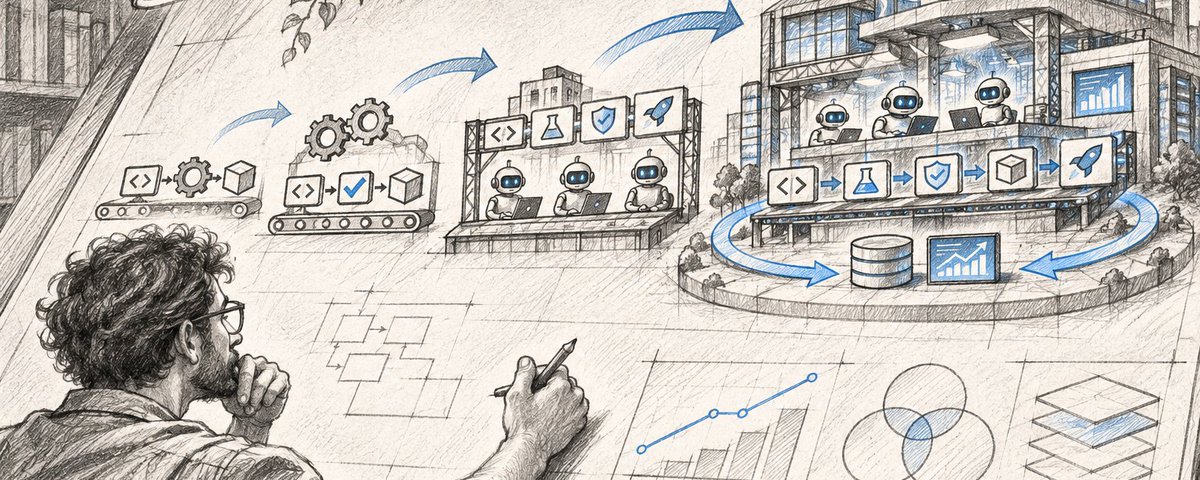
AI models, agents, and products help us advance toward a declarative software factory.
This shift is not dark magic. it requires a process, effort, and steps we must invest in along the journey.

TL;DR:
“250,000+ pages” was a joke. Apparently, we laypeople missed the punchline.
The Lean code is messy. The proof is valid and independently verified.
He suspects most of the argument is unnecessary and hopes to write up a much simpler proof.
He thinks the Riemann hypothesis should be easy to prove in the right framework. The hard parts may reveal which or new mathematical concepts we’re missing.

Stupid things I did:
1. 250,000+ pages was a joke guys!, I find big number extremely hilarious. I tried to make it clear by the level of pedantry of the reals total ordered statement in the main theorem, but people ran with it unfortunately and I didn’t feel like talking on social media in the days after the announcement, though I did have a good time with the memes. Sorry!!! (Similarly with our YM4 existence I found it extremely funny that we were slowly working through 60,000 pages of slop, though the committee asking for Lean made me feel dumb about wasting our time with that. But 60,000 funny.) Tao advises to not joke in papers, see also the Big Lebowski reference I shoehorned, I now understand why… I didn’t feel comfortable having any slop writeup attached to this problem, and I figured I can’t produce anything readable anyway, so I went off the Lean to lengthmaxx.
2. The Lean is full of garbage obviously, but compiles, but all criticism of such garbage is totally reasonable and accepted, I should have cleaned it up but it was randomly difficult to for various strange reasons. Mea culpa…
3. @scottnarmstrong clocked me, indeed even as a student there were theorems that took me the better part of a decade to write up, but with this one I should hopefully be more responsible. (I really was yoloing a lot in there, I bet most is unnecessary in the end, admittedly the lazy thing to do would be to wait because it’ll simplify massively…)
4. I forgot to emphasize what I think is the point. Arguments like these, cool, but they are the raw inputs when interpolating definitions. We don’t have the / an “H^1 object” over number fields, and probably for a layperson the fact that we fight hard for these arguments for the purpose of definitions is not clear a priori (that’s at least my philosophy). Just like I knew I must fight for an utterly simple Weil / Deligne, I feel Riemann should be easy, and any real difficulty is an indication our setup is just dumb at the moment.


This is really high-quality slop, salute

“The future is not set. There is no fate but what we make for ourselves.” #slopcore
@elonmusk should join forces with @JensenHuang and make @grok open weights.
AI code review tools must close the loop with coding agents upfront, applying extreme precision when they agree and escalating only disagreements or high-risk issues (even with agreement) to humans.
This approach reduces the burden on engoneers and reserves human judgment for moments when it is necessary

At HR platform HiBob, a mobile bug stayed live for ten days while a fix awaited app store approval.
Qodo had flagged it before release. Authors must now confirm they've addressed Qodo's comments before a second human reviewer is assigned.

ALT Original artwork from Qodo's HiBob case study. A purple magnifying glass highlights lines in a code window, with an orange HiBob logo and a purple Qodo anteater icon on a dark background.
I agree we don’t need more than 2-3 startups that sell SWF*-as-turn-key-service, and with much of the referenced article, but, I think it reaches the wrong conclusion:
“Factories copy. We design.”
That’s true for a traditional assembly line producing identical artifacts. But a Software Factory doesn’t need to mass-produce identical software. It needs to industrialize the process of producing different software reliably.
And interestingly, the article describes many of the ingredients of a Software Factory: specifications, agents, architecture, context, automated tests, review, and traceability. It calls that a workshop harness.
I think the interesting question is what happens as we make that harness increasingly capable.
Can the system independently challenge the implementation? Can it reconstruct intent, understand blast radius and criticality, evaluate organizational constraints, and collect evidence of correctness? Can it decide when a change is safe to ship, and when it must stop and escalate to a human?
That’s the transition from Agentic SDLC to an L4 Software Factory.
The biggest disagreement is around human review. Human accountability is essential. Human inspection of every change isn’t.
A Software Factory doesn’t remove engineering judgment. It makes more of that judgment executable, verifiable, and reusable across the organization.
And it doesn’t need to eliminate the workshop. Exploratory, ambiguous, and high-risk engineering work can remain human-led, while the factory autonomously handles well-defined classes of changes.
Great engineers that want to stay relevant build and own increasingly autonomous systems that produce trustworthy software.
Remember:
System > Agents > LLMs.
* SWF = software factory

A lot of startups are currently creating software factories. But from my experience a factory is highly dependent on the development process. So it's simpler to create one that matches the process instead of trying to configure a product. Especially because a factory may just be a workshop.
martinelli.ch/not-a-factory-…

8
10
1,083
TL;DR:
A demonstration of AI’s intellectual power at scale, enabled by human intellectual agency, producing a new form of collective intelligence.
Will create cyborgs, and as humanity we need to make meaningful efforts so it will be harnessed for good (ie good >>> bad)

6️⃣7️⃣% there.
Missing:
+ Independent verification. Agents shouldn’t be the sole judges of their own work.
+ Governance. What agents can change, approve, and execute autonomously.
+ Risk assessment like Blast radius. Understanding the downstream impact of every change.
+ Accountability. Tracing decisions, responsibility, and failures across agents.
+ Continuous learning. Measuring actual outcomes, not just task completion, and improving from feedback.
(Not by importance)

Agent platform of 2027.
This is the end game. This is the blueprint for the one and only application layer software that will exist. Every other software will effectively become databases for this layer, the everything agentic operating system for the million agent swarm to work on top of.
This is obviously the end game vision for the application layer of ChatGPT and Claude. I have reasons to believe that an independent company will own this product layer. But most ADE, "enterprise agent platform", or vertical saas companies, are focused on the wrong things far too narrowly, not technically competent, and do not have the product / technical vision to see this inevitable future.
The correct agent platform that wins will function like the base of a garden, from which customers will plant their unique "seeds" to grow their own plants and trees, managed and evolved by agents, humans, and signals from the sensors of the business. This presents a clearer picture than "factory of a factory" imo.


