




JRose retweeted

⚡️ Somewhere, a second version of you is being assembled.
It has never been born. It has never experienced a single moment of consciousness.
Yet it is learning your habits, your fears, your preferences, and the decisions you make when you believe nobody is watching.
Every purchase. Every search. Every hesitation. Every relationship.
Fragments of your existence are becoming a mathematical representation of who you are.
And here’s where things become disturbing.
Soon, machines will increasingly make decisions about your future by consulting a version of you that has never been alive.
Whether you receive an opportunity. What information reaches you. Which choices appear before you. How much someone believes you are worth.
Now follow the consequences.
Those predictions influence how the world treats you.
The world’s treatment changes your behavior.
Your behavior generates new evidence.
And that evidence strengthens the original predictions.
A mathematical representation of your identity begins influencing the person you actually become.
Think about that.
You spend your entire life believing your identity belongs to you.
Meanwhile, an increasingly sophisticated model of your identity begins participating in the construction of your future.
And eventually, something extraordinary happens.
The world begins responding to its prediction of you before you have decided who you are going to be.
Perhaps the most unsettling part of the coming intelligence age is that your future will increasingly be shaped by conversations you never hear.
Conversations between machines.
About you.
And one day, the most consequential decision of your life will be made by something that has never met you, after consulting something that has never been you.
JRose retweeted
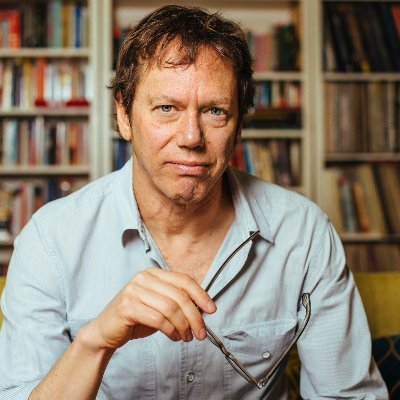
Today, after seven years of work, The Law of the Sublime is out in the world.
When I started this book, I had an ambitious plan. I would go down the Amazon, find chimpanzees in the wilds of Africa, and cross the Gobi Desert, then write about those experiences of awe.
Then, on a hot August afternoon in 2018, I had a stroke while driving in Los Angeles. A blood clot cut off oxygen to my brain, and within seconds I lost consciousness. When I woke up in the hospital, I learned how close I had come to the point of no return. My left hand was frozen into a claw, and I could barely feel my left leg, but something strange happened.
On the ambulance ride home, I looked out at the people on the street, and for a moment I felt I could be inside their bodies and hear their thoughts. It was marvelous and weird, and I knew it was time to write this book.
I couldn't type, so I wrote every page by hand, dictated it, printed it out, and edited it all over again. I couldn't take the long hikes that had carried me through my six previous books. Then one afternoon I woke from a nap in my backyard to find a grasshopper inches from my face, and I understood that this small backyard would have to be my Amazon jungle. The lizards, the hummingbirds, the insects became my teachers.
My limits turned out to be a blessing. They forced me to find the Sublime in the simplest things, and that is what this book is about.
Most of us live inside a circle: an everyday consciousness shaped by culture, convention, and, more and more, technology. That circle keeps shrinking, and we grow bored and restless. Just outside it is the Sublime, a realm that is frightening and exciting at once, pulling us out of our comfort zones and opening us to a much wider reality. The book maps 12 points outside that circle, and each one is a different face of the Sublime.
Inside, you'll find stories of near-death encounters, astonishing discoveries, and radical changes of consciousness, along with exercises and meditations so you can feel the Sublime yourself, not just read about it.
The Sublime doesn't require travel or exotic adventures. It only requires a new pair of eyes for the reality all around you.
The Law of the Sublime is available now in hardcover, ebook, and audiobook.
Thank you for your support of my work. I hope you enjoy reading this book, and I look forward to hearing your feedback.
With gratitude,
Robert Greene

JRose retweeted

What makes a joke funny? And can anyone actually learn to be funny? Yes. Even you.
Jimmy Carr, comedy writer Abi Grant and director Amanda Baker have the answers. From the anatomy of a joke to the secret of comic timing, On Jokes is the essential manual for anyone who wants to master the art of making people laugh.
Listen now on Audible.
JRose retweeted

The most real shit ever, and he’s basically describing flow state, which applies to basically everything

JRose retweeted

Andrew Sullivan wrote a wonderful, long essay making that case, based on the Republic, Book 8, for New York Magazine back in 2016. nymag.com/intelligencer/2016…

JRose retweeted

Psychedelics tune the brain to the environment | Nature nature.com/articles/d41586-0…

JRose retweeted

Diego Simeone on watching Lionel Messi from the stands during Argentina’s comeback against Egypt:
🗣️“I was sitting in the stands, and I’ll admit something I’ve never admitted before I was close to tears when Egypt scored their second goal. The stadium suddenly felt silent to me. I looked around and saw thousands of Argentine fans with their heads down. It hurt because I knew how much this meant to them.
“Then I looked at Messi. He wasn’t complaining. He wasn’t looking for excuses. He simply picked up the ball and his body language said, ‘We’re not finished.’ At that moment, I told myself, ‘As long as Leo is on that pitch, I will believe.’
“Every time he touched the ball, you could feel the energy in the stadium changing. The fear disappeared. The hope came back. It was as if 80,000 people were breathing again because Messi had decided the story wasn’t over.
“When Argentina completed the comeback, I couldn’t hold my emotions anymore. I stood there in the stands with tears in my eyes. Not because of the scoreline, but because I had just watched a man who has already conquered football refuse to give up on his country.
“Then I saw Messi crying after the final whistle… and I lost it. Those tears weren’t from a player who had won another match. They were from a captain who loves his country with everything he has. That’s something no statistic can ever explain.
“People ask why Messi is different. It’s because he doesn’t just make you admire football he makes you feel it. Tonight, from the stands, he reminded me why millions of Argentines never stop believing while he’s wearing that shirt.
“When I left the stadium, I wasn’t thinking about tactics or statistics. I was thinking about how lucky we are to still witness a player who can make an entire nation cry, smile, and dream again in the space of ninety minutes.”


JRose retweeted
It was a pleasure to talk with Lewis Howes about how spacetime is a simple headset created by consciousness, and how physical objects in spacetime, such as brains and bodies, are simply icons in that headset—rendered as needed and then deleted.
youtube.com/watch?v=MBXK4n0N…

JRose retweeted
“major discoveries often start with a hunch that is later tested against evidence. Chen puts it well: Maybe we can be grounded in both feeling and fact.”
technologyreview.com/2026/06…

JRose retweeted
Jesse asks if I believe in God.
youtube.com/watch?v=fv5rkSxV…

JRose retweeted
We will never know the full truth of reality, but we aim to get closer than anyone has before.
traceinstitute.org

JRose retweeted
⚡️People are starving for worlds that are small enough to feel real.
That is why this hit.
A video store sim gives players something modern life keeps taking away. Clear boundaries. Tangible objects. Limited inventory. Simple rules. Human scale. Immediate agency. You walk in, understand the fantasy instantly, and start mastering it. That is rare now.
Most of modern digital life feels infinite, abstract, and frictionless. Streaming is endless. Stores are dead. Algorithms choose for you. Games are bloated with live service sludge, battle passes, lore inflation, and engagement engineering. This game does the opposite. It gives you a place. Shelves. covers. late fees. customers. upgrades. small power. The brain can hold the whole world in one grip.
That is the deeper hunger.
People miss environments where culture had weight and choices had shape. In the old world, scarcity forced taste. You had to browse. You had to choose. You had to live with what was available. Even the inconvenience made the experience more memorable because it gave the world texture. Streaming solved access and killed ritual. Infinite abundance made culture flatter.
So this game is not really selling the 90s.
It is selling relief from digital sprawl.
That is why two indie devs can outrun giant studios.
Big studios keep trying to impress the market with scale. Players are increasingly rewarding coherence. One clean fantasy executed tightly can beat a hundred million dollars of bloated confusion. The market is starting to value emotional compression again. If the fantasy is instantly legible and mechanically satisfying, it travels.
And this connects to something bigger than games. As reality gets more virtual, automated, and depersonalized, old forms come back as luxury experiences. Vinyl. film cameras. mechanical keyboards. physical books. old interfaces. dead media return because friction starts feeling real once everything else becomes vapor. The obsolete object becomes emotionally premium.
The real truth is simple.
This game is winning because it gives people a bounded world they can still touch, understand, and rule.
Modern life keeps scaling upward.
People are starting to crave downward again.

Two indie devs made a game where you run your own video store in the early 90s. It’s currently the #5 top-selling game on Steam.
- Rent out VHS tapes & manage customers
- Charge Late & Broken Fees
- Upgrade & customise your store
It’s called Retro Rewind - Video Store Simulator
JRose retweeted

Wow. What an emotionally raw interview with @GaryWoodland and his struggle with PTSD after his brain surgery. It is a must watch and a great reminder to give grace. Gary is one of the strongest, grittiest dudes I know. If he suffers from this, anyone can.
youtu.be/yFGyXUPMpcY

JRose retweeted
‘Our consciousness is under siege’: Michael Pollan on chatbots, social media and mental freedom | Well actually | The Guardian theguardian.com/wellness/202…

JRose retweeted

People stopped liking poetry because we got too good at teaching it.
For thousands of years, poetry was central to education and people loved it because we were so bad at teaching it. Then came a group called the New Critics in the 1920s who figured out how to analyze poetry. For the first time in history, poetry was taught right, and it killed the audience.
How was poetry taught before? You memorized it. You recited it. You sang it. And you didn't teach poetry as something that needed to be understood via analysis.
The best way to teach poetry is like this: experience it, perform it, memorize it. Once you've done that, then you can do the analysis. But analysis is secondary to what poetry is.
We don't make people analyze pop songs before they fall in love with them, so why do we do that for poetry?
— @DanaGioiaPoet

Dana Gioia is one of the world’s greatest living poets. He’s been writing for ~55 years, and this 3-hour interview is all about his approach to writing.
Some lessons:
1. What is poetry? Here’s a definition: “Poetry is a way of remembering what it would impoverish us to forget.”
2. And who is the mother of the muses? Mnemosyne, the goddess of memory.
3. You can’t understand poetry until you start learning it by heart. Yes, memorizing it. The metaphor of knowing something by heart means storing a piece of wisdom in the center of your being and making it a part of you.
4. Poetry exists in the body before it exists in language. For him, great writing is about putting form to felt sensations.
5. First drafts are an act of madness. They’re messy and chaotic, and it’s worth embracing that. Only in the process of revision does the structure begin to reveal itself.
6. The most valuable ideas arrive suddenly, fully formed but fragile, and they won’t wait for you to be ready. If you don’t write them down immediately, you’ll probably forget them.
7. His artistic process: Confusion, followed by madness, exhilaration, and despair.
8. Aspiring writers who can’t find the time to write run the risk of living a life of regret, where destiny takes the wheel and steers them off-course. Seneca says, “If you follow your destiny, it guides you. If you resist it, it drags you behind it.”
9. What’s the purpose of art? Most people, most of the time, go through life half-awake. The purpose of art is to awaken us to reality and help us feel our situation. Done right, it excites, expands, and refines our complete human intelligence.
10. Can you write with a full-time job? T.S. Eliot had a day job at a bank. Wallace Stevens was an insurance lawyer. Dana Gioia worked a full-time job in New York and wrote in the evenings.
11. Life is like a wallet full of one-hour bills. You only have 24 hours to spend every day. If you want to do serious writing while raising a family and maintaining a full-time job, almost every hour of every day has to be budgeted.
12. Poetry should turn. It shouldn’t just climb to an emotional height. It should pivot, contradict, or contain its own rebuttal. But most new poems go something like this: “I’m sad, I’m sad, I’m sad, I’m sad, the end,” or “I’m happy, I’m happy, I’m happy, the end. There’s no twist, no turn.
13. You don’t need to be 100% original. All you need to do is assemble parts of the reality that already exists. As George Balanchine said, “God creates, I assemble.”
14. A foundational book in his life: The City of God by St. Augustine. He says there are two cities that exist: There’s the City of Man, which is ruled by wealth and power and all the laws of man. And there’s the City of God which is eternal and governed by the rules of God.
15. Great poetry exists at the level of intuition, and it’s the same intuition that academic education tries to suppress. With great poems, like great songs, you feel before you understand.
16. Art is an argument with yourself. Yeats said: “Out of arguments with others, we make politics. Out of arguments with ourselves, we make poetry.”
17. Great writing should astonish the creator, and if it doesn’t astonish the creator, it won’t astonish the reader.
18. Robert Frost once said: “No tears in the writer, no tears in the reader. No surprise in the writer, no surprise in the reader.”
19. Beauty is being able to see the form, the shape underneath reality, and to understand why it is right, even when it is destructive or terrifying or humiliating. The most powerful kind of beauty is to discover the secret shape and rightness of things that are terrifying.
20. On novels: Most people don’t understand what a novel is — and how revolutionary the form was. So, what’s a novel? It’s a story that tells you simultaneously what’s happening on the outside of a character and what they’re thinking on the inside.
I’ve shared the full interview with @DanaGioiaPoet below. If you’d rather watch it on YouTube, or listen on Apple or Spotify, check out the reply tweets.
JRose retweeted
Leo Tolstoy was once asked if a novel should deal with social issues and stuff like that.
He said: "No, no... a novel isn't commensurate with those things. What a novel does is make you feel the joy of being alive in the world."
That's what art does. It ignites our humanity. It shows us how we aren't actually all that alive most of the time. That's why we need art. It excites. It expands. It refines our complete human intelligence.
(From my interview with @DanaGioiaPoet)
Dana Gioia is one of the world’s greatest living poets. He’s been writing for ~55 years, and this 3-hour interview is all about his approach to writing.
Some lessons:
1. What is poetry? Here’s a definition: “Poetry is a way of remembering what it would impoverish us to forget.”
2. And who is the mother of the muses? Mnemosyne, the goddess of memory.
3. You can’t understand poetry until you start learning it by heart. Yes, memorizing it. The metaphor of knowing something by heart means storing a piece of wisdom in the center of your being and making it a part of you.
4. Poetry exists in the body before it exists in language. For him, great writing is about putting form to felt sensations.
5. First drafts are an act of madness. They’re messy and chaotic, and it’s worth embracing that. Only in the process of revision does the structure begin to reveal itself.
6. The most valuable ideas arrive suddenly, fully formed but fragile, and they won’t wait for you to be ready. If you don’t write them down immediately, you’ll probably forget them.
7. His artistic process: Confusion, followed by madness, exhilaration, and despair.
8. Aspiring writers who can’t find the time to write run the risk of living a life of regret, where destiny takes the wheel and steers them off-course. Seneca says, “If you follow your destiny, it guides you. If you resist it, it drags you behind it.”
9. What’s the purpose of art? Most people, most of the time, go through life half-awake. The purpose of art is to awaken us to reality and help us feel our situation. Done right, it excites, expands, and refines our complete human intelligence.
10. Can you write with a full-time job? T.S. Eliot had a day job at a bank. Wallace Stevens was an insurance lawyer. Dana Gioia worked a full-time job in New York and wrote in the evenings.
11. Life is like a wallet full of one-hour bills. You only have 24 hours to spend every day. If you want to do serious writing while raising a family and maintaining a full-time job, almost every hour of every day has to be budgeted.
12. Poetry should turn. It shouldn’t just climb to an emotional height. It should pivot, contradict, or contain its own rebuttal. But most new poems go something like this: “I’m sad, I’m sad, I’m sad, I’m sad, the end,” or “I’m happy, I’m happy, I’m happy, the end. There’s no twist, no turn.
13. You don’t need to be 100% original. All you need to do is assemble parts of the reality that already exists. As George Balanchine said, “God creates, I assemble.”
14. A foundational book in his life: The City of God by St. Augustine. He says there are two cities that exist: There’s the City of Man, which is ruled by wealth and power and all the laws of man. And there’s the City of God which is eternal and governed by the rules of God.
15. Great poetry exists at the level of intuition, and it’s the same intuition that academic education tries to suppress. With great poems, like great songs, you feel before you understand.
16. Art is an argument with yourself. Yeats said: “Out of arguments with others, we make politics. Out of arguments with ourselves, we make poetry.”
17. Great writing should astonish the creator, and if it doesn’t astonish the creator, it won’t astonish the reader.
18. Robert Frost once said: “No tears in the writer, no tears in the reader. No surprise in the writer, no surprise in the reader.”
19. Beauty is being able to see the form, the shape underneath reality, and to understand why it is right, even when it is destructive or terrifying or humiliating. The most powerful kind of beauty is to discover the secret shape and rightness of things that are terrifying.
20. On novels: Most people don’t understand what a novel is — and how revolutionary the form was. So, what’s a novel? It’s a story that tells you simultaneously what’s happening on the outside of a character and what they’re thinking on the inside.
I’ve shared the full interview with @DanaGioiaPoet below. If you’d rather watch it on YouTube, or listen on Apple or Spotify, check out the reply tweets.

JRose retweeted

Donald Hoffman and co are on the brink of releasing PROOF that consciousness is fundamental and NOT produced by the brain. BREAKTHROUGH: How consciousness creates the simulation;
JRose retweeted
We have trillions of specific conscious experiences. None has been explained by physicalist or functionalist theories of consciousness. I discuss consciousness, the trace logic, and constructing spacetime physics from consciousness, with Michael Phillip.
youtube.com/watch?v=J--0hk89…
