

Venture @PanteraCapital. Former Venture @Nascent + @Coinbase, Ops + Research @Visa. Views my own. NFA
San Francisco
Joined April 2015
- Tweets847
- Following835
- Followers1.4K
- Likes5.5K








Pinned Tweet
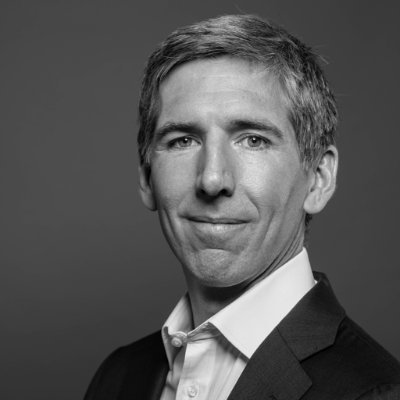
Excited to announce I'm joining @PanteraCapital as a Junior Partner!
I'll be backing founders building stablecoin payments, fintech x DeFi, and new markets for compute, energy, and more.
Thank you to @dan_pantera, @veradittakit, @FranklinBi, @stutireal, Cosmo and the rest of the Pantera team for the trust and the opportunity. It's an honor to join a team that has backed the foundations of onchain finance for over a decade.
Huge thank you to @nascent and @delitzer. Nacscent sharpened how I think about DeFi, market structure, and what it takes to build at the edge of finance. I'm grateful for the mentorship and the friendships.
More on why I joined Pantera: [panteracapital.com/joining-p…]

Gold’s cooked

Last month, we demonstrated high-rate alchemy: turning mercury into real, stable gold, beating CERN’s record by a factor of 10.
Last week, we enriched isotopes in the world’s most powerful plasma centrifuge, beating the Soviet record that stood for 40 years.
Now, we’re building a fusion reactor in San Francisco to achieve record power density.
J/\ck retweeted

Just wrapped Money20/20. My biggest takeaway as a VC: the two forces reshaping fintech right now are AI agents and stablecoins.
@SirDigitalDan from @CoinflowLabs and I dug into both in our fireside.
Some takeaways:
* Where will value accrue?
AI is collapsing the cost of cognition, and stablecoins the cost of settlement. This changes value accrual, when those inputs aren’t scarce. I’m expecting value to migrate to regulated trust, proprietary data, distribution, underlying physical assets, networks.
* What does stablecoins as programmable money unlock?
Funds and spending rules can execute together, letting a product enforce agent budgets or trigger conditional payouts with less coordination across banks, processors and operational teams.
* Where is agent demand emerging?
Dan pointed to compute, inference and data APIs, which agents need to complete tasks. I’m looking for infra on fraud, KYA, chargebacks, and merchant side ops to help proliferate agentic commerce usage.
* Who carries agent liability?
A purchase can comply with the spending rules and still be a mistake. Before delegating larger budgets, businesses will want audit trails, a way to dispute purchases and an agreement on who absorbs losses.
* Where’s the distribution advantage?
Local integrations and merchant relationships give providers access to existing payment volume. Stablecoins can improve settlement without changing how customers pay. (Coinflow connects cards, ACH and PIX this way.)
* How do existing PSPs participate?
A provider can earn a processing fee when a developer funds an agent by card, even if subsequent payments settle in stablecoins. (Coinflow powers card funding for Tempo’s MPP Credits.)
Thanks for the week @money2020! Curious what others took away too!


J/\ck retweeted
First they ignore you, then they laugh at you, then they fight at you, then they add you to their Long-Term Capital Markets Assumptions paper and predict you'll be the best-performing asset of the next decade.

J/\ck retweeted

this California wealth tax thing is just incredible.
so in October 2025, a California healthcare union proposed a "one time" 5% tax on any billionaire's wealth. the ballot measure will be voted on next month. In early December 2025, California announced that it would be a retroactive tax if passed, applying to anyone with CA residency as of Jan 1, 2026. The objective is to pay for Medi-Cal, California's incredibly dysfunctional healthcare system. (which also functions as a glorified welfare apparatus, but that's a discussion for another time).
polls reveal that the CA electorate is split around 50/50 on the tax, but prediction markets only give Prop 40 a ~23% chance of passing (there are competing measures on the ballet that would nullify it).
there are 200 billionaires in CA, worth collectively somewhere between $2.3 and $2.6 trillion. 5% of that is around $100b, accounting for a small amount of attrition. proponents of the tax forecasted a significant windfall, assuming only a 10% departure rate.
supporters thought they were being clever with the retroactive concept. no billionares would leave CA in the few short months between the tax being proposed and the residency cutoff date, without the tax even having passed yet, right?
well as it turns out, they did.
a new paper [1] from two academics at Stanford called "The Net Present Value of the California Billionaire Tax Act", argues that not only did more billionaires leave due to the proposed tax than its proponents expected, but that the value of the tax, if it does pass, is actually negative.
proponents of the tax only assumed 10% avoidance, that is, only 10% of the taxable base of targeted billionaires would leave CA within the very short Oct-Dec 2025 window. Jaros and Rauh, the Stanford academics, find that a lower bound of 28.6% of the taxable base managed to leave.
just based on known departures, those departures total $577b in net worth, or $28.8b in potential tax lost. this of course does not capture everyone (many left without announcing their departure), so the authors normalize to departure rates estimated from other wealth tax events, and apply other discounts for litigation, arriving arrive at a figure of only $28-$36b in forecasted tax revenues.
but this isn't all! all of the income taxes paid by the departed billionaires are also forsaken. the authors estimate that CA billionaires pay $3.3- 5.8b in annual income taxes. they assume a midpoint of $2b lost in annual collections from departed billionaires. the net present value of that lost income stream is -$68.9 billion.
so when you add it all up you get:
+ $30b one-time tax windfall (estimated)
- $69b in present value of lost future income taxes
= - 38.9b overall net present value of the tax
of course, this analysis is highly estimate driven. the authors simulate the parameters 100k times and find a negative NPV of the implemented tax 85 percent of the time.
and if the tax doesn't pass, which it's not looking like it will, California still ended up losing at least $577b in departed net worth, and they have permanently poisoned the well with entrepreneurs who will now worry about future wealth taxes.
[1]: nber.org/system/files/workin…


J/\ck retweeted

Massive opportunity for onchain receivable-backed credit. Excited to share more about what we are building here soon.




J/\ck retweeted

1/ We discovered something totally unexpected about the neural structure of consciousness that overturns decades of thinking on its biological basis and brings us significantly closer to the recipe for generating conscious awareness.
New preprint: biorxiv.org/content/10.64898… (led by @HesseJanis, with @FrankLanfranchi, @_conor_mcgrory, @Yuelin_Shi, and @EngelTatiana)

J/\ck retweeted

HOLY SHIT.
For crypto, this is one of the most insane posts of the year, but I'm guessing most people don't understand it.
Let me explain...
Bitcoin's accounts, and subsequently Ethereum's (and therefore every other EVM chain's), are built on a specific elliptic curve called secp256k1.
secp256k1 is a different elliptic curve from the one used across nearly every modern hardware device, including iPhones.
Modern devices mostly use a different curve called secp256r1, which is usually referred to as P-256 - one of the curves investigated in the article.
This mismatch has made it sooo difficult in the past to integrate crypto accounts natively into the security systems of modern hardware.
For example, Apple's Secure Enclave natively supports P-256, not secp256k1.
This has prevented crypto accounts from being able to use the same hardware protection as things like Apple Pay.
Same goes for the web with passkeys - WebAuthn uses P-256 signatures, which means Ethereum accounts using secp256k1 can't use them natively either.
But why did Satoshi do this?
The main theory for choosing secp256k1 was distrust of the P-256 curve - i.e. he thought there was an NSA backdoor.
A "backdoor" here basically means a secret, intentional weakness in the curve that would allow the NSA to exploit it and access private keys.
This was because P-256 was created with involvement from the NSA...
And the NSA provided a mysterious "seed" used to generate one of the curve's parameters without explaining where that seed came from.
This eventually transformed into a ~25-year-old mystery with a 5-figure reward for finding where this seed came from.
Claude figured it out in less than 30 mins.
And the best part is its internal thinking was: "Hmm wait... is it suspicious that such an obvious thing wasn’t discovered in 25 years?"
The solution was stupidly simple - just the time the curve was created, put into a specific random number generator function.
This doesn't 100% prove there's no backdoor yet, but it provides strong evidence that this seed wasn't secretly engineered by the NSA.
And Claude did this with "just a simple prompt" in under 30 minutes.

CLAUDE FOUND THE SEEDS
anthropic.com/research/ecdsa…


J/\ck retweeted

Fission has raised $10M in Series A funding, led by @PanteraCapital.
We’re building the liquidity infrastructure for the next generation of tokenized financial products.
Eligible investors can now access capital without waiting for a fund's scheduled redemption window.
More in Fortune: fortune.com/2026/10/15/pante…

J/\ck retweeted

52 Quarks minted on day one.
Faces, hand-drawn pixels, words. Each one unique, numbered and forever on @QuantusNetwork.
The first 52 are already part of history.
Still early.
J/\ck retweeted
Pantera's latest State of Tokenization report is out.
We analyzed the $332bn tokenization market across 671 assets.
Institutions entered in force this quarter. J.P. Morgan, HSBC and Fidelity launched onchain products.
BlackRock's BUIDL moved $441mn onchain in June, runs a $1bn daily redemption facility, and is now accepted as collateral.
On the consumer side, Robinhood Chain hit $888mn in weekly RWA volume in August, two months after launch.
Collateral markets matured, with private credit putting 45% of its matched value to work in DeFi.
The lack of a market-structure bill didn't stop tokenized stocks. A five-year SEC exemption lets the market keep developing under current rules.
Full report: panteracapital.com/state-of-…

J/\ck retweeted

Welcome @JackSimison to the @PanteraCapital investment team!

Excited to announce I'm joining @PanteraCapital as a Junior Partner!
I'll be backing founders building stablecoin payments, fintech x DeFi, and new markets for compute, energy, and more.
Thank you to @dan_pantera, @veradittakit, @FranklinBi, @stutireal, Cosmo and the rest of the Pantera team for the trust and the opportunity. It's an honor to join a team that has backed the foundations of onchain finance for over a decade.
Huge thank you to @nascent and @delitzer. Nacscent sharpened how I think about DeFi, market structure, and what it takes to build at the edge of finance. I'm grateful for the mentorship and the friendships.
More on why I joined Pantera: [panteracapital.com/joining-p…]
J/\ck retweeted

the crypto era of the 2010s and early 2020s will forever be goated. anyone on the planet with an internet connection was able to own eventual trillion dollar assets at sub billion dollar valuations. by contrast almost every other tech wave including ai begins in the silicon valley, where only a handful of ppl already close to the room are able to get extraordinarily wealthy.
J/\ck retweeted

Been seeing a lot of discourse on X about agents triggering a bank run/lowering bank NIM by sweeping non-interest bearing deposits into yield. I think this is possible but going to take a lot longer than people think:
1. Retail banking is one of the highest switching cost products and deeply concentrated. The top 5 banks hold roughly half of US consumer deposits and banks with over $10B in consumer deposits hold close to 85%. These banks are incentivized to not be accessible to agents and are already not developer friendly. We have seen this with the big banks pushing back on open banking by charging for data access and reducing what is available. Muse can read your balances via Plaid but cannot move the money.
2. Well over half of consumer deposits are held by households 55+. This cohort is less likely to be an early adopter of an AI finance tool not being endorsed or directly offered by their bank.
3. The top 10% of households by wealth hold approximately 60% of deposits (top 1% alone is nearly 25%). Most of this money already has an advisor or brokerage attached reducing the incremental value proposition of a standalone consumer agent. The bottom 50% hold 5.5% of deposits, so the mass market agent story is less existential to bank funding.
Net net, I think in the fullness of time agents do become the primary interface for personal finance and cheap deposits shrink over time. But most of that comes from AI democratizing access to services the wealthiest people already get, and it will be relatively slow because these tools are new and people will need to establish trust before having them manage their money.
J/\ck retweeted

Our latest report on the State of Tokenization is out today!
Last time, we asked how much of today's tokenized market is stuck in the "newspaper-on-a-website" phase. This time, we asked what comes after tokenization? How do tokenized assets become tradable markets with broad investor participation?
Our Q2 research covers 671 tokenized assets ($330B+) with amazing work by @sui414 @0xallyzach. We updated our Tokenization Progress Index (TPI) across issuance & redemption, transferability, and composability.
This edition adds new dimensions: onchain trading and ownership data. These help depict the current state of liquidity, trading volumes, and overall participation in tokenized assets.
We also cover key Q3 developments, including @RobinhoodApp Chain's launch and the Clarity Act.
Takeaway #1: Open assets are winning the battle for liquidity. Among tokenized assets of $10M+ value, the open / freely transferable ones made up 41% in value, but processed 99.8% of spot trading.
Takeaway #2: Equity demand is arriving mostly through derivatives, mainly perpetuals. June equity perp volume hit $67.8B, ~16x the $4.2B of tokenized-equity spot volume.
Takeaway #3: Liquidity means something different for each product. Yield funds need dependable redemption. Tokenized stocks need deep liquidity. Collateral needs reliable valuation & liquidation.
Despite the CLARITY Act's delay, the momentum behind tokenization can't be stopped. The Great Onchain Migration marches forward, from putting assets onchain to building new markets around them.
Here's the full report link:
panteracapital.com/state-of-…


