

Researcher in #sysbio and #compbio with focus on the #analysis of #CancerSignalling and #SingleCell data
Joined November 2016
- Tweets622
- Following278
- Followers540
- Likes496






Jan Hasenauer retweeted

Españoles desarrollan un modelo de #IA para anticipar #lesiones en el #fútbolfemenino de élite
@madeofgenes @BarcaInnoHub @JanHasenauer @UniBonn @FCBarcelona @javieryanguas
mlibr.es/z08vU8

Jan Hasenauer retweeted

An AI model trained from routine electronic health record data of 3.7 million individuals predicted cancer 1 year before clinical onset, no less promoted accuracy in detection, staging, treatment response, and prognosis
cell.com/cell/fulltext/S0092…

Jan Hasenauer retweeted

A nice python package for creating Publication-Ready Scientific Plots github.com/faridrashidi/cnsp…
if you use R, take a look at rpkgs.datanovia.com/ggpubr/

Jan Hasenauer retweeted
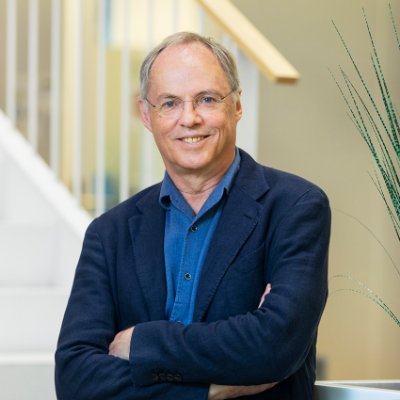
Organoid researchers!! Save the date for the annual "Organoids are Us"-symposium. Held at the Beatrix Theater in the center of beautiful historic Utrecht. Venue is a 20 minute train ride from Schiphol Airport Amsterdam. Program will follow shortly.

Jan Hasenauer retweeted

Guiding AlphaFold3 to generate experiment-consistent protein ensembles
AlphaFold3 is a diffusion model, and like most generative models trained to predict a single most-probable output, it collapses to one dominant mode. For proteins that is a real problem, because proteins are not static. They breathe, flip loops, and sample multiple conformations, and the techniques used to measure them (NMR, X-ray crystallography, cryo-EM) report ensemble averages, not single snapshots. So you have a powerful prior that throws away exactly the heterogeneity the experiments are trying to capture.
Advaith Maddipatla and coauthors fix this by reframing the whole task as posterior inference. They keep AlphaFold3 frozen as a sequence-conditioned prior and cast ensemble modeling as sampling from p(ensemble | sequence, data). Concretely, they modify the reverse diffusion steps to add a gradient-based guidance term derived from an experimental likelihood, so at each denoising step the sampler is nudged toward structures whose ensemble-averaged observables match the measurements. A single scaling hyperparameter interpolates between pure prior and strongly data-conditioned output.
What makes it general is that any modality becomes a differentiable likelihood you can plug in: NOE distance restraints and order parameters from NMR, real-space electron density from crystallography, electrostatic potential maps from cryo-EM, and combinations of these. After sampling they run a short force-field relaxation and a matching-pursuit style pruning step to return a compact set of conformers.
The results hold up. On ubiquitin, NOE-guided sampling produces far fewer distance-restraint violations than the deposited NMR ensemble, and adding an order-parameter term recovers backbone dynamics that match relaxation data, all in GPU minutes rather than the days that ensemble molecular dynamics needs. Across 91 NMR cases it beats the deposited PDB ensembles in about 77% of them. On crystallographic data it recovers alternate conformations hiding in electron density that the unguided model misses entirely.
This is a practical inference tool, not a replacement for refinement. In drug discovery it can propose alternate loop conformations and occupancies during model building, surface cryptic states worth targeting, and speed up map fitting in cryo-EM workflows. The small compute footprint means it slots into existing structural pipelines as an interactive step, which matters for biotech and materials groups doing large-scale reanalysis of legacy structural data.
Paper: Maddipatla et al., Nature Biotechnology (2026), CC BY 4.0 | nature.com/articles/s41587-0…

Jan Hasenauer retweeted

1/ How does one cell become an entire animal? We can now film it in 3D, but turning those movies into accurate cell tracks is brutally hard. Enter our new #Kaggle challenge: $60K prize pool, to help crack 3D+time cell tracking at scale!
kaggle.com/competitions/bioh…
@biohub
We’re hiring in Bonn! 📢
The University of Bonn seeks applications for a W2 Professorship in Mathematics in Medical Sciences.
📅 Deadline: July 5, 2026
uni-bonn.de/de/universitaet/…
Jan Hasenauer retweeted

We’re hiring a Junior Group Leader - AI in immunotherapy - to join our team at the earliest possible date. The position is embedded within my Chair and the Chair of Cellular Immunotherapy (Michael Hudecek), and connected to CAIDAS center for AI.
med.uni-wuerzburg.de/fileadm…

Jan Hasenauer retweeted

📢 Preprint: we present a whole-mouse-brain in vivo Perturb-seq atlas, 7.7 million cells, 1947 disease-associated perturbations, moving toward direct readout of how human genetics rewires cell states & circuits in vivo. Grateful for the Team! @NVIDIAHealth biorxiv.org/content/10.64898…

Jan Hasenauer retweeted

Download our extended database of postdoc fellowships.
276 funding opportunities. For each entry, we provide eligibility/requirements, amount, deadline, link, description, etc.
Download our database here: research.jhu.edu/rdt/funding…

Jan Hasenauer retweeted

🚨 Someone just turned Claude into a full AI research scientist.
This GitHub repo called claude-scientific-skills just quietly changed what's possible with AI in science.
Most people are using Claude to write emails and summarize docs.
These researchers are using it to run actual drug discovery pipelines, analyze single-cell RNA sequencing data, interpret clinical variants, and generate publication-ready reports all from a single prompt.
Here's how it works:
You install one plugin in Claude Code. Claude automatically discovers and uses 140 scientific skills across every major research domain bioinformatics, cheminformatics, proteomics, clinical research, medical imaging, materials science, quantum computing, laboratory automation.
The skills connect Claude directly to the databases and tools scientists actually use:
→ Query ChEMBL for bioactive compounds
→ Annotate variants with ClinVar and Ensembl
→ Dock molecules with DiffDock against AlphaFold structures
→ Analyze 10X genomics data with Scanpy
→ Search ClinicalTrials. gov and match patients to trials
→ Generate PDF clinical reports with ReportLab
One prompt. Real scientific libraries. Live database APIs. Actual results.
This is what happens when someone stops treating Claude like a chatbot and starts treating it like a research platform.
/plugin install scientific-skills@claude-scientific-skills
100% Opensource. MIT License.
(Link in the comments)

Jan Hasenauer retweeted

Join us at Cell Symposia: Single-Cell Biology in the Era of AI (Dec 2–4, 2026, Munich) 🇩🇪
From multi-omics to AI-driven models of cellular dynamics — an exciting lineup across experimental & computational biology.
Hope to see you there!
🔗 cell-symposia.com/single-cel…
Jan Hasenauer retweeted

This May 10-15 in Les Diablerets, Switzerland, we are bringing cutting-edge research from leaders in single-cell omics and artificial intelligence (AI) to GRC Single-Cell Genomics 2026! If you’re interested, please submit your abstract ASAP! grc.org/single-cell-genomics…

Jan Hasenauer retweeted

We are opening applications for our 2026 cohort of FutureHouse AI-for-Science Independent Postdoctoral Fellows! Apply our AI tools to specific problems in biology and biochemistry, in collaboration with world-leading academic labs:
--$125,000 annual stipend.
--Access to all tools developed by FutureHouse and Edison Scientific at scale, including Kosmos and several as-of-yet unreleased agents, with under-the-hood access to them to specialize them for your workflows.
--Receive dedicated software engineering support.
--1 year with possible 1 year extension.
Even more exceptional co-advisors than last year. Deadline for applications is February 13th, 2026. Link in next post.

Jan Hasenauer retweeted
Nature Methods names AI agents a “Method to Watch”!
We've started building active-learning loops with perturbation models, where AI proposes experiments & data closes loop. Supplying such models to agents could transform exp design into theory search.
nature.com/articles/s41592-0…

Jan Hasenauer retweeted

🔥 Now published in Bioinformatics Advances: “Shiny-Calorie: A context-aware application for indirect calorimetry data analysis and visualization using R.”
Read the full paper here: doi.org/10.1093/bioadv/vbaf2…
Authors include: @smgrein, @RonjaKardinal, @MueezUdin, @JoergHeeren, @DagmarWachten, @ECSignalMet, @JanHasenauer, @MartinKlingens4

Jan Hasenauer retweeted

We are searching for computational PhDs and Postdocs to join our group in collaboration with @TreutleinLab . We have exciting single-cell technology projects that incorporate bioengineering, computation, biology, translation. Send CV to [email protected]

Jan Hasenauer retweeted

Nature research paper: Tracking clonal evolution during treatment in ovarian cancer using cell-free DNA
go.nature.com/46zRY9L
Jan Hasenauer retweeted

How to write a scientific paper in fifteen steps. #ScientificPaper #PaperWriting @PLOSCompBiol
journals.plos.org/ploscompbi…

Jan Hasenauer retweeted

biologists continue to mistake single-cell technical sampling noise for meaningful cellular heterogeneity. the apparent sparsity of single-cell data is due largely to technical artifacts like transcript capture and sequencing depth--if there are hundreds of thousands of transcripts per cell but you sequence only 5-10k unique molecules, of course you get mostly zeroes in any given cell. pseudo-bulking makes this clear: when you aggregate these noisy single cell samples, the vast majority of the genome shows expression greater than zero
this is because the entire genome is being pervasively (yet stochastically) transcribed across nearly all cell types, including terminally differentiated cells (with a few obvious exceptions, e.g. enucleated red blood cells, spermatozoa, etc). hence you should expect to find at least one copy of nearly every transcript if you sample a single cell deeply enough over time
it is the *relative* or *ranked* differences in expression compared to this low-level baseline that dictate cellular identity and function
yet this pervasive transcription extends to retrotransposons, heterochromatin, and other supposedly "silenced" regions of the genome--all of which are systematically discarded in most standard processing pipelines. stare at the raw .fastq for long enough and this becomes obvious
thus, this pervasive genome-wide transcription has implications not only for how we train virtual cell models on single-cell RNA count data, but for our understanding of cellular biology as a whole: to truly plumb the depths of the cell, we must venture beyond the reference genome into transcriptional terra incognita, where we will encounter eldritch species of non-coding RNAs that may throw into question much of what we know about the biology of the cell

"Only ~0.02%-3.1% of [a cell's] genome" is being transcribed at any given moment.
Other interesting takeaways from this new paper:
> If you pool together a bunch of cells of the SAME type (like primary immune cells from a mouse's spleen), and you measure the transcription for each of them, you'll find that ~67% of the genome is active collectively.
But at a SINGLE cell level, only like 0.04% of the genome is active. There is huge heterogeneity between cells, even of the same type. This heterogeneity disappears when we do bulk RNA-seq and measure cells together.
> About 31% of a cell's transcription comes from known protein-coding genes. The rest of transcription happens in regions that don't make proteins. In other words, more "non-coding" DNA is transcribed than "coding" DNA.
> There is a surprising disconnect between RNA production & decay at the single-cell level.
If you look at thousands of cells together, the rate of RNA production (how fast genes are transcribed) usually matches the rate of RNA decay (how fast old transcripts are degraded). This makes sense, because cells presumably would want to keep a fairly steady balance of RNA levels.
But when scFLUENT-seq was used to look at individual cells, this "rule" broke down! For a given mRNA, some cells were making a lot of new copies even if old copies weren’t being degraded much, while other cells had the opposite. So transcription and decay don't seem to be tightly matched within a single cell at a given time after all. The balance between production + decay is only true in bulk.

