

Psychology Prof @NYUPsych | Author of @PowerOfUsBook (https://teapaw.org/t.co/bG3QVlNURs) | Director of NYU Center for Conflict & Cooper | Keynote Speaker @TheLavinAgency
New York, NY
Joined April 2011
- Tweets23K
- Following1.8K
- Followers71K
- Likes62.9K



Pinned Tweet
Social media discourse is driven by false #polarization
Analyzing 1.7 million social media posts, a series of controlled experiments, and a large global survey covering 40 countries (total N = 49,222), we find that
(1) strong ideologues post their opinions significantly more often than moderate individuals
(2) extreme attitudes are posted more often than moderate attitudes.
(3) This general pattern replicates robustly across 40 countries
(4) the opinions that users post are more hostile and toxic than the beliefs they keep to themselves.
Across studies we find extreme opinions are overrepresented on social media by at least 6% and up to 22% compared to their true prevalence in our samples.
osf.io/preprints/psyarxiv/7z…
This project was led by @small_schulz and @ClaireRobertson and includes @H_Sjastad @AshuAshok @LisaFOswaldo @junghwanyang @simonsaysnothin and @andyguess

Jay Van Bavel, PhD retweeted

Más allá de las críticas metodológicas: qué nos siguen diciendo Stanford y Milgram sobre el mundo real
Jay Van Bavel explica que Netflix ha convertido el famoso experimento de la prisión de Stanford en un reality show. Recuerda que el estudio original de 1971 se presentó durante décadas como la prueba de que personas normales, al ser asignadas al rol de guardias, se volvían rápidamente crueles y abusivas. Sin embargo, señala que los archivos y las grabaciones posteriores mostraron que Zimbardo y su equipo no se limitaron a asignar roles y observar: empujaron, instruyeron y modelaron activamente la dureza de los guardias. Compara el reality con el experimento original y con la réplica de la BBC, y concluye que la fuerte intervención de los productores impide sacar conclusiones claras sobre la naturaleza humana. Según Van Bavel, el programa acaba siendo más un drama manipulado que una demostración seria del poder de la situación.
Yo tengo problemas con esta forma de interpretar estos experimentos que va más allá de sus problemas metodológicos. El objetivo real de estudios como el de Stanford o el de Milgram no era hacer un experimento de laboratorio impecable, sino intentar entender cómo fue posible el Holocausto: cómo millones de personas fueron asesinadas con la colaboración de funcionarios, administradores y ciudadanos que miraron para otro lado. Todos decimos que lucharíamos contra la injusticia, pero la historia muestra que muy pocos lo hicieron. Acepto que no es verdad que baste con darte un rol y que tú solo te conviertas en un monstruo. Esa versión simplificada no se sostiene. Pero la conclusión corregida -que el rol más la presión, las instrucciones y el miedo sí te convierten en alguien capaz de hacer daño o de dejar que se haga- sigue siendo un resultado muy valioso precisamente porque se parece más al mundo real.
Lo que van a hacer tus jefes de las SS o de la Gestapo no es darte un uniforme y dejar que “el rol hable”. Te van a dar órdenes concretas, te van a vigilar, te van a meter miedo y te van a dejar claro qué pasa si no cumples. Y en esas condiciones, la mayoría de la gente acaba haciendo lo que le piden.

Jay Van Bavel, PhD retweeted

Is social technology use related to life satisfaction?
In a Nature Human Behaviour study, Team Scientist @J_R_Schroeder and collaborators surveyed 1,966 US adults on their use of 10 social technologies, from texting to TikTok.
Which social technology people use matters: Those who texted more often were more satisfied with their lives, while those who used YouTube or TikTok more often were less satisfied.
doi.org/10.1038/s41562-026-0…

Jay Van Bavel, PhD retweeted

Our colleague Eva Yi Xie, a Princeton neuroscience PhD student, was detained by ICE at Reagan National Airport on her way home from SfN, where she’d just presented her poster. She’s being held in Chantilly, VA. Please help us bring her home. 📷


One of the most famous findings in psychology is that ordinary people can become cruel very quickly when you give them power over others.
That’s the lesson millions of people learned from the Stanford Prison Experiment. Now Netflix has done something bizarre: it has turned the study into a reality TV show called The New Stanford Prison Experiment.
As a social psychologist who has written extensively about the original experiment, I obviously had to watch. Did Netflix really replicate the Stanford Prison Experiment? And what does the show actually tell us about human nature?
I compared the original experiment with the BBC replication and the Netflix Reality show version. They all elicited different types of behavior because the people running them each acted very differently. powerofusnewsletter.com/p/th…

Educational interventions are effective in improving students’ ethical and moral outcomes
A new meta-analysis of 92 randomized controlled trials conducted in naturalistic education settings acros education levels (k-effects = 381; 12,693 students) finds that educational interventions effectively improved students’ moral outcomes compared with control groups (g = 0.65)
Interventions improved students’ ability to reason about what is morally right in a given situation (moral judgement; primary outcome), recognize the presence of a moral issue (moral sensitivity; secondary outcome) and prioritize moral values over other competing interests (moral motivation; secondary outcome).
nature.com/articles/s41562-0…


I think a public forum for sharing information about academics advisors could be good, as long as it's honest and accurate.
In academia, there is often no way to know which advisors are intellectually engaged, supportive, well funded, value work-life balance, and maintain a vibrant lab culture.
We need far more transparency on these topics.

GREATE NEWS, everyone!
Academia finally invented PEER REVIEW FOR ADVISORS.
LMAO 😂. Someone built YELP FOR PHD ADVISORS.
Fully anonymous. You can even rebuttal others' reviews.
Grad school just got a FEEDBACK LOOP 🫠
👉 openadvisor.net/


My main concerns are:
1) anonymous accounts sharing false informatiion or libel
2) perverse incentives to "be nice" rather than provide accurate feedback and rigorous training (this is what has happened with undergrad course evaluations)
3) unrepresentative ratings (e.g., if only people with extreme opinions share their evaluations they will not reflect reality)
If we can find a way to avoid these issues, this could be a helpful tool for prospective students.
1
558
What kind of news diet is TikTok feeding young people?
An analysis of youth TikTok feeds (6.7 million videos) found that 98% of the news they saw on TIkTok did *not* come from accounts users followed, suggesting that these were mostly algorithmic recommendations.
Only 13% came from news organizations on TikTok. Instead, most of these videos came from niche content creators who were far more likely to produce hate speech videos than other creators.
Hate speech videos most often mentioned specific politicians, political parties, and minority groups osf.io/preprints/psyarxiv/j7…

Does AI help group decision making?
An LLM facilitation increased information shared within a group discussion by raising the minimum level of engagement with the task among group members.
But it did not fundamentally improve decision-making.
This was based on an experiment with 1,475 participants assigned to 281 live groups completing a hidden profile task—selecting an optimal city for a hypothetical sporting event
dl.acm.org/doi/10.1145/38169…

Groups are more rational than individuals in an economic decision making task
When people had to discuss decisions as a group, they made decisions in an ultimatum game that approximated rationality more than individuals.
That is, group discussion led to lower offers than individuals but also a willingness to accept lower offers.
link.springer.com/article/10…

Jay Van Bavel, PhD retweeted

🚨New🚨: The teen mental health crisis may finally have crested.
Since 2021:
📉 Persistent sadness/hopelessness: 42% → 33%
📉 Seriously considered suicide: 22% → 14.5%
📉 Attempted suicide: 10.2% → 6.4%
@jtrothwell @FamStudies

"in focus groups on A.I. conducted by the university, students asked for clearer guidance. They were worried about cognitive offloading, cheating and A.I. providing false information"

The A.I. conscientious objector movement is growing, especially on campuses.
My new story on how colleges are responding, and what this means for students/faculty who are refusing to use an ever-more pervasive and powerful technology.
nytimes.com/2026/11/18/us/an…

Jay Van Bavel, PhD retweeted

Is anyone going to point out that the “brutal” Harvard class in which you actually need to read books & can’t use tech that’s popular right now is just a standard college class from 20 yrs ago
Jay Van Bavel, PhD retweeted

I recently became aware of how confused even many academics are about Pangram. Please, please, look at the audits that have been done before you deliberately sow doubt.
(link in thread)

People with negative beliefs about being alone experience a steep increase in loneliness after spending time alone in daily life, whereas those with positive beliefs feel less lonely after spending time alone.
Exposure to negative media about being alone seem to drive these beliefs. But reappraising time alone as more positive can buffer against these negative effects.
nature.com/articles/s41467-0…

New Evidence Shows School Phone Bans Are Gradually Improving Test Scores
Previous results were mixed, but the first national study to track individual students’ growth shows bans may help reverse declines.
The study looked at 3.3 million students between 2021 and 2026. They were in third through 10th grade, attending 4,600 U.S. schools. Using scores on MAP tests, which track achievement from fall to spring, it compared the performance of students at schools that put in strict phone bans with those at similar schools that did not have such bans.
The annual gains reversed about half the annual loss that an average student experienced in the years leading up to the pandemic. (Students lost even more ground during pandemic closures.)
The study indicated that strict bans — physically restricting students from accessing their phones — had the largest effects on academic growth.
Banning phones probably won’t be enough on its own to turn around test scores. Research shows that successful schools do many interventions at once, and that execution matters. Still, even if the academic effects are modest, bans are an inexpensive solution.
nytimes.com/2026/11/17/upsho…

Schools with strict bans — requiring students to lock their phones in pouches all school day — saw math and reading scores improve as if students had an additional week or two of school a year, the study found.
"Banning phones probably won’t be enough on its own to turn around test scores. Research shows that successful schools do many interventions at once, and that execution matters. Still, even if the academic effects are modest, bans are an inexpensive solution."
2
490
Jay Van Bavel, PhD retweeted

Introducing the Center for Human Progress, a think-and-do tank rooted in cultural evolution, behavioral science, and economics.
The world isn't short of great ideas. It's short of the systems to deliver them. The barriers to implementation are typically in the people layer - norms, incentives, and other aspects of culture. 🧵
centerforhumanprogress.org/

What is the best AI writing detector?
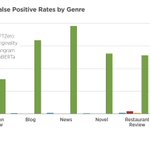
A study from UChicago compared Pangram, GPTzero, Originality and Roberta using multiple types of writing
"Pangram maintains near-perfect accuracy across long and medium length texts. It achieves very low error rates even on shorter passages and ‘stubs."
The false positive and false negative rates for Pangram are less than .05
To put this in context, this is vastly superior to any diagnost tool in mental health (eg the best measures of depression and anxiety have ~15% false positive/negative rates).
bfi.uchicago.edu/wp-content/…


Pangram also seems fairly robust against humanizer tools.
I decided to look into this since I'm developing an AI policy for my lab and class and needed a standardized tool to assess AI use.
Then I saw the debate on social media about Pangram and decided to share some concrete data to draw their own conclusions (rather than relying on speculations or insults).