
Founder of Medicise. Founder of AVO2 (Pty) Ltd and @vo2account. Deep analysis of physiology (through AI) is future of healthcare, banking and financial services
Cape Town, South Africa
Joined December 2012
- Tweets1.1K
- Following2.8K
- Followers464
- Likes289




Pinned Tweet
#Vision is the capacity to believe in what others cannot see, and prepare and plan for it before everyone else see it.
The fundamental problem is that we are trying to finance an increasingly long human lifespan without sufficiently understanding how an individual’s functional health capacity will change throughout that lifespan.
We can calculate investment returns, retirement capital, insurance premiums and life expectancy. But how accurately can we quantify the changing physiological capacity that influences a person’s ability to remain healthy, independent, economically productive and financially sustainable?
This is where I believe an entirely new dimension of risk assessment will emerge.
Imagine being able to measure changes in functional health over time, identify deterioration before it translates into substantial financial consequences, and objectively measure whether interventions are restoring that capacity.
The implications could extend far beyond healthcare into insurance, retirement planning, banking and intergenerational wealth.
It would not eliminate catastrophic events or the need for insurance. But it could potentially change how certain risks are measured, managed and financed.
The real question may no longer be simply whether you can afford to live longer.
It may become whether we can develop a more intelligent way to preserve and finance the functional capacity required to live longer.
@vo2account all your future products of health and finance are applicable here.

The future of financing human life may depend not only on predicting how long people will live, but also on understanding how their functional capacity changes throughout those years—and whether that capacity can be preserved or restored. @vo2account this is what you are all about…
55
Johann Els retweeted

The future shift in health and finance are intertwined with flipping reactive healthcare into preventive healthcare via the use of functional capacity rather than structural pathology and using this new insight within actuarial insights to finance preservation of metabolism.
For generations, we have calculated the financial cost of losing our health. What if we could become substantially better at measuring the functional capacity that helps us preserve it—and the financial value of restoring it?
The central lesson: lactate is not merely a measure of metabolic activity. It is part of the machinery that regulates metabolic activity itself.
@ProfTimNoakes
pmc.ncbi.nlm.nih.gov/article…
A few thoughts from this article:
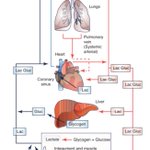
L-lactate may be far more than a fuel transferred between skeletal muscle and the heart. It is also a biological signal that helps regulate which fuels are available, how cells adapt and how different organs communicate.
This changes the research question from “Is the muscle producing enough lactate to fuel the heart?” to something considerably more important:
“Is the body producing, transporting, oxidising and responding to lactate appropriately as physiological demand changes?”
1. Lactate can regulate fat availability—not just supply energy
2. Lactate may influence future cellular capacity through gene regulation
3. The lactate transporter may be as important as the lactate concentration
4. Lactate connects energy metabolism with immune regulation
5. The gut microbiome introduces another source of lactate metabolism
My conclusion:
We should investigate whether the coordination of energy metabolism between organs becomes abnormal before conventional clinical measurements identify overt disease.
@ProfTimNoakes
“The myocardium is capable of utilizing different energy substrates, which is referred to as “metabolic flexibility.” This process assures ATP production from fatty acids, glucose, lactate, amino acids, and ketones, in the face of varying metabolic contexts. In the normal physiological state, the oxidation of fatty acids contributes to approximately 60% of energy required, and the oxidation of other substrates provides the rest. The accumulation of lactate in ischemic and hypoxic tissues has traditionally be considered as a by-product, and of little utility. However, recent evidence suggests that lactate may represent an important fuel for the myocardium during exercise or myocardiac stress. This new paradigm drives increasing interest in understanding its role in cardiac metabolism under both physiological and pathological conditions. In recent years, blood lactate has been regarded as a signal of stress in cardiac disease, linking to prognosis in patients with myocardial ischemia or heart failure. In this review, we discuss the importance of lactate as an energy source and its relevance to the progression and management of heart diseases.”
doi.org/10.3389/fphys.2021.7…
Yet fat oxidation and lactate metabolism is not one of the first things normally tested within primary healthcare - WHY?
If the heart uses fat and lactate as the majority fuel source during a healthy physiological state - why is there not a bigger emphasis on this in routine health checks? And why are there not a bigger emphasis to restore this?

Johann Els retweeted
Restoring fatmax and L-lactate production during exercise is critical!
“The myocardium is capable of utilizing different energy substrates, which is referred to as “metabolic flexibility.” This process assures ATP production from fatty acids, glucose, lactate, amino acids, and ketones, in the face of varying metabolic contexts. In the normal physiological state, the oxidation of fatty acids contributes to approximately 60% of energy required, and the oxidation of other substrates provides the rest. The accumulation of lactate in ischemic and hypoxic tissues has traditionally be considered as a by-product, and of little utility. However, recent evidence suggests that lactate may represent an important fuel for the myocardium during exercise or myocardiac stress. This new paradigm drives increasing interest in understanding its role in cardiac metabolism under both physiological and pathological conditions. In recent years, blood lactate has been regarded as a signal of stress in cardiac disease, linking to prognosis in patients with myocardial ischemia or heart failure. In this review, we discuss the importance of lactate as an energy source and its relevance to the progression and management of heart diseases.”
doi.org/10.3389/fphys.2021.7…
Yet fat oxidation and lactate metabolism is not one of the first things normally tested within primary healthcare - WHY?
If the heart uses fat and lactate as the majority fuel source during a healthy physiological state - why is there not a bigger emphasis on this in routine health checks? And why are there not a bigger emphasis to restore this?
We are observing a continued abnormal metabolic response during exercise among all ages and both genders, while evaluations during rest show up predominantly normal. Patients are increasingly complaining of symptoms such as abnormal fatigue, elevated heart rate, poor sleep quality, pressure on their chest…yet when they consult with their doctor the results come back as normal. These symptoms are normally explained through an integrative stress test during exercise to understand the integrative physiological response with a big focus on the oxidative cellular systems response during exercise. @vo2account
2
139
The world of health care is changing dramatically - due to the current decreasing oxidative cellular system capacity observed within the broader society. The secondary effect is the financial implication, and actuaries are not able to include this novelty into their modelling. We are facing a completely new beast of a problem in the 21st century. Times are changing. The question boils down to: are you prepared for this regarding your own health and finances?
Exercise beyond the stable oxidative cellular systems capacity lead to these type of claims ( referring to: “exercise is a scam”)…times are evolving and the general fitness idea of exercise is facing massive challenges. The physiological reason is mitochondrial dysfunction during exercise. But this is not identified due to a lack of formal exercise testing. The lack of formal training in clinical exercise physiology is now being exposed across the board. Techonological and scientific advances in exercise physiology is shifting exercise away from fitness and closer towards primary healthcare. Read @ACSMNews Exercise Management for Persons with Chronic Diseases amd Disabilities, Fourth Edition (2016)
Authors:
Geoffrey E. Moore
J. Larry Durstine
Patricia L. Painter
You will have a clear idea how - and I quote: “primary care medicine is changing dramatically in the United States, but also around the world. Two major innovations, still evolving are (1) the chronic care model and (2) the concept of the medical home. To some degree, these two concepts go together, with the medical home serving to help patients coordinate all aspects of their care and most especially chronic disease management. There remains a tendency however, not to use exercise in patients who really would benefit from exercise training. Most physicians and even trained epidemiologists are underinformed on the power of exercise and physical fitness in the promotion of health, wellbeing, quality of life, and longevity. Patients need their physicians to advise them to be more active, and our aim is to help physicians know how to this for their patients with complex chronic health problems.”
“From the perspective of the editors, the most important barrier our health care system meeds to overcome is the lack of interaction between the medical and exercise professions. Few physicians are well trained in the use of medically directed exercise, and they could refer many more of their patients than they do. As a result, programs like cardiac rehabilitation, diabetes education, and interventions are underused, as are exercise programs for persons with arthritis, cancer survivors, and people wirh many other conditions. Thus, perhaps the most important goal of this book is to reveal common ground and to create an approach involving more collaboration and teamwork between medical and exercise professionals.”
This book was published for medical doctors. Would be interested to hear your opinion after you read this book.
Johann Els retweeted

You just don't realize how easy you make it for the Boks to find reasons to win another worldcup. Thanks for contributing to #ChasingTheSun3
Johann Els retweeted

🔬🧪LACTATE DOES NOT CAUSE MUSCLE FATIGUE
It is a surrogate marker of metabolic stress and even contributes to improve muscle acidosis during exercise.
During exercise, fatigue develops through metabolic and cellular disturbances, including the accumulation of inorganic phosphate (Pi), changes in ATP turnover, impaired calcium handling, and reduced actin–myosin force production.
Lactate reflects the dynamic balance between glycolytic flux, mitochondrial oxidative capacity and lactate oxidation and clearance.
Lactate is not the enemy. Beyond being the best fuel for cells, lactate is a valuable metabolic signal that helps us understand what is happening inside the muscle.
Understanding this distinction is fundamental to interpreting exercise metabolism, fatigue, and performance.
#Lactate #Mitochondria #ExercisePhysiology #MuscleFatigue #Metabolism #SportsScience

The next major market shift may begin with something healthcare has barely learned to measure.
When human capacity becomes visible, the economics around it change.
A new category is taking shape.
Most people won’t see it coming—until they do.
76
Interesting news…@ProfTimNoakes have you seen this report?
Another piece of the puzzle beyond fatmax and L-lactate @TheNoakesF @StefanusSnyman @MyDocFrank @SJschmidt963
A preliminary AHA analysis of 28,345 FDA reports found cardiac events disproportionately reported with energy drinks and stimulant supplements. Voluntary reports cannot prove causation or estimate consumer risk. The signal warrants better safety monitoring and research.
newsroom.heart.org/news/ener…

99
The economics of ageing could become one of the greatest financial transformations of the 21st century. For generations, the financial world has largely treated ageing as a predictable progression from earning income to retirement, increasing healthcare expenditure and eventual dependency. Insurance, banking, pensions and retirement planning have been structured around this expectation. But what happens when we begin to understand human energy as a measurable and potentially modifiable determinant of how people age, function and remain economically independent? The implications could fundamentally change how we value longevity, calculate future liabilities, allocate capital and finance an entire lifetime. The question may no longer be simply how much money someone needs to survive retirement, but how financial systems can support a longer period of meaningful independence and participation. The future of finance may not be about funding the final decades of life under yesterday's assumptions, but redesigning how an entire human lifetime is financed. This is where a superior understanding of human energy could open an entirely new chapter in actuarial science, banking and the global economy.
The next great transformation of the global economy may emerge from a place few are looking. Actuarial science, insurance and banking are approaching a period in which long-established assumptions about risk, value and financial sustainability may be fundamentally challenged. While much of the world remains focused on technological disruption, a deeper structural shift could quietly redefine how financial institutions operate, how capital is allocated and where future economic value is created. The consequences will not be limited to existing industries; they could give rise to entirely new markets, investment opportunities and economic models. History has shown that the greatest opportunities emerge when the world discovers that something it has always taken for granted can no longer be assumed.
The banking industry may be approaching its greatest disruption yet—and it may have very little to do with technology. For generations, banks have built increasingly sophisticated models to assess creditworthiness, predict financial behaviour and manage long-term risk. Yet even the most advanced financial models depend on assumptions about the future that are rarely questioned. What happens when those assumptions begin to change in ways that traditional financial indicators cannot immediately detect? The consequences could extend far beyond lending and profitability, fundamentally challenging how banks understand risk, value assets and allocate capital. The greatest threat to the future of banking may not be a financial crisis, but a reality unfolding quietly beneath the very assumptions on which the financial system was built.