

M.DRM (in view) | DRR Specialist | Disaster Risk Management & Development Studies | Climate Resilience | Disability-Inclusive Education Consulting & Advocacy
Worldwide 🌐
Joined June 2011
- Tweets23.3K
- Following1.7K
- Followers9.2K
- Likes26.3K




Pinned Tweet
Climate action must include persons with disabilities ♿
Climate-related disasters can create additional barriers to evacuation, emergency information, shelter, and recovery.
We need accessible early warnings, inclusive evacuation plans, and disability-inclusive disaster preparedness.
No one should be left behind.
Good disaster risk management begins with good risk information.
Hazard mapping, vulnerability assessments, exposure data, community knowledge, and climate projections help decision-makers identify priorities.
We cannot manage risks effectively if we do not understand them.
Lekky-John Oyedeji retweeted
Climate action has two complementary dimensions:
1. Mitigation: Reduce greenhouse gas emissions and limit future warming.
2. Adaptation: Prepare for and manage the climate impacts already occurring or expected.
We need both to protect lives, livelihoods, ecosystems, and development gains.
Climate action has two complementary dimensions:
1. Mitigation: Reduce greenhouse gas emissions and limit future warming.
2. Adaptation: Prepare for and manage the climate impacts already occurring or expected.
We need both to protect lives, livelihoods, ecosystems, and development gains.
Exactly. “Saving the planet” is shorthand, but the real objective is protecting the stable climate, ecosystems, food systems, and public health that civilization depends on. Earth will persist; the question is whether human societies can thrive on it or face escalating disruption, displacement, and conflict.


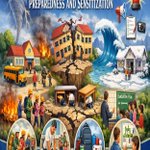
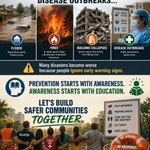
Disaster education is an investment in safer futures.
Teaching children and adults about hazards, early warnings, evacuation, climate change, and environmental protection builds knowledge that can save lives.
Let's make disaster risk education practical, inclusive, and accessible.
Lekky-John Oyedeji retweeted

Nigerians will complain that everywhere is hot, then cut down the few trees providing shade, block drainage channels with refuse and plastic bottles, burn waste and keep destroying green spaces.
We cannot keep fighting nature while expecting nature to protect us.
A healthier environment begins with the choices we make every day.
Are we part of the solution or part of the problem?
Choose wisely today
An early warning is only effective when people receive it, understand it, trust it, and can act on it.
Climate resilience requires timely forecasts, accessible alerts, clear evacuation guidance, and preparedness at community level.
Warnings must reach everyone including those most at risk.
Activism doesn’t have to begin with a platform or a crowd; it can start with one small, consistent action in your own community. Collective change grows from individual responsibility.
Healthy ecosystems can strengthen climate resilience.
🌳 Forests store carbon and protect soils.
🌿 Wetlands can absorb and slow floodwaters.
🌊 Mangroves can reduce some coastal hazards and support livelihoods.
Protecting nature is an investment in both biodiversity and disaster risk reduction.
Extreme heat is a serious public health and disaster management concern.
Heat action plans should include public awareness, access to drinking water, shaded public spaces, cooling options, and targeted support for vulnerable people.
Climate resilience also means preparing for hazards that are not always visible.
Climate change threatens agriculture through heat stress, shifting rainfall patterns, droughts, and floods.
Climate-resilient agriculture can include soil conservation, water management, suitable crop varieties, diversified livelihoods, and reliable climate information.
Protecting farmers strengthens food security.
Recovery should not simply restore the conditions that existed before a disaster.
It should reduce future risks, improve infrastructure, strengthen livelihoods, and address the vulnerabilities exposed by the event.
Let's rebuild safer, not just faster.
Important list and the silence part is real. But we should be careful with the numbers and keep pushing for systemic change, not just individual guilt. Schools should teach both the drivers of emissions and the solutions.

Lekky-John Oyedeji retweeted

Does your emergency plan consider wheelchair users, people with visual or hearing disabilities, and people who need assistance to evacuate?
If not, your plan may leave people behind.
Disability-inclusive preparedness is essential for safer communities.
Emergency response is about more than delivering supplies.
It means protecting dignity, ensuring safe shelter, providing clean water, supporting health needs, and reaching people who are often overlooked.
Humanitarian assistance must be timely, accountable, accessible, and guided by the needs of affected people.
An emergency plan that has never been tested may fail when it matters most.
Schools, workplaces, hospitals, and communities should practise evacuation procedures, communication protocols, and emergency responsibilities.
Don't wait for a real disaster to discover what your plan is missing.
Lekky-John Oyedeji retweeted
If every school in Nigeria taught children how to grow trees, manage waste, conserve water and understand climate change, what would our communities look like 10 years from now?
Environmental responsibility is not just something we practise today. It is something we teach for tomorrow.

During emergencies, poor coordination can delay assistance and put more lives at risk.
Effective response requires clear communication, defined responsibilities, reliable information, logistics, and collaboration among emergency services and communities.
Prepared teams respond better. Coordinated teams respond smarter.
Disasters do not affect everyone equally.
Poverty, unsafe housing, limited access to information, and insecure livelihoods can increase vulnerability to hazards.
Reducing disaster risk also means addressing inequality, strengthening livelihoods, and improving access to essential services.
Lekky-John Oyedeji retweeted
When we talk about desertification in Nigeria, we are talking about more than the sand advancing.
We are talking about land productivity, livelihoods, water stress and the pressure on communities to adapt.
If not addressed, it will affect our food supply and further exacerbate the current food inflation!!
Land restoration must be treated as an economic priority, too.