

Professor of Psychology and Infectious Disease at Vrije Universiteit Amsterdam.
Amsterdam, The Netherlands
Joined October 2016
- Tweets1.9K
- Following588
- Followers1.8K
- Likes4.9K




Joshua M. Tybur retweeted

"As predicted, in all 61 societies, people were more willing to have infection-risky contact with people they valued more."
Our new paper in Proceedings of the National Academy of Sciences.
stevestewartwilliams.com/p/w…

Joshua M. Tybur retweeted

Happy to share our new paper in @PNASNews, led by Hongyu Sun! Proud to have been a part of this team effort. Across 61 societies, we investigated whether people are more willing to risk infection from those they value more. Have a read! 🥳

New in @PNASNews: Interpersonal value regulates infection-risky social contact across 61 societies.
pnas.org/doi/10.1073/pnas.26…
Our team of 150+ scientists set out to answer a simple question: are we more willing to risk catching something from those we value? 🧵 (1/x)

Joshua M. Tybur retweeted
Whose Germs Are Worth the Risk? The Hidden Trade-Off Behind Every Hug and Handshake
stevestewartwilliams.com/p/w…

Greetings are visible, ritualized signals that communicate relationship and reputational information, and their meaning varies across societies. Greater variation in greetings likely reflects differences in these signaling conventions rather than openness to microbe risks. (10/x)
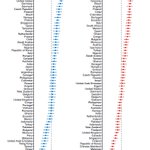
The paper also describes how much contact comfort (left panel, blue) and greeting contact (right panel, red) vary across societies. Greeting contact varied more (~7% of variance attributable to society) than contact comfort (~3%). (9/x)

They also reported: (1) their comfort with multiple acts that expose them to that person's microbes (e.g., drinking from a water bottle; using a toilet seat after that person) and (2) whether they typically physically touch that person during a greeting. (5/x)
A society’s historical pathogen prevalence related modestly to contact comfort, but only for high-value targets. Where pathogen prevalence was higher, people were less comfortable with microbe-sharing acts with friends than where it was lower. (7/x)

In a 2020 paper, we found that US participants were more comfortable with microbe-sharing acts with those they value more, as measured by a task in which they divided money between themselves and the other person. journals.sagepub.com/doi/ful… (3/x)

New in @PNASNews: Interpersonal value regulates infection-risky social contact across 61 societies.
pnas.org/doi/10.1073/pnas.26…
Our team of 150+ scientists set out to answer a simple question: are we more willing to risk catching something from those we value? 🧵 (1/x)
Joshua M. Tybur retweeted

Young children put almost everything in their mouths, at a time when they’re especially vulnerable to infection. A new study mapping 39 germ-related behaviors from birth to age 10 finds key shifts around ages 2 and 4, and asks whether early exploration might be worth the risk.
hbes.com/why-and-when-are-yo…

Joshua M. Tybur retweeted

My new book, ALL THE FEELS, is out! Each feeling gets a chapter: What is it for, what is it measuring, and what is it motivating? Paperback and Kindle versions now available: amazon.com/dp/B0H6DML559 (Repost to experience Feel #37: Pleasure from Helping.)

Joshua M. Tybur retweeted

New paper with @joshtybur and @florianvl, out in Evolution & Human Behavior: we mapped when kids actually start avoiding pathogens, month by month, from birth to age 10.

Joshua M. Tybur retweeted

I believe it is worth revisiting just how utterly tragic EU accession has been for some of the most recent member states to join, and, in doing so, explain why all local anti-EU actors, for all the backing of Donald Trump and Russia, will always ultimately end up defeated. 🧵
My three-year-old son's screen time easily surpasses an hour per day. And it's wonderful. Gives me time to cook and clean. Helps his English development. Our curated screen options teach him about cool things like why it rains and why people get sick.

The evidence for these recommendations is largely correlational (not causal), and the correlations are routinely very small (r ≈ 0.10). So the intervention is likely to have no effect whatsoever. It's just middle-class meddling. @BBCNews bbc.co.uk/news/articles/c1d9…

Joshua M. Tybur retweeted

Is shame maladaptive? A culturally constructed emotion? An adaptation that is part of human nature? And how would one know?
🔴 Cross-cultural evidence that shame is a defense against reputational damage
pnas.org/doi/10.1073/pnas.25…
