

Cutting-edge news & reports from PNAS, one of the world's most-cited scientific journals, sibling journal of @PNASNexus & an official journal of @theNASciences.
- Tweets19.4K
- Following1.2K
- Followers184K
- Likes1K





ALT Pictured is a micrograph of stalked unicellular ciliates attached to a filament of aquatic vegetation. Image credit: Zhe Wang (Ocean University of China, Qingdao, China).

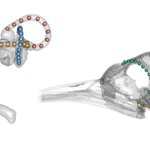
ALT Braincase and semicircular canzal morphology of crown bird sparkling violetear (Colibri coruscans), showing orientation of the foramen magnum (arrow) and landmark coordinates (colored spheres). CREDIT: Guillermo Navalón.

ALT : A two-panel scientific diagram illustrating the statistical parameters of the continuous-time structural equation model.

ALT A boy next to a small table playing a marble game, and another boy watching him.

ALT Altmetric score: 101. Research article: why the mortality penalty of smoking is rising over time by R. Lawton, J. B. Dowd, J. Skinner, and E. Meara.

ALT Percent of respondents in each condition who fully reversed their views—moving from strong pretreatment agreement with the misconception to no agreement with the misconception or agreement with the consensus position—with 95% confidence intervals.

ALT PNAS logo. Featured Topic: Plant Biology. Discover peer-reviewed research on plant systems, agriculture, and resilience.

ALT An orangutan mother and child on the move in Borneo. Stock photo.

ALT Credit: wikimedia/NOAA Photo Library

ALT Scientists work on a large humanoid robot. One technician adjusts gears in its head while another monitors data on a screen near its arm. Until researchers resolve some fundamental concerns, behavioral research should not accept AI output as a substitute for human data. Image credit: iStock/bonezboyz.

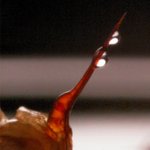
ALT Detached honey bee (Apis mellifera) stinger with venom droplets. CREDIT: Ajay Narendra and Fiorella Ramirez-Esquivel.

ALT Elephant carcass site in Kruger National Park, South Africa. CREDIT: Courtney Reed.

ALT Pictured are mangrove seeds germinating directly on their parent plant, an ability known as vivipary. Image credit: Qiuxia Chen.

ALT A graph presents national gender gaps in attitudes toward academic effort, shown as a function of each country’s level of socioeconomic development.

ALT Green grass with dandelions overlooking slight hills with trees varying in shades of green with a blue sky above. Image credit: Unsplash/CC0 Public Domain

ALT Figure 2: Example array of faces. This array shows features associated with increases in facial trustworthiness, such that face 1 tends to be viewed as the least trustworthy and face 7 as the most trustworthy. This was one of the 10 morphed face identity arrays used in experiments 2, 4, and 6.

ALT Cattle on a ranch in Mato Grosso, Brazil. CREDIT: Lisa L. Rausch.

ALT Four years is shorter than the median time to a US research doctorate in essentially every science and engineering field. That gap between the rule and the reality puts the pipeline of American science at risk. Image credit: Shutterstock/Charles HHuang.

ALT Epeorus pellucidus (mayfly) from Central China, belonging to Palaeoptera. CREDIT: Chenyang Cai.

ALT PNAS Logo. Explore the PNAS 2025 Cozzarelli Prize Winner YouTube Playlist. Hear the stories behind the research!

ALT Close-up of a skeleton's teeth showing detailed enamel texture under soft lighting. Credit: wikimedia/Brian Spatola